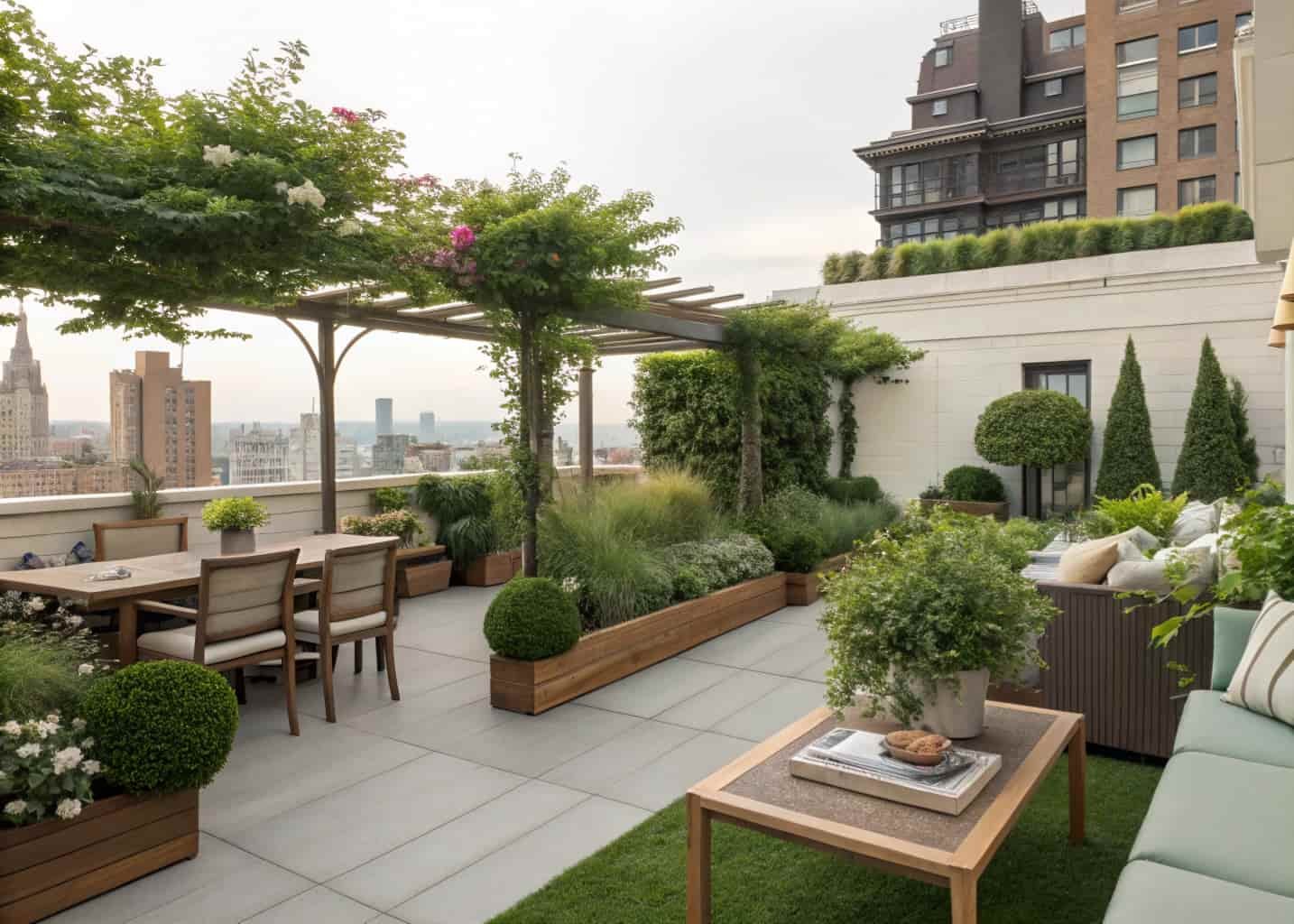
You step onto your terrace with good intentions. There is a bare slab, a few mismatched pots, maybe a plastic chair that has faded in the sun. You buy a plant here, a string of lights there, and somehow the space still feels like a leftover corner instead of a place you want to sit in.
Most terraces stay stuck at this stage because we treat them as a shopping list instead of a plan. The better approach to terrace landscape design is to think in layers: first the surface and structure, then the greenery, then the small details that make you linger.
Once you see the space as a small outdoor room with a floor, walls, a ceiling and a mood, every decision gets easier. This guide walks you through that thinking step by step.
1. What Is Terrace Landscape Design?
Terrace landscape design is the practice of planning an elevated outdoor space, such as a rooftop, balcony or open terrace, so that plants, surfaces, furniture and lighting work together as one calm, usable area. It is not just “adding plants.” It is deciding where people walk, where they sit, where the sun lands and where greenery softens hard edges.
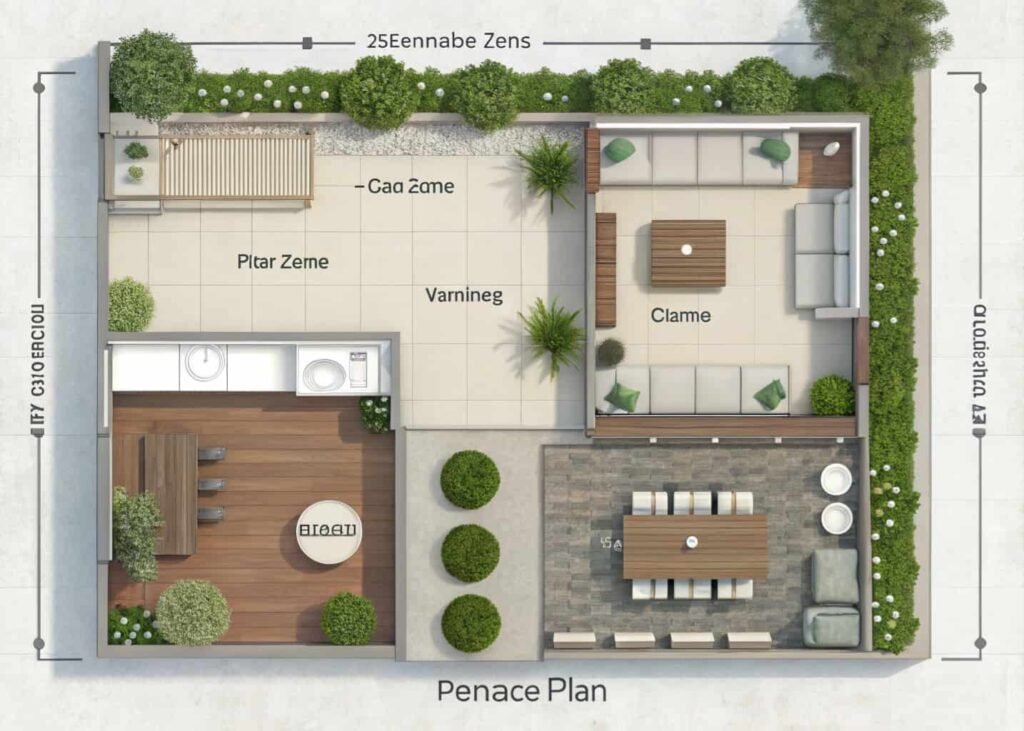
Why Planning in Zones Works
A terrace is usually small and exposed, so every item competes for attention. When you divide the space into zones (sitting, growing, passing through), the eye knows where to rest. A plant that would look messy in a random corner looks intentional inside a defined planting zone.
2. Terrace Garden Layout Ideas
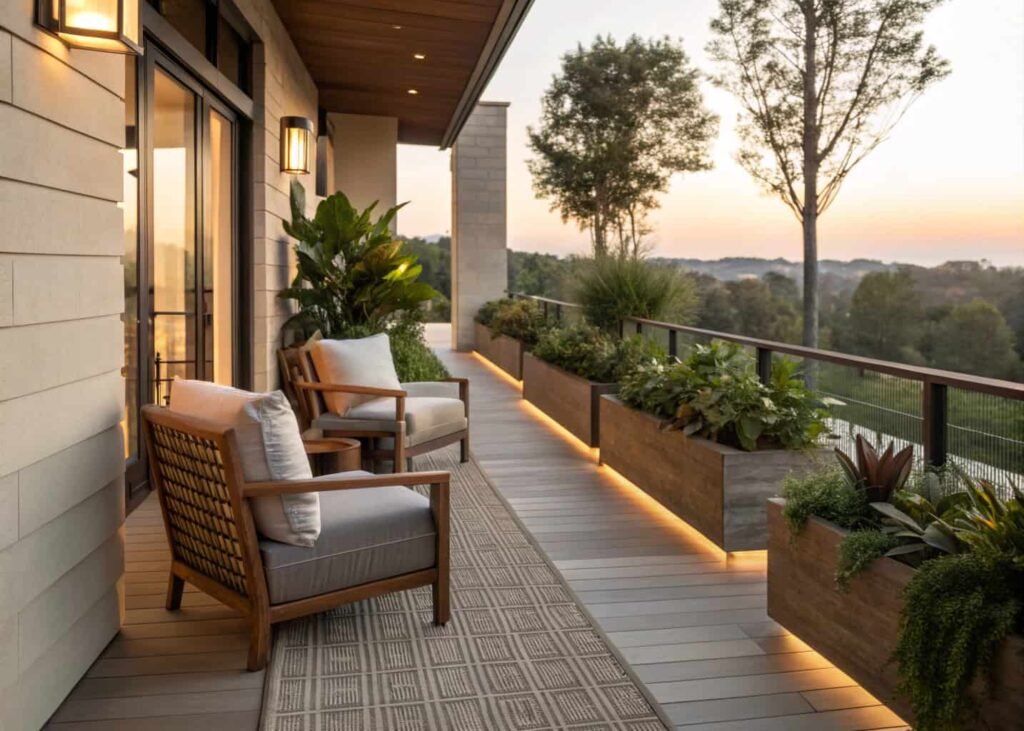
Start with what you cannot change: the direction of the sun, the wind, the door you walk out of and the view you want to keep. Mark these mentally before you buy a single pot. A layout that respects them will feel natural, even in a very small space.
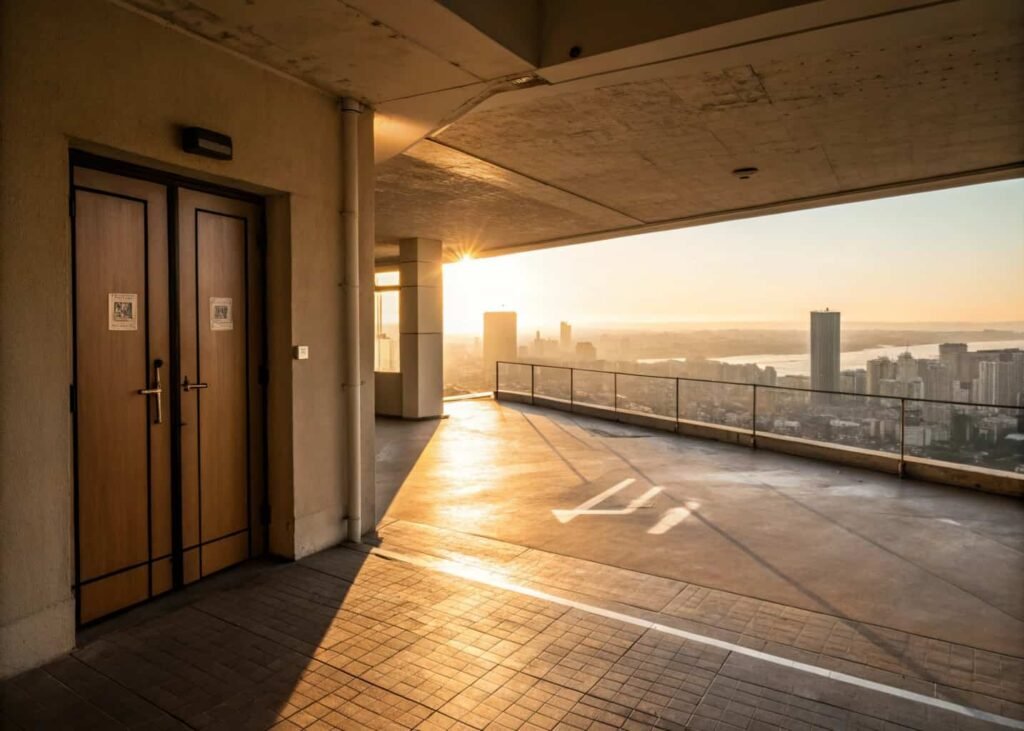
Here is a simple way to think about the main building blocks of any terrace layout.
| Layout Element | What to Look For | Why It Works |
|---|---|---|
| Entry path | A clear walking line from the door to the far edge | Keeps the space from feeling blocked and makes furniture placement easier |
| Seating zone | A corner or edge with a wall or railing behind it | People feel more relaxed when their back is protected |
| Planting edge | Pots and planters along the perimeter | Frees the center for movement and makes a small terrace feel larger |
| Focal corner | One area that draws the eye, like a large planter or a small water bowl | Gives the layout a purpose instead of scattered decoration |
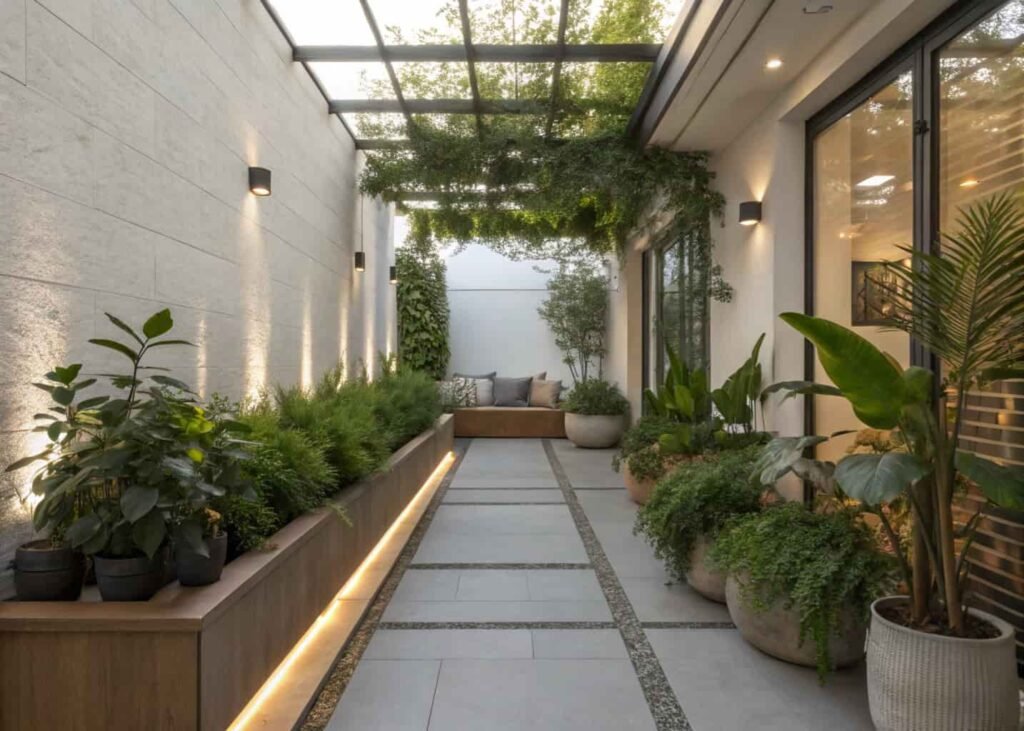
Quick Tip: Before moving anything heavy, arrange your pots and chairs on the floor with tape or chalk marks. Live with the layout for a day or two, then adjust.
3. Best Plants for Terrace Landscaping
Terrace plants face more sun, wind and heat than garden plants at ground level. That is why the best choices are usually tough, flexible growers that forgive a missed watering. Think in three layers: taller plants for structure, medium plants for body, and trailing plants to soften edges.
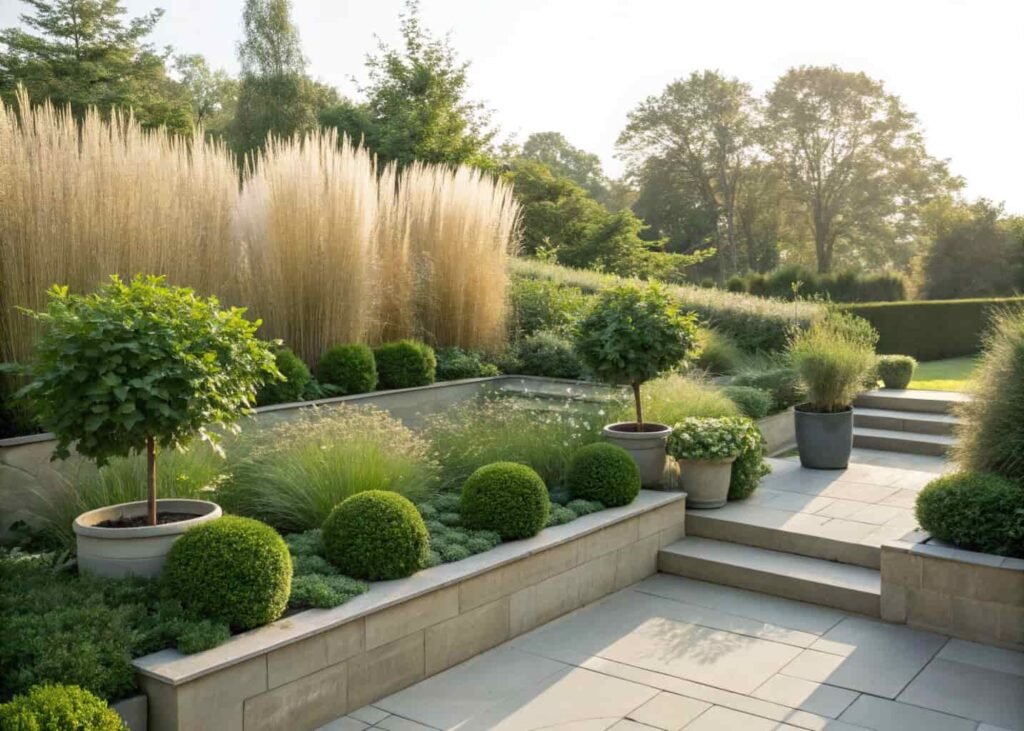
Some old planting habits do not suit rooftops and balconies. This table shows what tends to work better now.
| Old Rule | What Works Better Now |
|---|---|
| Fill every pot with flowers | Mix foliage plants with a few flowering ones so the space looks good all year |
| Buy plants first, then find room | Choose plants based on sun, wind and pot size available |
| Use many different plant types | Repeat two or three plants so the terrace feels calm and connected |
| Plant everything in small pots | Use fewer, larger containers that hold moisture longer |
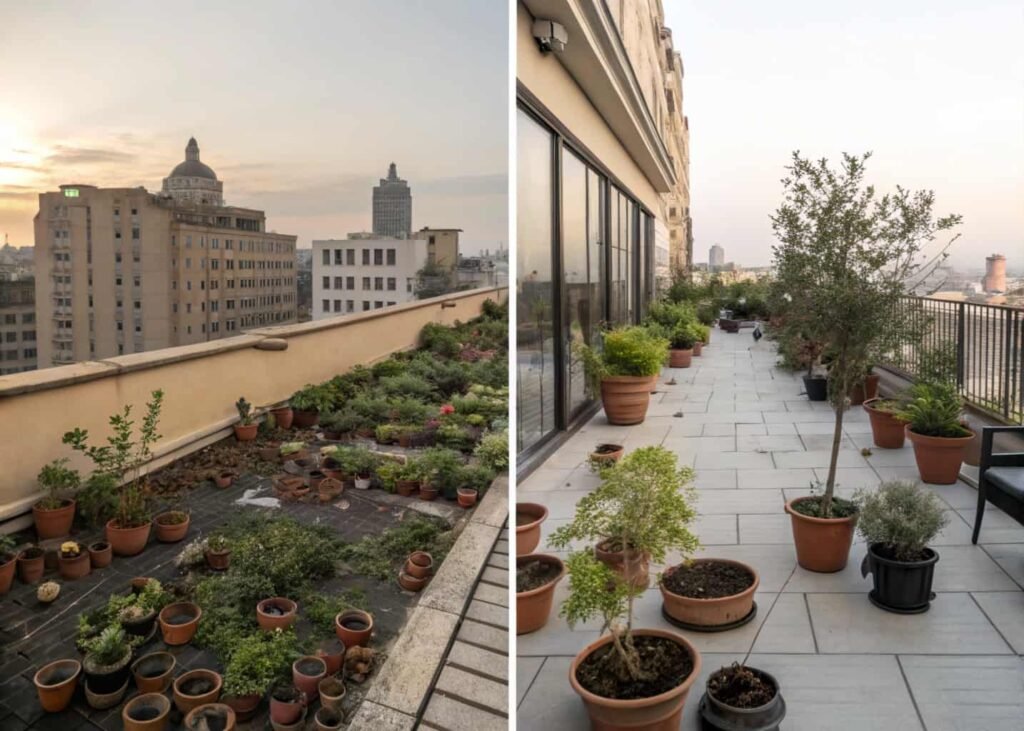
4. Flooring, Decking and Tile Options
Your floor is the largest surface on the terrace, so it sets the whole mood. Bare concrete can feel cold and harsh, while a thoughtful floor makes the space feel finished. Popular choices include outdoor tiles, wooden decking, interlocking deck tiles and even simple outdoor rugs over an existing surface.
The real balance to aim for is structure plus softness. Hard surfaces like tile or stone give the terrace a clean base, while plants, rugs and cushions add warmth. If everything is hard, the space feels like a courtyard in a hotel; if everything is soft, it feels temporary. Pair one firm surface with two or three soft elements.
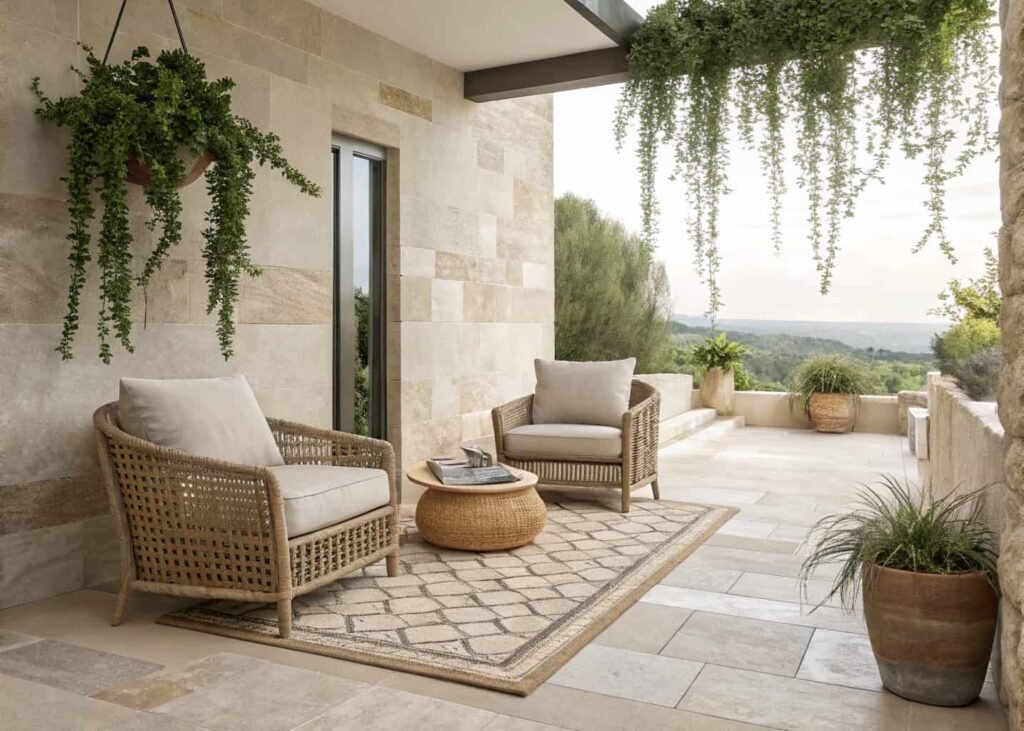
Pro Tip: Whatever flooring you pick, check that water can still flow toward the drainage point. Pretty flooring that traps water becomes a problem later.
5. Pergolas, Shade and Privacy Ideas
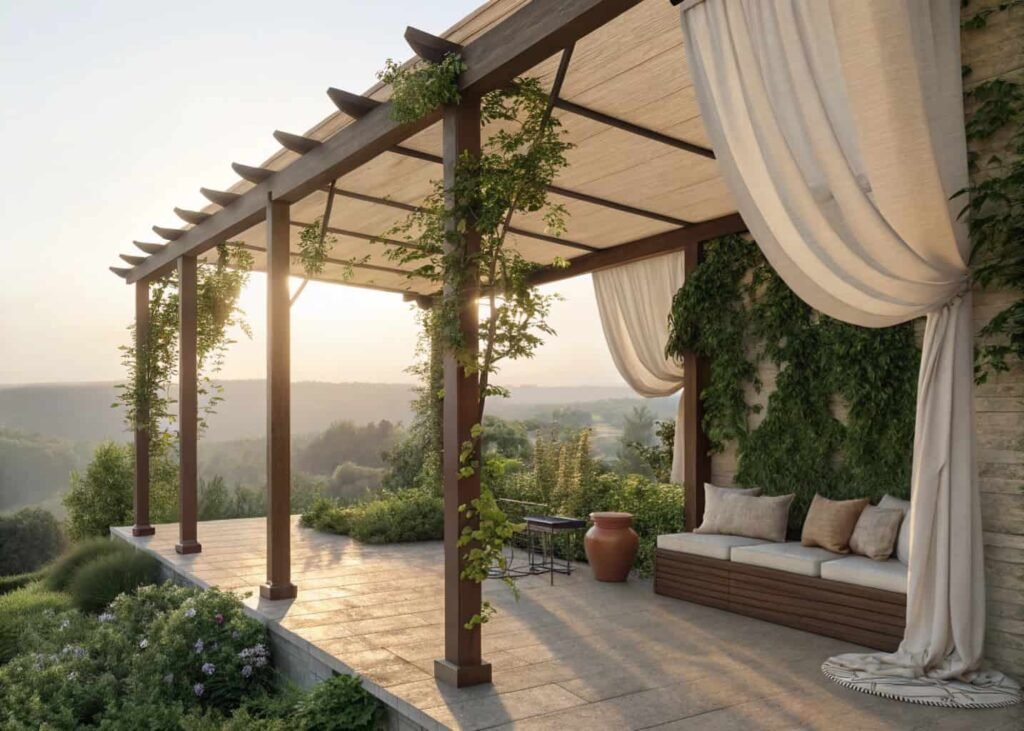
An open terrace can feel exposed in every direction. A pergola, a shade sail or a simple screen turns it into a proper outdoor room by adding a ceiling and walls. This is often the step that makes a terrace comfortable enough to use in the middle of the day.
Give One Element Permission to Stand Out
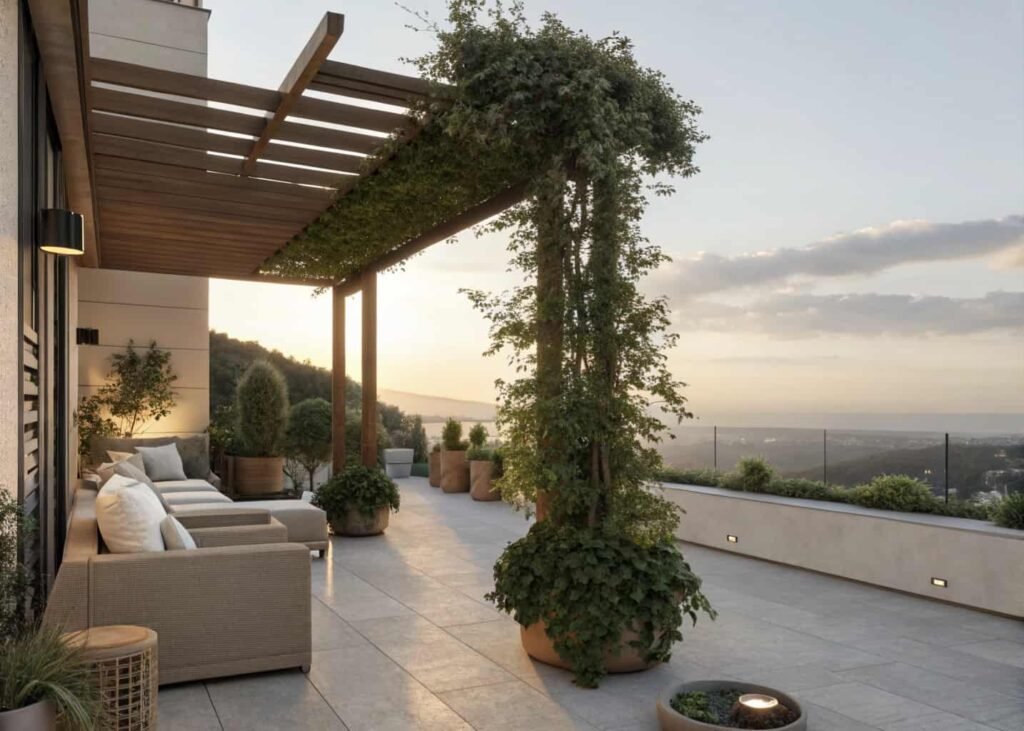
Here is a principle that works in almost every design: choose one focal point and let everything else support it. On a terrace, that could be the pergola covered in a climbing plant, a bold planter, or a single statement chair. When one element leads, the rest of the space can stay simple, and the whole terrace looks planned rather than crowded.
6. Container Gardening and Vertical Garden Ideas
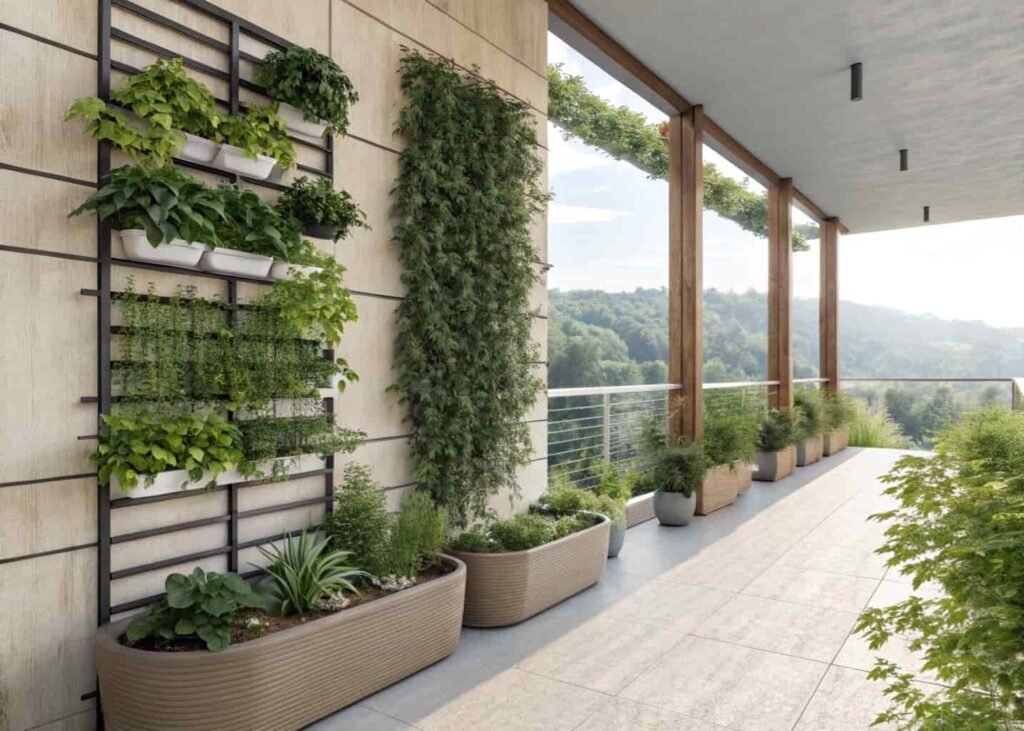
When floor space is limited, go up. Wall planters, hanging baskets, trellises and tiered stands let you grow more without crowding the walkway. Containers also give you freedom to rearrange as the seasons change or as your taste evolves.
Keep It From Feeling Cluttered
Vertical and container gardens can tip into “too much” quickly. If yours starts to feel busy, use this quick guide:
- If it feels like too many pots, try grouping them in odd-numbered clusters with a few larger containers instead.
- If the wall looks crowded, try leaving open wall space between planters so each one can breathe.
- If plant colors clash, try limiting yourself to two or three shades of green plus one accent color.
- If the floor feels tight, try moving plants to shelves or hooks and clearing a walking path.
- If the look feels random, try choosing one pot color or material and repeating it throughout.
7. Terrace Lighting and Outdoor Furniture Ideas
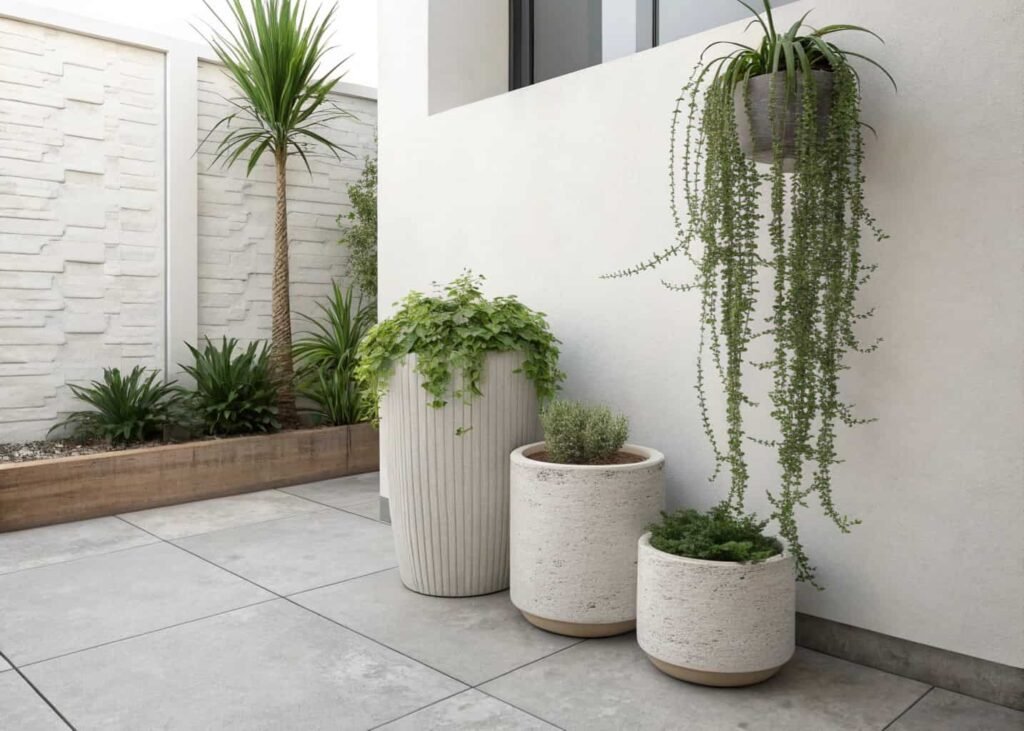
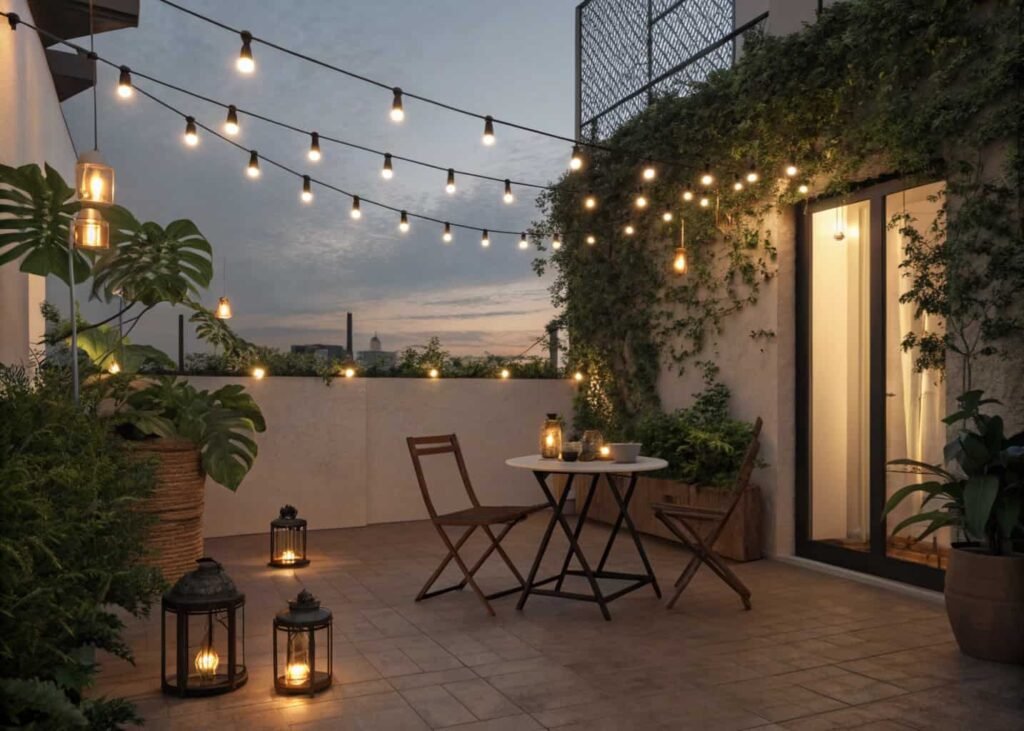
Good lighting turns a terrace from a daytime space into an evening retreat. Warm string lights, solar lanterns and small path lights create a soft glow without harsh glare. For furniture, choose pieces sized to your space: a compact bistro set or a bench with storage often beats a bulky sofa.
Build Your Own Repeatable Formula
You do not need to reinvent the terrace every time. Use this simple formula: base + greenery + one glow + one comfort item. Swap the pieces to fit your situation.
| Situation | Formula | Why It Works |
|---|---|---|
| Small balcony | Compact chair + hanging plants + one lantern + a cushion | Keeps the floor free while still feeling cozy |
| Large rooftop | Deck tiles + large planters + string lights + lounge seating | Defines zones in a wide space |
| Windy terrace | Sturdy planters + tough plants + low lighting + heavy furniture | Prioritizes stability and comfort |
| Evening entertaining | Bench + candle-style lights + planters + throw blankets | Creates warmth for guests without clutter |
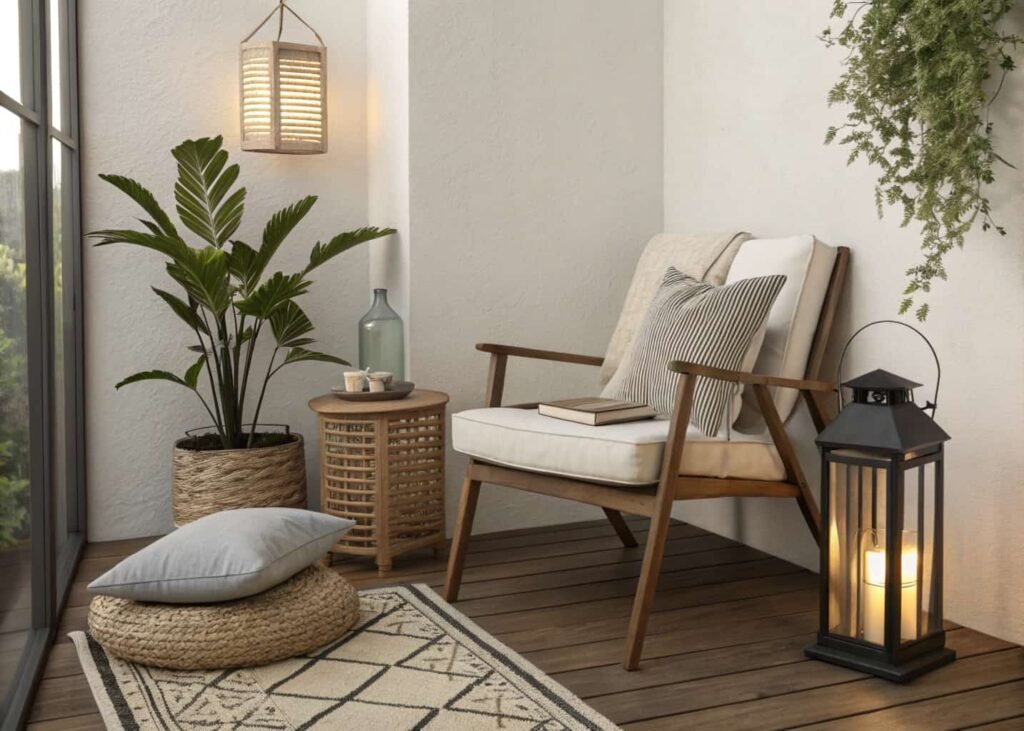
| Quiet morning corner | Single chair + small table + one leafy plant + soft rug | Makes a peaceful spot for tea or reading |
8. Waterproofing and Drainage Tips
This is the least glamorous part of terrace landscape design, but it protects everything else. Water that sits on a terrace can damage the surface below, so make sure the floor slopes toward a drain and that the drain stays clear of leaves and soil. If you are unsure about the existing waterproofing layer, ask a qualified professional to inspect it before you add heavy planters or new flooring.
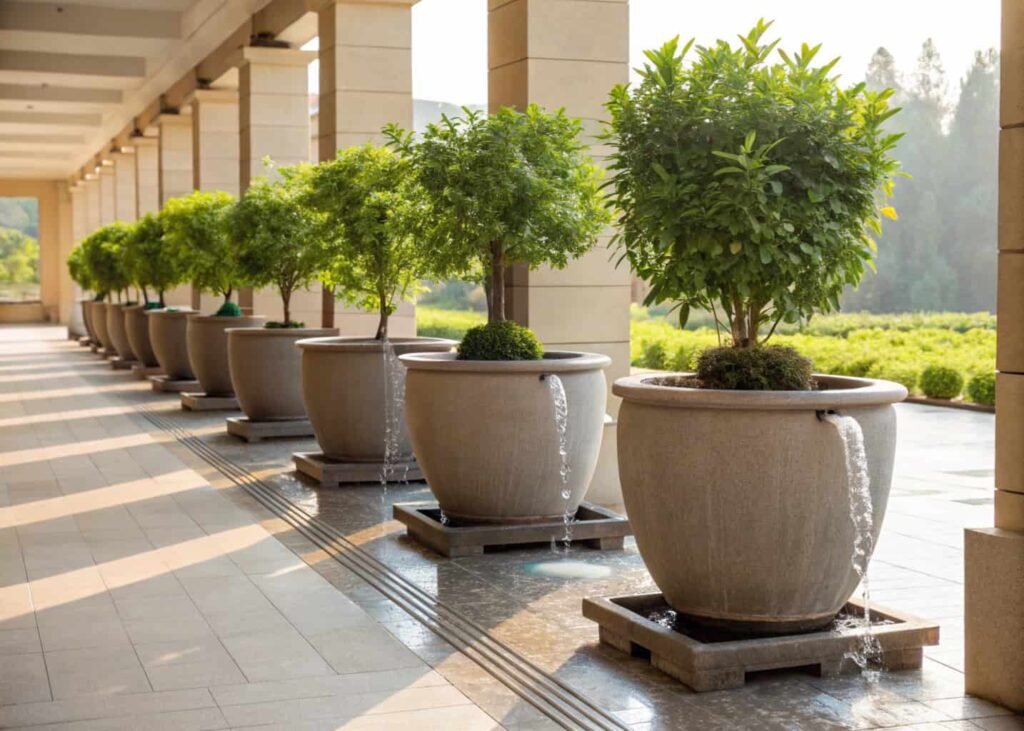
Use saucers or raised planter feet so water can move freely beneath containers, and avoid pushing soil against walls. Also think about weight: large planters full of wet soil are heavy, so spread them out rather than stacking them in one spot, and check that your terrace can support the load.
9. Low-Maintenance Terrace Landscape Ideas
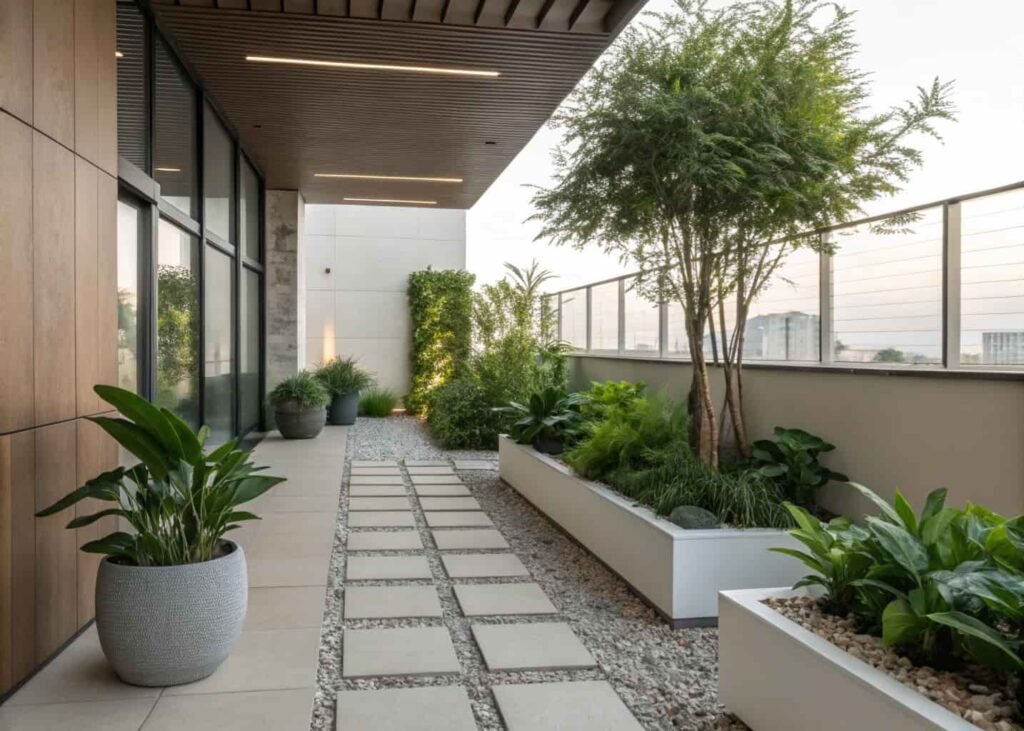
If you love the look of greenery but not the daily chores, a low-maintenance terrace garden is very achievable. Choose hardy plants, use larger pots, group containers with similar water needs and consider a simple drip or self-watering setup. The goal is a space that looks cared for even when your week gets busy.
Make It Simpler When You Want To
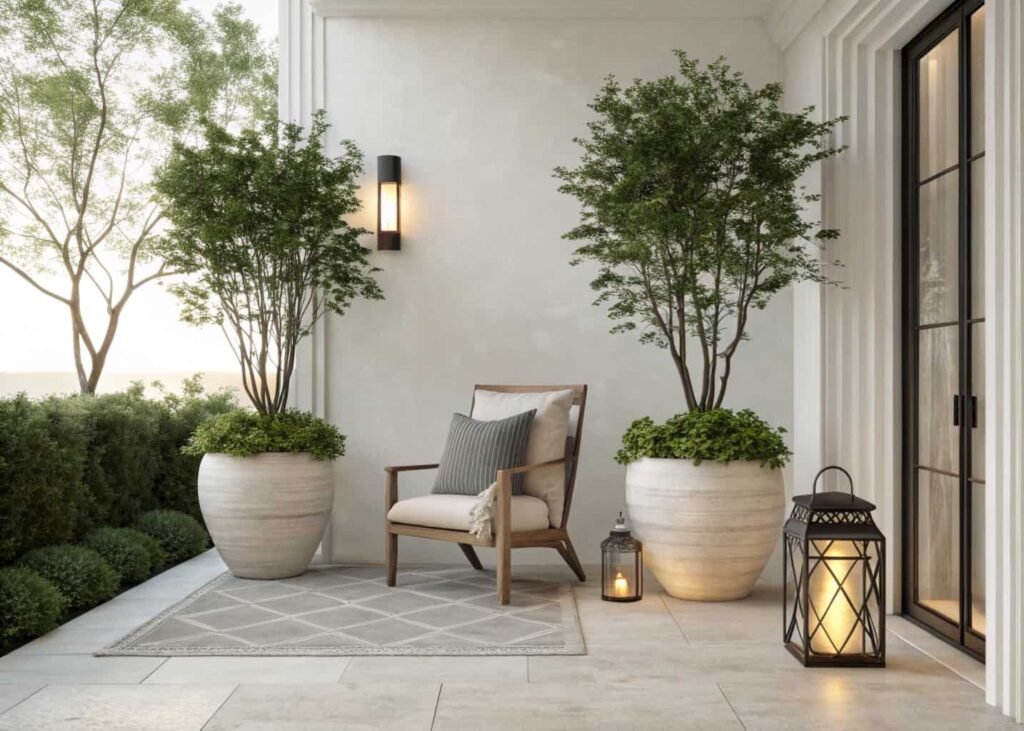
If the full plan feels like too much, start with a beginner-friendly version: one comfortable seat, three large planters and one light source. That is enough to make a terrace feel like a retreat, and you can add layers later at your own pace.
Beginner Note: Fewer, bigger plants are usually easier to look after than many small ones. Start small and add only when you are enjoying what you already have.
10. Terrace Landscape Design on a Budget
A beautiful terrace does not require a large budget. Start with what you already have, repaint old pots, use secondhand furniture, grow plants from cuttings and add lighting last. Spend money first on the things that affect safety and durability, such as drainage and stable planters, then on the pieces that create mood.
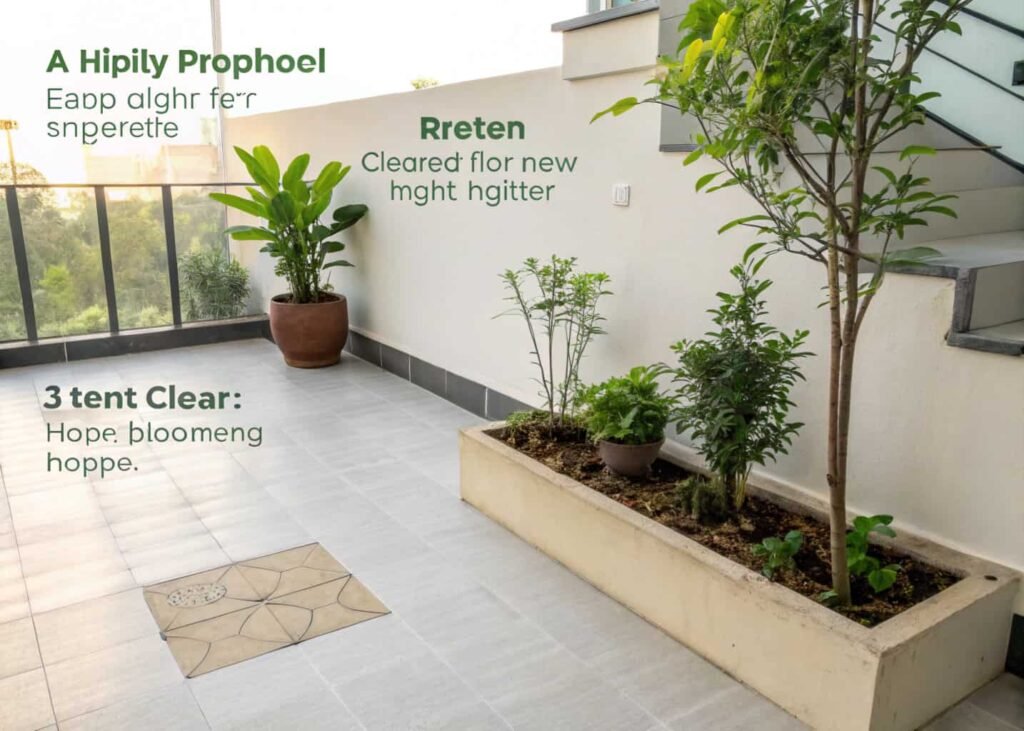
A budget terrace can look even more personal than an expensive one, because every piece is chosen with care. Build it in stages: floor and drainage first, seating and shade second, plants third, lighting and finishing touches last.
Frequently Asked Questions
What is terrace landscape design? It is the planning of an elevated outdoor space so that plants, flooring, furniture, shade and lighting work together. The aim is a terrace that is beautiful, comfortable and practical to maintain.
Can beginners create a rooftop garden? Yes. Start small with a few large containers, hardy plants and a simple seating spot. A rooftop garden is easier when you begin with a clear layout and add more only after the first stage feels comfortable.
How do I make balcony garden design work better in a small space? Use vertical space with wall planters, hanging baskets and slim shelves, and keep the floor as clear as possible. Repeating one or two plants and one pot style helps a small balcony feel calm rather than crowded.
Do I need expensive materials for terrace landscaping? No. Repainted pots, secondhand furniture, deck tiles and plants grown from cuttings can all look great. Spend first on drainage and safety, then add style gradually.
How do I create terrace garden ideas that last without constant upkeep? Choose tough plants, larger containers and a simple watering routine, and group plants with similar needs. Fewer, well-chosen elements will always be easier to maintain than a crowded setup.
Conclusion
A terrace does not need to be big or expensive to feel like a retreat; it just needs a clear plan and a few thoughtful layers. This week, clear one corner of your terrace, place a single chair and one large plant there, and sit in it for ten minutes. That small moment will show you exactly what your space wants to become.