By three o’clock the house is a sauna. The oven has been roasting since morning, a dozen people are somehow all in the kitchen at once, and the dining room feels warmer than the turkey. If your Thanksgiving always ends up hot, crowded and faintly stuffy, the problem is not the guest list — it is the room.
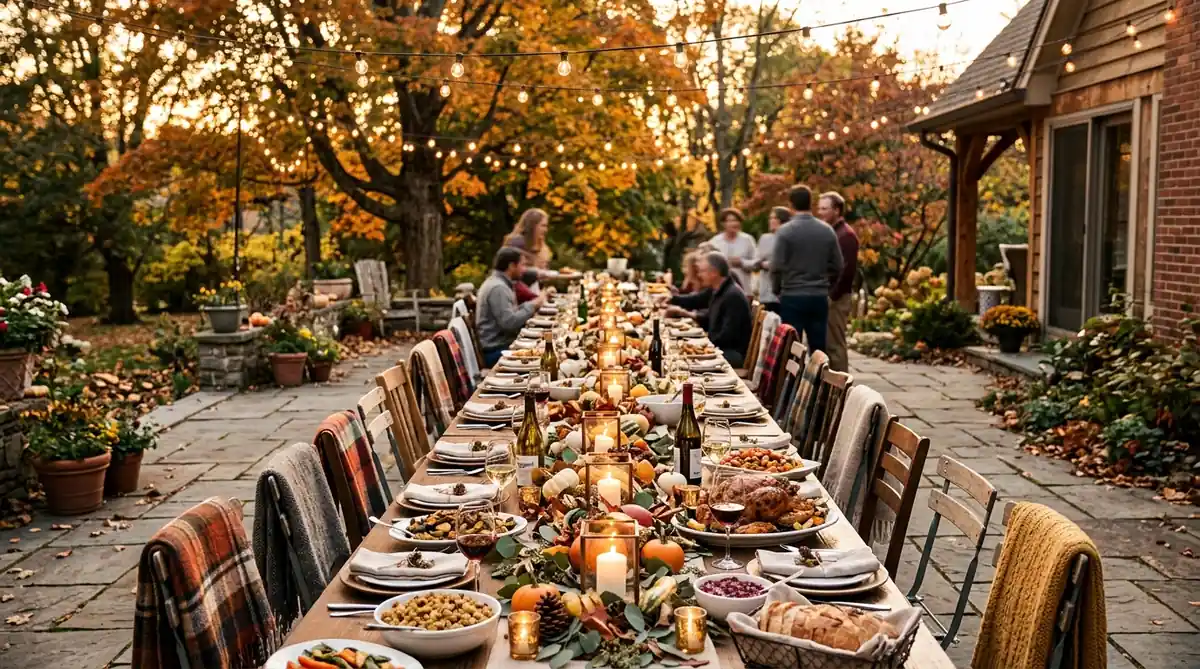
Move the meal outside. An outdoor Thanksgiving table setup is not about being brave; it is about planning for three predictable things — wind, dropping temperature and fading light. Handle those, and the fresh air does the rest: appetites sharpen and nobody fights for elbow room.
This guide walks through the outdoor Thanksgiving table, from the rug underfoot to the lights overhead, with a formula you can reuse every year.
Why Fresh Air Does Half the Decorating
Outside, the setting arrives pre-decorated. Autumn trees, low golden light and a cool blue dusk do what no centrepiece can, which is why fall outdoor table ideas need less stuff, not more. Cooler air keeps guests hungry instead of drowsy, and the kitchen stays a workspace, not a social club. Your job shrinks to three comforts: somewhere steady to sit, light to see by, and warmth within reach.
Pro Tip: Hang the lights and test every bulb the day before. Dusk on Thanksgiving Day is the worst possible moment to discover a dead strand and a missing extension lead.
1. Start With a Rug, Not a Tablecloth
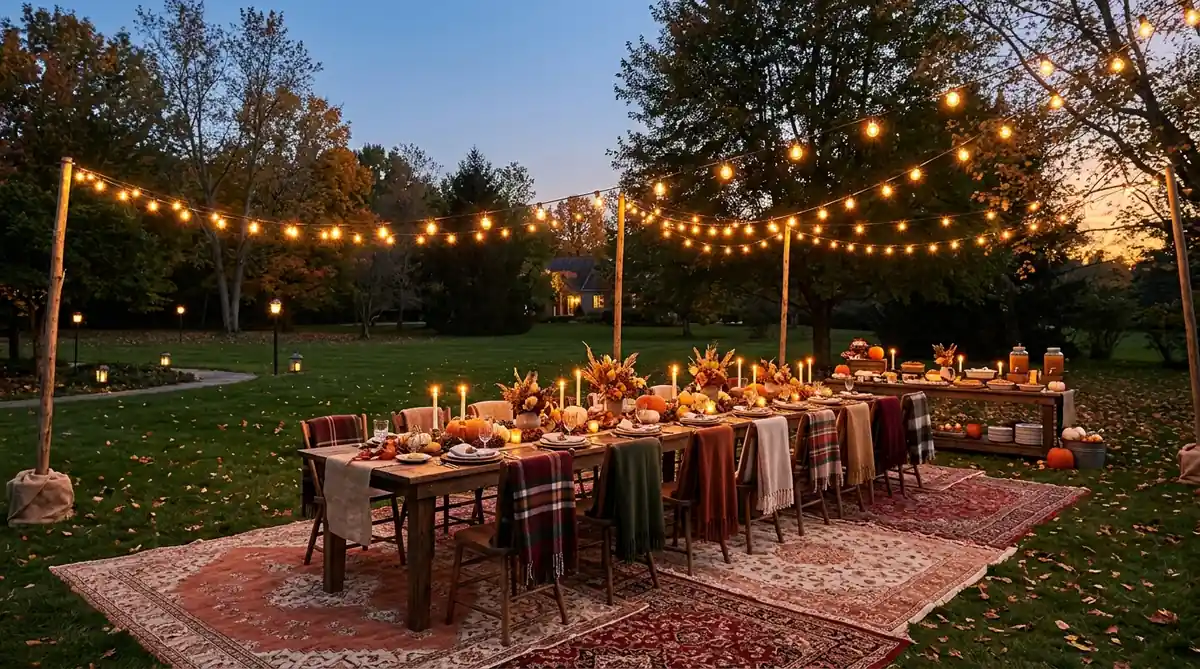
Start with a flat-weave outdoor rug under the table. It marks out the “room” in open space, stops chair legs sinking into lawn or catching in deck gaps, and makes bare paving feel intentional rather than borrowed. Choose one slightly larger than the table footprint so pulled-back chairs stay on it. A rug also softens the scrape and clatter of chairs and plates.
2. Choose Centrepieces With Weight in Them
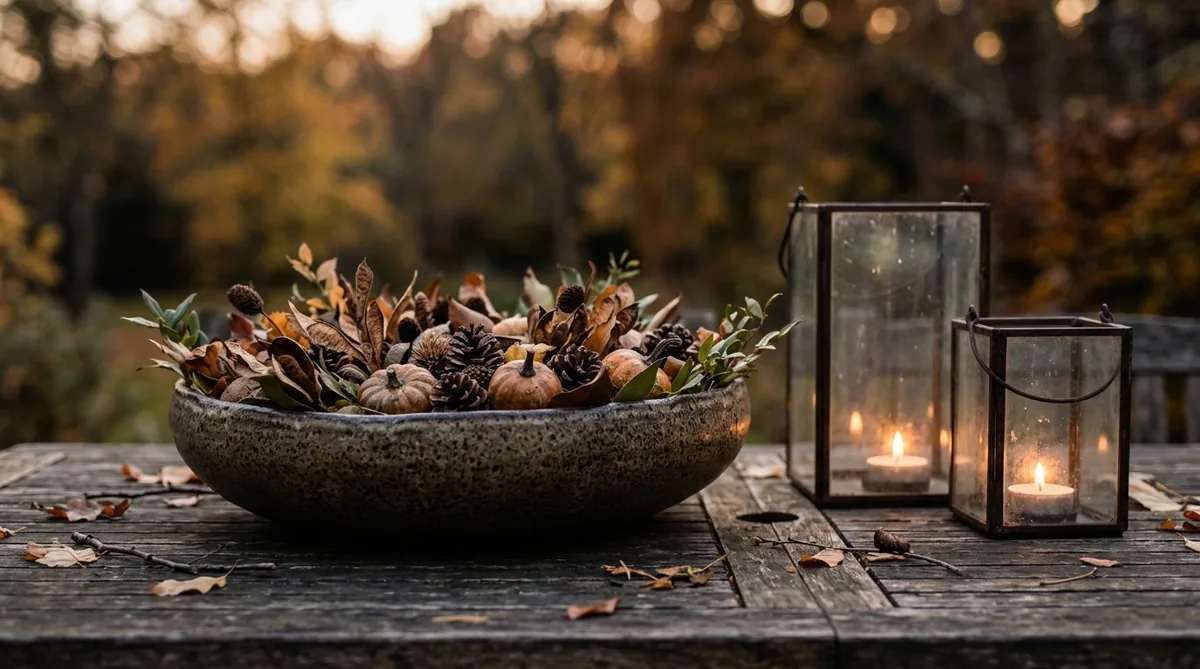
Outdoor centrepieces need ballast. Pick low, heavy arrangements — a stoneware crock, a cast-iron pot, a low wooden crate of candles — that a gust cannot tip or scatter. Fill tall vases a third full of water or pebbles before adding branches. Anything light and flighty will spend the meal migrating; weight keeps the table composed.
3. Trade Open Flames for Lanterns
Open candle flames and autumn breezes are enemies. Swap exposed candles for lanterns, hurricanes and lidded jars, where the flame sits behind glass and keeps glowing instead of drowning in its own wax. Mix heights along the table’s centre and add a few at ground level near the chairs. You still get flicker and warmth, without the relighting every five minutes.
4. String a Canopy of Lights Overhead
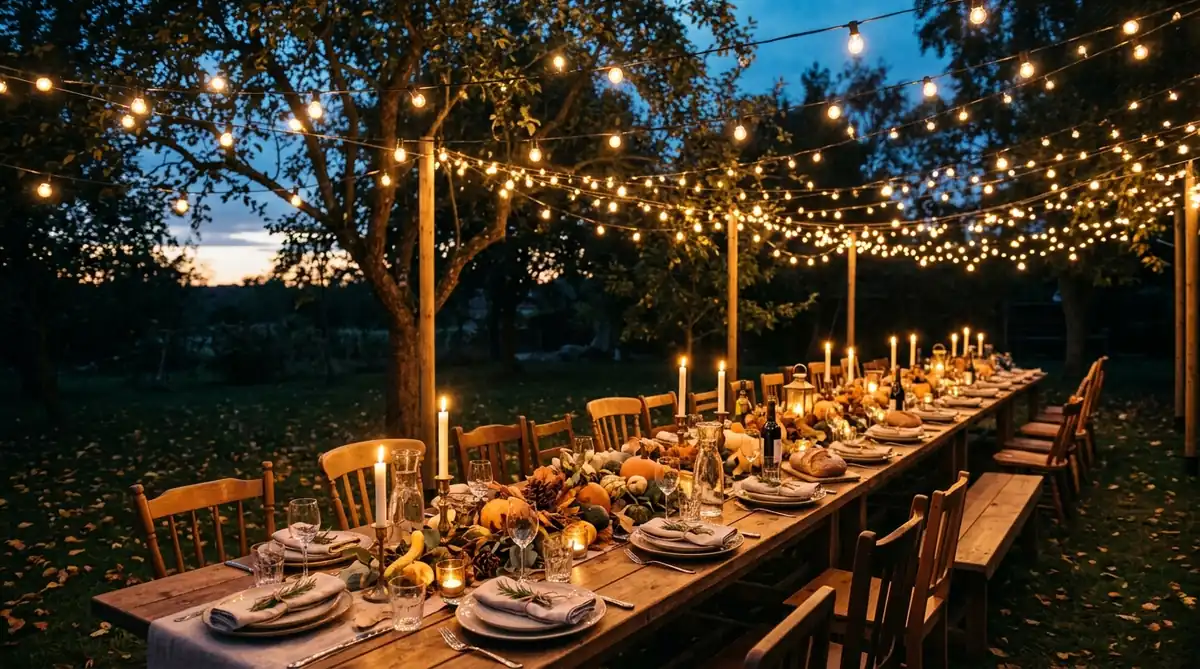
Once the sun drops, overhead light is what turns dinner into an occasion. Run two or three strands of festoon lights above the table, anchored to a tree, fence or wall, crossed for even coverage. Warm-white bulbs flatter food and faces far better than blue-white ones. This canopy becomes the ceiling of your outdoor room — and later, the thing everyone photographs.
5. Put a Warm Throw on Every Chair
Plan warmth as part of the place setting. Drape a folded throw or wool blanket over the back of every chair before guests sit down, so nobody has to ask, or shiver politely. Mismatched is fine — it reads as generous, not unprepared. As the temperature falls, the blankets migrate to laps and shoulders, and the meal stretches an hour longer.
6. Serve From a Side Station, Not the Table
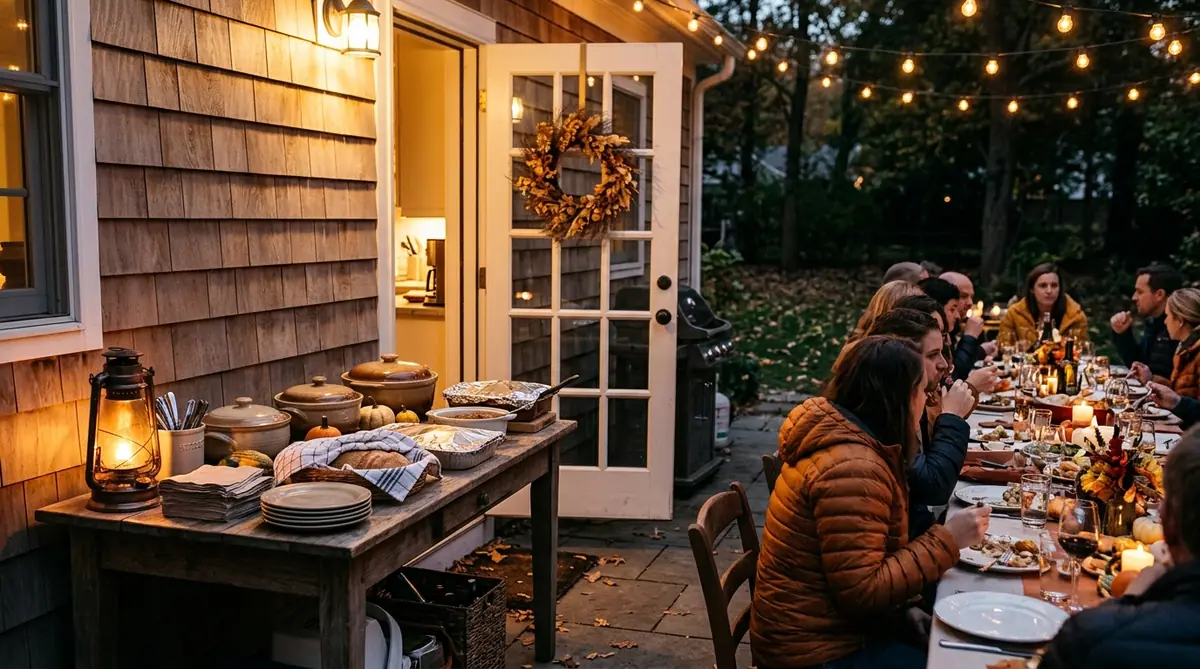
Keep the dining table for people and put the food on a separate side table, potting bench or folding table near the kitchen door. It keeps hot dishes out of elbow range, gives the carver room to work, and shortens every trip for refills. Dress it simply — a cloth, one lantern, the water jug — and let guests circulate.
7. Preheat the Serving Dishes
Ceramic and glass serving dishes steal heat from food the moment it lands. Warm them first — in a low oven or a few minutes near the fire — then cover each dish with a lid or clean tea towel for the walk outside — a two-minute habit that buys twenty minutes of properly hot food.
8. Bring Food Out in Small, Hot Batches
Do not carry the whole feast out at once. Serve family-style in smaller batches — half the potatoes now, the rest reheating while you eat — so nothing sits cooling in the autumn air. Keep the next round in a low oven and swap dishes as they empty. Food stays steaming, the table never resembles a buffet queue, and seconds arrive hot.
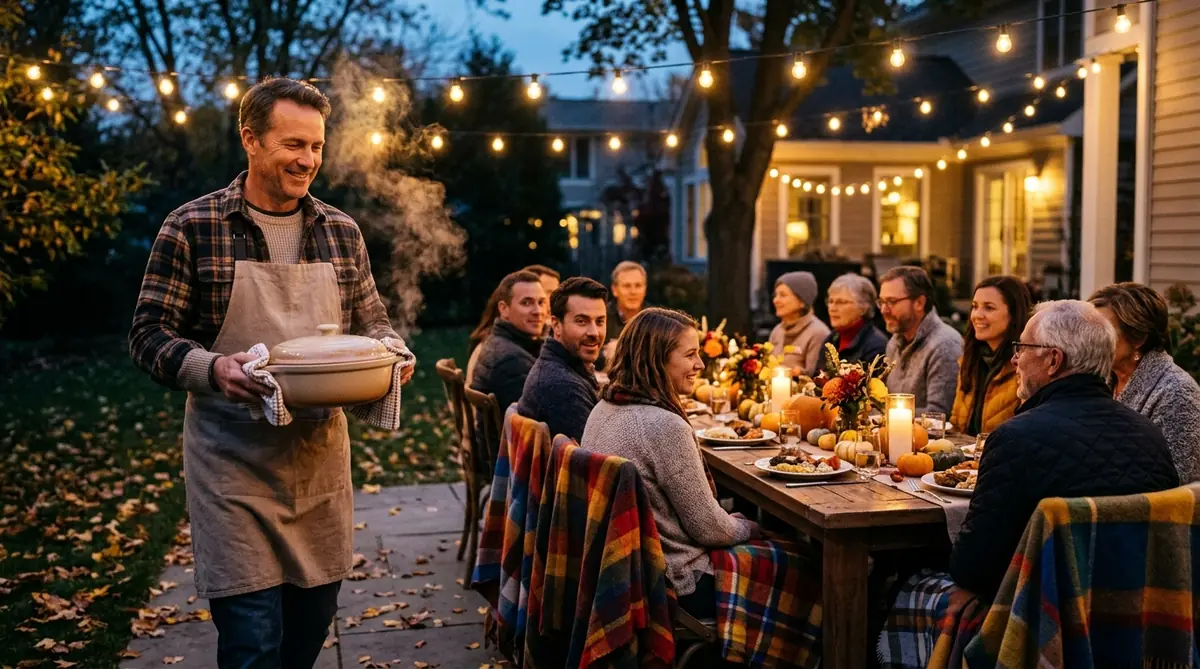
9. Anchor Every Place Setting
Lightweight napkins are the first casualties of any breeze. Anchor each setting: a proper charger or heavy plate resting over the napkin, cutlery with some heft, and glasses filled early so they sit steady. Skip paper decorations and anything tall or top-heavy. When every setting has weight, the table reads calm even when the wind picks up mid-meal.
10. Put the Heat Where the People Are
Place the heat where the people are, not where it looks pretty. Angle a patio heater across the table from just behind the seating, rather than blasting one end. A fire pit works at the table’s flank — close enough for warmth and glow, far enough that smoke drifts away from plates. Test the smoke’s direction before guests arrive, and move seats, not hopes.
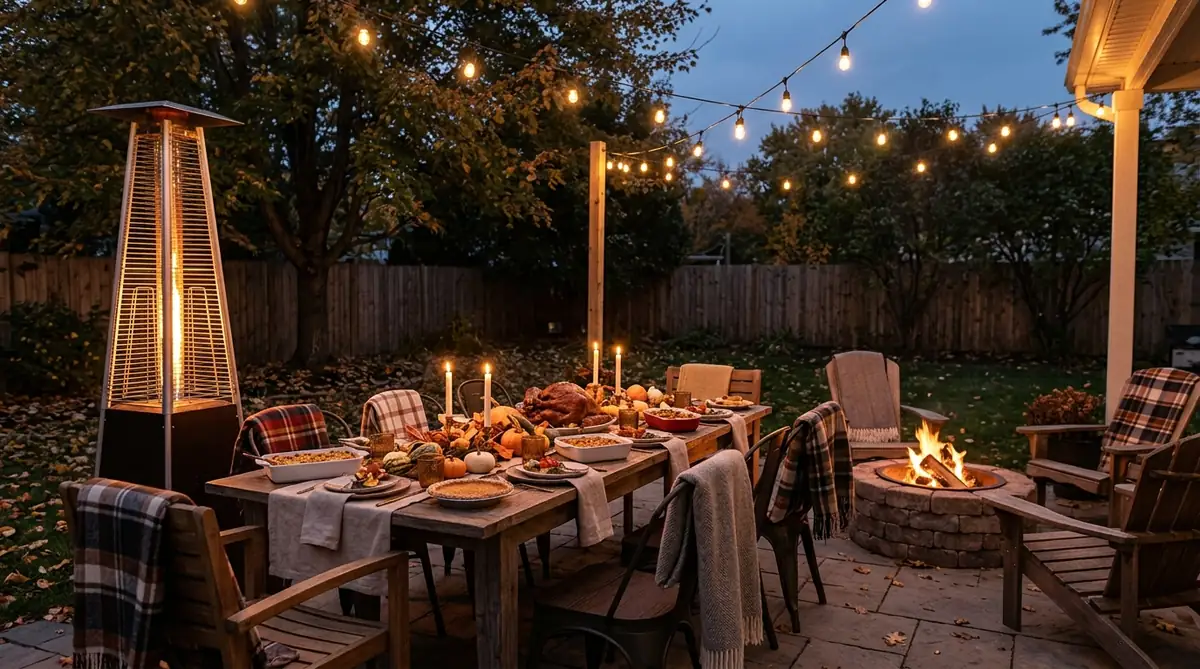
11. Run a Self-Serve Hot Drinks Station
A self-serve hot drinks station is outdoor insurance. Set an urn or big thermos of coffee, tea or mulled cider on the side table with real mugs, so guests can warm their hands when the chill creeps in. It takes pressure off the host and gives anyone who feels cold a reason to stay put rather than retreat indoors.
12. Keep Late-Season Bugs Bored
Late autumn helps you — most insects have retired for the year — but a warm afternoon can still bring flies to the food. A small fan moving air across the serving station discourages them far better than sprays near plates. Keep citronella candles at the perimeter, away from dishes, lit half an hour before you sit down. Covers over waiting dishes finish the defence.
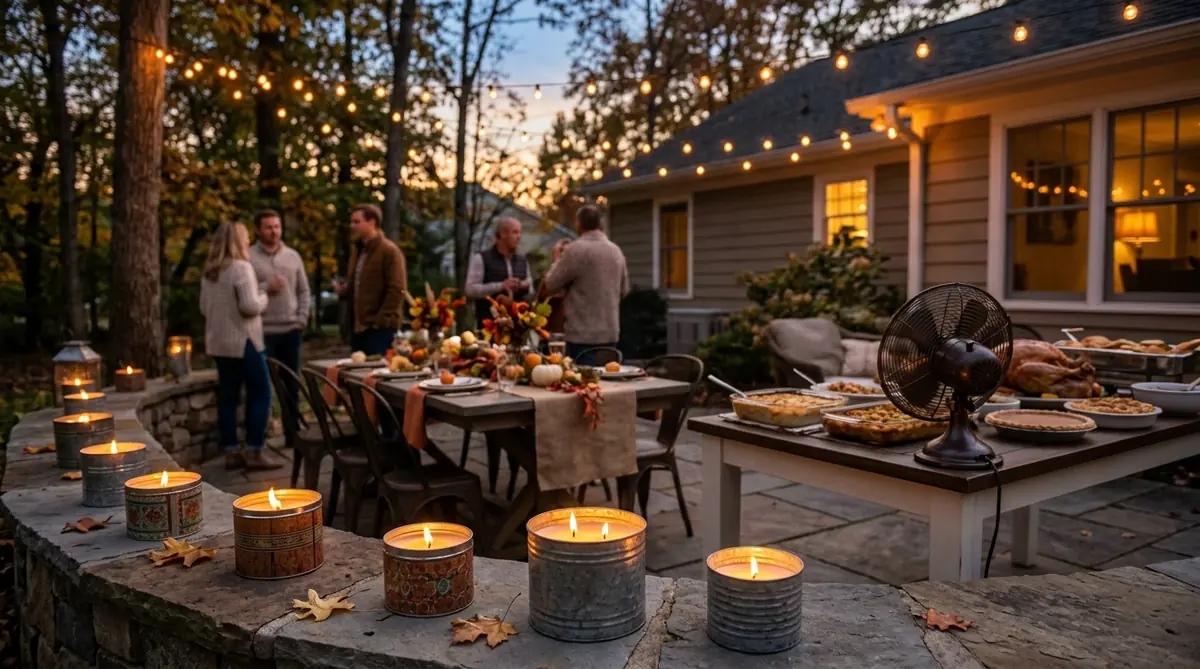
13. Match the Table to the Ground
Match the setup to the surface. On a deck or patio, any sturdy table works; on lawn, check every leg for wobble and slip a flat board or tile under any leg that sinks. A dining-height table is kinder across a long meal than low picnic style, which charms for twenty minutes and punishes by dessert. Walk the kitchen-to-table route once, tray in hand, beforehand.
14. Time Dinner to Golden Hour
Schedule the meal backwards from sunset. Aim to sit down about an hour before it, so the first course happens in low golden light that flatters any backyard Thanksgiving table, and dessert lands under the string lights. Starting “whenever the turkey is ready” wastes the best free decoration you have.
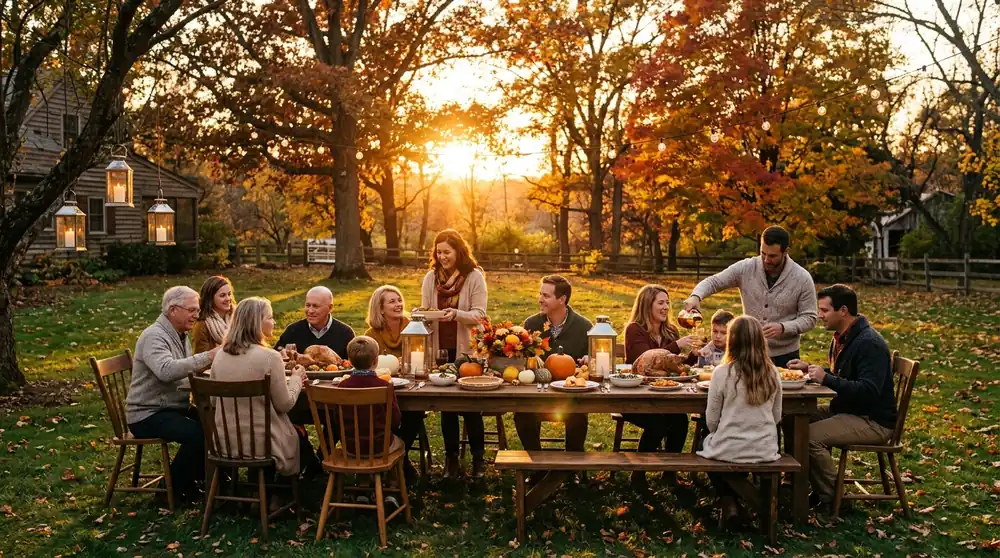
15. Tell Guests the Layer Plan
Tell guests the plan, kindly and early: “We’re eating outside — bring a warm layer for after dark.” People dress for the event you describe; a warned guest in a good coat is happier than a surprised one in a thin blouse. Keep spare wraps by the door for anyone who forgets. Nobody enjoys guessing wrong about the weather.
16. Decide Your Weather Trigger Point Now
Decide your Plan B trigger before the day, not in a panic during it. Pick your numbers — say, rain, a sharp wind, or a temperature that keeps sliding past comfort — and know exactly what moves indoors. Most years you will never use it — but having the line drawn lets you commit fully, without a background hum of doubt.
Match the Fix to the Forecast
| Challenge | What to Choose | Why It Works |
|---|---|---|
| Wind | Lanterns, weighted centrepieces, heavy chargers | Enclosed flames survive gusts, and weight keeps every setting put |
| Cold guests | Throws on chairs, a heater at the table’s edge | Warmth at the seat stretches the meal by an hour |
| Fading light | Festoon lights overhead, battery lanterns on the table | Light where faces are makes dusk feel planned, not accidental |
| Bugs | A fan over the serving station, citronella at the perimeter | Moving air deters flies without sprays near the food |
| Uneven ground | A rug under the table, boards beneath sinking legs | A level, defined floor stops wobbles, sinking and trips |
Old Rules That Stay Indoors
| Old Rule | What Works Better Now |
|---|---|
| Dinner must be indoors | The meal follows the best light and the freshest air |
| Candles belong everywhere | Flames belong behind glass, where the wind cannot reach them |
| One long table or nothing | Two smaller tables beat one that nobody can reach across |
| Guests should dress up | Guests should dress for dusk; layers are the dress code |
Hosted, Not Camping
The outdoors supplies the wild half: cool air, rustling trees, a sky that changes colour through the meal. Your half is deliberate comfort — real plates, a hot drink within reach, chairs with backs, light you can see your food by. Unmistakably hosted comforts make the rough edges read as charm. Skip them, and the same setting reads as an expedition. Guests should feel looked after, not hardy.
Let the Lights Do the Showing Off
Every table gets one hero, and outside after sunset it is the light. Keep the centrepiece low, the colours quiet, and let the canopy of festoon lights and the ring of lanterns carry the drama. Against calm surroundings, that glow looks intentional and generous. Tall arrangements and glitter only break the spell; the dark garden beyond is decorating for you.
When the Setup Starts Feeling Like Hard Work
- If heating the whole garden feels like too much, try heating just the seating zone instead.
- If a full light canopy feels like too much, try a single strand of festoon lights over the table instead.
- If a blanket for every guest feels like too much, try one blanket basket by the table and let guests help themselves instead.
- If serving every course outside feels like too much, try the main course outside and dessert indoors by the fire instead.
- If a formal outdoor setup feels like too much, try just the rug, the lights and one low centrepiece instead.
Your Repeatable Outdoor Thanksgiving Table Formula
Anchor + weight + glow + warmth. Anchor the space with a rug, weight everything the wind can move, add glow overhead and on the table, and put warmth on every seat. A patio Thanksgiving dinner built on those four words survives most autumn weather.
| Situation/Occasion | Formula | Why It Works |
|---|---|---|
| Small patio | Rug, one table, one light strand, throws | All four elements still fit; small just means cosier |
| Big lawn | Two tables, a serving station, canopy on poles | Stations break a wide space into hosted rooms |
| Chilly evening | Heater at the edge, hot drinks first, earlier start | Warmth and timing beat bravado every time |
| Warm-climate Thanksgiving | Shade while setting up, fan on the food, lights for later | The same formula with the problems reversed |
| Rental garden | Battery lights, nothing fixed down, everything freestanding | Nothing screwed in and nothing left behind |
The Version With Almost No Effort
Strip it back to four things: one sturdy table on the flattest spot you have, the rug if the ground is soft, one strand of lights overhead, and a throw per chair. Serve family-style from a single side table, light whatever lanterns you own, and sit down at golden hour. Of all fall outdoor table ideas, this is the one to memorise — everything beyond it is decoration on a sound idea.
Questions Every First-Time Outdoor Host Asks
What temperature is too cold for an outdoor Thanksgiving?
Most people stay comfortable into the mid-50s Fahrenheit (around 12–14°C) with layers, throws and a heat source nearby; below that, eating slows and food cools fast. Judge by your guests, not the forecast alone.
How do I keep food warm outside?
Warm the serving dishes first, cover everything for the walk out, and serve in smaller batches swapped from a low oven. Lidded dishes and a serving station close to the kitchen door cut the cooling time to almost nothing.
What lighting works without outdoor sockets?
Battery and solar lanterns can carry the table itself, and LED festoon strands draw little enough power to run from one extension lead indoors. Candles in lanterns supply the flicker; battery lights do the real work.
How do I stop napkins and decor blowing away?
Give everything weight: chargers resting over napkins, heavy glasses filled early, low solid centrepieces, and nothing tall, paper or top-heavy anywhere on the table. If it can flutter, it eventually will — anchor it, enclose it, or leave it inside.
What is the rain plan without ruining the day?
Decide in advance what moves inside and how that table will look, then stop worrying. A covered porch, an open-doored garage or a quick dining-room reset all work — guests take their cue from a calm host.
One Cool Evening, Done Properly
An outdoor Thanksgiving is not a braver version of dinner; it is a better-located one, and a handful of practical decisions is all that stands between the idea and the day. This week, do one small thing: string up your lights after dark and count your blankets. If both pass, your table is already half planned.