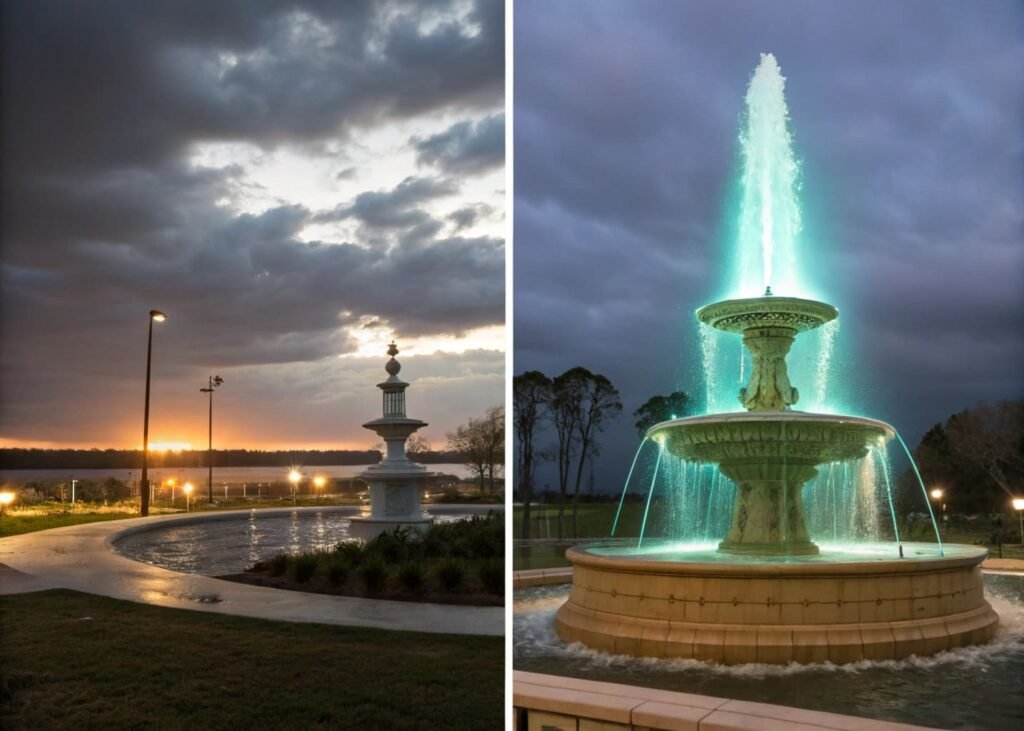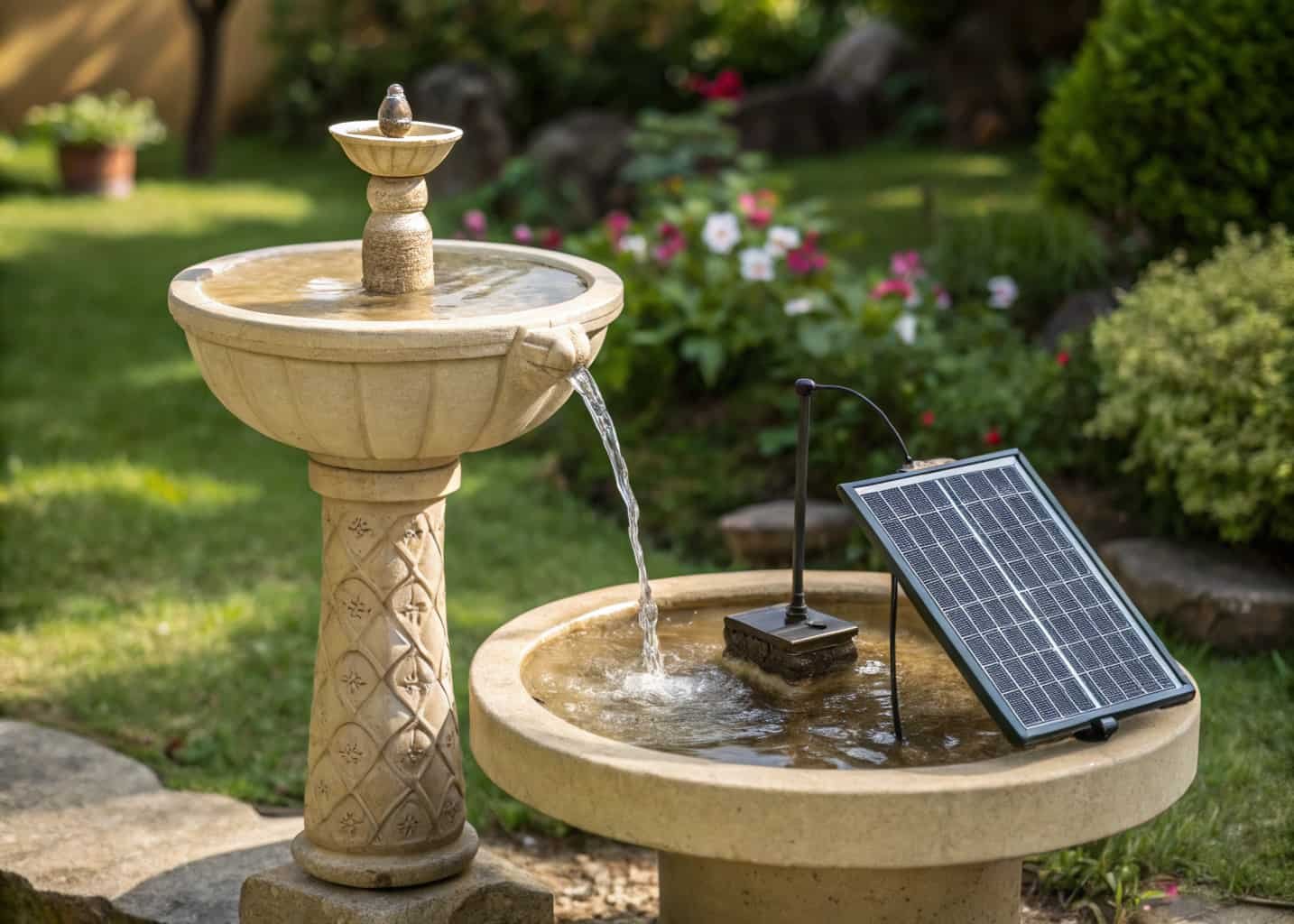
I built my first Solar-Powered Outdoor Water Fountain out of a ceramic pot, a $19 pump, and a leftover 6V panel from a broken garden light. It ran for about four hours a day and died in three weeks because I skipped the one part everyone skips — matching the pump’s wattage to the panel’s actual output, not its “rated” output. That mistake alone cost me two pumps before I figured out what was actually going on. This guide covers what I wish someone had told me before I started.
1. Why Choose a Solar Water Fountain?
The honest answer is running cost, not romance. A typical 40-watt electric fountain pump left on 8 hours a day pulls roughly 320 watt-hours daily — at a US average of about $0.16/kWh, that’s a little over $18 a year, which sounds trivial until you add the cost of an outdoor-rated extension cord, a GFCI outlet if you don’t already have one nearby, and the fact that most municipal codes want buried electrical lines at 18 inches or deeper for anything permanent. A solar setup skips all of that. The trade-off is that solar fountains are weather-dependent — on a cloudy day your water flow visibly drops, and that’s not a defect; it’s physics.
2. How Solar Fountains Work
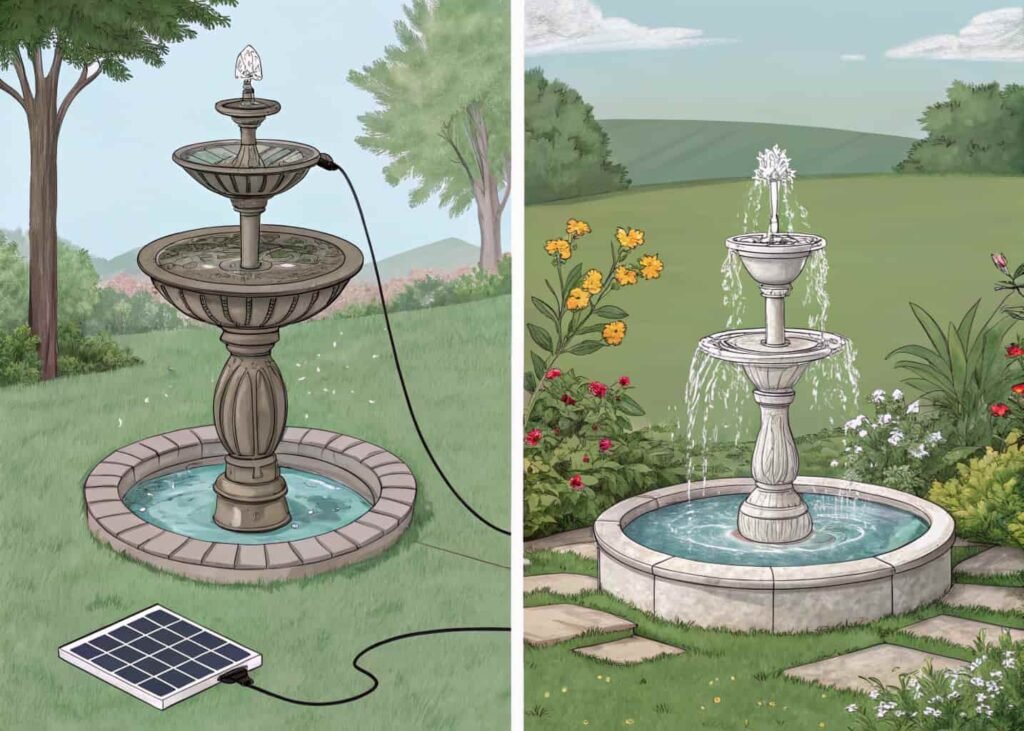
There are two designs, and knowing the difference saves you money. “Direct-drive” fountains wire the pump straight to the panel with no battery — the pump only runs when the sun hits the panel, and flow rate rises and falls with cloud cover in real time. “Battery-backed” fountains store charge in a small battery pack (usually 3.7V–12V lithium) through a charge controller, so the pump can keep running at dusk or on overcast days. Direct-drive is cheaper and simpler — it’s what most people should start with. Battery-backed adds $15–$40 and one more failure point (the charge controller), but gives you a fountain that doesn’t just stop mid-afternoon when a cloud rolls over.
3. Materials and Solar Components Needed
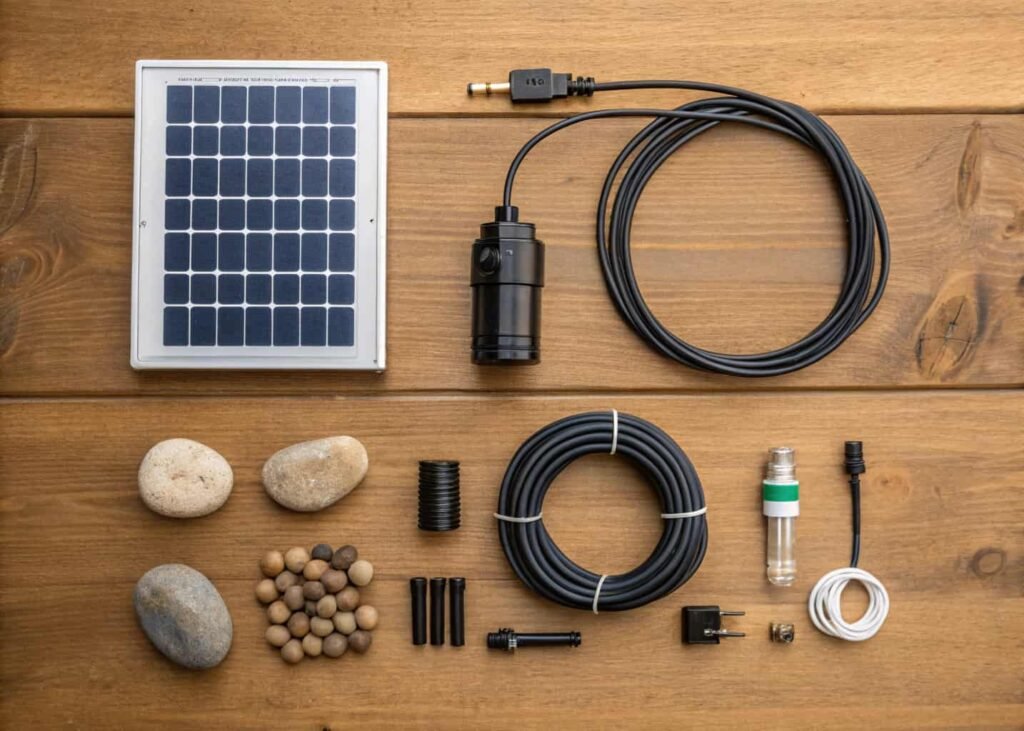
For a basic tabletop or small basin fountain, here’s what actually goes on the shopping list:
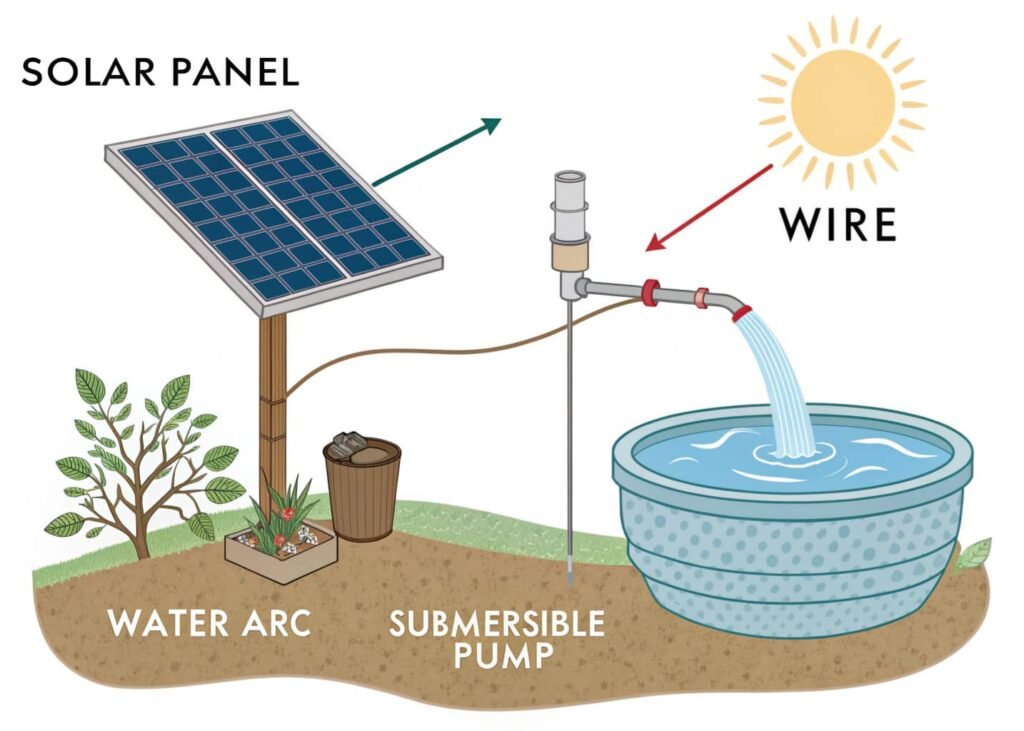
- A submersible solar fountain pump (100–800 GPH depending on basin size)
- A matching solar panel — polycrystalline is fine and cheaper; monocrystalline is 15–20% more efficient per square inch if you’re panel-space-limited
- A basin or reservoir — glazed ceramic, resin, or a repurposed half-barrel all work; unglazed terracotta will wick water out through the walls over time
- Silicone aquarium sealant (100% silicone, not the kitchen-and-bath kind with additives — those can leach into water)
- Outdoor-rated wire connectors or heat-shrink butt connectors, not wire nuts
- Optional: a small lithium battery pack and MPPT-style charge controller if you want dusk operation
- Decorative stone, river rock, or a pump cover to hide the mechanics
Skip the big-box “fountain kits” that bundle a fixed panel-pump pair — they’re often mismatched, with a panel that under-delivers on cloudy days and no way to size up the pump later.
4. Choosing the Right Solar Panel and Pump
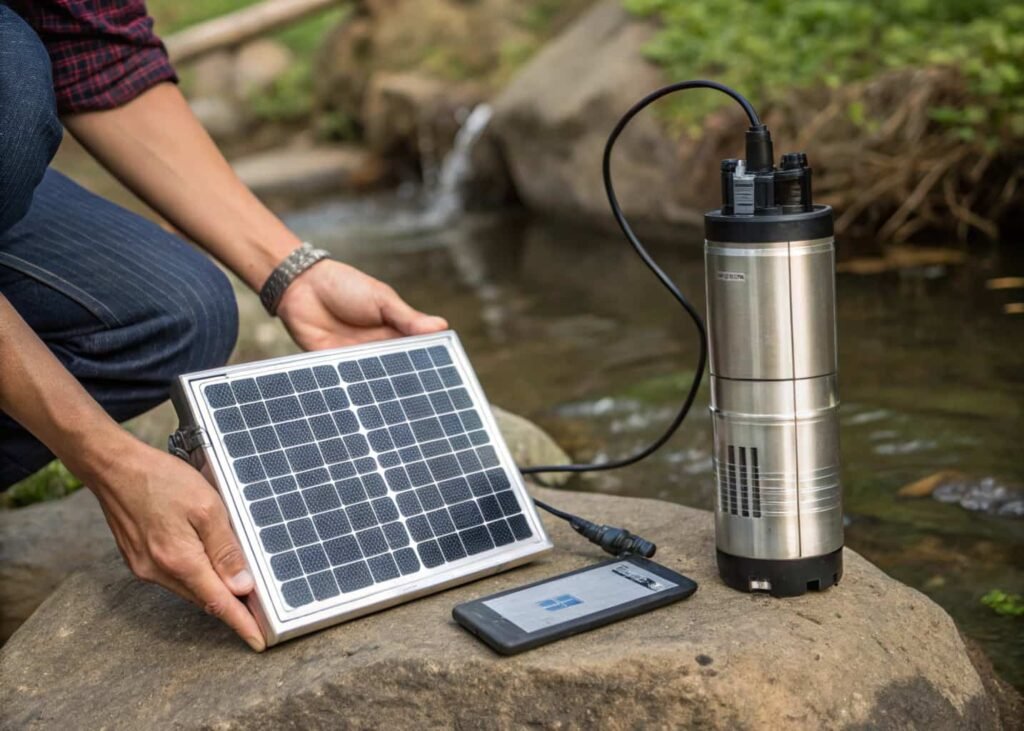
This is where most first-time builds go wrong, so here’s the actual math. Submersible pumps are rated in GPH (gallons per hour) at zero head height, but that number drops fast as you add vertical lift — a pump rated for 400 GPH at 0 inches might only move 150 GPH at 24 inches of lift. Check the pump’s flow curve, not just the headline number. Then match wattage: a pump drawing 5W needs a panel rated for at least 6–8W to account for real-world inefficiency (panels rarely hit their rated output outdoors — expect 70–85% of the sticker number on a clear day, less in haze or at low sun angles). If you’re building anything with a vertical jet over 12 inches, size up to a 10W+ panel and a pump in the 300+ GPH range, or you’ll get a weak dribble instead of a real spray.
5. Best Location for Maximum Sunlight
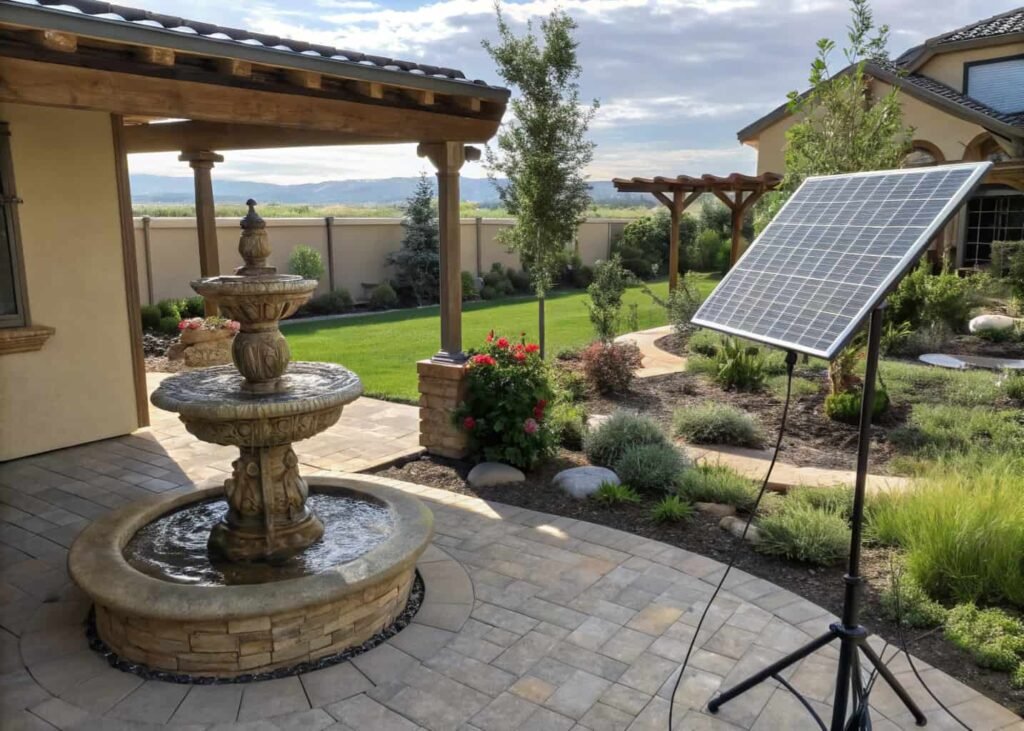
South-facing placement (north-facing if you’re in the Southern Hemisphere) with 6+ hours of direct sun is the baseline, but the panel and the fountain don’t have to be in the same spot. Many people assume the panel must sit right next to the basin — it doesn’t. Most kits include a 6–10 foot cable, so you can tuck the fountain itself in a shadier, more visible garden bed and mount the panel separately on a stake or fence post that actually gets sun. This single trick solves 90% of “my solar fountain barely runs” complaints, because people build the fountain in the pretty spot instead of the sunny spot.
6. Step-by-Step Assembly Instructions
- Prep the basin. Clean it, and if it’s porous (unsealed ceramic, concrete), apply a food-safe sealant or a pond liner to stop water loss.
- Set the pump. Place it on a small platform or brick riser near the center-back of the basin so the outlet sits just below your intended waterline.
- Drill or route the cable path. If the basin has a rim, drill a hole slightly larger than the cable and feed it through, then seal around it with silicone.
- Attach the spout or nozzle. Test different nozzle attachments before permanently mounting anything — flow patterns vary a lot between a bell jet, a bubbler, and an open tube.
- Fill the basin with water before powering on. Never run a submersible pump dry, even briefly — it burns out the impeller seal in seconds.
- Position the panel and test. Run it for 15–20 minutes in full sun and watch for weak flow or air in the line before you finalize placement.
- Add rocks or cover material around the pump to hide it, leaving the intake unobstructed.
7. Connecting the Pump to the Solar Panel
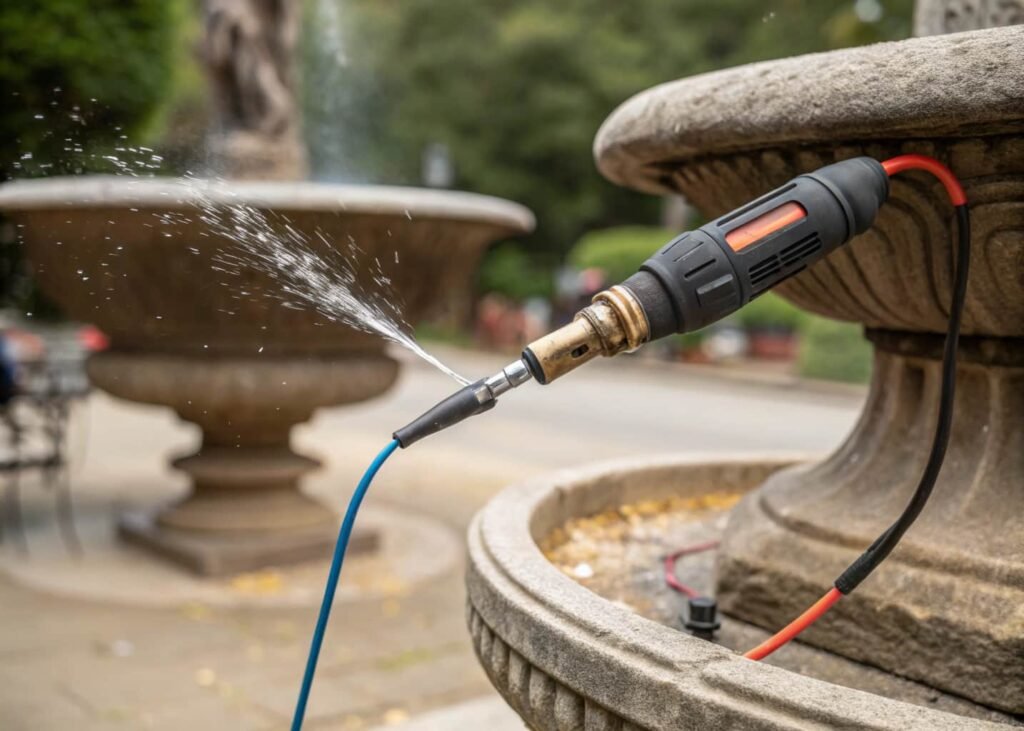
Most small fountain pumps come with a barrel connector or a simple 2-wire terminal — match polarity carefully, since reversing it on a DC pump usually won’t damage it but it also won’t run. If you’re hardwiring instead of using a plug connector, use heat-shrink butt splices, not twist-on wire nuts, which corrode outdoors within a season. Route the cable so it never sits in standing water at any point along its length, even if it’s “waterproof” rated — most outdoor cable ratings (IP44 or IP65) mean splash-resistant, not submersion-safe. Leave a small drip loop in the cable before it enters any electrical component so water runs off instead of tracking down into the connector.
8. Adding a Battery Backup (Optional)
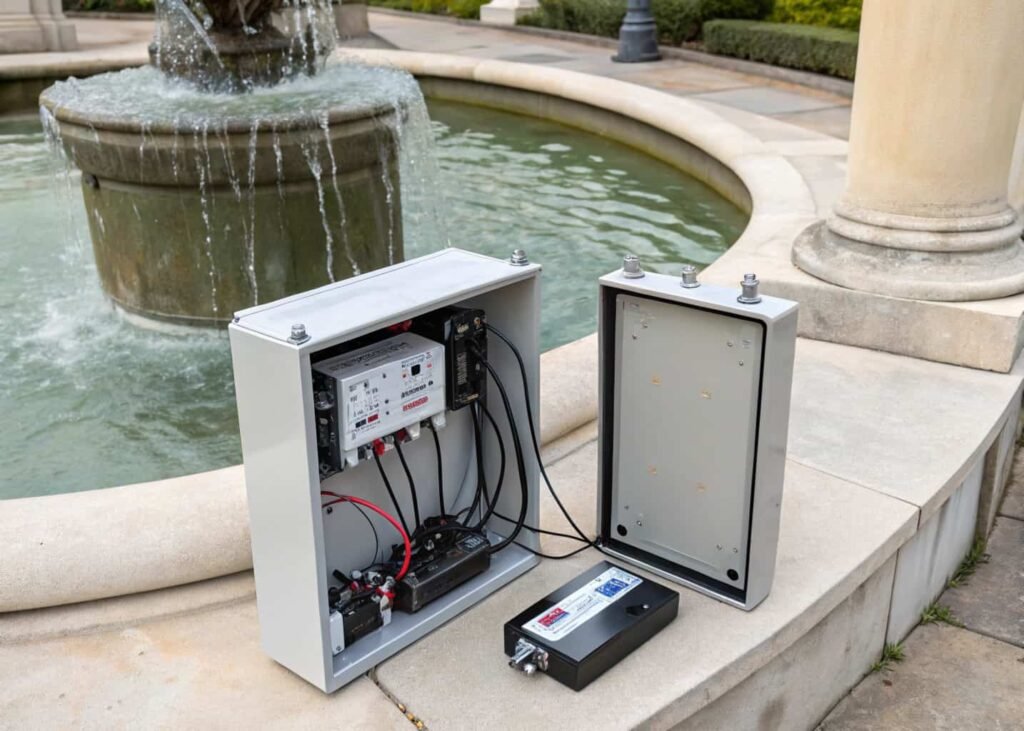
A battery backup isn’t necessary, but if you want the fountain running into early evening or on a heavily overcast morning, a small lithium pack (often 2–4 x 18650 cells, giving roughly 3.7V–7.4V at 2000–3000mAh) wired through a basic solar charge controller will do it. Budget $20–$35 for a decent controller-and-battery combo. The trade-off: batteries in an outdoor enclosure need a vented but weatherproof box, and lithium cells shouldn’t be left to freeze repeatedly — if you’re in a climate with hard winters, plan to pull the battery indoors for the off-season rather than leaving it in the housing year-round.
9. Weatherproofing Your Fountain
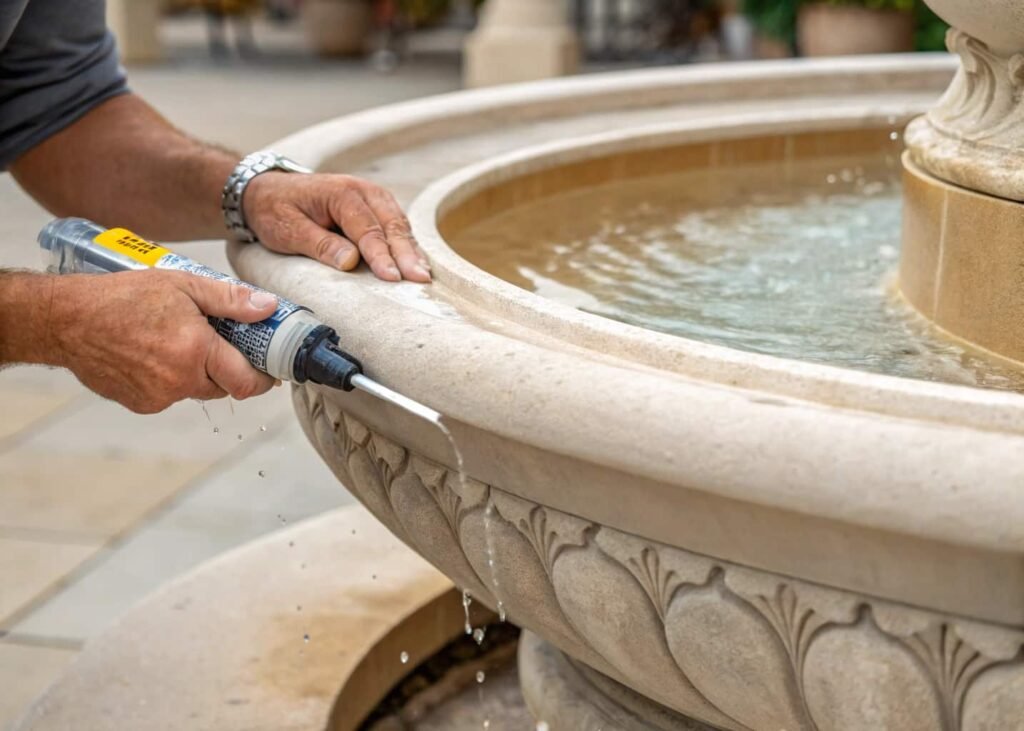
Silicone sealant is your main tool here, but it’s not permanent — expect to redo seams every 1–2 years as UV exposure breaks it down. For electrical connections, dielectric grease packed into connector housings before sealing adds real protection against corrosion, not just water intrusion. The part people miss: ceramic and concrete basins can crack over winter if water is left inside and freezes, because ice expands. If you’re not draining the fountain for winter, either use a resin/plastic basin (which flexes slightly) or install a small basin de-icer — but that reintroduces an electrical component that needs its own weatherproofing, so weigh whether it’s worth it versus just draining and storing the fountain November through March.
10. Common Solar Fountain Problems and Fixes
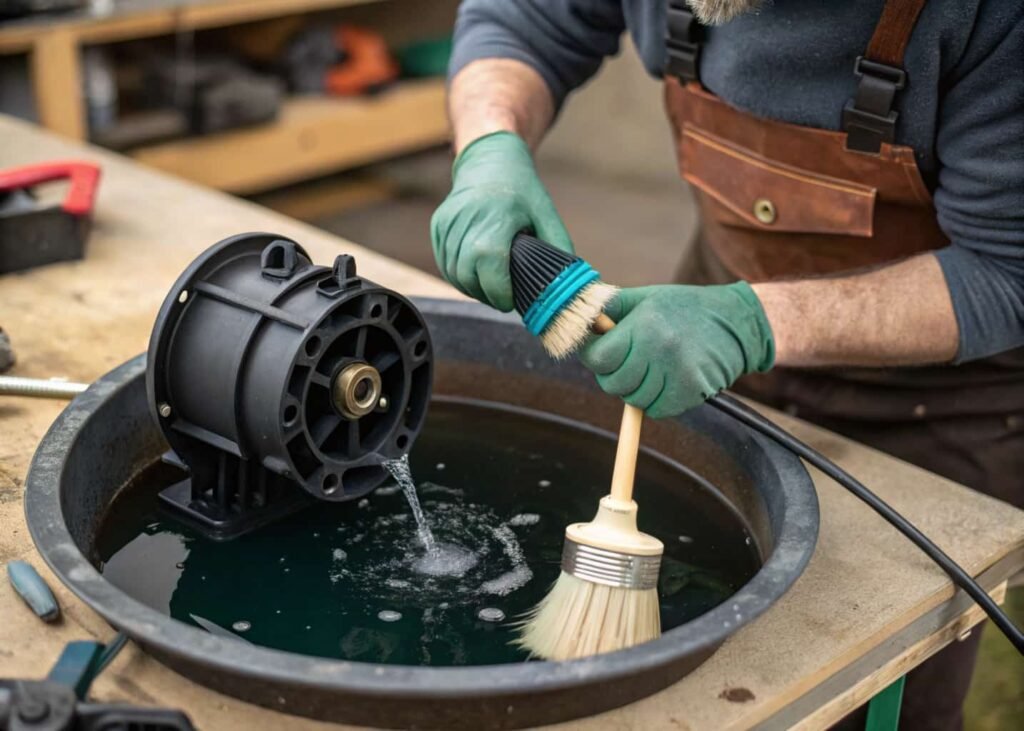
Pump runs but barely any water comes out — usually a partially clogged intake screen or air trapped in the line; unplug, submerge fully, and gently tilt to release air bubbles. Fountain stops the moment a cloud passes — normal for direct-drive systems with no battery; this isn’t a fault, it’s how they’re designed. Panel gets full sun but pump won’t start — check polarity first, then test the panel’s actual voltage output with a multimeter against its rated spec; a lot of “dead” panels are just underperforming due to a hazy coating or a loose connector, not full failure. Green or cloudy water — algae from stagnant nutrients; adding a handful of aquarium-safe barley straw extract or doing a full basin scrub every 2–3 weeks in summer keeps it clear without chemicals that could damage the pump seals. Pump hums but doesn’t spin — almost always debris caught in the impeller; these pumps are cheap to disassemble, so open the housing and clear it rather than replacing the whole unit.
11. Maintenance Tips for Solar Fountains
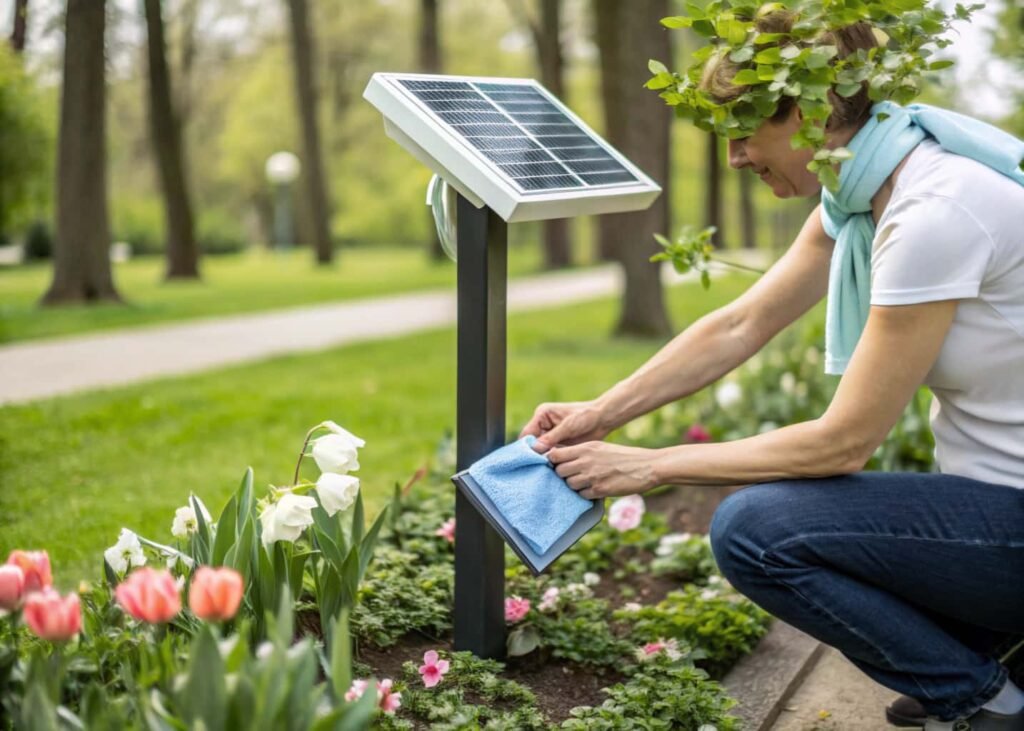
Wipe the solar panel down every 2–3 weeks — a thin layer of dust or pollen can cut output by 10–25%, which is often the real reason a fountain seems “weaker” than when it was new. Rinse the pump intake monthly during pollen-heavy or leaf-drop seasons. Top off water weekly in summer since evaporation is faster than people expect, especially with any kind of spray jet rather than a still bubbler. If you’re in a hard water area, a light vinegar-water soak on the pump housing every few months prevents mineral scale from building up on the impeller, which is one of the more common causes of early pump failure that has nothing to do with the solar side at all.
12. Cost Comparison: Solar vs Electric Fountains
| Solar Fountain | Electric Fountain | |
|---|---|---|
| Upfront cost | $35–$120 (basic to mid-range kit) | $40–$150 (pump + basin, similar range) |
| Installation | No wiring to outlets, no trenching | May need outdoor GFCI outlet or buried line ($150–$400 if hiring an electrician) |
| Running cost | $0 | ~$15–$25/year for an 8-hour daily run |
| Reliability | Flow varies with weather; no run at night without battery | Consistent flow regardless of weather, runs any time |
| Best for | Spots without nearby power, eco-focused setups, renters | Fountains near patios/decks with existing power, year-round consistent flow needs |
If you already have an outdoor outlet within 20 feet and want a fountain that runs the same every single evening regardless of cloud cover, electric is genuinely the better choice — solar is not strictly superior, it’s a different trade-off. Solar wins clearly when you’re placing a fountain somewhere without easy power access, like a side yard or a far corner of a larger garden.