Christmas decor inspiration tends to look beautiful, expensive, and identical — imported ornaments, styled shelves, and the feeling that anything homemade looks like a school project by comparison.
You do not need stricter rules or a bigger budget — you need the right examples: classics that work, year after year, in real homes.
The secret is borrowing. A homemade decoration rarely succeeds because the whole project was copied perfectly — it succeeds through one useful detail: a finish, a material, a display trick.
The 10 projects below are the icons of the homemade Christmas — ordinary supplies, forgiving steps, one afternoon each.
What Makes a DIY Project Worth Your Afternoon?
A project earns its afternoon when it needs only what you already own — paper, flour, jars, scraps — and still looks deliberate when done. No craft-store run, special tools, or talent required.
They also forgive — an uneven fold, a wobbly stamp, a lopsided wreath — because each has one built-in detail carrying the finished look.
Look for at least one of these things:
- Supplies already in a kitchen drawer
- One repeatable step, not ten fiddly ones
- A finish hiding mistakes — paint, pattern, repetition
- Results that group well with pieces you own
- Stores flat or small until next year
Ask “Why does handmade work so well here?” instead of “Where did they buy that?”, and every project gets easier.
Quick Guide to the 10 Icons
| Icon | Best Inspiration For | The Detail Worth Borrowing |
|---|---|---|
| Folded paper stars | Windows and tree branches | Crisp folds, one paper color |
| Paper chain garland | Mantels and doorways | Repeating two or three colors |
| Salt-dough ornaments | Keepsake tree decorations | Smooth dough, clean cut edges |
| Snow-globe jars | Shelves and tabletops | Slow-falling glitter, sealed lid |
| Cinnamon-stick candle wraps | Table centerpieces | Even sticks, plain twine tie |
| Mini wreaths from scrap ribbon | Chairs, knobs, and gifts | One ribbon, repeated everywhere |
| Hand-stamped wrapping paper | Gifts that decorate too | One stamp, one ink color |
| Envelope advent calendar | Walls and hallway strings | Numbered envelopes, mixed paper scraps |
| Painted pinecones | Bowls and mantel displays | Paint only on the tips |
| Orange and clove pomanders | Bowls and hanging ornaments | Even clove patterns, whole fruit |
Folded Paper Stars and the Paper Chain Garland Prove Paper Is Enough
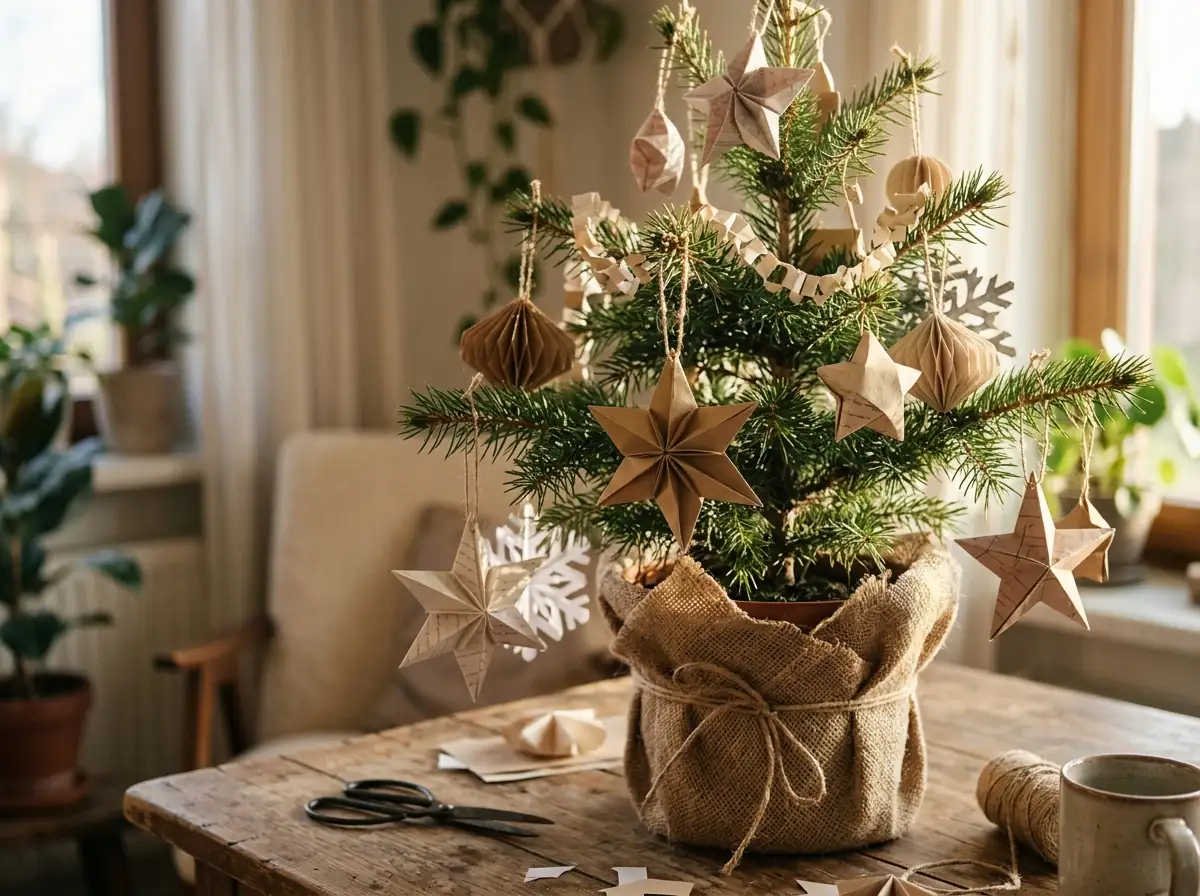
The folded paper star is the purest icon here: a flat sheet becomes a star with sharp, shadow-catching folds. A good one is defined by crisp folds and one paper color, so the shape shows off. Crease firmly, keep points even, make several alike — a matching cluster reads as design, five different ones as leftovers.
Budget note: Plain paper and sharp folds beat pricey patterned sheets every time.
Hang them against daylight, and guests ask about the folding first.
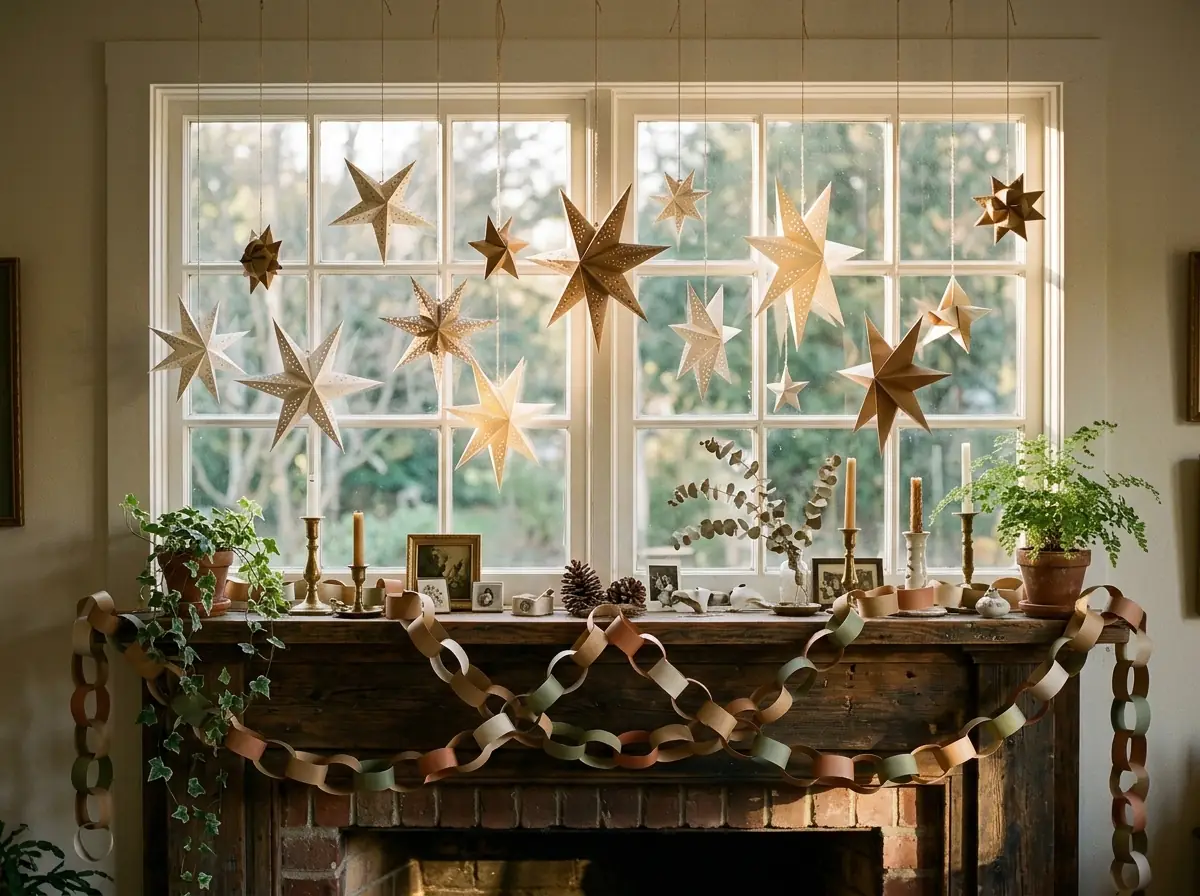
The paper chain garland is the relaxed partner: paper strips looped and linked along a mantel or doorway, defined by rhythm — two or three colors repeating, loops roughly equal. Cut the strips first, agree the order, then loop and glue; imperfections vanish in the repetition, and grandparents and children can share it.
Salt-Dough Ornaments Turn Baking Supplies Into Keepsakes
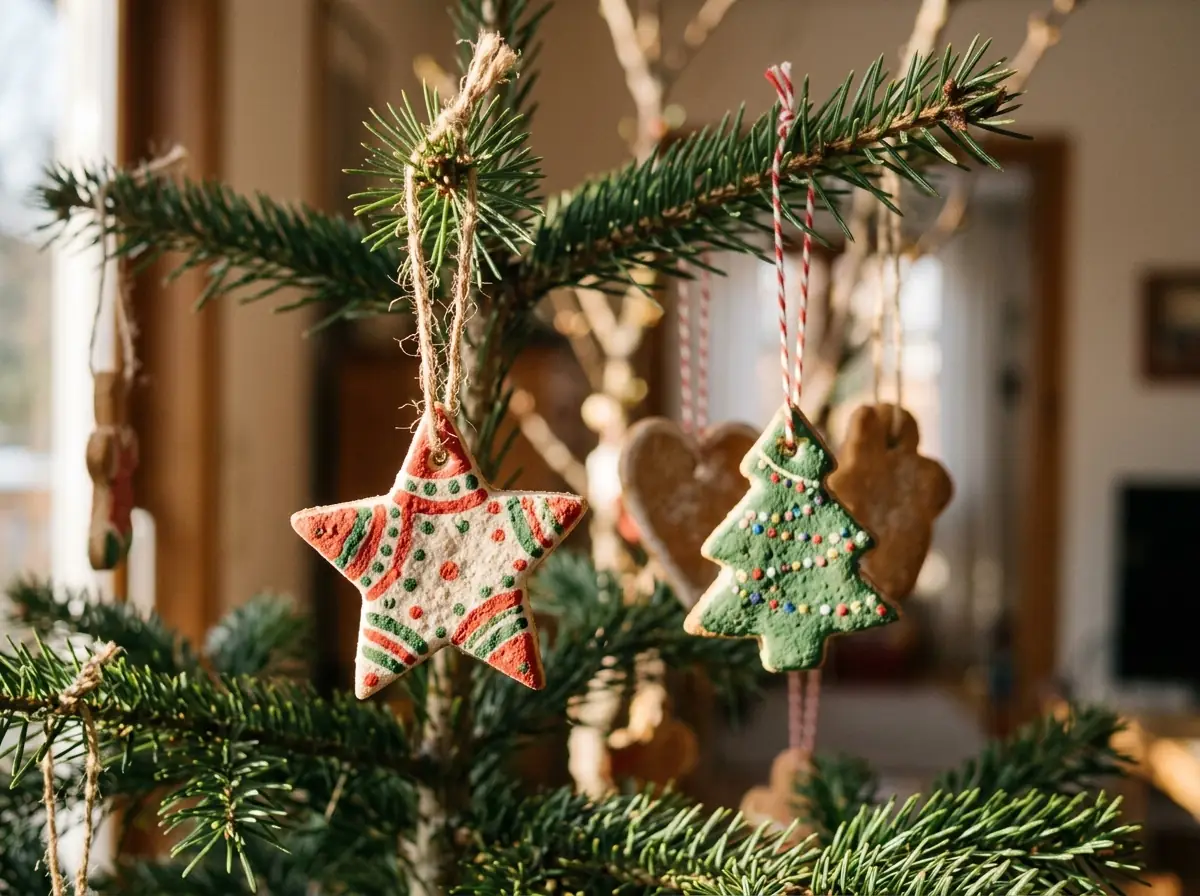
Salt dough — flour, salt, water — rolled and cut like biscuits is the kitchen’s answer to clay. A good ornament is defined by its surface: smooth-rolled dough, clean-cut shapes, the ribbon hole made before baking, never forced afterward.
Treat it like baking: one thickness, simple shapes, a low, slow bake until hard. One coat of white or a soft color looks almost like ceramic.
Start small: Date your first tray on the back of each piece — the dated set becomes the keepsake nobody could have bought.
Snow-Globe Jars Make a Scene Out of a Jam Jar
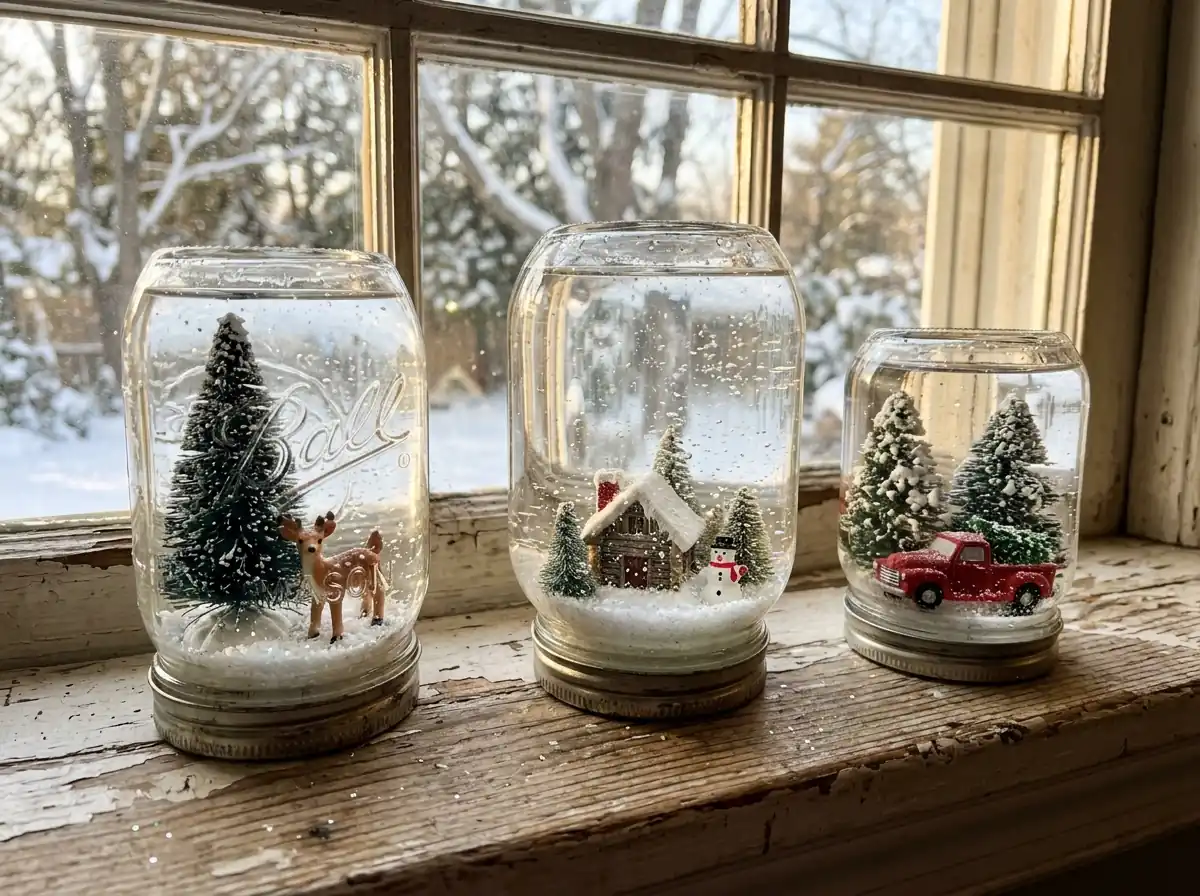
A tiny figure or miniature tree fixed inside a jar’s lid, water, and glitter. A good snow-globe jar is defined by restraint: one scene, glitter that falls slowly, not clouds, and a lid sealed tight.
Fix the figure to the lid; let the glue set before water nears it. Fill nearly full, add less glitter than you think, stand it on its lid — three in a row become a winter village for a jar’s price.
Cinnamon-Stick Candle Wraps and Mini Ribbon Wreaths Dress Up Plain Bases
Cinnamon sticks upright around a plain pillar candle, tied with twine: a good wrap is defined by evenness — similar heights, straight sticks — and repaid in scent as the candle warms the spice. Add sticks one by one, each holding the next up; group two or three.
Color note: Cinnamon is already a rich warm brown — cream candles and natural twine keep it calm.
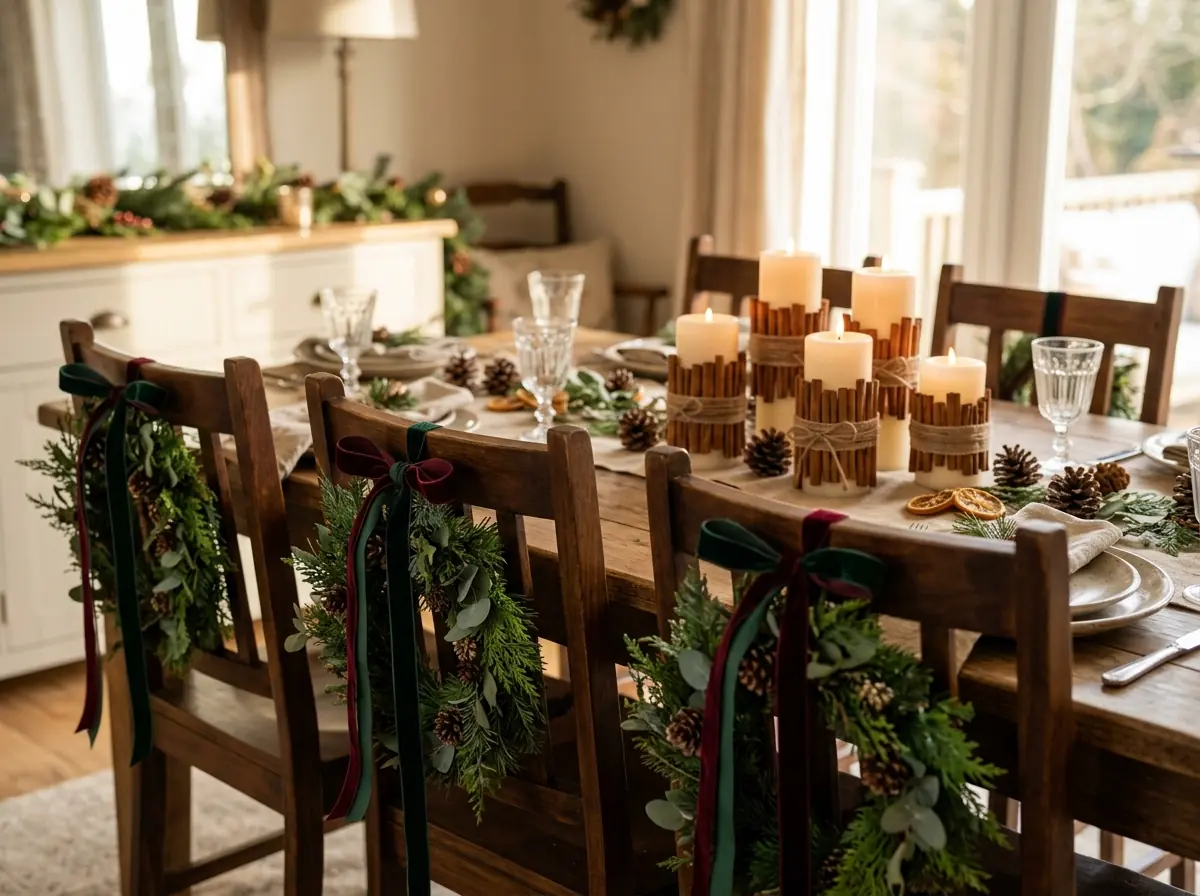
The mini ribbon wreath works the same way, smaller: leftover ribbon tied around a small ring until the base vanishes under a fringe. Its defining detail is commitment — one ribbon, or two matching ones, repeated all the way around; anything less looks like scraps. Tie them to chairs, knobs, or gifts, and leftovers become a scheme.
Hand-Stamped Wrapping Paper Makes the Gifts Part of the Decor
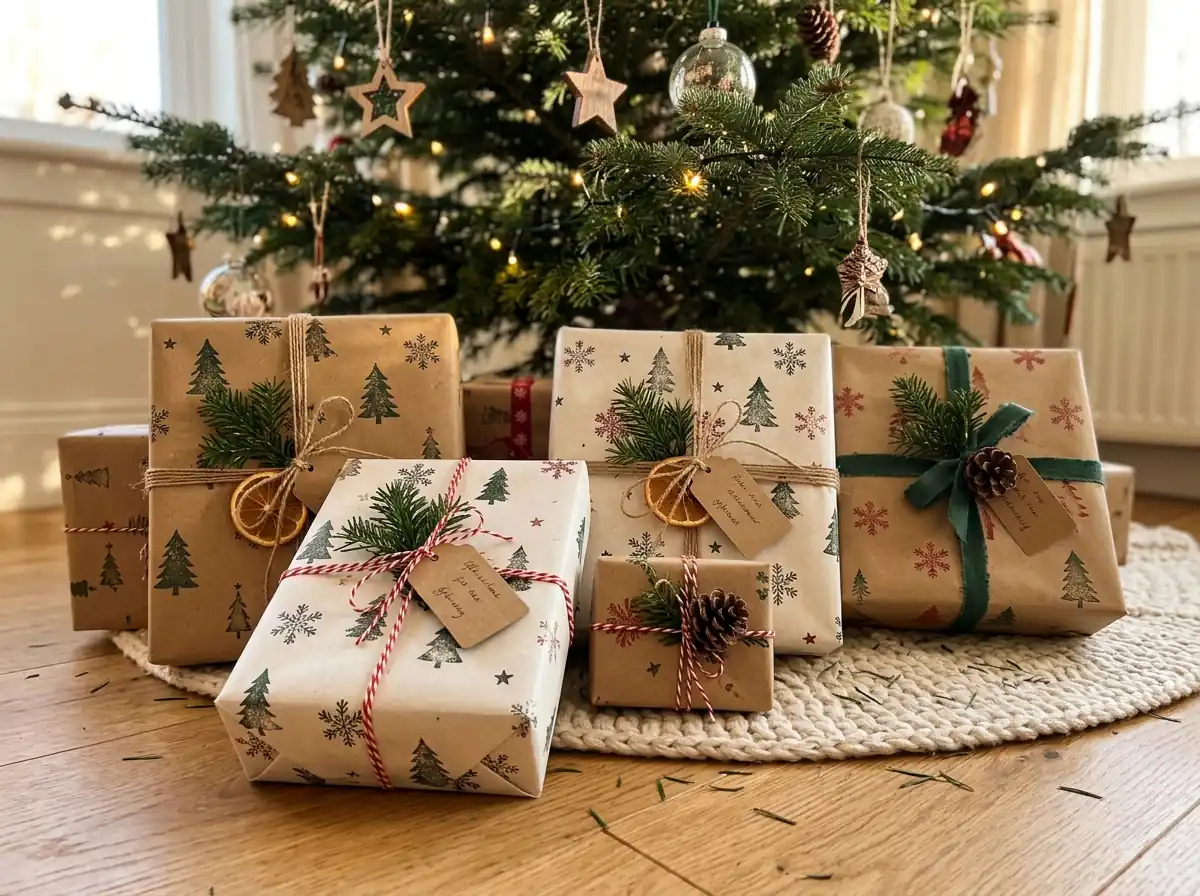
Plain brown or white paper becomes designed with one stamp — a potato print, a carved eraser, a leaf — pressed in rows in a single color. A good roll is defined by rhythm, not perfection: one small shape repeating, evenly spaced, its wobble the point.
Stamp a full sheet before wrapping anything; regular imperfect rows read as pattern, one careful stamp per gift as accident.
Reality check: Some prints will smudge. Use those sheets anyway and tuck the parcels underneath — the pile hides its own flaws for weeks.
An Envelope Advent Calendar Turns the Countdown Into a Wall Display
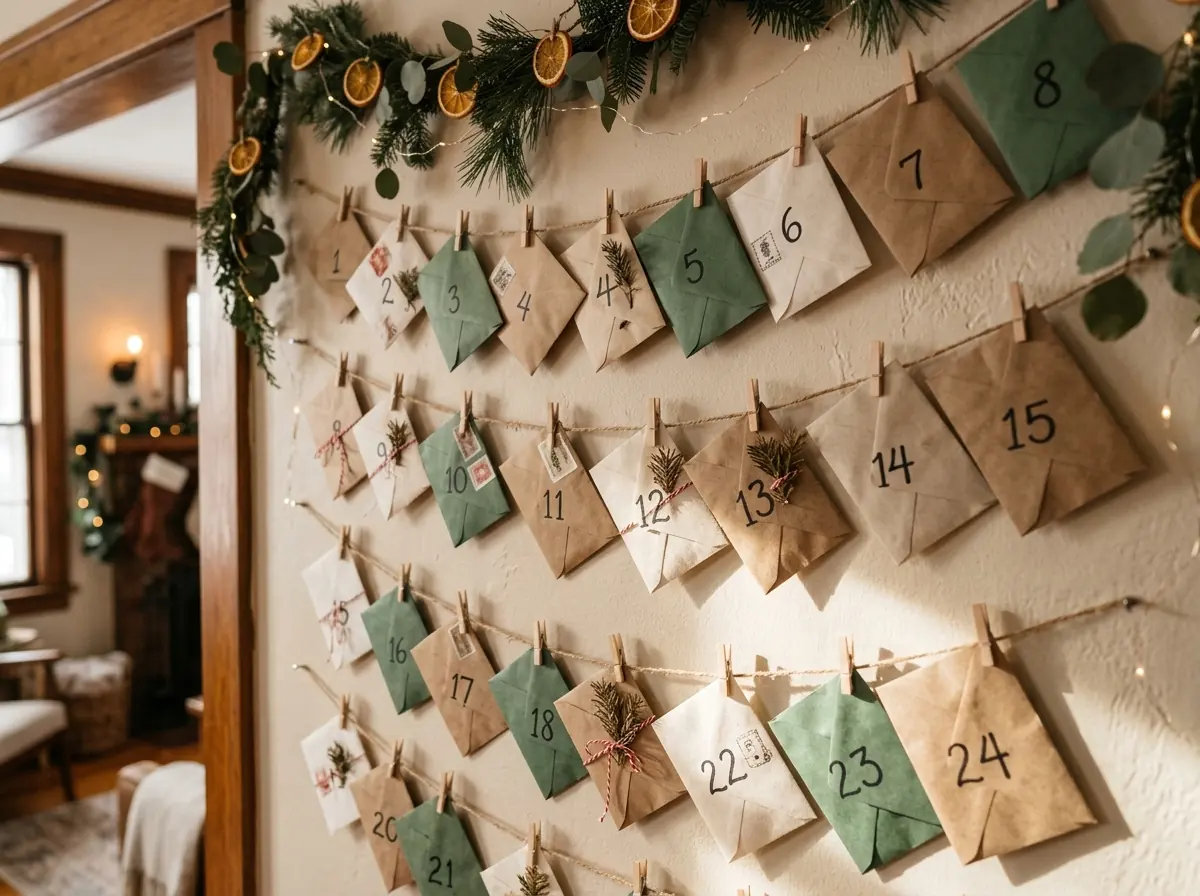
Twenty-four small envelopes, numbered and hung in rows on a string, replace the shop-bought box. A good calendar holds variety inside a system: mixed sizes and scraps, but every number written the same way, in the same pen.
Number first, then fill each envelope with something small and free — a joke, a memory, a kind task, a treat.
| Situation | Base Pieces | Why It Works |
|---|---|---|
| Small apartment wall | Envelopes on one string | The whole countdown takes no floor space |
| Family with children | Bigger envelopes, mixed fillings | Notes and treats suit different ages |
| Minimal, calm home | Plain envelopes, one pen | The grid of numbers is the decoration |
By mid-December, the half-empty string tells the month’s story.
Painted Pinecones and Orange Pomanders Bring the Outdoors In
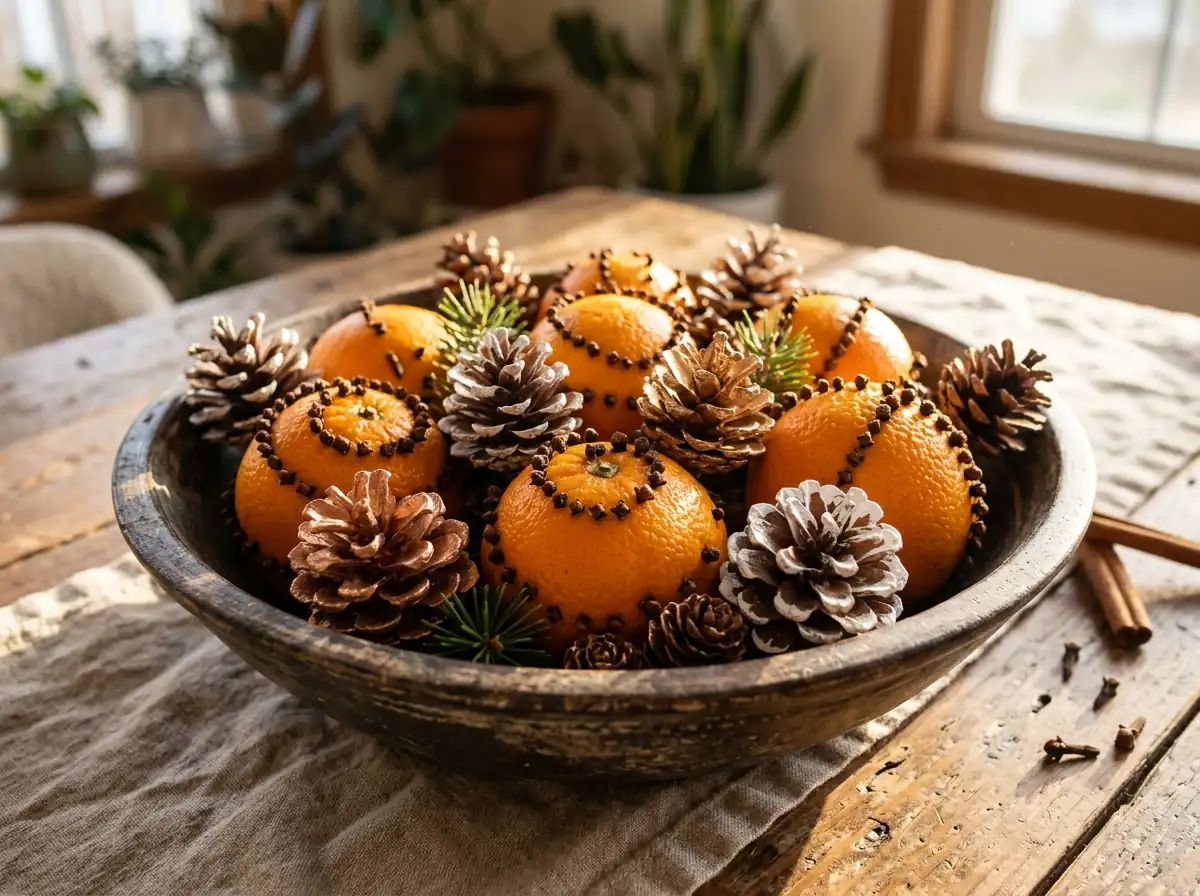
A fallen cone is free material; painted, it becomes decor with the lightest touch. A good one is defined by restraint — paint on the tips only, in white or gold, the natural shape still showing. Clean and dry the cones (a low oven opens them), dab the paint on, and a bowlful finishes a table.
Pomanders are the scented cousins: a whole orange studded with cloves in an even pattern. Unlike sliced-fruit decorations, the whole, uncut orange lets a pomander last, smell wonderful for weeks, and hang as an ornament itself.
Fit note: Both display best in odd numbers — three or five, grouped, look arranged rather than spilled.
Copy the Principle, Not the Project
Craft photos are staged like shop windows: perfect light, failed attempts cropped out. Copying a board exactly is the fastest route to feeling your version fell short.
Why do the good versions work? The same principles recur: one material repeats until it is a theme; one or two colors run through everything; handmade pieces sit in groups — jars in a row, cones in a bowl — because groups look intentional and single pieces look lost.
| Instead of Copying This | Borrow This Principle |
|---|---|
| A styled craft photo exactly | The one finish that makes it look good |
| A cart of special supplies | Household supplies, one repeated material |
| One perfect statement piece | Groups of simple pieces together |
| Every project in different colors | One color story across all your projects |
| A tutorial’s exact design | The same technique in your own pattern |
Copy the principle, and every December your decorations get better instead of just more numerous.
Build Your Own Homemade Formula From the Projects You Like
You do not need all 10. Two or three beat ten in a rush — especially sharing a color or material, so the window stars answer the stamped paper.
Mix by job: one for the tree, one for walls or mantel, one for table or gifts.
Formula: One repeated household material + one shared color story + pieces displayed in groups + one scented finishing touch
Change one part at a time — next year’s colors, or the calendar instead of the table project. The formula stays; the decorations evolve.
The best homemade Christmas is not the one that looks bought; it is the one carrying your own afternoon in every piece.
Frequently Asked Questions
What if I am not crafty at all?
Start with paper chains or painted pinecones — both forgive everything, and one finished project makes the rest easy.
How much do these projects cost to make?
Almost nothing, by design — paper, kitchen supplies, jars, scraps, outdoor finds. The real ingredient is a free afternoon.
Which projects can children genuinely help with?
Paper chains, salt-dough cutting, envelope filling, and pinecone painting suit small helpers: repetitive steps for them, sharp tools for adults. Their uneven pieces become the keepers.
How far ahead of Christmas should I make them?
Pomanders improve with drying time; the calendar must be ready by December 1st. Everything else fits any afternoon — paper stores flat.
How do I make homemade decorations look good together?
Give them one shared thread — one color story, one repeated material, groups of three and five. Group closer when in doubt.