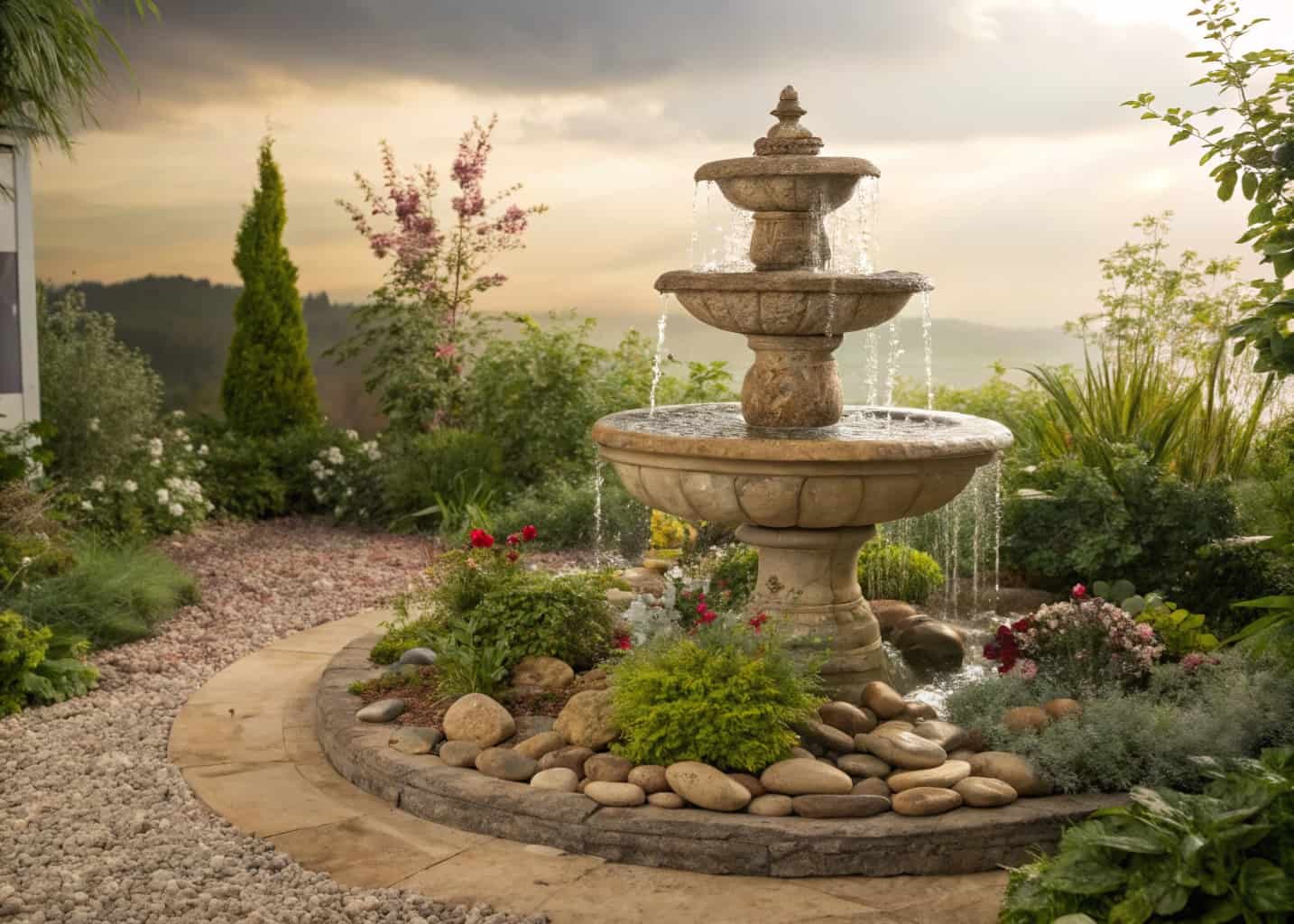
Running water does something a static garden can’t — it masks traffic noise, keeps mosquitoes from breeding in stagnant puddles, and gives birds a reason to stick around. Most people assume DIY fountain ideas mean calling a landscaper and spending four figures. It doesn’t. A basic recirculating fountain is really just three parts: a basin that holds water, a submersible pump, and something for the water to fall over or through. Once you understand that, you can build one out of almost anything sitting in your garage.
1. Why DIY Fountains Are Trending
Search interest in “DIY fountain” has climbed steadily since 2021, and it’s not just a Pinterest fad — it tracks pretty closely with people spending more on outdoor living spaces during and after the pandemic. A store-bought resin or cast-stone fountain from a garden center typically runs $150–$600 for anything decent, and the cheap ones crack within a season or two because the material isn’t rated for freeze-thaw cycles. Building your own with a $12–$25 submersible pump and materials you already own or can find secondhand usually lands under $60, and you control the quality of the components. The other draw is customization — a fountain built from a wine barrel or a stack of glazed pots looks nothing like the mass-produced tiered ones every third house on the block seems to have.
2. Budget-Friendly Fountain Ideas
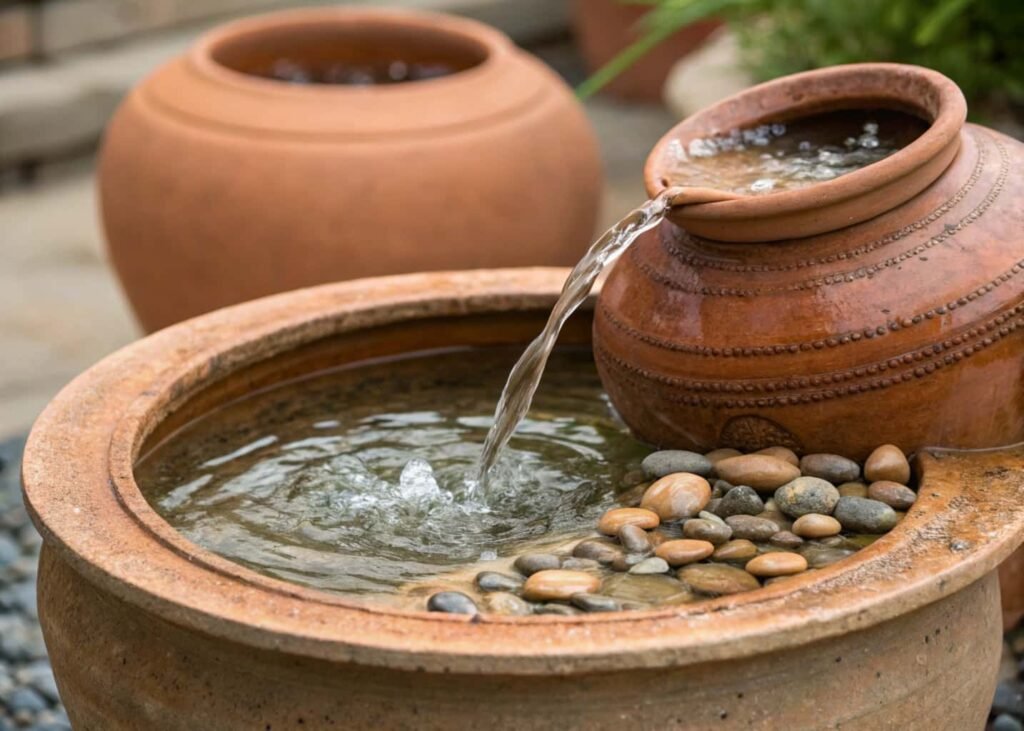
The cheapest real fountain you can build is a “pot fountain”: a large glazed ceramic pot (no drainage hole, or one you’ve plugged with aquarium-safe silicone) sitting over a hidden basin, with a submersible pump pushing water up through a length of PVC pipe hidden inside the pot so it bubbles over the rim. Total cost, if you’re buying everything new: a 25–50 GPH pump ($15), a plastic tub or repurposed nursery liner buried in the ground for the basin ($10–20), a bag of pond gravel to disguise the reservoir ($8), and the pot itself, which you can often find at a garden center’s damaged-stock shelf for half price. Skip the “fountain kits” sold at big box stores — they bundle a weak pump with an overpriced basin liner and you pay a markup for convenience you don’t need.
3. Rustic and Vintage Fountain Designs
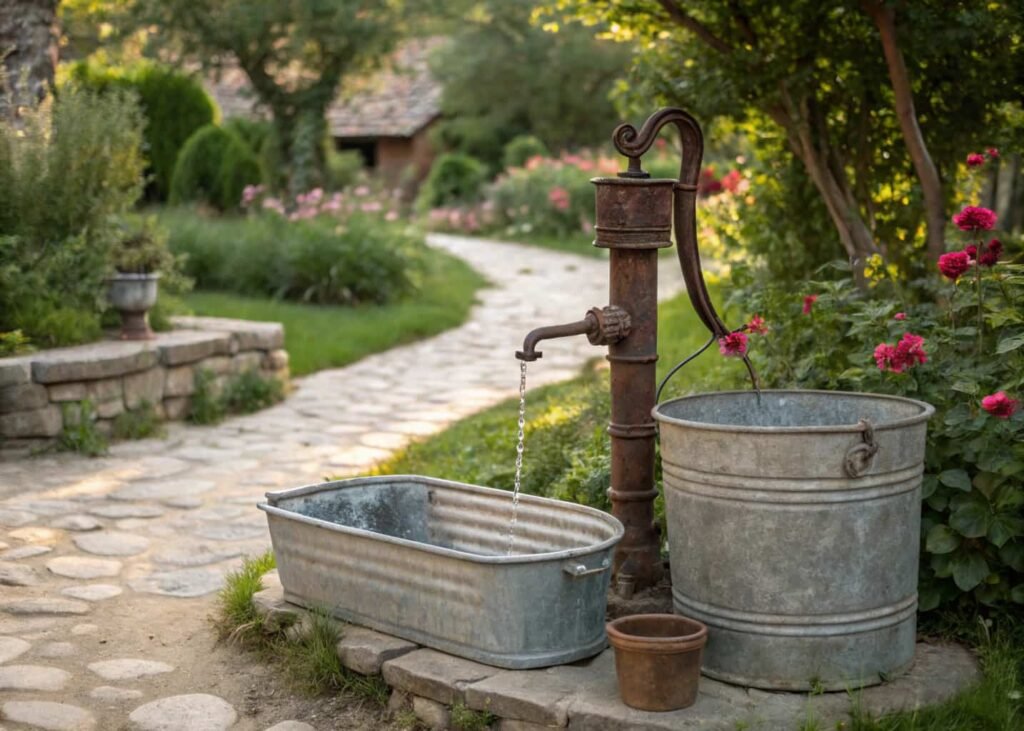
Old wash basins, galvanized tubs, or a cracked bathtub reclaimed from a renovation make excellent rustic fountain shells because they’re already watertight (or close to it) and have real age and patina you can’t fake with paint. Stack two mismatched galvanized tubs — a smaller one tipped on its side inside a larger flat one — and run a pump line from the bottom tub up through a hole drilled in the tipped one, so water pours out like it’s spilling from a bucket. For a more antique look, an old hand-crank water pump (the kind found at architectural salvage yards for $40–$100) can be plumbed as a purely decorative fountain: gut the internal mechanism, run tubing through the spout, and hide the pump and reservoir in a half-buried tub underneath.
4. Modern Minimalist Fountain Concepts
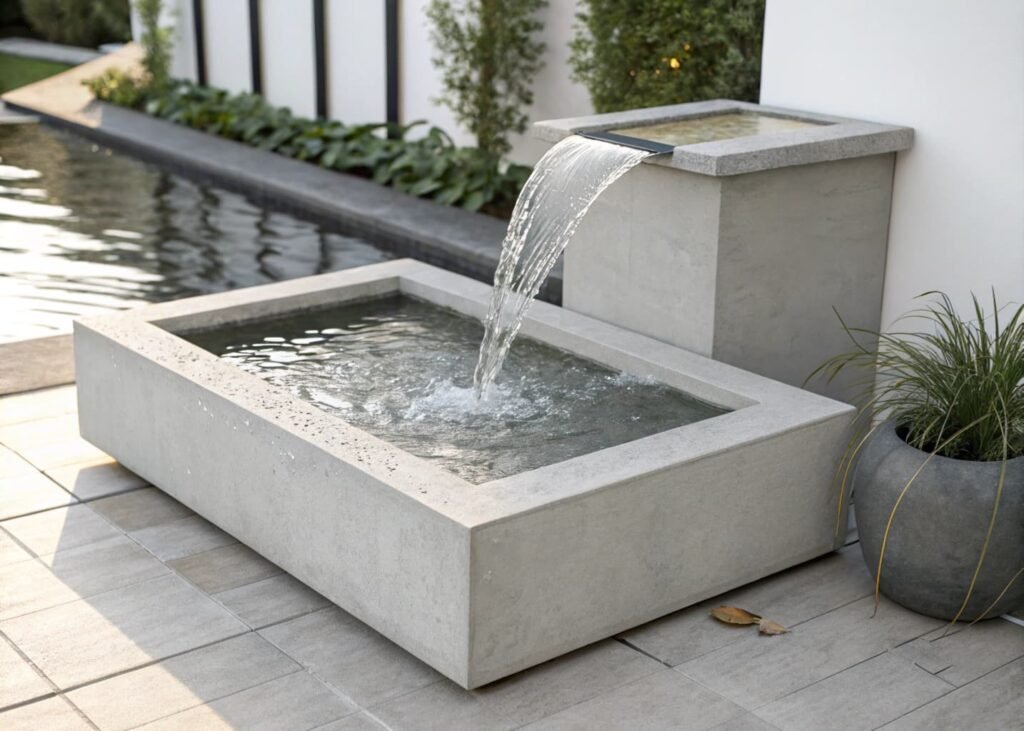
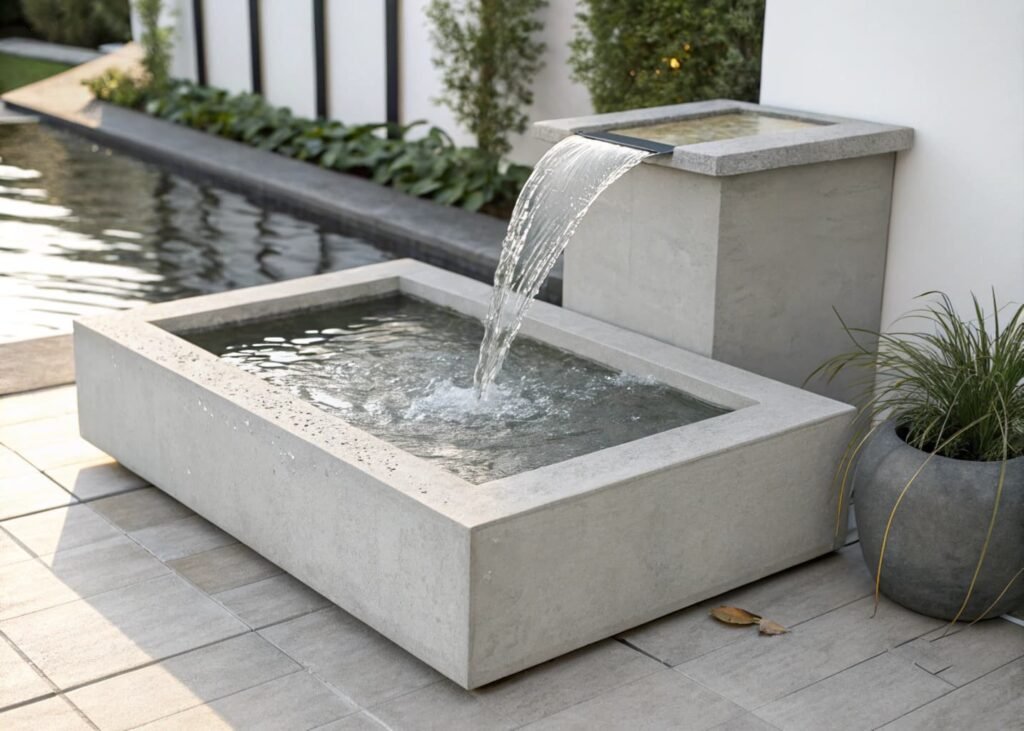
Minimalist fountains rely on a single clean water feature — usually a thin sheet or single stream — rather than tiers or ornamentation. A “spillway” fountain made from a rectangular concrete or composite planter box with a slot cut near the top edge, lined with a metal spillway lip (aluminum L-channel from a hardware store works fine, around $8 for a 4-foot length), creates a flat, even sheet of falling water that looks architectural rather than crafty. Concrete is unforgiving to work with as a beginner — it needs to cure for a full 28 days before it reaches full strength, and rushing that step is the number one reason DIY concrete fountains crack in their first winter. If you’re not confident with concrete, a large powder-coated steel planter with the same spillway detail gets you 90% of the look with none of the curing risk.
5. Tabletop Fountain Inspirations
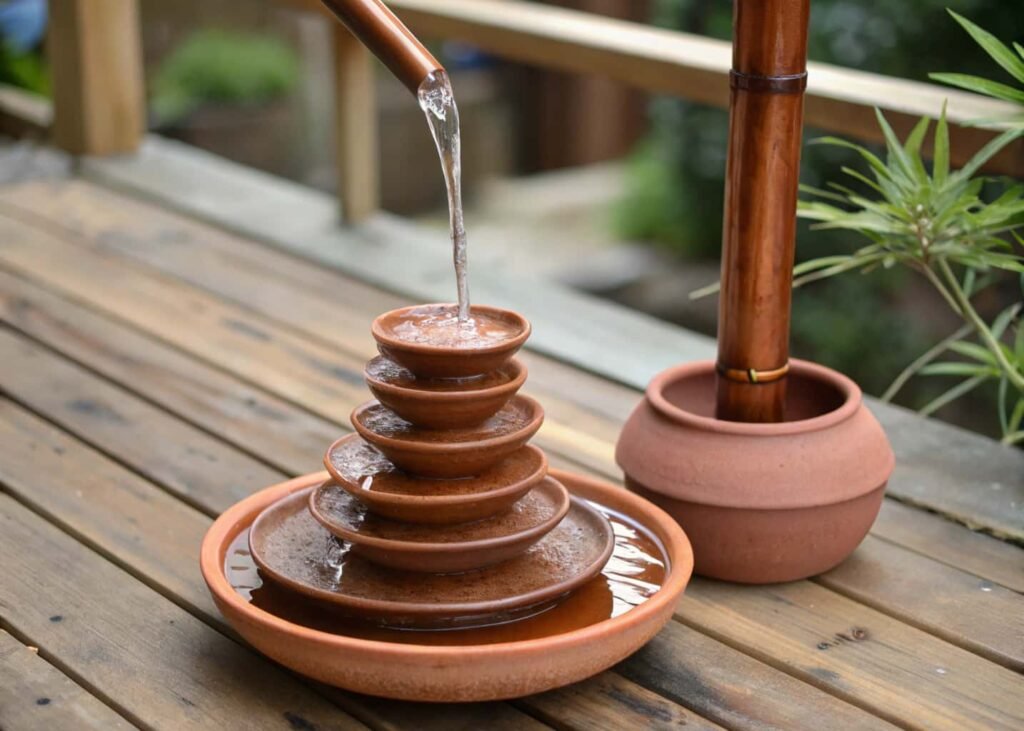
Tabletop fountains need much less pump power than people assume — a 40–80 GPH pump is plenty for anything under 18 inches tall, and going bigger just means more splash and a louder motor. A stack of three terra cotta saucers of decreasing size, glued with waterproof silicone (not standard super glue, which won’t hold up to constant moisture) and centered on a length of copper pipe that doubles as the water channel, is one of the easiest tabletop builds and looks intentional rather than crafty once it’s sealed and planted with a bit of moss around the base. Keep the reservoir dish at least 3 inches deep so the pump doesn’t run dry between refills — shallow reservoirs are the most common reason tabletop pumps burn out within a month.
6. Recycled Material Fountain Ideas
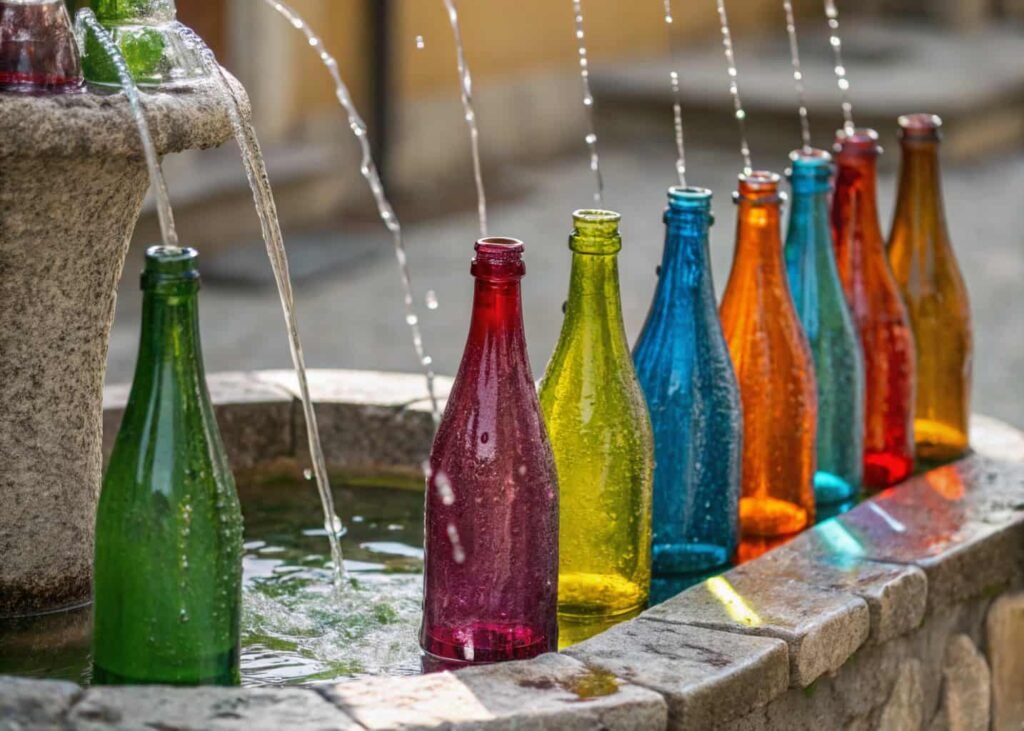
Wine bottles, mason jars, an old teapot, or a chipped enamel colander can all become fountain spouts with a $3 drill bit rated for glass or ceramic (a diamond-tipped hole saw works on glass; a standard masonry bit works on most glazed ceramic). Drill a hole just large enough for 1/2-inch vinyl tubing, run the tubing from a hidden pump up through the vessel, and seal around the tubing with aquarium-safe silicone so it doesn’t leak at the entry point. A cluster of three or four mismatched bottles at different heights, all fed from one pump using a splitter valve, gives you visual variety without needing multiple pumps. This is also one of the few fountain styles where imperfection genuinely helps — mismatched, slightly weathered glass looks better here than anything matching.
7. Solar-Powered Fountain Ideas
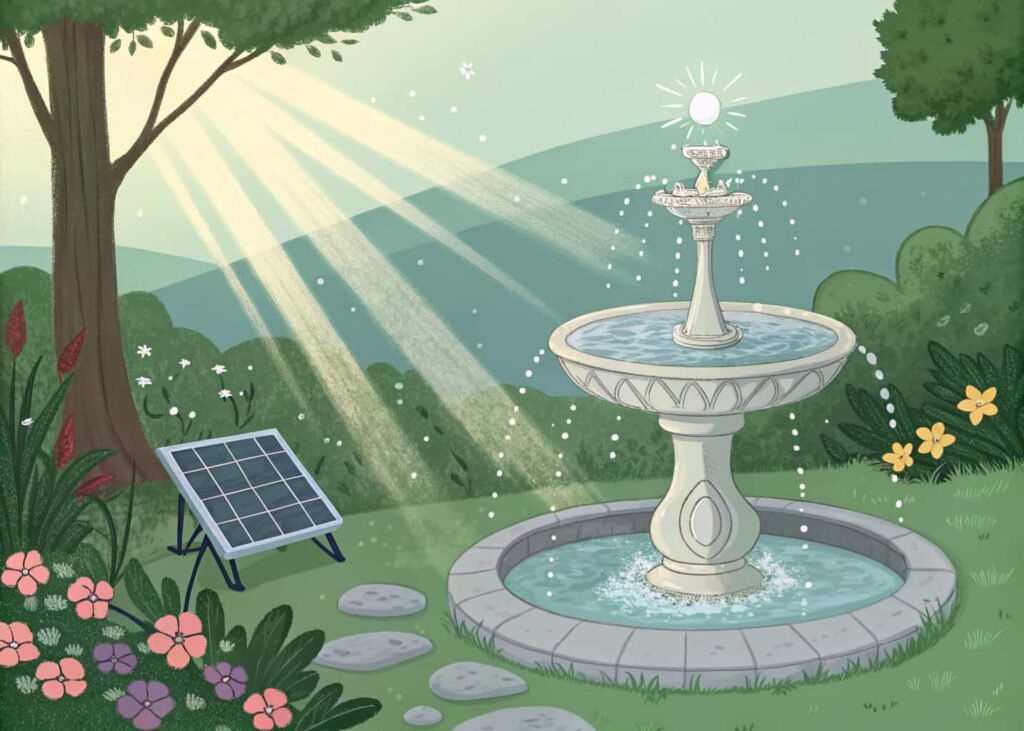
Solar fountain pumps have gotten genuinely usable in the last few years, but there’s a real trade-off people don’t mention enough: a basic floating solar pump (the $20–30 kind with a small panel attached directly to the pump) only runs while the sun is actually hitting the panel, and output drops noticeably under partial cloud cover — you’re not getting a steady stream, you’re getting a pulsing one. If you want a fountain that runs reliably, spend closer to $60–90 for a kit with a separate panel and a small battery pack, which stores enough charge to keep the pump running for an hour or two after the sun dips or clouds roll in. Position the panel facing true south (in the northern hemisphere) and avoid afternoon shade from trees, which is the single biggest killer of solar fountain performance.
8. Small Space Fountain Solutions
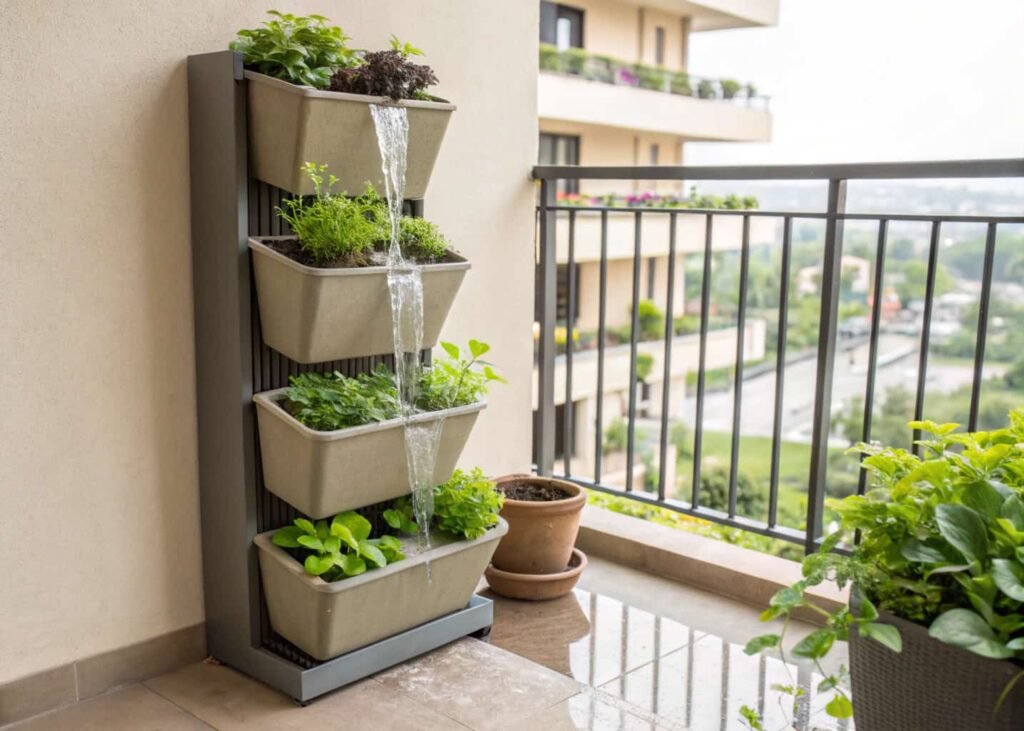
Balconies and small patios do better with wall-mounted or narrow vertical fountains than anything with a wide footprint. A slim fountain built from stacked square planters (the kind meant for herbs) bolted to a wall bracket, with tubing run up the back and hidden behind the planter stack, uses almost no floor space and can be mounted at eye level so the sound carries better than a ground-level fountain would. For anything wall-mounted, use a pump rated for at least 3 feet of vertical lift (check the “max head height” spec, not just GPH) or the water won’t make it to the top reliably. Balcony fountains also need a drip tray or overflow catch underneath — homeowners’ associations and downstairs neighbors notice water stains fast.
9. Indoor Fountain Ideas
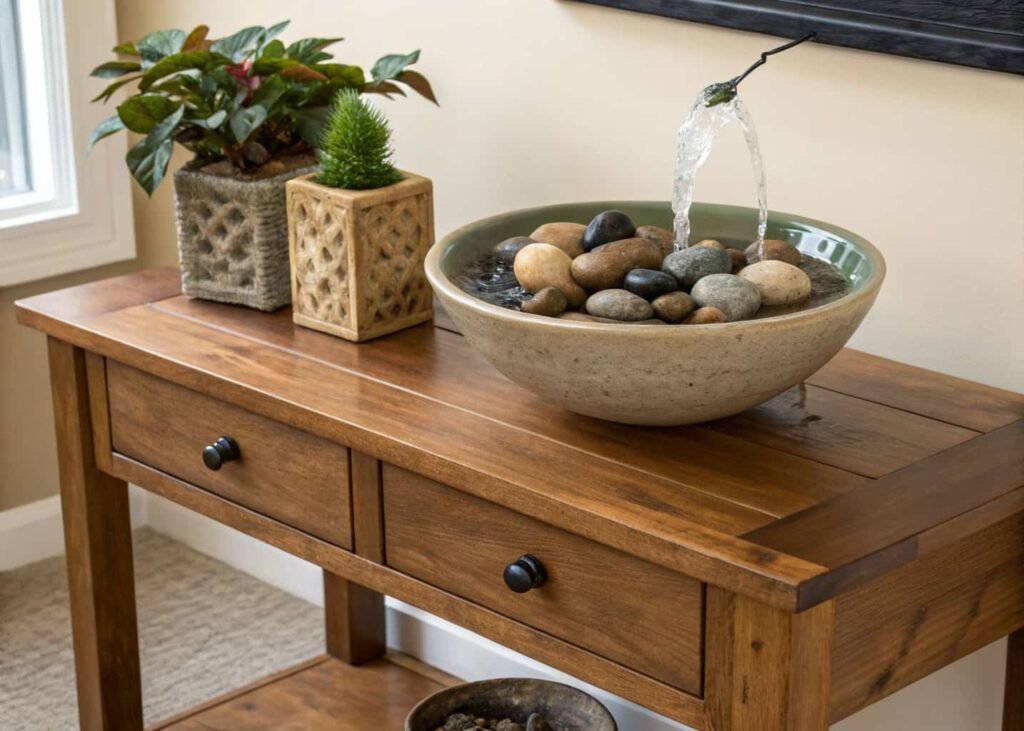
Indoor fountains need to solve two problems outdoor ones don’t: noise and evaporation residue. A pump that sounds fine outside will hum noticeably in a quiet living room, so look for pumps specifically rated “ultra-quiet” — usually the ceramic-shaft models rather than the cheaper plastic-shaft ones, even though they cost a few dollars more. Tap water left to evaporate indoors leaves visible mineral scale on dark stone or glass within a couple of weeks; using distilled or filtered water instead of tap solves this almost entirely and is worth the extra cost for an indoor build. A simple indoor fountain built into a wide ceramic bowl with a few polished river stones covering the pump is enough — indoor fountains work best understated, since they’re usually viewed up close on a shelf or console table rather than from across a yard.
10. Outdoor Garden Fountain Ideas
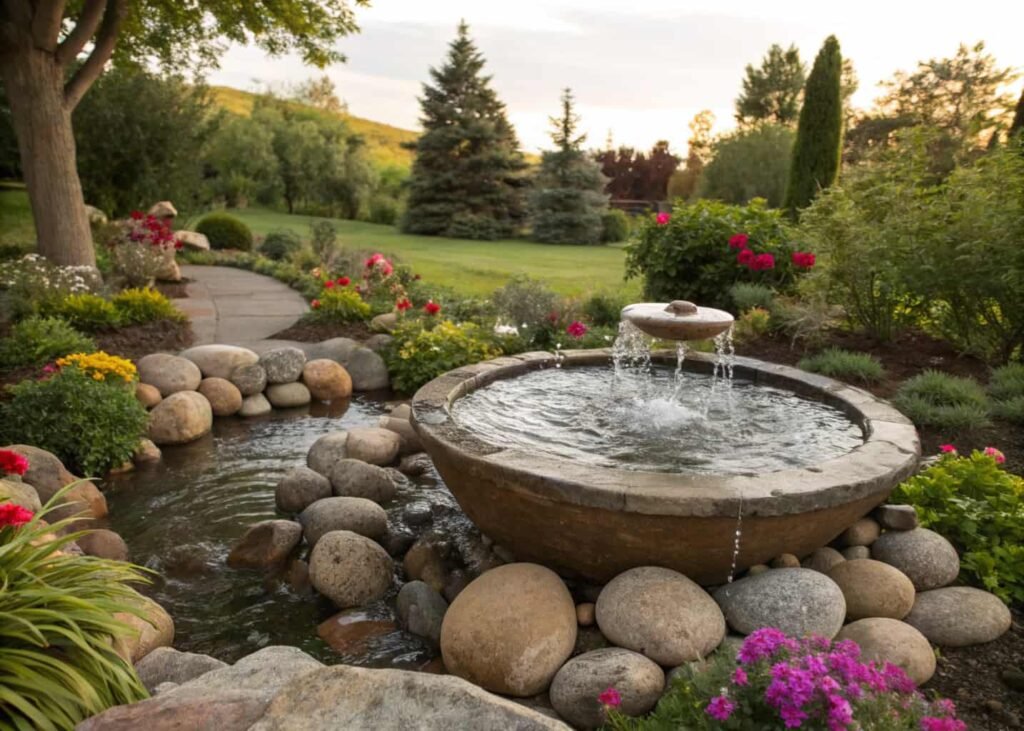
Larger garden fountains — anything meant to be a real focal point in a flower bed or near a patio — benefit from a basin buried at least partially in the ground rather than sitting fully above grade, since a buried basin stays cooler and loses less water to evaporation over a hot afternoon. A rock-and-gravel “disappearing fountain,” where water bubbles up through a bed of river rock and drains invisibly back into a buried reservoir below, is genuinely one of the safest DIY fountain styles for households with small kids or dogs, since there’s no standing open water to fall into. Budget a full weekend for this build, not an afternoon — most of the time goes into leveling the buried basin properly, which matters more than people expect, since an uneven basin means the water pools unevenly and the pump can run dry on one side.
11. Fountain Ideas Using Old Pots and Jars
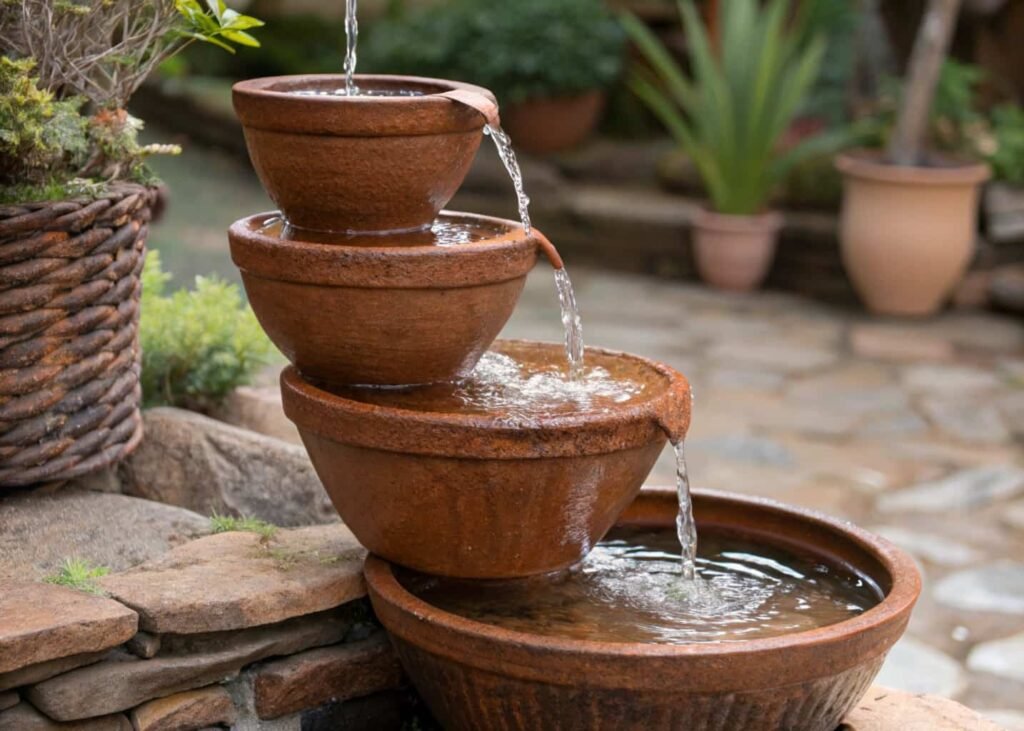
This deserves its own section separate from the general recycled-materials idea above because pots and jars specifically solve a problem other containers don’t: they’re already shaped to stack and nest, which makes tiered fountains much easier to build without extra hardware. Take three unglazed terra cotta pots of decreasing size, drill a centered hole in the bottom of each (a standard masonry bit handles this fine), and thread them onto a length of PVC pipe like rings on a pole, propped on a base pot filled with gravel to hide the pump. Unglazed terra cotta is porous, so seal the inside of each pot with a coat of pond sealant or exterior masonry sealer before use — unsealed terra cotta will wick water through the clay and stay damp on the outside indefinitely, which speeds up cracking in freezing weather.
12. Kid-Friendly Fountain Projects
Fountains kids actually enjoy tend to involve some element of play, not just ambient sound — a shallow “splash bowl” fountain with a low, wide basin (rather than a tall vertical one) lets kids safely dip hands or float small toys without tipping anything over. A mosaic-tiled birdbath-style fountain, where kids help press broken tile pieces or glass beads into wet thinset mortar on a plain concrete birdbath form, is a good weekend project that doubles as a craft activity — just seal the finished mosaic with grout sealer once it’s cured, or the grout lines will stain within a season. Keep water depth under 2 inches for anything kids will be near unsupervised, and always use a GFCI-protected outlet for the pump, which most areas actually require by code for any outdoor water feature near a play space.

13. Tips to Choose the Best Idea for Your Space
Match the pump before you fall in love with a design — figure out your basin’s water volume and desired height first, then size the pump, not the other way around. A rough rule: multiply the fountain’s height in feet by 100, and that’s roughly the minimum GPH you need to keep a steady flow at the top. Consider maintenance honestly, too. A wide, shallow basin exposed to full sun will grow algae within two weeks unless you add a few drops of hydrogen peroxide weekly or drop in a couple of floating aquatic plants like water lettuce, which shade the water and starve the algae of light. And if you live somewhere with real winters, plan for a fountain you can actually empty and store, or one built from freeze-tolerant material like sealed concrete or glazed stoneware — unglazed terra cotta and thin resin are the two materials most likely to crack once the water inside them freezes and expands.