
Woodland Christmas decor sounds simple — bring the forest indoors and enjoy the cozy, natural feel. In real homes it often goes the other way: needles and soil on the floor, a jumble of brown bits on every surface, and a room that looks more like a craft project than a calm forest corner.
This list fixes that problem idea by idea. Every suggestion below keeps the forest feeling — real greenery, wood, cones, and quiet brown-and-green color — while cutting out the dirt, clutter, and fuss that usually come with it. If you like natural pieces, these pinecone Christmas ideas follow the same tidy approach.
Why Woodland Decor Tips Into Mess
Woodland style rarely fails because of one bad piece. It fails because of three habits that sneak in while you are busy making the room feel natural.
- Too Many Natural Textures at Once. Bark, moss, fur, feathers, twigs, and cones are all lovely, but layered together in one spot they stop looking like a forest and start looking like a pile of garden waste.
- Real Finds Brought In Uncleaned. Cones, acorns, and branches picked up outside carry soil, sap, and tiny insects. Skipping a quick clean is how the forest floor ends up on your carpet.
- No Color Limit Anywhere. Nature is not one color, but a room needs limits. When red, gold, orange, and every shade of brown all compete, the calm woodland mood disappears into visual noise.
Keep those three causes in mind and the ideas below stay easy, because each one is built to dodge at least one of them — much like the foraged Christmas decor that works best when it is cleaned and edited first.
1. A Base of Real Greenery Cut From the Garden
The problem: plastic greenery everywhere makes a woodland room look like a shop display instead of a forest. Cut real branches from the garden — pine, cedar, or fir — and lay them as the base layer on the mantel, table, and shelves before anything else goes down. Real needles have uneven color and shape, and that slight roughness is exactly what reads as woodland rather than manufactured.
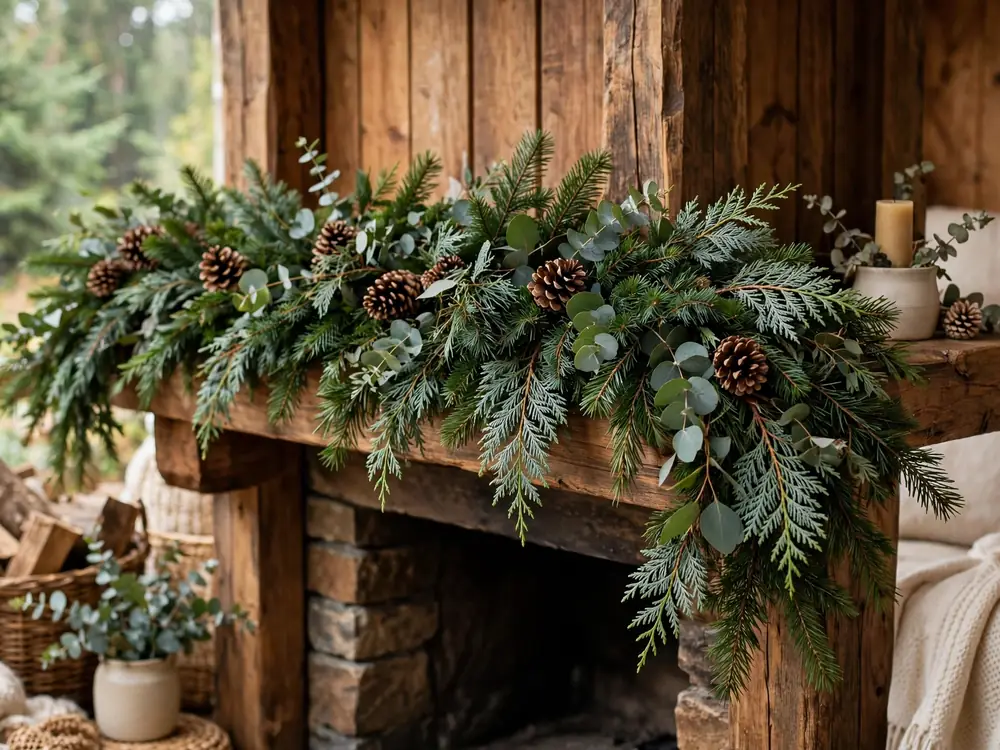
Quick check: cut each stem at an angle and stand the branches in water for an hour before arranging them. Fresh-cut greens drink first, then hold their needles much longer indoors without shedding them across the floor.
2. Pinecones Sorted by Size Before They Go Anywhere
The problem: a mixed bag of cones tipped into bowls and corners looks like sweepings from the garden path. Sort the cones by size first, then give each size one job: the largest stand alone on the mantel, medium ones fill a basket, and small ones scatter along the table runner. Grouped sizes look collected on purpose, not dropped by accident.
Cost note: cones are free if you gather them on walks, but rinse them and bake them on a low heat for thirty minutes first. That one step removes sap, soil, and any insects before they come indoors.
3. Birch Logs Stacked in the Fireplace or a Basket
The problem: loose logs rolled beside the hearth shed bark crumbs and look like firewood waiting to be burned, not decor. Stack birch logs tightly in neat rows, either inside an unused fireplace or in one sturdy basket, with the pale cut ends facing outward. The white bark does the decorating, and the tight stack keeps every crumb contained in one place.
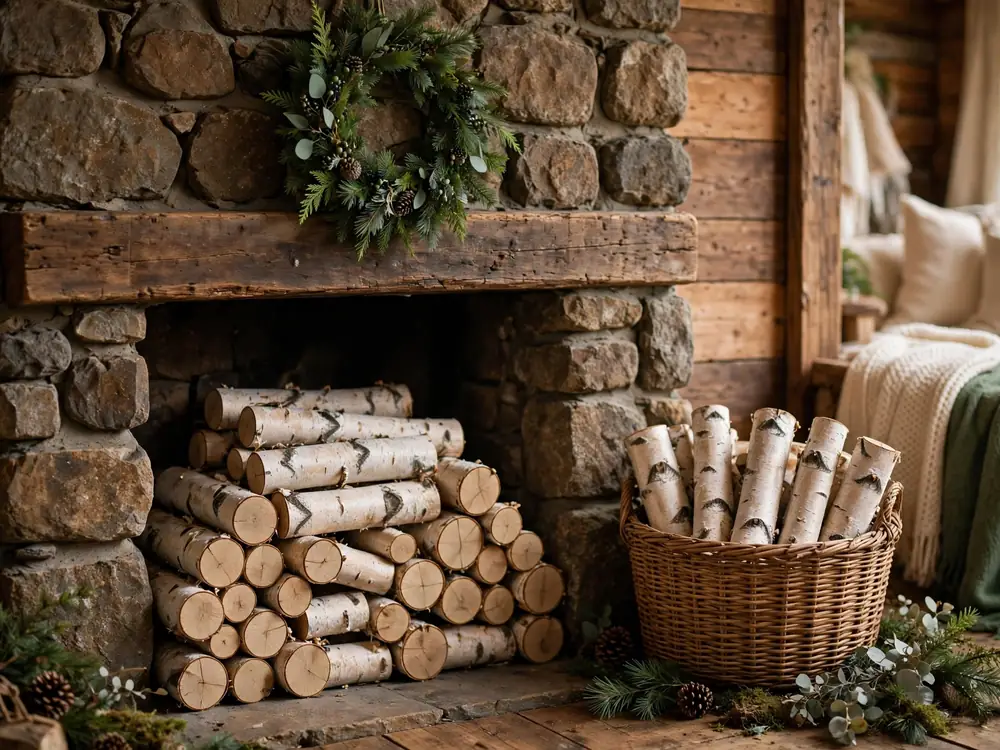
Watch out: brush each log down outdoors before it comes in, and shake the basket outside once a week. Birch bark flakes a little no matter what, so one contained basket beats logs spread around the room.
4. A Wreath of Dried Leaves and Seed Heads
The problem: a fresh wreath of mixed garden cuttings wilts within days and drops brown leaves down the door. Build the wreath from dried leaves and seed heads instead, wired onto a plain ring in one or two tones only. Dried material is already finished changing, so the wreath looks the same on day twenty as it did on day one.
Quick check: hold the finished wreath up and shake it gently before hanging. Anything that falls off now would have fallen on your hallway floor later, so rewire loose pieces before it goes on the door.
5. Mushroom Ornaments in Red and Cream Only
The problem: cute woodland ornaments in every color turn a tree into a toy box and break the calm forest mood. Choose mushroom ornaments in red and cream only, and repeat just those two colors across the whole tree. The red reads as a quiet nod to the forest floor, and the strict limit keeps the tree looking grown-up rather than playful.
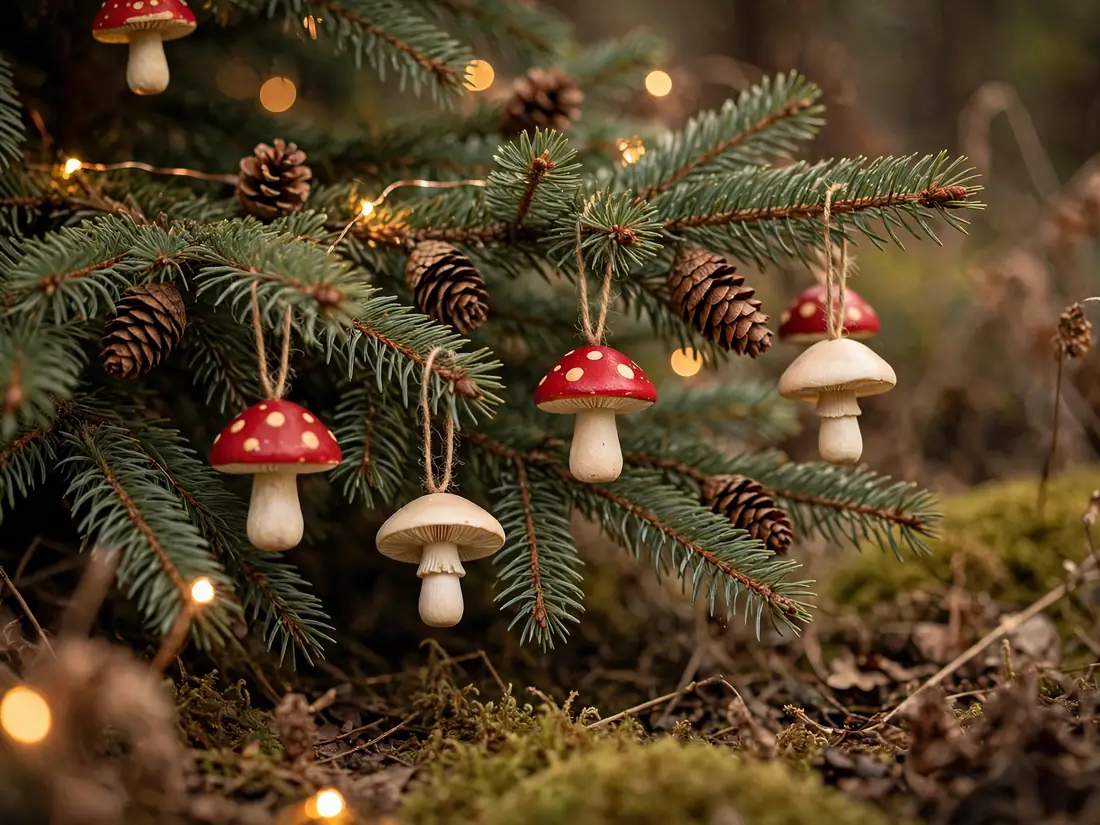
Cost note: a small set of six to eight mushrooms is plenty when the color repeats. Spread them evenly around the tree instead of clustering them, and the eye reads a pattern rather than a pile of decorations.
6. A Faux Fur Throw as the Forest Floor Layer
The problem: real-looking woodland rooms often feel cold and hard, all wood and twigs with nothing soft to sit against. Drape one faux fur throw over the sofa arm or the reading chair as the single soft layer, the way moss softens a forest floor. One throw adds the warmth the room needs without turning the whole sofa into a costume.
Watch out: keep it to one throw in one natural shade, cream or soft brown. Two or three furry layers tip the room toward a hunting lodge theme, and the throw starts shedding its charm along with its fibers.
7. Wood Slice Chargers Under Every Plate
The problem: a woodland table covered in loose twigs, cones, and scattered leaves leaves no clean space for actual plates and glasses. Put the wood under the plates instead: one flat wood slice charger at each setting carries the whole theme, while the middle of the table stays clear. Guests get the forest feeling without brushing debris away from their dinner.
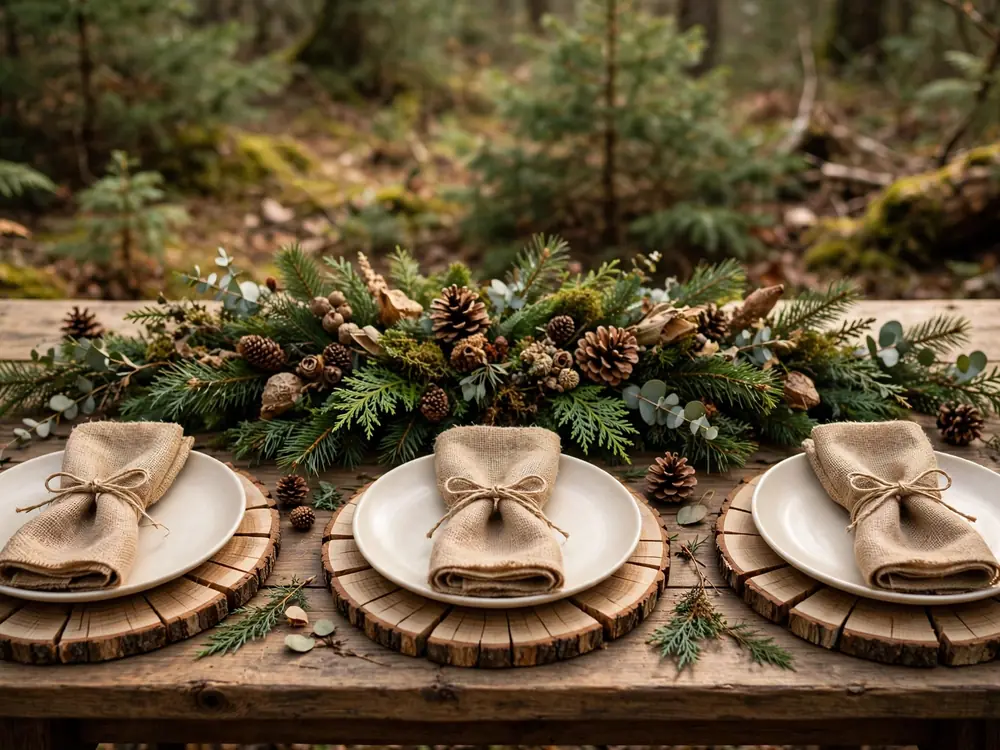
Quick check: wipe each slice with a damp cloth and let it dry fully before the meal. Wood slices can hold a little dust in the bark edge, and a quick wipe keeps it off the table linen.
8. Resin Antlers as the Mantel Centrepiece
The problem: a mantel crowded with small woodland trinkets looks like a gift shop shelf, busy and dusty. Set one pair of resin antlers in the center and let it be the single statement, with plain greenery laid flat on either side. Resin gives the shape and weight of real antlers with no smell, no shedding, and nothing fragile to knock over.
Cost note: one good resin piece costs less than a dozen small figures and does more work. Spend on the centrepiece, keep everything around it simple and free, and the mantel looks planned rather than filled.
9. Owl and Fox Figures Kept to One Shelf
The problem: woodland animal figures are easy to buy and easier to overdo, until every surface has a creature staring out of it. Gather all your owl and fox figures onto one shelf and nowhere else in the room. Grouped together they look like a small collection on display; scattered around the house they look like clutter that wandered in from a toy cupboard.
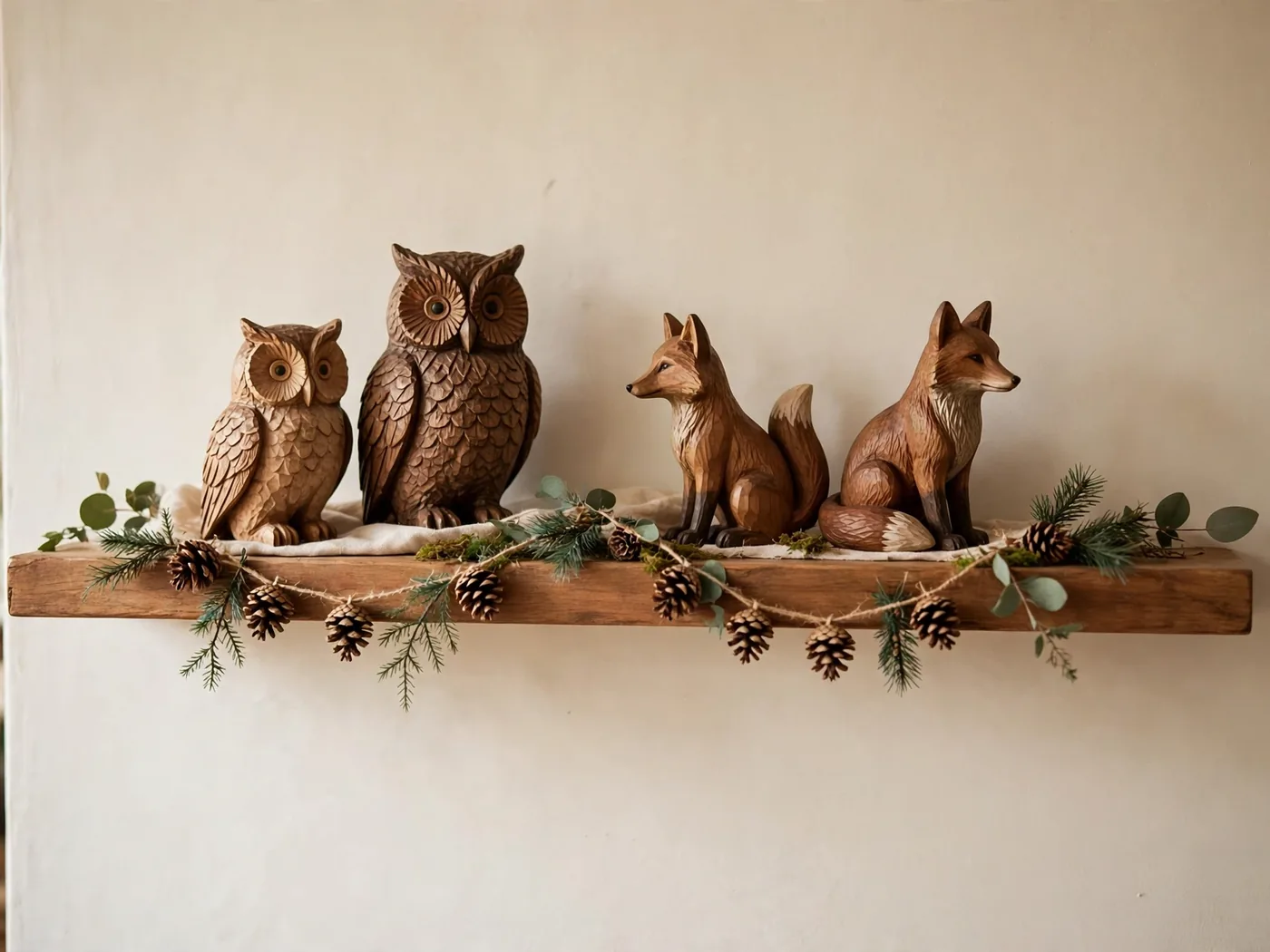
Watch out: stop at what fits that one shelf comfortably with space between pieces. If a new figure means crowding the shelf, an old one has to leave — that single rule keeps the collection charming instead of hoarded.
10. Bark-Covered Candles on the Table
The problem: plain white candles on a woodland table look too clean and wedding-like against all the rough natural textures. Use candles wrapped in real bark, or set plain candles inside bark sleeves, so the flame sits inside the theme. The light stays soft and warm, and the table keeps one clear idea instead of two styles fighting each other.
Quick check: keep bark well away from the flame and never leave these candles burning unattended. Battery candles inside bark sleeves give exactly the same look with none of the fire risk near dry natural material.
11. A Table Runner of Sheet Moss and Bark
The problem: loose moss sprinkled down a table drifts into plates, sticks to sleeves, and ends up on the floor by dessert. Lay sheet moss instead — it comes in flat pieces that sit like a runner and stay where you put them — with two or three bark pieces resting on top. You get the forest floor look in one controlled strip down the middle.
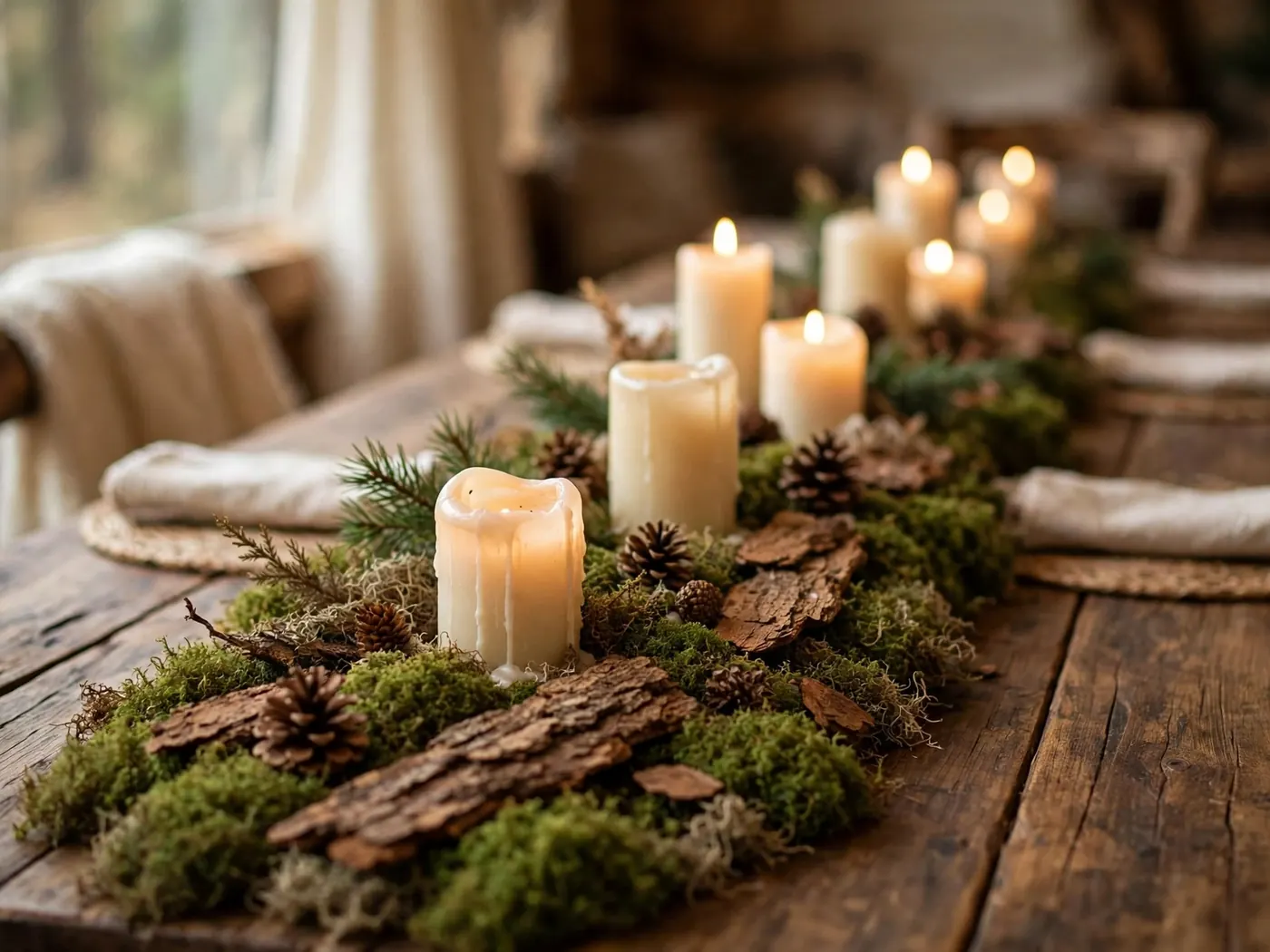
Cost note: preserved sheet moss from a craft shop costs a little more than gathered moss, but it does not crumble, smell, or need misting. One pack usually covers a family table with some left for the mantel.
12. Acorns Collected in a Glass Hurricane With a Candle
The problem: acorns scattered loose on shelves roll, gather dust, and look like something the tree dropped rather than something you chose. Fill a glass hurricane with cleaned acorns and stand a candle in the center so the whole piece glows through them. The glass contains every acorn, shows them off like treasure, and turns a handful of free finds into one finished decoration.
Watch out: bake acorns on a low heat before using them, just like cones. Fresh acorns can carry tiny weevil larvae, and the oven step makes sure nothing hatches quietly inside your decoration halfway through December.
13. Plaid in Brown and Forest Green Only
The problem: the classic red Christmas plaid fights with woodland browns and greens until the room looks like two holidays sharing one sofa. Restrict every plaid in the room — cushions, ribbons, and blankets — to brown and forest green only. The pattern still feels festive and warm, but it sits inside the woodland palette instead of shouting over it from across the room.
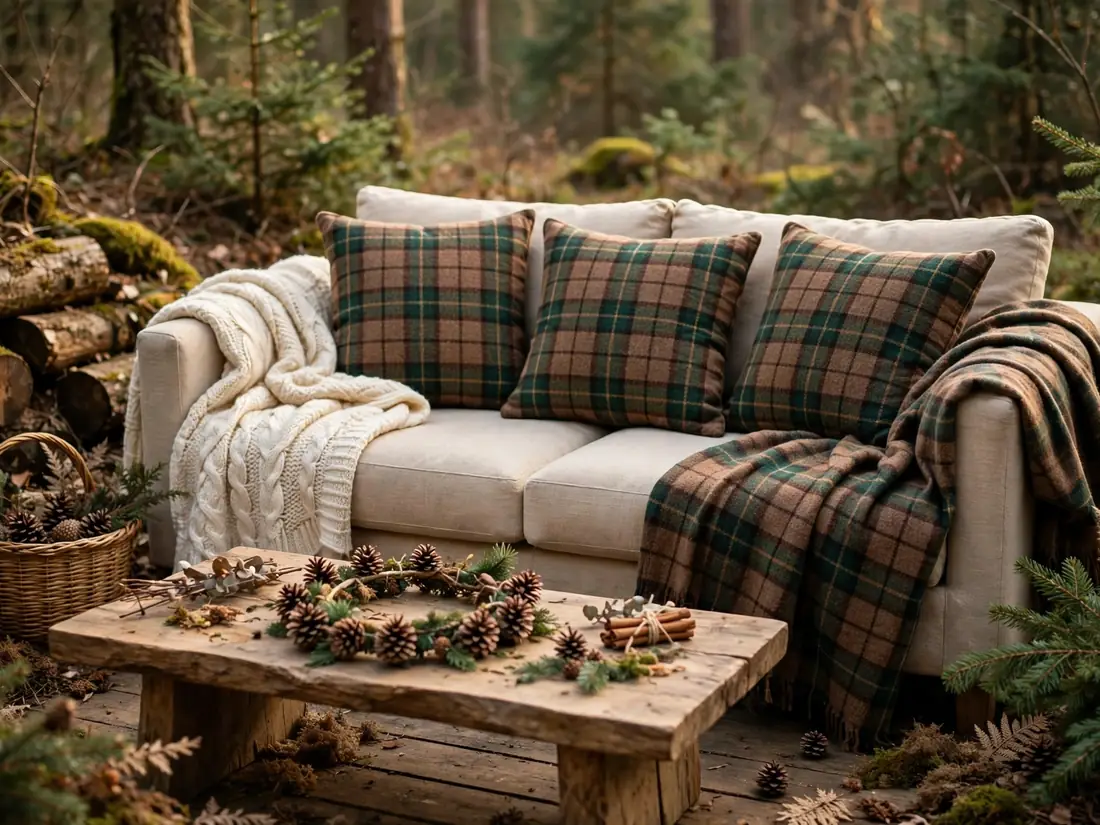
Quick check: hold any plaid item against your greenery before buying or placing it. If the green in the fabric clashes with the green of the branches, it will annoy you every day until January, so choose the closer tone.
14. A Basket of Kindling Tied With Twine by the Hearth
The problem: kindling dumped in a heap beside the fire looks like a job half finished, and loose sticks shed splinters and soil. Stand the kindling upright in one basket and tie a simple twine bow around the basket handle, or around a small bundle on top. The sticks become a deliberate woodland detail, tidy enough to sit beside the hearth all season without looking like firewood storage.
Cost note: twine is one of the cheapest craft supplies there is, and one ball covers every bundle, wreath tie, and gift tag in the house. It is the small detail that makes gathered wood look styled, not stored.
15. Feather Accents Tucked Into the Tree
The problem: feather garlands draped everywhere shed constantly and make the room look like a costume wardrobe exploded. Tuck single feathers into the tree instead, pushed gently between branches at intervals, the way birds would actually settle there. A dozen feathers placed one by one give the tree a soft, wild edge without a single strand of garland to unravel or shed.
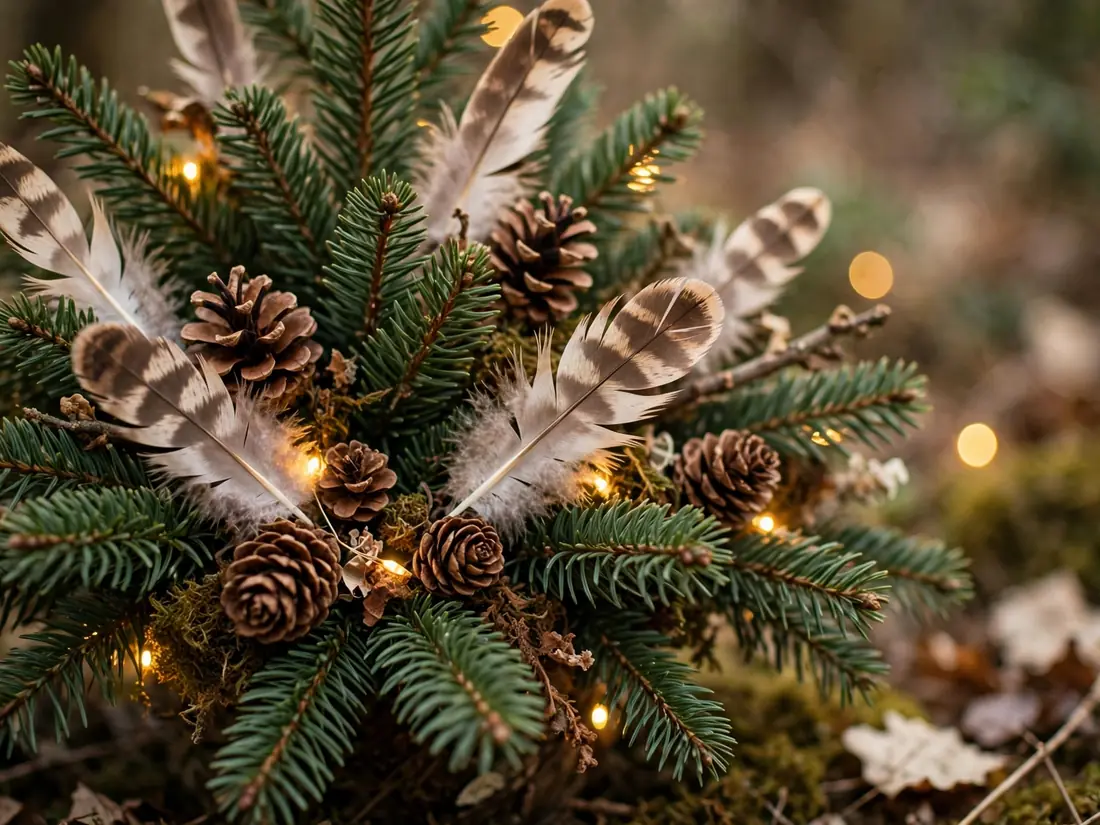
Watch out: use craft feathers, not found ones, for anything indoors. Found feathers can carry mites and dirt, while craft feathers in brown, cream, and soft grey are clean, even in color, and shaped to sit neatly in branches.
16. Lanterns With Battery Candles Along the Hall
The problem: a dark hallway breaks the woodland mood the moment guests step out of the decorated room, but real candles along a walkway are a fire risk. Line the hall with lanterns holding battery candles instead, spaced evenly like a path through trees. The flicker setting on most battery candles is convincing, and nobody has to watch open flames near coats, bags, and passing children.
Quick check: put every lantern on the same timer setting before guests arrive. When the whole row glows on together at dusk, the hallway feels planned and welcoming rather than like an afterthought you remembered at the door.
17. A Woodland Tree Skirt of Burlap
The problem: a shiny red tree skirt drags the whole tree back toward a department-store look and fights the natural base you built. Wrap the base in plain burlap instead, tucked loosely so it falls like gathered sacking. The rough weave matches bark, twine, and wood tones, hides the stand and wires, and works the same way simple wood bead garland ideas keep a neutral scheme calm.
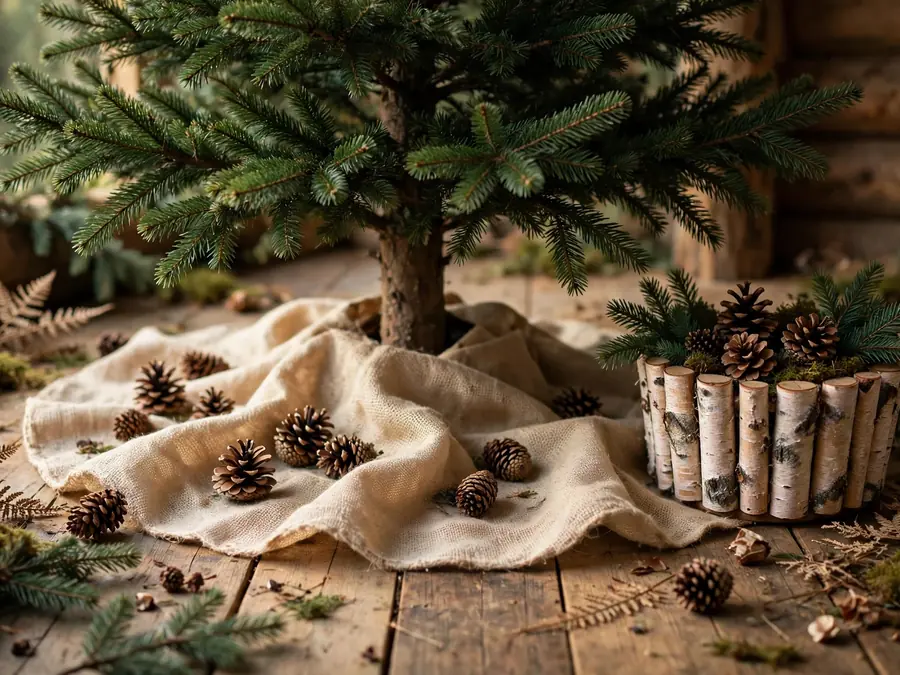
Cost note: burlap is sold by the meter at fabric shops for very little, and one length wraps the tree base with enough left over to line a basket or back a wreath. It stores flat and never goes out of style.
18. Dried Orange and Star Anise in the Garland
The problem: a plain greenery garland can look flat and heavy, but loading it with baubles drags it back to a standard shiny Christmas. Thread dried orange slices and star anise through the garland instead, spaced a hand apart along its length. Both are natural, both smell faintly warm when the room heats up, and their shapes echo the forest theme without one piece of plastic or glitter.
Watch out: dry orange slices fully before wiring them in, until they feel hard and light. Slices that are still soft in the middle can turn mouldy inside a warm garland, and the whole strand has to come down early.
19. A Single Deer Figure as the Whole Statement
The problem: after adding greenery, cones, and candles, most woodland rooms keep going — one more figure, one more garland — until the calm is gone. Finish with restraint instead: place one single deer figure, in wood or brushed metal, in the room’s best spot and add nothing else around it. A lone deer carries the entire woodland story in one glance, and the empty space around it is what makes it look expensive.
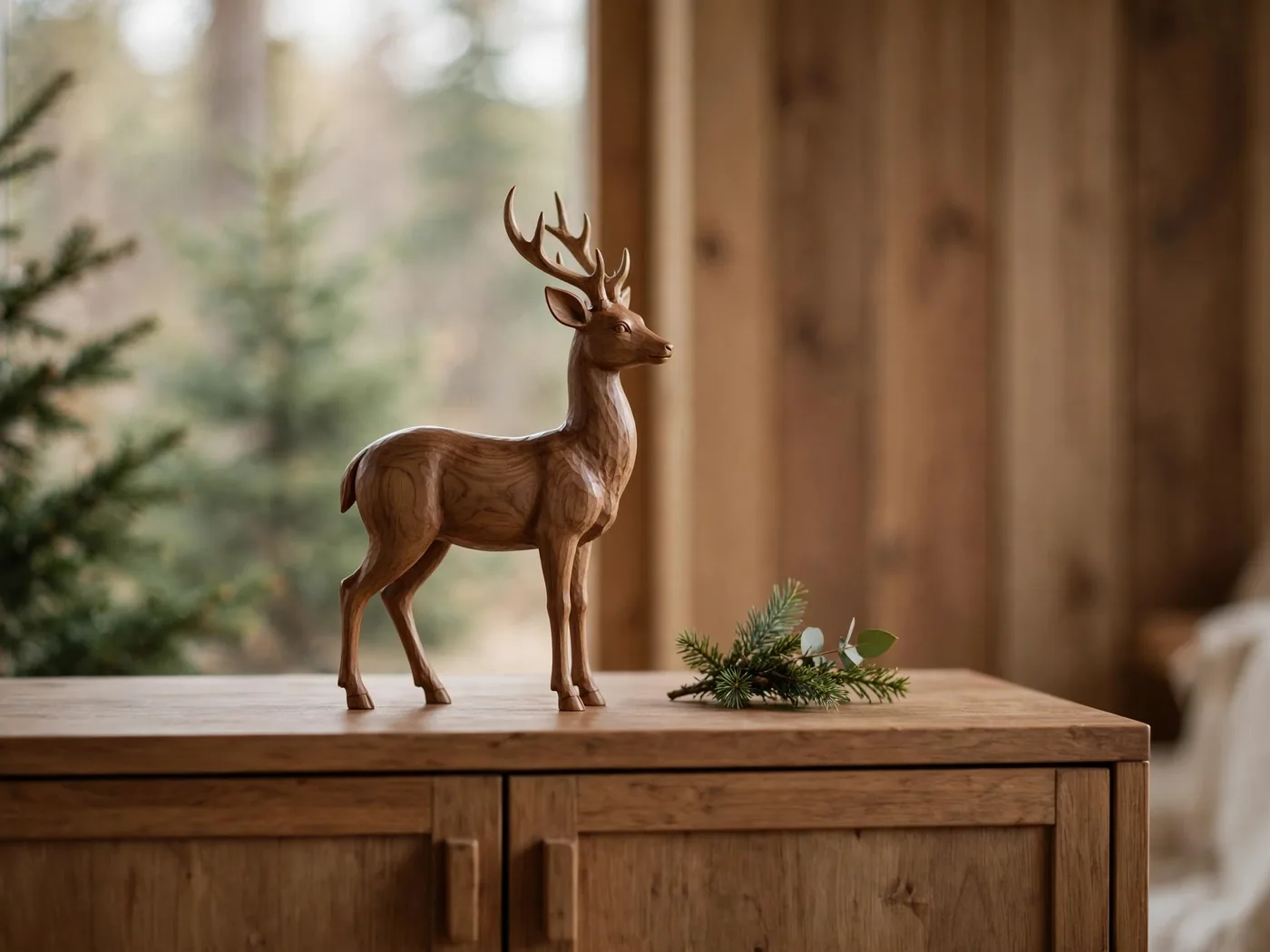
Quick check: step back to the doorway and look at the room as a guest would. If your eye lands on the deer first and then rests, the room is done — that is the moment to stop decorating, not to add more.
Mistakes That Tip Woodland Into Mess
- Skipping the clean. Every cone, acorn, and branch needs a rinse, a bake, or a brush-down before it comes indoors, or the soil and insects come in with it.
- Decorating every surface. Woodland works when a few spots carry the theme strongly and the rest of the room stays plain, giving the eye somewhere quiet to rest.
- Mixing in shiny extras. Glitter baubles and tinsel undo the natural mood in seconds, so if it sparkles under shop lights, it does not belong in a woodland scheme.
Done this way, a woodland Christmas gives you the forest without the sweeping-up afterwards — the calm greens, the honest wood, and the quiet glow of a real woodland, with every natural piece cleaned, contained, and placed on purpose. Choose a few ideas, keep the colors limited, and let the room breathe.