Modern Christmas inspiration looks calm, pale, and perfectly coordinated — pretty, but next to memories of a grandparent’s house, all colored lights and tinsel, a little cold.
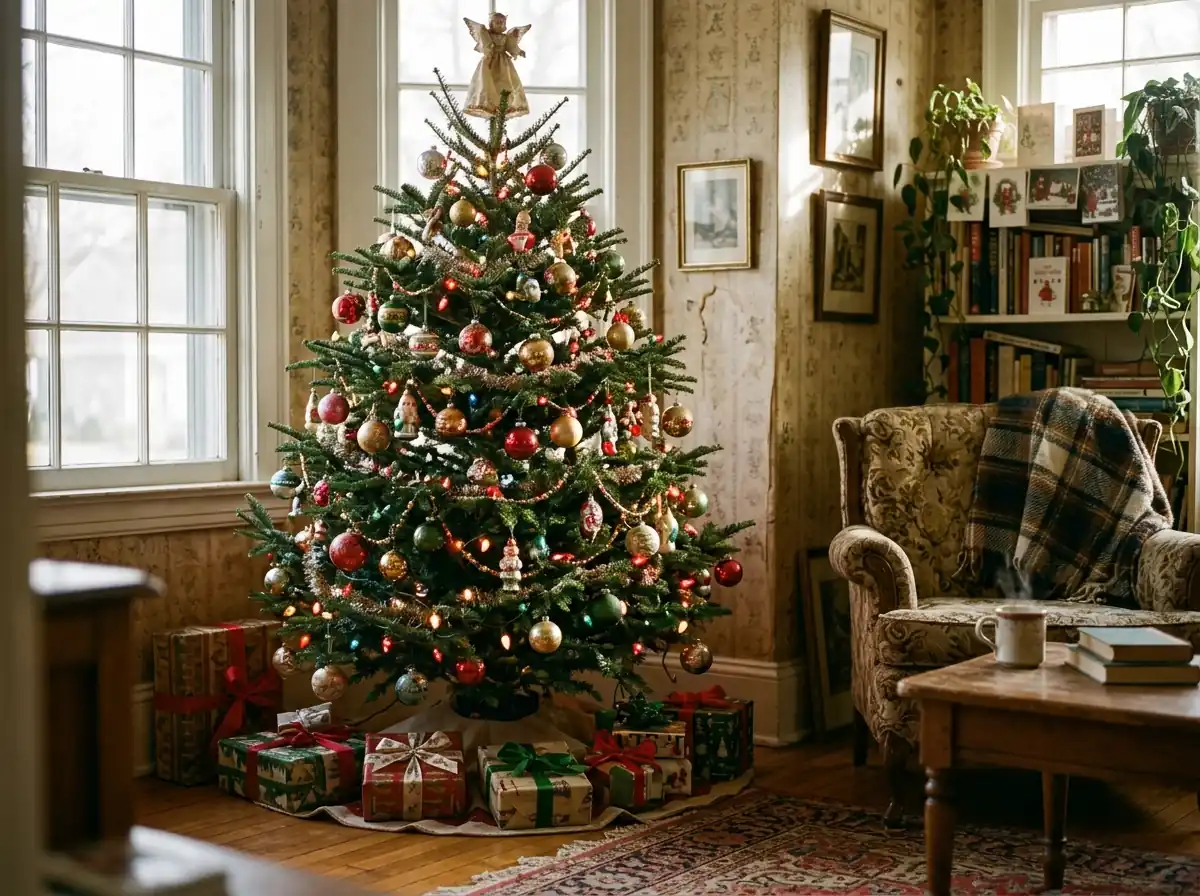
You do not need more rules. What helps is the right examples: the pieces that made those rooms magical, and an honest look at what each one was doing.
So borrow one useful detail at a time — one piece’s glow, another’s color. Copy a whole time capsule and your living room becomes a museum.
The 13 retro icons below each teach one borrowable detail, all differently.
What Makes a Retro Icon Worth Borrowing?
A retro piece earns its place when it does one job beautifully inside a normal, modern room. The contrast is the charm: one shimmering tree against plain walls, one strand of colored lights in a calm space. Surrounded by fifty other vintage pieces, the same item is just clutter.
Each icon repeats a single strong idea — a glow, a color, a shine — clearly enough to steal without inheriting the whole era.
Look for pieces that give you at least one of these things:
- One strong glow or shine for a plain room
- Saturated color, repeatable in small doses
- A texture modern decor rarely offers
- A silhouette that reads “Christmas” instantly
- A safe modern reproduction of the look
Borrowing well starts with a better question: stop asking “Where did they get that?” and start asking “Why does that work so well?”
| Icon | Best Inspiration For | The Detail Worth Borrowing |
|---|---|---|
| An aluminum silver tree | A bold focal point | Shine instead of ornaments |
| Shiny glass ball ornaments | Rich, saturated tree color | One color family, committed |
| Bubble lights | Warm, moving light | Gentle motion in lighting |
| A lighted ceramic Christmas tree | Tabletop nostalgia | A whole tree, one glow |
| Tinsel icicles | Old-fashioned shimmer | Sparkle, strand by strand |
| Bottle-brush trees | Tiny woodland scenes | Group small trees as a forest |
| A putz-house cardboard village | Storybook windowsills | Houses lit from within |
| Tissue honeycomb bells | Doorway cheer | Decor that hangs, not sits |
| A vintage-style Santa figure | One character with presence | One figure, real space |
| Large colored C9-style bulbs | Porch and mantel glow | Big bulbs, spaced wide |
| A pastel ornament palette | Soft retro sweetness | Pink, mint, aqua on green |
| Mid-century reindeer and elf figures | Playful shelf scenes | Figures arranged mid-story |
| A classic angel tree topper | A finished treetop | The crowning piece, in proportion |
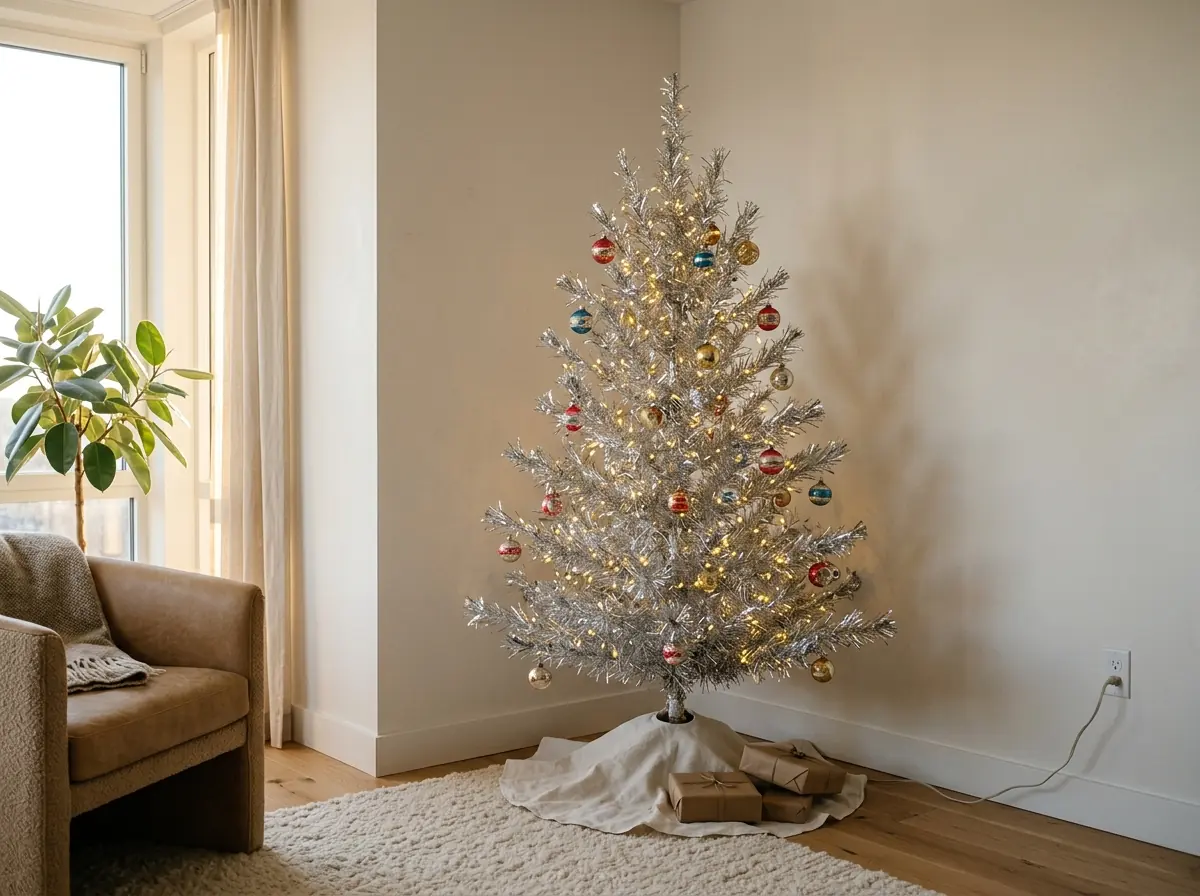
An Aluminum Silver Tree and Tinsel Icicles Prove Shine Is Enough
The aluminum tree is pure confidence: silver tinsel-needle branches made to be lit by a spotlight or color wheel, not weighed down with ornaments. Its whole beauty is reflection.
Reproductions need almost nothing on them. Stand one in a corner, keep everything around it plain, and let the shimmer do the decorating.
Start small: A tabletop aluminum tree gives the same glow in miniature.
Tinsel icicles were its partner: thin metallic strands draped branch by branch until the tree dripped with light and movement.
The translation is patience: drape it strand by strand over one tree section or a mantel garland. One deliberate patch of shine beats a tree lost under it.
Shiny Glass Ball Ornaments and a Pastel Palette Show Two Ways to Color a Tree
Thin glass ball ornaments in ruby, cobalt, emerald, and gold — so saturated they seem lit from inside — are the retro tree’s signature, with a shine brighter than modern matte finishes.
The translation is commitment. Pick two or three saturated colors and fill the tree generously with glossy balls in those shades, mixing sizes. Modern reproductions make it buildable without hunting fragile originals.
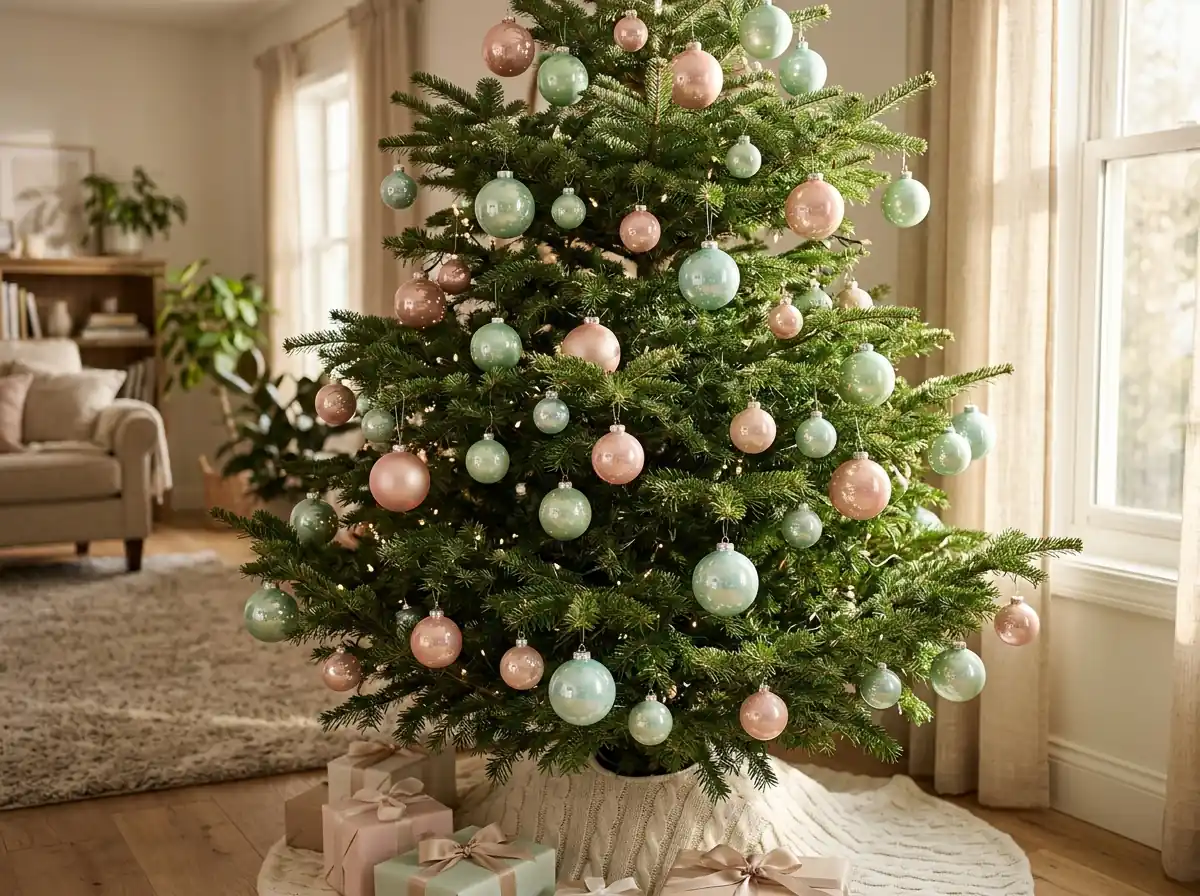
The pastel palette runs the same glossy balls the other way: pink, mint, aqua, and butter yellow on a deep green tree, which grounds the sweetness.
Color note: Pastel ornaments need dark, rich green — on a pale or flocked tree they wash out completely.
Either direction teaches the same lesson: color repeated with confidence makes a tree vintage-rich.
Bubble Lights and Large C9-Style Bulbs Bring Back the Glow
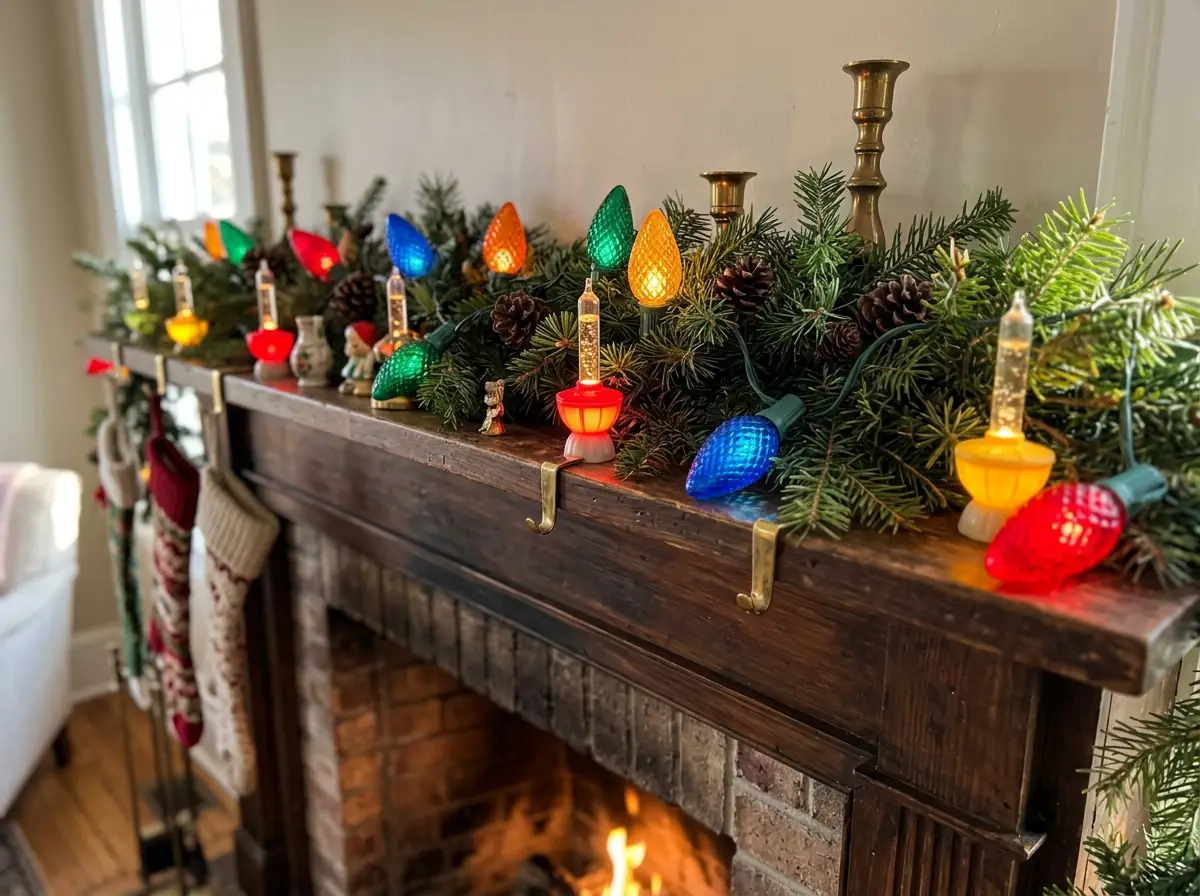
Bubble lights are the most alive decoration here: small tubes of colored liquid that bubble steadily once warm — light that does something all evening.
Old electrical sets belong on display only, so borrow the silhouette with a modern LED strand, strung where eyes rest: the mantel edge, a shelf, the tree’s inner branches.
Reality check: Nearly every retro bulb style now exists as an LED reproduction — same glow, none of the worry.
C9-style bulbs go bigger: chunky, thumb-sized colored bulbs spaced wide along a porch rail or mantel. Where fairy lights whisper, C9s announce — and LED versions run all season.
A Lighted Ceramic Christmas Tree Is a Whole Tree in One Glow
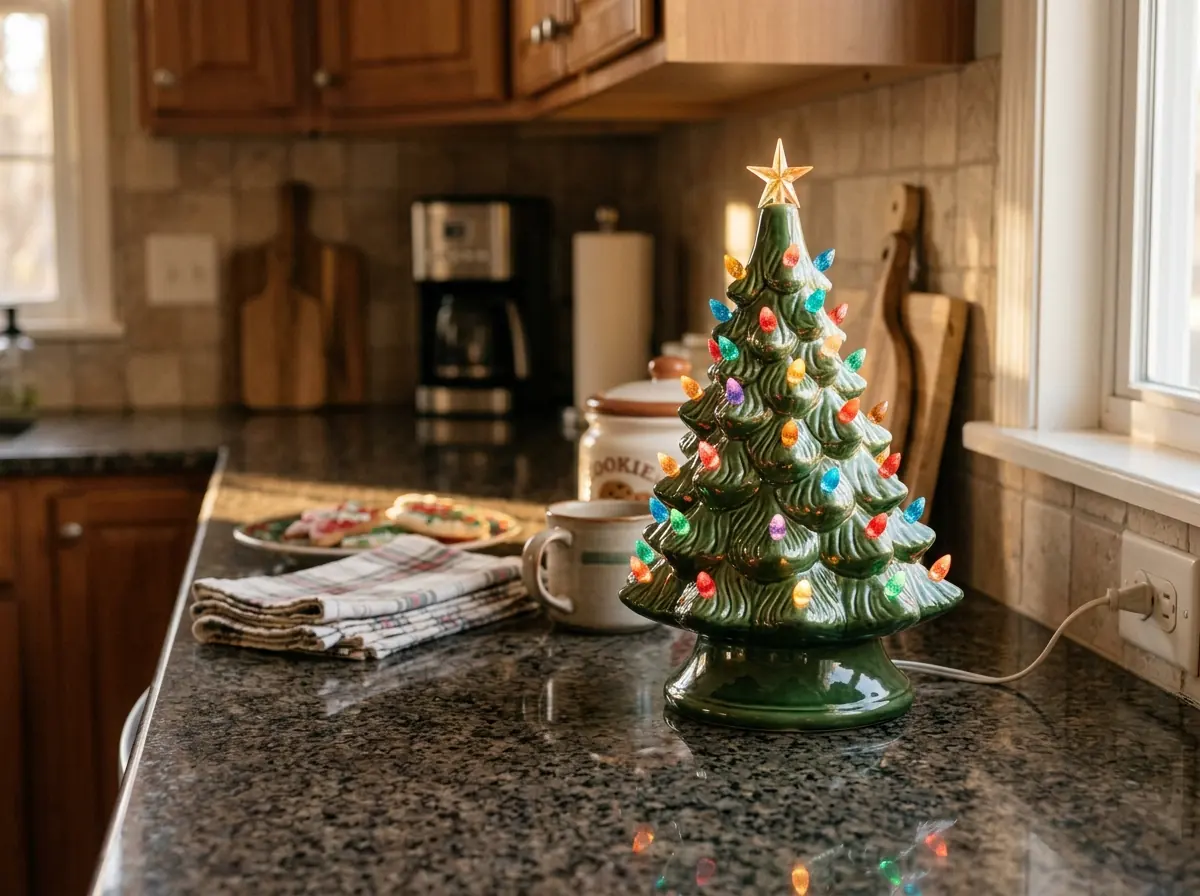
The ceramic tree is the most practical icon here: a glossy molded tree studded with tiny colored bulbs, lit from inside — a whole tree’s glow in under a foot of space.
Modern versions come in green, white, and pink. Put one where a real tree could never go — a kitchen counter, an entry table. No watering, no shedding, one small box in January.
Bottle-Brush Trees and a Putz-House Village Build Tiny Worlds
Bottle-brush trees are humble — bristly little trees dyed green, red, pink, or cream on small wooden bases. Alone, one is nothing. Grouped in mixed heights on a mantel, they become a forest; the grouping is the entire trick.
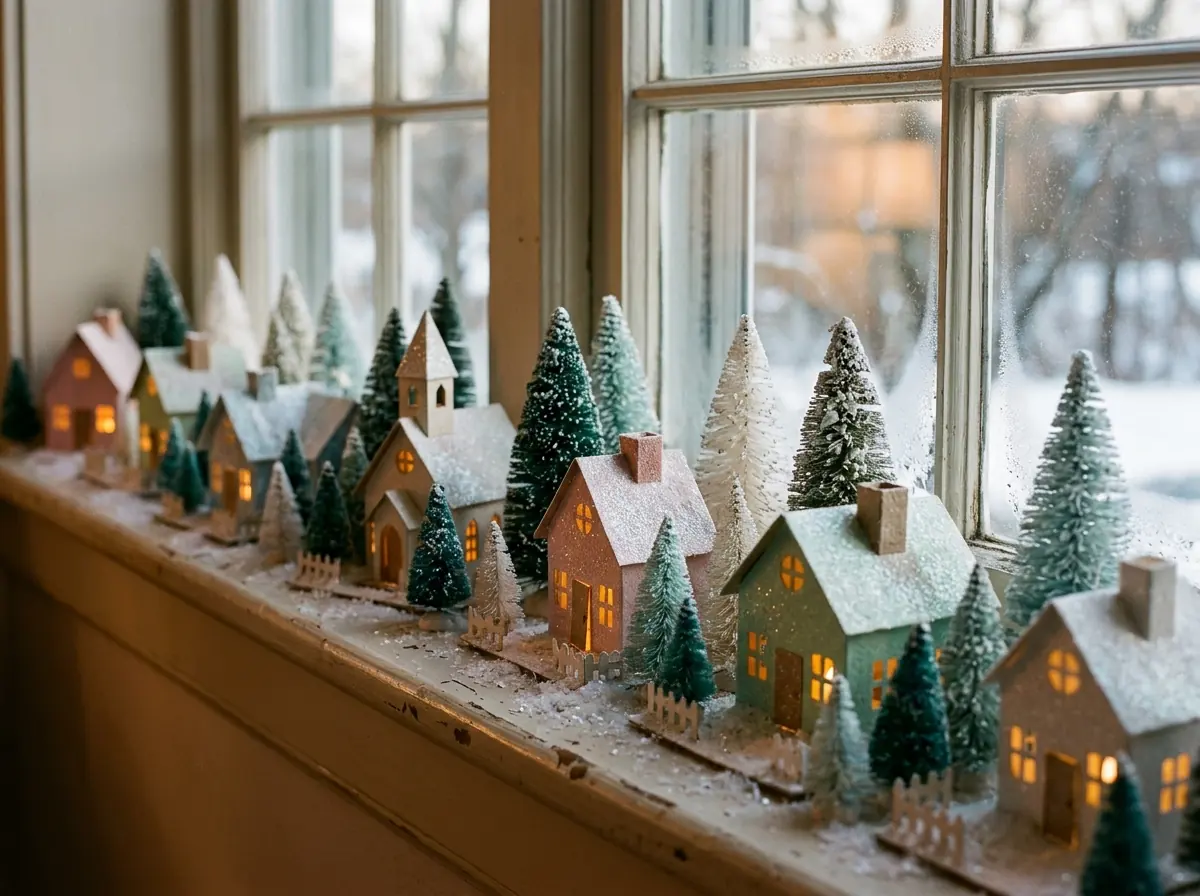
Putz houses do the same at windowsill scale: tiny cardboard houses with glittered roofs and windows made to glow from a light behind them. A row at dusk is pure storybook.
| Situation | Base Pieces | Why It Works |
|---|---|---|
| Bare mantel | Five putz houses, one light string | Windows glow at eye level |
| Windowsill | Three houses, brush trees between | A village from outside too |
| Sideboard | Houses on white cloth “snow” | The base unifies mismatched pieces |
| Child’s shelf | Two houses, battery tea lights | Glow, no cords or heat |
New village sets are just as charming lit. Small things grouped with intention beat big things scattered alone.
Tissue Honeycomb Bells Decorate the Air Itself
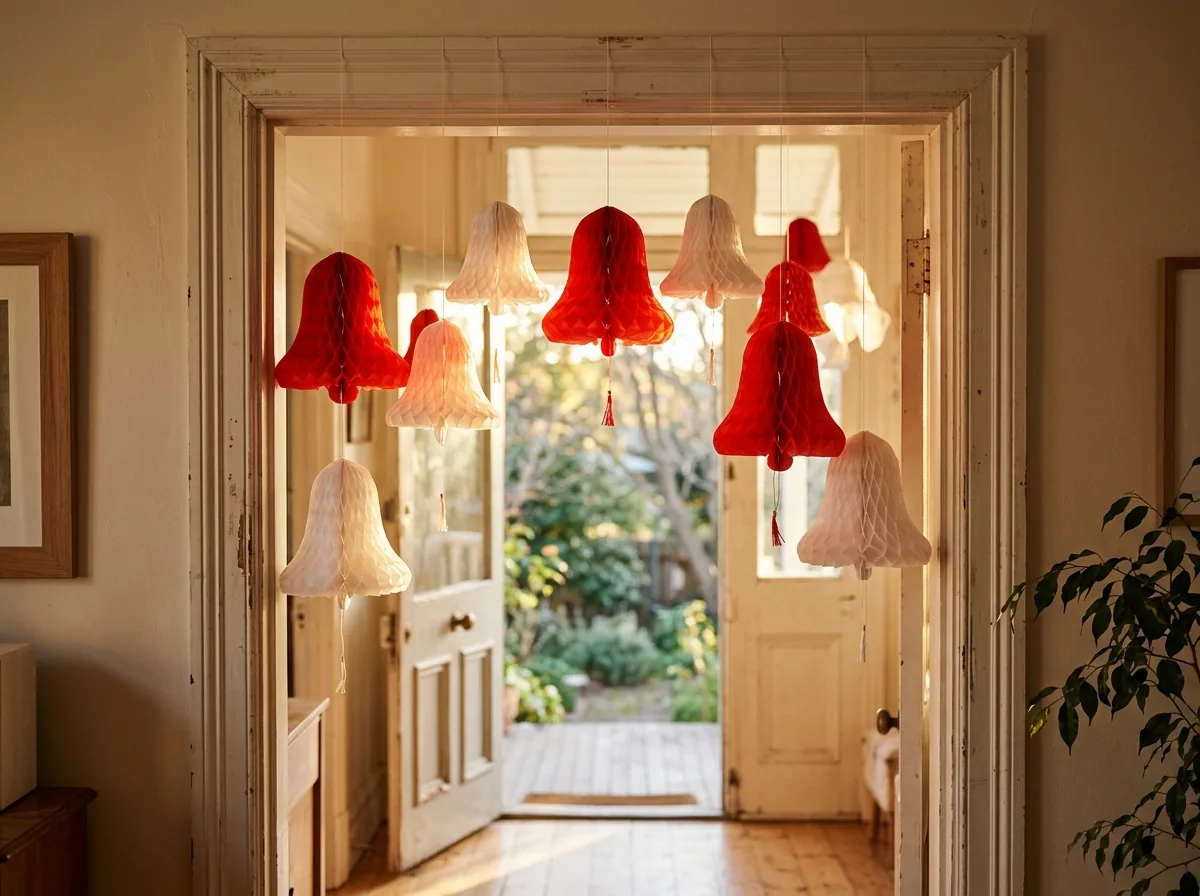
Most decorating sits on surfaces. Honeycomb bells take the ceiling: pleated tissue bells that fan open and hang from doorways in red, green, white, or gold — light, slightly swaying, joyful in a way solid objects can’t be. Party suppliers still make them, and they fold flat for storage.
Budget note: The cheapest borrow here — three large bells over a table change the room for coffee money.
Hang them in odd numbers at varied heights, in one room rather than the whole house.
A Vintage-Style Santa and Mid-Century Reindeer and Elf Figures Give the Room Characters
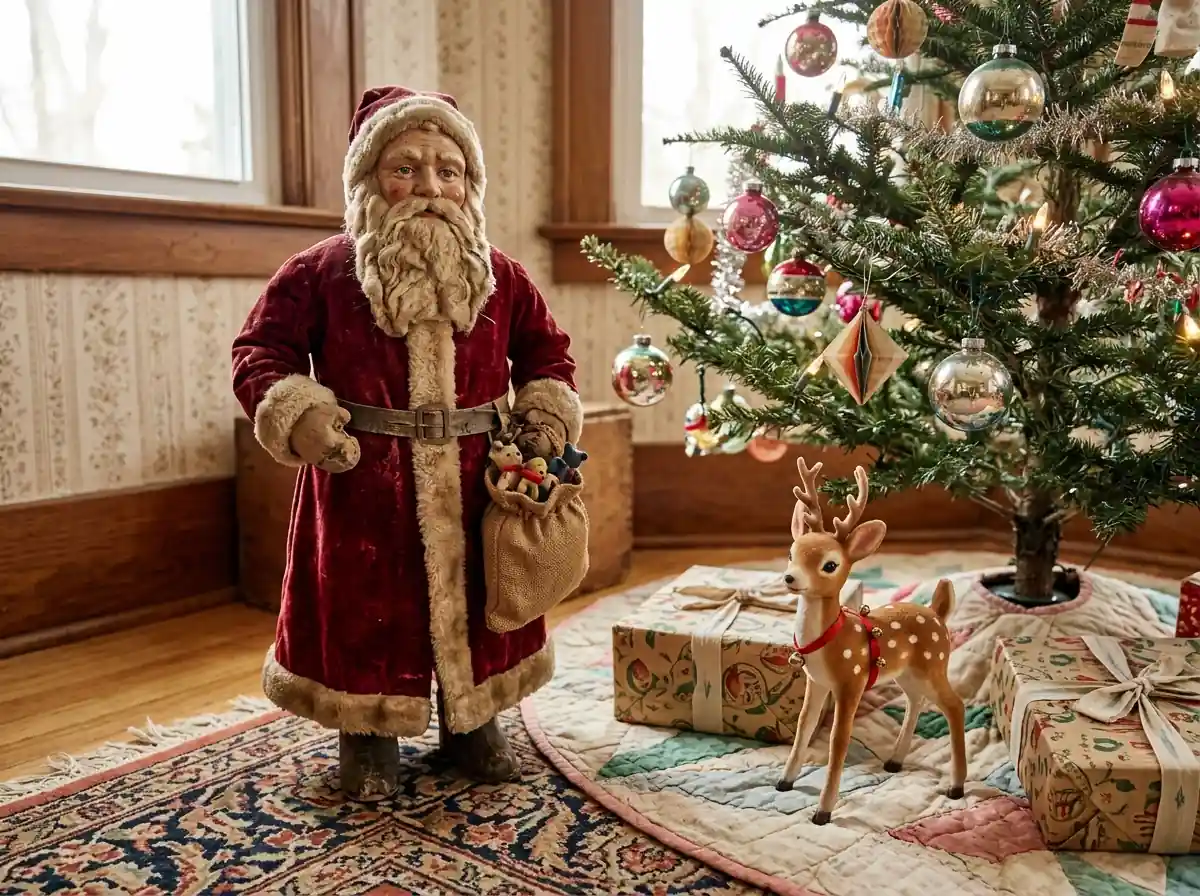
The vintage-style Santa — rosy-cheeked, deep red suit, sack over his shoulder — stood on mantels like a host greeting guests. Classic-style reproductions run from shelf size to statement height.
Fit note: Scale decides charm. One mantel-height Santa with clear space around him beats five small ones competing.
Reindeer and elf figures bring the play: slim long-legged mid-century reindeer, small capped elves that perch on branches and hooks — a reindeer by the bottle-brush forest, an elf peeking from the tree.
A Classic Angel Tree Topper Finishes What the Others Start
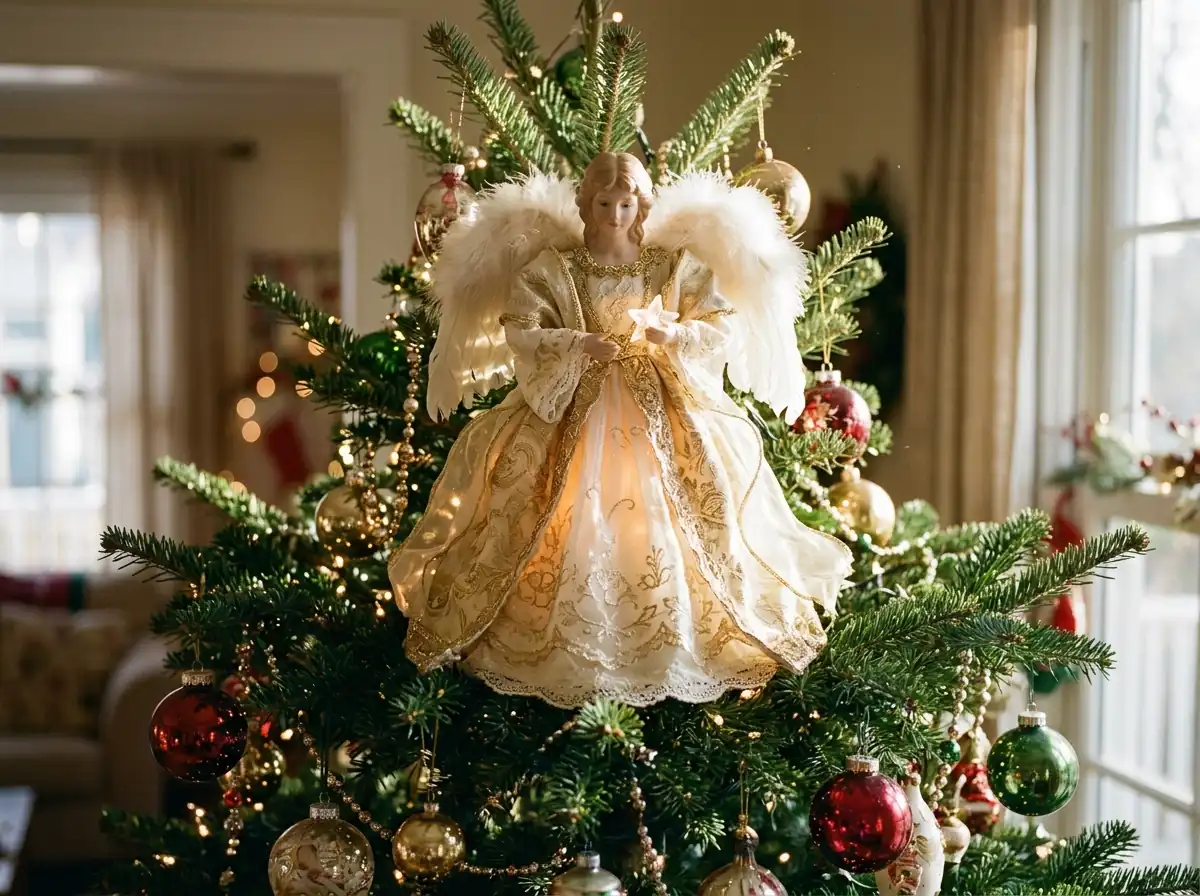
The angel is the era’s full stop: a serene figure in a white, gold, or pastel gown, sometimes lighted. After all the color below, she brings calm — why retro trees look finished, not just full.
Classic-style toppers, including LED versions, are widely available. Choose one roughly a tenth of your tree’s height. If your tree has felt almost done for years, the missing piece is rarely more ornaments — it is a proper ending.
Copy the Principle, Not the Time Capsule
After one good thrift afternoon, the temptation is to use every find at once. Resist. Nostalgia is a seasoning, not a floor plan — the rooms you remember held a few special pieces inside an otherwise ordinary home.
The secret under every icon here is contrast. Silver shines because the room is plain. Colored bulbs glow because the walls are calm. One ceramic tree charms; six compete.
| Instead of Copying This | Borrow This Principle |
|---|---|
| A whole aluminum tree display | One high-shine focal point per room |
| Boxes of fragile vintage ornaments | Saturated glossy color, committed |
| Original vintage light strings | Same glow, LED reproductions |
| A mantel crowded with figures | One character, real space |
| Tinsel on every surface | Shine in one deliberate place |
Borrowed this way, the result is warmer than any perfect replica.
Build Your Own Retro Mix From the Icons You Like
You do not need all thirteen. Mixing two or three works better: ceramic-tree glow in the kitchen, a bottle-brush forest on the mantel, big bulbs on the porch.
Formula: calm modern base + one retro glow + one saturated color repeated + one small nostalgic figure
Then change one part at a time — a different glow piece next year, pastels the year after. That is how a house style gets built.
The best icon is the one that makes your home feel like the houses you loved — while staying unmistakably yours.
Frequently Asked Questions
How many retro pieces should I use in one room?
One or two is plenty. A single strong piece reads as a deliberate note; a room full of vintage feels like a display, not a home.
Are real vintage decorations safe to use?
Solid pieces — ornaments, figures, bottle-brush trees — are generally fine to display. Old electrical items are best kept look-only; LED reproductions give the same glow, made for daily use.
Where can I find retro-style Christmas decor on a budget?
Thrift stores and estate sales are rich in figures, ornaments, and village pieces, especially outside December. Reproduction lines copy the look closely, and honeycomb bells cost very little.
Will retro pieces clash with my modern style?
That contrast is the point. One nostalgic piece in a calm modern room looks intentional, like a single antique in a new house. Start small and judge before adding more.
Which retro icon should a beginner start with?
The lighted ceramic tree: inexpensive, style-free, one small storage box, instant glow. Bottle-brush trees are second — group three heights anywhere.