You can spend two days and a small fortune on Thanksgiving decor and still sit down to a table that feels cold — stiff, formal, as if nobody is meant to eat at it. The problem is rarely effort; it is decorating in a dozen pieces that never agree.
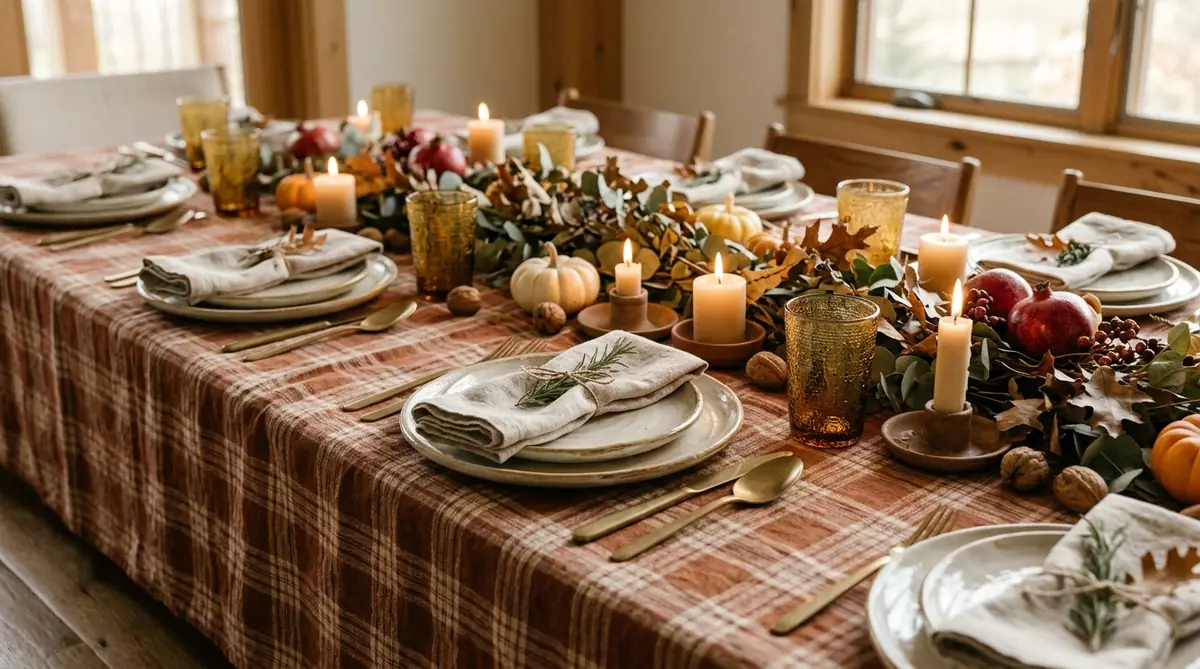
The simpler principle behind every good plaid Thanksgiving table: let one patterned textile do the heavy lifting. A plaid cloth, runner or set of napkins brings palette, warmth and personality in one decision. Everything else can stay plain, mismatched and already in your cupboard. One strong pattern plus quiet basics reads as intentional — and intentional is what cozy looks like.
Why Plaid Earns Its Place
Plaid does three jobs at once. First, it hands you a ready-made palette: pull napkins, candles and flowers from the check’s colours and nothing can clash. Second, those crossing lines in autumn tones read as gathered and warm before a dish is served. Third, a busy pattern forgives — mismatched plates, glasses from two sets, a scarred tabletop.
1. Let a Full Plaid Tablecloth Run the Show
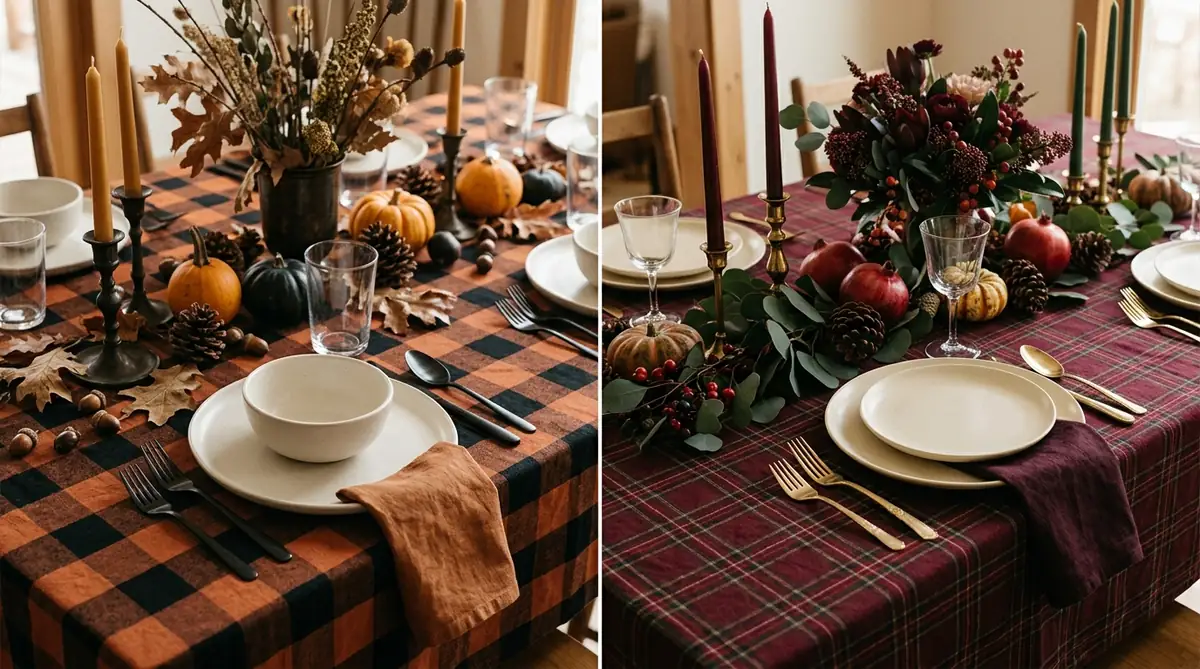
If you own one generous plaid cloth, you own the whole look. Spread a full plaid tablecloth Thanksgiving-style from edge to edge, then keep everything on top plain: solid plates, single-colour glasses, unadorned candles. The cloth becomes the room’s colour story. In a dark dining room, choose a cream-based check — it lifts the table while staying classic.
2. Run a Plaid Runner Down Bare Wood
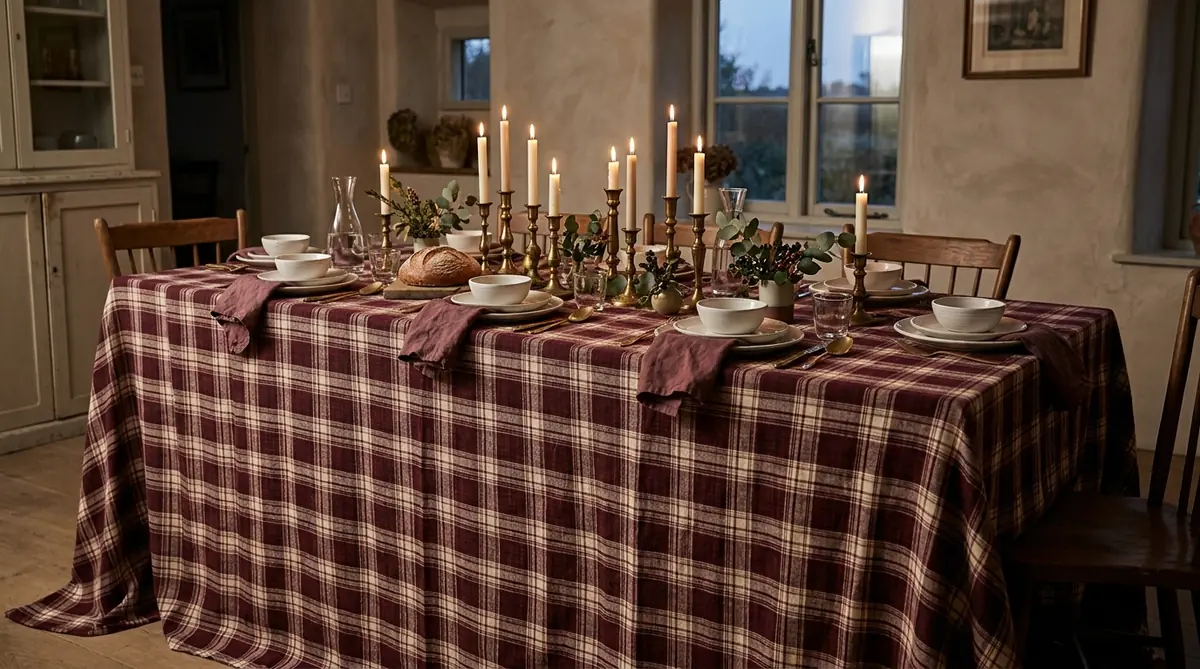
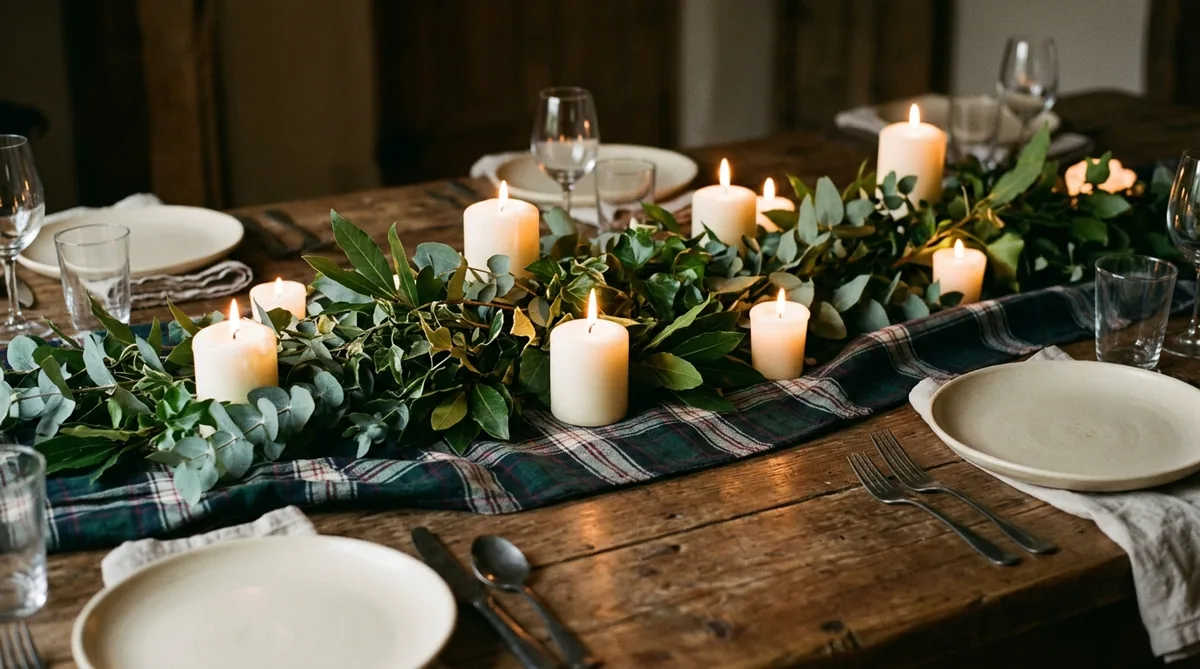
A beautiful wooden table deserves to be seen. Lay a plaid runner lengthwise down the centre and leave the wood exposed on both sides; the contrast between polished timber and soft woven pattern is the entire decoration. Set places directly on the wood, placemats or none. It is the easiest plaid tablescape to pull off, especially on long farmhouse tables.
3. Make Plaid Napkins the Only Pattern
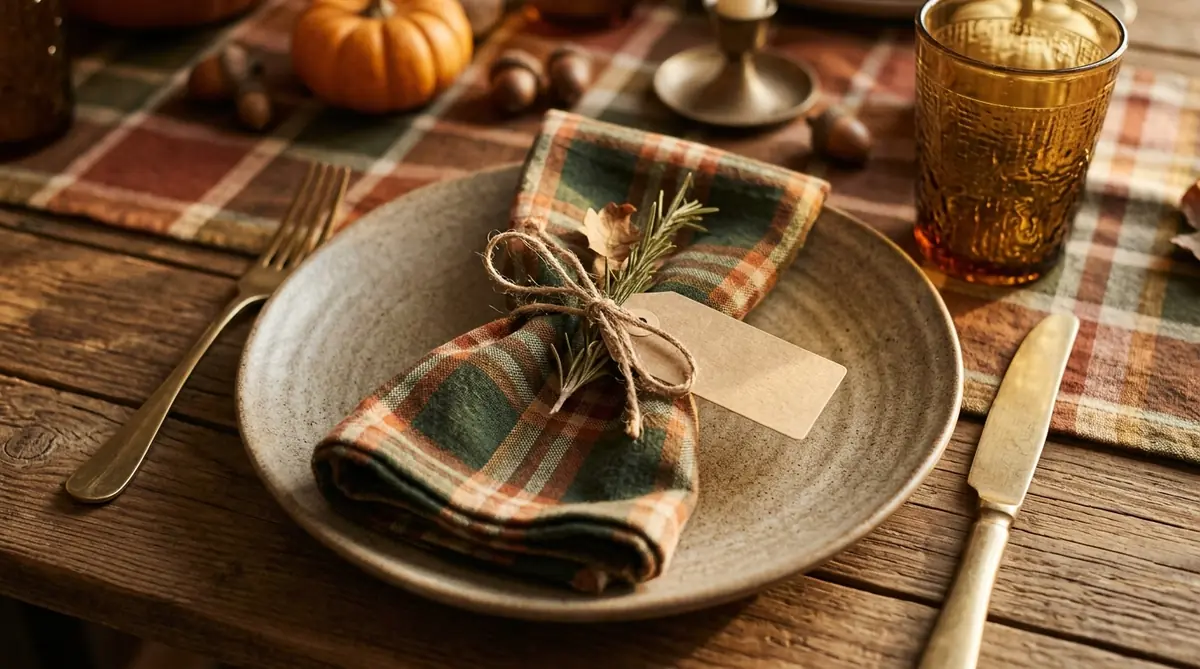
When the table itself must stay plain — white cloth, bare top, borrowed furniture — let the napkins carry the pattern alone. Fold generous plaid napkins on each plate or tuck them under the forks. Twenty percent pattern, eighty percent calm. Guests notice the detail precisely because it is the only one — and napkins cost far less than a cloth.
4. Mix Two Plaids at Different Scales
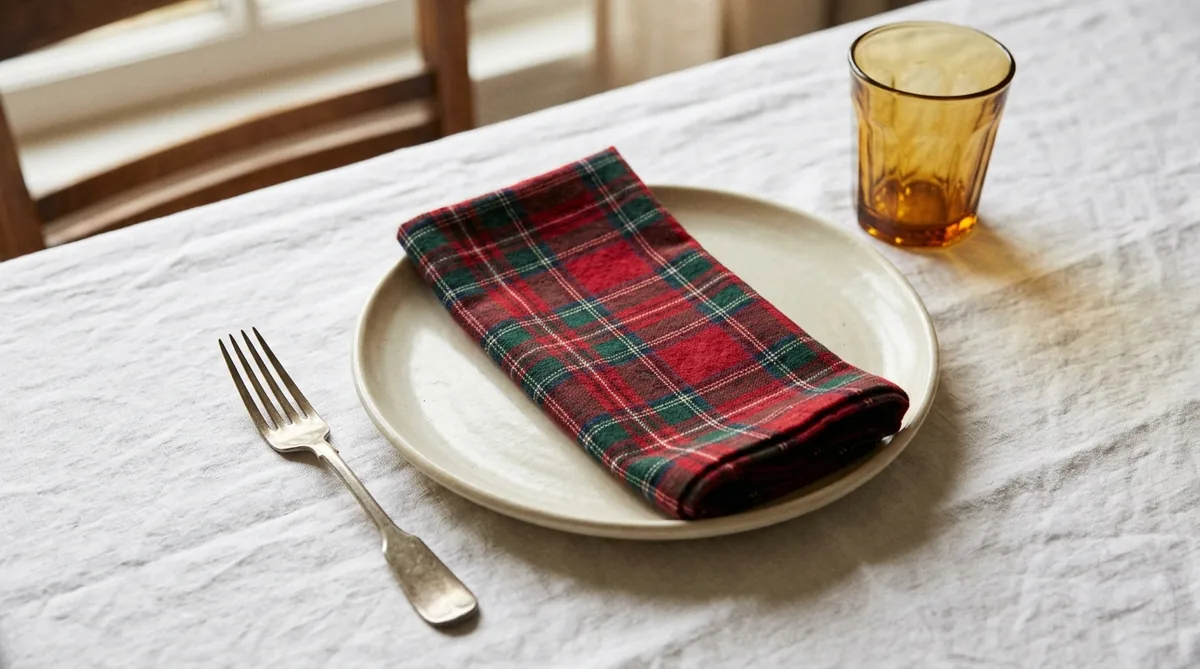
Two plaids can share a table if they are clearly different sizes. Pair a large-scale buffalo check cloth with a fine, small-scale plaid napkin in one of the same colours. The eye reads the big check as background, the little one as accent. Keep a third pattern out — two is a conversation, three is an argument.
5. Tie Plaid Ribbon Around Chairs and Glasses
A roll of wired plaid ribbon is the cheapest tool in this article. Tie loose bows on chair backs, loop a short length around each glass or napkin, wind a little through the centrepiece. The ribbon repeats the cloth’s colours in tiny flashes, so the table feels considered from every angle — with no purchase beyond the roll.
6. Drape Plaid Throws Over the Chair Backs
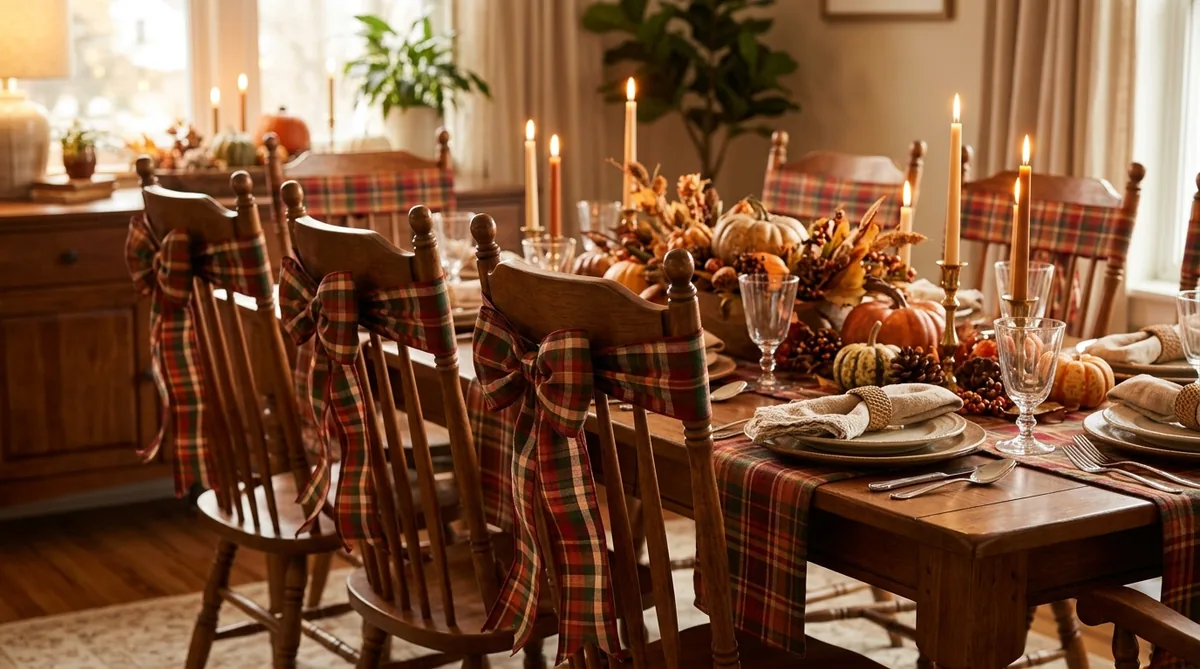
Borrow the throws from your own sofa and drape one folded plaid throw over each chair back — or just the two end chairs if you own only a pair. It looks generous and layered, and it solves the chilly dining room later, when guests pull them round their shoulders. Decorating people can wrap up in never feels staged.
7. Choose Buffalo Check for Bold, Tartan for Traditional
The scale of your plaid sets the table’s personality. Big buffalo check in rust, black or forest green feels hearty and informal — wonderful for a young family crowd. A finer tartan in burgundy, navy or deep green feels more traditional, closer to a classic Thanksgiving table setting grandparents would approve of. Neither is better; they host different evenings.
8. Use Plaid Chargers or Placemats as the Base Layer
If a full cloth feels like too much commitment, put the plaid under each place instead. Plaid chargers or woven placemats give every setting a framed square of pattern while the surface between stays neutral. This suits glass or dark wood tables a cloth would hide, stores flat afterwards, and quietly protects the surface from hot dishes.
9. Layer Plaid Under a Plain Centrepiece
Set your centrepiece on a folded plaid runner, a plaid tray or even a plaid scarf, and keep the arrangement solid: cream candles, plain greenery, a bowl of one kind of fruit. The plaid acts as a rug under the display, grounding it instead of letting it float. Pattern as foundation, solids as the picture.
10. Carry Plaid onto the Buffet and Drinks Station
Decorating usually stops at the table’s edge, so the serving side looks forgotten. Cover the buffet with the same plaid — a second cloth, a folded throw — and set the pies, glasses and bottles on it. One pattern in both places makes the room feel planned, not just the table dressed for company. Guests serve themselves there — it should feel like part of the celebration.
11. Fold Plaid into the Place Cards and Small Details
Cut narrow strips of plaid fabric, or use plaid ribbon, to tie each napkin with a small name tag tucked in. Line the bread basket with a plaid napkin; wrap cutlery in plaid paper napkins at the kids’ end. Five-minute jobs — but small echoes of the main pattern make a table look finished rather than nearly done.
12. Keep a Plaid Scarf as Your Anywhere Fix
Every home stylist has one fallback: a large plaid scarf or lightweight throw that becomes a runner, a small-table cloth, a buffet cover or a basket liner at ten minutes’ notice. Soft rather than stiff, it drapes better than linens. If you buy nothing else for your plaid tablescape, thrift this one piece in colours you already love.
Picking Your Plaid: What Actually Matters
| Plaid Piece | What to Look For | Why It Works |
|---|---|---|
| Tablecloth | Cream base, two or three autumn colours | Sets the whole palette in one purchase |
| Runner | Woven, not printed, fabric | Real checks drape softer over wood |
| Napkins | Smaller-scale check than your cloth | Scale contrast stops plaids clashing |
| Ribbon | Wired edges, the cloth’s exact colours | Holds bows; ties the scheme together |
| Throw or scarf | Lightweight, fringed, runner-sized | Covers buffets, baskets and bare patches |
Old Pattern Rules Worth Retiring
| Old Rule | What Works Better Now |
|---|---|
| Only one pattern per table | Two plaids are fine if scales clearly differ |
| Everything in the set must match | Matching colours matter; matching pieces do not |
| Plaid is only for cabins and Christmas | Autumn checks belong to harvest season most |
| A formal table must be plain | Quiet plaid under plain dishes reads classic |
Pattern Up Front, Calm Everywhere Else
The secret here is restraint around the star. Plaid is busy and warm, so let it be the only thing shouting. Choose solids lifted straight from the check, repeat one warm metal — brass, copper, old gold — and add no second theme. Cozy is one idea done fully, not five halfway.
Quick Tip: Lay your plaid piece on the table a full day early. By morning you will know which two colours to pull for napkins and candles.
Let the Cloth Be the Star
Every table needs one element with permission to be the main event — here, the cloth or runner. Once chosen, demote everything else: centrepiece low and plain, dishes simple, glasses one colour. This is not settling for less — it is how a table gets a clear point of view. It is the heart of classic Thanksgiving table setting advice worth following: one star, everything else support.
When It Starts Feeling Like Too Much
- If plaid napkins on a plaid cloth feels like too much, try plain linen napkins in the check’s main colour instead.
- If two plaids together feels like too much, try keeping the second plaid only on the buffet instead.
- If a bright autumn plaid feels like too much, try a neutral plaid in cream, tan and soft brown instead.
- If ribbon on every chair feels like too much, try bows on just the two end chairs instead.
- If the whole table feels like too much, try removing one item per setting instead.
Your Repeatable Plaid Thanksgiving Table Formula
Most plaid tables that work follow one formula: one plaid + two solids pulled from the check + one warm metal. Trust it, and the same pieces restyle for any crowd — most cozy Thanksgiving table ideas are this formula dressed for a different house.
| Situation/Occasion | Formula | Why It Works |
|---|---|---|
| Formal dining room | Tartan cloth + ivory and burgundy + brass | Fine checks and metal read polished |
| Casual kitchen table | Plaid runner + cream and denim blue + wood | Bare wood keeps it everyday |
| Big family crowd | Buffalo check cloth + two bold solids + enamelware | Large scale hides spills and mismatches |
| Small table | Plaid napkins only + white and rust + copper | Pattern stays a detail, never crowding |
| Budget refresh | Plaid throw as runner + cupboard solids + candles | One new piece changes the whole mood |
The Ten-Minute Version
Short on time this year? Fold one plaid throw or scarf lengthwise as a runner. Set the table with everyday plates, plain glasses and whatever candles you can find, in colours near the plaid. Done — it needs one patterned piece and the confidence to let it be enough.
Questions Every Plaid Host Asks
What colours of plaid suit Thanksgiving best?
Warm autumn colours — rust, burgundy, mustard, forest green, cream — echo the food and the season. Cream-based plaid keeps things light; dark-based feels moodier, more formal.
Can I mix two plaids on one table?
Yes, if the scales are obviously different — large buffalo check with a small fine check. Share one colour, keep everything else solid, and the pairing looks deliberate.
How do I use plaid without a tablecloth?
Put the pattern lower or smaller: a runner over bare wood, plaid napkins on plain plates, plaid placemats under each setting. Same warmth, in easier doses.
Do I need matching dishes to pull this off?
No — plaid is the great unifier of mismatched cupboards. With the pattern supplying so much visual information, plain plates in slightly different whites look gathered instead of inconsistent.
How do I keep plaid looking classic instead of country-kitsch?
Choose woven fabric over shiny prints, keep the rest solid, and repeat one metal for polish. Restraint separates a classic table from a themed one.
One Pattern, Whole Mood
A cozy Thanksgiving table was never about owning more things; it is about choosing one good pattern and letting it carry the colour and warmth. This week, pull out the plaid you already own — cloth, throw, even a scarf — lay it on the table tonight, and build the rest around it from your cupboards.