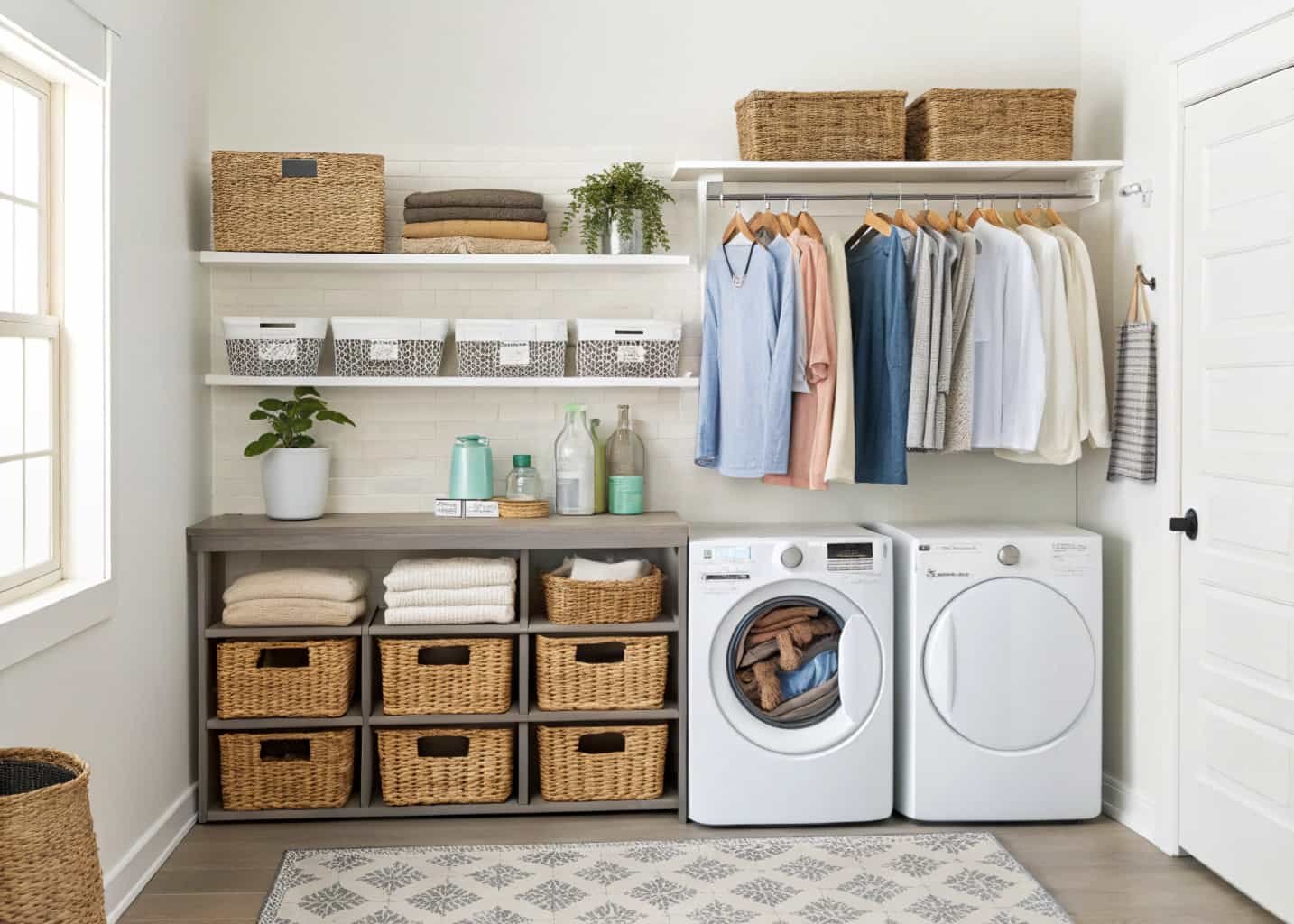
You walk into the laundry room to grab one thing and leave twenty minutes later, having moved a pile of towels, rescued a lone sock, and knocked over a half-empty detergent bottle. Sound familiar? For most homes, the laundry room is the hardest-working space and the least-planned one.
Here is the good news: strong laundry room organization is not about buying more bins or chasing a picture-perfect makeover. It is about building small systems, so every item has a home and every step of the laundry cycle has a place to happen. When the system does the work, tidiness stops depending on willpower.
In this guide, we will walk through simple, realistic ways to organize a laundry room of any size, from a full utility room to a single closet. Take what fits your space and skip what doesn’t.
Why Laundry Rooms Get Messy So Fast
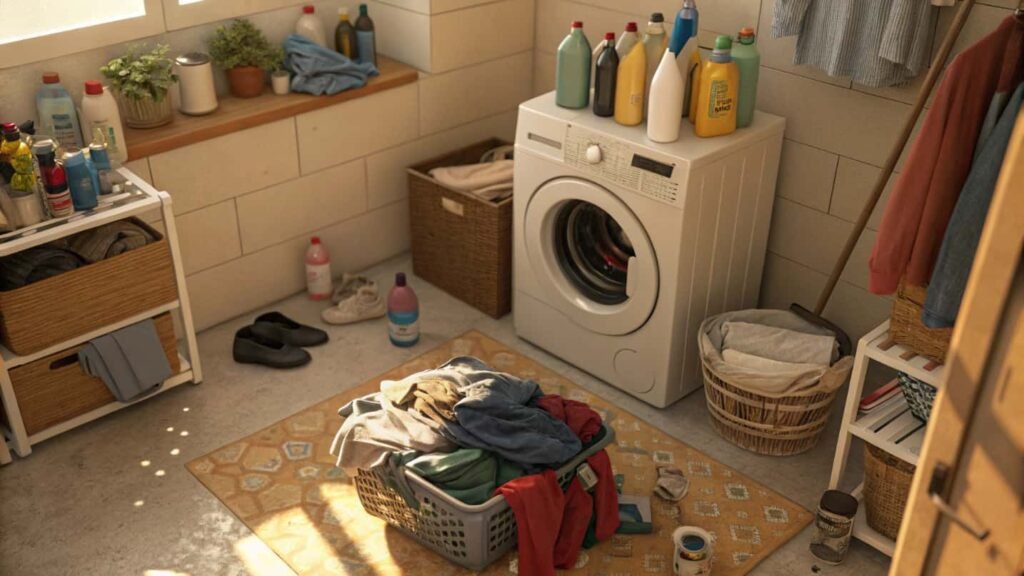
A laundry room is a “transition space.” Dirty clothes arrive, clean clothes leave, and supplies quietly pile up in between. Nothing in that flow naturally stays put, so clutter builds in the gaps: the dryer top becomes a dumping ground, the floor becomes an extra hamper, and the shelf turns into a graveyard of half-used products.
The real culprit is rarely laziness. It is a lack of defined zones. When sorting, washing, drying, and folding all happen in the same jumbled spot, every task leaves a little mess behind for the next one.
The fix is a simple principle: give every stage of laundry its own small zone, and give every item one obvious home. Once you think in zones instead of “stuff,” the room becomes far easier to keep clear.
Declutter and Sort: Where to Start
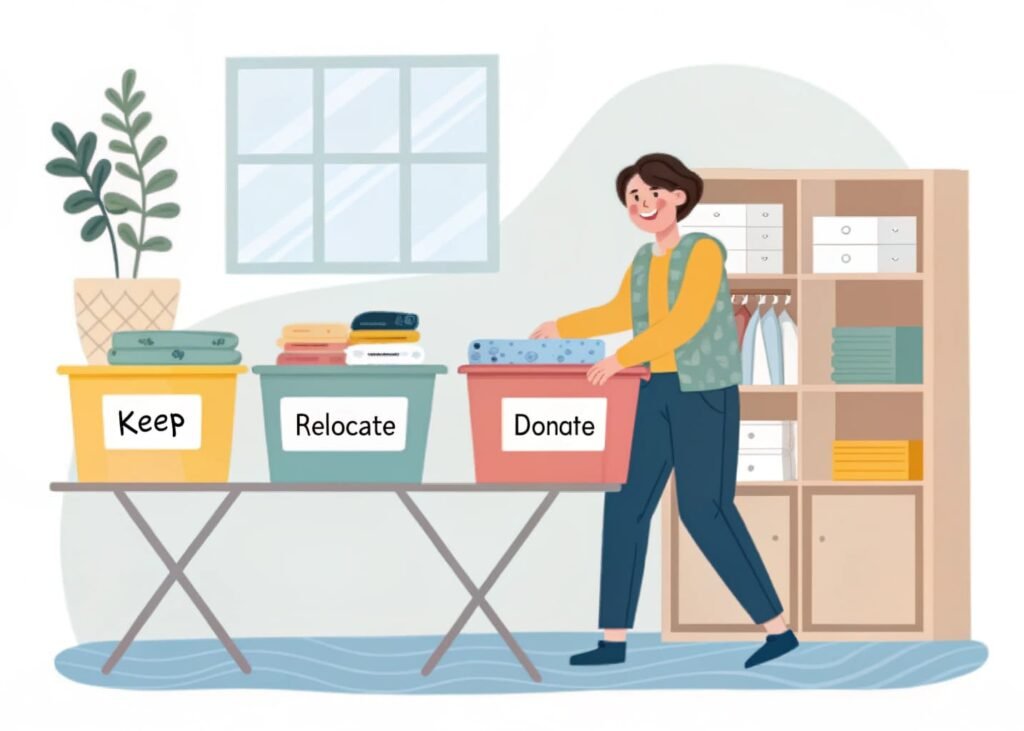
Before you buy a single organizer, empty the room’s surfaces and shelves. Pull everything into one spot, wipe down the shelves, and sort items into three groups: keep, relocate, and let go.
Be honest about what belongs here. Cleaning rags, spare light bulbs, and craft supplies often wander into the laundry room and never leave. If something doesn’t relate to washing, drying, folding, or stain care, it likely has a better home elsewhere.
Here is a quick guide to sorting what you find:
| Item | What to Look For | Why It Works |
|---|---|---|
| Detergents and boosters | Duplicates, dried-out or nearly empty containers | Fewer products means faster grabbing and less shelf crowding |
| Stain removers and sprays | Products you actually use each month | Keeps only proven helpers within reach |
| Lost socks and orphan items | Anything unmatched for weeks | Clears clutter and stops the “someday” pile |
| Cleaning supplies | Items unrelated to laundry | Frees space for what truly belongs |
| Hangers and lint tools | Broken or excess pieces | Leaves only what supports your routine |
Pro Tip: Do this in one focused session with a timer. A 30-minute sprint keeps you from overthinking every item.
Best Laundry Room Organization Products
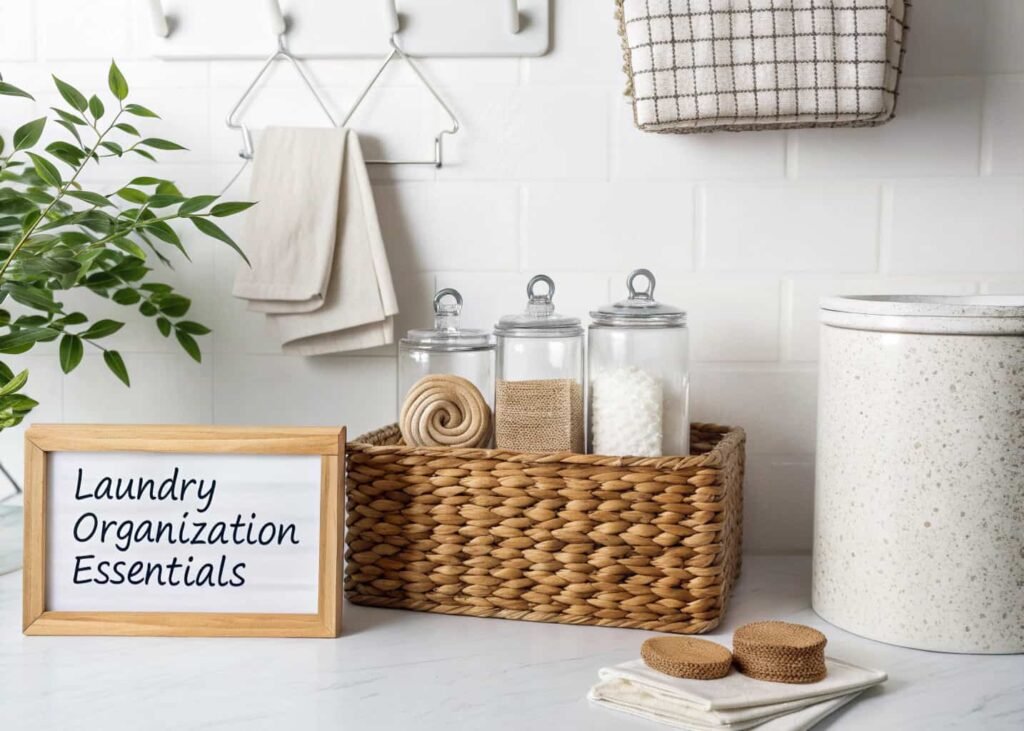
You don’t need a cart full of gadgets. A handful of well-chosen pieces does most of the heavy lifting. Think in categories rather than brands, and pick what fits your space and budget.
The most useful categories are:
- Shelving or wall-mounted racks to lift supplies off the counter and floor.
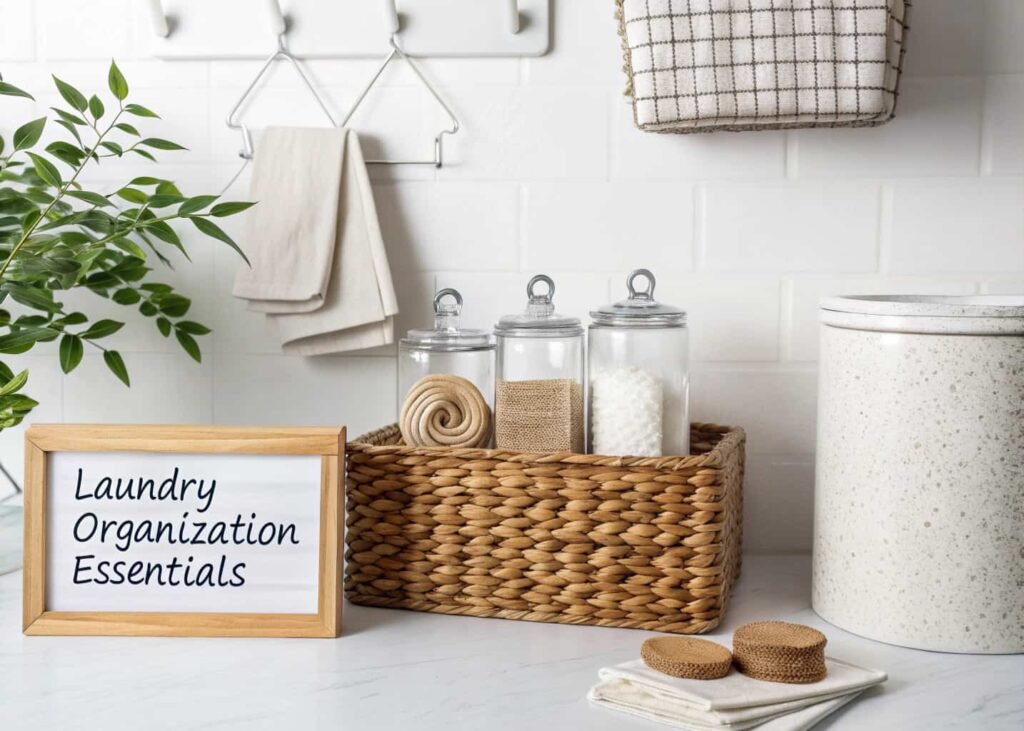
- Lidded bins or baskets to hide small items and keep the room visually calm.
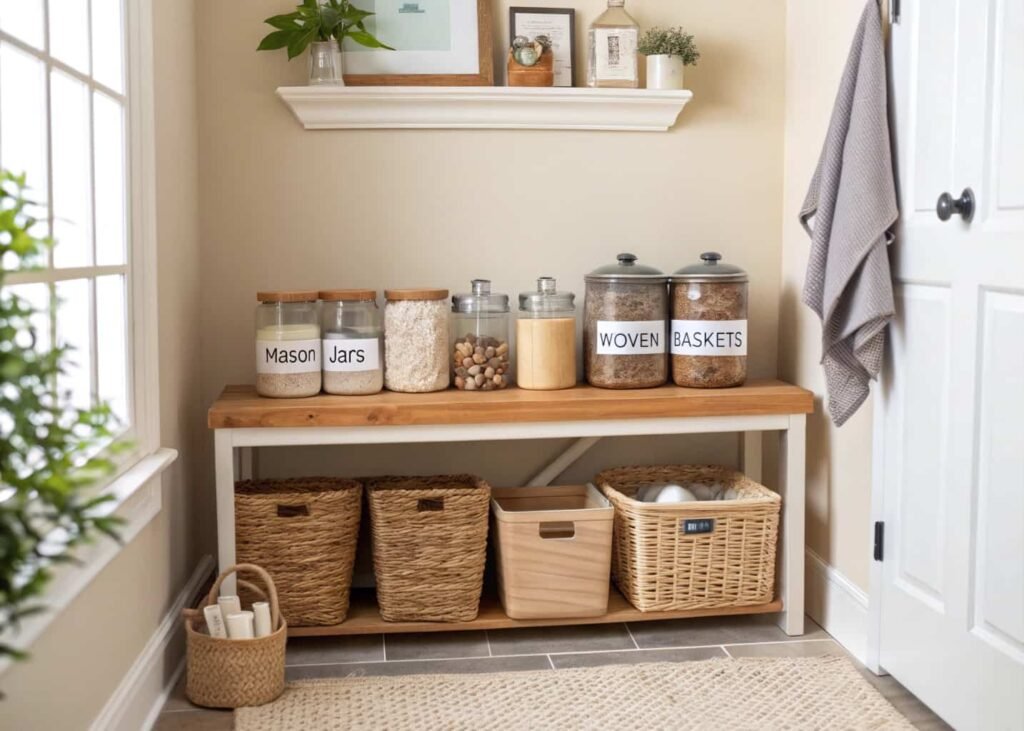
- Clear containers for detergent pods, dryer sheets, and clothespins, so you can see what’s running low.
- Over-the-door or wall hooks for lint brushes, hangers, and bags.
- Labels to help every family member return things to the right place.
Aim for a balance between open and closed storage. Open shelves keep daily items easy to grab, while closed bins soften the look and hide the visual noise. A mix of both keeps the room functional without feeling like a warehouse.
Organizing Detergents and Supplies
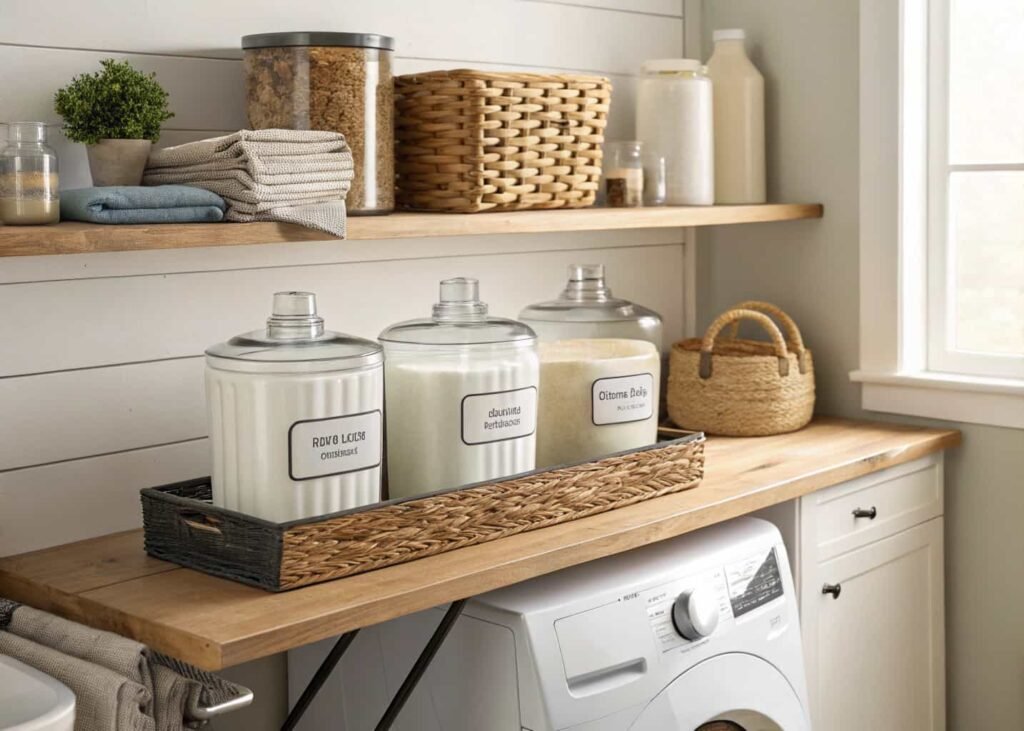
Supplies should live where you use them. Put detergent, softener, and stain treatments close to the washer, ideally at reach height, and store backups higher up or lower down.
Many of us are holding onto habits that don’t serve us anymore. Here is how some common rules compare with what works better today:
| Old Rule | What Works Better Now |
|---|---|
| Keep every product in its original bulky packaging | Decant into clear, labeled containers where safe, and keep original labels for instructions |
| Store everything on one big shelf | Group by task: washing, stain care, drying |
| Buy in bulk whenever there’s a deal | Buy only what you can store neatly |
| Keep “just in case” products forever | Keep one backup per essential and let the rest go |
A small tray or basket for stain treatments is a quiet game-changer. When it’s all in one place, you’re far more likely to treat a spot before it sets.
Beginner Note: Always keep cleaning products in their original bottles or clearly labeled containers, and store them out of reach of children and pets.
Laundry Sorting and Hamper Systems
The best laundry sorting system is the one your household will actually use. A good system catches the mess before it reaches the laundry room.
Consider these common approaches:
- Divided hampers or a three-bin rack for lights, darks, and delicates, so sorting happens the moment clothes come off.
- One hamper per bedroom to keep dirty clothes out of the hallway.
- A rolling sorter for tight spaces, easy to move to the washer.
- A “next load” basket by the machine, so the following wash is always ready to go.
Here is where the “one focal point” idea helps: choose one hero piece, such as a beautiful, sturdy hamper or a standout shelf, and keep everything else simple. A single pretty element makes the whole room feel intentional instead of overdone.
Small Laundry Room Organization Ideas
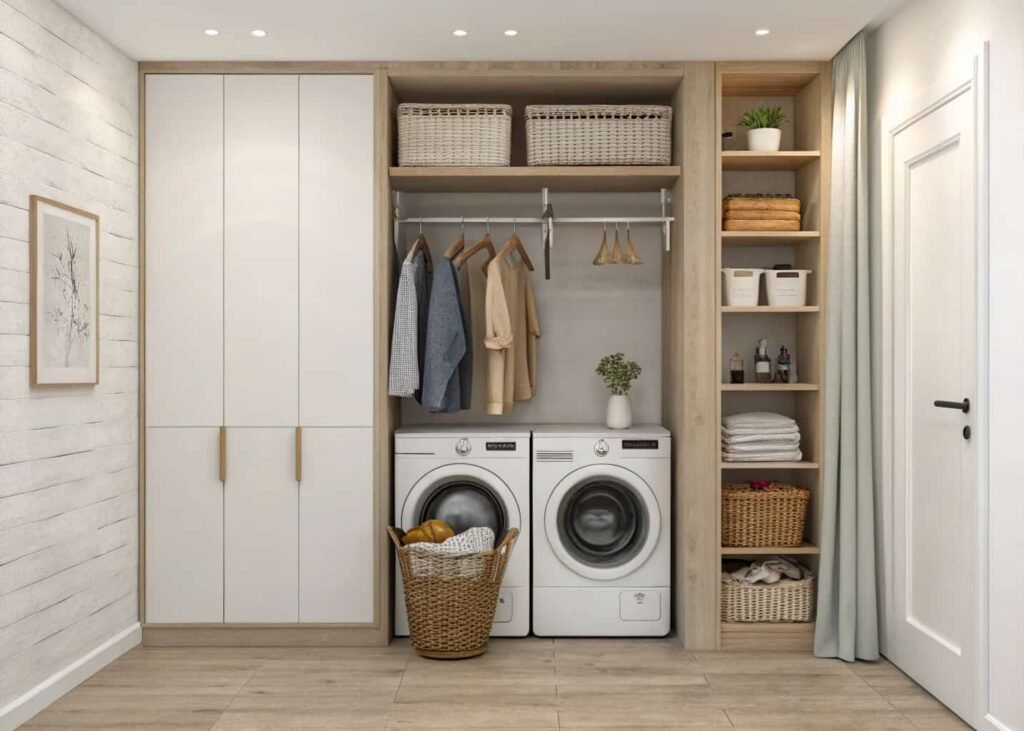
In a small laundry room, every inch has to earn its place. Go vertical first. Wall shelves, hanging rods, and over-the-door racks add storage without stealing floor space.
Try these small laundry room ideas:
- Mount a narrow shelf above the machines for supplies.
- Use the side of the washer or a nearby wall for magnetic or hook storage.
- Slide a slim rolling cart into the gap between appliances.
- Keep the floor clear so the room feels larger.
If a small space starts to feel busy, follow the “If X feels like too much, try Y” approach:
- If open shelving feels cluttered, try adding lidded baskets.
- If too many labels feel fussy, try labeling only the big categories.
- If matching containers feel expensive, try reusing jars you already own.
- If the room feels dark, try a light color palette and one warm lamp.
- If storage still feels crowded, try removing one category and relocating it.
Organizing a Laundry Closet or Stackable Setup
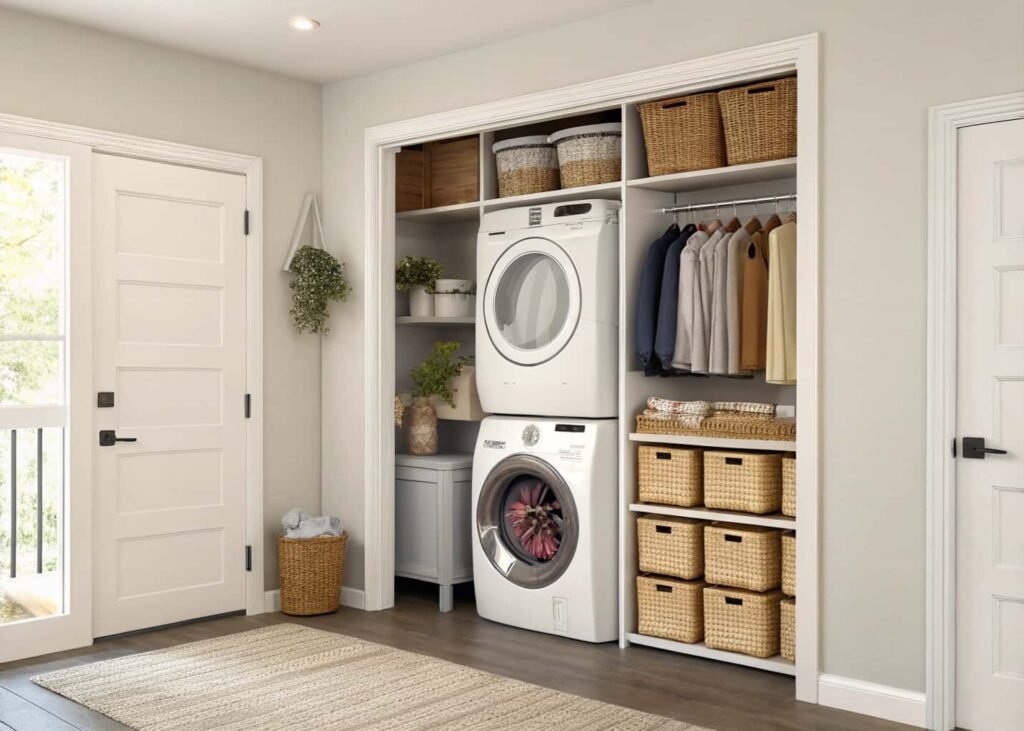
A laundry closet can work beautifully with a little planning. Stackable machines free up vertical space, but you’ll want to use every layer smartly.
Ideas that work well:
- Add a shelf above the stacked unit for daily supplies.
- Use the inside of the closet door for hooks, pouches, or a slim rack.
- Keep a small basket on the floor for the “next load.”
- Choose bins with handles, so you can pull supplies out quickly.
When you can’t fit a folding table, plan a “fold anywhere” routine: fold near the dryer, then carry stacked laundry straight to the bedrooms instead of letting it pile up.
Drying Rack and Folding Station Ideas
Drying and folding are the two steps that most often overflow. A dedicated spot for each keeps clean clothes from becoming the next pile.
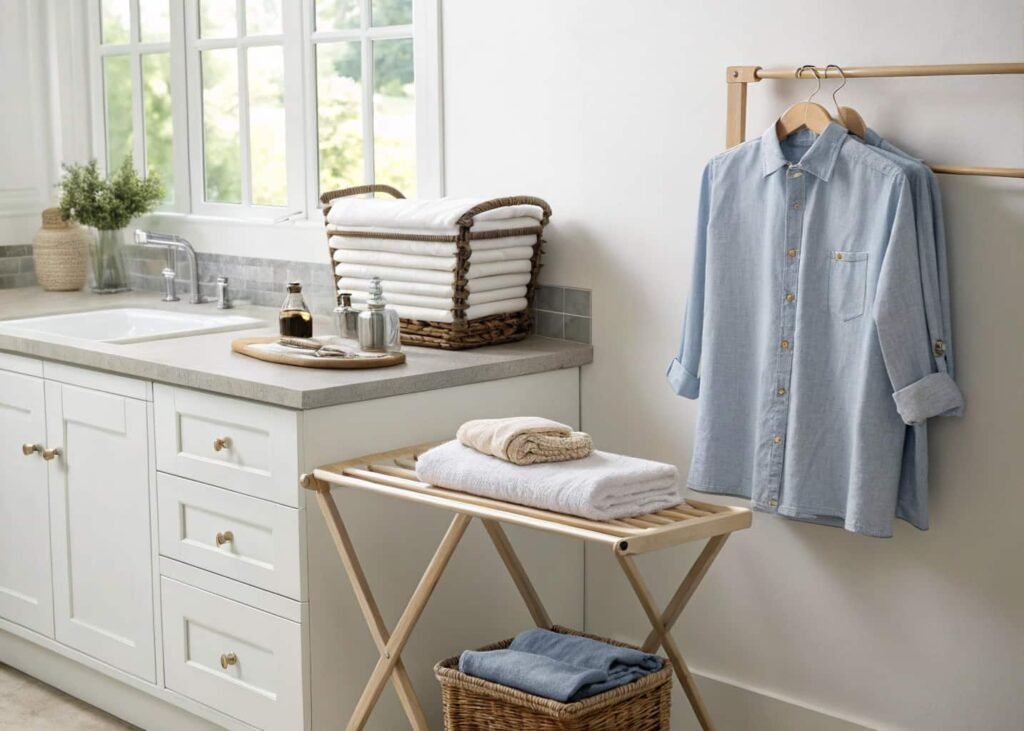
For drying, consider a fold-flat rack that tucks behind a door, a wall-mounted drying rack, or a simple rod for hanging shirts straight from the dryer. Fold-away options keep the room open when they’re not in use.
For folding, even a narrow counter works. If you don’t have one, a sturdy board that rests over a bin or the machines can create a temporary station. Keep a small basket nearby for items that need mending or ironing.
Quick Tip: Fold while clothes are still slightly warm. Wrinkles smooth out more easily, and the task feels quicker.
Weekly Laundry Routine That Actually Works
A system only stays alive when a routine supports it. The most reliable approach is a repeatable formula: sort + wash + finish. Sort as clothes come off, wash on a set rhythm, and finish (dry, fold, put away) in the same session.
Here are ways to apply the formula in different situations:
| Situation | Formula | Why It Works |
|---|---|---|
| Busy family | One load per day | Prevents a giant weekend pile |
| Single person | Two set laundry days | Keeps the routine light and predictable |
| Big week of towels or bedding | Dedicated “linen day” | Keeps large items from clogging regular loads |
| Rushed mornings | Start a load at night, dry in the morning | Uses downtime to your advantage |
| Vacation return | Sort by fabric, run one load at a time | Avoids overwhelm after travel |
Pick the version that fits your schedule, and write it where you’ll see it. The point is consistency, not perfection.
Laundry Room Organization on a Budget
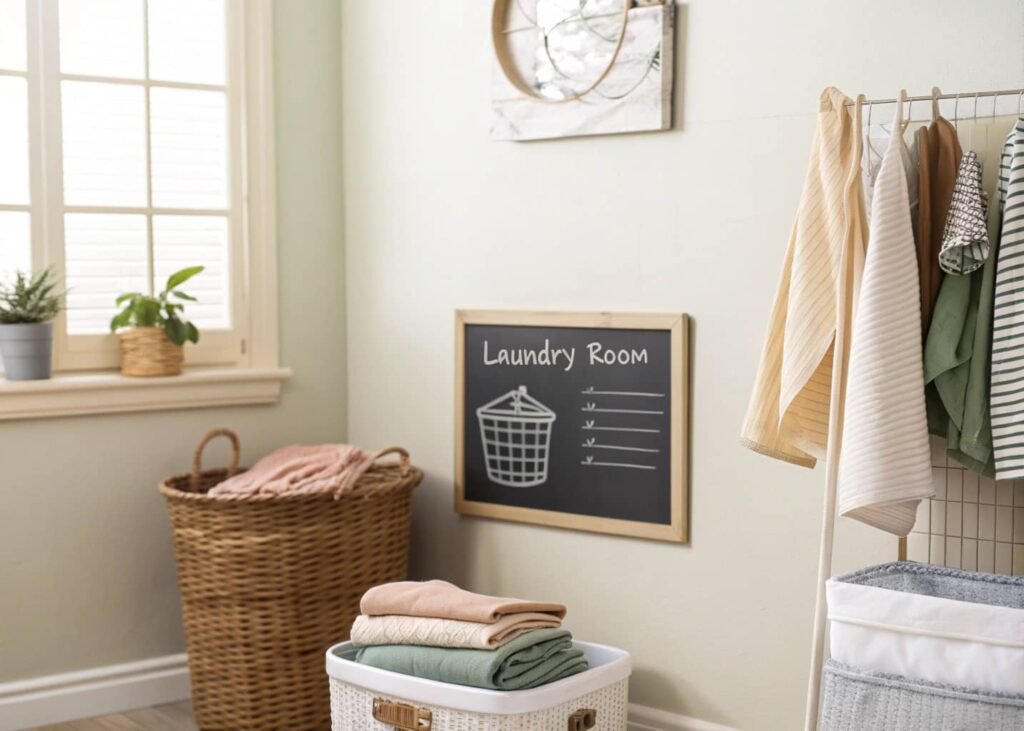
A budget-friendly laundry room can look just as neat as an expensive one. Start with what you already have: repurpose jars, baskets, crates, or boxes as containers, and use masking tape and a marker for labels.
If you want to make it easier, keep things very simple. Tackle one zone this weekend, such as the supply shelf. Next weekend, choose another zone. Small wins build a room that stays organized without a big spend.
When you do buy something, choose multi-purpose pieces: a rolling cart that works as a folding surface, or a hamper that also stores extras. A little creativity goes a long way.
Frequently Asked Questions
What is laundry room organization?
Laundry room organization is the practice of giving every laundry task and supply a clear place, so the room stays clean and easy to use. It combines zones, storage, and a simple routine.
Can beginners organize a laundry room without a full makeover?
Yes. Start with decluttering and one supply shelf, then add zones gradually. Small changes create noticeable results without a big project.
How do I make my laundry sorting system work better?
Place hampers where clothes come off, and label bins clearly. Keep the system simple enough that everyone in the household can follow it.
Do I need expensive organizers to do this?
No. Jars, baskets, crates, and basic shelves are enough. The system matters more than the price tag.
How do I keep a laundry room tidy without spending hours cleaning?
Return items to their homes at the end of each laundry session, and do a quick five-minute reset once a week. A clear routine prevents big messes from building.
Your Laundry Room Can Work for You
Laundry room organization isn’t about perfection; it’s about making a hard-working space easier to live with. Start small this week: pick one shelf or one zone, clear it, and give everything a home.