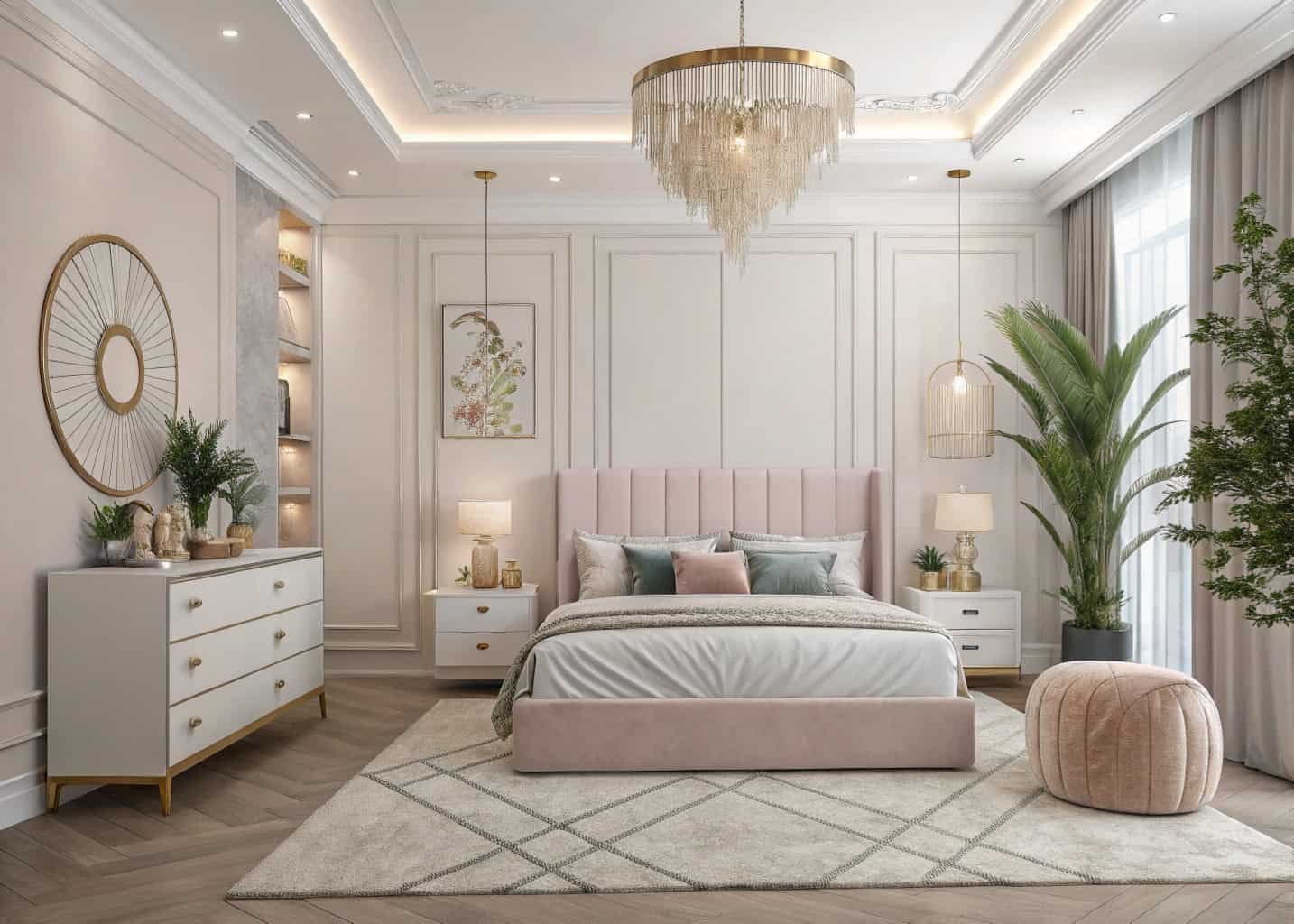
You walk into your bedroom after a long day, and instead of feeling like a retreat, it feels like a room you’re just passing through. Maybe the colors feel flat, the walls are bare, or nothing quite matches — even though you didn’t buy anything that clashed on purpose. This is one of the most common decorating frustrations: a bedroom that looks “fine” but never quite feels like yours.
The good news is that calming, personal bedroom decor ideas don’t come from a single big purchase or a total renovation. It comes from layering a handful of intentional choices — color, texture, light, and a few personal touches — so the room builds on itself instead of feeling like a random collection of items. That’s the approach this guide walks you through, piece by piece.
Whether you’re working with a spacious primary suite or a cozy rental bedroom, the same core principles apply. Small, consistent choices compound into a space that actually feels restful. Let’s go through them one at a time.
1. Choosing a Color Palette That Feels Calm
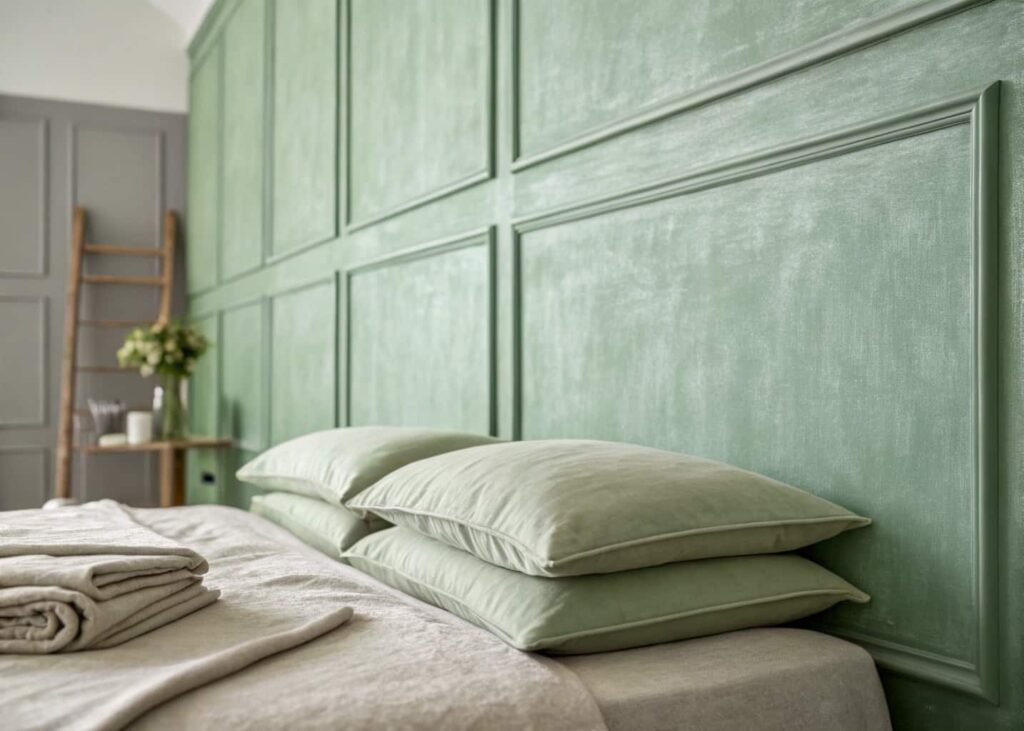
Color sets the emotional tone of a bedroom before you even notice the furniture. Soft, muted tones — warm whites, dusty blues, sage greens, clay pinks — tend to read as restful because they don’t compete for attention the way bright, saturated colors do. A good rule of thumb is to pick one dominant neutral for walls and large surfaces, then bring in one or two supporting colors through textiles and accessories. This keeps the eye moving smoothly around the room instead of jumping between too many strong hues. If you’re nervous about committing to paint, start with bedding and curtains in your chosen palette first — they’re easier to change later and will tell you quickly whether the colors feel right in your actual lighting.
2. Layering Textures With Bedding and Throws
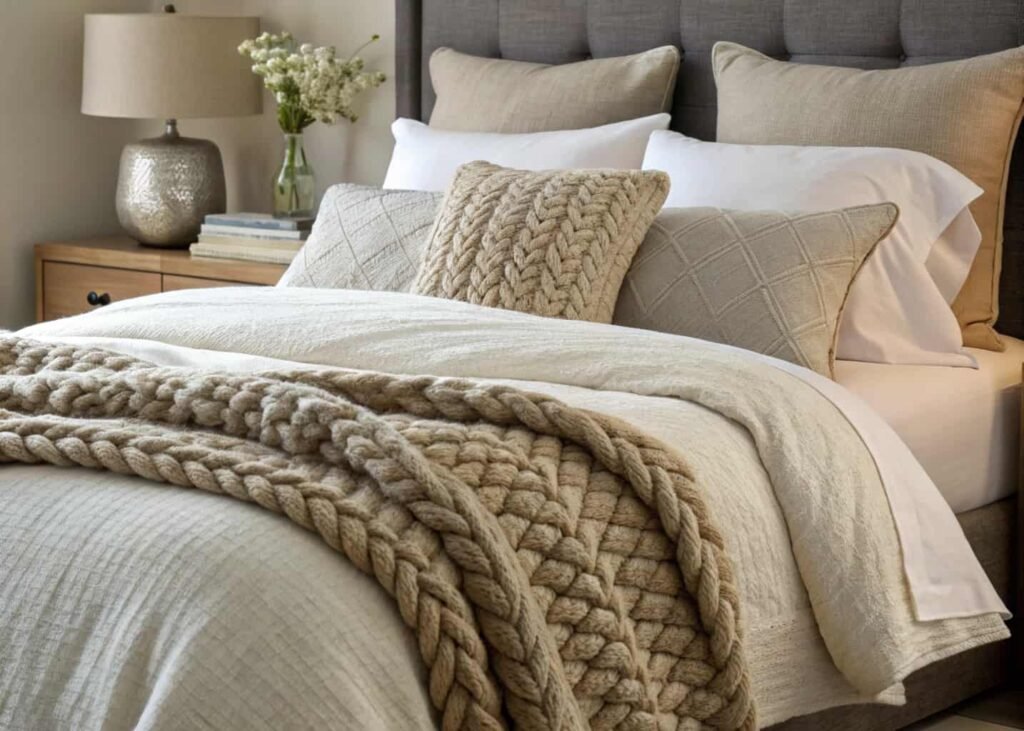
Once your color palette is set, texture is what keeps a monochrome-leaning room from feeling flat. Mixing a crisp linen duvet with a chunky knit throw, a few velvet or boucle pillows, and a lightweight cotton blanket at the foot of the bed gives the eye multiple surfaces to rest on, even within a single color family. The goal isn’t to use every texture you own — it’s to pick two or three that feel intentional together, like linen plus knit plus a touch of velvet. This kind of layering is also what makes hotel-style beds look so inviting: it’s rarely about more pillows, it’s about more variety in a small, curated number of pieces.
3. Statement Headboards on a Budget
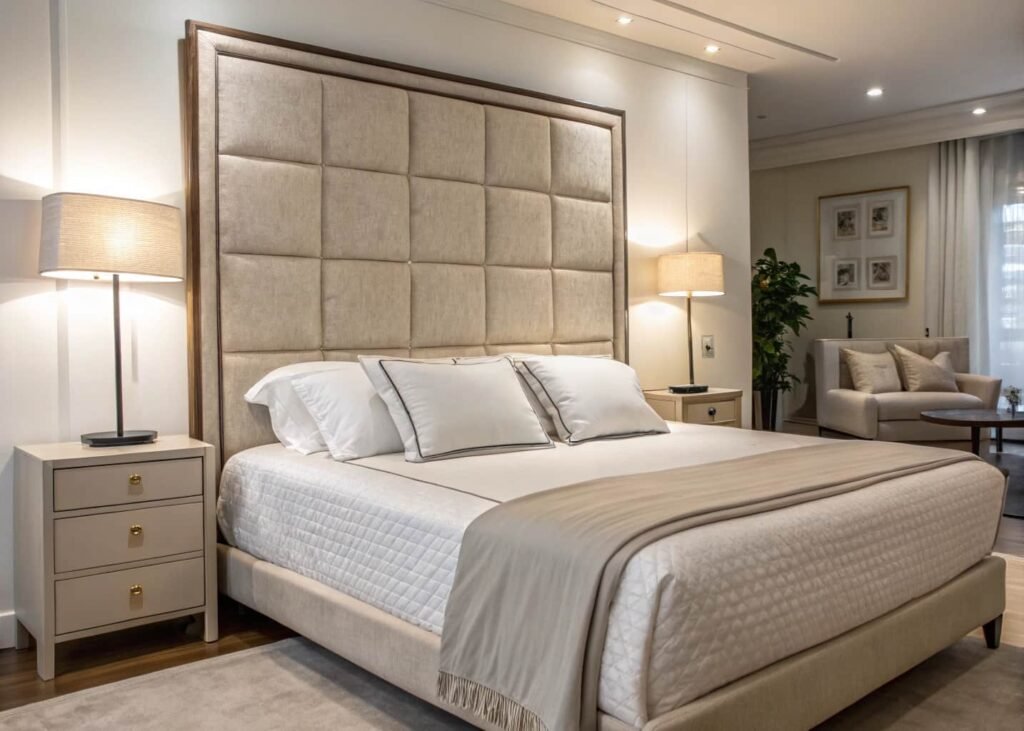
A headboard anchors the entire bed visually, but it doesn’t have to be expensive to make an impact. An upholstered headboard panel, a simple wood slat design you build yourself, or even a large piece of fabric stretched over a frame can all read as “statement” pieces when styled well. If a full headboard isn’t in the budget right now, hanging a large piece of art or a woven tapestry at headboard height creates a similar visual anchor. The key is height and width — a headboard-style feature should feel proportional to the bed, not like a small afterthought floating above it.
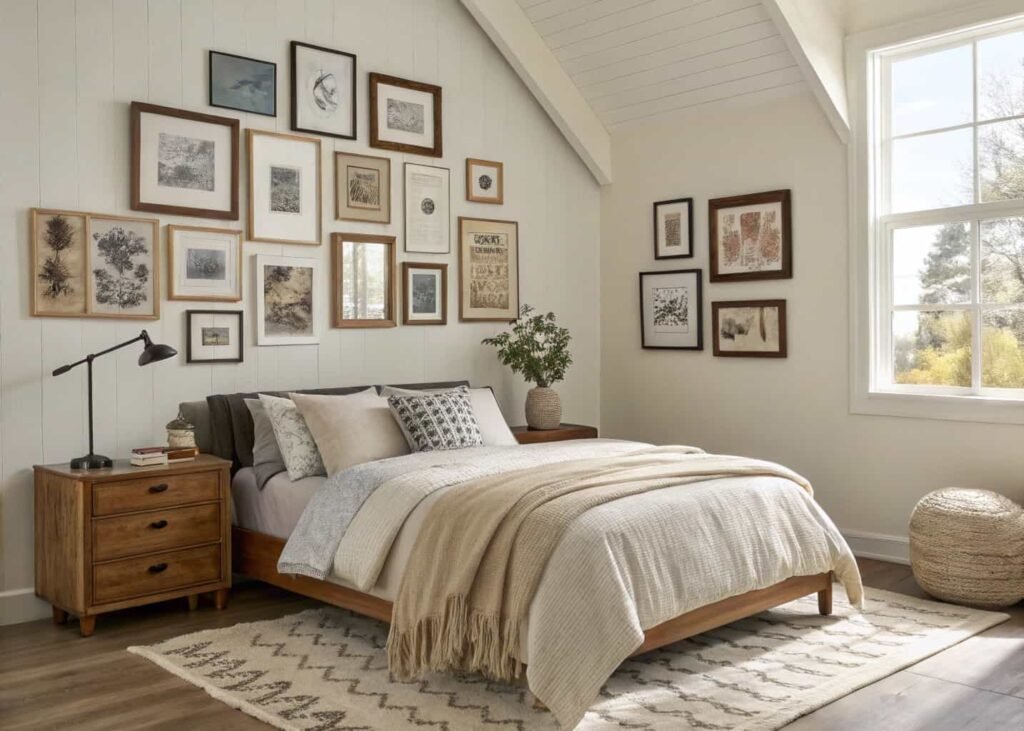
4. Gallery Wall Layouts for Above the Bed
A gallery wall above the bed fills empty space and adds personality, but it works best with a plan rather than a random scatter of frames. Lay your frames out on the floor first, aiming for either a tight symmetrical grid or a loose, asymmetrical cluster — mixing the two usually looks unintentional. Keep the bottom edge of the gallery roughly six to eight inches above the headboard so it reads as connected to the bed, not floating separately near the ceiling. Mixing frame sizes and a couple of finishes (like matte black with natural wood) adds interest without looking cluttered.
5. Nightstand Styling Essentials
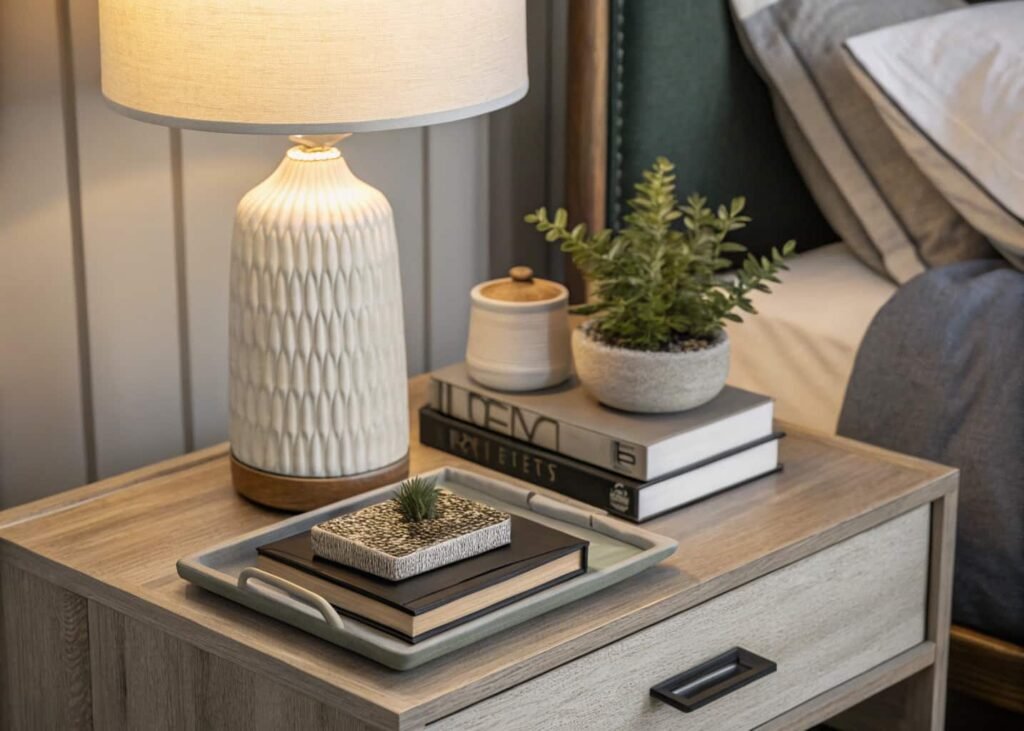
Nightstands get cluttered fast because they’re where daily life lands — chargers, water glasses, half-read books. Styling them well is less about removing everything and more about grouping what’s there. A good formula is a lamp, one stack of two or three books, a small tray for jewelry or odds and ends, and one personal object like a small plant or a framed photo. Keeping cords tucked behind rather than draped across the surface makes an immediate visual difference, even before anything else changes.
6. Curtain and Drapery Ideas
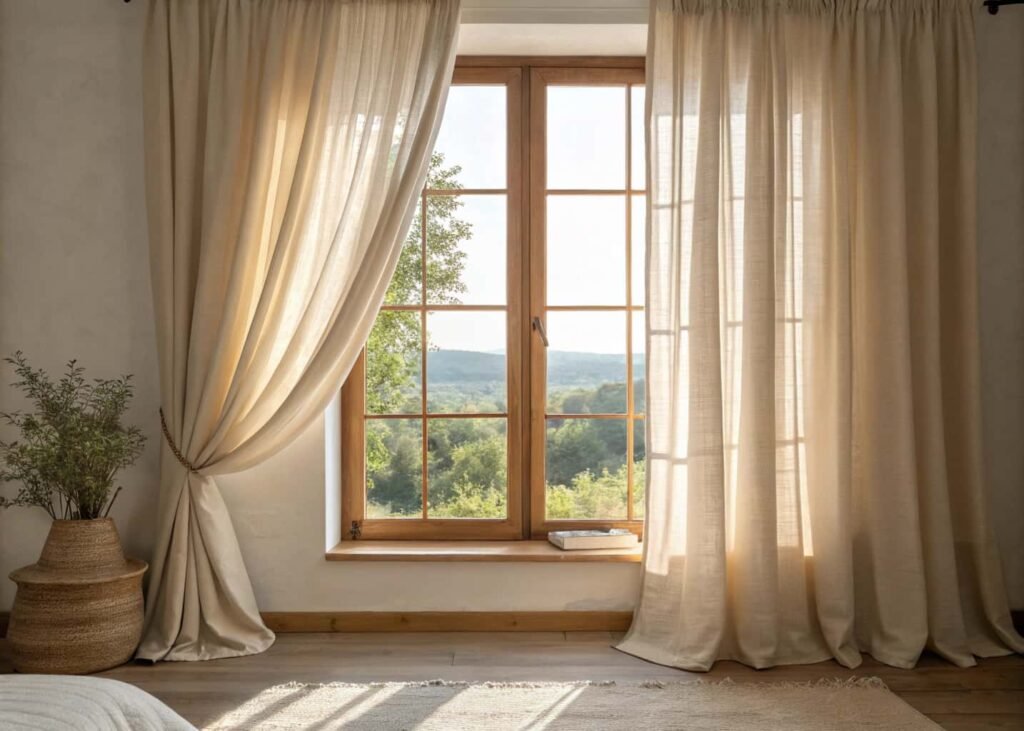
Curtains do double duty — they control light and they soften the hard lines of a window frame. Hanging curtain rods a few inches above the actual window frame, and wide enough that the panels can fully clear the glass when open, instantly makes ceilings feel taller and windows feel larger. Lightweight linen or cotton panels in a soft neutral let daylight filter through gently, while a blackout lining behind a decorative sheer panel gives you both privacy and a layered look. Floor-length panels almost always look more finished than curtains that stop short above the sill.
7. Rug Pairings for Different Bedroom Sizes
Rug size is one of the most common bedroom styling mistakes — too small, and the room feels disjointed; sized right, it grounds the whole layout. In larger bedrooms, a rug that extends at least two feet past each side of the bed, with the bed frame’s front legs resting on it, creates a cohesive floor plan. In smaller bedrooms, two narrow runners placed on either side of the bed can achieve the same grounding effect without overwhelming the space or requiring furniture to be moved onto a single oversized rug. Either way, a rug is what keeps a room from feeling like furniture placed on bare floor.
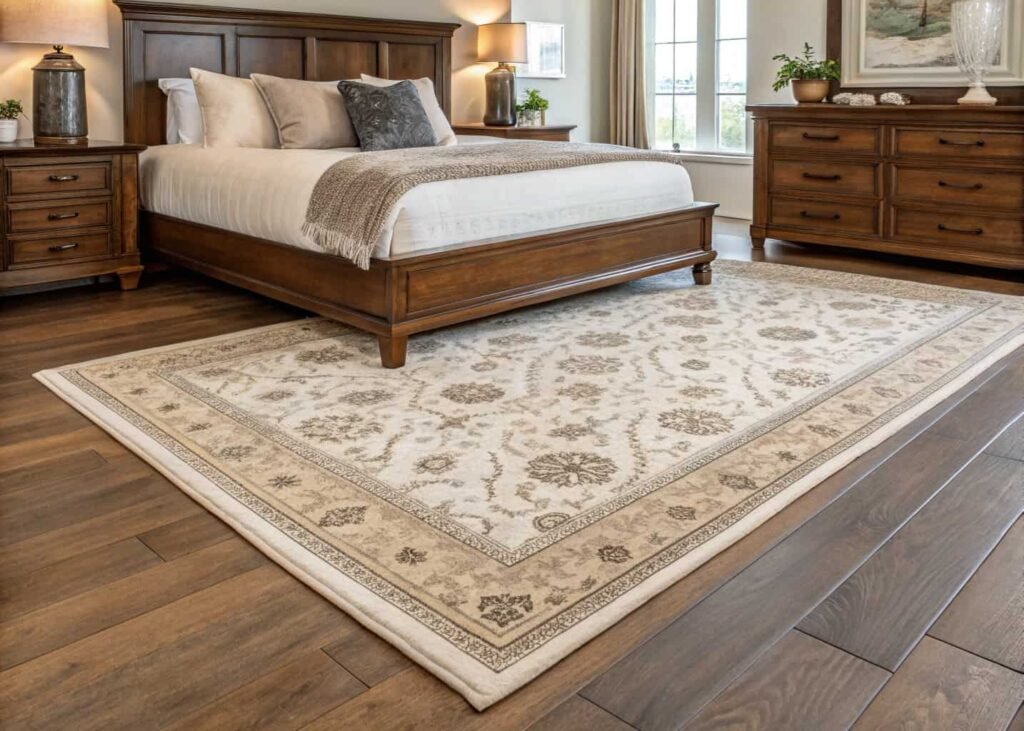
Quick Tip: If you’re unsure what size rug to buy, measure your bed’s footprint first and add at least 18–24 inches on each side — that buffer is what makes a rug look intentional instead of undersized.
8. Mirror Placement for Light and Space
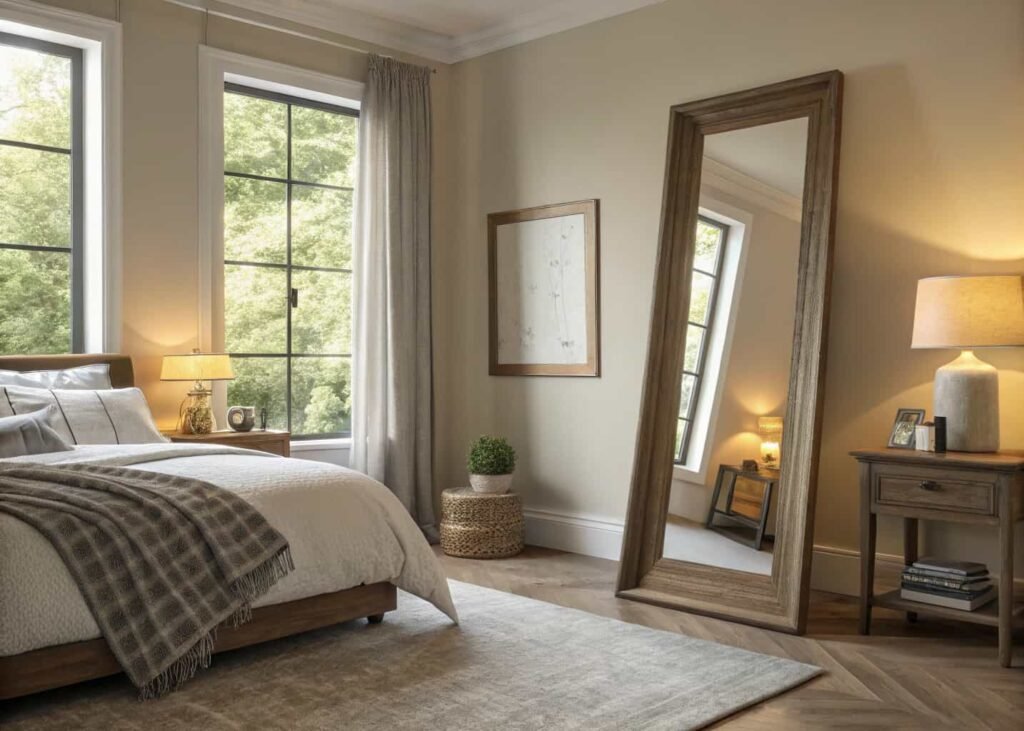
A well-placed mirror does two things at once: it bounces available light around the room, and it visually pushes the walls outward, making a small bedroom feel less boxed in. Positioning a mirror across from or adjacent to a window — rather than facing the bed directly, which some approaches to bedroom design avoid for restfulness — maximizes the light-bouncing effect. A single larger mirror leaning against a wall or hung above a dresser generally reads as more intentional than several small mirrors scattered around the room.
9. Accent Chair and Reading Nook Ideas
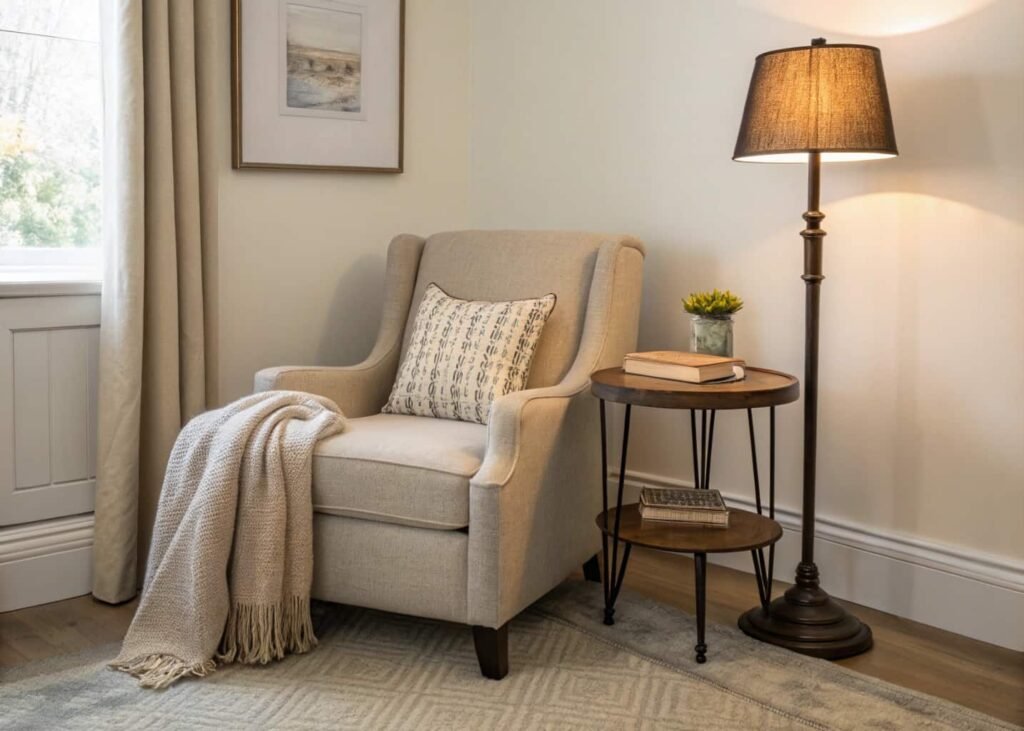
A small chair in the corner of a bedroom turns unused floor space into a spot people actually use. It doesn’t need to be large — a slim armchair or a cushioned bench works in even a modest-sized room. Pair it with a small side table, a floor lamp for reading light, and a folded throw draped over the arm, and the corner instantly reads as a designed nook rather than leftover space. If floor space is genuinely tight, a wide, deep windowsill with a cushion can serve the same purpose.
10. Ceiling and Overhead Decor Touches
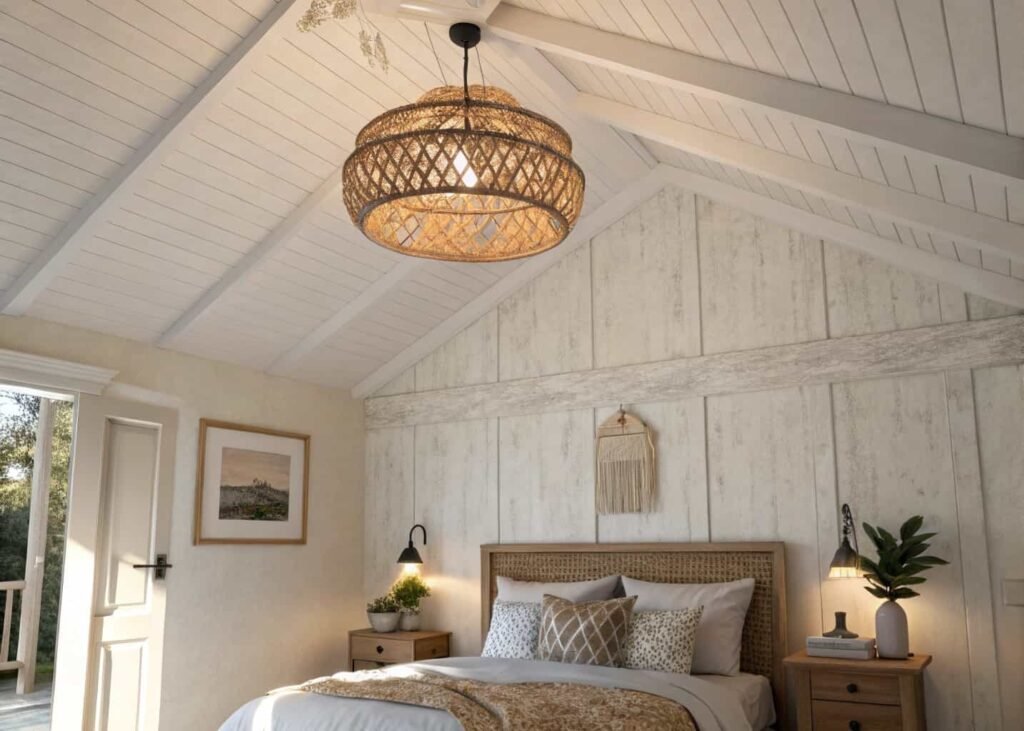
The ceiling is the most overlooked surface in most bedrooms, but a little attention here makes a big difference. Swapping a builder-grade flush-mount fixture for a simple pendant or a woven drum shade adds warmth without needing an electrician in most cases, since many fixtures use the same wiring setup. A canopy frame or draped fabric above the bed adds softness and a sense of coziness for very little cost. Even paint — a shade lighter or a soft complementary tone on the ceiling instead of standard white — can make the whole room feel more finished.
11. Seasonal Decor Swaps for the Bedroom
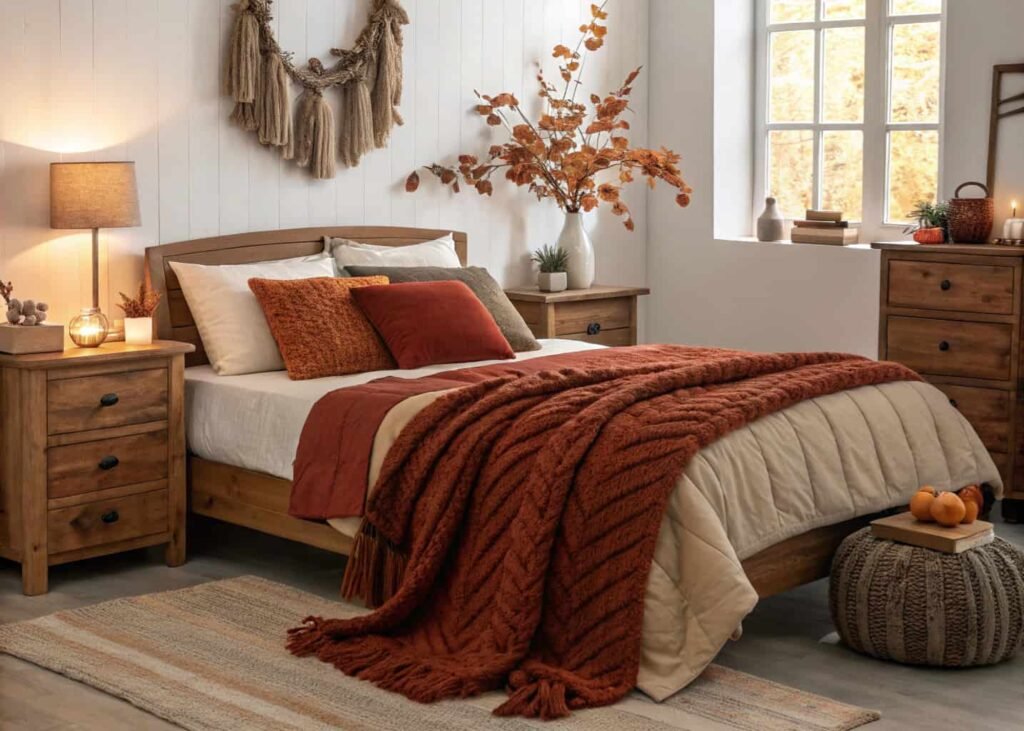
A bedroom that adapts slightly with the seasons feels lived-in and cared for rather than static. In cooler months, swapping in a heavier knit throw, warmer-toned pillow covers, and a scented candle in a spice or wood note shifts the mood without any major purchases. In warmer months, lighter linen bedding, a breathable cotton throw, and brighter accent colors keep the room feeling fresh. Keeping a small bin of seasonal textiles makes these swaps quick — usually under twenty minutes — rather than a full redecorating project.
12. Mixing Vintage and Modern Pieces
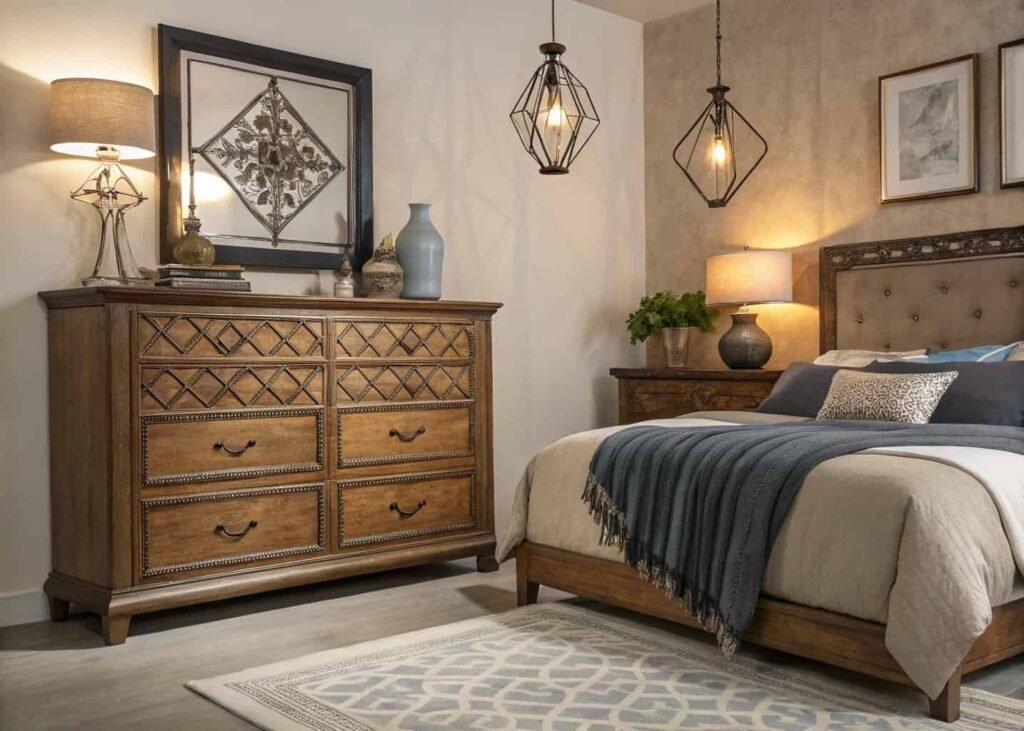
A bedroom furnished entirely from one store or one era can start to feel like a showroom rather than a home. Mixing in one or two vintage or secondhand pieces — an antique dresser, an inherited mirror, a flea-market lamp — alongside newer furniture gives the room depth and a sense of history. The trick to making this mix feel cohesive rather than mismatched is repetition: echo a finish or color from the vintage piece somewhere else in the room, like a similar wood tone or a matching brass accent, so the old and new pieces feel like they’re in conversation with each other.
13. Decorative Storage That Looks Intentional
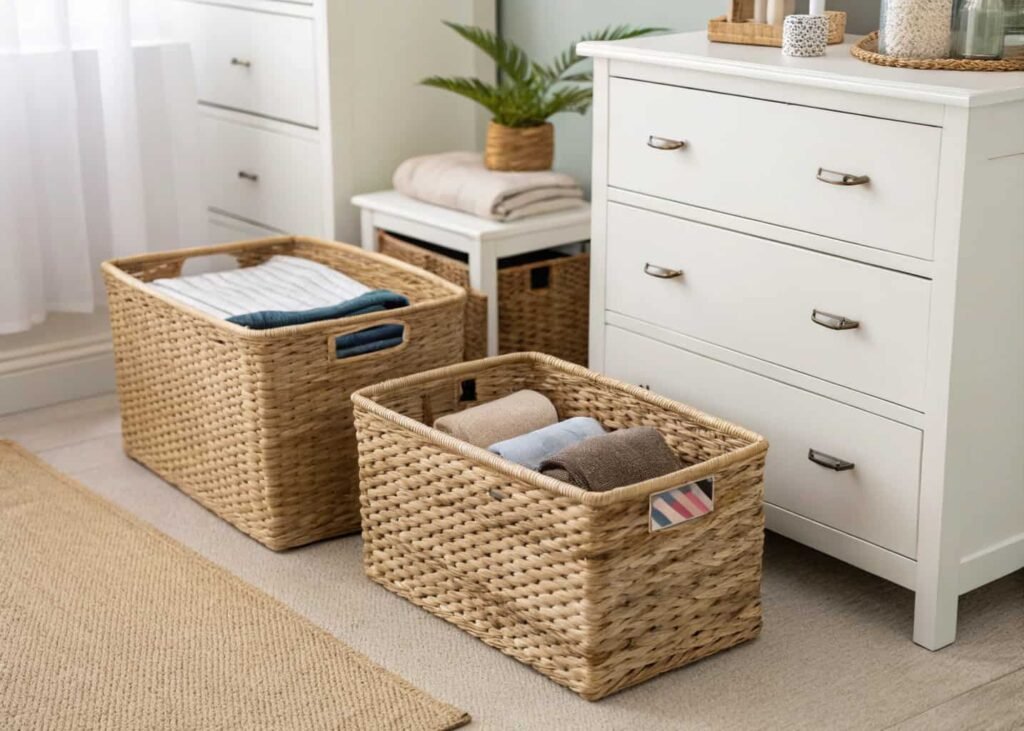
Storage is often treated as purely functional, but baskets, boxes, and bins can be part of the room’s style rather than something to hide. Woven baskets under the bed or beside a dresser hold extra blankets while adding natural texture. A set of matching lidded boxes on a closet shelf or bookcase keeps small items organized and visually calm, since uniform storage reads as tidier than a mismatched jumble even when the actual contents are similar. Choosing storage in materials that echo the room’s palette — like rattan in a warm-toned room — turns a practical need into a styling opportunity.
14. Candles, Trays, and Tabletop Styling
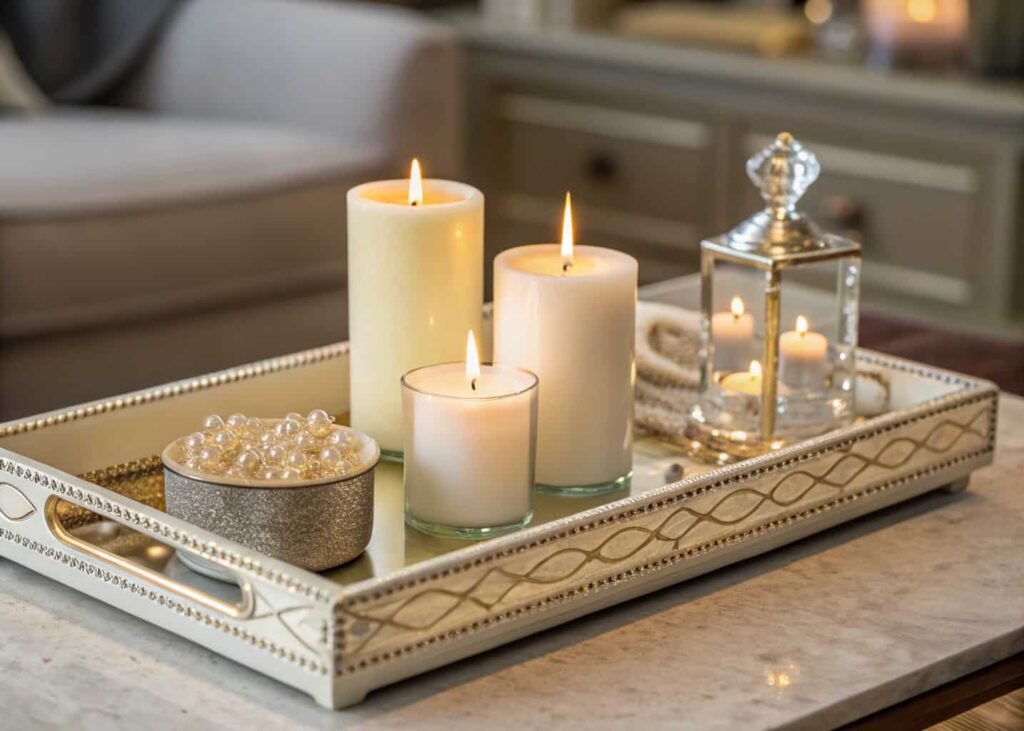
Small tabletop details are what make a bedroom feel finished rather than furnished. A simple tray on a dresser or nightstand corrals candles, perfume bottles, or jewelry into a defined shape instead of letting them spread across the surface. Grouping items in odd numbers — three candles of varying heights, for example — tends to look more natural than pairs lined up evenly. A single unscented or lightly scented candle also adds a soft, ambient light option for evenings without needing to turn on an overhead fixture.
15. Personal Touches That Make a Room Feel Like Yours
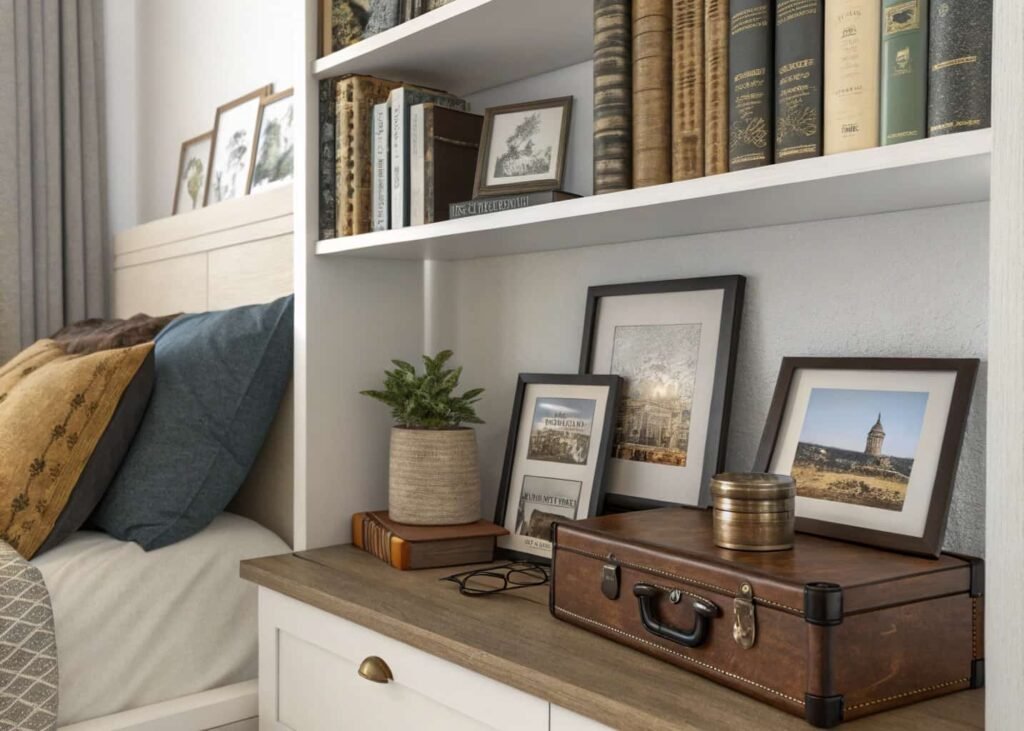
All of the color coordination and styling formulas in the world won’t make a bedroom feel like home without something personal in it. A framed photo, a piece of art you actually love rather than one that “matches,” a travel souvenir, or a shelf of well-loved books all do more for a room’s warmth than another generic decor object. The goal is a room that looks pulled-together to a guest but still feels unmistakably like you when you’re alone in it — and that balance almost always comes down to the one or two personal pieces you choose to keep visible.
Give One Element Permission to Stand Out
With so many components — color, texture, art, lighting, storage — it’s easy to end up with a room where everything competes for attention. A simple fix is to pick one element and let it be the star: a bold headboard, a striking piece of art, or a richly patterned rug. Everything else in the room should then play a supporting role, staying a shade quieter so the standout piece actually reads as a focal point instead of getting lost in the mix.
Quick Tip: If you’re not sure which element to feature, choose the piece you were most excited about when you bought it — that’s usually the one worth building the room around.
Keep It From Feeling Like a Showroom
- If matching bedding sets feel too uniform, try mixing solid and patterned pillow covers from the same color family instead.
- If a full gallery wall feels like too much commitment, try one large piece of art with two smaller pieces flanking it.
- If an all-neutral room feels flat, try adding one warm accent color through a single throw or lamp shade.
- If a heavily styled nightstand feels fussy to maintain, try trimming it down to a lamp and one personal object only.
- If vintage pieces feel mismatched, try repeating one shared finish, like brass or dark wood, across two or three items.
Build Your Own Repeatable Formula
Once you understand the individual pieces, styling any surface in the bedroom comes down to a simple, repeatable formula: base, accent, finishing touch. The base is the largest or most functional item, the accent adds color or texture, and the finishing touch is the small personal detail that makes it feel complete.
| Situation | Formula | Why It Works |
|---|---|---|
| Nightstand | Lamp (base) + small tray (accent) + framed photo (finishing touch) | Keeps daily-use items organized while still feeling personal |
| Bed styling | Duvet (base) + patterned throw pillow (accent) + folded throw blanket (finishing touch) | Builds visual layers without overcrowding the bed |
| Dresser top | Mirror (base) + candle cluster (accent) + small plant (finishing touch) | Balances function and softness on a flat surface |
| Reading corner | Chair (base) + floor lamp (accent) + throw over the arm (finishing touch) | Turns empty floor space into a usable, styled nook |
| Shelf styling | Books (base) + one decorative object (accent) + personal keepsake (finishing touch) | Keeps storage from looking like clutter |
Make It Simpler When You Want To
Not every season of life allows for elaborate styling, and that’s completely fine. A simplified version of this approach still works: choose one calming color, add one textured throw to the bed, and keep one personal object visible on the nightstand. That’s genuinely enough to make a bedroom feel more intentional than a completely undecorated room, and you can always build on it later when you have more time or budget.
Small-Bedroom Adaptations
Every idea above scales down for smaller rooms — it just takes a slightly different approach. Favor furniture with visible legs rather than solid bases, since it lets more floor show and makes the room feel more open. Choose one or two statement elements instead of several, since a small room can only comfortably support so many focal points before it starts to feel busy. And lean on vertical space — tall, narrow bookshelves or wall-mounted nightstands — to keep the floor plan open while still getting the storage and styling surfaces a bedroom needs.
Frequently Asked Questions
What is bedroom decor styling? It’s the process of intentionally choosing and arranging color, textures, furniture, and personal items so a bedroom feels cohesive and restful rather than like a random collection of things. It’s less about buying more and more about how existing and new pieces work together.
Can beginners take on a full bedroom redesign? Yes, especially by starting with lower-cost, lower-risk changes like bedding, a rug, or rearranging what you already own before committing to bigger purchases like a new headboard or furniture. Most of the ideas here can be done gradually.
How do I make my gallery wall look better? Lay the frames out on the floor first and photograph the layout before hanging anything, so you can adjust spacing without extra nail holes. Keep the bottom edge close to headboard height so it reads as connected to the bed.
Do I need expensive furniture to make this work? No — many of the biggest visual changes, like curtain height, rug sizing, and nightstand styling, cost little to nothing and rely on placement and grouping rather than new purchases.
How do I redecorate without it feeling overwhelming? Pick one section from this guide — like nightstand styling or curtains — and finish it completely before moving to the next. Small, finished changes add up faster than several half-done projects happening at once.
Final Thoughts
A bedroom doesn’t need to be expensive or perfectly matched to feel like a retreat — it needs a handful of intentional choices that build on each other. Pick one idea from this list, whether it’s restyling your nightstand or hanging your curtains higher, and start there this week.