
Curtains are one of the few things in a living room you can change in an afternoon and feel the difference immediately. Paint takes a weekend, furniture takes a truck, but curtains just take a step stool and twenty minutes per window. Most people default to whatever came with a cheap two-panel set from a big box store, and it shows — the room reads unfinished even when everything else is done. This isn’t a “10 curtains everyone loves” roundup. It’s a practical walkthrough of the choices that actually change how a room looks and feels, plus a few technical details most articles skip.
How to Choose the Right Curtain Style for Your Living Room
Start with ceiling height and window trim, not color. If your ceilings are under 9 feet, mount the rod as close to the ceiling as your trim allows — even 4 to 6 inches above the window frame makes a noticeable difference in perceived height. Rod width matters just as much: extend it 6 to 10 inches past each side of the window frame so that when panels are open, they stack on the wall instead of covering glass and blocking light. A common mistake is buying curtains sized to the window itself; you want panels that are 1.5 to 2 times the width of the window when using standard pleats, so they hang with enough fullness to fold naturally rather than lying flat like a bedsheet. Fabric weight should match function — a living room that gets western sun all afternoon needs something with more body (cotton twill, linen blends) than a north-facing room where sheers alone might do the job.
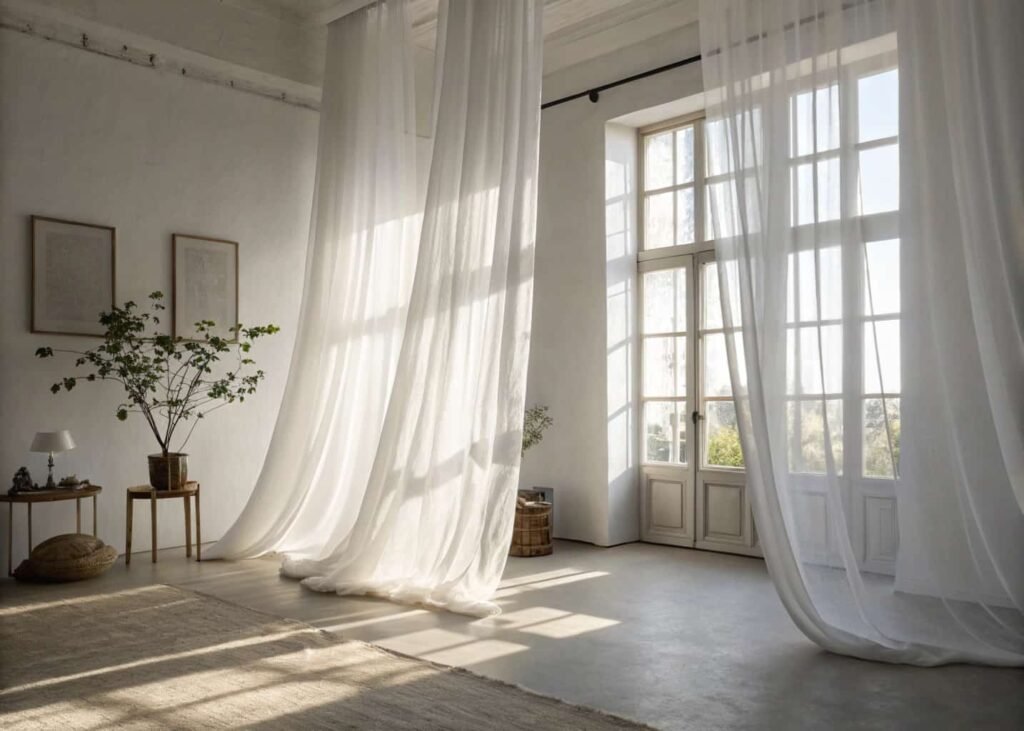
Sheer Curtains for a Light and Airy Feel
Sheers work best as a layer, not a solution on their own, unless privacy genuinely isn’t a concern. A 100% polyester voile sheer (usually $15–25 per panel) diffuses light well and holds its shape better than linen sheers, which look beautiful but wrinkle and sag over time, especially in humid climates. If you want the airy look without the fabric going see-through at night when your lights are on, look for a sheer with a slightly higher thread density — it’s not marketed clearly, so the trick is to hold the fabric up to a lamp in the store before buying. Hang sheers on an inner rod, a few inches closer to the glass than your main curtain rod, so they layer cleanly behind heavier drapes instead of bunching together on one track.
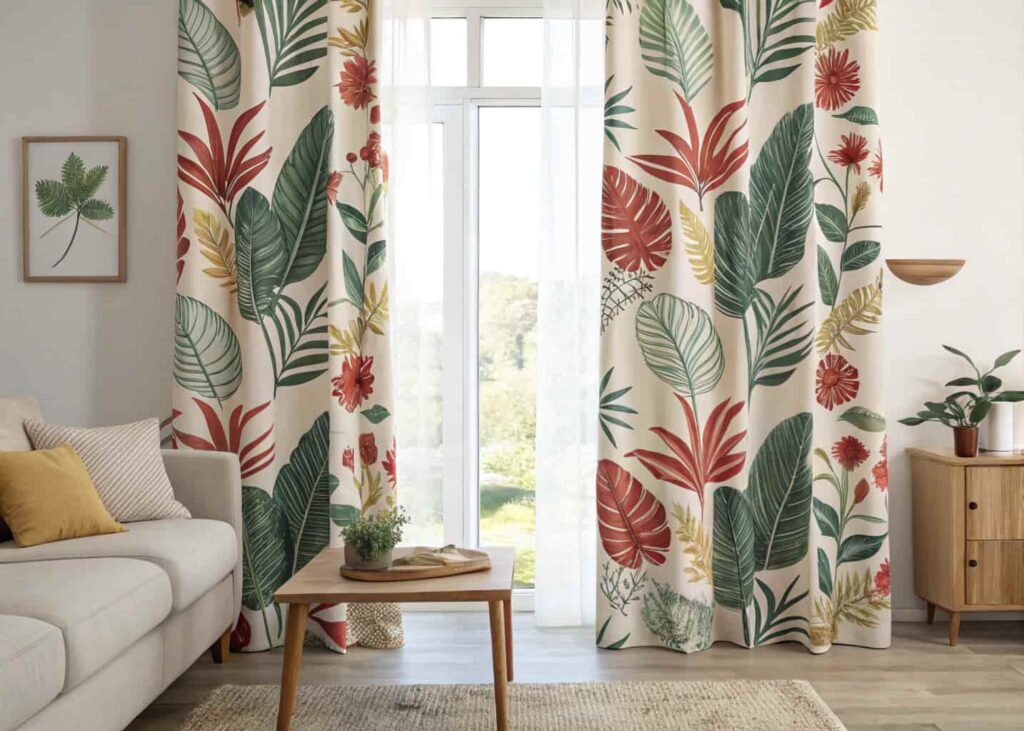
Bold Prints and Patterns to Make a Statement
A patterned curtain is the one piece of textile in a room large enough to set the tone for everything else, which is exactly why people get nervous about it. The safest entry point is picking a print that repeats a color already in your rug or a piece of art, rather than introducing a brand-new palette. Large-scale prints (think botanical leaves or oversized geometric shapes) actually read calmer from across a room than small busy prints, which can start to vibrate visually at a distance. If you’re not ready to commit a whole room to pattern, hang patterned panels on just the widest window and keep the rest of the room’s textiles solid — this keeps the statement contained instead of competing with itself.
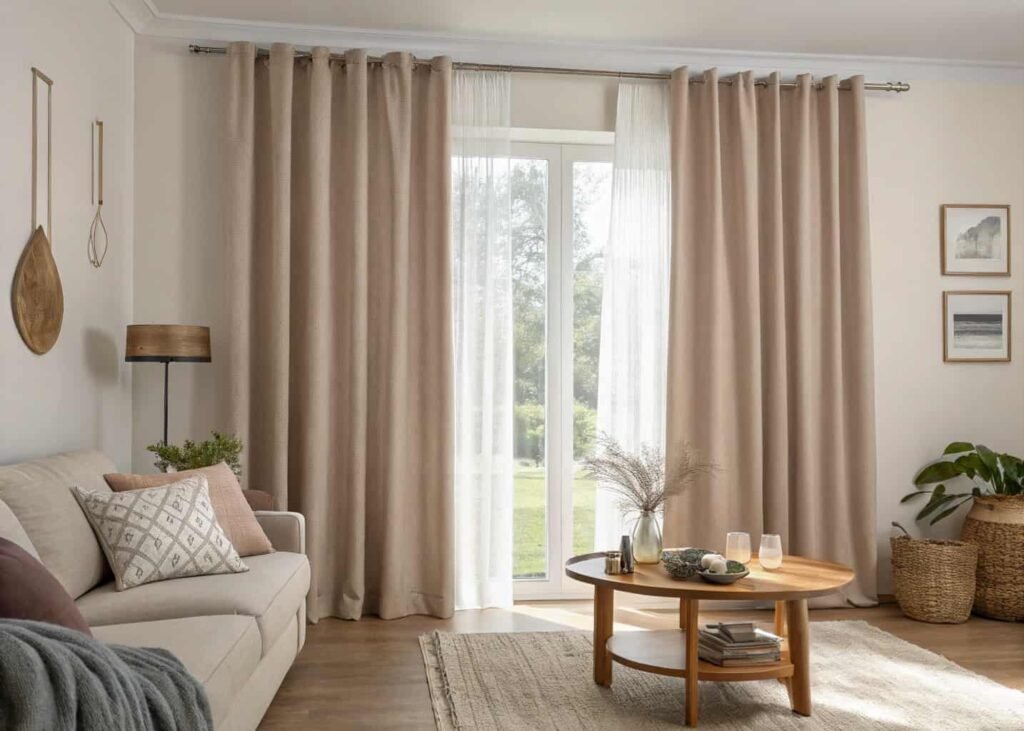
Neutral Tones for a Timeless, Minimalist Look
Neutral doesn’t have to mean white or beige — warm taupe, soft greige, and muted sage all read as neutral while giving a wall of fabric more depth than flat white. The mistake people make with neutral curtains is matching them exactly to the wall color, which flattens the whole window into the wall and makes the room look smaller, not bigger. A half-shade darker or lighter than your wall gives just enough contrast for the window to still register as a design element. Linen-cotton blends in neutral tones also age better than pure cotton, which can yellow near direct sun exposure over a couple of years.
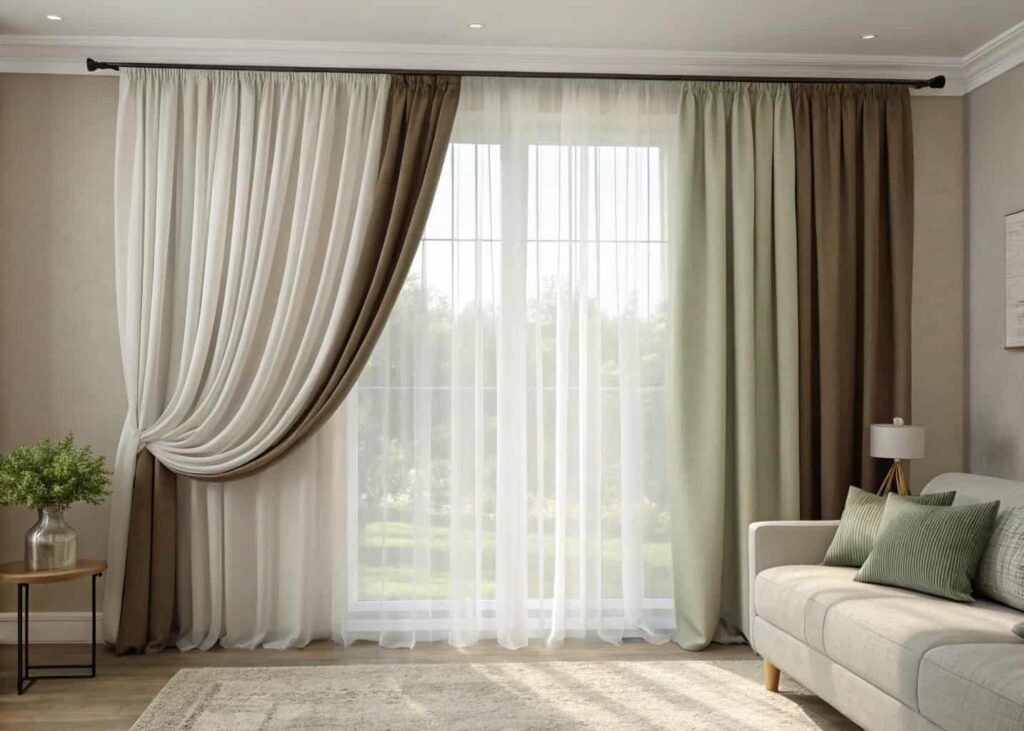
Layered Curtains for Texture and Depth
Layering is really just sheers plus a heavier drape sharing the same window, but the detail that makes it look intentional instead of accidental is using a double rod — one mounted 3 to 4 inches in front of the other. Sheers go on the back rod closest to the glass, heavier drapes on the front rod. Skip trying to layer two heavy fabrics; it looks bulky and the panels fight each other when you open and close them. Textured linen paired with a smooth sheer gives the most visual depth for the least effort, and you don’t need to match colors exactly — a slightly warmer sheer under a cooler-toned drape actually looks more considered than a perfect match.
Best Curtain Colors for Small Living Rooms
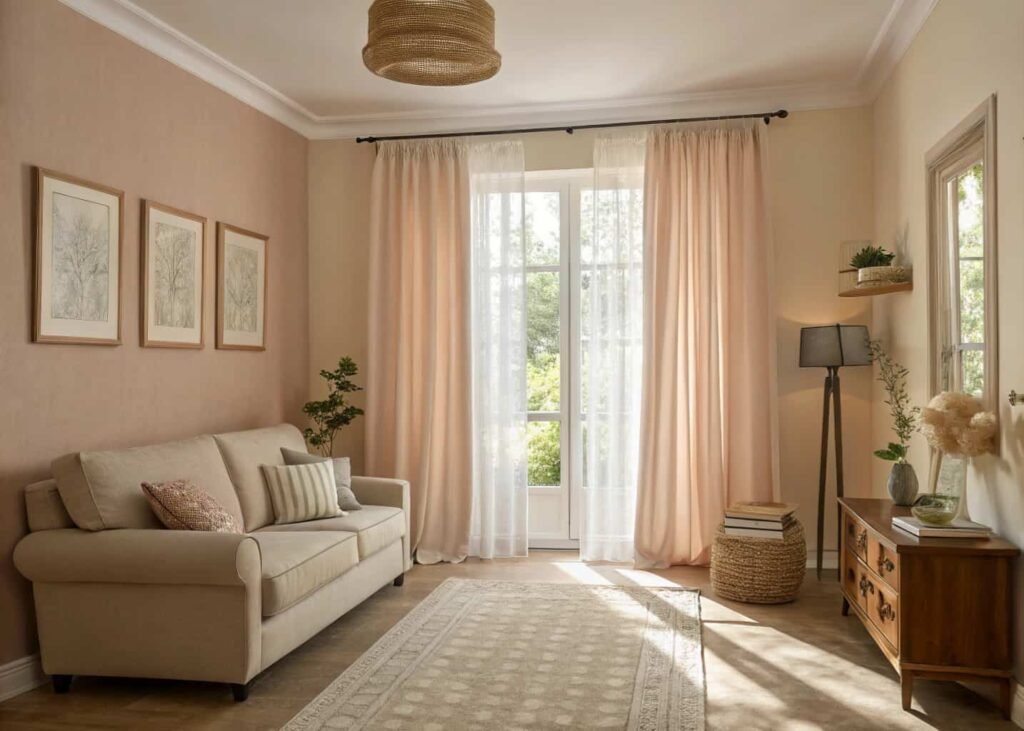
Floor-to-ceiling curtains in a color close to the wall color genuinely make a small room feel taller and less chopped up, because the eye doesn’t stop at a hard color break partway up the wall. Avoid heavy, dark curtains on more than one wall of a small room — they absorb light and can make the space feel like it’s closing in, especially in rooms that already get limited natural light. If you want a darker or richer color, use it on just one window and keep the rest of the room’s palette light to balance it out. Vertical stripes in a subtle tone-on-tone weave can also add height without adding visual noise the way a bold pattern would.
Floor-Length vs. Café-Style Curtains
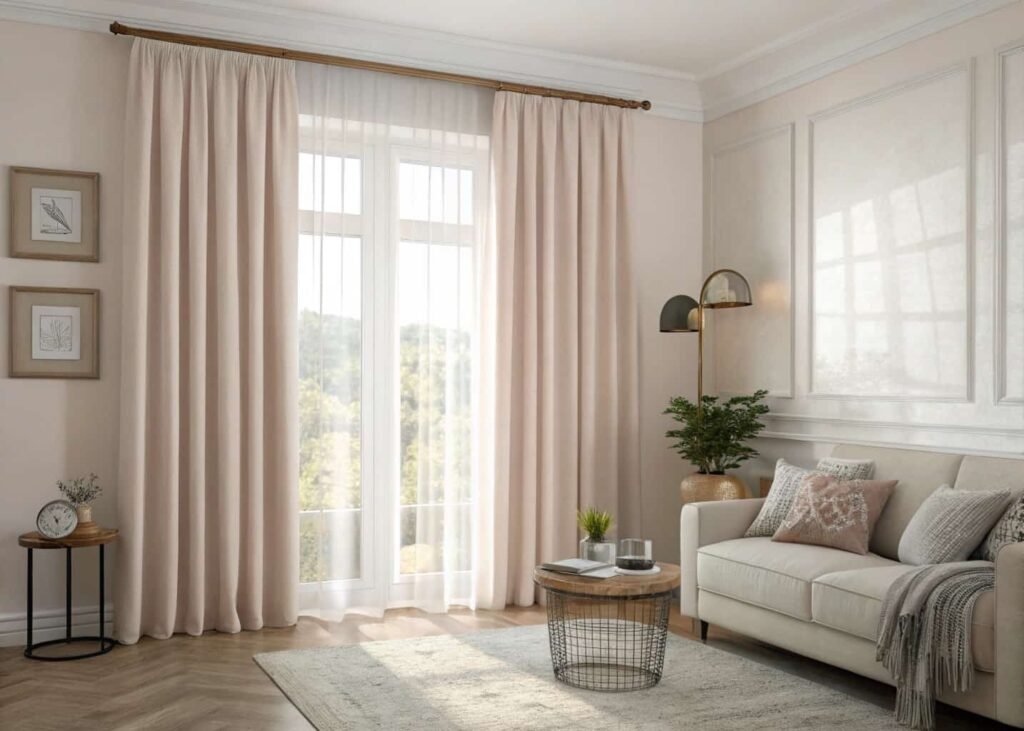
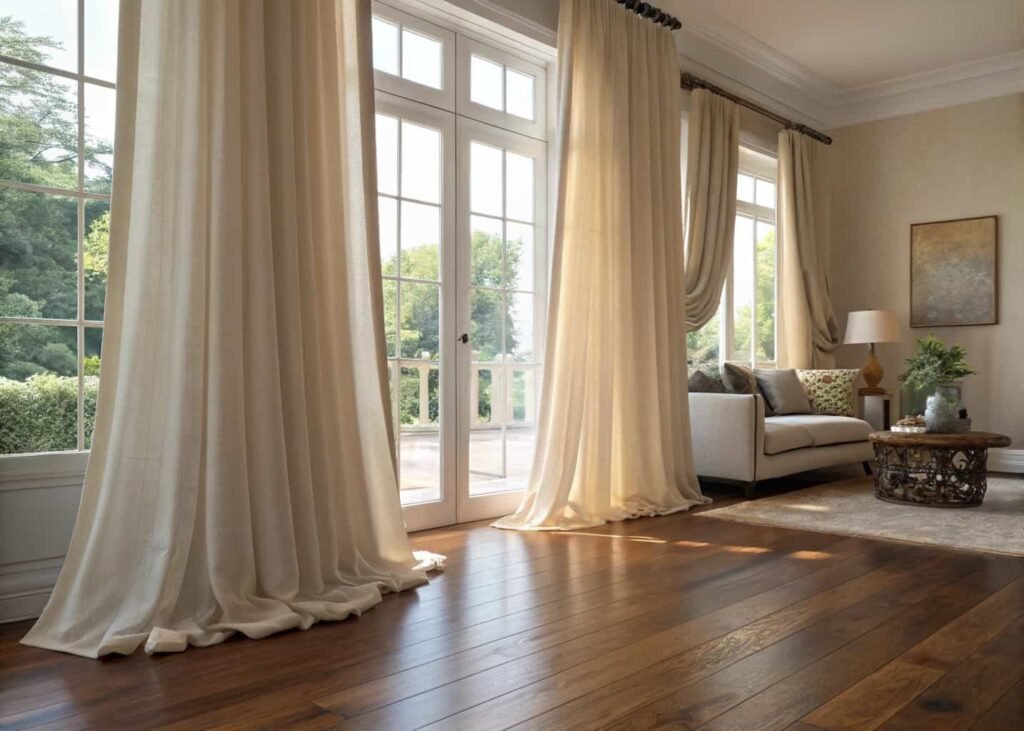
Floor-length curtains should either just barely brush the floor (called “kissing the floor”) or break slightly like dress pants, pooling half an inch to an inch. Anything shorter looks like a measuring mistake, not a style choice. Café-style curtains, which cover only the lower half of a window, work well in living rooms with a strong view or built-in seating you want to keep visible, but they read casual and cottage-y rather than formal — they’re a poor fit for a living room you’re trying to make feel more elevated, which is what this article is about in the first place. If your goal is “instantly elevate,” floor-length is almost always the better call for a main living room window.
Curtain Ideas for Large Bay Windows
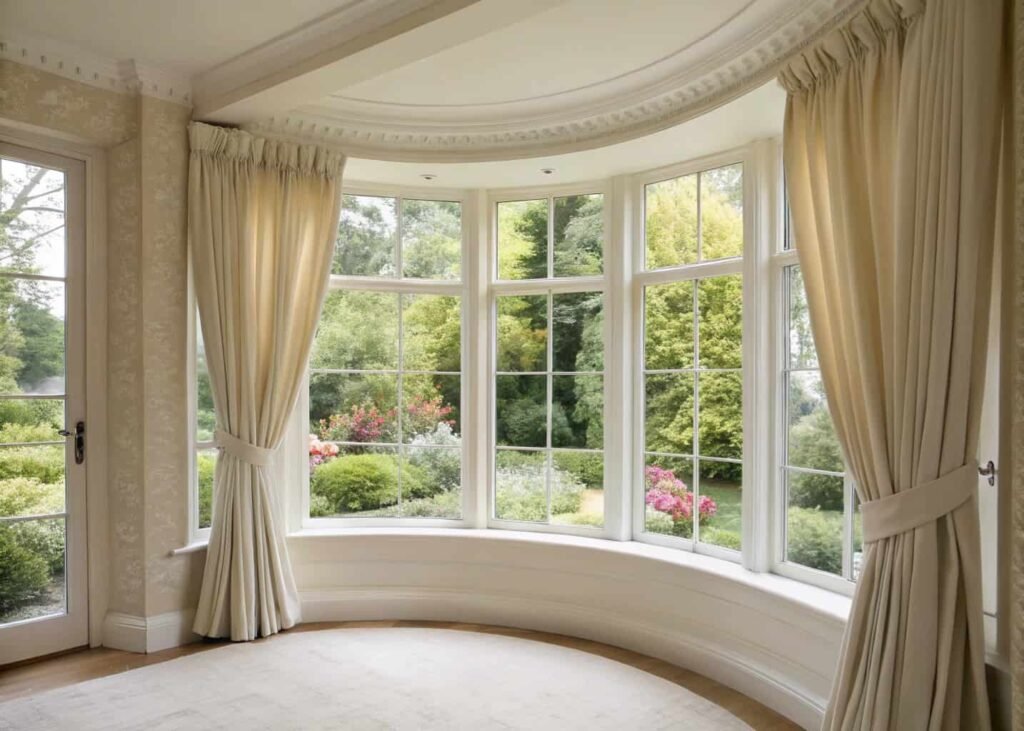
Bay windows need a curved or angled rod, and most standard tension rods won’t hold heavier fabric across the angle without sagging in the middle — a wall-mounted, bendable bay window rod (usually $40–70) holds up far better long term. Rather than one continuous curtain across all three window sections, treat each angled section as its own panel pair; this avoids awkward bunching at the corners when you open and close them. Keep fabric weight on the lighter side for bay windows specifically, since heavier drapes pull the rod down at the joints over time. A single valance across the top, rather than curtains on every section, is also a solid option if the bay window itself is the room’s best feature and you don’t want to cover it.
Pairing Curtains with Your Existing Furniture
Curtains don’t need to match your sofa fabric, and honestly, matching them too closely usually looks dated rather than coordinated. What matters more is undertone — a sofa with cool gray undertones next to warm ivory curtains will feel slightly off even if both are technically “neutral.” Hold a fabric swatch against your sofa in daylight, not under indoor lighting, before deciding. If your furniture is already visually busy (patterned upholstery, a lot of wood tones, a statement rug), solid curtains give the room a place to rest. If your furniture is mostly solid and simple, that’s your opening to bring in the pattern or color through the curtains instead.
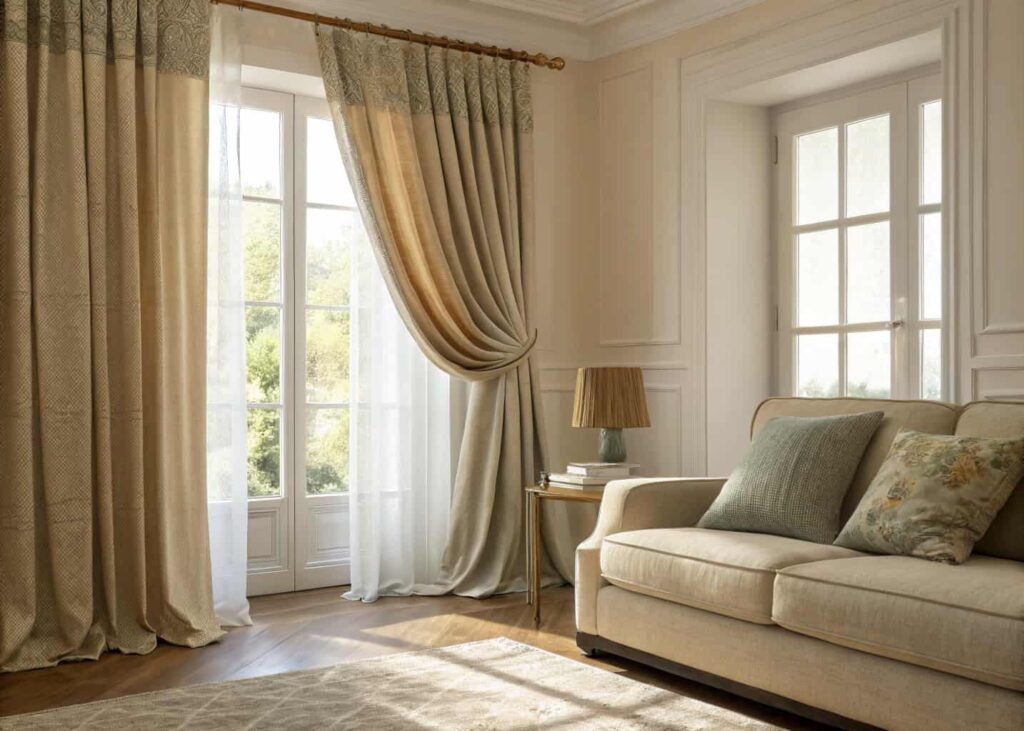
Budget-Friendly Curtain Ideas That Look Expensive
The single biggest lever for a budget curtain to look expensive is length and fullness, not fabric cost. A $20 panel that’s properly long and hung with enough width to gather will beat a $60 panel that’s too short or too flat. Buy two packs of a plain, mid-weight cotton or poly-blend panel instead of one — doubling up the fabric on each side gives the fullness that expensive drapery has by default. Iron or steam curtains before hanging; store-fold creases are the single most common reason cheap curtains read as cheap. Curtain rings with clips also make panels glide and hang better than the built-in rod pocket most budget curtains come with, for about $10–15 extra per window.
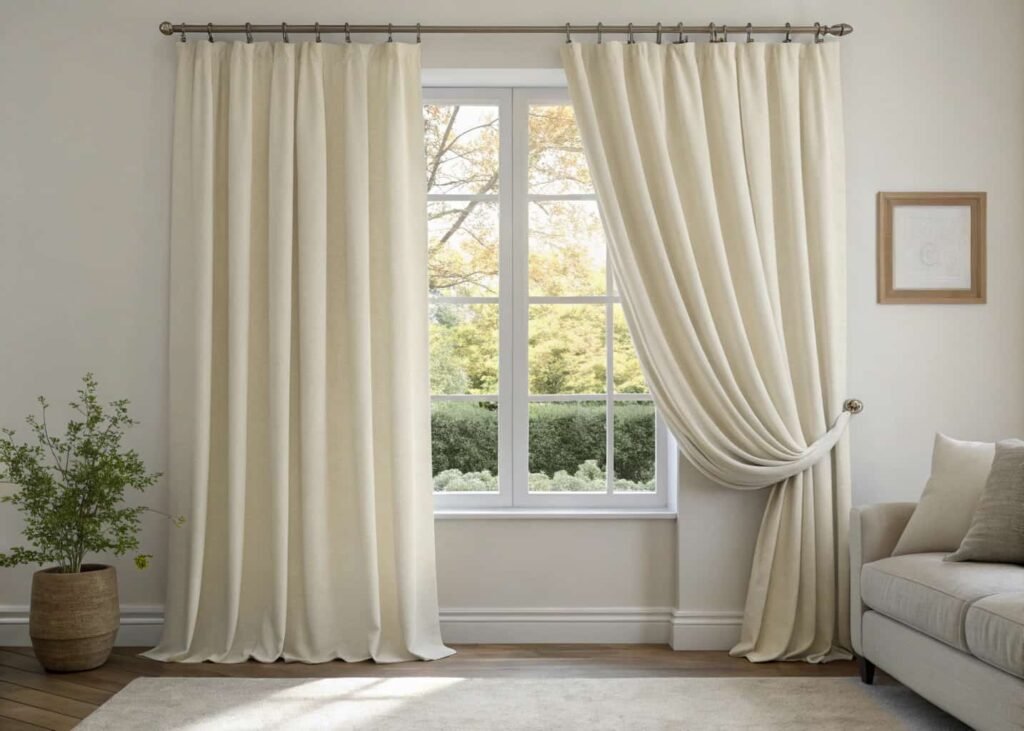
Common Curtain Mistakes to Avoid
Hanging curtains too low or too narrow is the most common one, covered above, but a few others come up constantly. Using curtains as the sole light-blocking solution in a room that needs real darkness (movie nights, shift workers) without checking for a blackout liner — sheer and lightweight fabrics alone won’t do it, no matter how dark the color. Forgetting to account for furniture blocking the curtain’s swing path, so panels can’t fully open without hitting a lamp or the arm of a chair. And skipping a curtain weight or hem weight on lightweight fabrics near an open window or vent — without it, sheers especially will billow unevenly and look messy rather than breezy.