Kitchens get decorated last and lived in the most. That’s the truth of it — people spend weeks picking a sofa color and then throw whatever curtains were on sale over the kitchen window. This guide walks through real decorating decisions for different styles and different wallets, with actual products and numbers instead of vague inspiration talk.
Planning Your Kitchen Decor Theme
Before buying anything, walk your kitchen at three different times of day and note how the light changes. A kitchen that faces north stays cool and slightly gray all day, which makes warm woods and brass fixtures look richer. A south-facing kitchen gets strong direct sun for several hours, which can wash out pale colors and fade fabric curtains within a year or two. Pick your theme based on what the room already does, not just what looks good on a screen. If your cabinets are staying (most people aren’t replacing $8,000 to $15,000 worth of cabinetry just to decorate), your theme has to work with their existing tone — oak reads farmhouse or rustic, white shaker leans modern or coastal, and dark walnut suits a moodier, more traditional look.
Choosing a Color Scheme That Works
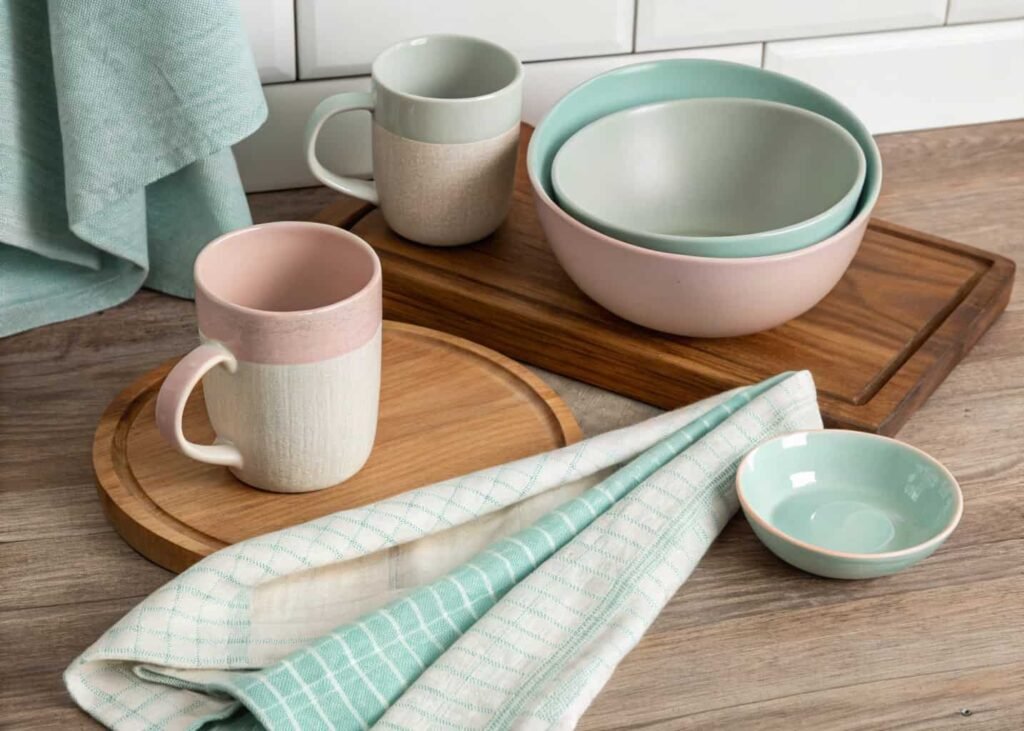
Most kitchens do best with a 60-30-10 split: 60% a neutral base (walls or cabinets), 30% a secondary color (often the backsplash or a large textile like curtains), and 10% an accent color repeated in small pieces like dish towels, a bowl, or a few mugs on open shelves. Sherwin-Williams’ Alabaster and Benjamin Moore’s Simply White are two of the most-used kitchen wall colors right now because they read warm rather than clinical, unlike a stark bright white. If you want color but aren’t ready to repaint, start with the 10% accent tier — swap in mustard yellow, terracotta, or sage green through smaller items first, live with it for a month, then decide if you want to commit further up the wall.
Farmhouse-Style Kitchen Decorating Ideas
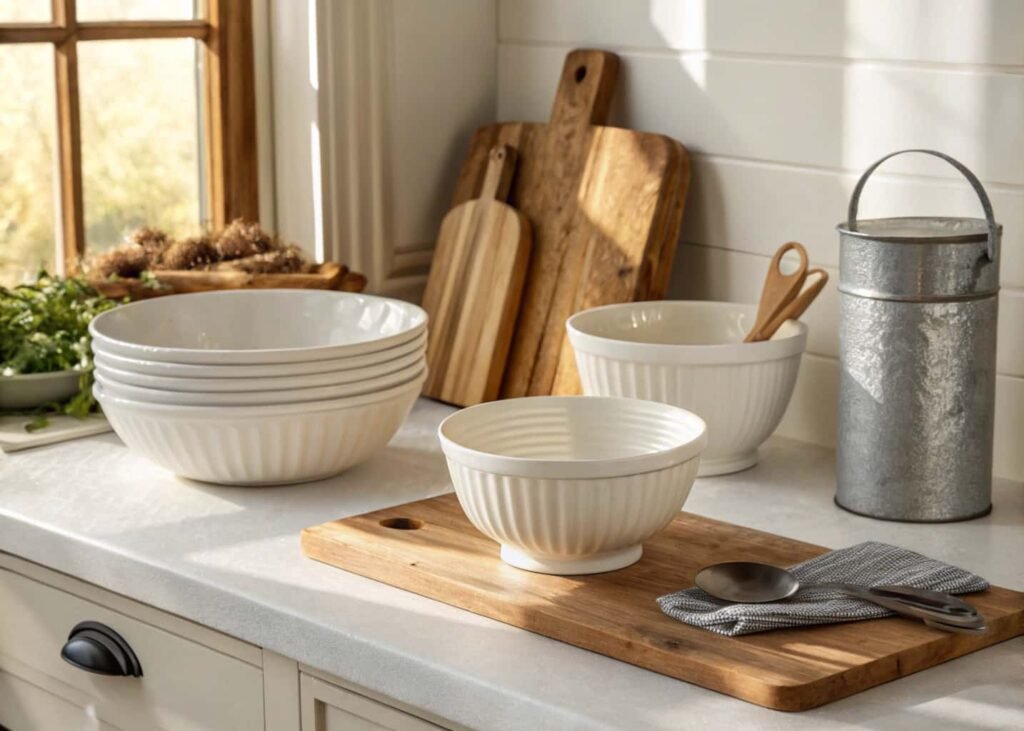
Farmhouse decor gets overdone fast because people lean on the same three signifiers: a “Live Laugh Love” sign, mason jars, and shiplap. Skip those and go for texture instead — a woven jute rug in front of the sink, open shelving with mismatched white stoneware, and a wood cutting board leaned against the backsplash rather than stored flat. Galvanized metal pieces (a utensil crock, a small bin for fruit) add the right cool-metal contrast against warm wood tones without tipping into costume-y territory. One thing people get wrong: farmhouse doesn’t mean cluttered. The original farmhouse kitchens were sparse because everything on the counter had a job. Keep your surfaces mostly clear and let two or three intentional pieces do the work.
Modern Minimalist Kitchen Decorating Ideas
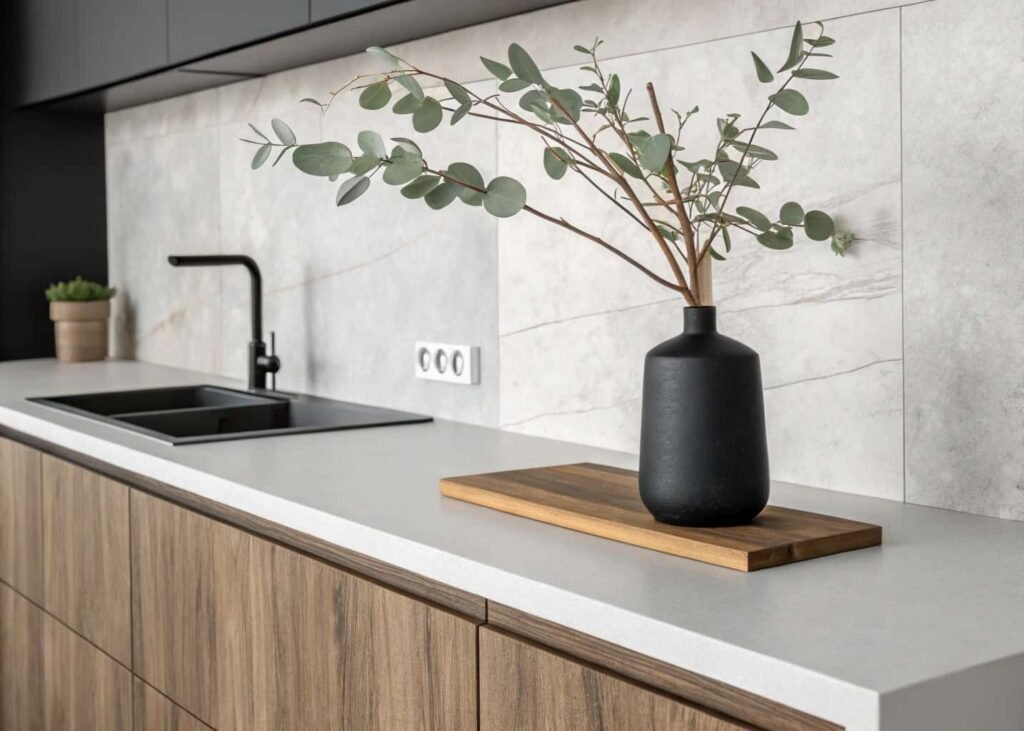
Minimalist kitchens rely on restraint, but restraint isn’t the same as bare. The trick is choosing objects with strong, simple shapes and letting them stand alone rather than grouping five small items together. A single ceramic vase with one branch of eucalyptus, a matte black pour-over coffee setup, or one substantial cutting board displayed vertically all do more visual work than a cluster of trinkets. Stick to two finishes max — matte black and warm wood, or brushed steel and white — because mixing more than that starts to look busy instead of curated. Hide the small appliances (toaster, kettle) in a cabinet or appliance garage if you have one; minimalism falls apart the moment countertops get crowded with daily-use gadgets.
Coastal and Beachy Kitchen Vibes
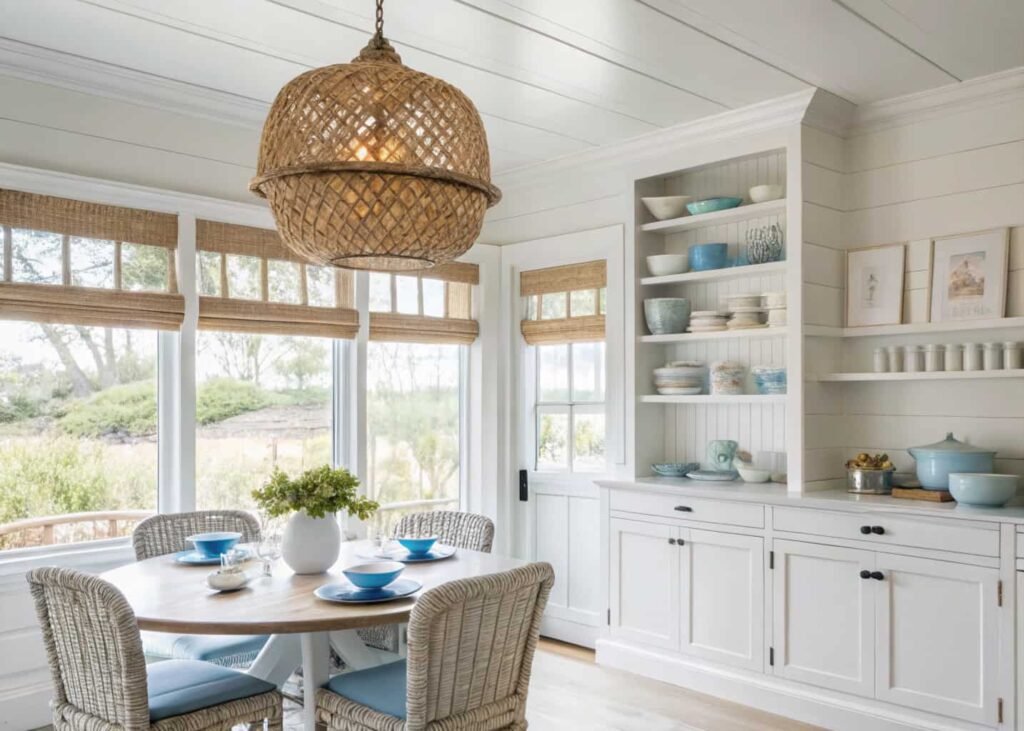
Real coastal kitchens borrow their palette from actual beach materials, not from a craft-store nautical section. Think bleached wood, rope, linen, and sea glass tones like pale blue-green and sandy tan — skip the anchor motifs and shell-shaped soap dishes, which date the room fast. A woven rattan pendant light over an island, linen roman shades instead of heavy drapes, and open shelving that shows off a mix of white ceramic and blue-rimmed glassware get you there without leaning into theme-park territory. Blue and white striped textiles (a runner, a few dish towels) are the one classic coastal element that still holds up because the pattern reads as timeless rather than kitschy.
Rustic Wood Accents for Warmth
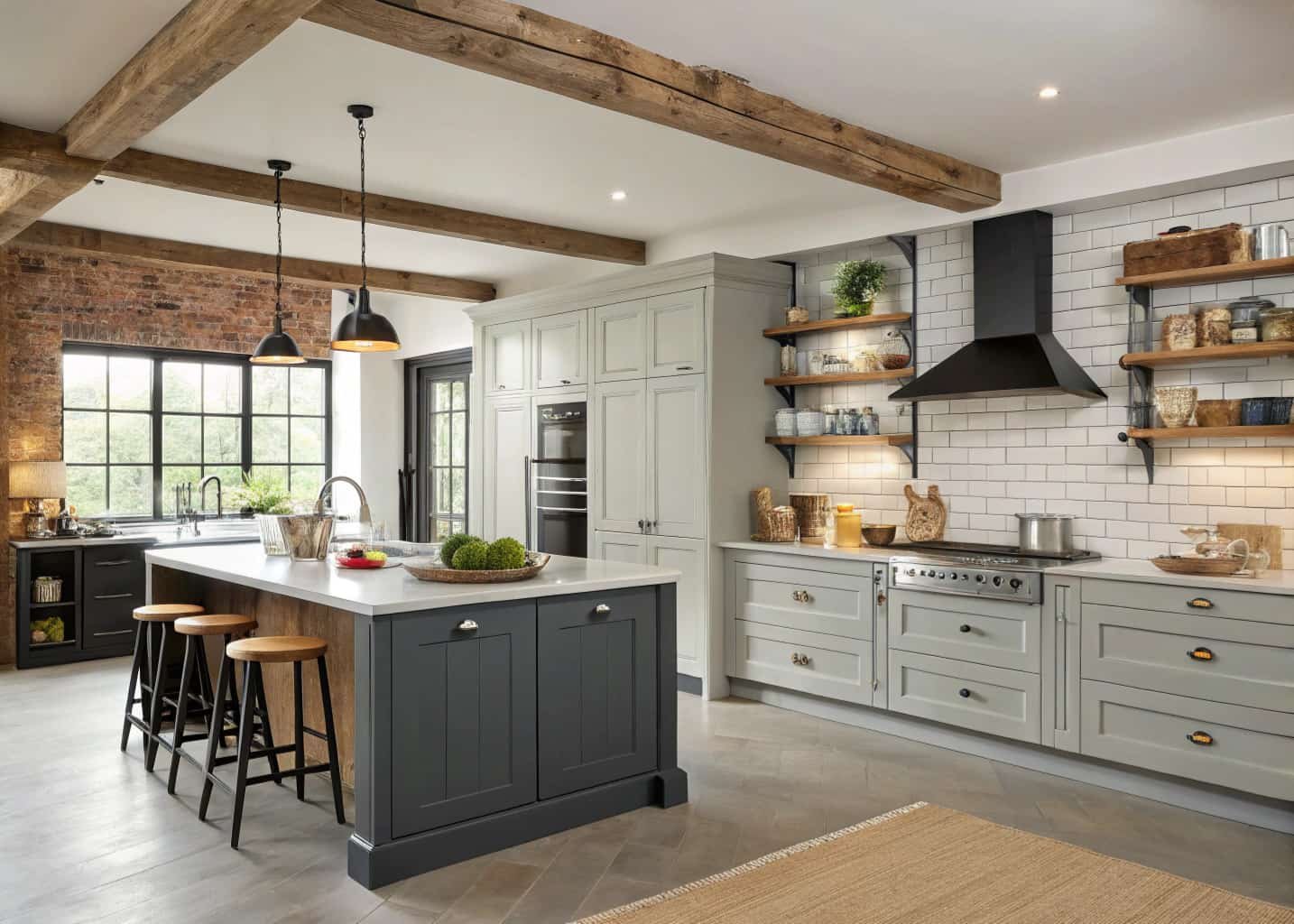
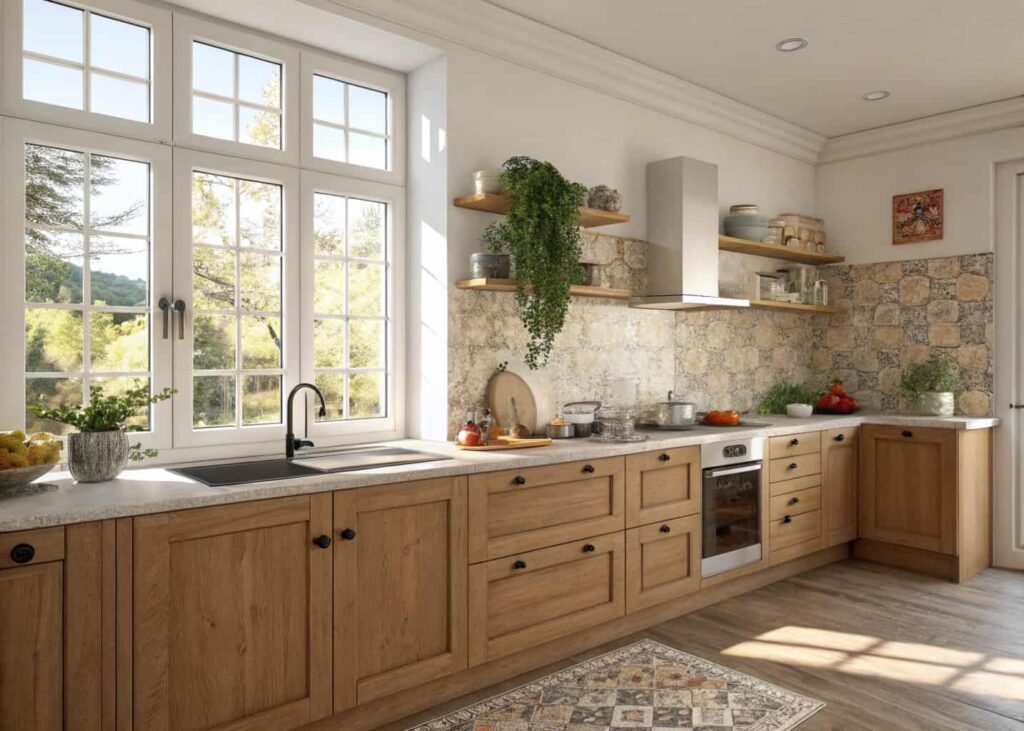
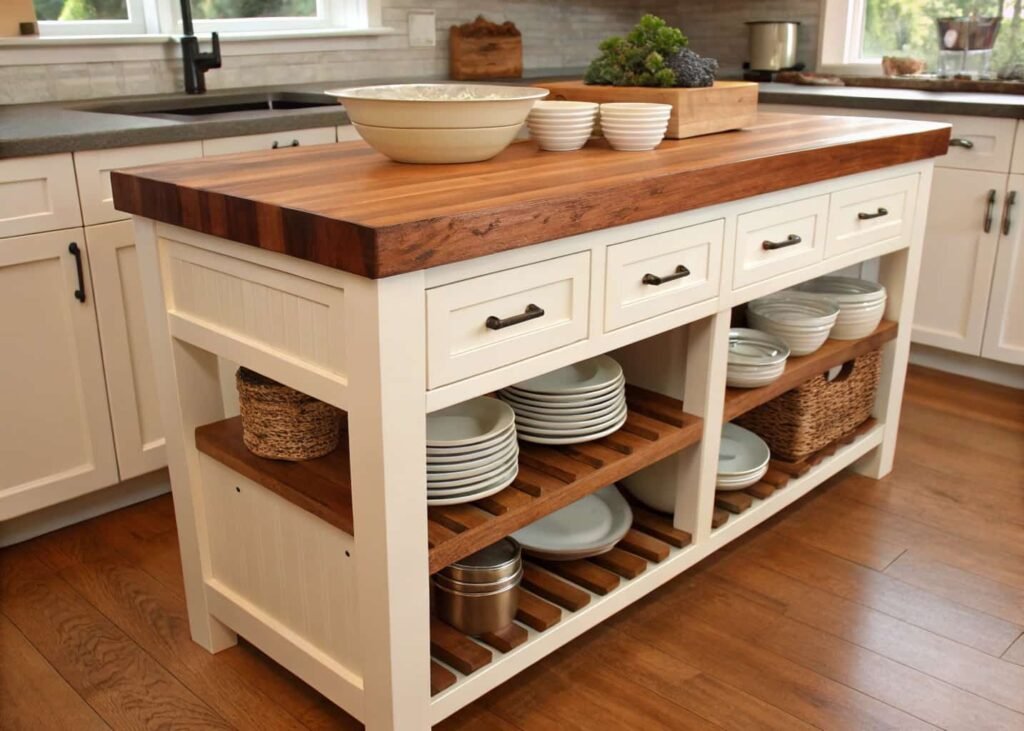
Wood accents fix a lot of kitchens that feel too clinical, especially ones with white cabinets and stainless appliances. A butcher block insert on an island (even a small 18-by-24-inch removable board) breaks up an all-white counter and gives you a real cutting surface at the same time. Open wood shelves in place of one upper cabinet run about $40 to $120 per shelf depending on wood type, and they read warmer than the same space filled with more white cabinetry. If your budget doesn’t stretch to real wood, a wood-look peel-and-stick shelf liner inside glass-front cabinets fakes the effect from a few feet away — not perfect up close, but it works for the price. Reclaimed wood specifically (versus new-cut lumber stained to look old) has visible nail holes, saw marks, and color variation that machine-cut “rustic” wood can’t fully copy, so if authenticity matters to you, look for salvage yards over big-box stores.
Decorating with Open Shelves and Displays
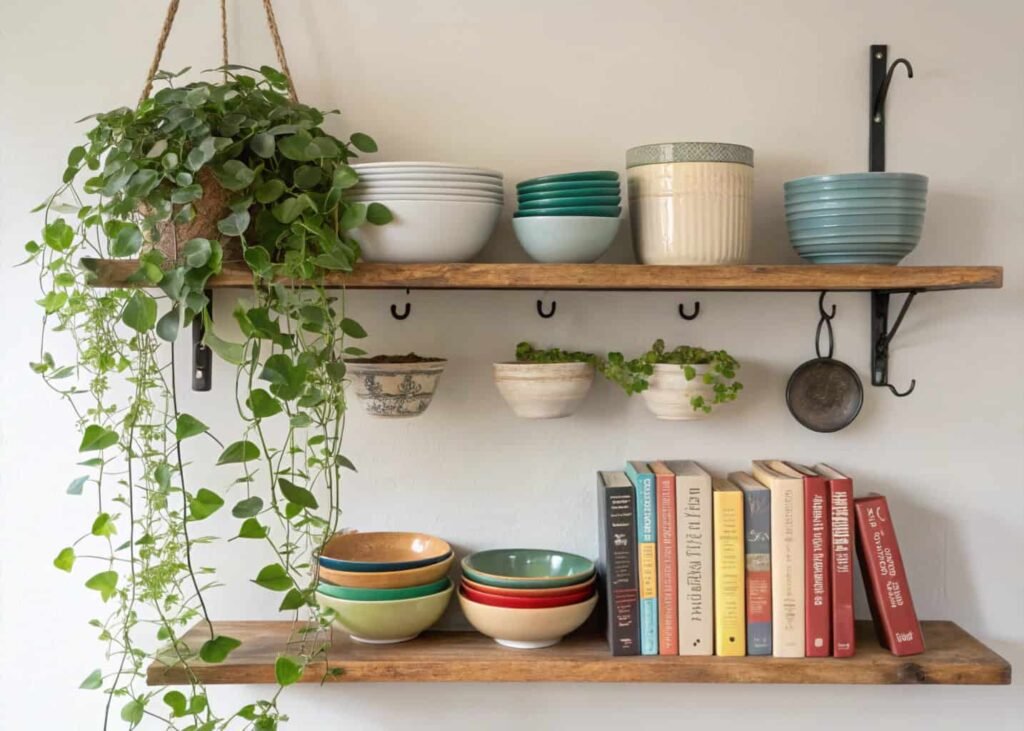
Open shelves photograph beautifully and function terribly if you fill them wrong. The rule that actually works: only put items on open shelves that you use at least once a week, or that are genuinely decorative and dust-resistant (ceramic, glass, metal — not woven baskets, which trap grease and dust in a kitchen environment). Group items in odd numbers — three bowls stacked, one plant, two cookbooks leaned sideways — because odd groupings read as intentional while even groupings read as accidental. Leave roughly 20% of each shelf empty. Fully packed shelves look like storage; shelves with breathing room look like styling. If you’re nervous about switching from closed cabinets to open shelving permanently, test it first by removing just one cabinet door for a month before committing to a full renovation.
Window Treatments That Complete the Look
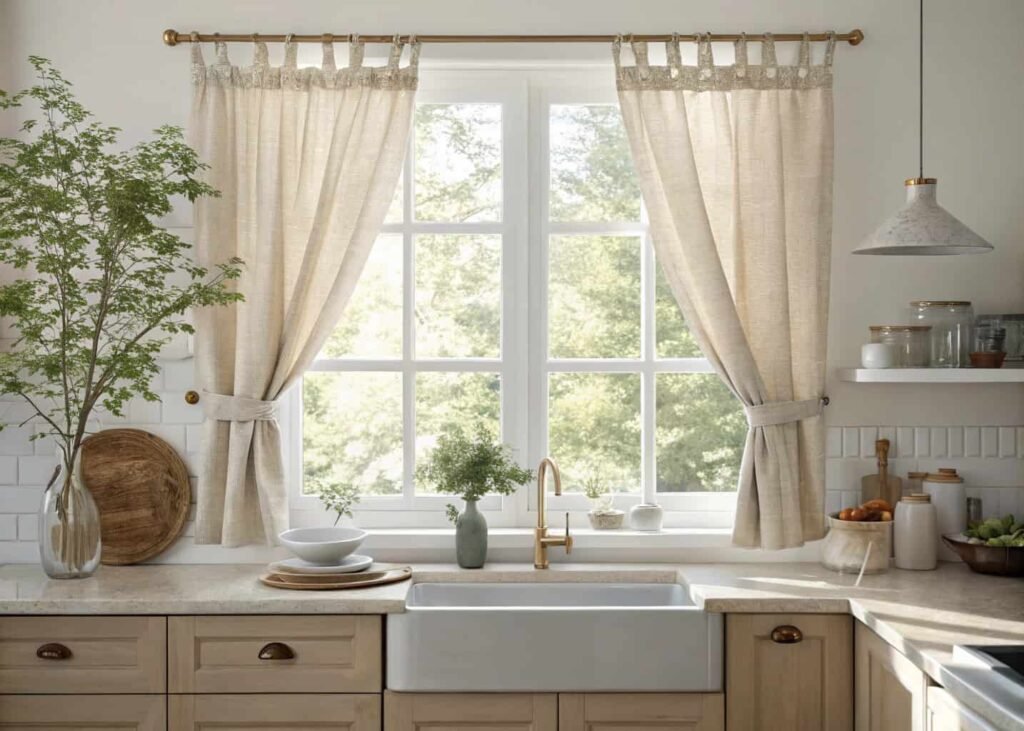
Kitchen windows take more abuse than any other window in the house — steam, grease splatter, and constant sun exposure. Skip heavy drapes near the stove or sink; they absorb odors and are a genuine fire hazard within a few feet of a range. Cafe curtains (covering just the lower half of the window) are the classic kitchen solution because they block sightlines from outside at counter height while still letting light in above. Roman shades in a washable cotton or linen blend work well over a sink where you need full coverage sometimes and full light other times. Whatever you choose, keep the hem at least 4 to 6 inches above any open flame or burner, and go with a fabric you can actually machine wash — kitchen textiles need real washing every few months, not just spot cleaning.
Rugs and Flooring Decor Tips
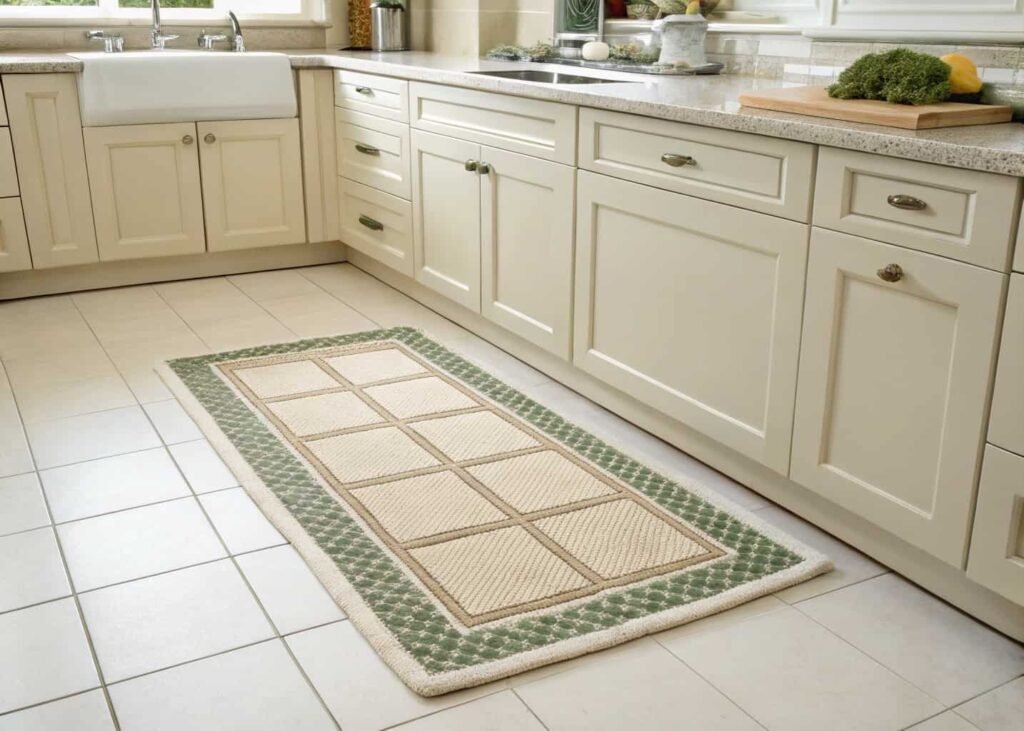
A rug in front of the sink is one of the highest-impact, lowest-cost changes you can make, and most people skip it entirely. Look for a low-pile, machine-washable rug — 2 by 3 feet is the standard sink-area size — because kitchen floors take constant splashing and dropped food. Avoid high-pile shag rugs in a kitchen entirely; they trap crumbs and grease in a way that’s nearly impossible to clean properly. If your kitchen is long enough for a runner, a 2-by-6 or 2-by-8-foot runner down the center of the galley works better than multiple small mats, which tend to bunch and slide. For anyone standing at the counter for long stretches while cooking, a cushioned anti-fatigue mat under a flat-weave rug cover gives real comfort without looking like a gym mat sitting in your kitchen.
Wall Art and Decor for Kitchens
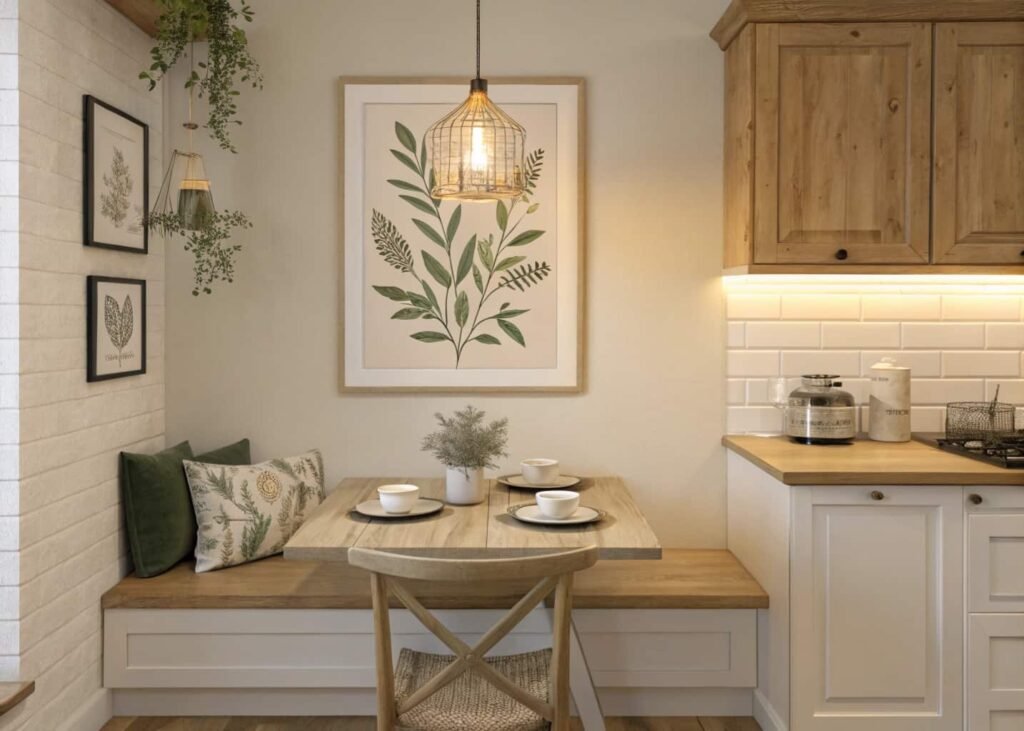
Kitchen wall art has to survive humidity and grease in the air, which rules out anything on unsealed paper or canvas without a glass or acrylic front near the cooking zone. Small framed prints (8×10 or smaller) work well above a breakfast nook or on an empty wall away from the stove, while a single larger statement piece — a vintage produce print, a botanical illustration, or a framed piece of textile — anchors an otherwise plain wall. A wood or metal shelf holding rotating art instead of a fixed frame lets you change the piece seasonally without new nail holes. Keep art at least 3 feet from any heat source, and prioritize matte or UV-protective glass if the piece will get direct sun for several hours a day, or the colors will fade within a couple of years.
Decorative Storage Solutions
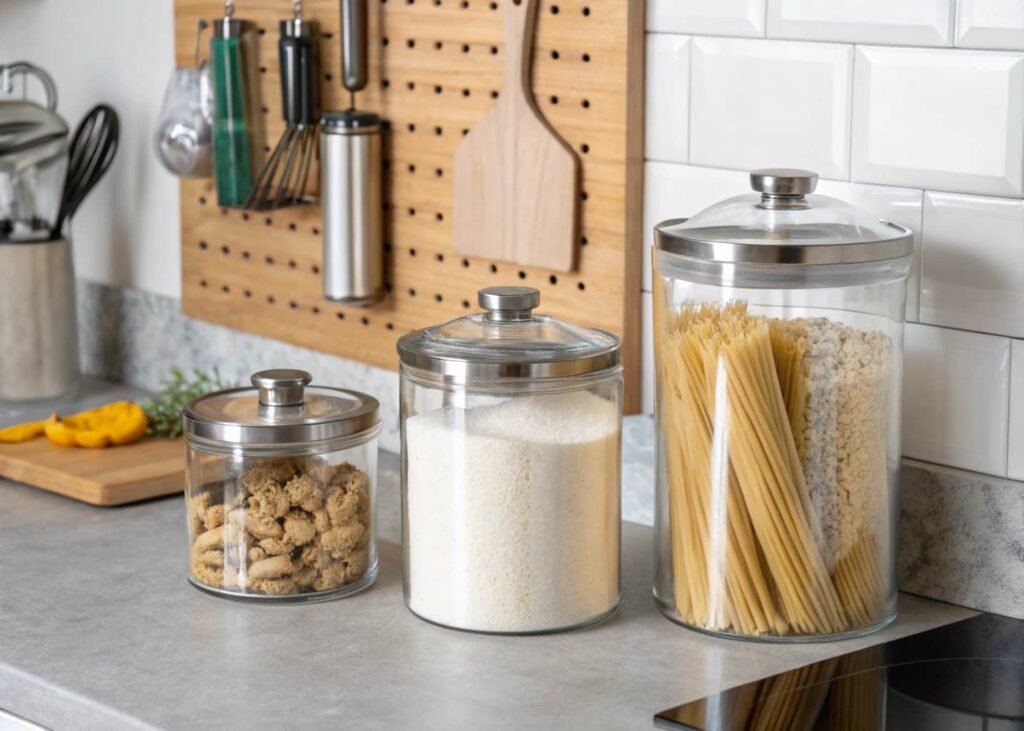
Good kitchen storage does double duty as decor, which is the cheapest way to style a kitchen without buying purely ornamental objects. Glass canisters for flour, sugar, rice, and pasta cost $8 to $20 each and instantly look more intentional than the original plastic bags and cardboard boxes, while also keeping food fresher longer. A wall-mounted wood pegboard for pots and utensils frees up drawer space and creates a genuine focal point at the same time — this is a technique borrowed from restaurant kitchens, where hanging storage saves real time during service. Woven baskets on top of cabinets (above the sightline, away from grease) hide rarely-used items like holiday dishware while still looking styled from below. The general rule: if a storage container is going to be visible daily, spend the extra few dollars on one that looks good empty, not just full.
Seasonal Kitchen Decorating Swaps
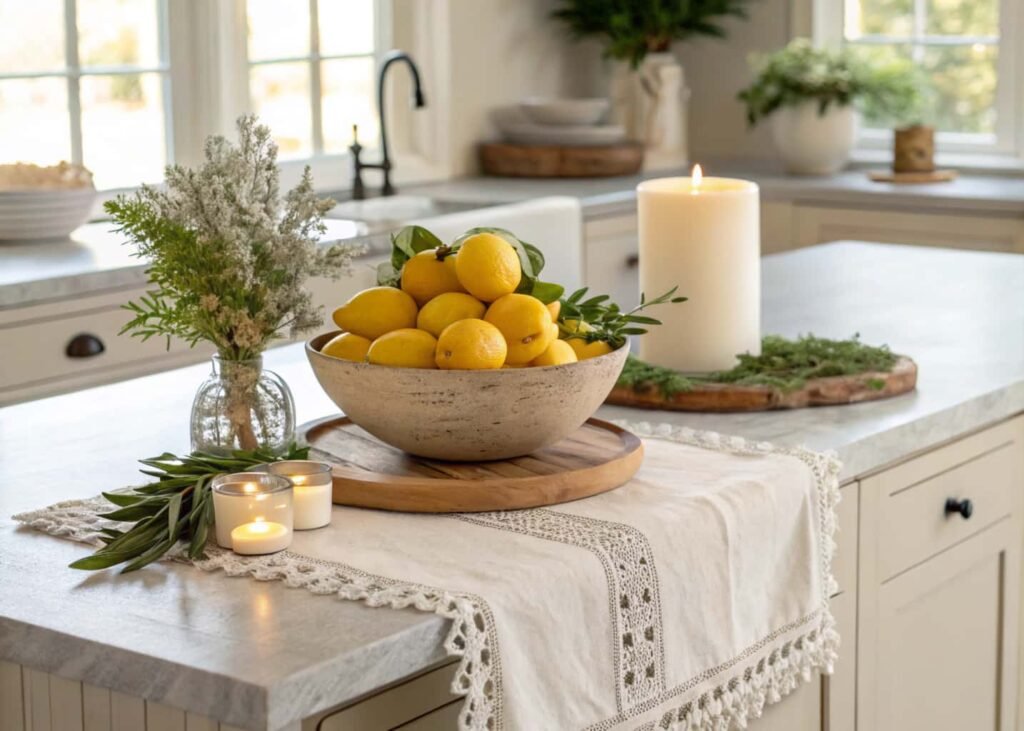
You don’t need to redecorate the whole kitchen every season — swap three things and the room reads completely different. Dish towels and a table runner are the fastest change, since they’re cheap and take thirty seconds to switch. A seasonal centerpiece on the island or table (a bowl of lemons in summer, small gourds in fall, evergreen clippings in winter) costs almost nothing if you’re using real produce or foraged greenery instead of buying decorative filler. The third swap is scent-adjacent but visual too — a different candle or diffuser on the counter changes the mood of the whole room. Store your off-season textiles in a labeled bin so the rotation actually happens instead of becoming a one-time project you never repeat.
Small Kitchen Decorating Tricks
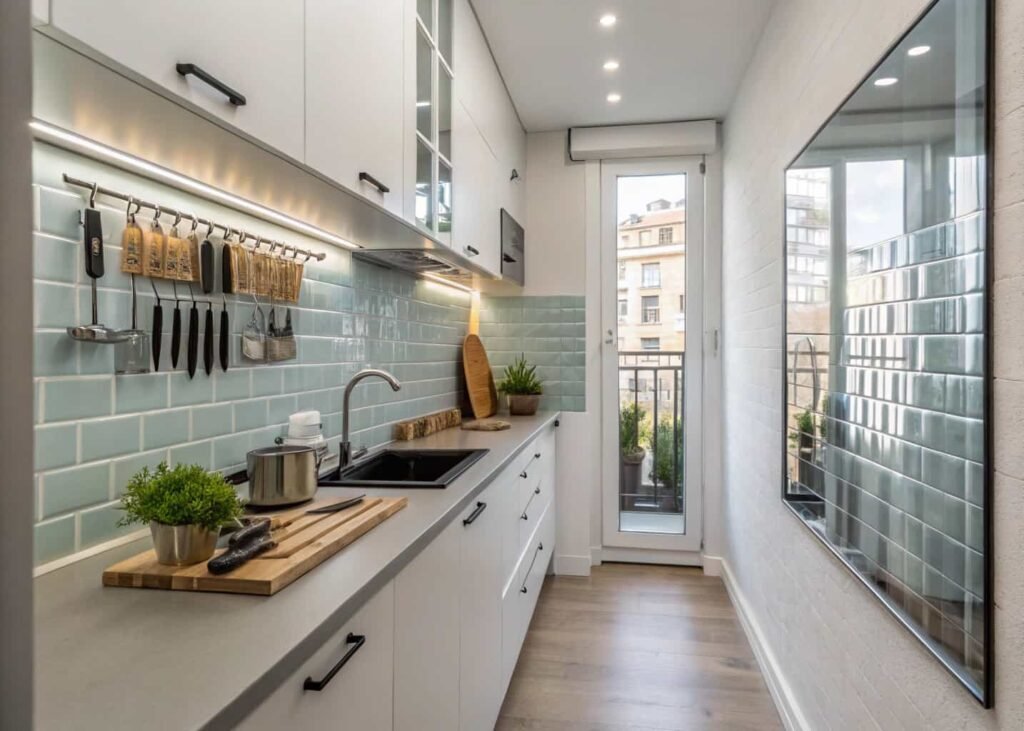
In a small kitchen, every decorative object competes with counter space you actually need, so vertical decorating matters more than horizontal. Magnetic knife strips and hanging rail systems clear the counter while still looking styled. A mirror or reflective backsplash tile on one wall bounces light and makes a narrow galley kitchen feel wider — this works especially well opposite a window. Light-colored, low-contrast decor items recede visually, while a single bold accent piece (one colorful rug, one patterned tea towel) draws the eye without cluttering the space. Skip anything bulky sitting directly on the counter, like a large fruit bowl or a tall vase — hang or shelve it instead, and you’ll get back several inches of usable prep space that matters far more in a small kitchen than it would in a large one.
Decorating on a Tight Budget
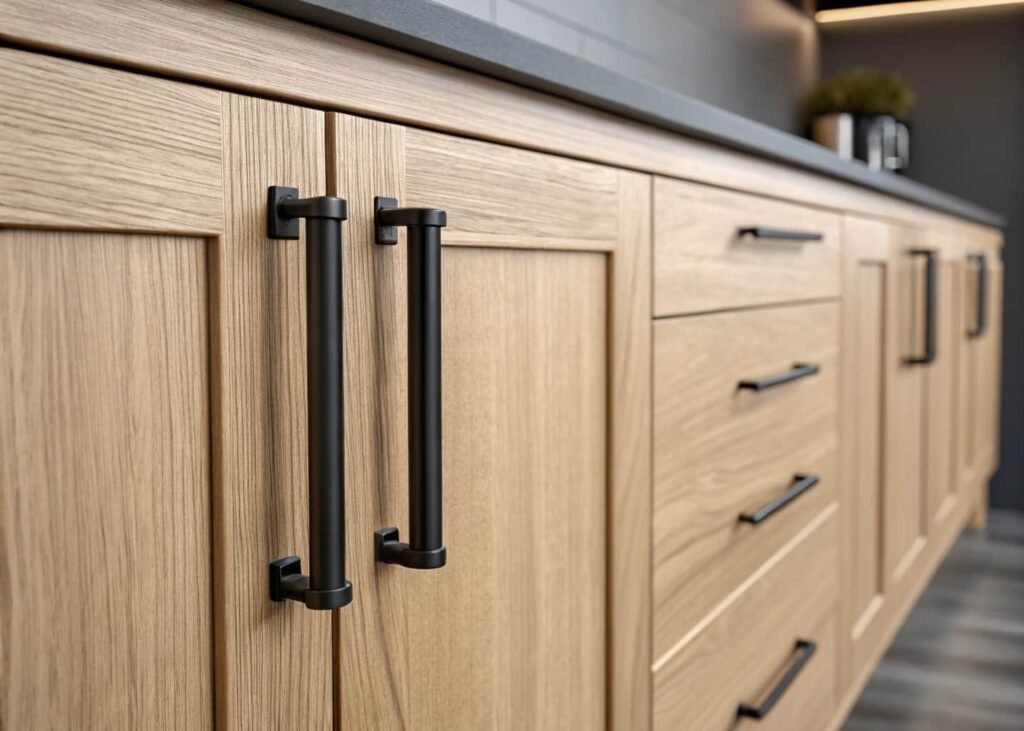
The single best low-cost kitchen decorating move is new cabinet hardware — swapping builder-grade knobs for $2 to $6 each brushed brass or matte black pulls changes the whole feel of the cabinetry for under $100 in most kitchens. Thrifted ceramics (bowls, pitchers, a few plates for open display) run $1 to $5 each at most secondhand stores and often have more character than new mass-produced pieces at ten times the price. A can of paint on just the kitchen door or the inside of open shelving ($25 to $40) gives a big visual return for very little money. Skip full curtain sets if money is tight — a $15 to $20 yard of fabric from a craft store, hemmed yourself or with basic iron-on tape, covers a standard kitchen window for a fraction of a ready-made curtain’s price.
Final Touches for a Designer Look
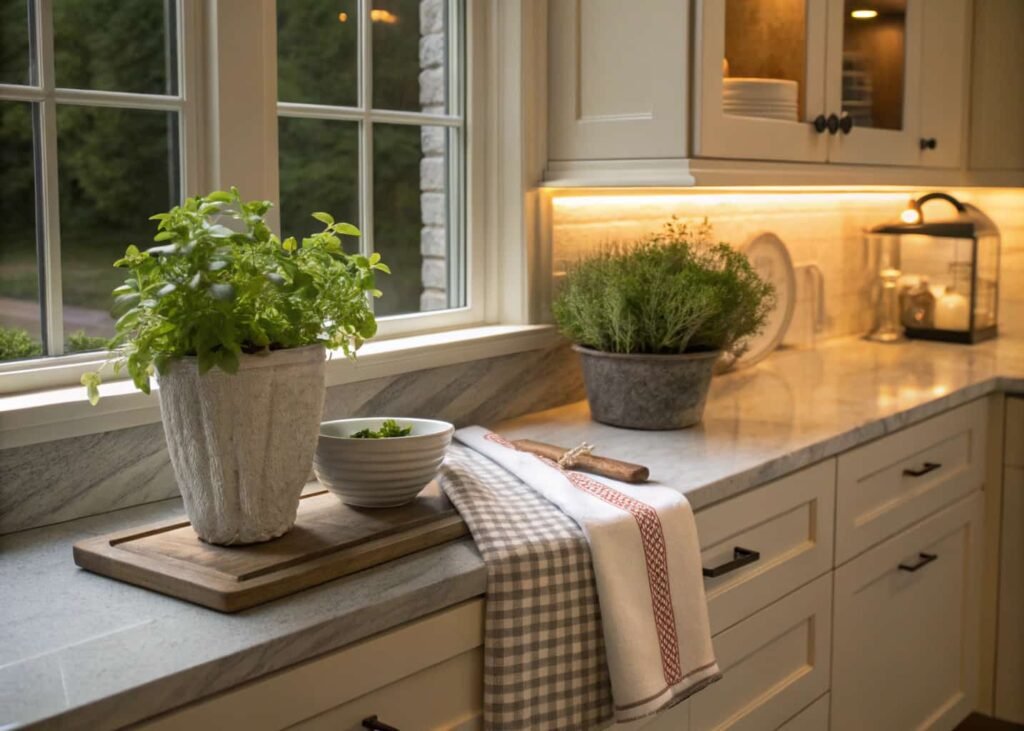
The details that separate a “decorated” kitchen from a “designed” one are usually small and easy to miss. Matching or intentionally coordinating your dish towels, oven mitts, and any visible small appliances stops the room from looking like items were bought at different times with no plan. A single fresh herb plant on the windowsill (basil or rosemary hold up well indoors) does more for a lived-in, high-end feel than any artificial greenery. Check your lighting layers too — most kitchens rely on one overhead fixture, but adding under-cabinet lighting or a small lamp on the counter creates the warmer, layered light that designer kitchens use instead of one flat overhead glare. None of these final touches cost much, but skipping them is usually what makes a kitchen look unfinished even after a full decorating pass.