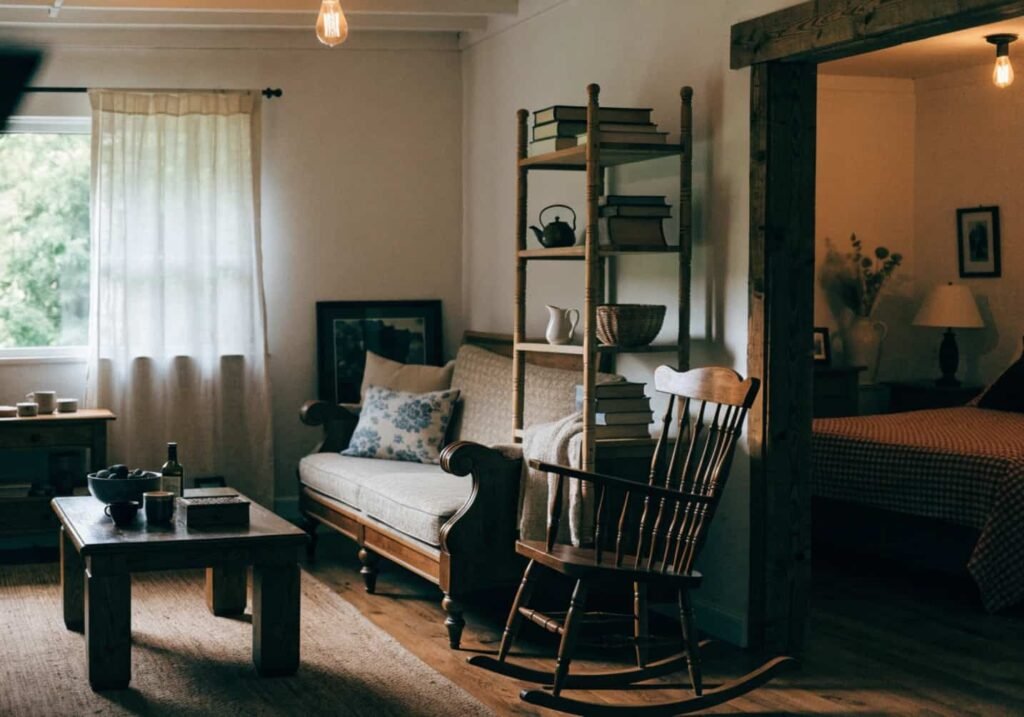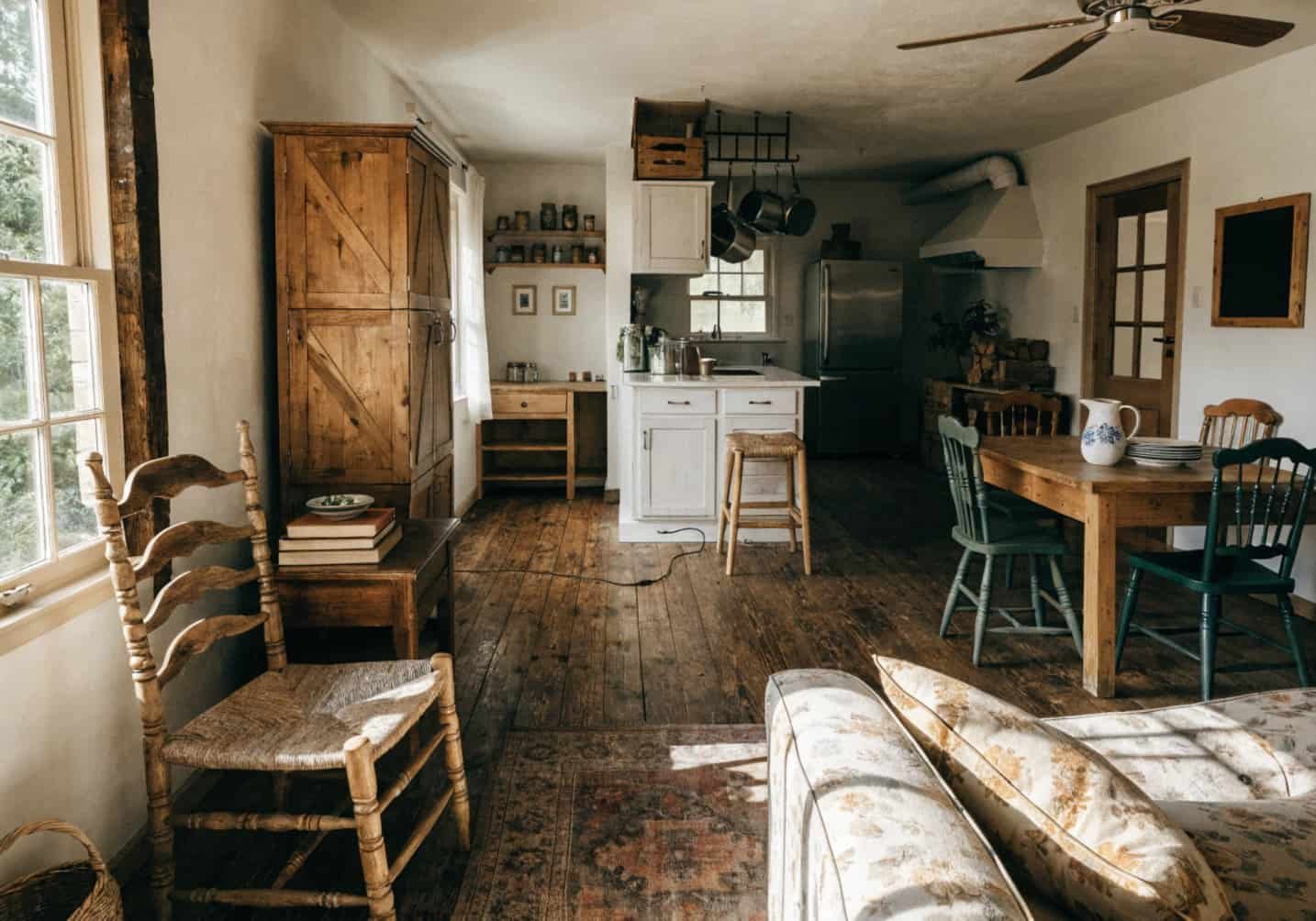
Farmhouse decor got expensive fast once every big-box store started selling “shiplap” panels and $180 galvanized pendant lights. The irony is that real farmhouse style was never about buying new things — it was about using what was durable, functional, and a little worn. That’s actually good news if you’re working with a tight budget. You’re not trying to fake wealth here; you’re trying to fake age and use, which costs a lot less.
How to Achieve Farmhouse Style on a Low Budget
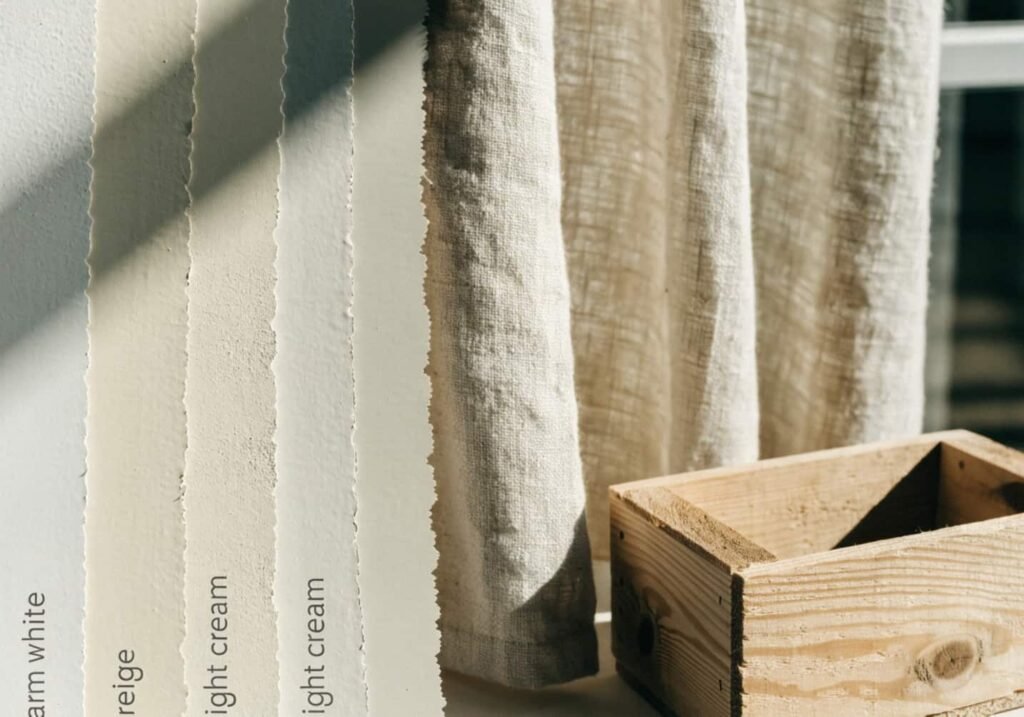
Start with the wall color, not furniture. A gallon of warm white or greige paint (Sherwin-Williams Alabaster or Behr Swiss Coffee are the usual go-tos, around $35–55 a gallon) will do more for the farmhouse look than any single piece of furniture. Most rooms need one gallon for two coats on a 12×12 space, so budget accordingly rather than guessing.
After paint, the next cheapest lever is texture. Swap synthetic curtains for cotton or linen-blend ones — even inexpensive ones from a discount home store read as more “farmhouse” than polyester because they drape and wrinkle naturally. Thrift stores are genuinely useful here; wooden crates, chipped ceramic pitchers, and galvanized buckets show up constantly and cost a few dollars instead of $40 retail.
One thing worth saying plainly: you don’t need to hit every farmhouse cliché in one room. A room with shiplap, a barn door, exposed beams, AND a farmhouse sink starts to look like a theme park instead of a house. Pick two or three elements and let the rest of the room stay simple.
How to Design Rustic Kitchen Cabinets
If your cabinets are solid wood or MDF in decent shape, don’t replace them — repaint or reface them. A cabinet repaint (sanding, primer, two coats of paint, new hardware) usually runs $150–400 in materials for an average kitchen, versus $8,000+ for full replacement. Use a bonding primer made for cabinets (Zinsser BIN or similar) so the paint doesn’t chip within a year, which is the most common mistake people make when repainting kitchen cabinets themselves.
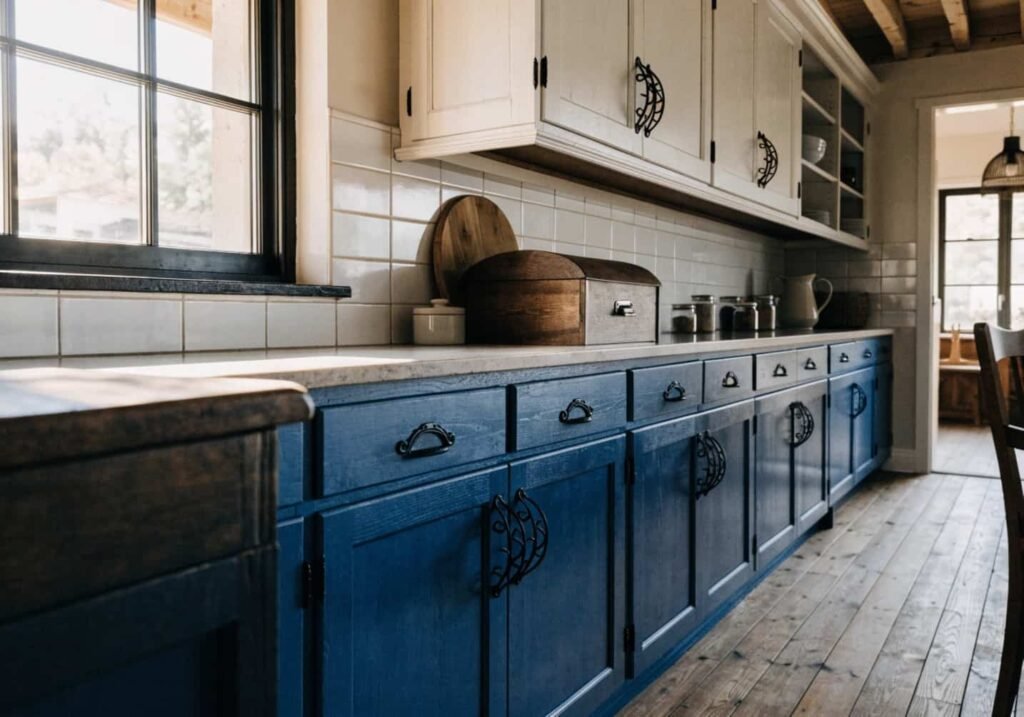
For the rustic look specifically, skip the shaker-style all-white trend and go with a two-tone approach: lower cabinets in a deep color (navy, sage, or black) and uppers in white or cream. This reads more farmhouse-authentic than an all-white kitchen, which tends to look more modern-farmhouse-hotel than rustic-homestead.
Hardware matters more than people expect. Swap out brushed nickel or chrome pulls for black iron or oil-rubbed bronze bin pulls — these run $3–8 each on sites like Amazon or Hobby Lobby (which also does 40–50% off hardware sales fairly often). That single swap changes the entire feel of a kitchen for under $100 total.
How to Select Farmhouse Furniture
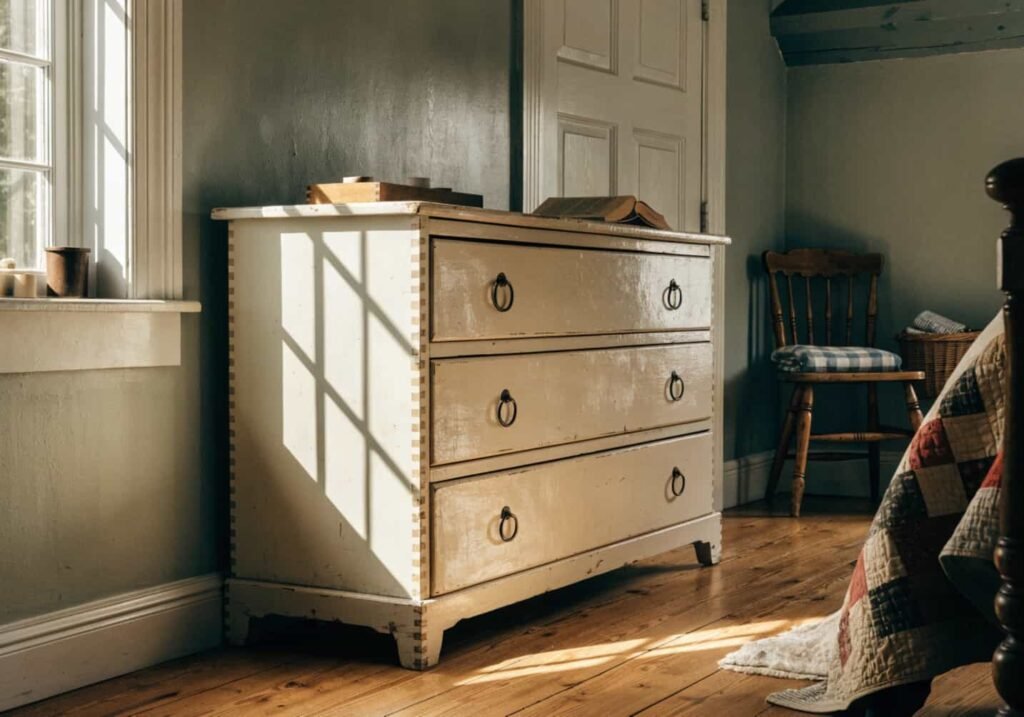
Solid wood furniture with visible joinery (dovetails, mortise-and-tenon, exposed pegs) is the actual marker of farmhouse furniture — not just “distressed” paint finish. If you’re shopping secondhand, check the back and underside of a piece before buying. Particleboard with a wood veneer won’t hold up the way real pine or oak will, and it won’t take a distressed finish convincingly either.
Facebook Marketplace and estate sales are the better sources than big furniture stores for this style — you’re looking for pieces that are already 20–40 years old, not new pieces made to look old. A solid pine dresser from the 80s or 90s can often be found for $50–150 and just needs cleaning, maybe new hardware, and possibly a coat of wax.
If you do need to buy new, look at unfinished wood furniture stores (there are still some regional chains) rather than pre-finished retail furniture. Unfinished pieces cost roughly 30–40% less, and you control the stain and distressing yourself.
How to Create a Farmhouse Look with Vintage Items
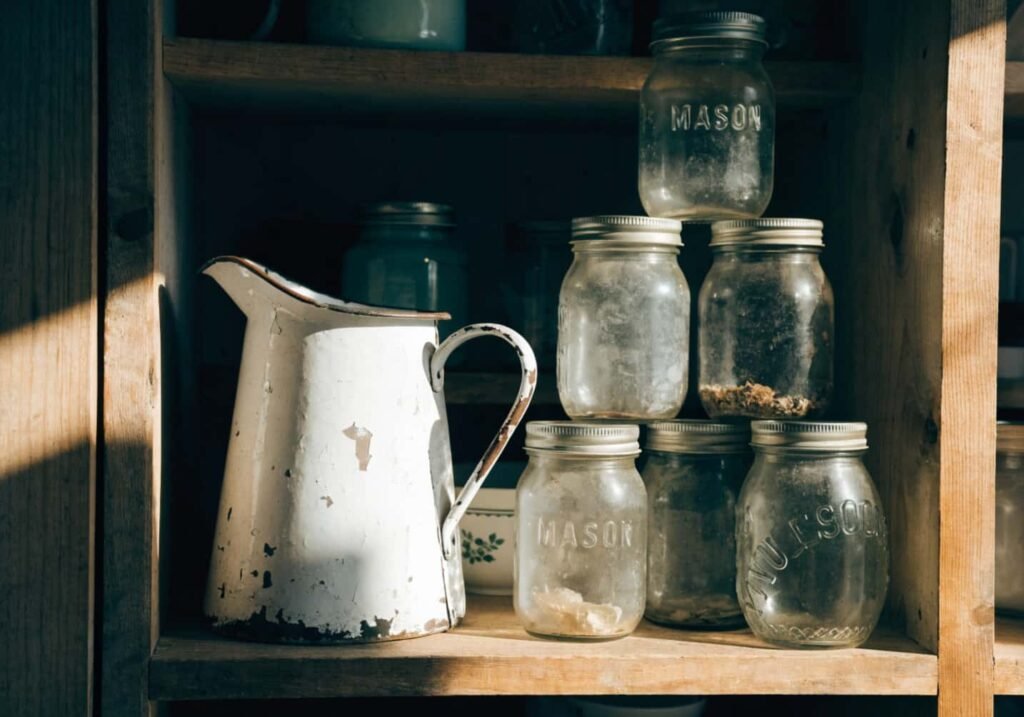
The trick with vintage farmhouse decor is restraint on quantity and generosity on repetition of material. One or two genuinely old items (a rusted milk can, a chipped enamel pitcher, an actual antique scale) will look intentional. Five or six scattered around a shelf starts to look cluttered rather than curated.
Enamelware is a cheap and reliable category to hunt for — old enamel coffee pots, basins, and canisters show up often at estate sales for $5–15 and hold up well as decor even with chips and wear (the wear is actually part of the appeal here, unlike with most home goods). Mason jars are the obvious cliché, but they’re cliché because they’re genuinely useful and cheap — used as vases, utensil holders, or bathroom storage, they cost next to nothing if you’re already buying preserves or pickles in them.
How to Use a Farmhouse Sink in a Small Kitchen
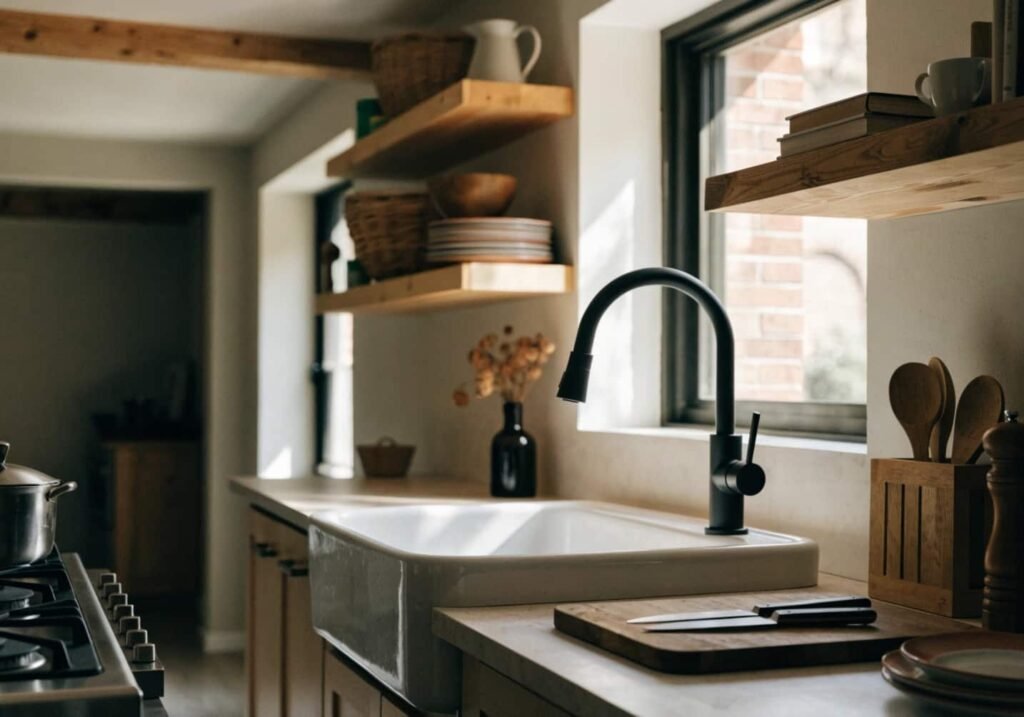
A full apron-front farmhouse sink typically needs at least 30–36 inches of cabinet width and a specific base cabinet designed to support the exposed front — you can’t just drop one into a standard cabinet without retrofitting it, which is the detail most budget articles skip over. In a genuinely small kitchen, this retrofit cost (custom cabinet modification, plumbing adjustment) can easily eat up whatever you saved buying the sink itself secondhand.
If your kitchen is under about 100 square feet, a better route is a farmhouse-style sink faucet paired with a deep single-basin stainless or fireclay sink instead of the full apron front. You get the visual cue (the tall gooseneck faucet, the deep basin) without the structural retrofit. A bridge-style or gooseneck faucet runs $80–150 and is a straightforward swap in most cases, unlike the sink itself.
If you do want the real apron-front sink and have the cabinet space, fireclay runs cheaper than cast iron over time (less chipping, doesn’t need refinishing) but costs more upfront — expect $300–600 for a decent fireclay sink versus $200–400 for cast iron. For a small kitchen that gets heavy daily use, I’d lean fireclay despite the higher price; the maintenance savings add up.
How to Add Wooden Accents for Farmhouse Style
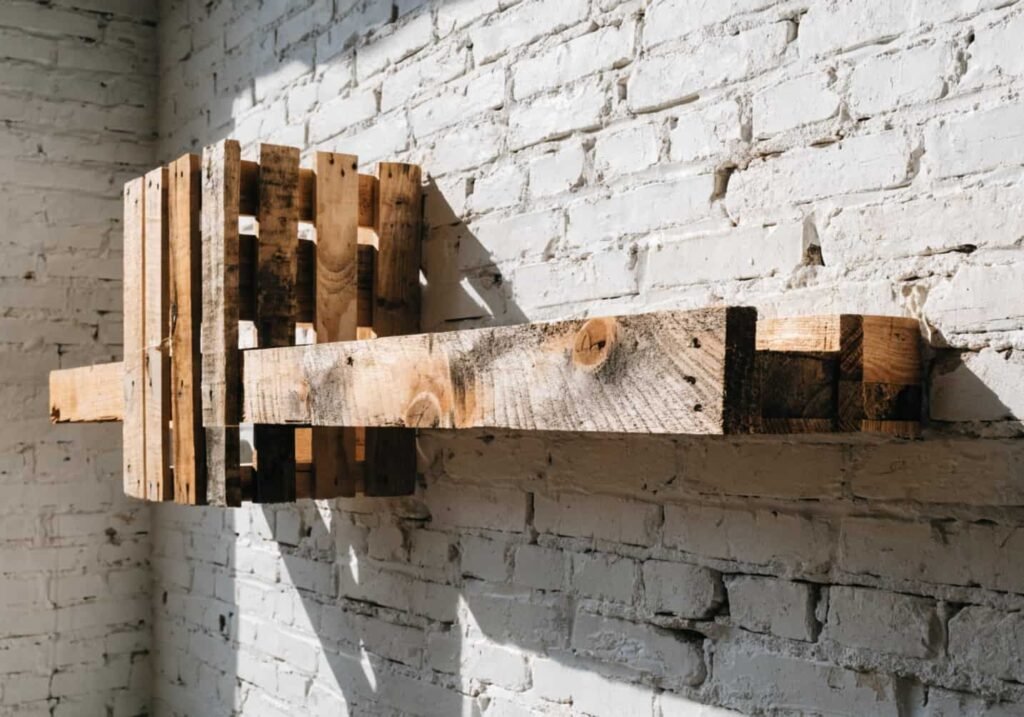
Reclaimed wood is expensive when bought pre-packaged from a home store (often $6–10 per square foot for shiplap-style planks). Pallet wood is the actual budget version, and it’s free or nearly free if you can find a business willing to give away pallets — check behind hardware stores, garden centers, or flooring warehouses, who often just want them hauled off. The catch: pallet wood needs to be checked for a stamp (HT for heat-treated is safe indoors; MB for methyl bromide-fumigated is not, and you don’t want that in your house).
For a floating shelf or accent wall, rough-cut pallet boards sanded down and given a simple wipe-on stain or wax will look more authentically farmhouse than uniform pre-cut planks, because real reclaimed barn wood has irregular widths and grain — which is exactly what makes it look old.
How to Choose Farmhouse Wall Decor
Skip the mass-produced “Live Laugh Love” sign category entirely — it’s the single fastest way to make a room look like it was decorated from a single Hobby Lobby end cap rather than lived in. Instead, look at functional wall items that double as decor: an old wooden ladder leaned against a wall for blanket storage, a vintage window frame with mirror glass added, or a printed feed sack or grain sack stretched and framed.
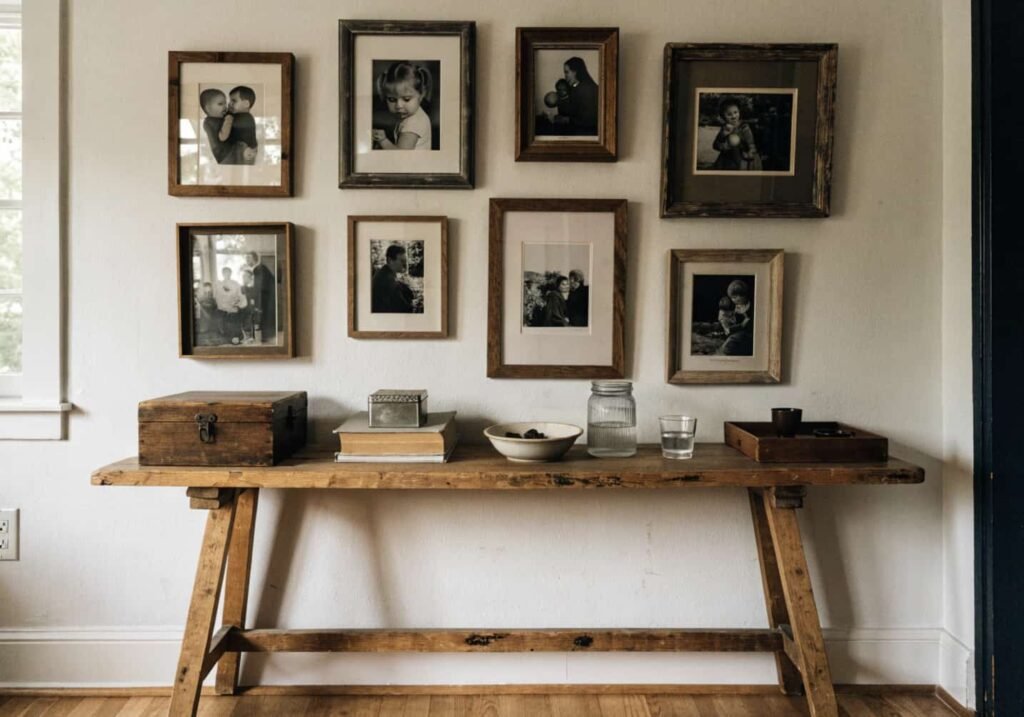
Black-and-white or sepia-toned family photos in mismatched wood frames also do a lot of work here and cost almost nothing if you already have the photos — thrift store frames run $1–4 each, and the mismatch in wood tone actually reads as more authentic than a matched frame set.
How to Bring Farmhouse Charm into a Small Space
In a small living room or apartment, the biggest mistake is trying to fit full farmhouse-scale furniture (oversized wood coffee tables, deep barn-style sectionals) into a space that can’t handle the bulk. Scale down the pieces but keep the materials — a smaller solid wood coffee table with turned legs still reads farmhouse, an oversized one just reads cramped.
Vertical storage does more work than horizontal in tight spaces: a tall open wood shelving unit against one wall stores more and takes up less floor footprint than a low console, while still giving you the open-shelf farmhouse look for displaying enamelware or jars.
Light matters more in small spaces too. Farmhouse style leans on warm, slightly dim lighting (think Edison bulbs, warm 2700K color temperature), but in a small room that can make things feel cramped rather than cozy. Mix in one brighter fixture at 3000–3500K near a work or reading area so the room doesn’t feel like a cave, and save the warm dim bulbs for accent lighting only.