1. What Is a Water Fountain?
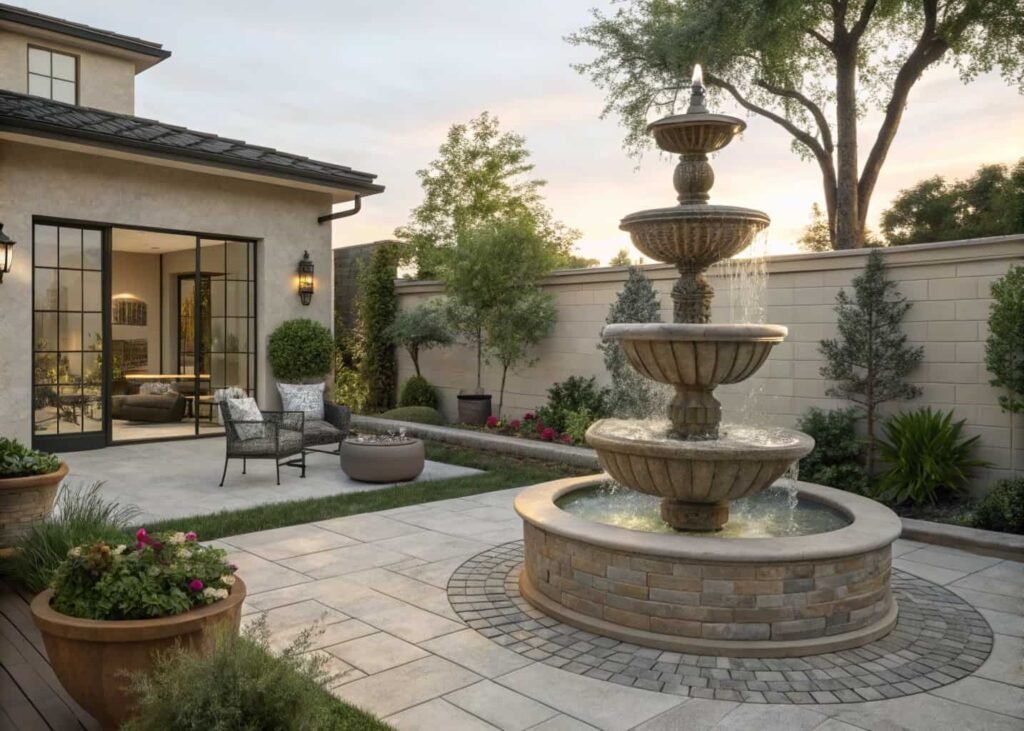
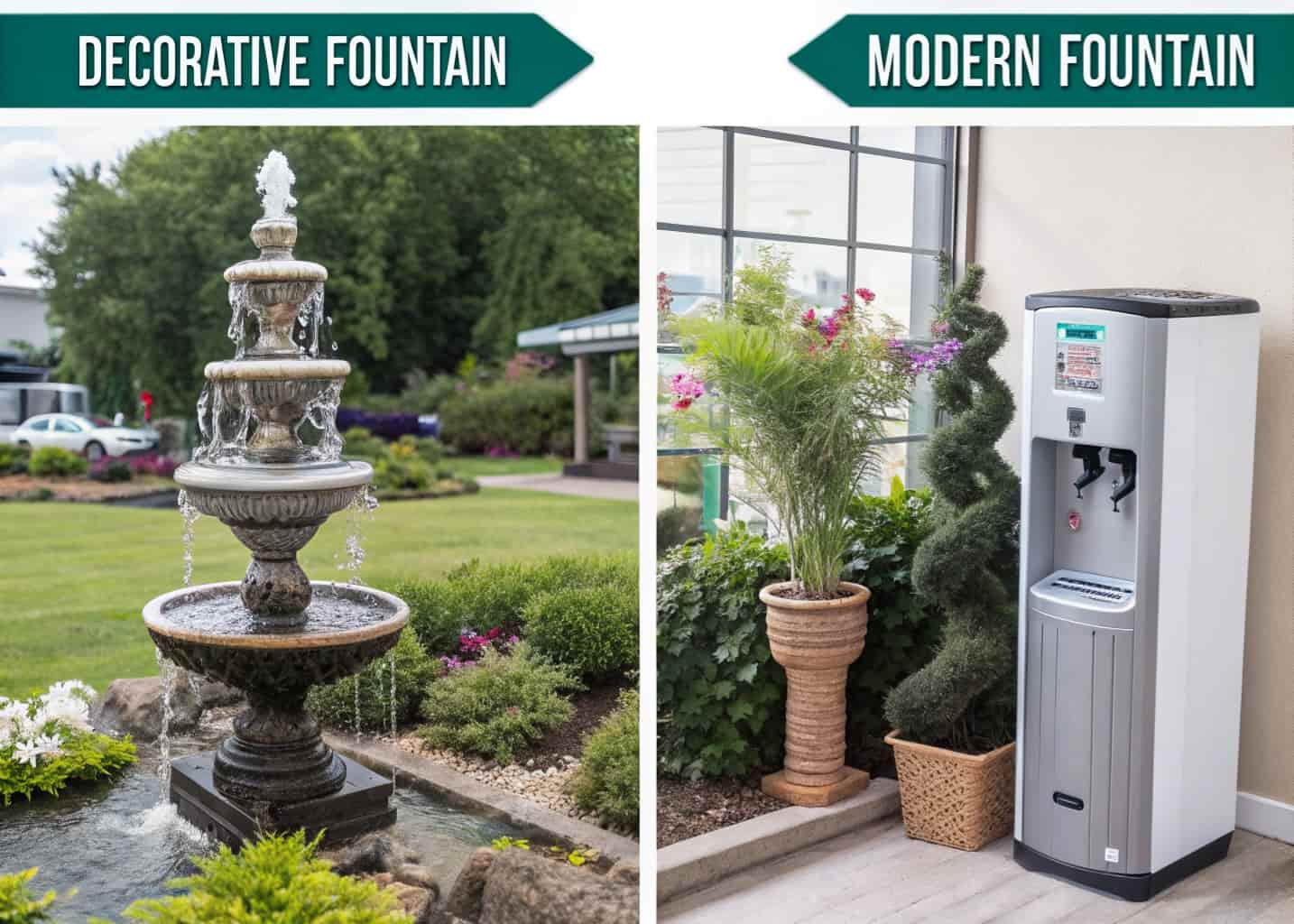
A Water Fountains, at its core, is just a pump moving water in a loop — from a basin, up through a hidden tube, out through some kind of spout or tier, and back down again by gravity. That’s the whole mechanical story. What separates a “fountain” from a generic “water feature” is usually the visible, controlled flow of water rather than a still pond or a waterfall built into landscaping. Fountains are self-contained units, which is why you can buy a tabletop one for $40 and have it running on your desk in ten minutes, or install an outdoor tiered fountain that becomes the centerpiece of a whole garden.
2. History and Evolution of Fountains
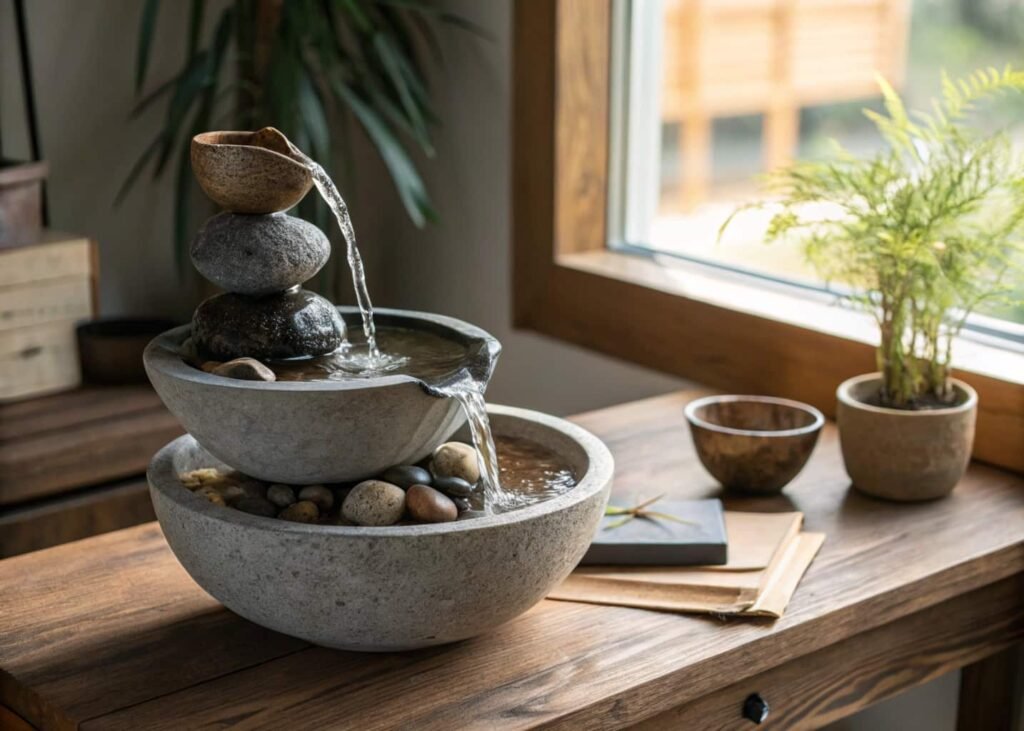
Fountains aren’t a modern invention dressed up as one — they go back to Roman aqueduct systems, where gravity-fed water was channeled into public basins for drinking and bathing, some of which (like the Trevi Fountain’s predecessor, the Aqua Virgo) date to around 19 BCE. Renaissance Italy turned fountains into status symbols, with the Medici family commissioning elaborate garden fountains at Villa d’Este in the 1550s that used hydraulic pressure alone, no motors. The shift to what we recognize today — small electric pump fountains for homes — really only became affordable and common in the 1950s and 60s, once submersible pumps got cheap enough to mass-produce. Before that, a “fountain” in your house was not a realistic idea unless you had serious money.

3. Types of Water Fountains (Indoor, Outdoor, Tabletop)
Indoor fountains are usually smaller, quieter (under 50 decibels), and built from resin, ceramic, or glass since they don’t need to survive frost or direct sun. Outdoor fountains are a different category entirely — tiered concrete or cast stone pieces, often 3 to 6 feet tall, built to handle rain, freeze-thaw cycles, and UV exposure without cracking. Tabletop fountains are technically a subset of indoor ones, but worth separating out because they’re a different buying decision: these are the $30–$150 units you put on a shelf or desk, usually running on a small 1.5–3 watt pump. There’s also wall-mounted and solar-powered fountains, which don’t fit neatly into the indoor/outdoor split — solar ones only work reliably in climates with 5+ hours of direct sun daily, which rules them out for a lot of shaded backyards.
4. Benefits of Having a Water Fountain
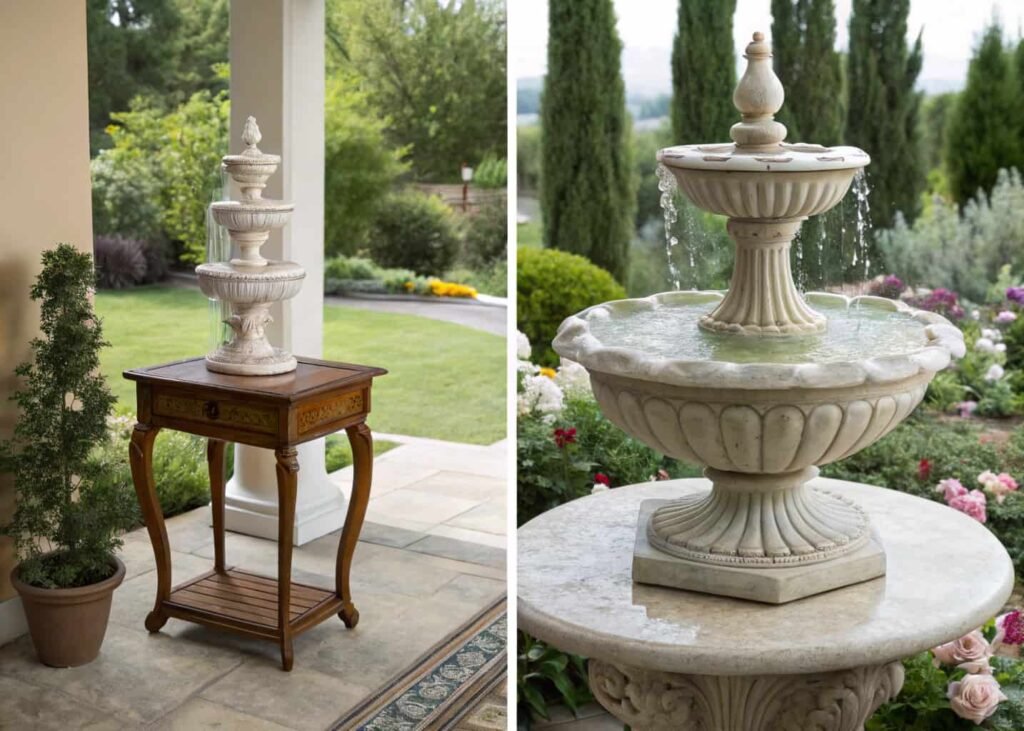
The white noise argument gets repeated a lot, and it’s actually backed by something real: flowing water produces broadband sound in the 40–60 decibel range, which is effective at masking traffic noise, neighbor conversations, or tinnitus-related ringing without being loud enough to disrupt sleep. Indoor fountains also add a small amount of humidity to a room — not enough to replace a humidifier, but enough to matter in a dry climate or during winter when forced-air heating drops indoor humidity below 30%. The calming effect isn’t just marketing either; a few small studies on “blue space” exposure (any visible moving water) have shown measurable drops in cortisol after 10–15 minutes near it. That said, I wouldn’t buy one purely expecting therapeutic results — it’s a nice bonus on top of something that’s mostly decorative.
5. Factors to Consider Before Buying
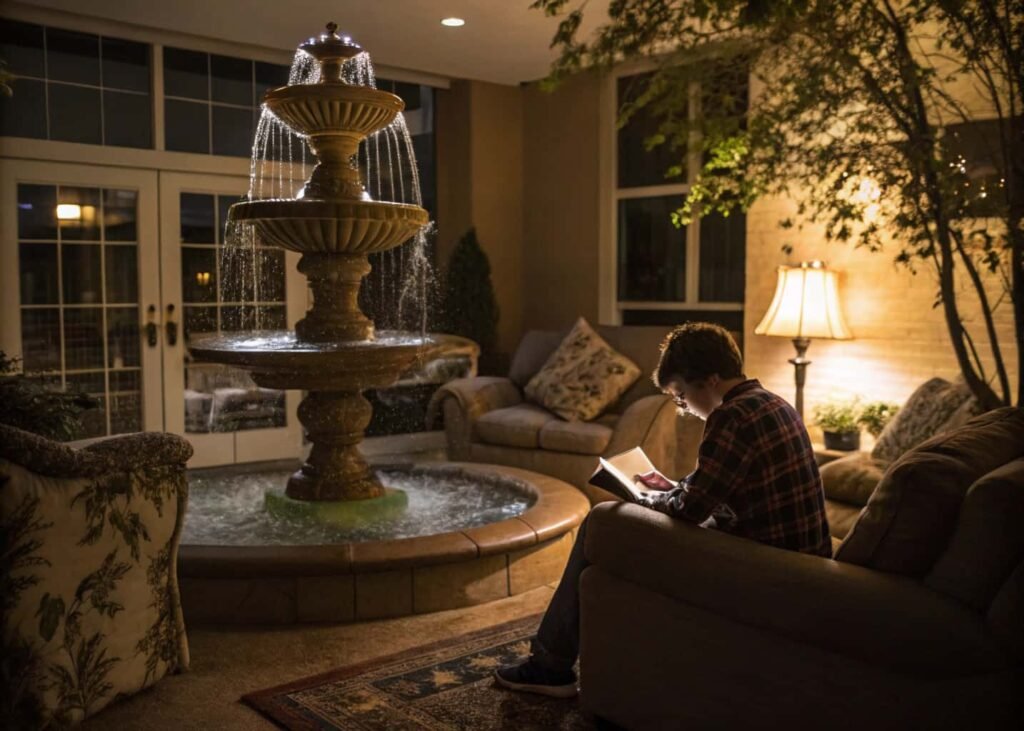
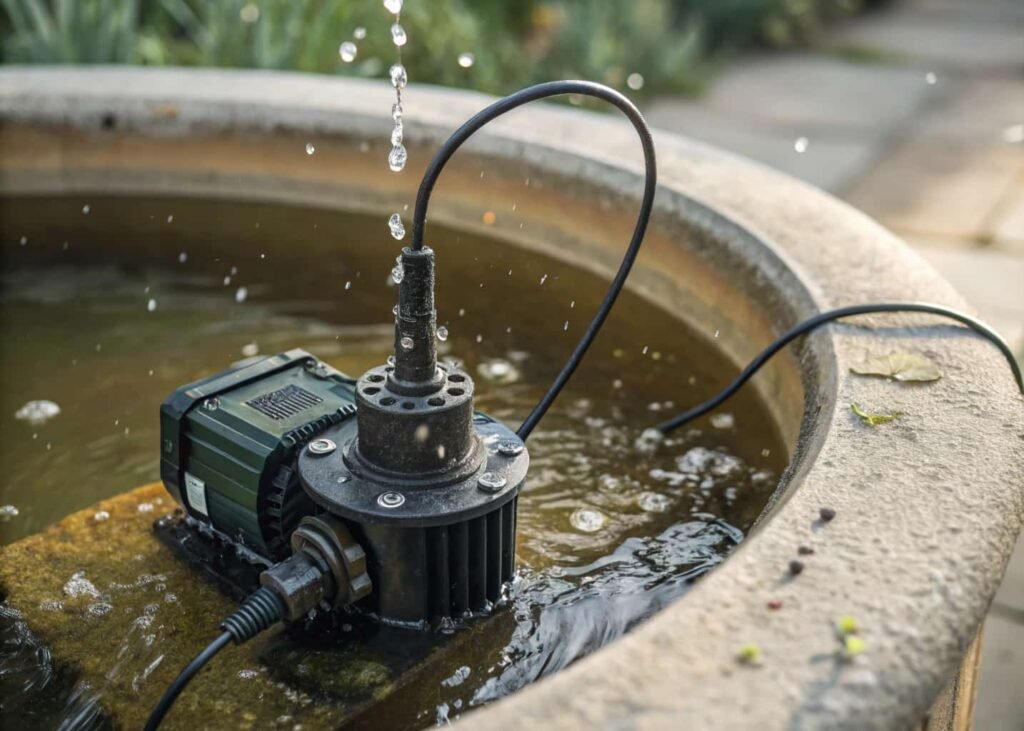
Pump strength (measured in GPH, gallons per hour) matters more than most buying guides admit — a fountain rated for 80 GPH will trickle, while one rated 300+ GPH will produce an actual audible flow you can hear from another room. Noise level is the second big factor: a pump that seems fine in a showroom can be genuinely annoying next to your bed at 2 a.m., so if possible, check the manufacturer’s decibel rating or read reviews that mention noise specifically. Size relative to the room is the third thing people get wrong — a fountain under 12 inches tall disappears visually in a large living room, while anything over 3 feet in a small apartment will dominate the space. Lastly, check whether it needs a nearby electrical outlet (most do) — cordless, battery, or solar options exist but are limited in run-time or reliability.
6. Best Materials Used in Fountains
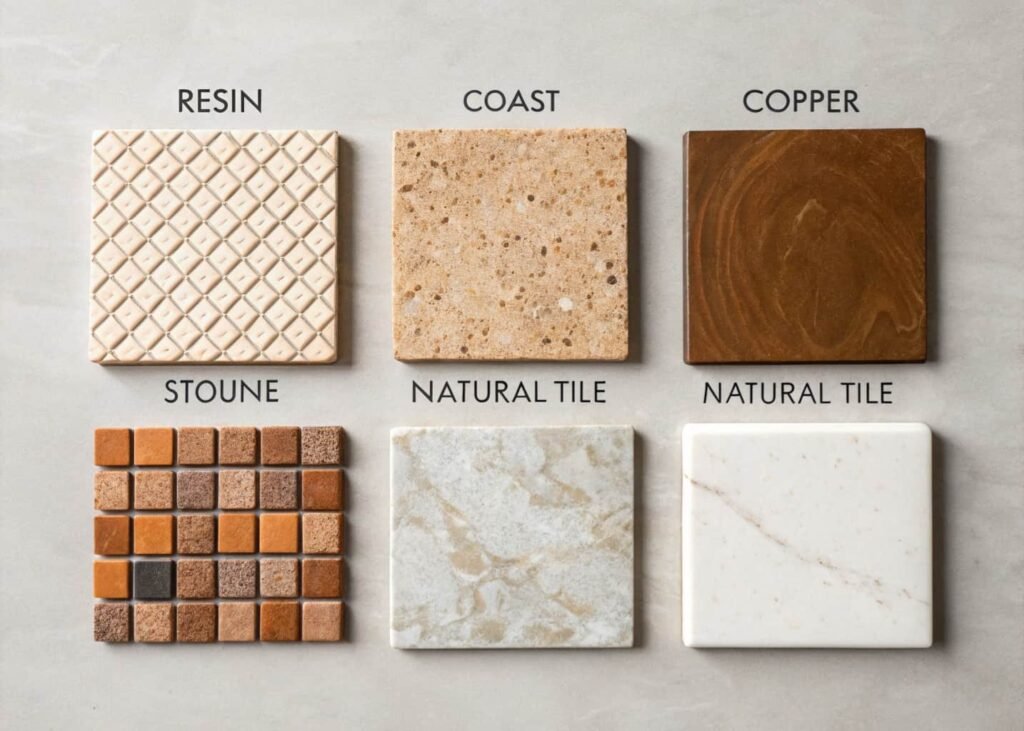
Resin and fiberglass fountains are lightweight, cheap to produce, and can mimic the look of stone convincingly — good for renters or anyone who might move the fountain later, since a 4-foot resin piece might weigh 15 lbs versus 150+ lbs for the real-stone equivalent. Cast stone (a concrete-and-aggregate mix) is the standard for mid-range outdoor fountains — durable, heavy enough to stay put in wind, but it can develop hairline cracks in climates with hard freezes if not properly sealed or drained before winter. Natural stone (granite, slate, marble) sits at the top price tier and will genuinely outlast every other material, but it’s expensive and heavy enough that installation sometimes needs two people or equipment. Ceramic and glass fountains are almost exclusively for indoor/tabletop use — they’re fragile, but the glaze finishes look sharper than resin. Copper is a smaller niche: it develops a green patina over time (which some people love, some hate) and is mostly used in modern or minimalist fountain designs.
7. Price Range and Budget Options
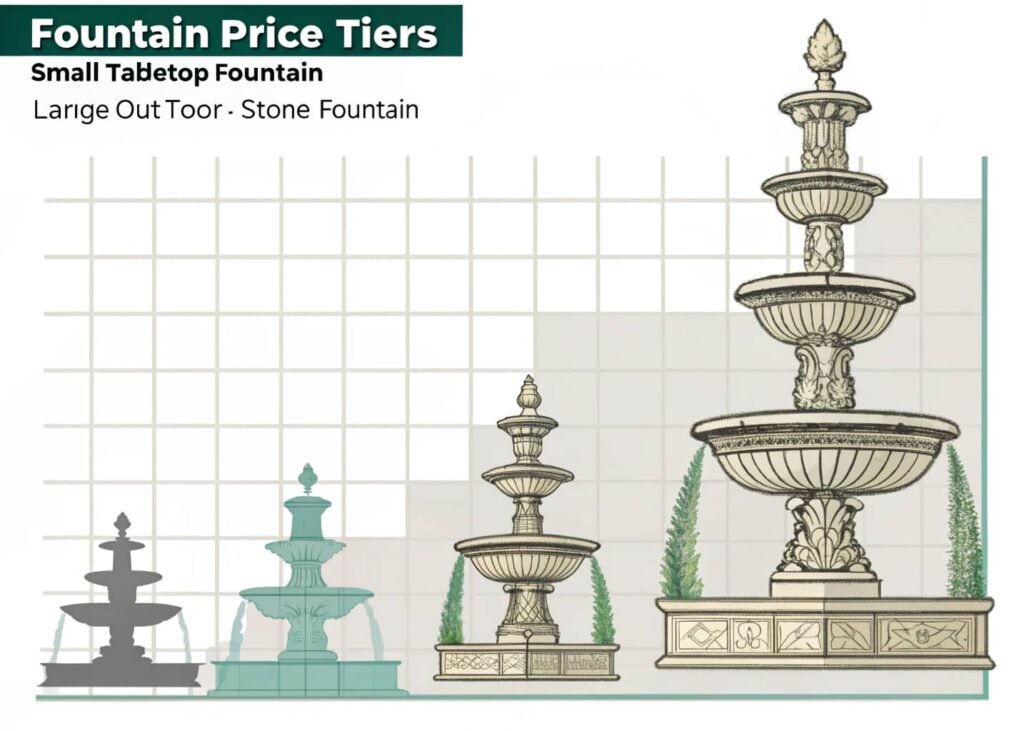
Tabletop fountains start around $25–$40 for basic resin designs and go up to $150–$200 for solar or LED-lit versions. Mid-size indoor floor fountains (2–4 feet) typically run $150–$500. Outdoor tiered fountains span the widest range: $200–$800 for resin or fiberglass, $600–$2,000 for cast stone, and $2,000–$8,000+ for natural stone or custom-installed fountains with plumbing built into the ground rather than a self-contained basin. A detail a lot of buying guides skip: replacement pumps aren’t included in most warranties and typically cost $15–$60 depending on GPH rating, so factor that into long-term cost if you’re buying secondhand or an older design.
8. Fountain vs DIY: Which Is Better?
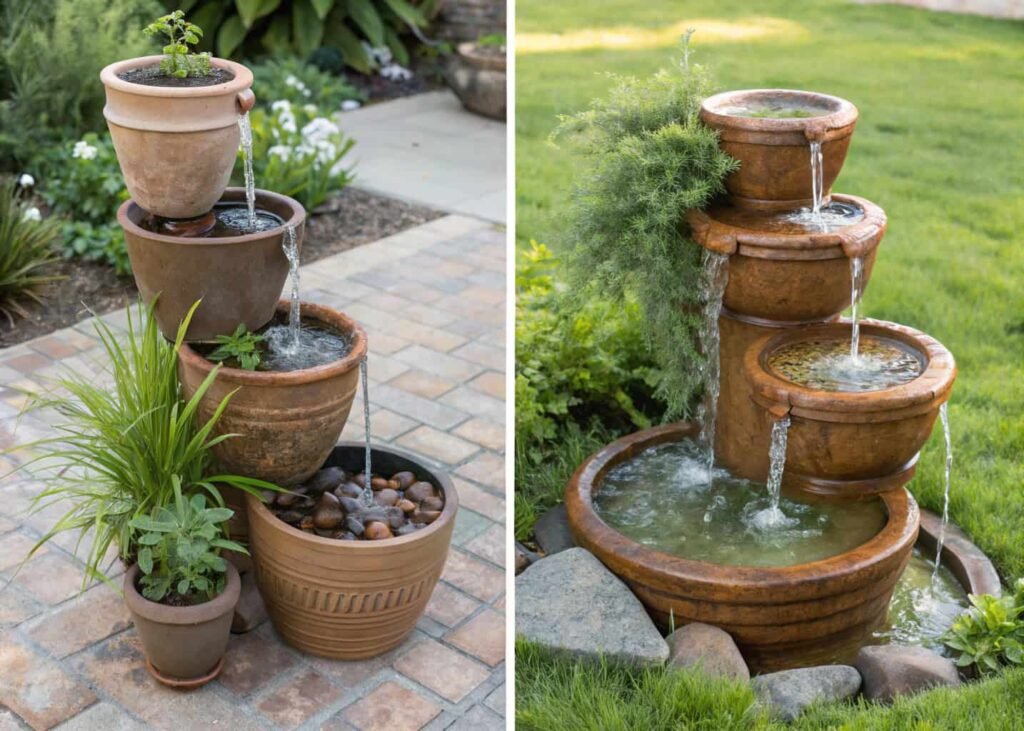
A DIY fountain — built from a large ceramic pot, a $20 submersible pump, and some pond liner — can genuinely cost under $60 and take an afternoon. The trade-off is durability and finish: DIY builds are more likely to leak at pot drainage holes (you’ll need aquarium sealant, and even then it’s not guaranteed), and the aesthetic rarely matches a manufactured tiered design unless you’re specifically going for a rustic look. My honest recommendation: DIY makes sense for small tabletop or patio fountains where the stakes of a leak or aesthetic mismatch are low. For anything outdoor, permanent, or over 3 feet tall, buy a manufactured unit — the engineering (weight distribution, basin capacity, pump sizing) is harder to get right than it looks, and a failed DIY outdoor fountain usually costs more to fix than it would have cost to buy one properly in the first place.
9. Placement Tips for Maximum Effect
Sound reflects off hard surfaces, so a fountain placed near a tile floor or bare wall will sound noticeably louder than the same fountain on carpet or near soft furniture — worth testing before you commit to a spot, especially for bedrooms. Keep outdoor fountains at least 3–4 feet from large trees; falling leaves clog pumps fast, and root growth can eventually shift the fountain’s foundation. For indoor placement, avoid direct sunlight on resin or ceramic fountains — UV exposure fades color within a year or two even indoors, if the fountain sits by a south-facing window. And practically: place it within reach of an outlet, but not so close that the cord is a trip hazard — an extension cord run under a rug is a common fix but not a great long-term one.

10. Maintenance and Cleaning Guide
Algae is the main enemy of any fountain that sits in indirect light for more than a few weeks — a build-up of green film on the basin walls usually means it’s time to drain, scrub with a soft brush and diluted white vinegar (skip harsh chemicals, they can damage pump seals), and refill. Do this every 1–2 weeks for outdoor fountains in warm months, less often indoors. Pumps need descaling if you have hard water — mineral deposits reduce flow rate over time and are one of the top reasons people think their fountain pump “died” when it just needs a vinegar soak. Before winter, outdoor fountains in freezing climates should be fully drained, cleaned, and either covered or moved indoors — water left in a basin or pump housing through a hard freeze can crack cast stone or fiberglass from the inside, which is not a cheap mistake to make.

11. Top Recommendations for 2026
For a starter tabletop fountain, look at resin designs with a solar-battery hybrid option — they let you run the fountain outdoors without an outlet and switch to battery on cloudy days, a feature that’s become more common and reliable in the last couple of product cycles. For indoor floor fountains, ceramic or glass designs with an LED-lit water column tend to hold up well and look more modern than the classic tiered-rock style. For outdoor statement pieces, cast stone tiered fountains in the 3–4 foot range hit the best balance of price, durability, and visual impact for most backyards — natural stone is worth the upgrade only if you’re planning to stay in the home long-term, since it’s not a piece you casually replace or move. Whatever category you land on, check the pump GPH and noise rating before checking the price tag — those two numbers matter more to daily satisfaction than the fountain’s material or brand name.