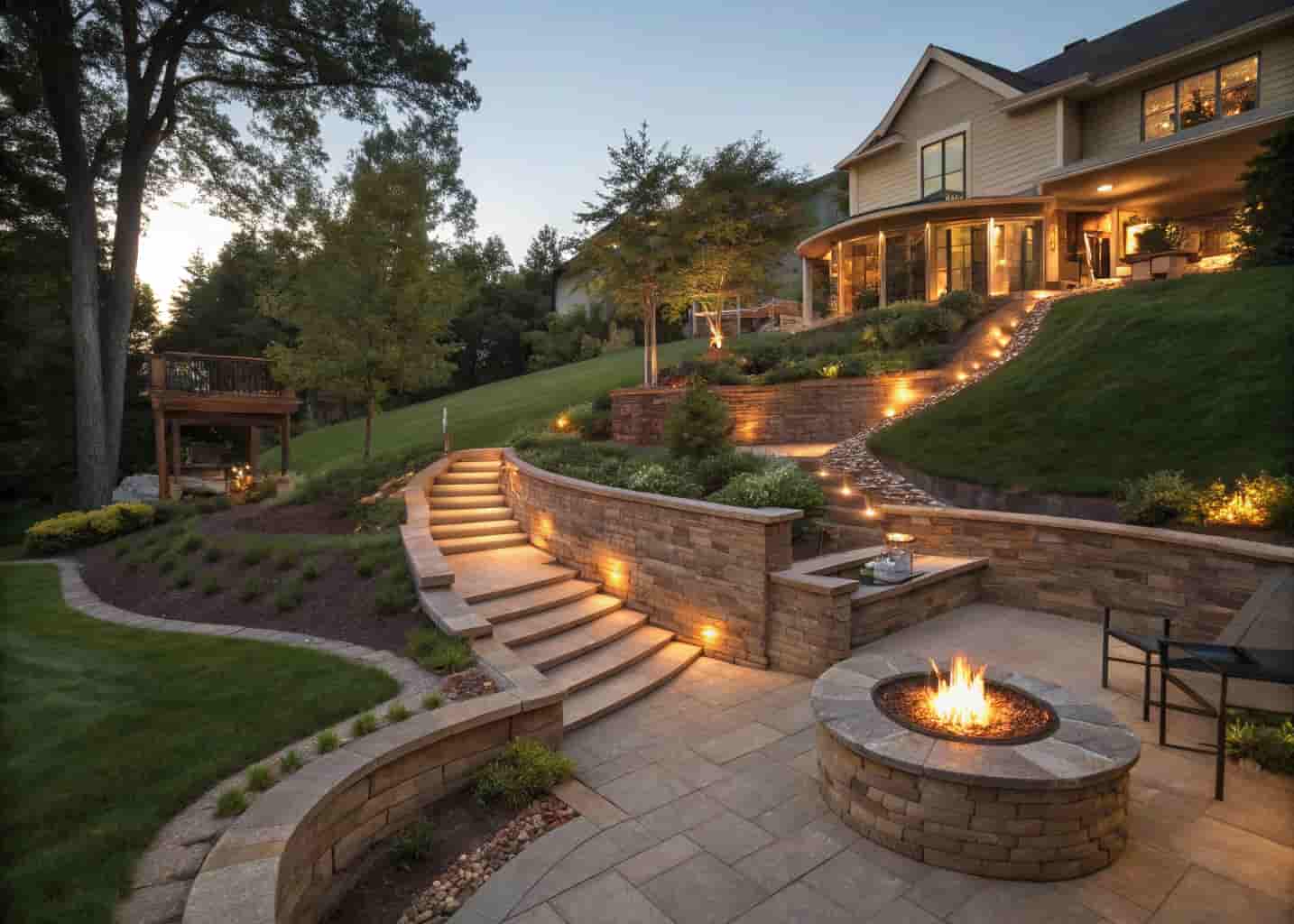
Having a Sloped Backyard Fire Pit doesn’t mean you have to give up on your fire pit dreams. Honestly, some of the most stunning outdoor setups I’ve seen were built on uneven ground. The trick is knowing how to work with the slope instead of fighting it. Whether you’ve got a gentle grade or a dramatic hillside, there are smart ways to create a fire pit area that’s safe, flat, and actually beautiful. I’ve pulled together 16 ideas that cover all kinds of slopes and styles.
1. Retaining Wall Fire Pit Platform
The most popular solution for sloped yards is building a retaining wall to carve out a flat platform. You basically cut into the hillside, hold back the earth with a strong retaining wall, and create a level pad where your fire pit sits. I’ve seen neighbors do this with stacked stone and it looks like it was always supposed to be there. The key is making sure the wall is properly engineered — especially if the slope is steep. A professional can check drainage and wall thickness so it doesn’t shift over time. Once built, you have a solid, permanent fire pit zone that feels totally natural in the landscape.
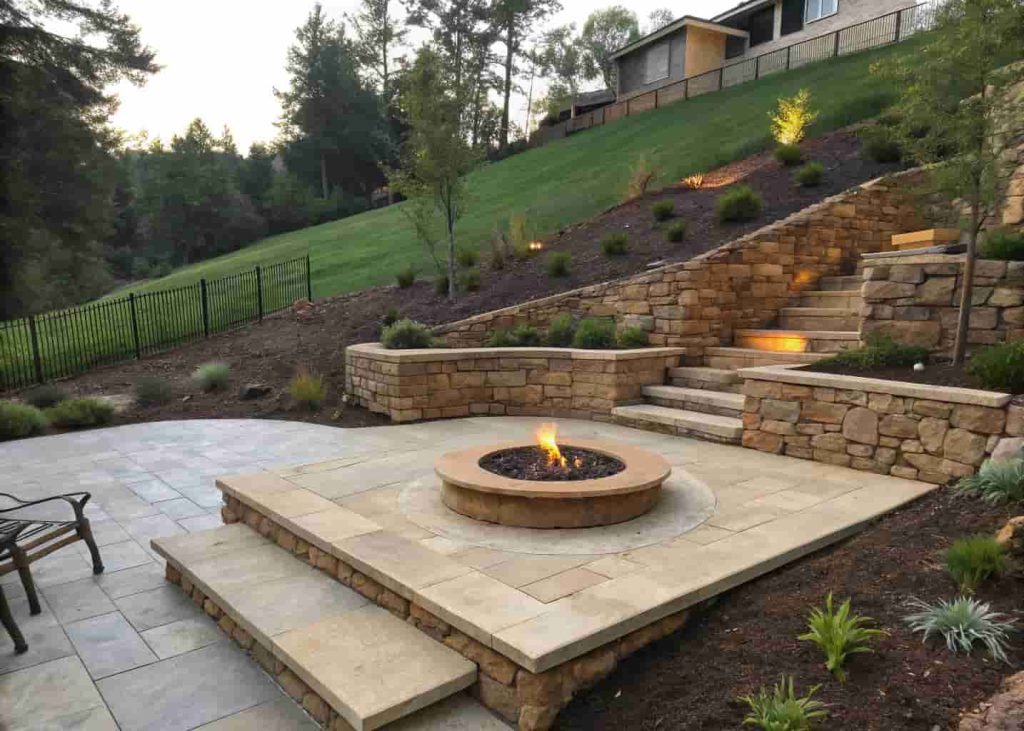
2. Terraced Stone Seating Levels
Instead of just flattening one area, why not use the slope to your advantage and create multiple terraced levels? Each level becomes its own seating row — kind of like an outdoor amphitheater with a fire pit at the center stage. I love this idea because it solves two problems at once: you get stable seating and a dramatic, layered look. Flagstone or natural stone works really well here. You can mix sitting walls with freestanding chairs on each terrace. The fire pit goes on the lowest flat level, so everyone seated above has a great view and stays safe from the flames.
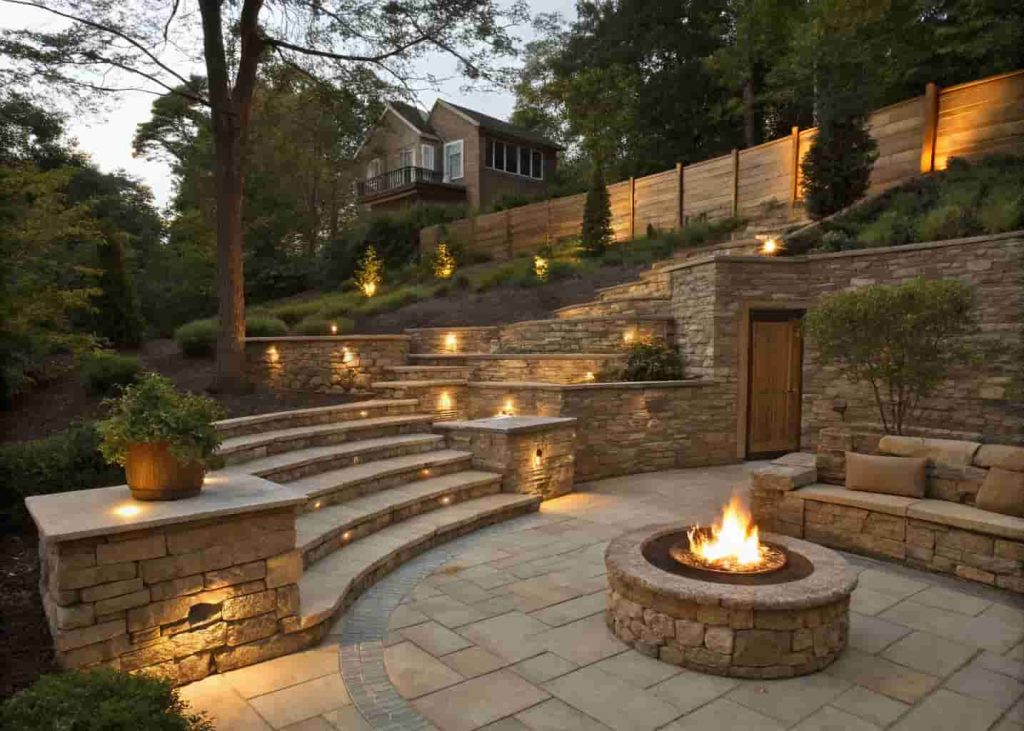
3. Sunken Fire Pit with Earthwork
A sunken fire pit on a slope gives you a really cool, built-in look without huge construction costs. You dig down into the hillside so the pit is recessed below the surrounding ground level. This naturally shields the fire from wind — which is a huge plus. It also keeps everything anchored and stable since the pit is literally part of the earth. The surround can be lined with gravel, concrete, or stone. Seating can be at grade level around the rim. One thing to plan for: drainage. A sunken pit on a slope can collect water after rain, so a gravel base and sometimes a small drain pipe is worth it.
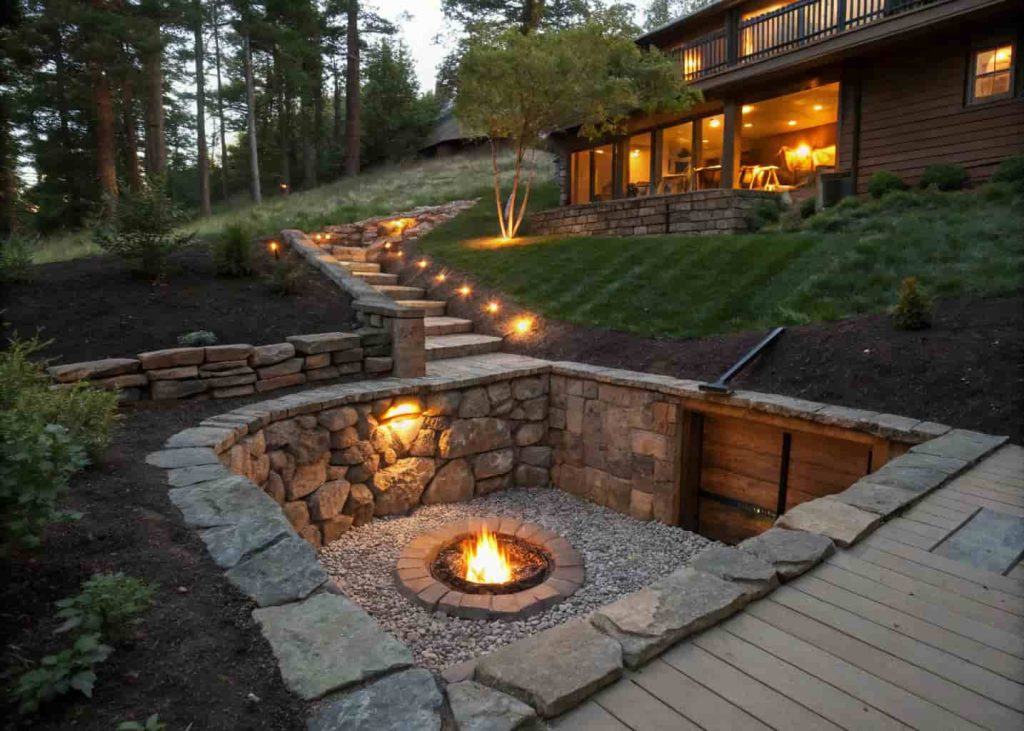
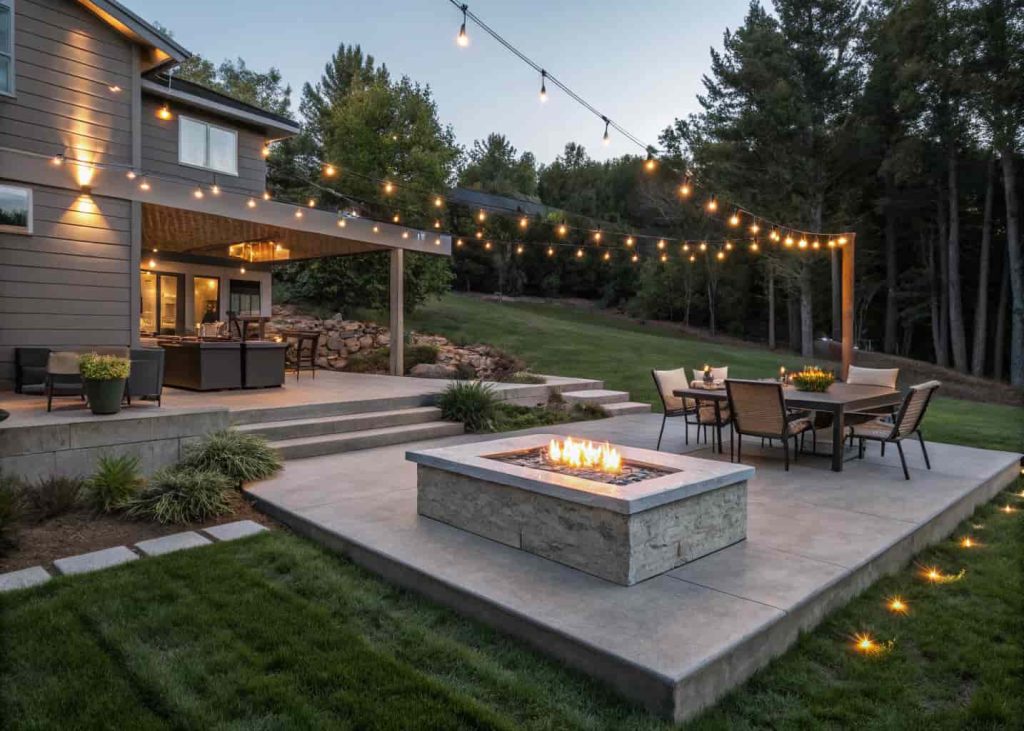
4. Concrete Pad on Cut-and-Fill Grade
This is one of the more practical approaches — especially if you like a clean, modern look. You hire a grading contractor to cut into the high side of the slope and use that soil to fill and build up the low side. The result is a flat pad where a concrete slab gets poured. Then your fire pit sits right on that solid base. It works incredibly well for both wood-burning and gas fire pit tables. The concrete slab is stable, easy to clean, and lasts decades. You can dress it up with outdoor rugs, furniture, and string lights. It ends up looking like a proper outdoor living room.
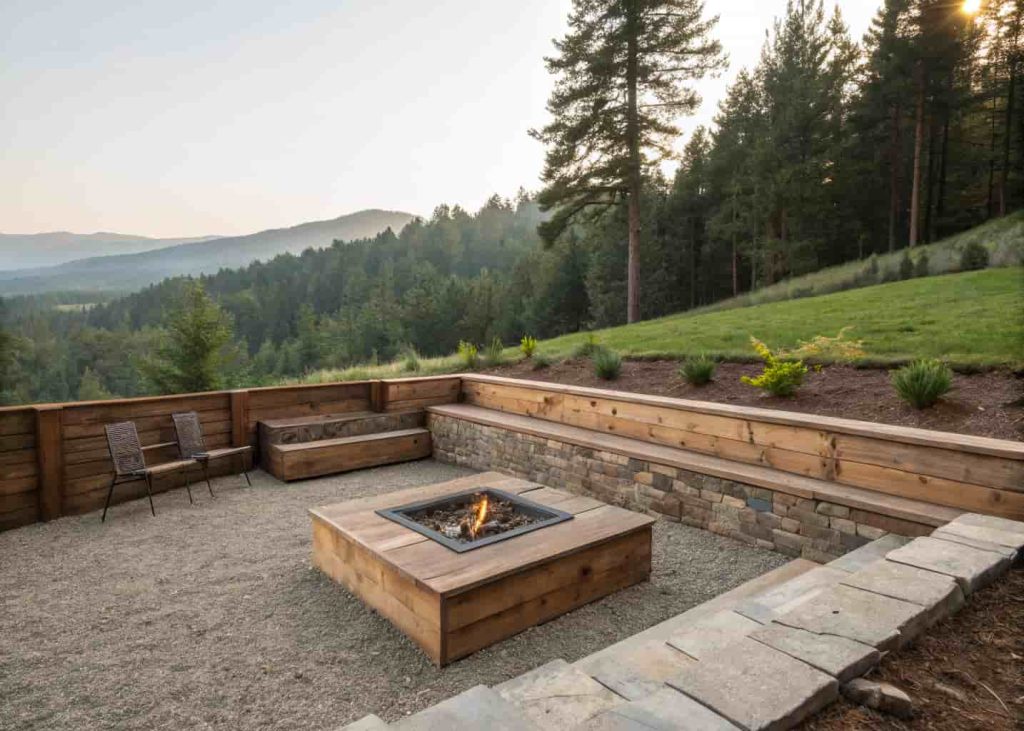
5. Railroad Tie Raised Bed Fire Area
Railroad ties or landscape timbers are a budget-friendly way to build terraced sections on a slope. Stack them horizontally into the hillside to create raised bed-style walls, then fill with compacted gravel and soil to create a flat area. The fire pit sits in the center of the leveled zone. This style has a rustic, earthy feel that suits more natural or wooded backyards really well. Railroad ties are also incredibly durable and grip the soil tightly. If your budget is limited but you want something solid and good-looking, this is absolutely worth exploring. Just make sure the ties are secured with rebar stakes for extra stability.
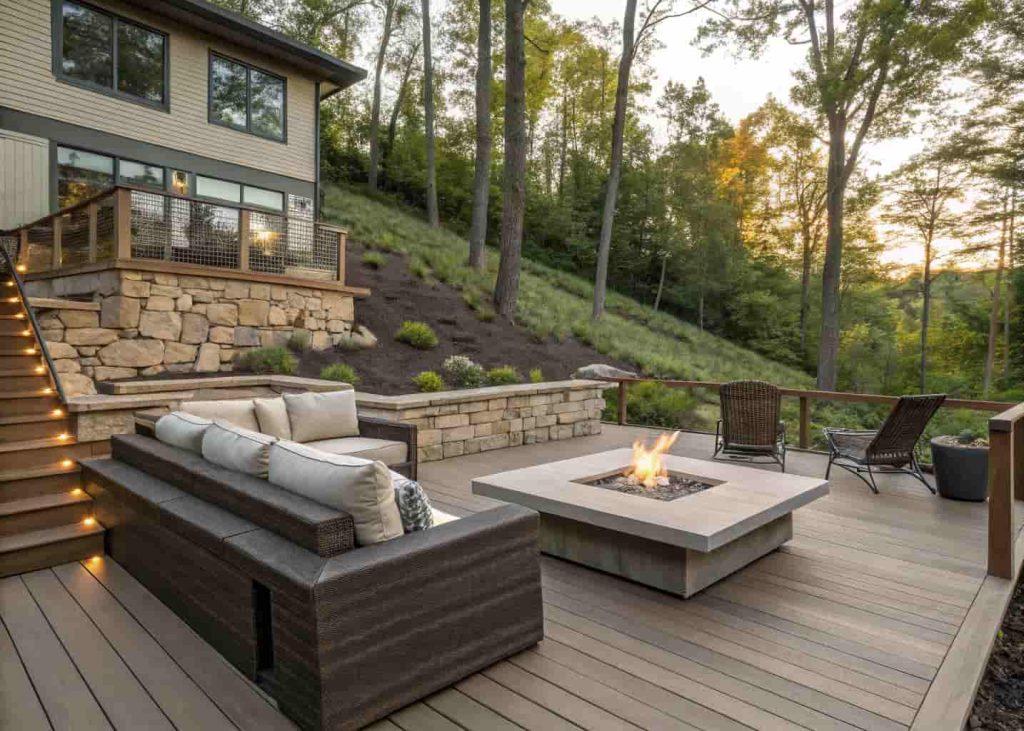
6. Hillside Deck with Built-In Fire Pit
If you already have or are planning a deck on your slope, adding a built-in fire pit to it is a brilliant move. A hillside deck is essentially a raised platform supported by posts — which means it’s already level by design. You can drop a gas fire pit table right into the decking, or build a dedicated concrete or stone inset for a wood-burning option. One thing to keep in mind: if it’s a wood deck, you absolutely need a heat-resistant barrier or use a gas fire pit that’s rated for deck use. Composite decking with a gas insert is the most common and safest combo for this setup.
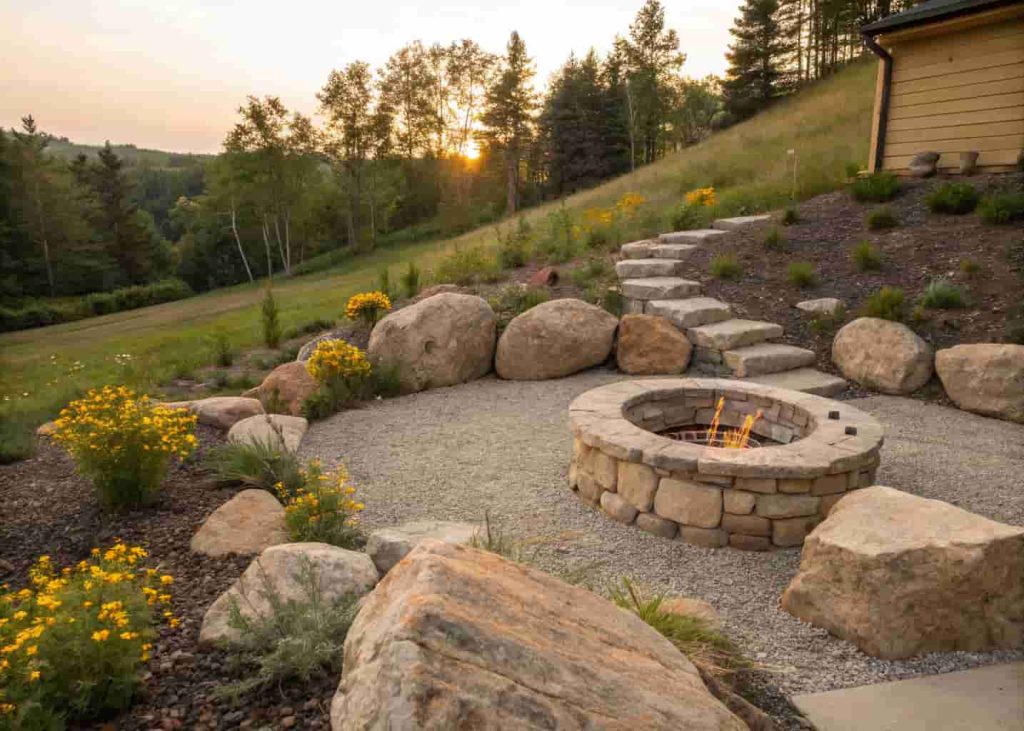
7. Natural Boulders as Fire Pit Surround
Using large boulders to anchor your fire pit is one of those ideas that looks like nature did the work. On a slope, strategically placed boulders can hold back small amounts of earth while also acting as seating and a visual frame for the fire. You place the biggest boulders on the downhill side to block runoff and give the area definition. The fire pit goes in the middle of the flat gravel or dirt zone between them. This works especially well in yards that already have some rock or a wild, natural look. No concrete needed — just careful placement and maybe a little digging to set the boulders level.
8. Gabion Wall Fire Pit Zone
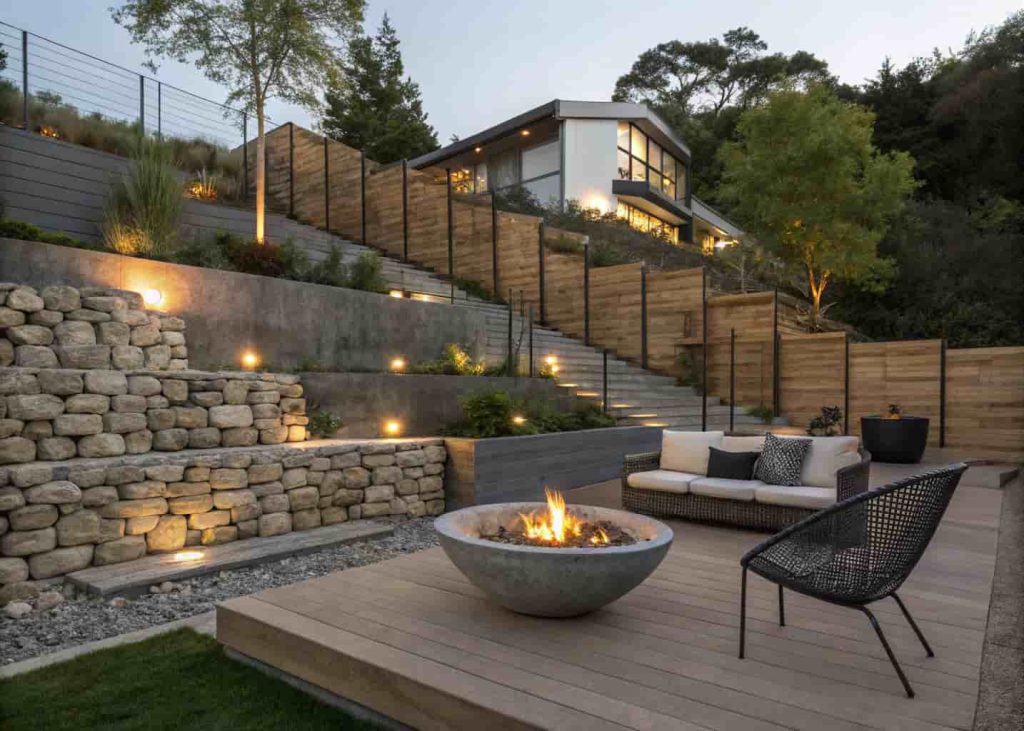
Gabion walls — those wire cage baskets filled with rocks — are having a serious moment in landscape design. They’re incredibly strong, great for drainage, and honestly look really cool in a modern or industrial outdoor setting. On a slope, you can stack gabion cages to build a retaining wall that holds back the earth, then level the area behind it for your fire pit. The wire-and-rock aesthetic pairs beautifully with concrete fire bowls or steel fire pits. They also don’t need mortar or professional masonry skills, which makes them a solid DIY project if you’re up for some heavy lifting over a weekend.
9. Gravel-Leveled Flat Fire Pit Base
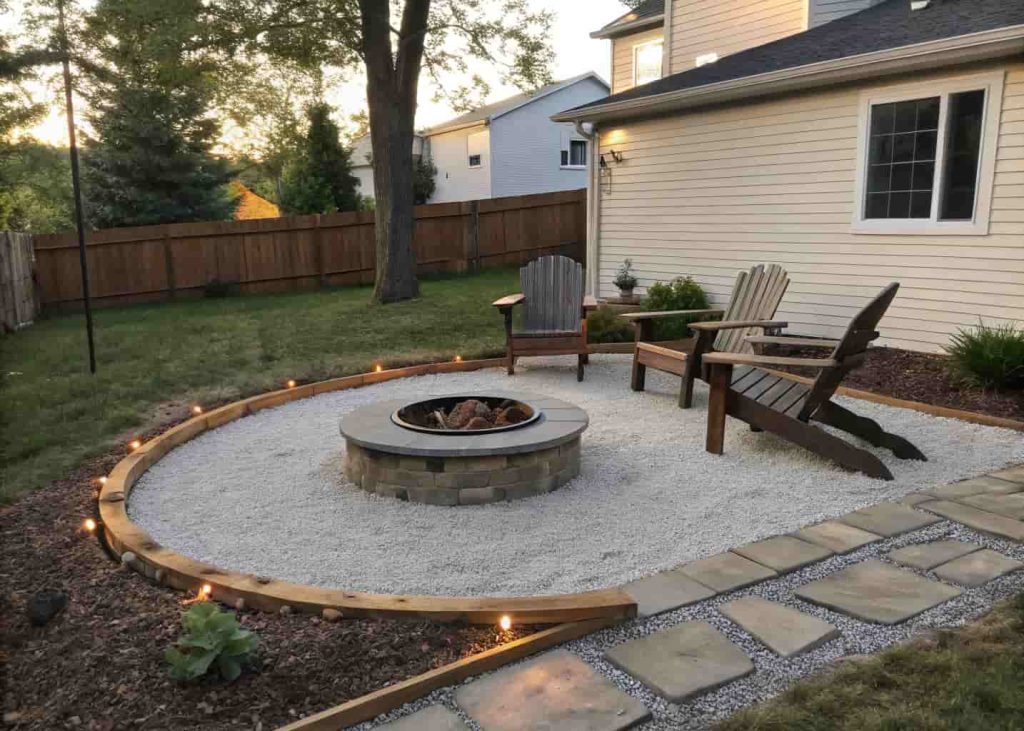
For gentler slopes — say under 10% grade — you can sometimes skip major construction and simply level the ground with compacted gravel. You dig out the high side slightly, add crushed gravel, compact it well, and create a stable flat zone. A gravel base also drains beautifully, which means no puddles around your fire after rain. Drop in a steel fire ring or a decorative fire pit on top, add some large stone pavers for stepping stones, and edge the area with garden border. This is probably the most beginner-friendly option on this list. My cousin did this for about $300 and it looks completely intentional and put-together.
10. Sloped Yard with Floating Stone Steps
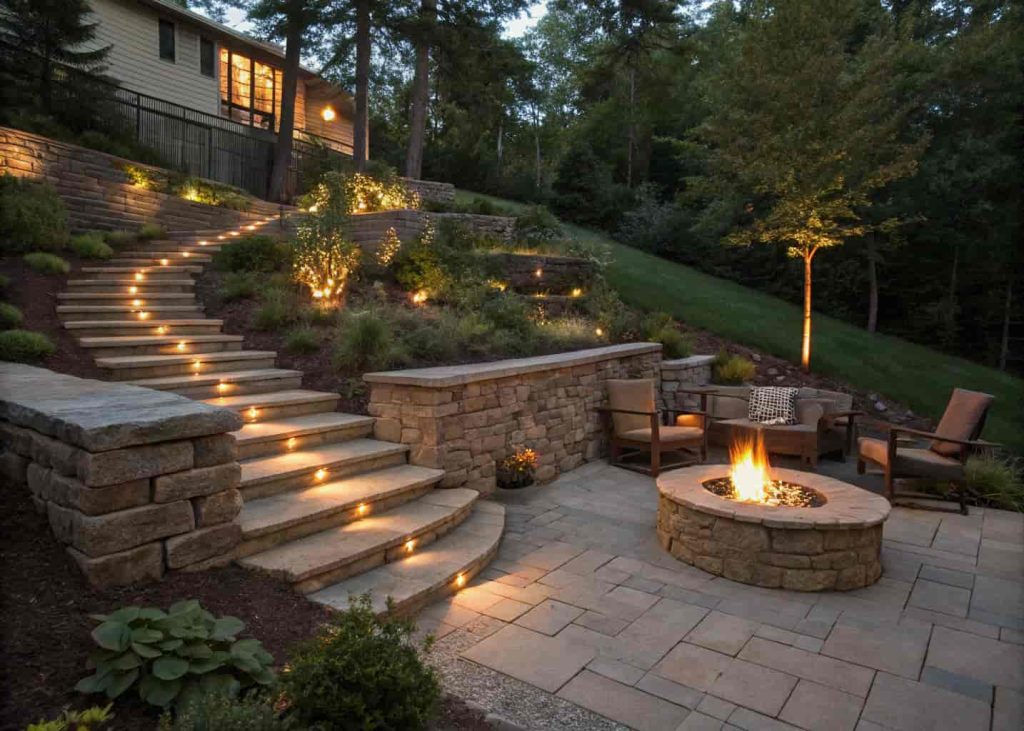
When your fire pit is at the bottom of a slope, you need a safe way to get there — and floating stone steps are both functional and gorgeous. These are large flat stones or concrete pavers set into the hillside, with gaps between them for planting ground cover. They guide guests safely down to the fire pit level. Each step is individually leveled, so even on a steep slope they’re comfortable and secure. Line the steps with solar-powered path lights so they’re visible at night when you’re heading down after dark. This kind of detail makes your yard look professionally designed without spending a fortune on a landscape architect.
11. Circular Stone Fire Pit on Cut Slope
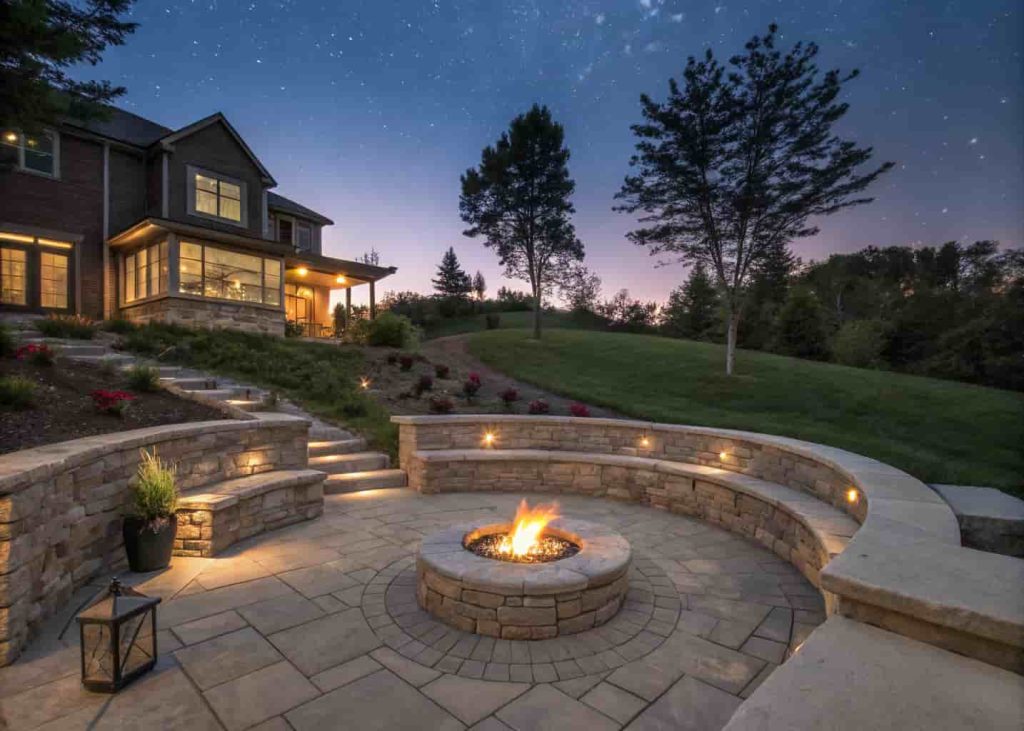
A classic round stone fire pit never goes out of style — and on a slope, a simple cut-and-level job gives it a perfect home. You hire someone or DIY the grading to cut a circular flat area into the hillside. Then line the cut edge with stacked stone to create a natural retaining border. Drop your stone fire pit in the center, add gravel around it, and ring it with seating. The circular shape works especially well on slopes because it fits neatly into the cut. You don’t need a huge flat area — just enough for the pit and a few feet of seating radius. Simple, timeless, and always a crowd pleaser at summer evenings.
12. Fire Pit With Downhill Overlook View
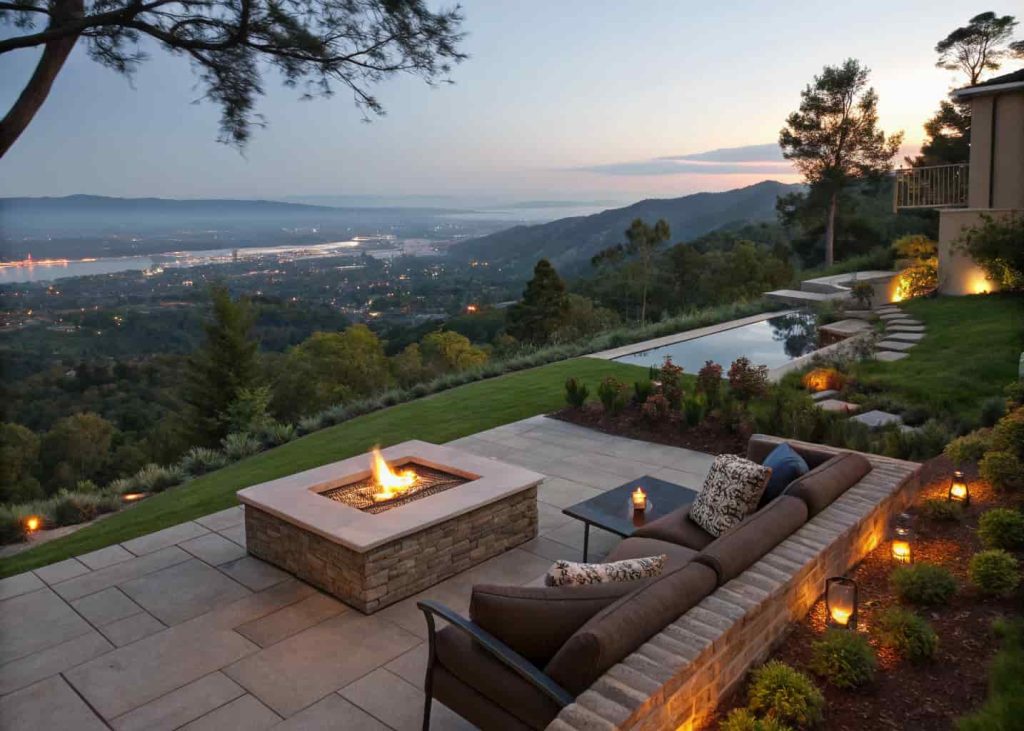
One of the great gifts of a sloped yard is the potential for a killer view. Rather than treating the slope as a problem, position your fire pit so it faces downhill — giving everyone seated around it a sweeping panorama of the valley, city lights, or tree canopy below. To pull this off, you create your flat pad near the top or mid-slope and let the view unfold in front of you. A low or no-railing design on the view side keeps sightlines open. Gas fire pits work especially well here since there’s no smoke blowing into your face from changing wind directions. This kind of setup makes every fire pit night feel like a special occasion.
13. Brick Fire Pit on Raised Plinth
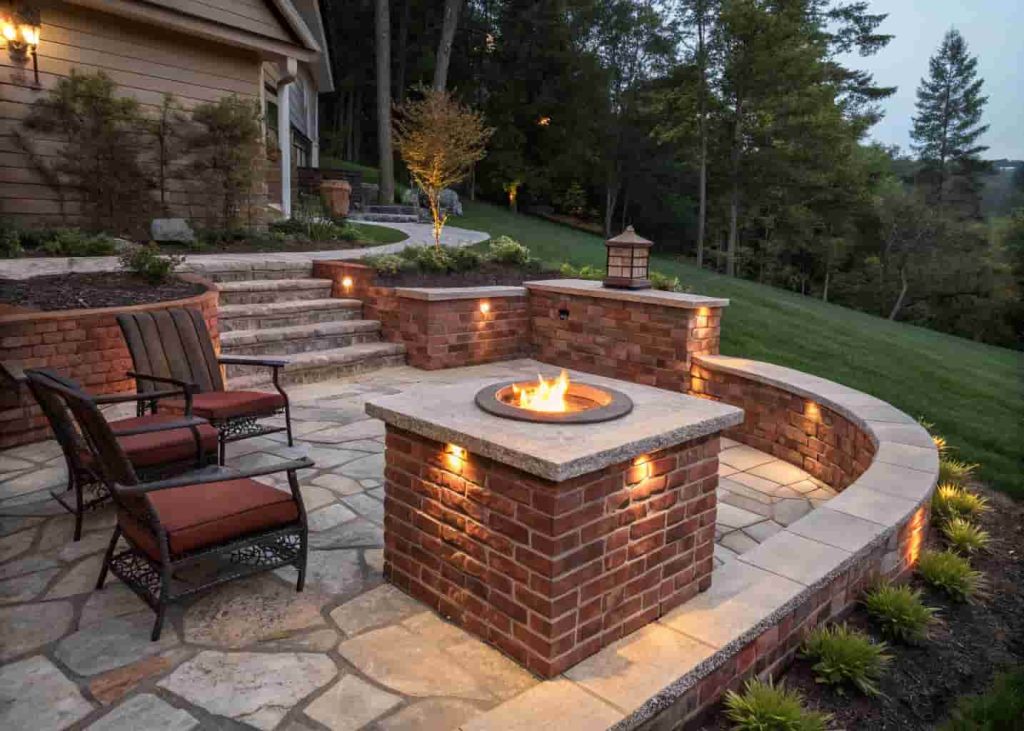
If you want something that looks permanent and polished, a brick fire pit built on a raised concrete plinth is the way to go. On a slope, you first create a level concrete footing — even if that means the front edge of the footing is raised above grade. Then the brick pit is built up from there. It ends up looking elevated and intentional, almost like a focal point in the yard. Brick is incredibly heat-resistant and ages beautifully. You can match it to your home’s exterior brick for a really cohesive look. I always recommend using fire-rated mortar between the bricks — regular mortar can crack from repeated heating and cooling cycles.
14. Corten Steel Fire Bowl on Leveled Gravel
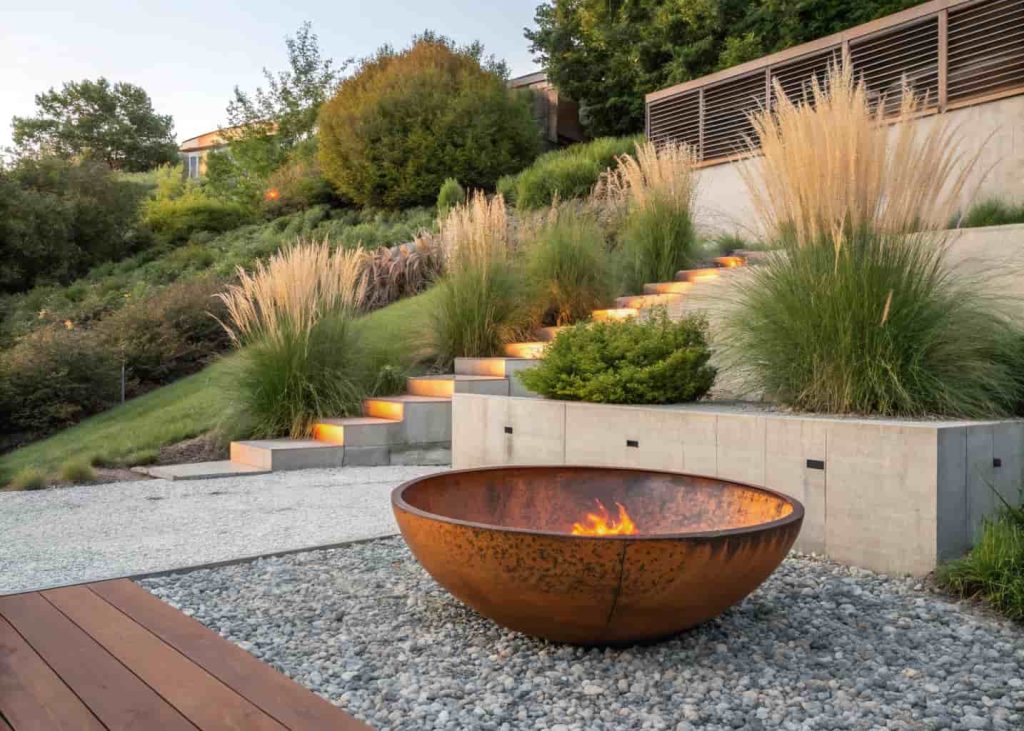
Corten steel fire bowls are having a big moment right now — and honestly, they deserve it. That warm rust-orange patina looks incredible against greenery, stone, and wood. On a slope, all you need is a small leveled gravel pad to set one safely. The bowl itself sits on legs, so you just need the ground beneath it to be flat within a few degrees. Use adjustable leveling feet if needed. The whole setup can be done in an afternoon without any professional help. The corten weathers naturally over time, so maintenance is minimal. It’s a really smart choice if you want modern style without a big construction project on your hands.
15. Stepped Garden Wall Fire Pit Nook
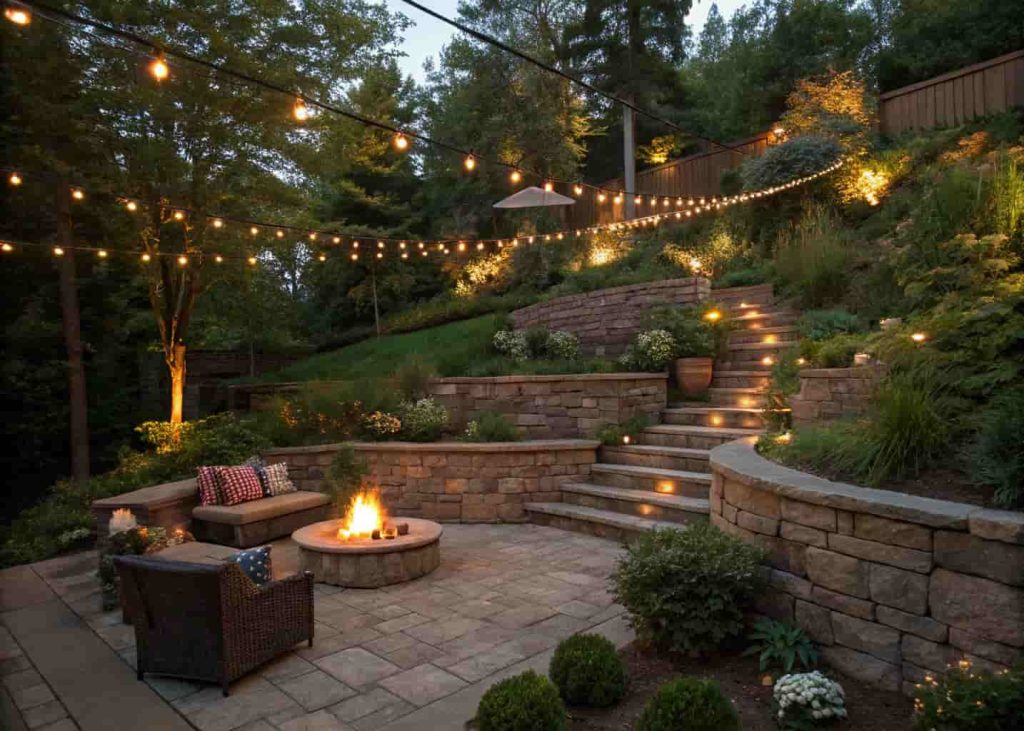
This idea turns the slope into a series of stepped garden walls with planting beds, and tucks the fire pit into a cozy nook at the lowest level. The walls are built in a U-shape or horseshoe formation around the pit, so you’re essentially sitting in a little outdoor room. Plants cascade over the walls above you, the fire burns in the center, and you’re shielded from wind on three sides. It’s incredibly intimate and private. This works beautifully in narrow yards too, since you’re not spreading outward — you’re going downward in a controlled way. Add some low lighting in the walls themselves for a magical nighttime effect.
16. Pergola-Covered Fire Pit on Hillside Pad
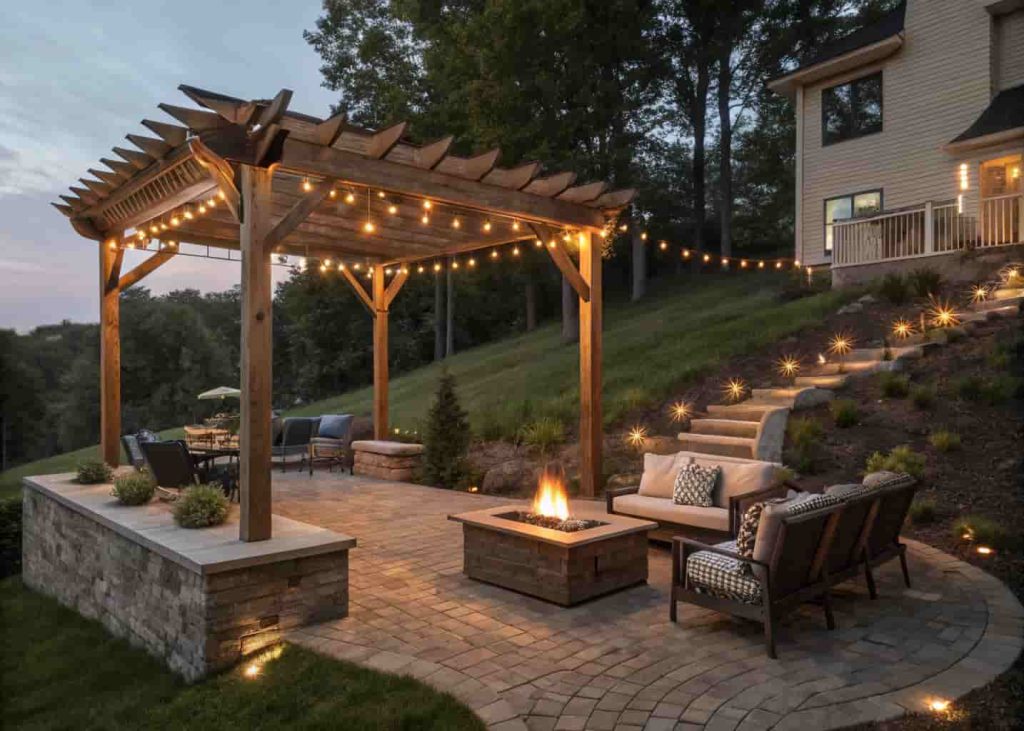
A pergola above your fire pit takes the whole setup to another level — literally and figuratively. You build your leveled pad on the slope, set your fire pit in the center, and then anchor a pergola structure over it. The pergola provides shade during the day and a framework for string lights at night. It also helps define the space and makes it feel like a real outdoor room rather than just a spot in the yard. Use gas rather than wood burning under a pergola to stay safe and code-compliant. Add side curtains for privacy and wind blocking, and you’ve got a four-season fire pit spot that’ll get used constantly all year long.
Conclusion
A sloped backyard is not a design problem — it’s an opportunity in disguise. From simple gravel pads and corten steel bowls to full retaining wall platforms and pergola-covered nooks, there are more than enough creative paths to a safe and stunning fire pit setup. The main things to always keep in mind: make sure your base is level, plan for water drainage, and choose the right fire pit type for your setup. Whether you spend $300 on a gravel pad or $3,000 on a full stone terrace, the result is the same — a beautiful place to gather, relax, and enjoy a fire with people you love. Start with whichever idea fits your slope, your budget, and your style, and go from there. You’ve got this.