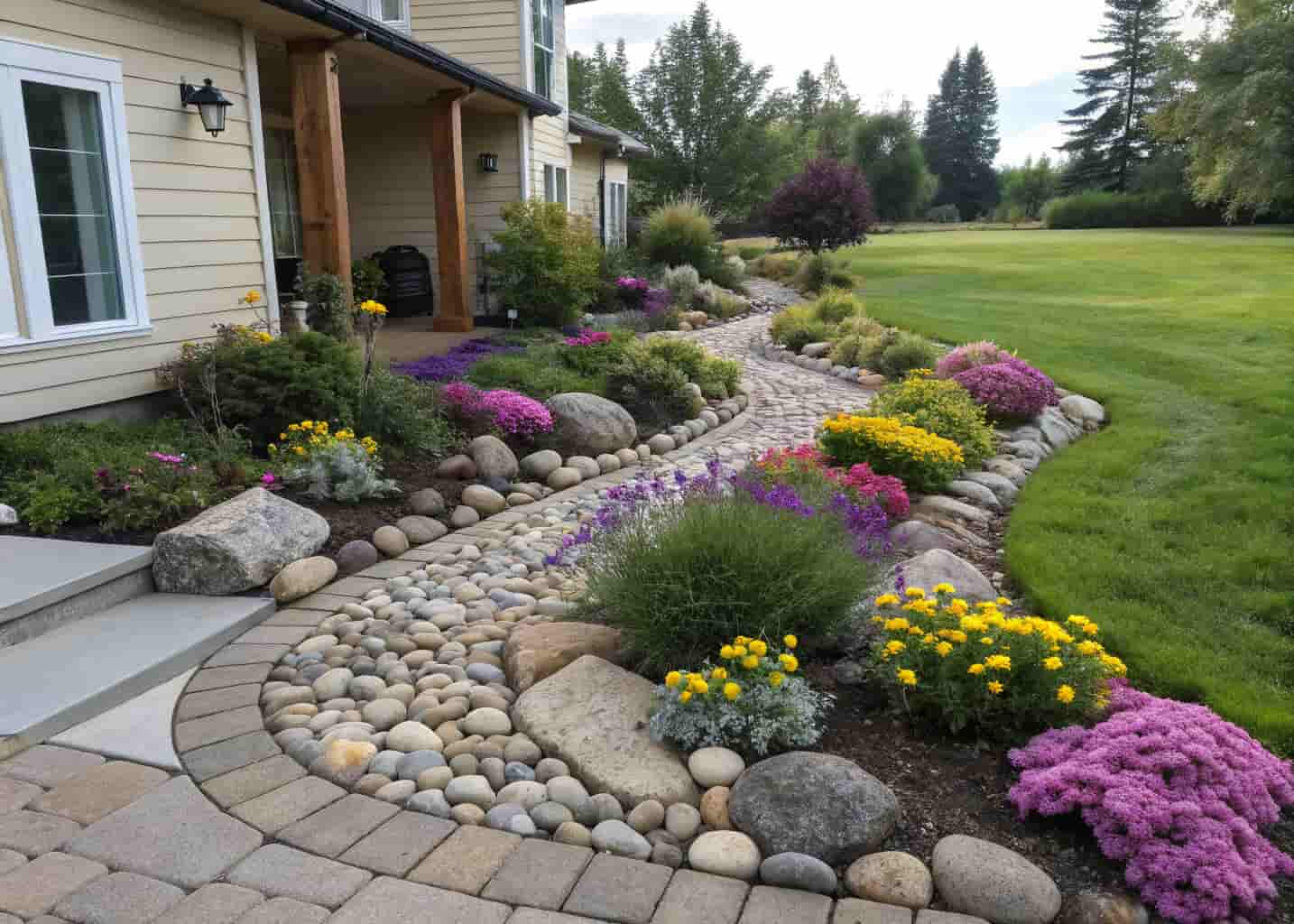
If you have ever looked at your yard after a heavy rain and wondered how to stop the muddy mess from coming back every season, you are not alone. Thousands of homeowners deal with the same problem every year — soggy soil, washed-out mulch, weeds taking over, and flower beds that look terrible no matter how much work you put into them. The good news is that river rocks offer one of the most affordable and long-lasting solutions you can find. River rocks do not rot, they do not wash away easily, and they naturally suppress weeds while giving your yard a clean, polished look that lasts for years.
1 Classic Border River Rock Flower Bed
The classic border design is the most popular starting point for homeowners who are new to using river rocks in their yards. In this design, you line the edges of your flower bed with smooth, medium-sized river rocks to create a defined separation between the grass and the planting area. The rocks act as a natural border that keeps mulch inside the bed and prevents grass from creeping into your flowers over time. It looks tidy, it is easy to install on your own in a single weekend, and it immediately makes the whole yard look more organized and cared for. You do not need any special tools or professional help to pull this off.
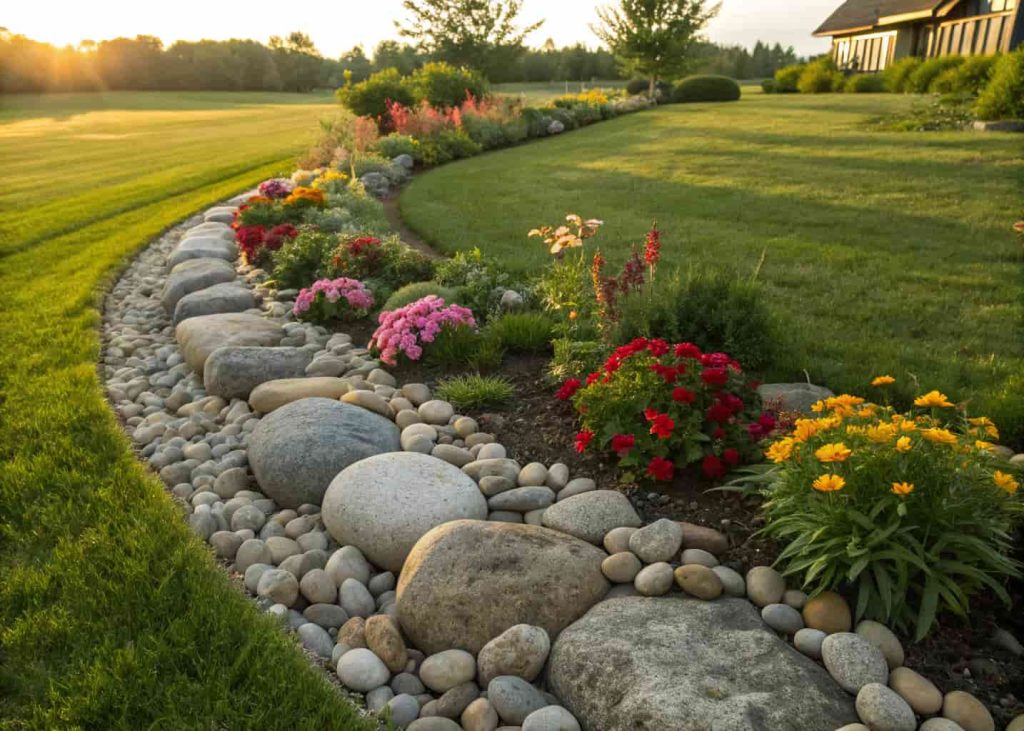
2 River Rock Dry Creek Bed Through the Garden
A dry creek bed design uses river rocks to mimic the look of a natural stream running through your yard or garden. This design is especially smart for yards that have drainage problems because it actually channels rainwater away from your home’s foundation and flower beds in a natural-looking way. You dig a shallow trench in the shape of a winding creek, line it with landscape fabric, and then fill it with different sizes of river rocks. The result looks like nature put it there on purpose, not like you were trying to fix a drainage issue. It works beautifully when planted with native grasses or small shrubs along the edges of the creek bed.
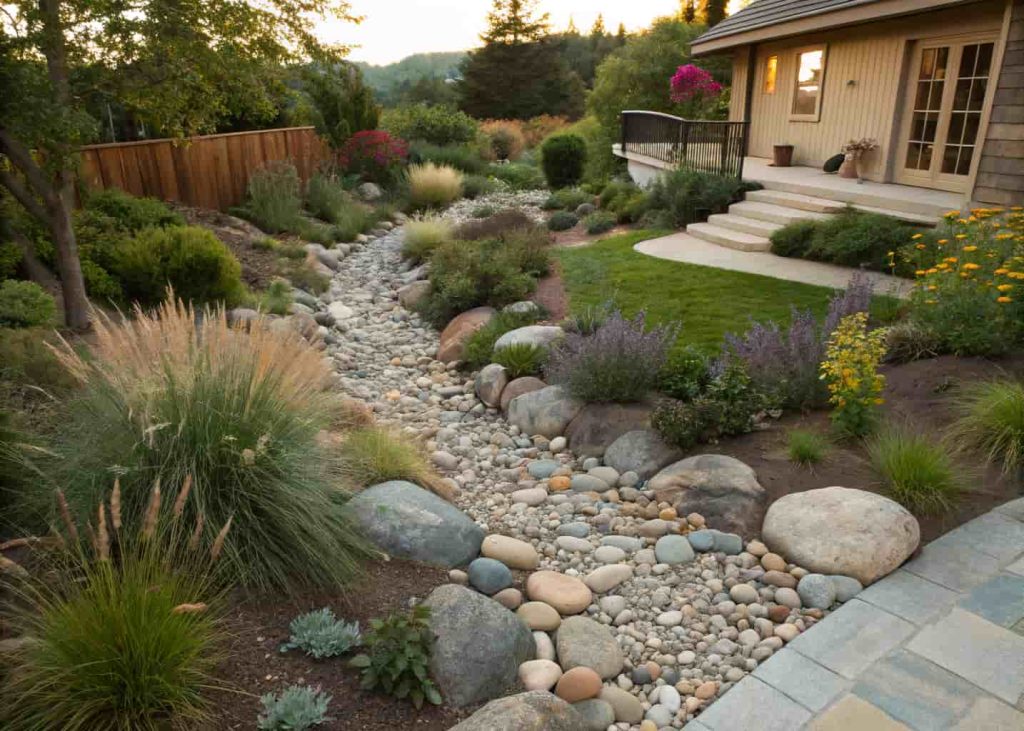
3 River Rock Mulch Replacement Bed
If you are tired of replacing mulch every single year — watching it decompose, turn gray, and wash away down the driveway — then replacing it entirely with river rocks is one of the best decisions you can make for your flower beds. River rocks do not break down over time the way organic mulch does. They stay in place, they look sharp every season, and they actually reflect heat upward which can help certain plants thrive in cooler climates. You lay landscape fabric first, then pour a two to three inch layer of river rocks over the entire flower bed surface. The rocks suppress weeds and keep moisture in the soil while looking polished and professional without any annual maintenance cost.
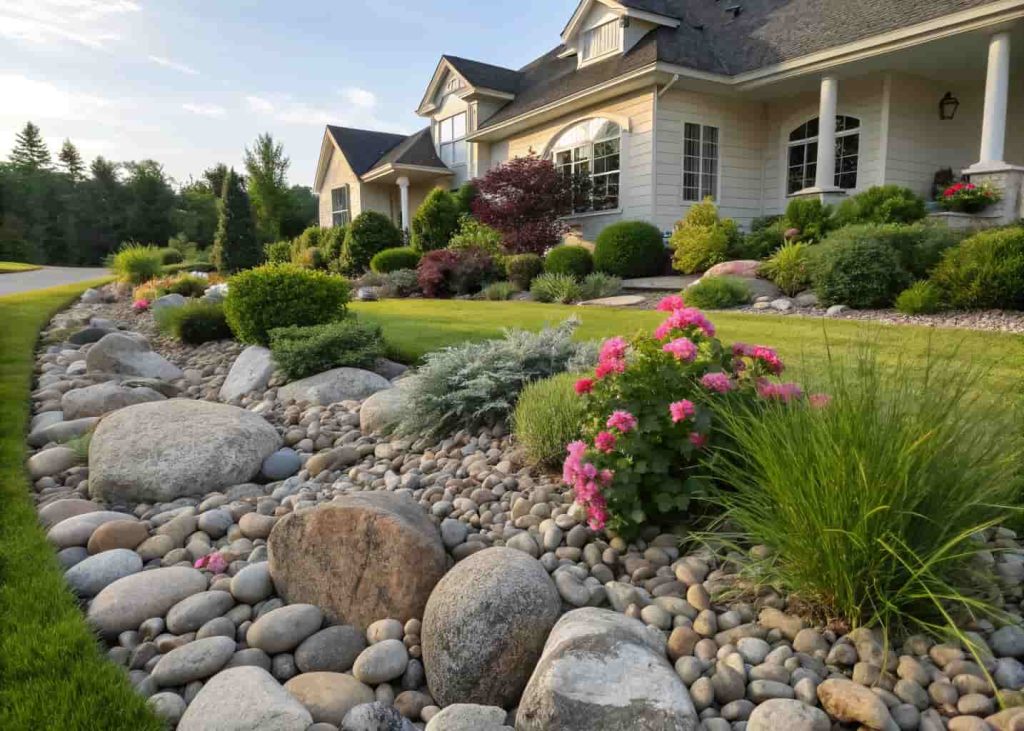
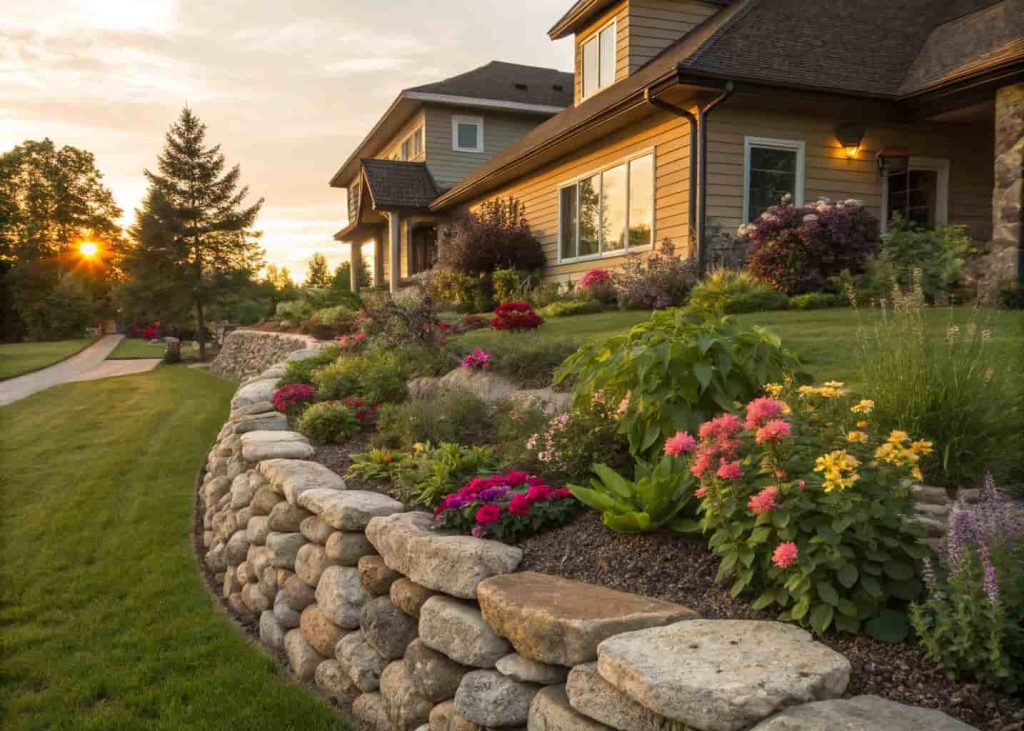
4 Stacked River Rock Raised Flower Bed Wall
If you want to add height and dimension to a flat yard, building a raised flower bed with stacked river rocks is a stunning option that also solves erosion and drainage problems at the same time. You stack flat or semi-flat river rocks on top of each other to build a low retaining wall anywhere from eight inches to two feet tall. Then you fill the raised bed with fresh quality soil, which gives your plants much better growing conditions than compacted ground-level clay. The stacked stone wall looks incredibly natural and adds real curb appeal and character to any yard. This design works especially well on gentle slopes where soil tends to wash away every time it rains.
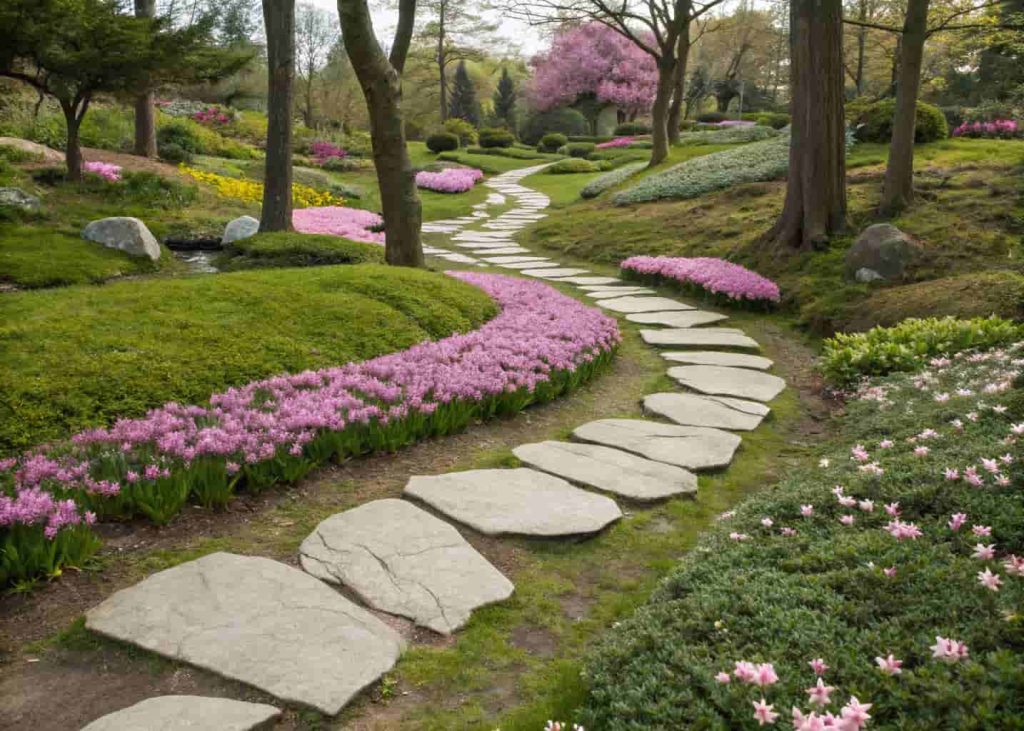
5 River Rock Path Through the Flower Bed
Adding a river rock stepping stone path through or around your flower bed is both practical and beautiful. It gives you a dry place to walk when you need to water or weed without compacting the soil around your plants or getting your shoes muddy during wet weather. You can use larger flat river rocks as individual stepping stones, or fill a defined path with smaller smooth pebbles to create a natural walkway. Either approach adds structure and flow to the garden space. A winding path looks especially charming in cottage style gardens, while a straight path suits modern minimalist landscape designs. The rocks naturally draw the eye and make the whole flower bed feel intentional and well designed.
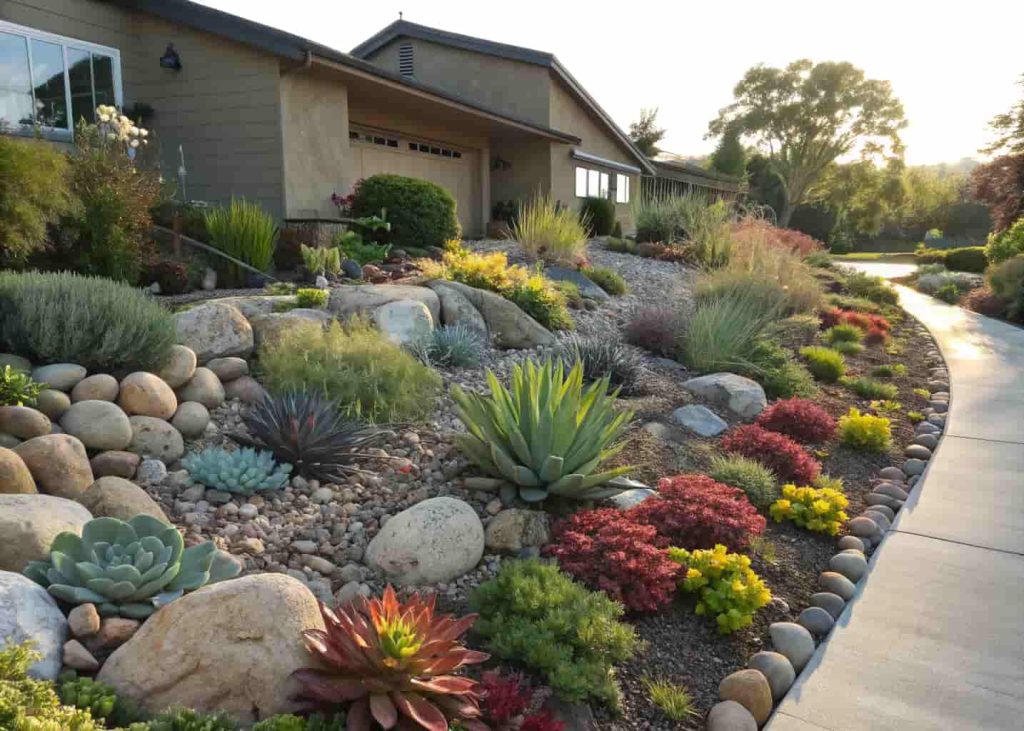
6 Rock Garden Flower Bed with Succulents
River rocks and succulents are one of the most low-maintenance combinations you can plant in your yard. Succulents naturally love fast-draining rocky soil, which means that a river rock filled bed gives them exactly the conditions they need to thrive. You mix river rocks into the soil and use larger decorative rocks as focal points throughout the bed. Then you plant drought-tolerant succulents like sedums, hens and chicks, agave, and ornamental grasses in and around the rocks. The result is a visually interesting flower bed that requires almost zero watering once established and never needs mulching. This design is perfect for hot, dry climates or for anyone who simply does not want a high-maintenance garden.
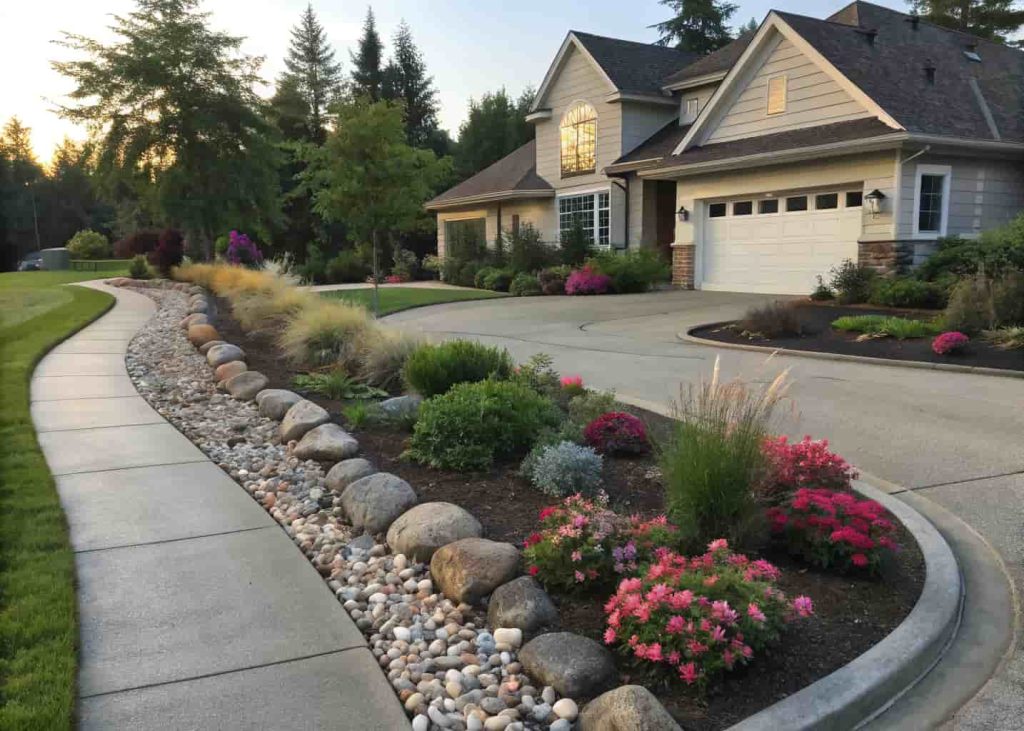
7 Curved River Rock Flower Bed Along the Driveway
One of the fastest ways to boost your home’s curb appeal is to install a curved river rock flower bed along the edge of your driveway. The gentle curve softens the hard straight lines of the concrete or asphalt and creates an elegant, intentional look that makes your property stand out in the neighborhood. You define the curve using a garden hose first to get the shape right, then dig and edge the bed before adding landscape fabric and river rocks. Plant low-growing shrubs or flowering perennials along the inner edge of the rocks. The river rock border keeps everything neat and prevents grass and weeds from invading the flower bed while giving the whole front of your home a clean, welcoming appearance year round.
8 Large Boulder and River Rock Mixed Flower Bed
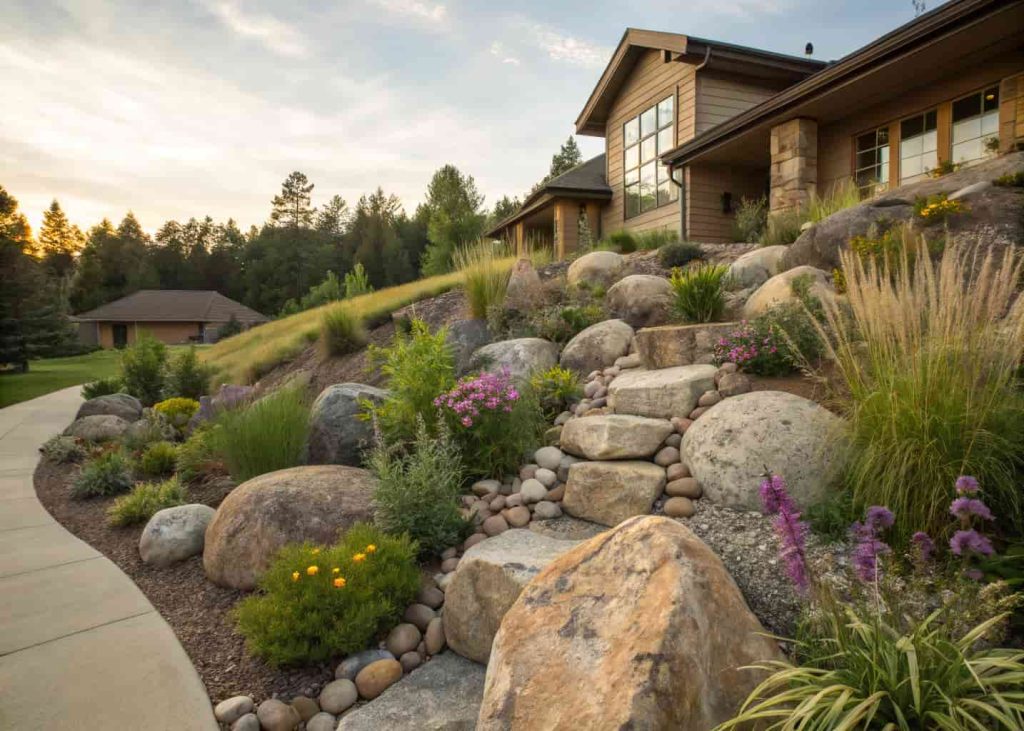
Mixing large boulders with smaller river rocks in your flower bed creates a dramatic, natural look that is impossible to ignore. The large boulders serve as anchor points and focal pieces while the smaller river rocks fill in the spaces between plants and boulders to tie everything together visually. This design works wonderfully in sloped yards where erosion is a problem, because the large rocks help hold the soil in place during heavy rains. You can plant tall ornamental grasses, native wildflowers, or flowering perennials behind the boulders and let smaller creeping plants grow around the base of the rocks. The layered effect of different rock sizes and plant heights gives the garden real depth and a completely natural, rugged character that looks like it belongs there.
9 River Rock Zen Garden Flower Bed
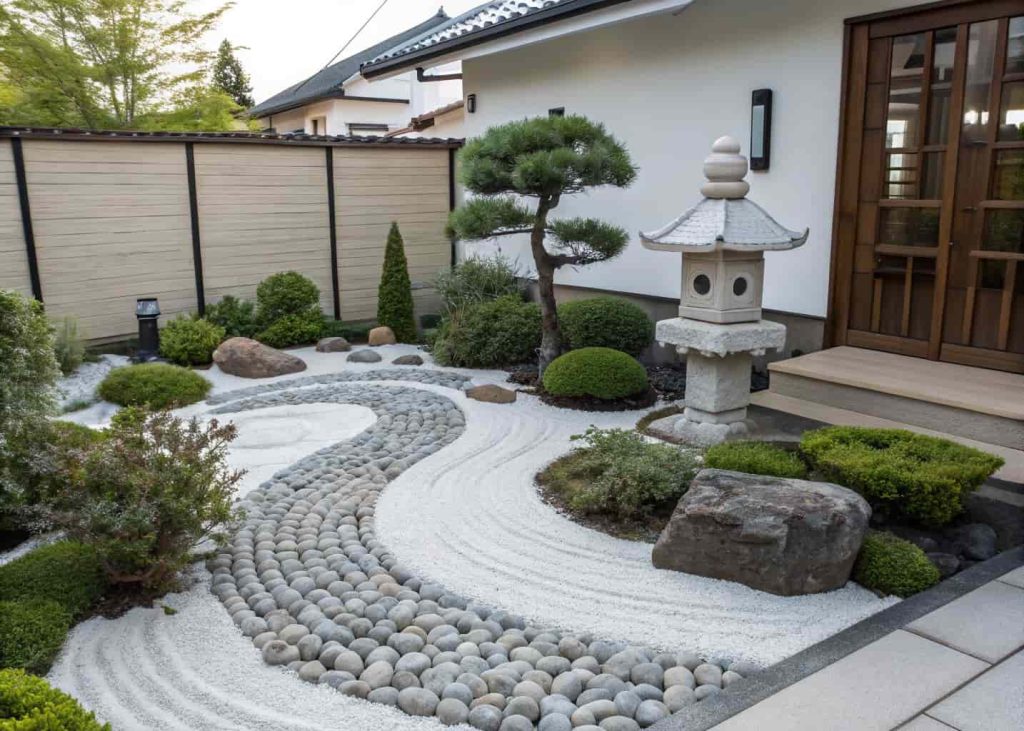
A Zen-inspired river rock flower bed brings a sense of calm and order to any outdoor space, and it is far easier to create than most people think. The key elements are smooth river rocks raked into gentle patterns, simple evergreen plants like Japanese boxwood or dwarf pine, and clean open space that lets each rock and plant breathe. You do not need dozens of plants — in fact, less is more in this style. Choose three to five specimen plants and space them thoughtfully, then fill the rest of the bed with river rocks arranged in flowing patterns. A simple stone lantern or small water feature adds to the peaceful atmosphere. This design requires very little ongoing maintenance and stays beautiful in every season, making it one of the most practical and serene flower bed options available.
10 River Rock Slope Erosion Control Flower Bed
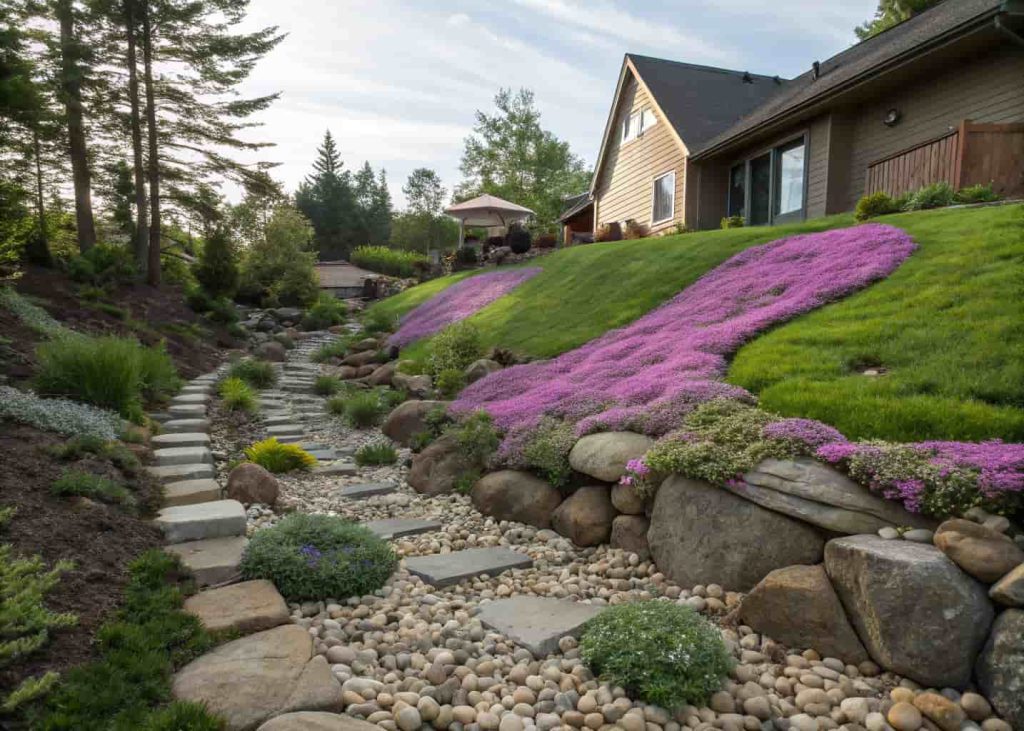
Sloped yards are notoriously hard to maintain because rain constantly washes soil and mulch downhill, leaving bare patches and muddy runoff. River rocks are one of the best solutions for controlling erosion on a slope while still keeping the area looking attractive. You install landscape fabric on the slope first to lock down the soil, then layer river rocks over the fabric and plant low-growing, deep-rooted ground cover plants through openings in the fabric. The rocks hold everything in place and the plant roots further anchor the soil over time. Creeping phlox, juniper, and dwarf ornamental grasses all work well in this kind of sloped rock bed. The result stops erosion almost immediately and looks beautiful rather than like a construction project that went wrong somewhere.
11 Colorful Mixed River Rock Mosaic Flower Bed Border
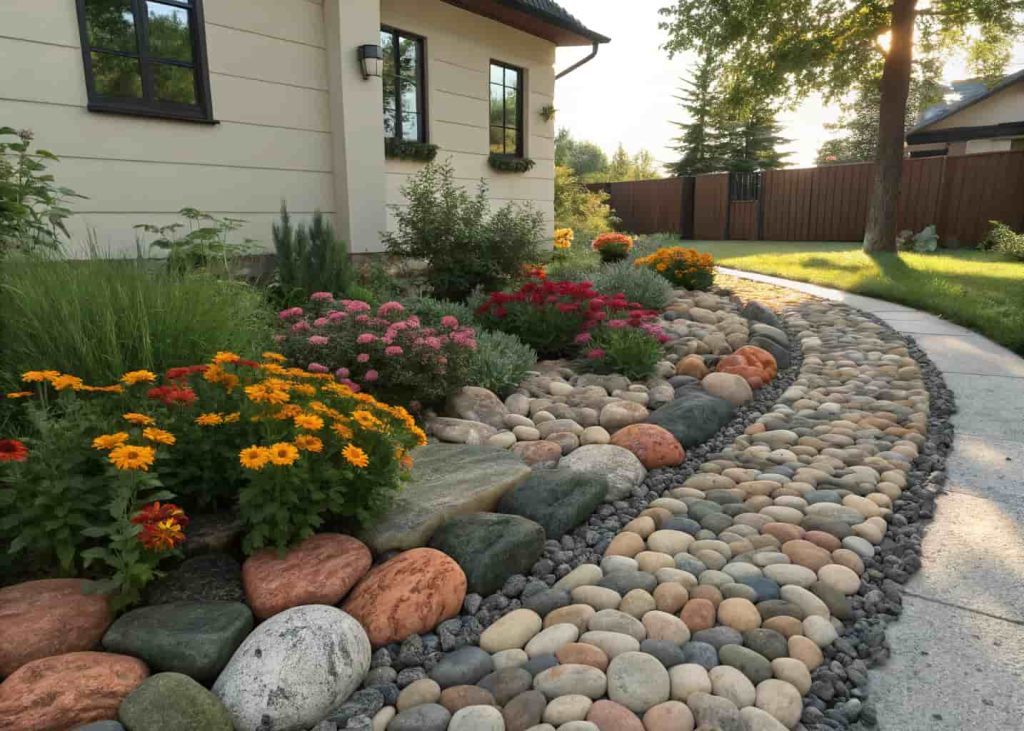
River rocks come in a surprisingly wide range of colors — from deep charcoal black to pale cream, warm terracotta, and even purple and green-tinted stones. Using several different colors of river rocks together in your flower bed border creates a mosaic effect that adds real personality and visual interest to your yard. You can arrange the colors in a deliberate pattern — alternating dark and light stones, or grouping colors in sections — or simply blend them together for a natural, variegated look. Either way, the variety of colors catches the eye and makes the garden feel more designed and intentional than a simple single-color border would. This approach pairs especially well with bright, bold flowering plants since the colorful rocks complement rather than compete with the blooms.
12 Circular River Rock Flower Bed Around a Tree
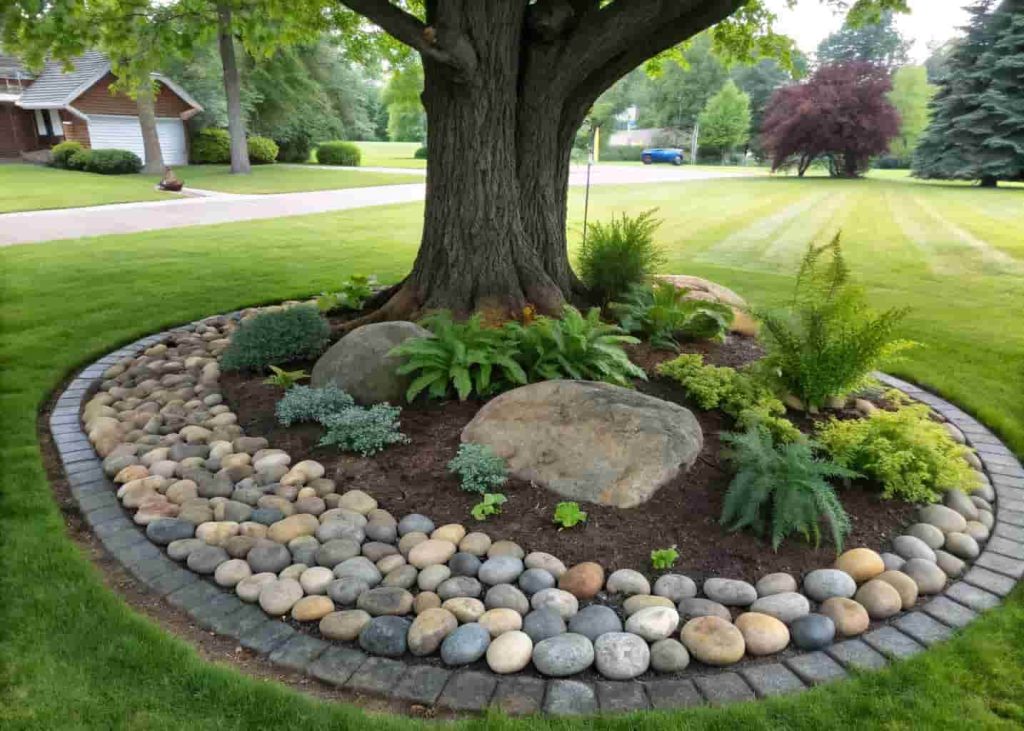
One of the most common muddy mess problems in any yard is the bare, eroded soil that forms around the base of mature trees where grass refuses to grow. A circular river rock flower bed solves this problem beautifully. You define a circle around the tree trunk — usually starting at least a foot away from the base to protect the roots — dig out the grass, lay landscape fabric, and fill the circle with river rocks. You can plant shade-tolerant plants like hostas, ferns, or impatiens between the rocks to add color, or keep it clean and simple with just rocks and a few decorative stones. This design instantly cleans up one of the messiest and most neglected spots in most yards, and it never needs mowing, edging, or replanting season after season.
Conclusion
River rocks are one of the most versatile, durable, and cost-effective landscaping materials you can use to fix a muddy, messy yard. Whether you choose a simple border along your driveway, a dramatic stacked stone raised bed, a Zen-inspired gravel garden, or a functional erosion control slope bed, the results are almost always immediate and long-lasting. Unlike mulch, river rocks do not decompose, wash away easily, or need to be replaced every year. Once installed correctly with landscape fabric underneath, a river rock flower bed can look beautiful for ten, fifteen, or even twenty years with very little upkeep. Start with one design that fits your yard’s biggest problem — whether that is drainage, erosion, bare soil, or just a messy look — and build from there. Your yard will thank you for it every single season.