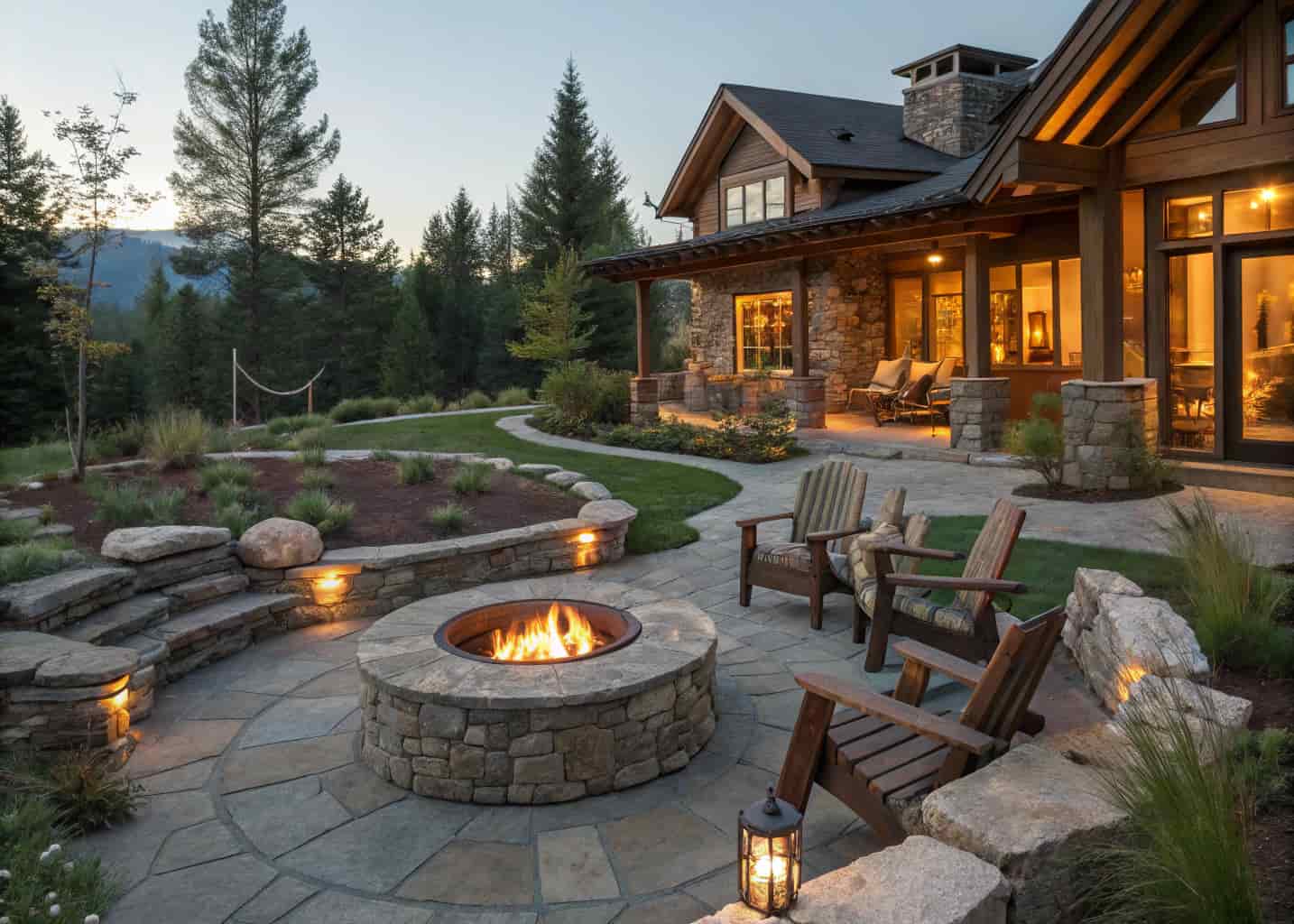
If you’ve ever stood in your backyard and thought, “This space just doesn’t work,” you’re not alone. Awkward corners, uneven ground, narrow side yards — outdoor spaces can be genuinely frustrating. But here’s the thing: a fire pit can fix almost all of that. It gives your yard a focal point, pulls people together, and suddenly that weird L-shaped patio makes total sense. I’ve seen Outside Fire Pit Ideas completely transform spaces that felt hopeless. So whether you’re working with a tiny urban backyard or a sprawling but oddly shaped property, there’s a fire pit idea here for you.
1. Sunken Fire Pit for Sloped or Uneven Yards
Sloped yards feel impossible to furnish. Nobody wants chairs sliding downhill or a patio that looks crooked. A sunken fire pit is the smartest fix here. You dig down into the slope, level out a circular seating area, and suddenly the slope becomes a feature, not a flaw. The earth around it acts like natural stadium seating. My neighbor did this on a yard that dropped almost four feet from front to back. Now it’s the most used spot in their entire outdoor space. Stone steps lead you down into it, and it feels like your own private amphitheater. Totally worth the digging.
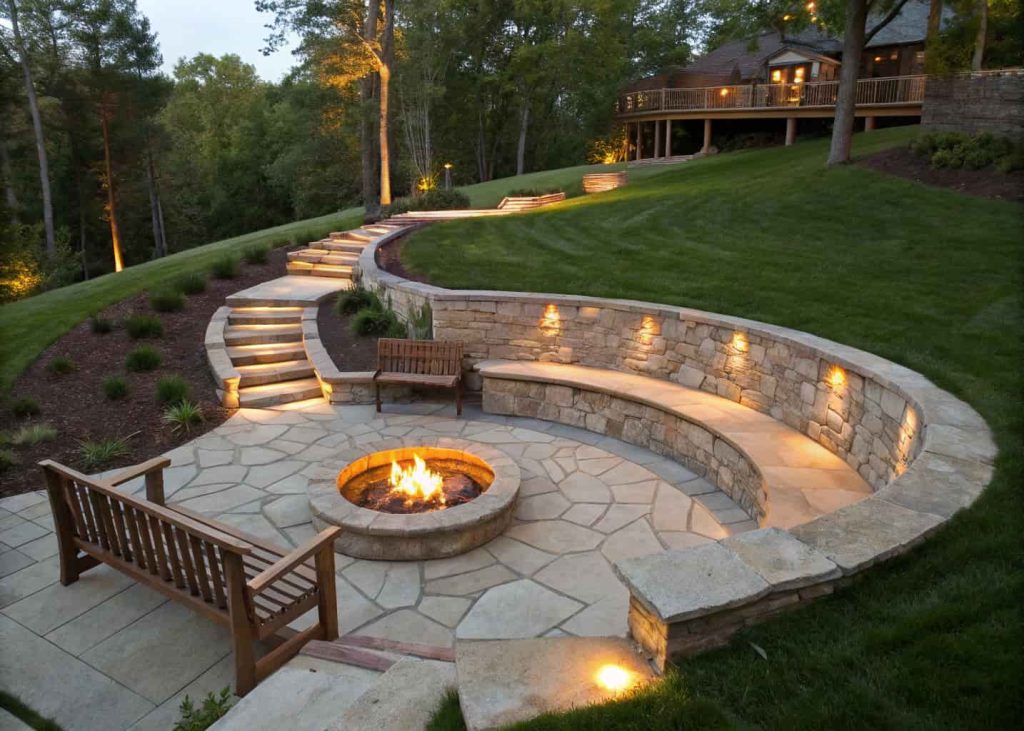
2. Corner Fire Pit to Claim Dead Space
Every yard has that one corner nobody uses. It collects leaves, maybe an old pot or two, and just sits there doing nothing. A corner fire pit claims that space and makes it the most interesting spot in the yard. You build or place the pit right into the corner and wrap seating around it in an L-shape or curve. It feels intentional, like you planned it that way all along. I once helped a friend set up a corner pit using simple concrete blocks and two old benches. Cost almost nothing. That corner became their go-to hangout spot within a weekend.
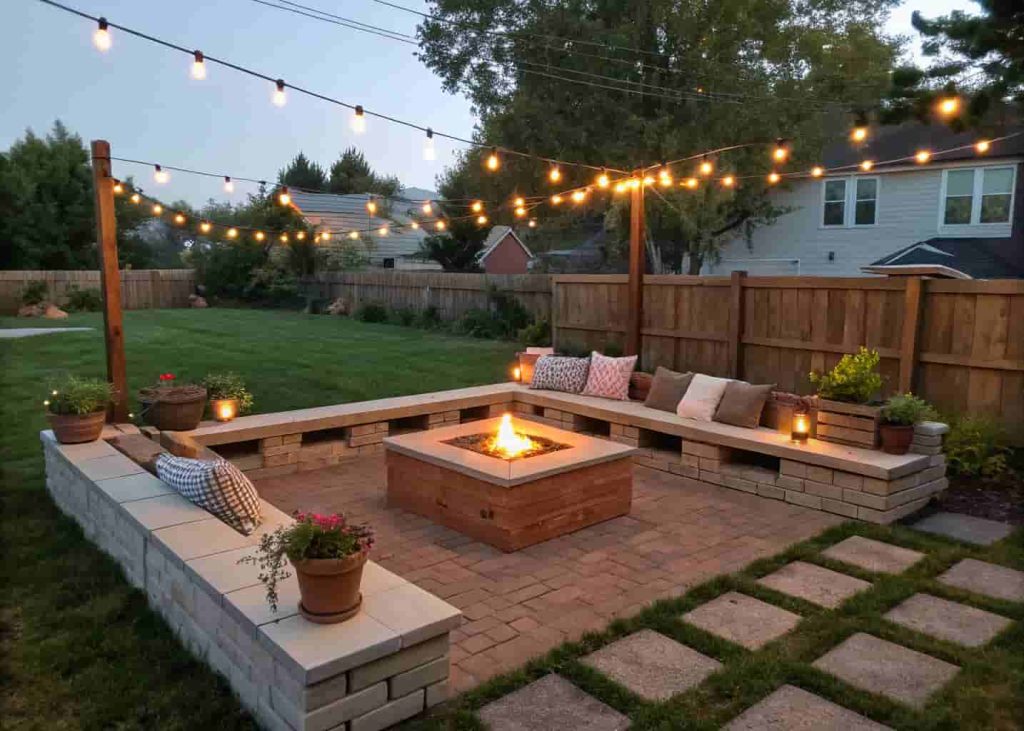
3. Narrow Yard Fire Pit With Linear Seating
Long and narrow yards are tricky. Traditional round fire pit setups just don’t fit — they eat up all the walking space and feel cramped. The solution is going linear. Place a rectangular or oval fire pit lengthwise down the yard and line both sides with long benches or built-in seating. It actually makes the yard feel bigger because your eye travels the length of the space. Think of it like a long dining table but for fire. Works especially well for row homes or townhouses with thin backyards. Add some gravel underneath and it looks like a magazine spread, honestly.
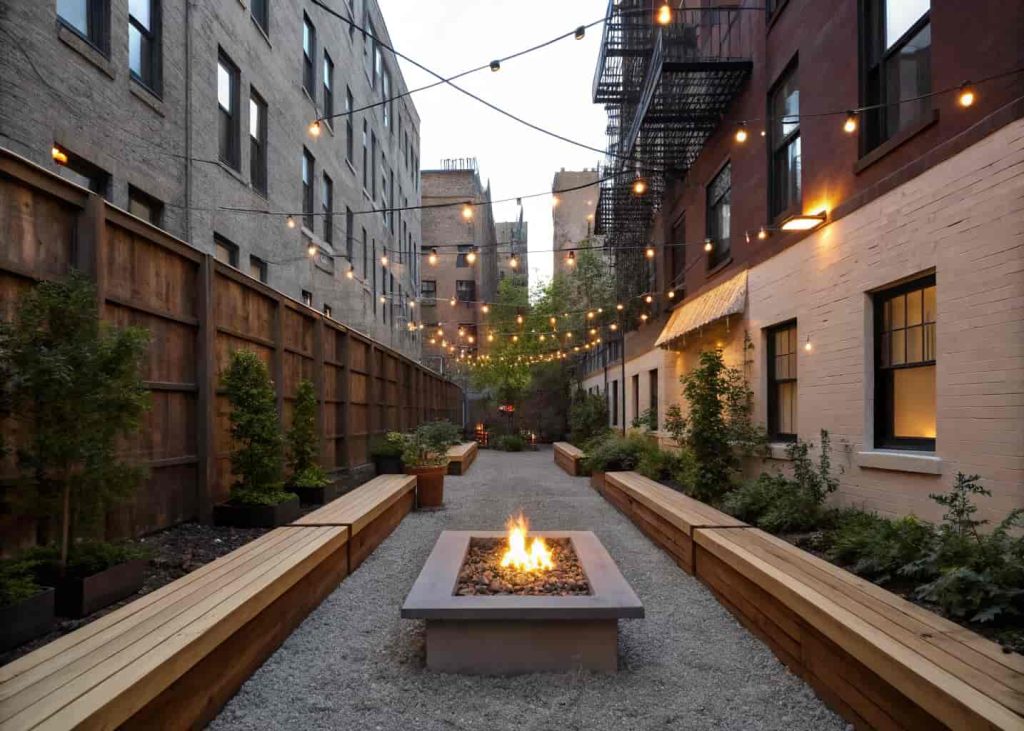
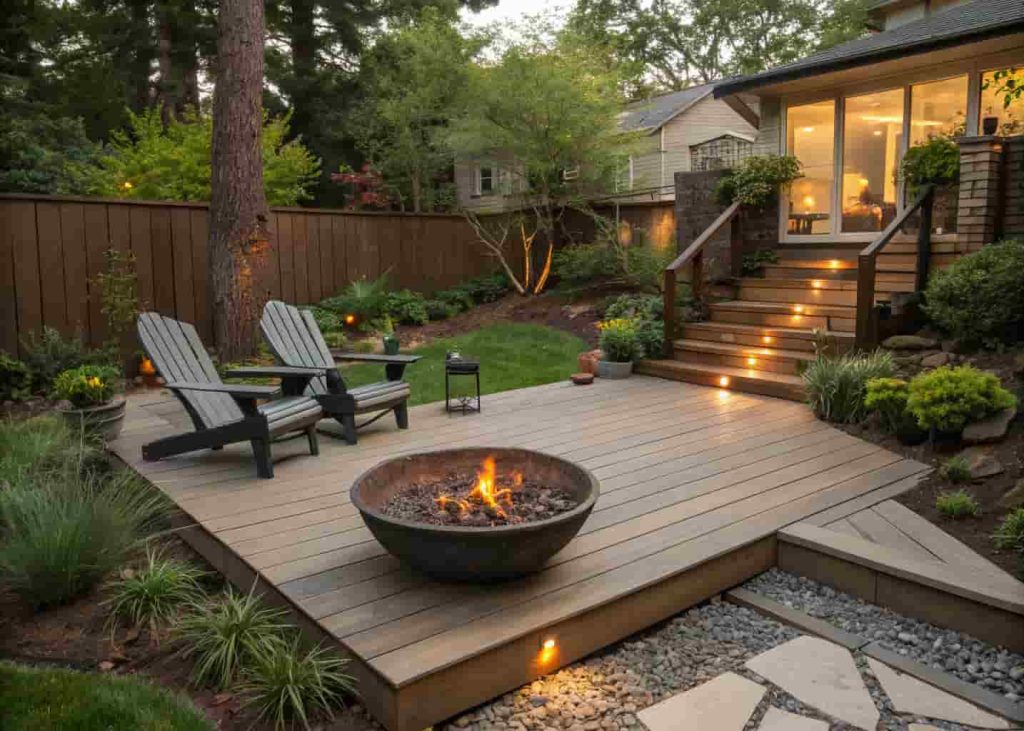
4. Floating Deck Fire Pit for Uneven Ground
When your ground is too uneven to level out easily, build over it. A floating deck gives you a perfectly flat surface regardless of what the ground underneath is doing. Put your fire pit in the center or off to one side, surround it with outdoor furniture, and you’ve created a destination spot. The deck visually separates the fire pit area from the rest of the yard, which actually helps awkward layouts feel more organized. Use composite decking so you’re not worried about sparks as much — pair it with a spark screen on the pit for safety. Elevated and elegant.
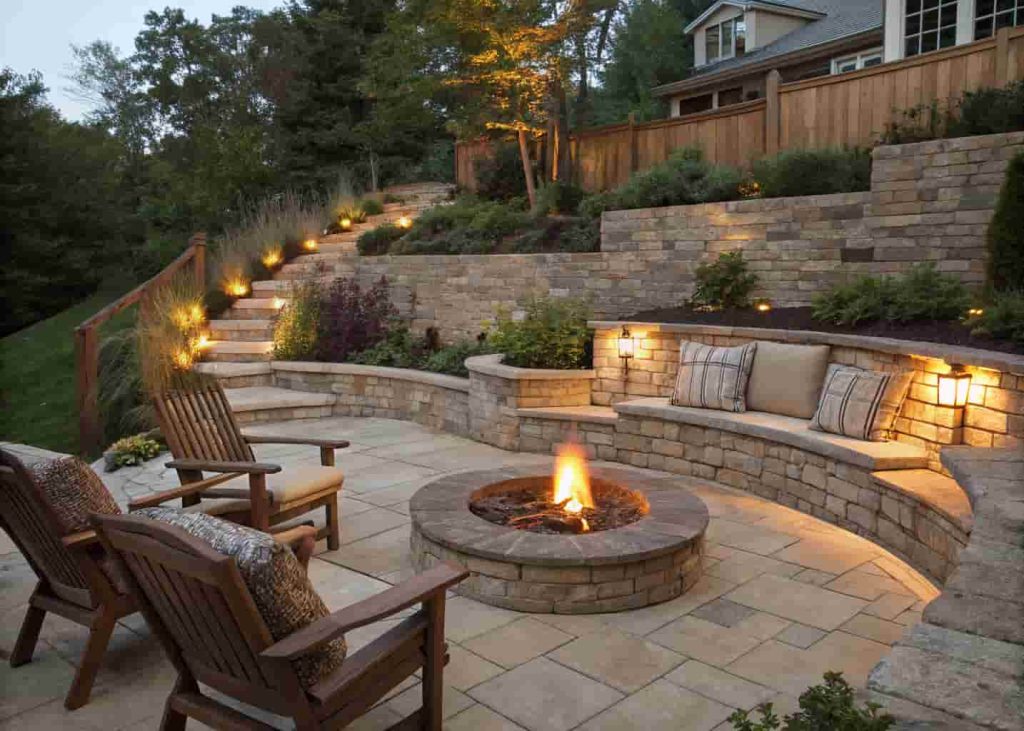
5. Fire Pit Built Into a Retaining Wall Layout
If your yard has retaining walls — which many sloped properties do — use them to your advantage. Build a fire pit area at the base of or against a retaining wall and use the wall itself as the back of your seating area. Add cushions along the wall ledge, place some chairs facing it, and you’ve got a built-in amphitheater feel without doing much extra work. The wall blocks wind, which is a bonus on cool evenings. A family I know in a hilly neighborhood did exactly this and it solved both their slope problem and their lack-of-seating problem in one shot.
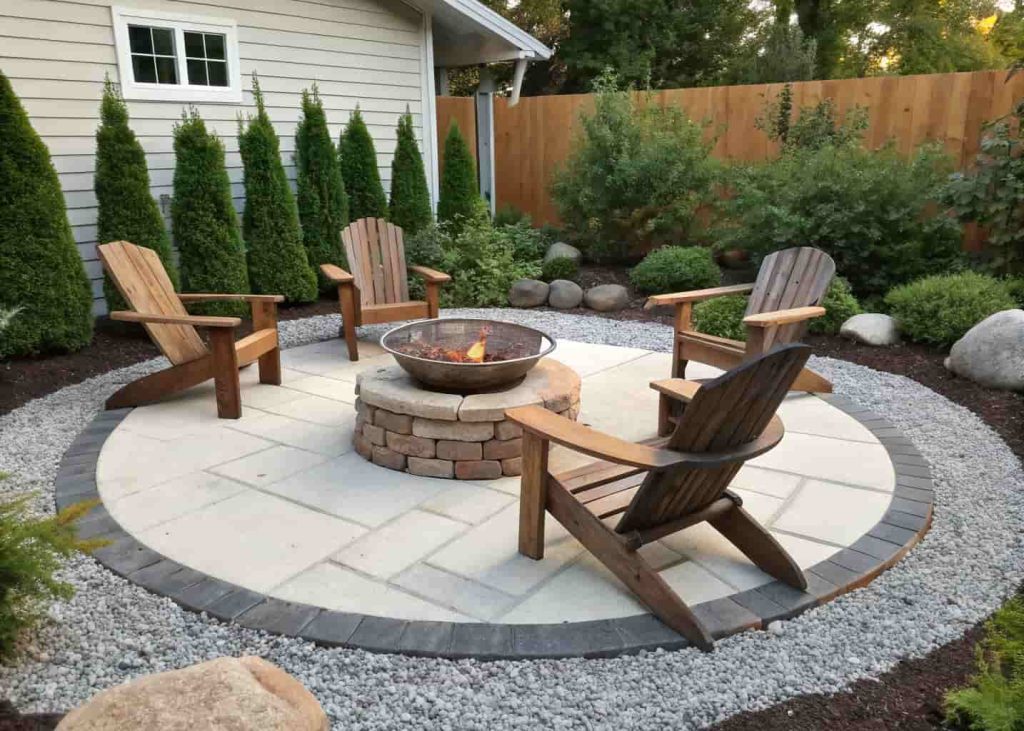
6. Gravel Pit Area to Handle Drainage Problems
Yards with drainage issues or patches where grass just won’t grow are perfect candidates for a gravel fire pit area. Lay down landscape fabric, pour pea gravel or crushed stone, set your fire pit in the middle, and done. The gravel handles water drainage naturally, so you never end up with a muddy mess after rain. It also looks really clean and intentional — like you designed it that way on purpose rather than solving a problem. It’s one of the most budget-friendly transformations out there. Gravel is cheap, fire pits come in every price range, and the whole setup can happen over one weekend.
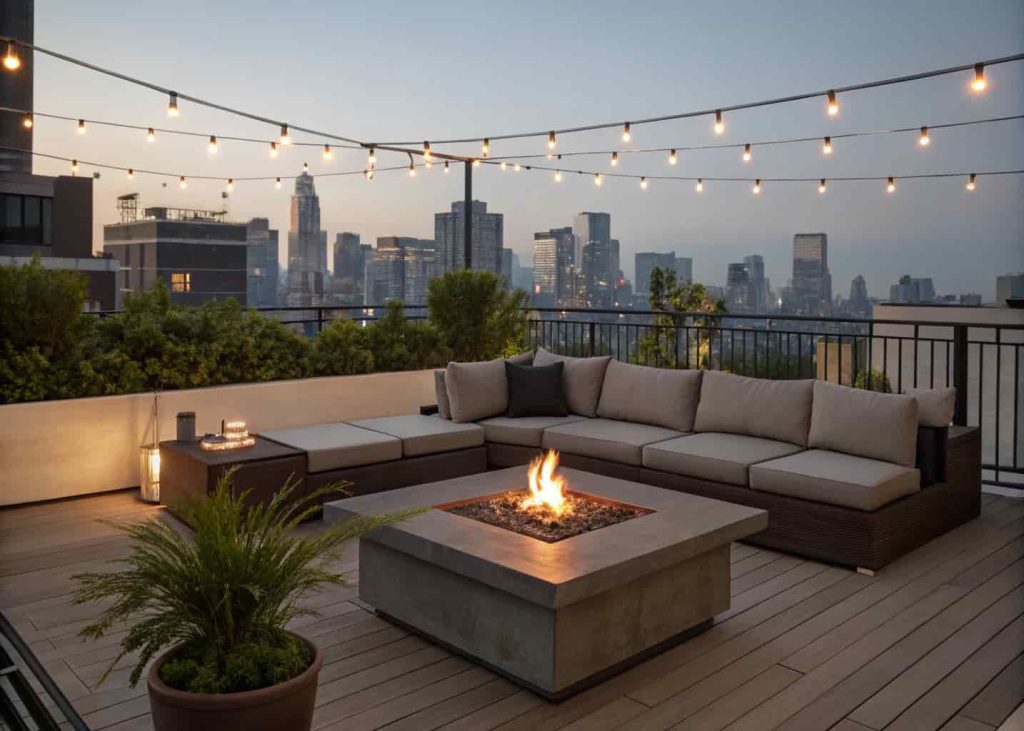
7. Rooftop or Balcony Fire Pit for Urban Spaces
Urban homes and apartments often have flat rooftops or large balconies that feel bare and underused. A tabletop or small propane fire pit can completely change how that space feels. You’re not doing any digging or major construction — just bringing up a compact fire feature, some weatherproof seating, and maybe a few outdoor rugs and plants. Suddenly your rooftop becomes a place people actually want to spend time. Always check local fire codes first, because rules vary by city. Propane options are usually the safest and most allowed in urban areas. The city skyline as your backdrop doesn’t hurt either.
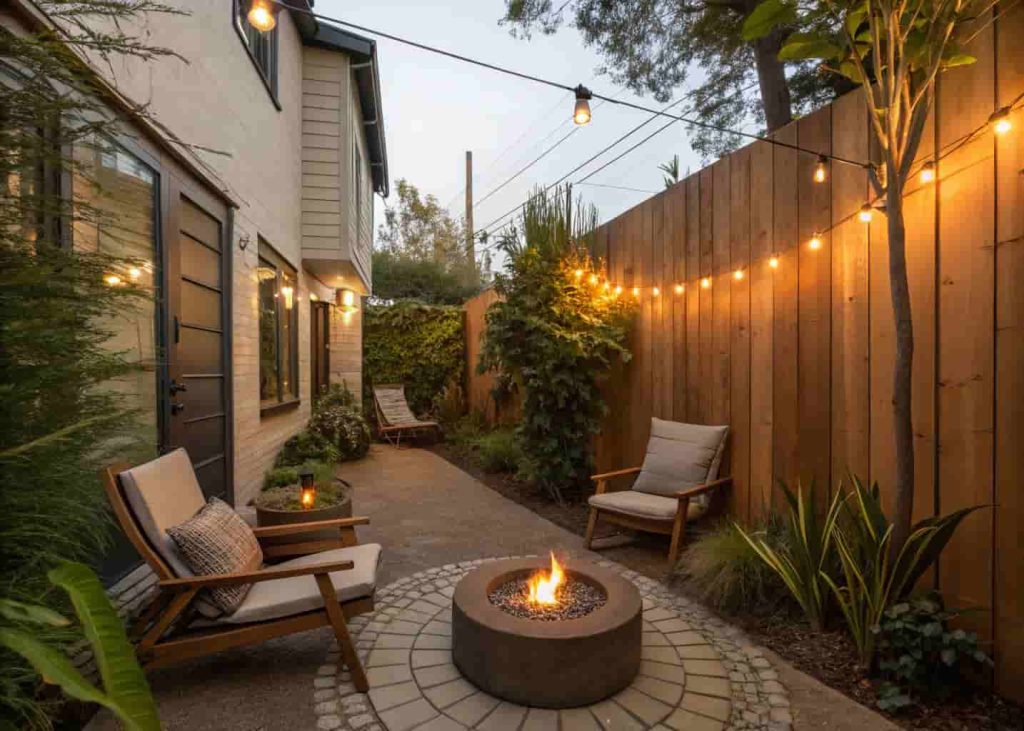
8. Side Yard Fire Nook for Forgotten Strip Spaces
Side yards are basically the junk drawers of outdoor spaces. They’re narrow, awkward, and usually ignored. But with some creativity, that strip of space becomes a private little fire nook. Install a small fire pit, add two chairs facing each other, line the fence with some tall plants for privacy, and hang a few lights. It becomes this secret garden vibe that feels totally separate from the rest of the house. It’s intimate rather than awkward. A friend of mine turned her six-foot-wide side yard into exactly this kind of space and it became her favorite reading and unwinding spot all fall.
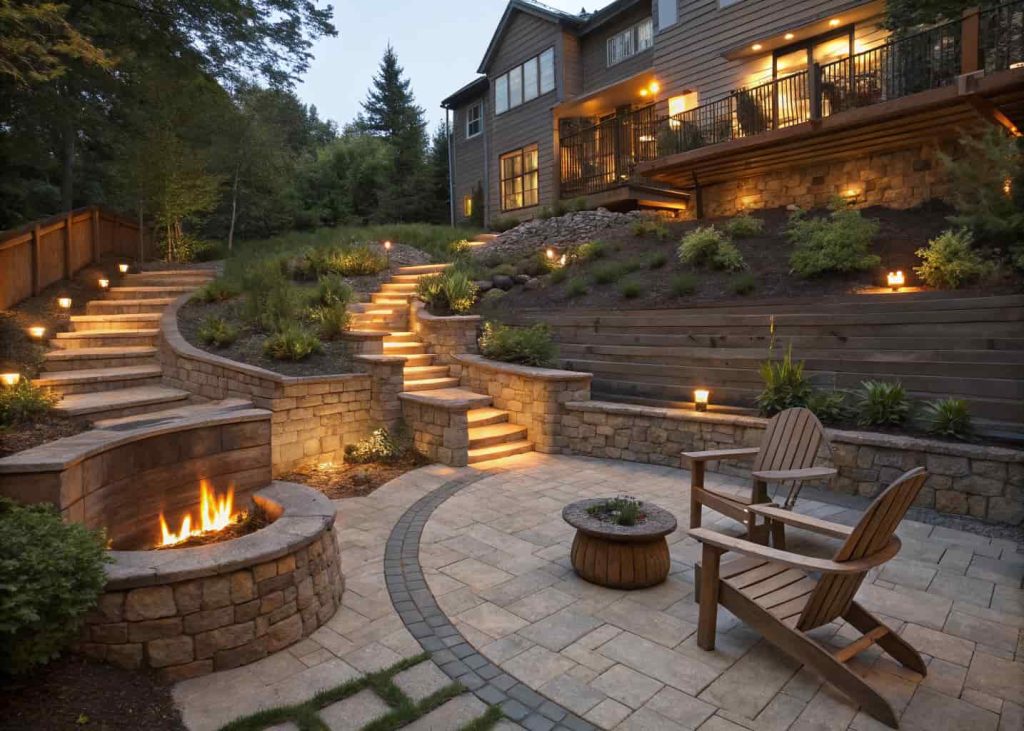
9. Multi-Level Yard Fire Pit as a Connecting Element
Some yards have multiple levels or terraces that feel disconnected from each other — like they belong to different properties. Placing a fire pit on one of the levels and adding pathways or steps that lead to it from the other levels creates a natural flow. The fire pit becomes the reason to move between spaces. People naturally gravitate toward fire, so it pulls the whole yard together. Use lighting along the steps and consistent materials — same stone, same wood tones — throughout the levels to tie everything visually. What felt like a disjointed mess starts reading as a thoughtfully designed outdoor living area.
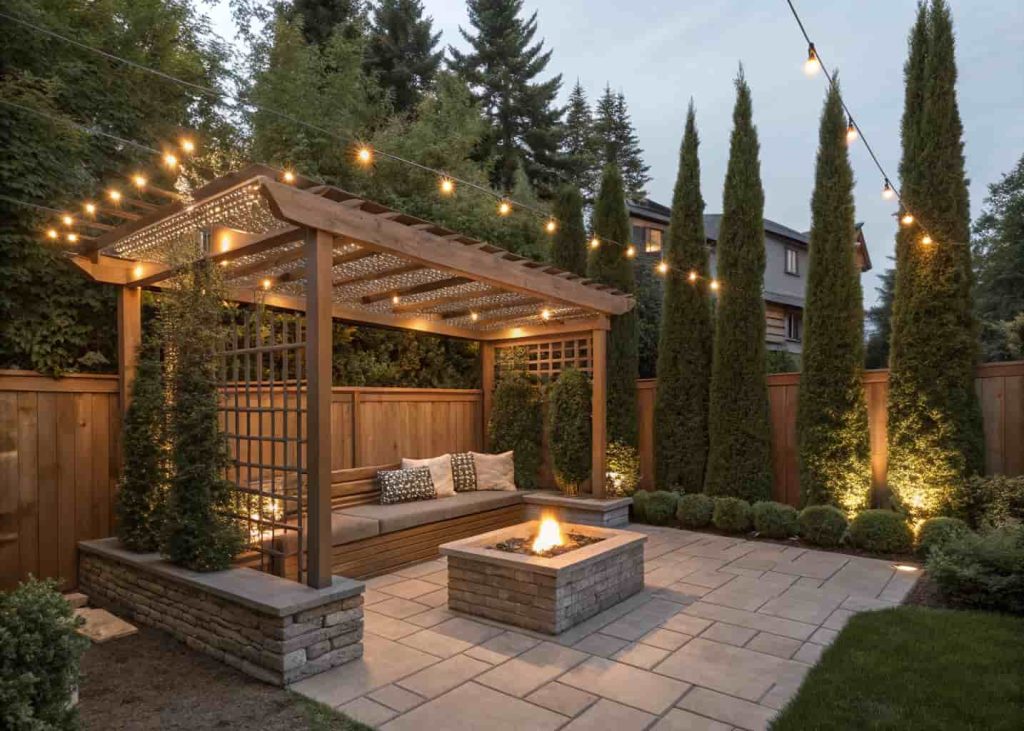
10. Enclosed Garden Fire Pit for Wind-Prone Areas
If wind is constantly blowing out your fire or making evenings uncomfortable, enclosure is the answer. Create a partially enclosed fire pit area using tall hedges, a pergola with side panels, a low stone wall, or a combination of all three. The enclosure blocks wind, traps warmth, and creates a much more usable space. It also adds a sense of room-like structure to your outdoor area, which helps awkward open spaces feel more defined and cozy. Cedar hedges work great for this and grow thick over time. A pergola with a fire pit underneath it is honestly one of the most beautiful outdoor setups you can build.
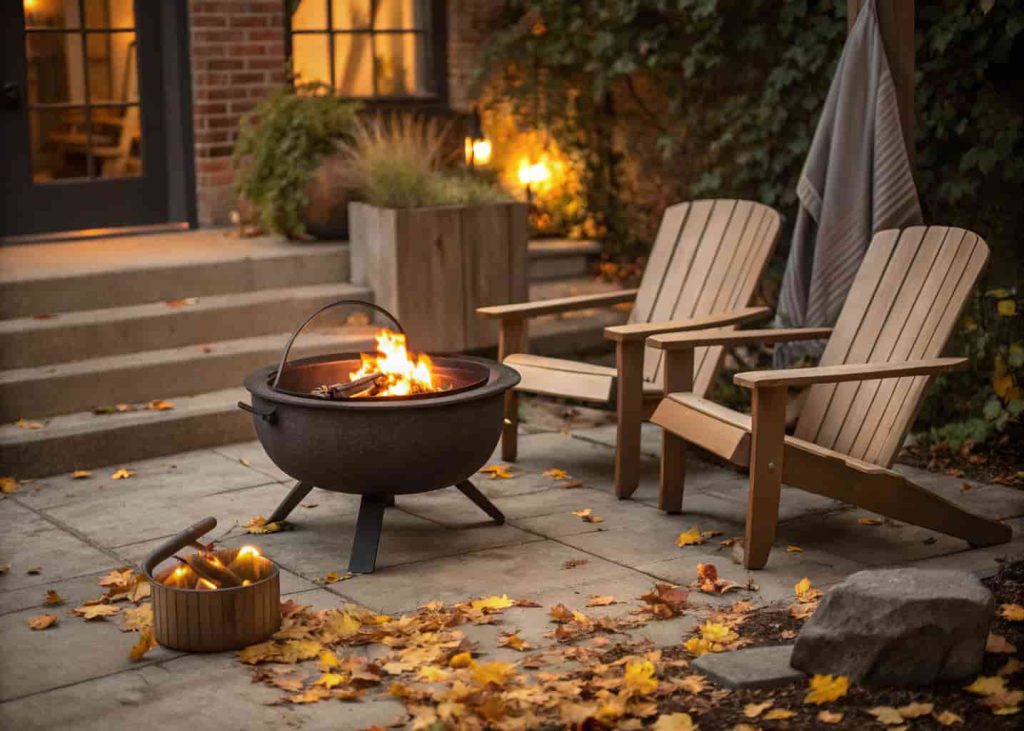
11. Portable Fire Pit to Work Around Any Layout
Sometimes the layout is so awkward or changes seasonally that a permanent fire pit just doesn’t make sense. That’s where a quality portable fire pit earns its place. You can move it to wherever the space works best — out to the lawn in summer, under the overhang in cooler months, or tucked against a fence when you need the open area for a party. Portable doesn’t mean cheap-looking either. There are some genuinely beautiful cast iron and steel options that look fully intentional wherever you place them. Get a good spark screen and a carry bag and you’re set for any layout, any season.
Conclusion
An awkward outdoor layout doesn’t have to stay awkward. A fire pit — whether it’s sunken, portable, tucked into a corner, or built against a retaining wall — gives your yard the anchor it’s been missing. It creates a reason to be outside, a place for people to gather, and a visual center that makes even the strangest spaces feel intentional and warm. Start with whatever bothers you most about your yard and work backward from there. Chances are, one of these eleven ideas fits your exact situation. Pick one, start simple, and enjoy your outdoor space the way it was always meant to be used.