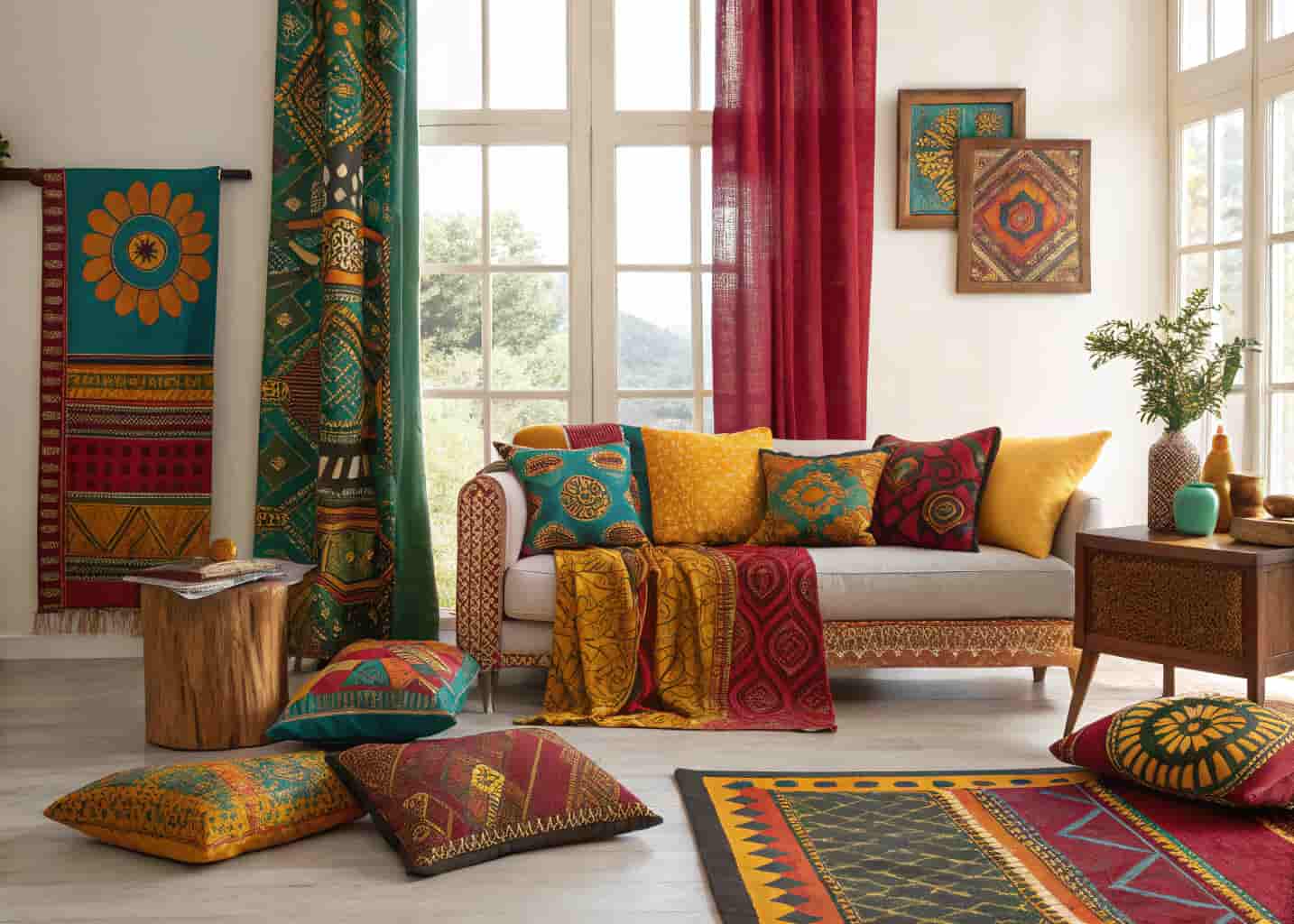
African Textile Decor carry centuries of culture, colour, and craft. Here’s how to bring that warmth and story into your home — without making it look like a museum.
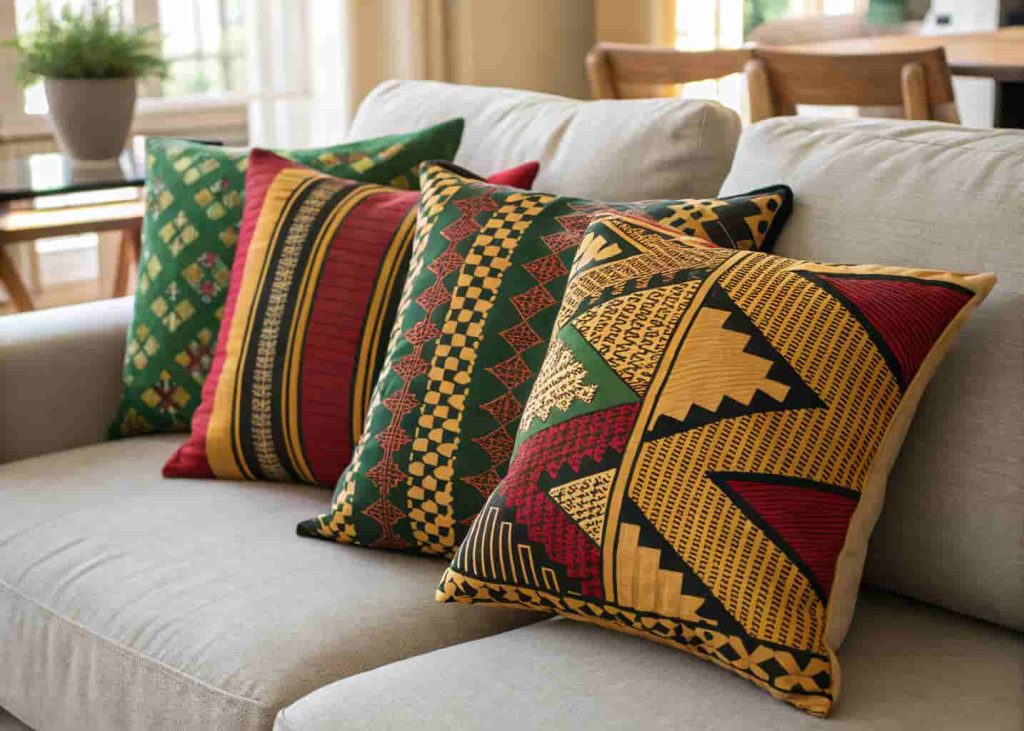
If you want to start small, Kente cloth pillows are honestly one of the easiest ways to bring African style into any room. Kente is originally from Ghana — woven in bold strips of gold, green, red, and black — and every colour actually means something. Gold stands for royalty. Green means growth. You’re not just buying a pretty cushion; you’re bringing in a whole story. I picked up two for my reading nook last year, and every single visitor asks about them first thing. Scatter a few on your sofa or bed and the whole room instantly feels richer and more intentional. You don’t need to redecorate everything — just let these pillows do the talking.
02 Mud Cloth (Bogolan) Wall Art
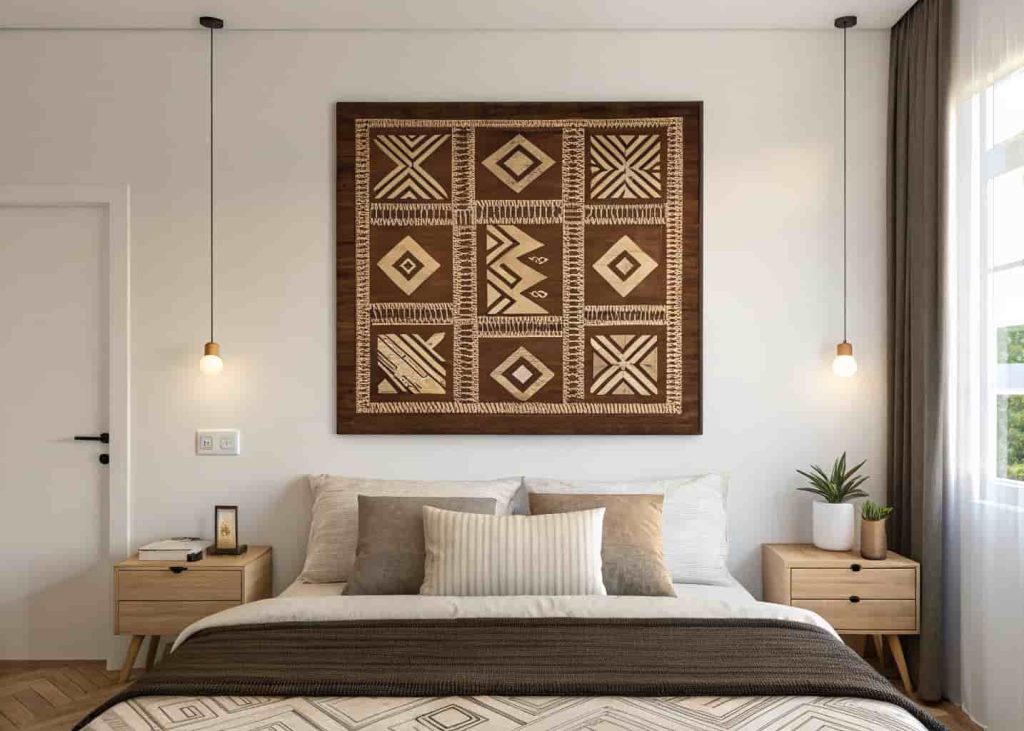
Mud cloth — called Bogolan in Mali — might just be the most striking thing you can hang on a wall. It’s made by painting fermented mud onto hand-woven cotton, creating deep brown and cream geometric symbols that look like nothing else in the world. No two pieces are ever exactly the same. In a modern home, one large framed mud cloth panel above a bed or fireplace turns a plain white wall into something genuinely special. The rough texture, the earthy tones — it adds depth without screaming for attention. I’ve seen it styled in minimalist Scandinavian apartments and it works beautifully because the patterns are graphic enough to hold their own against clean white walls and simple furniture.
03 Ankara Print Curtains
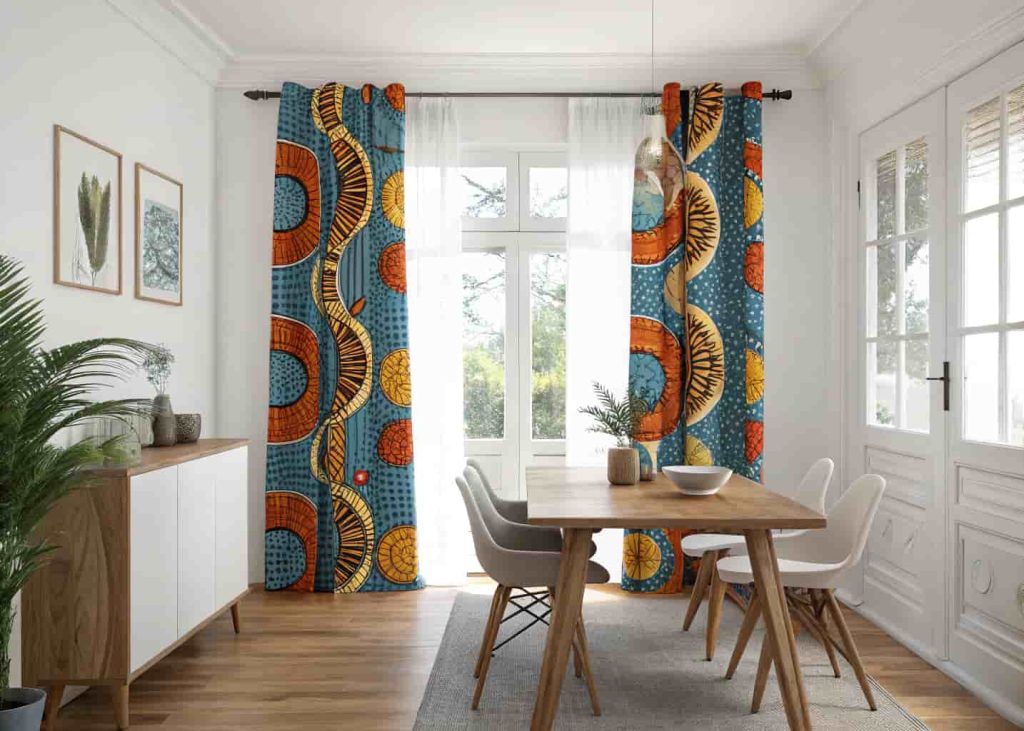
Ankara fabric is the one that really makes a room dance. Those bold, bright wax-print patterns in electric blue, orange, and yellow — they’re originally Dutch wax cloth that became deeply embedded in West African fashion and culture. As curtains, Ankara works incredibly well in kitchens and dining rooms because you want a bit of energy in those spaces. A pair of floor-length Ankara curtains can completely transform a boring box room into something full of personality. The trick is keeping the rest of the room fairly neutral — let the curtains be the hero. Stick to white walls, wooden furniture, and simple textiles elsewhere, and the Ankara will carry the whole vibe without overwhelming everything around it.
04 Kuba Cloth Table Runner
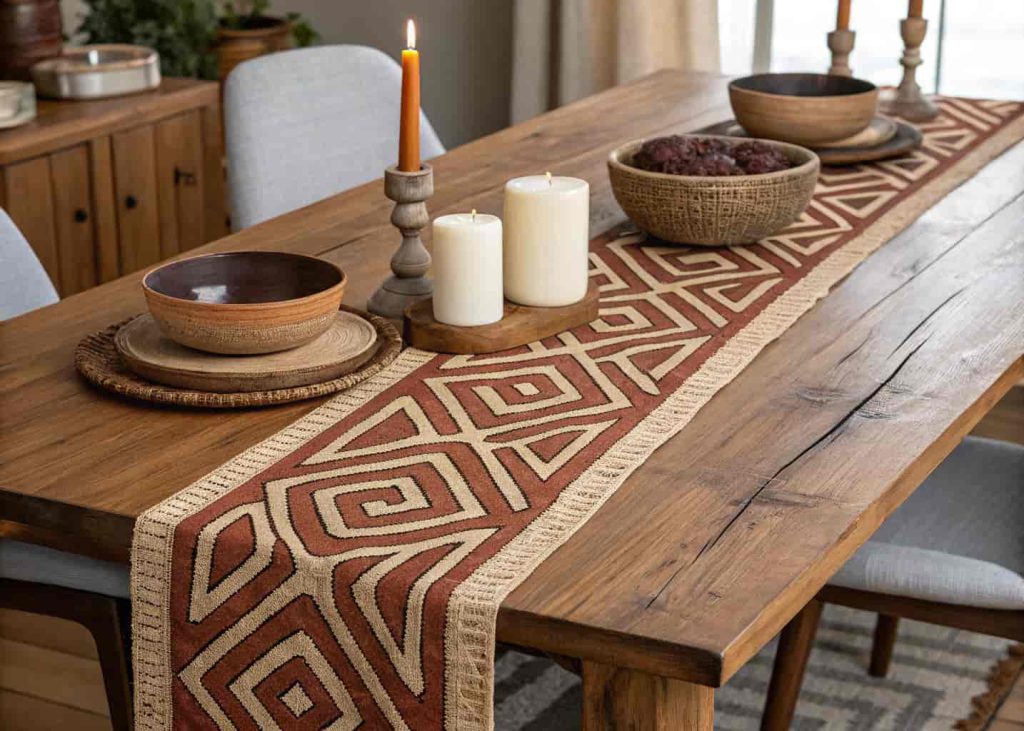
Kuba cloth comes from the Democratic Republic of Congo, and it’s honestly some of the most beautiful textile work you’ll ever see up close. It’s hand-woven from raffia palm — a plant fibre — and then embroidered with cut-pile stitching that creates this incredible velvety, almost three-dimensional surface. The patterns are angular and maze-like, usually in rust, beige, and dark brown. A Kuba cloth table runner down the centre of a dining table is an absolute showstopper at dinner parties. People lean in and touch it — it’s that tactile. You can also use a smaller piece as a dresser runner in a bedroom. The earthy tones make it easy to style because it pairs naturally with wood, linen, and neutral ceramics without any clashing.
05 Shweshwe Upholstered Chair
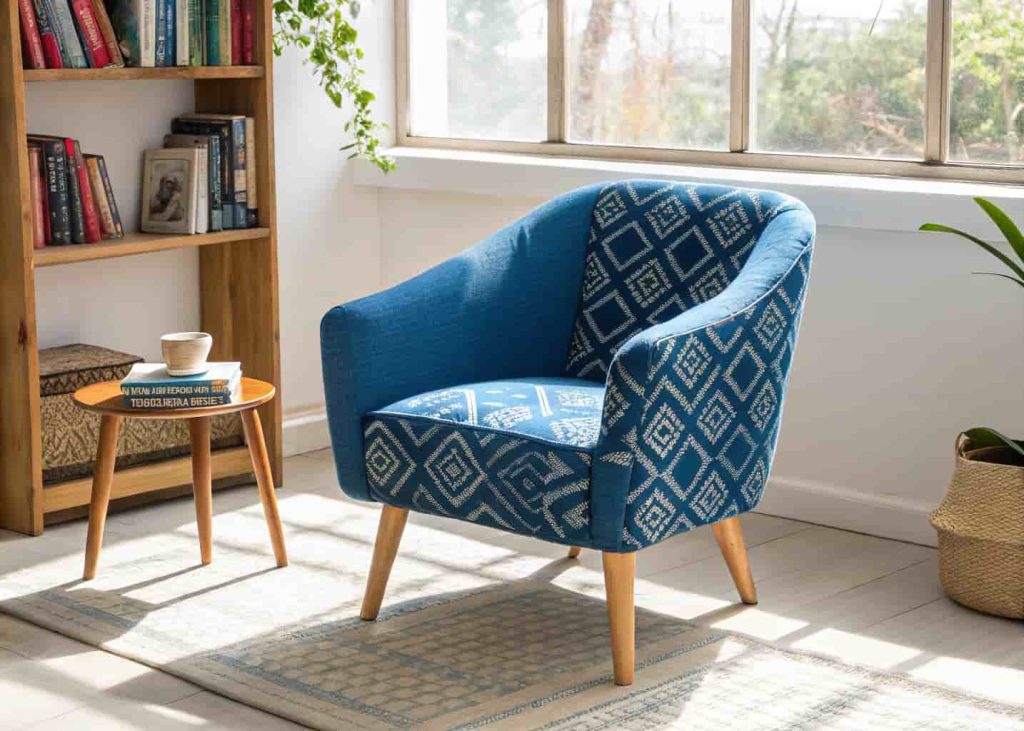
Shweshwe is a South African printed cotton that has been around since the 1800s — originally brought over by German settlers but now deeply claimed as a South African cultural fabric. It has this wonderful indigo-and-white or red-and-white geometric print that looks almost like a delicate floral when you see it from far away, but up close it’s all tiny repeated motifs and crisp lines. Getting a single accent chair reupholstered in Shweshwe is one of those investments that pays off every single day. It turns a plain reading chair into a focal point. I’ve seen this done in home offices and it works brilliantly — professional but personal, structured but warm. If you can’t find a seamstress, even a seat cushion cover in Shweshwe changes the whole energy of a chair.
06 Kanga Fabric Bedspread
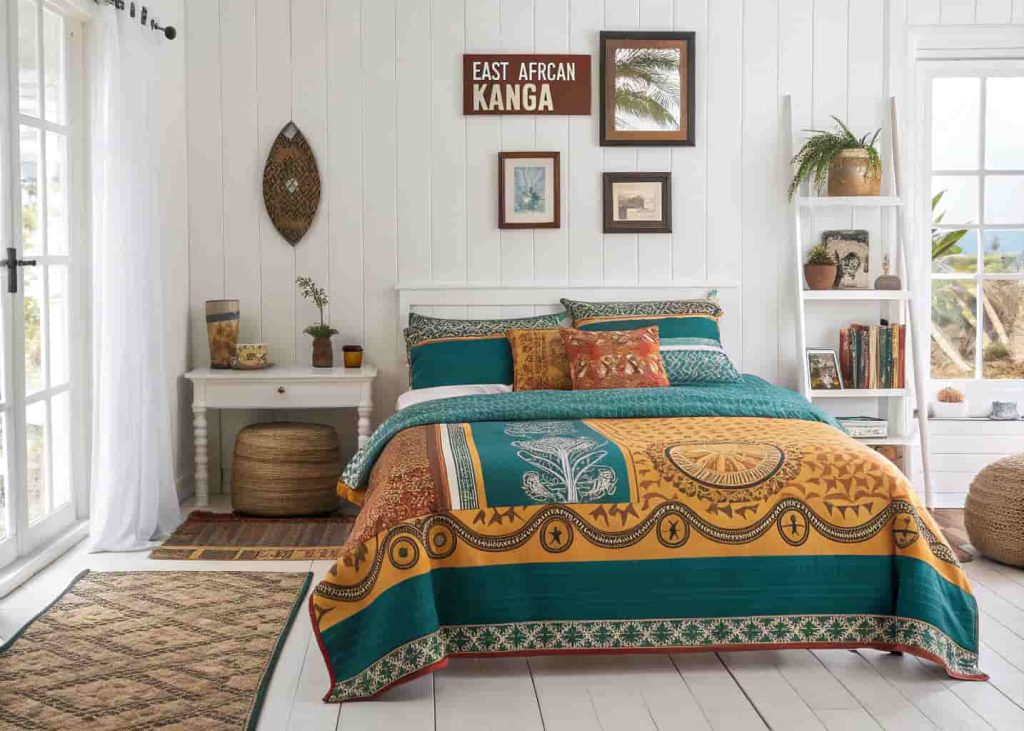
Kanga fabric is everywhere along the East African coast — Kenya, Tanzania, Zanzibar. It’s a lightweight cotton printed in gorgeous, saturated colours with a decorative border all the way around the edge. What makes Kanga truly special is that most pieces have a Swahili proverb printed right into the design — something like “Haraka haraka haina baraka” (too much haste has no blessing). Using a Kanga as a bedspread brings that cultural depth right into your most personal space. Layer two or three Kangas in complementary colours — maybe a deep teal, a warm terracotta, and a golden yellow — and suddenly your bed looks like it belongs in a beautiful coastal guesthouse. The fabric is light enough to work year-round and durable enough for daily use.
07 African Wax Print Lampshade
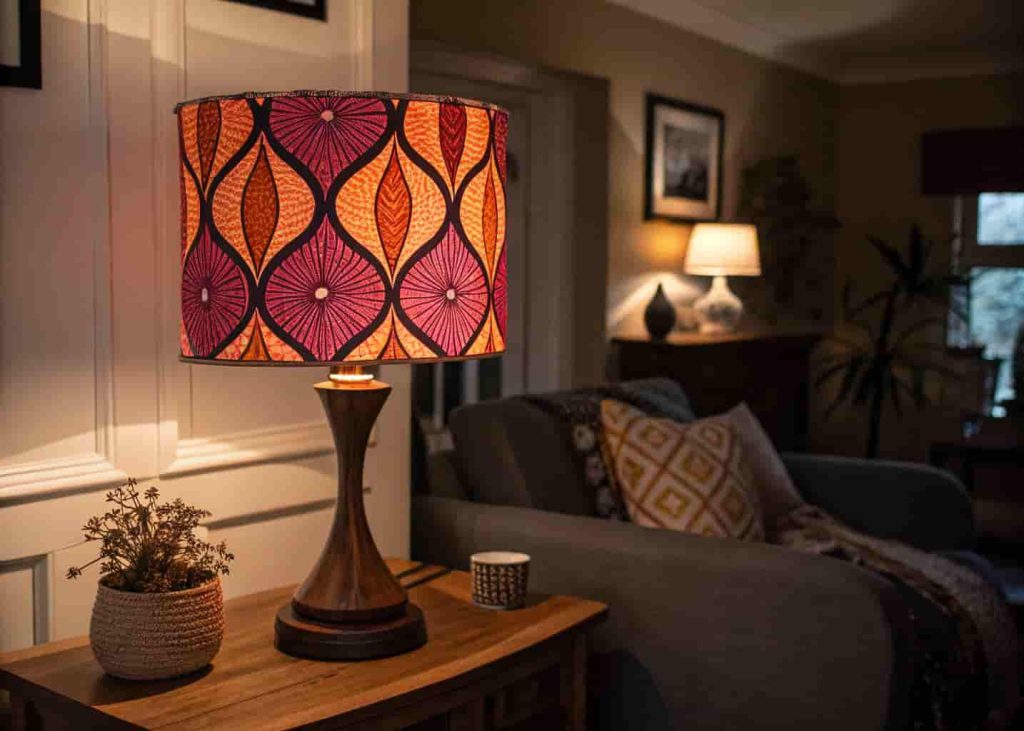
This one surprises people every time — and it’s genuinely one of the easiest DIY decor projects you can do at home. Take a plain drum lampshade and cover it with African wax print fabric. When the lamp is switched on, the light filters through those vivid patterns and throws the most beautiful coloured glow across the ceiling and walls. It’s warm and atmospheric in a way that no standard lampshade ever is. For a living room side table lamp or a hallway pendant, this is transformative. Choose a wax print in sunset tones — deep orange, magenta, yellow — for an evening lamp you want to feel cozy and intimate. For a home office or study, a cooler blue or green print gives off a calmer light that still feels unique and considered.
08 Kikoy Coastal Throws
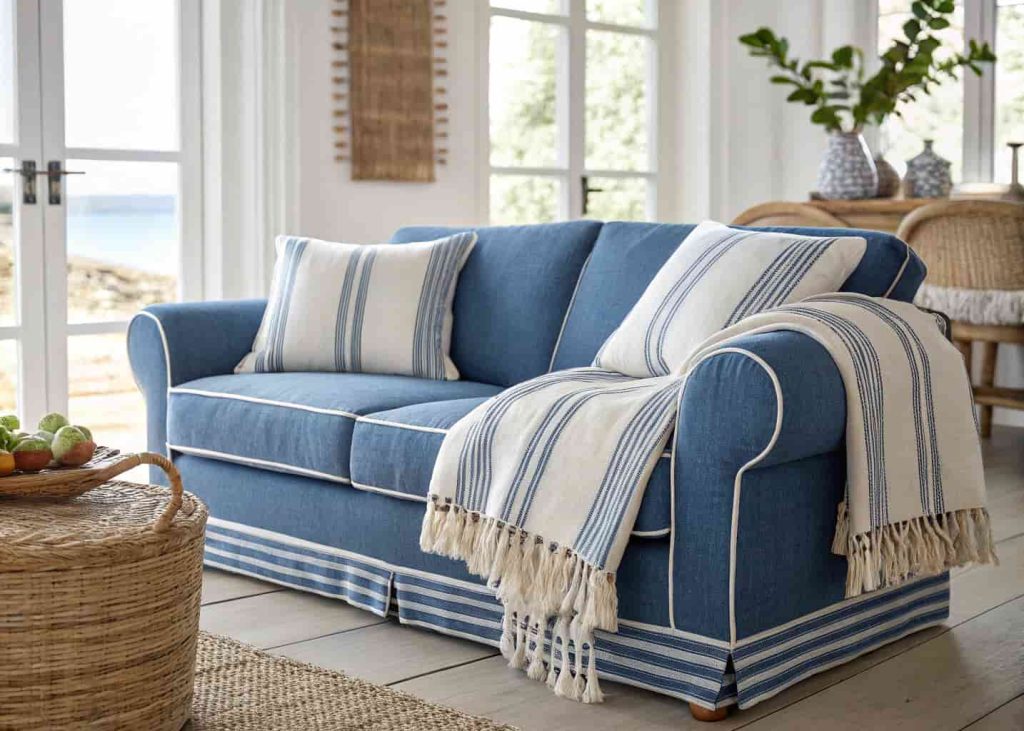
Kikoy is a woven cotton fabric from the Kenyan and Tanzanian coast — lighter than a Kanga, with a finer weave and beautiful fringed edges. Traditionally it was worn as a wrap by fishermen along the Swahili coast, but today it’s become one of the most versatile textiles you can have in a home. Draped over a sofa arm, it looks effortlessly casual. Thrown over a beach chair or a garden bench, it looks perfectly at home. Folded at the end of a bed, it adds a layer of texture without visual noise. Kikoys come in the most gorgeous stripes — cobalt blue and white, forest green and mustard, soft coral and sand. They wash brilliantly and last for years. If you want one textile that works in every room of the house, this is probably it.
09 Ndebele Beaded Textile Frame
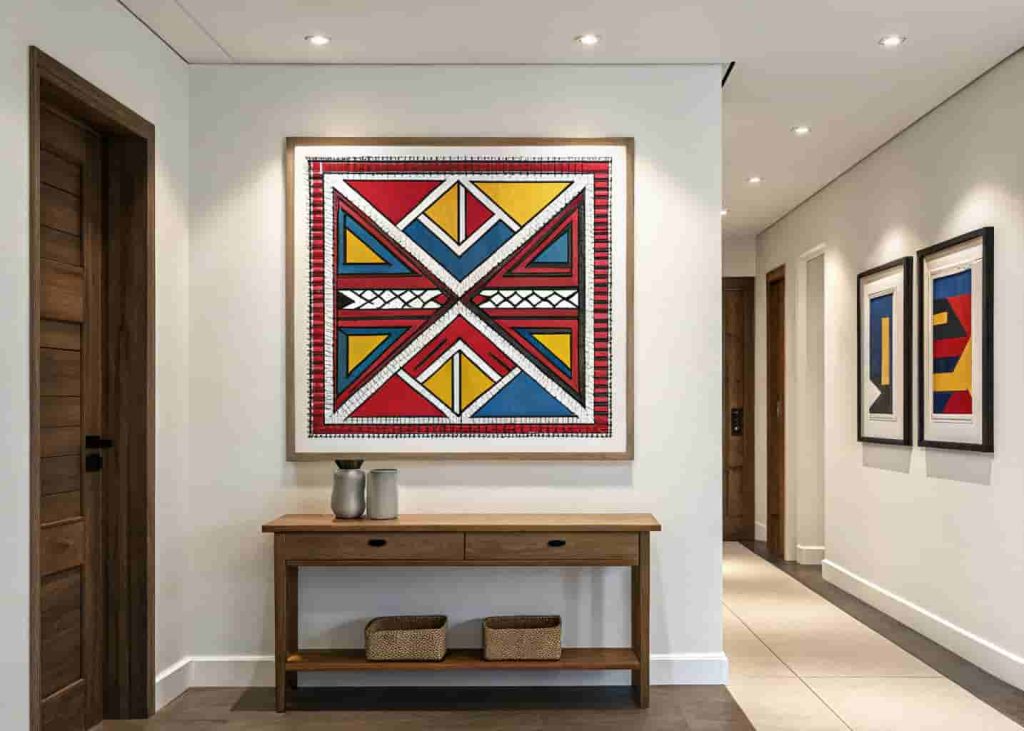
Ndebele beadwork from South Africa is some of the most iconic art on the continent. The geometric patterns — sharp triangles, rectangles, and bold colour blocks in red, white, blue, yellow, and green — look almost architectural. Traditionally, Ndebele women used beadwork to communicate social status and life milestones. As home decor, a framed Ndebele beaded textile panel is a statement piece that deserves a wall all to itself. Don’t clutter around it. Give it breathing room — maybe a small spotlight or picture light above it. In a hallway, above a console table, or as the centrepiece of a gallery wall, it draws the eye like nothing else. You’re not just decorating a wall; you’re preserving and honouring a living art tradition that has been passed down through generations of Ndebele women.
10 Mixed Textile Gallery Wall
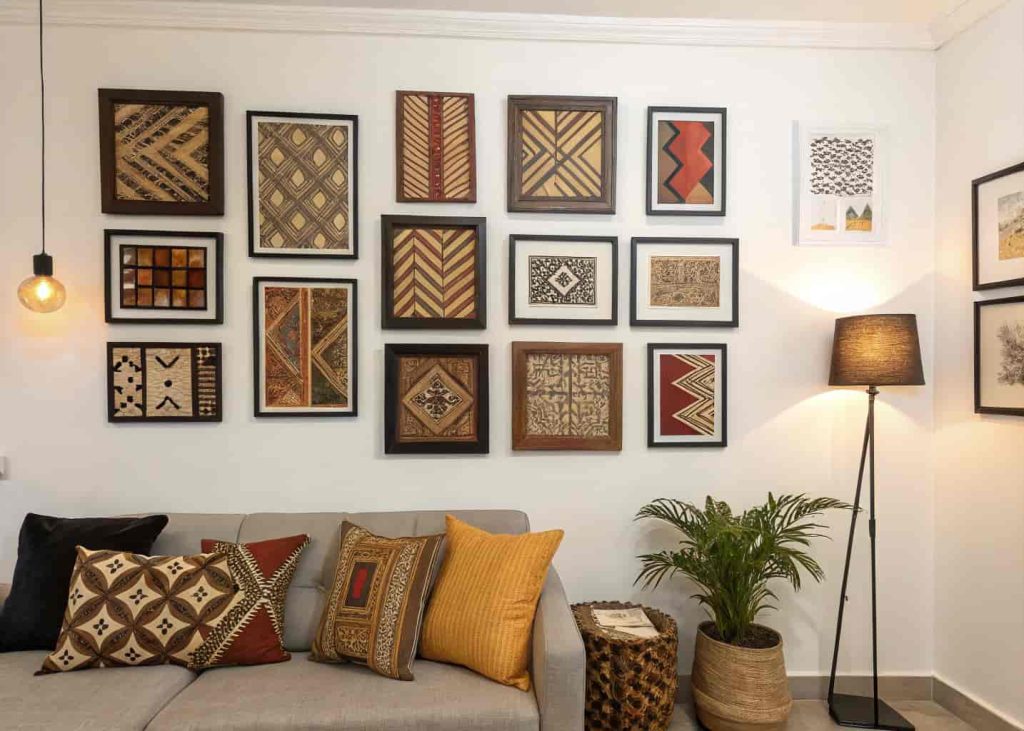
Once you fall in love with African textiles — and you will — you’ll start collecting. A mixed textile gallery wall is the perfect way to display multiple pieces together without it looking cluttered or chaotic. The key is framing. Get simple black or natural wood frames in consistent sizing — say 30x40cm and 50x70cm — and mount everything at consistent heights. Mix your mud cloth with a piece of Kente, a Kuba cloth square, and maybe a printed Ankara panel. The textiles are all busy and bold on their own, but in matching frames against a white or soft grey wall, they read as a curated collection rather than a jumble. Add a small spot lamp or two directed at the wall to bring out the textures in the evening. Your guests will think you hired an interior designer. You’ll know it just came from loving beautiful things.
Final Thoughts
African textiles are not a trend. They’re not a phase. They’re some of the oldest, most thoughtfully crafted fabrics in the world — each one carrying the fingerprints of the hands that made it and the culture that gave it meaning. Bringing them into a modern home doesn’t require a big budget or a complete redesign. Start with one thing. A pair of Kente pillows. A mud cloth runner. A single Ndebele frame. Then watch how the room changes around it.
The best homes tell a story. African textiles give yours one worth telling.