Introduction
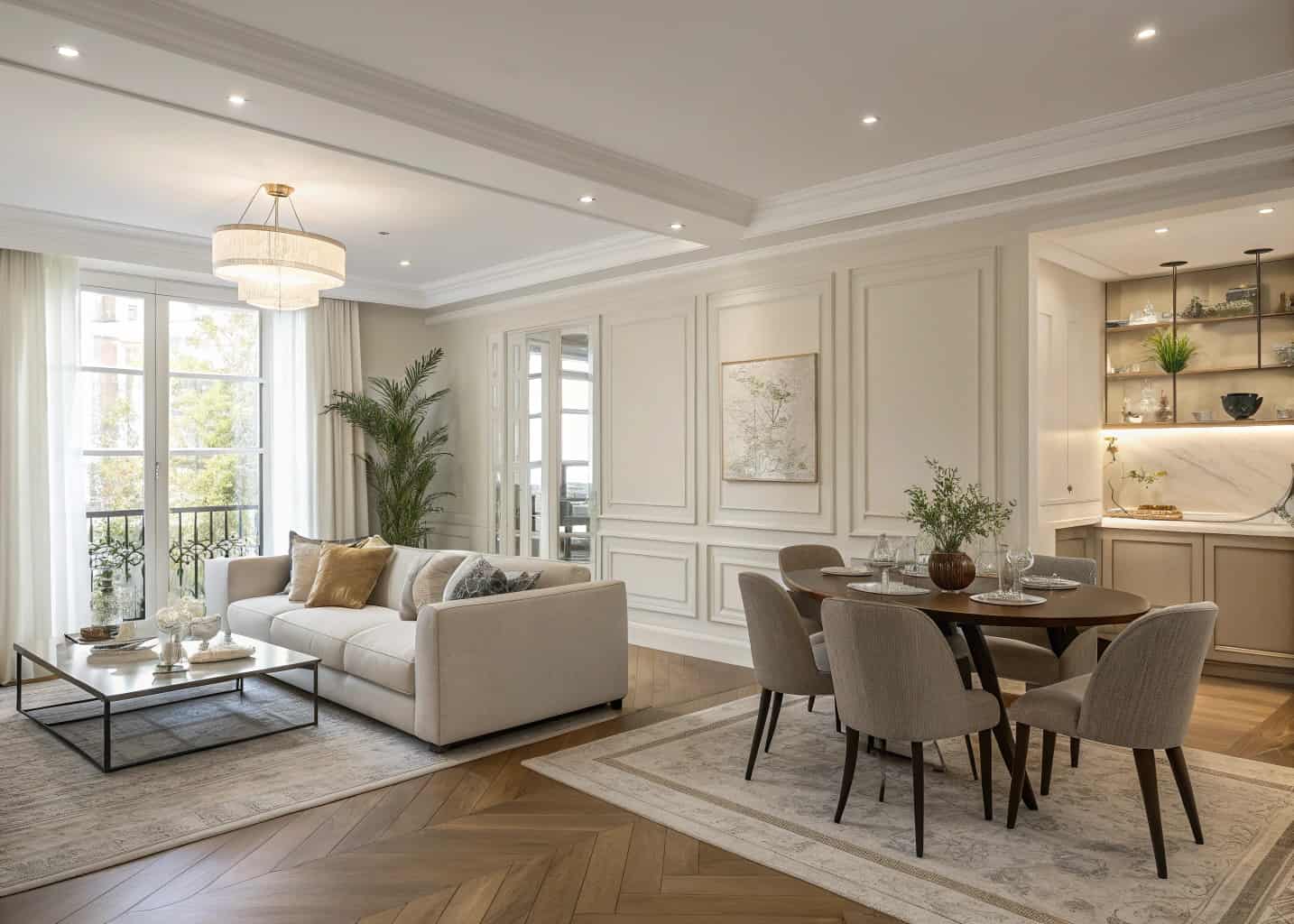
Creating a combined living and dining room is a smart way to make your home feel open, stylish, and functional. Many modern homes and apartments use open layouts where both spaces flow together naturally. The key is to design the area so it looks connected while still giving each section its own purpose. With the right furniture placement, colors, and decor choices, you can achieve an elegant look without making the space feel crowded. This guide will help you design a beautiful combined living and dining room using simple ideas that are easy to follow and perfect for everyday living.
1. Define Each Space Without Walls
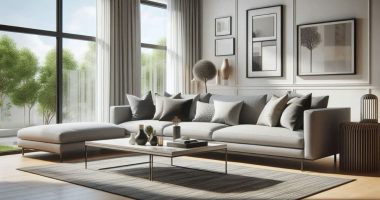
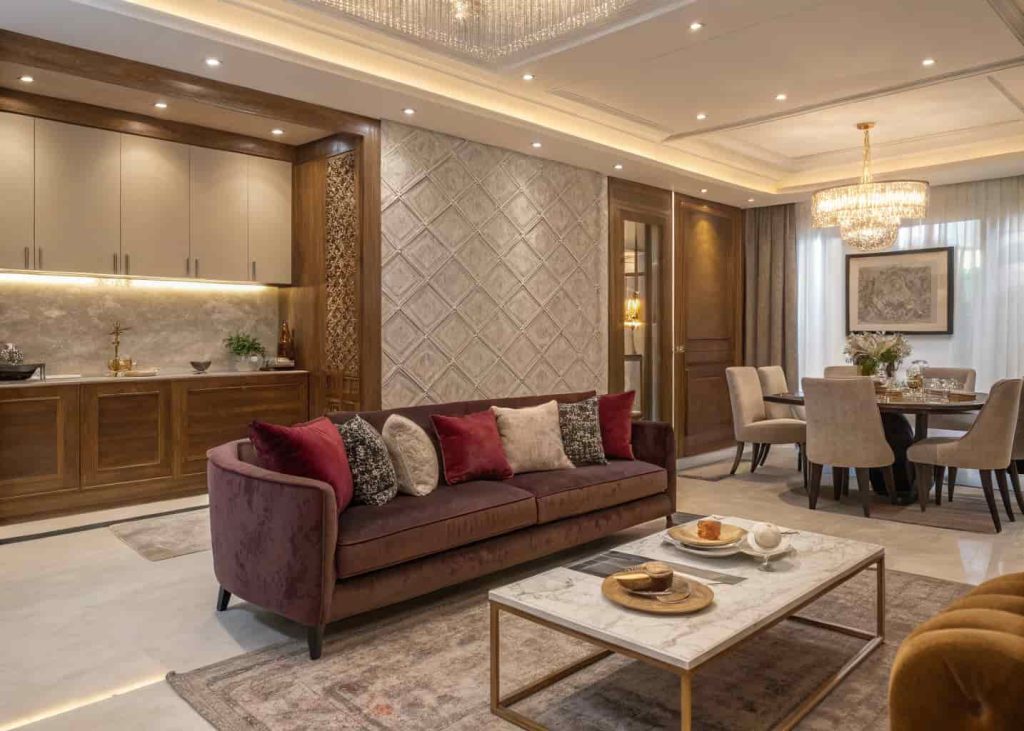
In a combined layout, you don’t need walls to separate areas. Instead, use rugs, lighting, or furniture placement to visually divide the living and dining zones. A large rug under the sofa helps define the living area, while a chandelier or pendant light above the dining table clearly marks the dining space. This creates organization while keeping the room open and airy. Try positioning the sofa with its back facing the dining area to naturally create separation. This simple trick makes the room feel structured while maintaining a smooth and elegant flow between both spaces.
2. Choose a Cohesive Color Palette
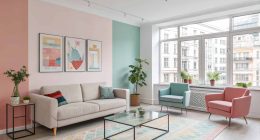
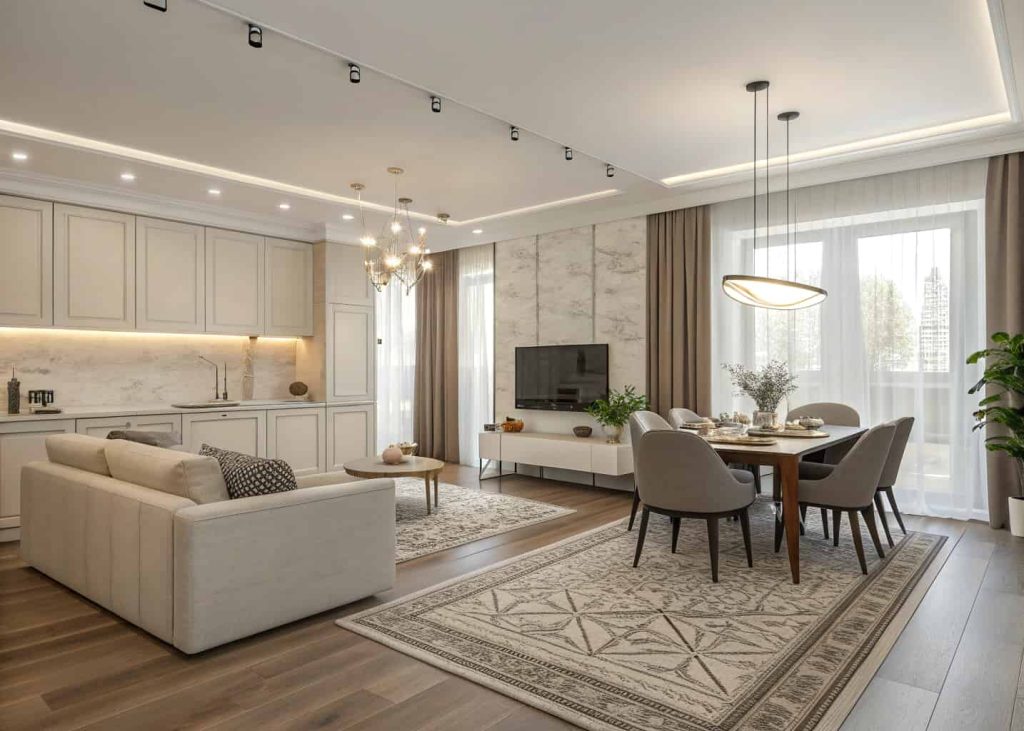
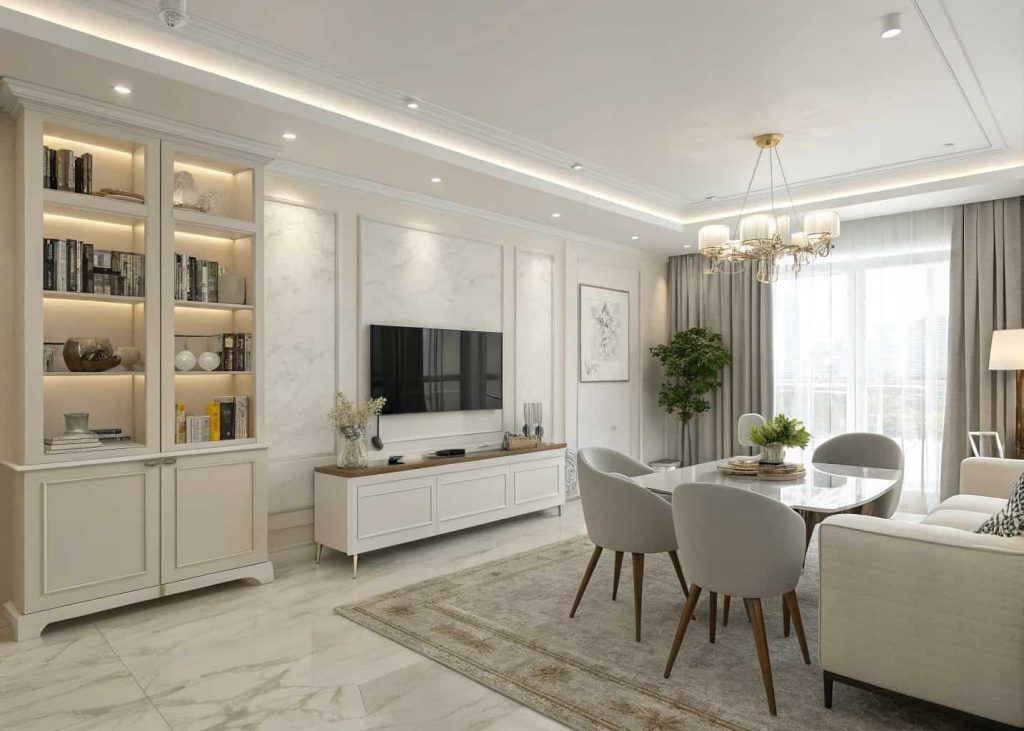
Using a consistent color palette helps both areas feel connected. Neutral shades like beige, cream, gray, or soft white work beautifully for elegant interiors. You can add warmth through wooden furniture or subtle accent colors like sage green, navy blue, or gold decor pieces. Avoid using completely different colors in each section because it can make the space look disconnected. Instead, repeat similar tones in cushions, curtains, or dining chairs. A cohesive palette creates harmony and makes the combined room appear larger, calmer, and professionally styled.
3. Select Furniture That Matches in Style
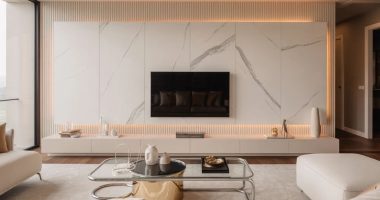
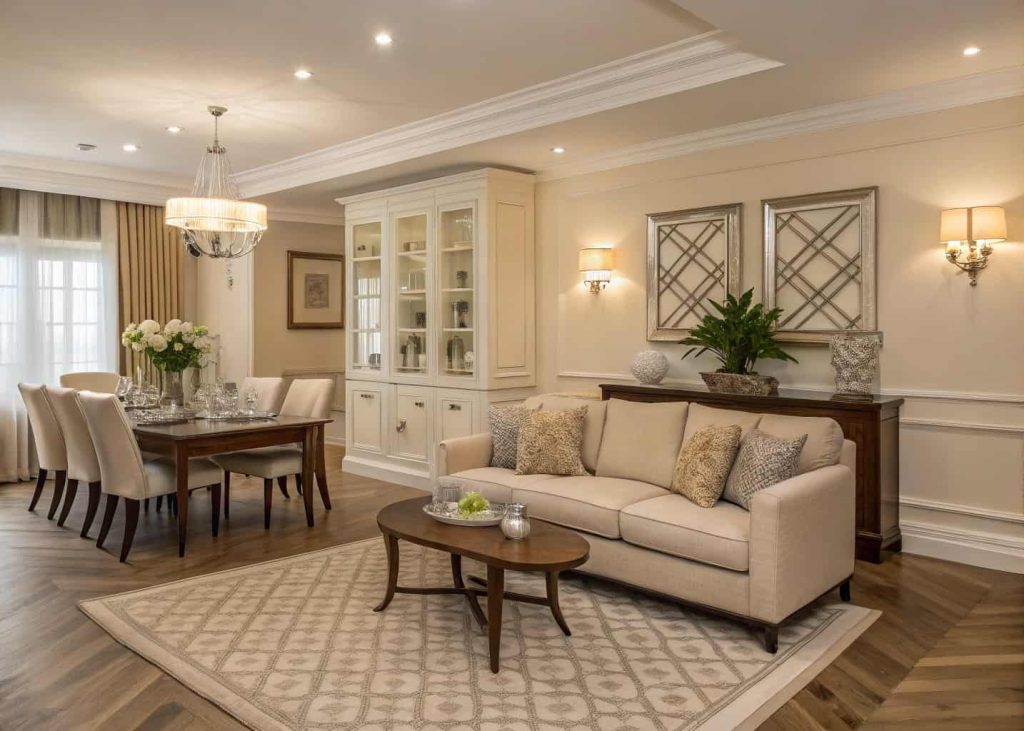
Furniture style plays a big role in creating elegance. Even if the living and dining furniture are different pieces, they should share a similar design language. For example, modern furniture pairs well with sleek dining chairs, while classic interiors look better with wooden tables and soft upholstery. Avoid mixing too many styles because it creates visual clutter. Choose furniture with similar finishes, shapes, or materials to maintain balance. Matching tones between coffee tables and dining tables also helps the room feel thoughtfully designed and visually connected.
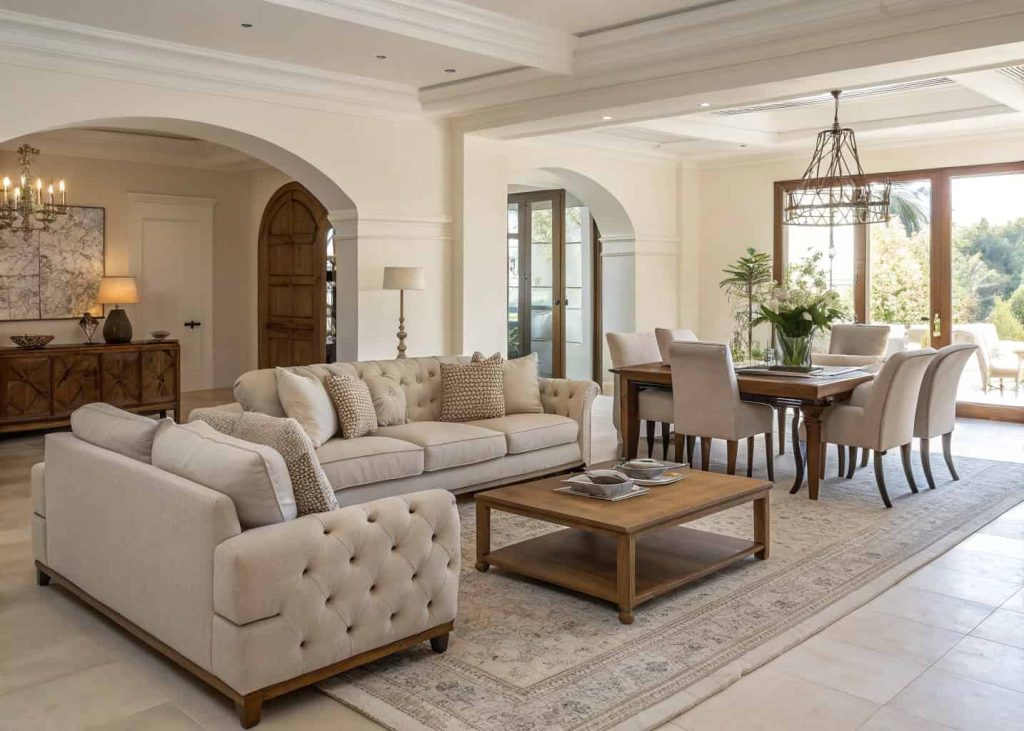
4. Use Lighting to Create Elegance
Lighting can completely transform a combined living and dining room. Layer different types of lighting such as ceiling lights, floor lamps, and table lamps to add depth. A statement chandelier above the dining table instantly creates a focal point, while warm lamps in the living area make the space cozy. Soft warm lighting works best for elegant interiors because it adds comfort and sophistication. Make sure both areas feel balanced in brightness so one side doesn’t overpower the other. Good lighting enhances textures, colors, and overall atmosphere beautifully.
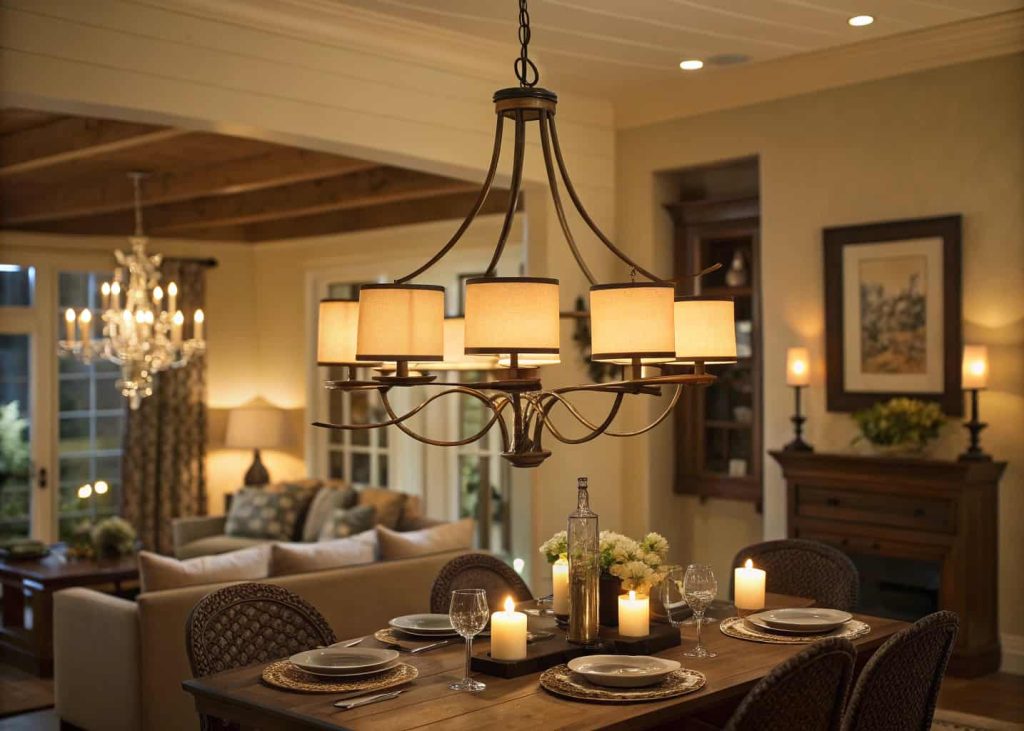
5. Add Decorative Elements That Connect Both Areas
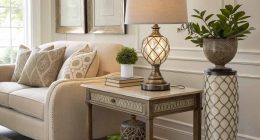
Decor is where your personality shines. Use artwork, mirrors, or decorative accessories that visually link both spaces together. For example, similar frames, matching metallic accents, or coordinated cushions and table decor can create harmony. Large wall art works well as a shared focal point between the living and dining areas. Plants are also a great addition because they add freshness and soften the overall look. Keep decorations balanced and avoid overcrowding surfaces to maintain an elegant and clean appearance throughout the room.
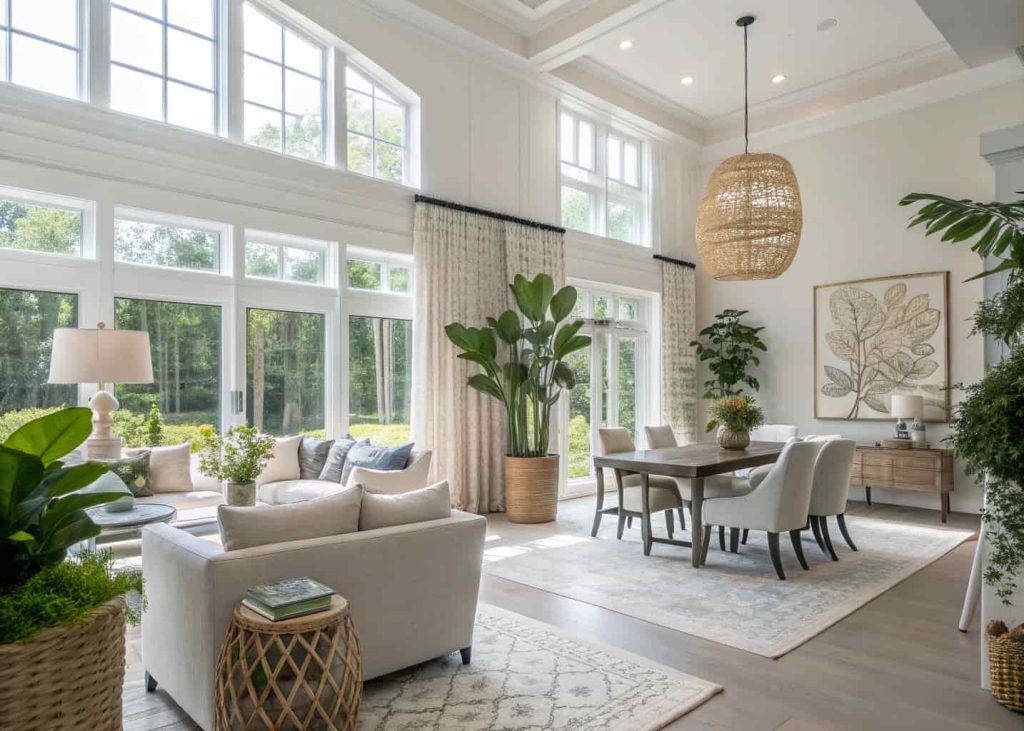
6. Optimize Layout for Easy Movement
An elegant room is not only beautiful but also practical. Leave enough walking space between furniture so movement feels natural and comfortable. Avoid placing large furniture pieces too close together. Ideally, maintain clear pathways between the sofa, coffee table, and dining chairs. A well-planned layout makes everyday activities easier and prevents the room from feeling cramped. Measure your space before arranging furniture to ensure balance and comfort. Functional design always enhances elegance because it supports real-life use without sacrificing style.
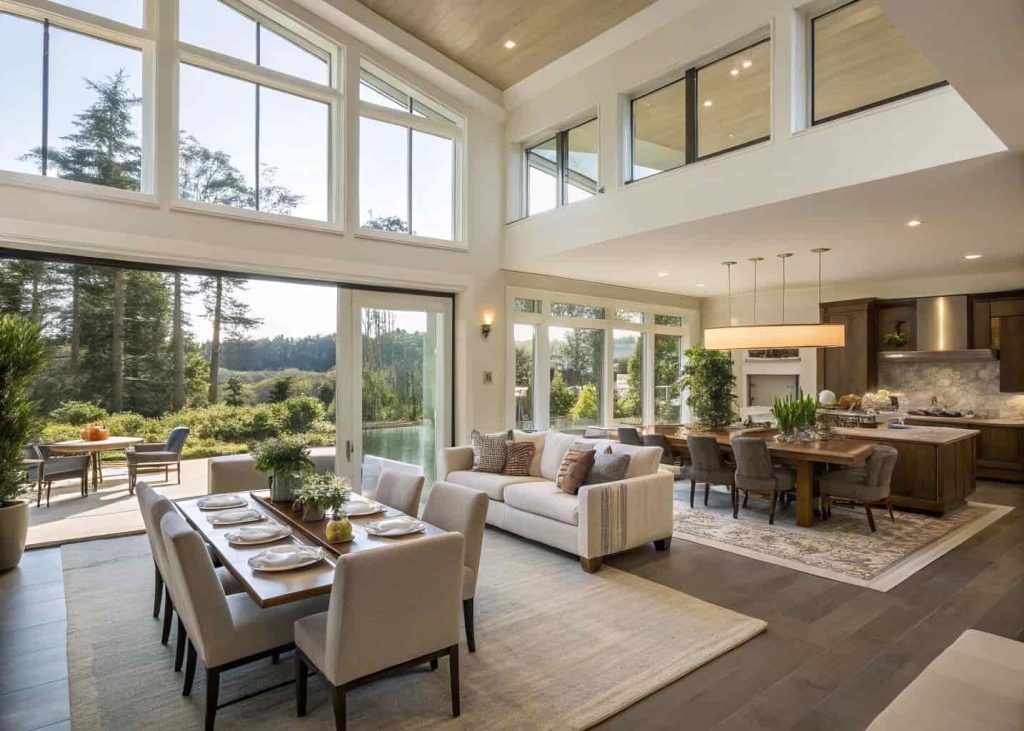
7. Use Textures to Add Warmth and Depth
Textures help make a combined room feel rich and inviting. Mix materials like soft fabrics, wood, glass, and metal to create visual interest. A plush rug, linen curtains, velvet cushions, or wooden dining furniture can instantly elevate the space. Texture adds elegance without needing too many colors or decorations. Even small details like woven baskets or ceramic vases can enhance the overall design. When textures are layered thoughtfully, the room feels cozy, stylish, and welcoming while maintaining a refined look.
8. Keep the Space Clutter-Free
Elegance often comes from simplicity. Keep surfaces clean and avoid overcrowding with too many decorative items. Use smart storage solutions like sideboards, cabinets, or hidden storage ottomans to organize everyday items. A tidy space looks more spacious and calming. Choose a few meaningful decor pieces instead of many small objects. Regularly editing your decor helps maintain balance and freshness in the room. A clutter-free environment allows furniture, lighting, and design details to stand out beautifully.
Conclusion
Designing an elegant combined living and dining room is all about balance, harmony, and smart planning. By defining spaces visually, choosing cohesive colors, matching furniture styles, and using thoughtful lighting, you can create a space that feels both functional and luxurious. Simple decor choices and a clutter-free layout make everyday living more enjoyable while keeping the room stylish. Whether your home is small or spacious, these ideas help you create a welcoming environment where relaxing and dining blend together perfectly in one beautiful open space.