Table of Contents Hide
- 1. Understanding Colorful Minimalism
- 2. Start with a Neutral Base
- 3. Choose a Limited Color Palette
- 4. Select Simple and Functional Furniture
- 5. Add Color Through Textiles
- 6. Keep Decor Minimal but Meaningful
- 7. Use Smart Storage to Avoid Clutter
- 8. Balance Color with Empty Space
- 9. Bring Natural Elements for Warmth
- 10. Create a Stylish Yet Calm Living Space
- 11. Use Lighting as a Design Element
- 12. Maintain Daily Organization Habits
- 13. Personalize the Space Thoughtfully
- Conclusion
1. Understanding Colorful Minimalism
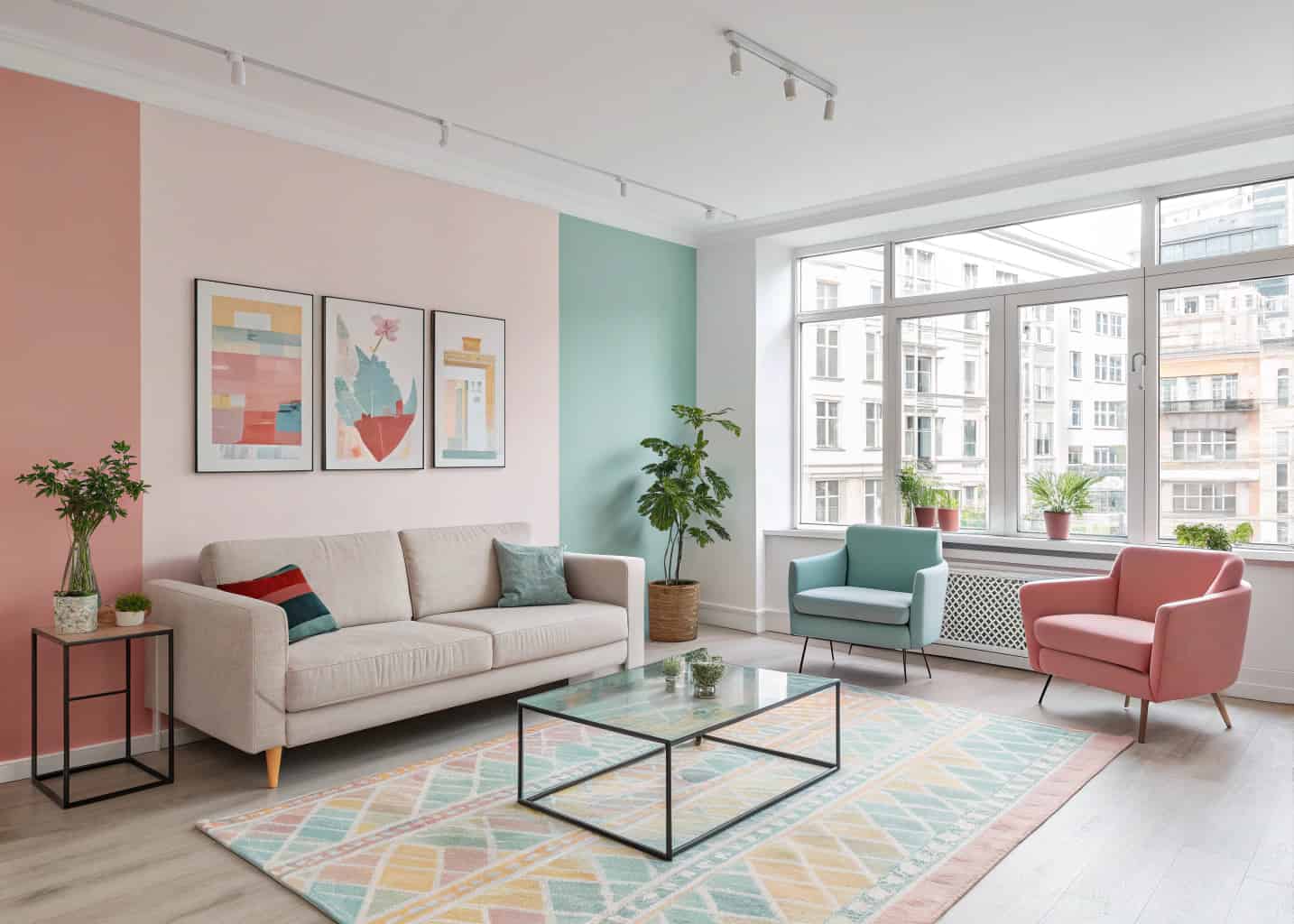
Colorful Minimalist Living Room Apartment with personality. Instead of using only neutral shades, this style introduces color while keeping the space clean and organized. In a living room apartment, the goal is to balance bright tones with minimal furniture and decor. Every item should have a purpose and contribute to the overall design. Too many colors or decorations can create visual chaos, so thoughtful choices are important. By mixing minimalism with controlled color accents, you can create a lively yet peaceful living space that feels modern, stylish, and comfortable without looking crowded.
2. Start with a Neutral Base
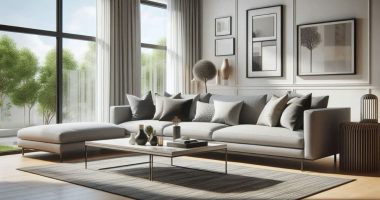
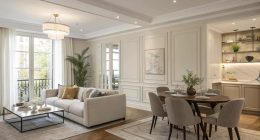
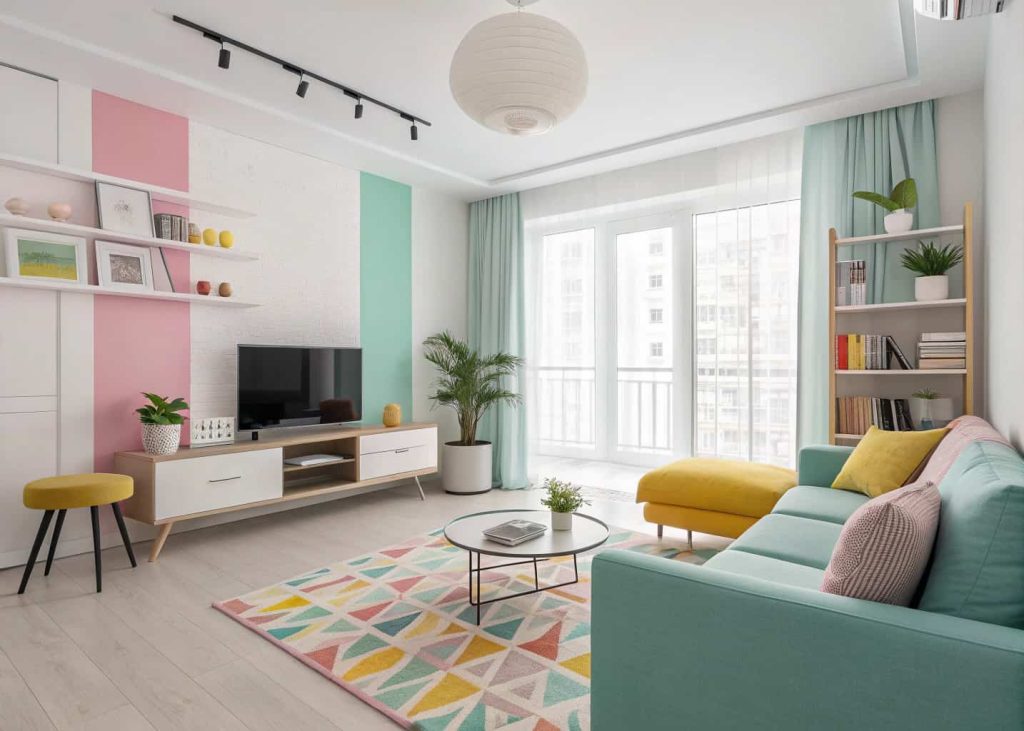
A neutral base helps colorful elements stand out without overwhelming the room. Use white, beige, or light gray walls and large furniture pieces as the foundation. Neutral backgrounds make apartments feel brighter and more spacious. Once the base is calm and simple, you can introduce color through smaller items like cushions, artwork, or rugs. This method keeps the design balanced and prevents cluttered visuals. A neutral base also allows you to change accent colors easily in the future without redesigning the entire living room.
3. Choose a Limited Color Palette
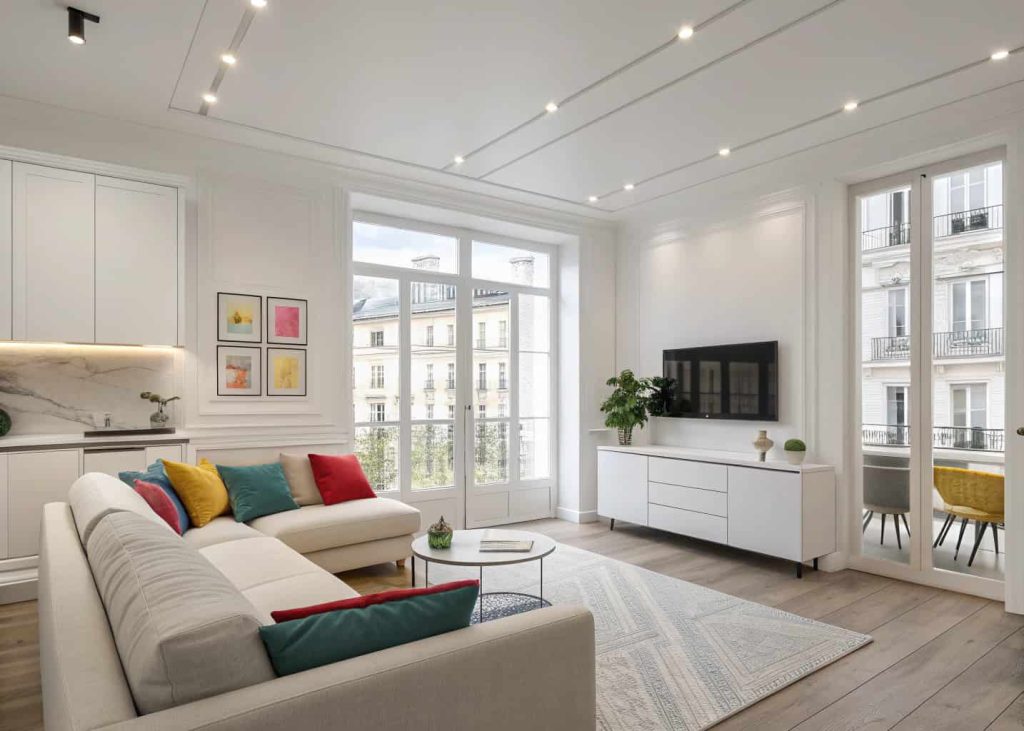
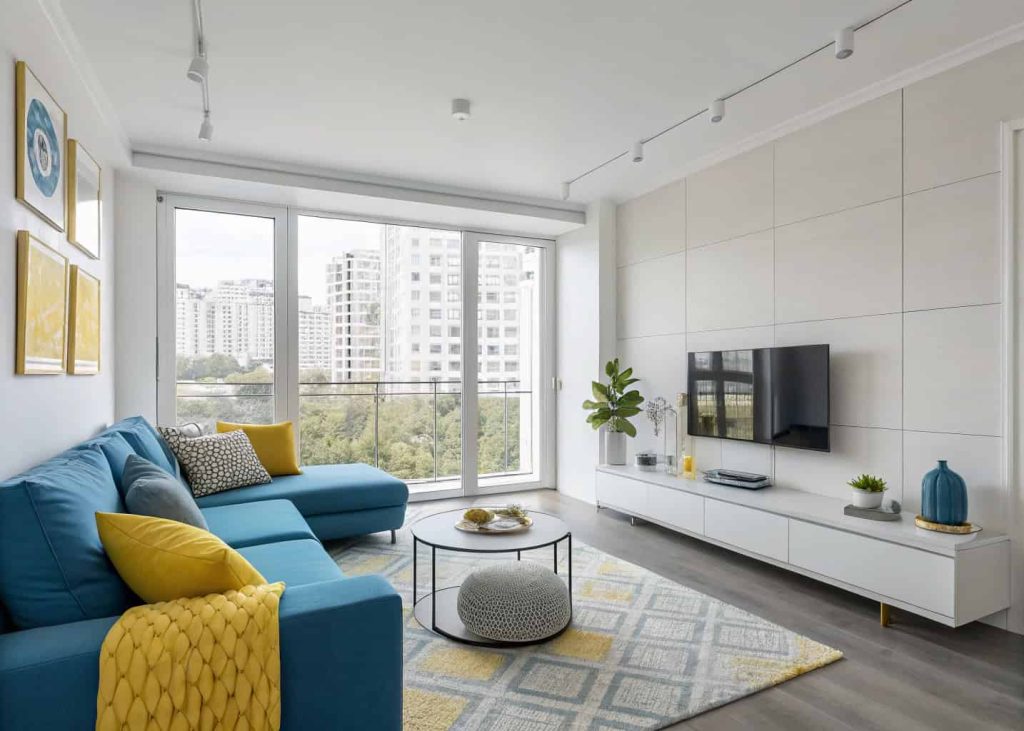
Using too many colors can make a minimalist space feel messy. Select two or three main colors and repeat them throughout the room. For example, combine soft blue, mustard yellow, and natural wood tones. Consistent colors create harmony and visual flow. You can apply these shades through textiles, artwork, or decorative objects. Keeping a limited palette helps maintain simplicity while still adding energy and personality. This approach ensures the living room remains colorful but controlled, supporting a clean minimalist aesthetic.
4. Select Simple and Functional Furniture
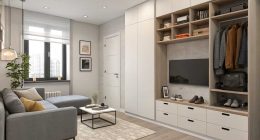
Furniture should remain simple even when the room includes color. Choose pieces with clean lines and modern shapes. A neutral sofa paired with colorful cushions works better than a heavily patterned couch. Multi-functional furniture like storage ottomans or compact coffee tables helps reduce clutter. Avoid oversized furniture that dominates small apartment spaces. Functional pieces keep the room practical while allowing color accents to shine. The goal is to let design feel light and open while still expressing creativity through carefully chosen details.
5. Add Color Through Textiles
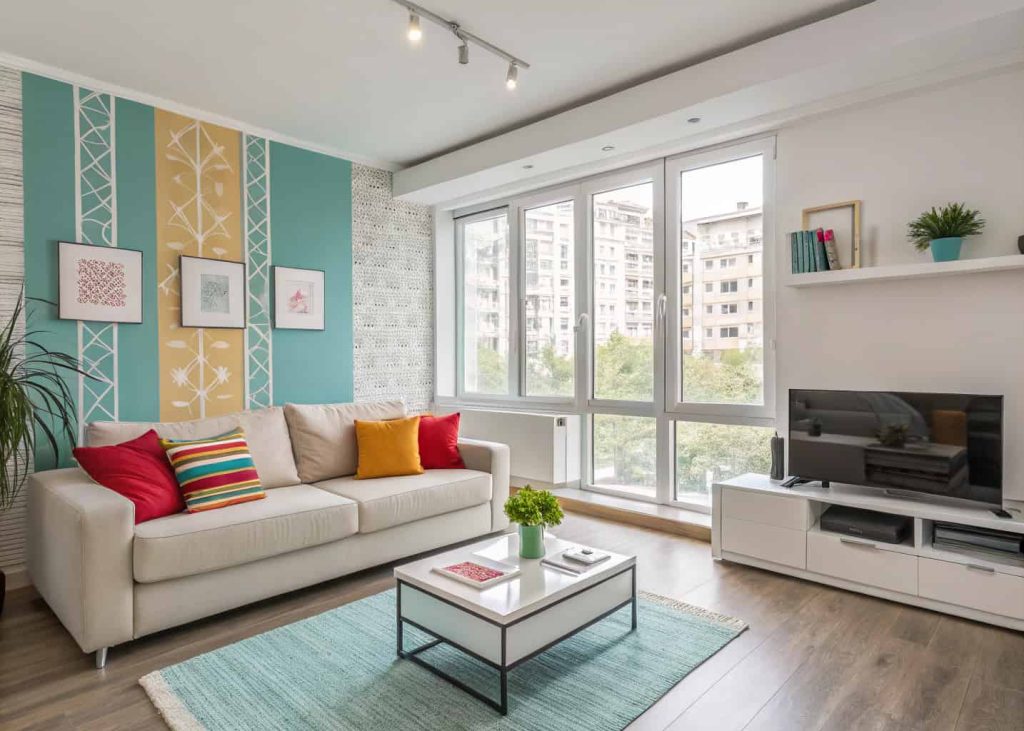
Textiles are one of the easiest ways to introduce color without permanent changes. Rugs, cushions, throws, and curtains can add warmth and personality while keeping the minimalist style intact. Choose simple patterns or solid colors instead of busy prints. Layering textures also adds visual interest without creating clutter. If you want to refresh the room later, textiles are easy to replace. This flexible approach keeps the living room vibrant while maintaining a calm and organized atmosphere.
6. Keep Decor Minimal but Meaningful
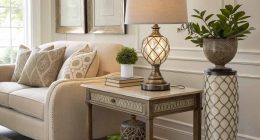
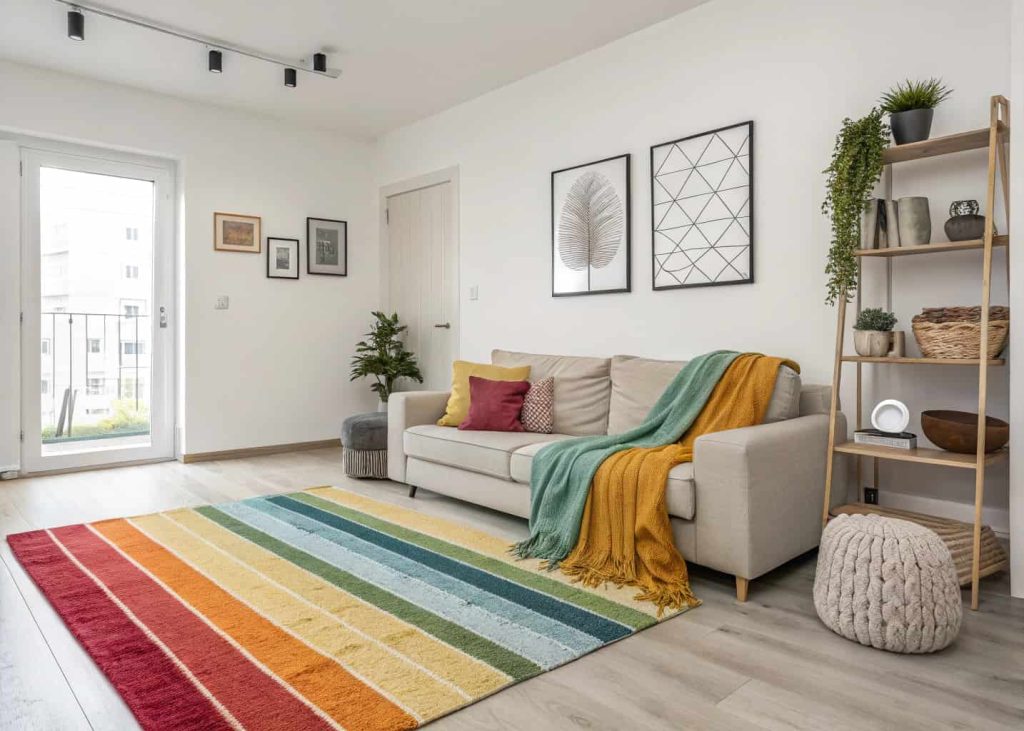
Decor should be limited but intentional. Instead of many small accessories, choose a few statement pieces such as abstract art, a bold vase, or a colorful lamp. Large artwork works better than multiple small frames because it reduces visual noise. Leave some surfaces empty to maintain balance. Minimal decoration helps colors stand out more effectively. Each item should add beauty or personal meaning, ensuring the space feels curated rather than crowded.
7. Use Smart Storage to Avoid Clutter
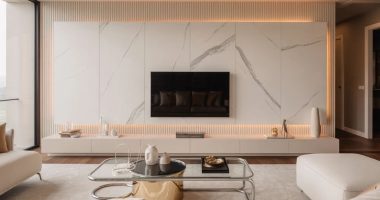
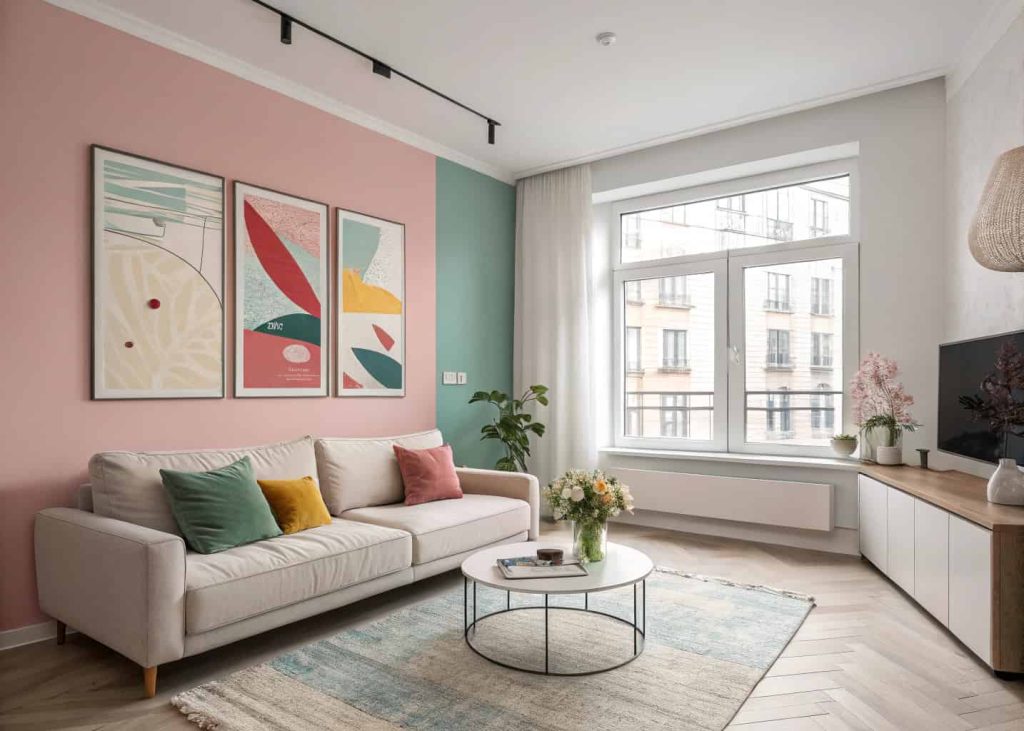
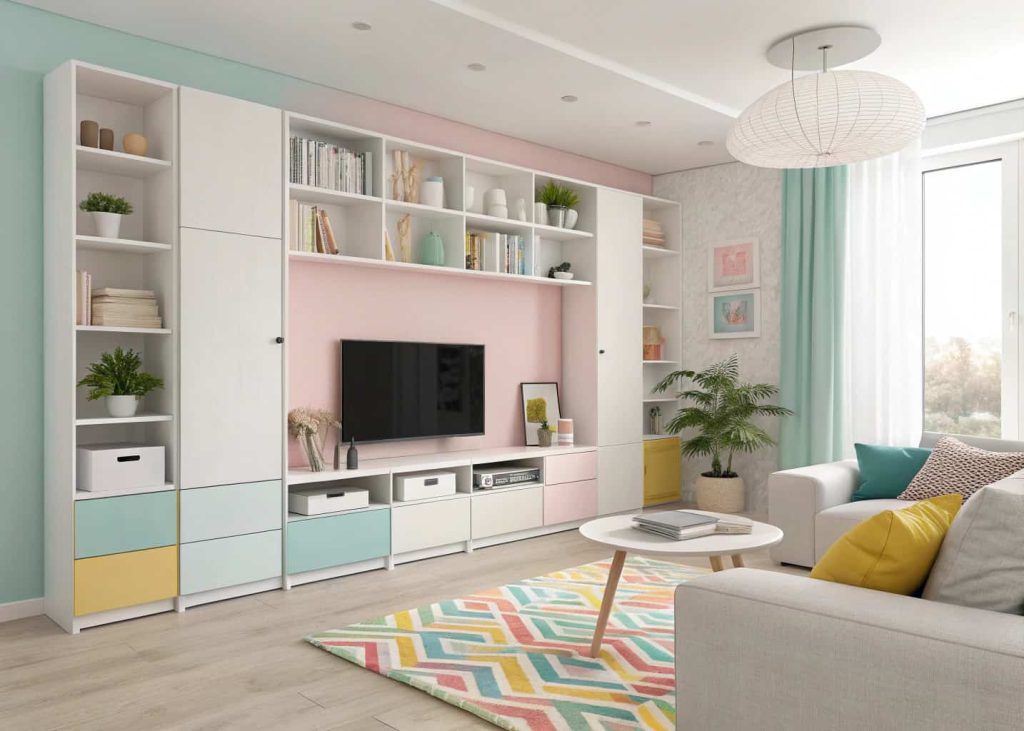
Hidden storage is essential for maintaining a minimalist look. Use cabinets, floating shelves, or storage furniture to organize everyday items. Keep visible surfaces clean and store unnecessary objects out of sight. Storage baskets in matching colors can blend with the decor while staying practical. Organized spaces automatically feel larger and calmer. When clutter disappears, colorful design elements become the main focus, enhancing both style and functionality in the apartment living room.
8. Balance Color with Empty Space
Empty space is an important part of minimalist design. Leaving areas open allows the eyes to rest and prevents the room from feeling crowded. Avoid filling every wall or corner with decor. Colorful accents should have breathing room around them so they stand out beautifully. Balanced spacing creates harmony and makes the apartment feel larger. This principle ensures that color enhances the design instead of overwhelming it.
9. Bring Natural Elements for Warmth
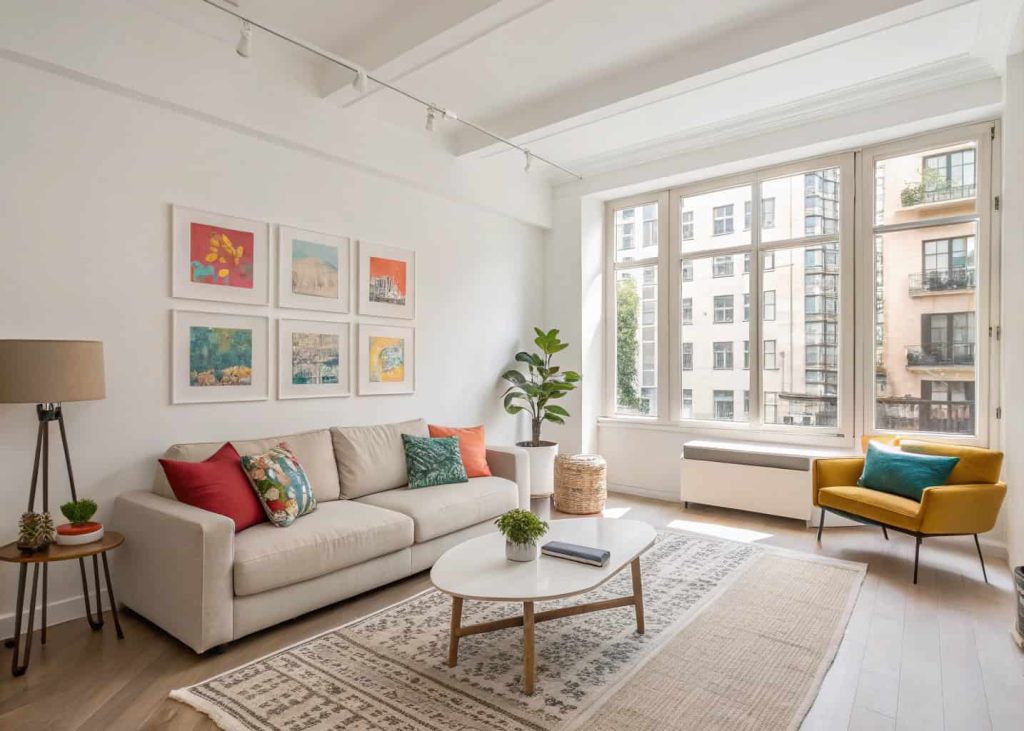
Natural materials help soften colorful interiors. Wooden furniture, indoor plants, and natural fabrics add warmth and balance bright tones. Plants introduce green color naturally without disrupting minimalism. Simple ceramic pots or woven textures complement modern apartments perfectly. These organic elements create a relaxing environment and connect the indoor space with nature. Combining color with natural materials makes the living room feel fresh, welcoming, and comfortable.
10. Create a Stylish Yet Calm Living Space
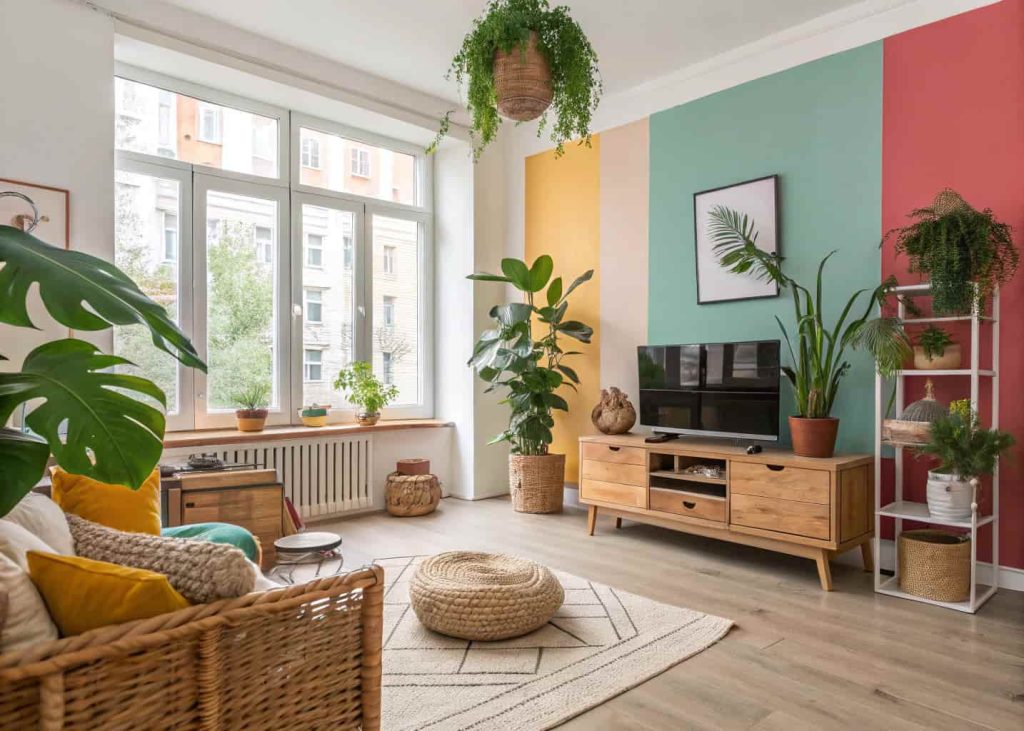
Designing a colorful minimalist living room apartment without clutter is about balance and intention. By starting with neutral foundations, limiting colors, choosing functional furniture, and keeping decor simple, you can create a lively yet peaceful environment. Minimalism does not mean removing personality; it means highlighting what truly matters. With thoughtful design choices, your apartment living room can feel bright, modern, and spacious while staying organized and stress-free for everyday living.