Table of Contents Hide
- Introduction: Making Small Open Spaces Work Beautifully
- Choose a Light and Neutral Color Palette
- Define Spaces with Smart Furniture Placement
- Use Multi-Functional Furniture
- Add Rugs to Define Each Zone
- Maximize Vertical Space with Storage
- Use Lighting to Create Balance
- Keep Furniture Sleek and Proportional
- Incorporate Mirrors for a Spacious Feel
- Add Greenery for Freshness and Life
- Maintain a Minimal yet Personal Style
- Conclusion: Small Space, Modern Living
Introduction: Making Small Open Spaces Work Beautifully
Modern Small Living and Dining Room areas into one open-concept space, especially in apartments and compact houses. While this layout saves space, designing it correctly is essential to avoid a crowded or unorganized look. A well-planned small living and dining room can feel stylish, functional, and surprisingly spacious. By focusing on smart furniture choices, cohesive décor, and clever layout strategies, you can create a balanced environment that supports both relaxation and dining. These modern ideas will help you transform your small open space into a comfortable and visually appealing area perfect for everyday living and entertaining guests.
Choose a Light and Neutral Color Palette
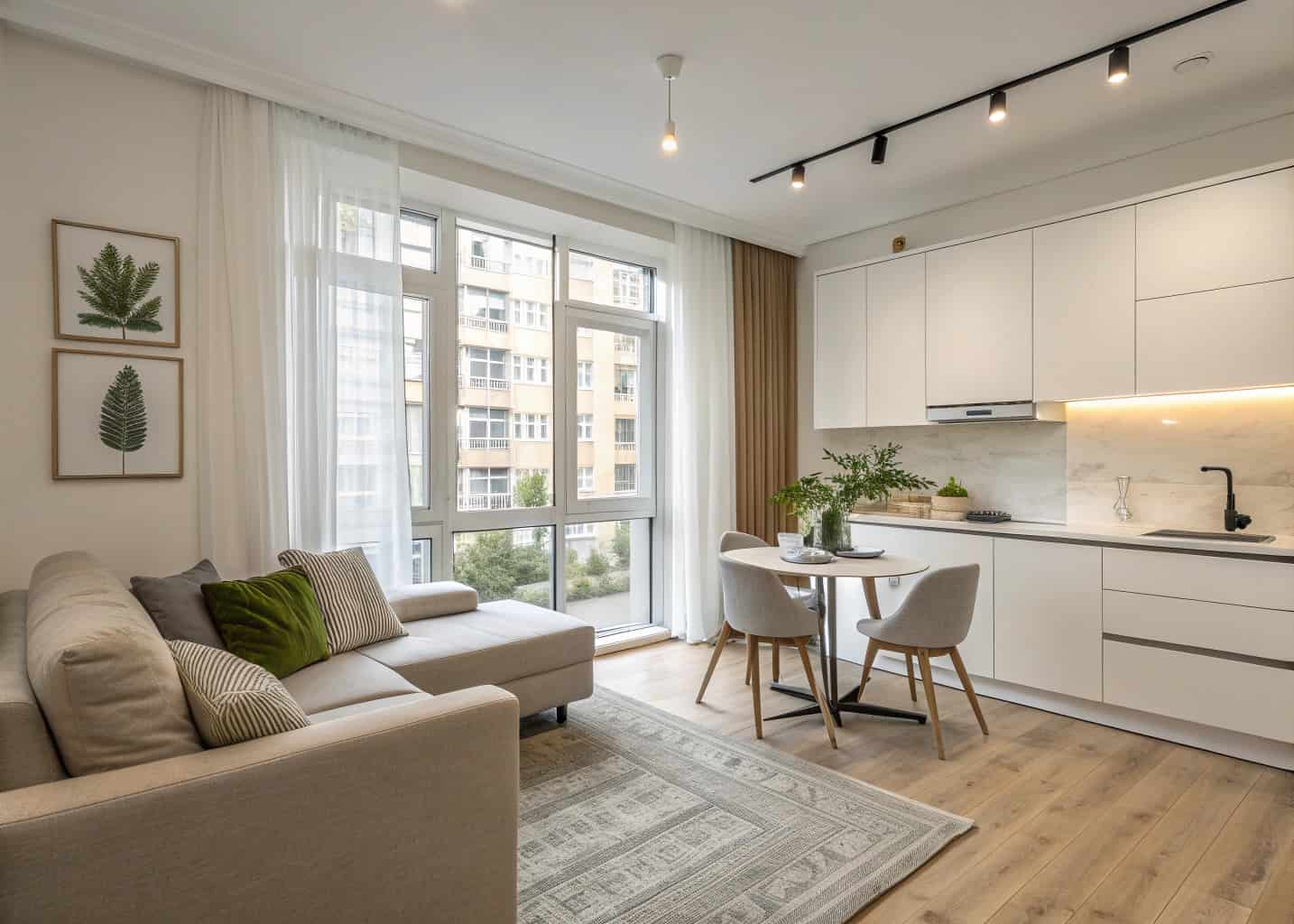
Light colors are one of the most effective ways to make a small open-concept space feel larger. Shades like white, beige, soft gray, and warm neutrals reflect light and create an airy atmosphere. Using the same palette across both living and dining areas helps maintain visual continuity. You can introduce subtle accents through cushions, artwork, or table décor without overwhelming the space. Avoid too many contrasting colors, as they can visually divide the room. A calm and cohesive color scheme allows your small living and dining area to feel seamless, modern, and inviting.
Define Spaces with Smart Furniture Placement
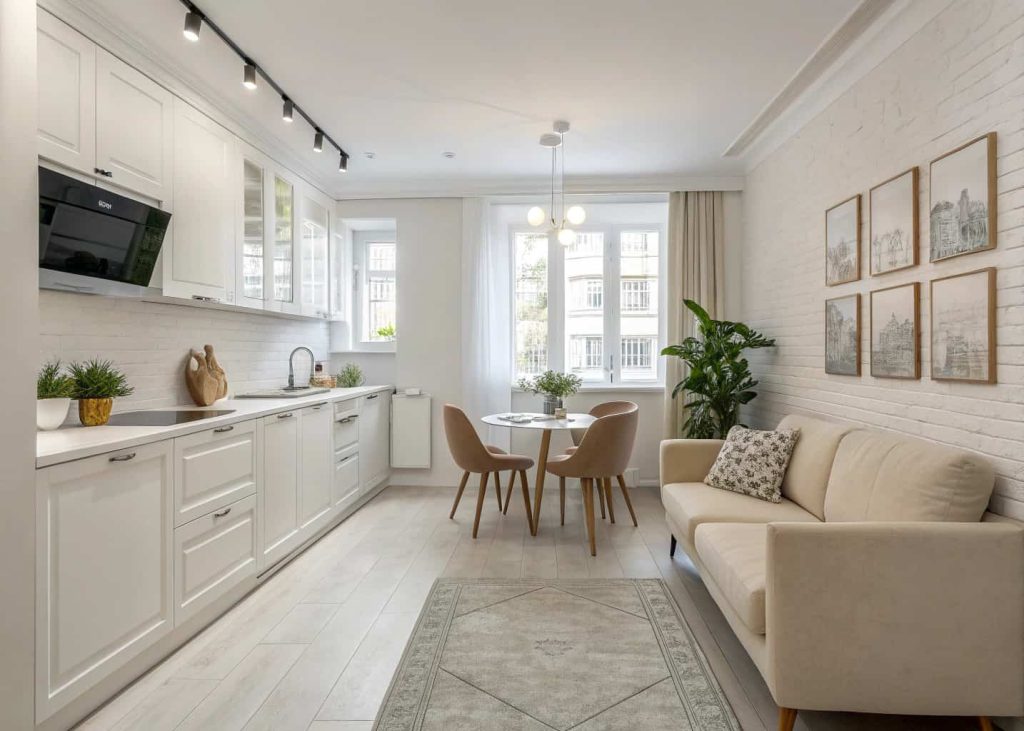
In an open layout, furniture placement acts as a natural divider between areas. Position your sofa so its back faces the dining table, creating a clear boundary without adding walls. A slim console table behind the sofa can further separate zones while adding storage or décor space. Keep furniture scaled appropriately for small rooms to maintain easy movement. Thoughtful placement ensures both areas feel distinct yet connected, helping your open-concept layout remain functional and visually organized without sacrificing openness or flow.
Use Multi-Functional Furniture
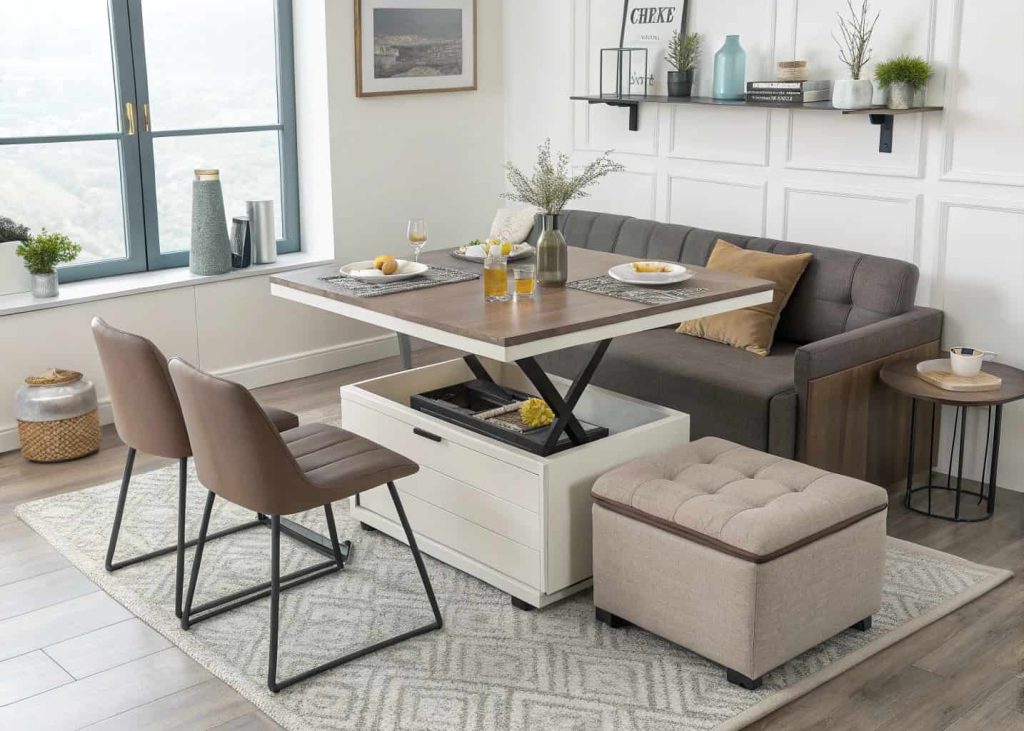
Multi-functional furniture is essential for modern small spaces. Choose pieces that serve more than one purpose, such as storage ottomans, extendable dining tables, or benches with hidden compartments. Nesting tables and foldable chairs offer flexibility when guests visit while saving space daily. Furniture that adapts to your needs keeps the room uncluttered and efficient. Modern design focuses on practicality without sacrificing style, allowing you to maximize every inch while maintaining a clean and sophisticated look throughout your living and dining combo.
Add Rugs to Define Each Zone
Area rugs help visually organize small open spaces while adding warmth and texture. Place a rug under the living room seating area and another beneath the dining table to anchor each section. Choose rugs that complement each other in color or pattern to maintain harmony. Properly sized rugs make furniture arrangements feel intentional and grounded. Besides improving comfort, rugs also enhance acoustics, making the space feel cozy. This simple design trick clearly separates functions while preserving the seamless feel of an open-concept layout.
Maximize Vertical Space with Storage
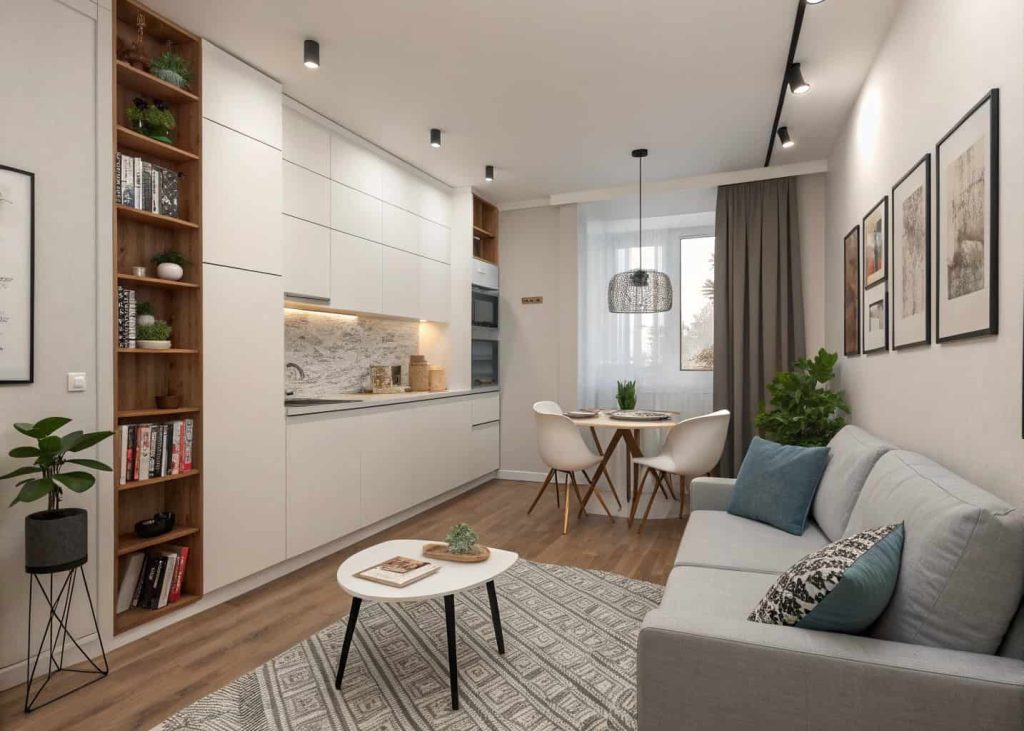
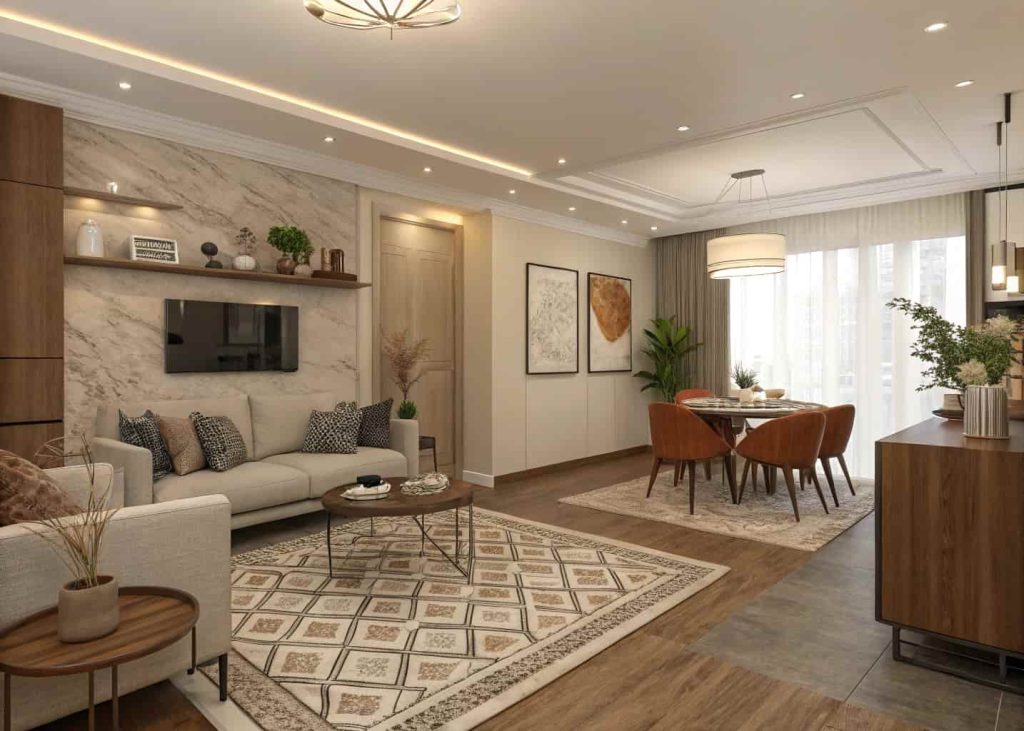
When floor space is limited, vertical storage becomes your best design solution. Install floating shelves, tall cabinets, or wall-mounted storage units to keep items organized without crowding the room. Use shelves for books, plants, or decorative objects that add personality while maintaining functionality. Vertical storage draws the eye upward, making ceilings appear higher and the room feel larger. Keeping clutter off surfaces helps maintain a clean and modern appearance, which is essential for small open-concept living and dining areas.
Use Lighting to Create Balance
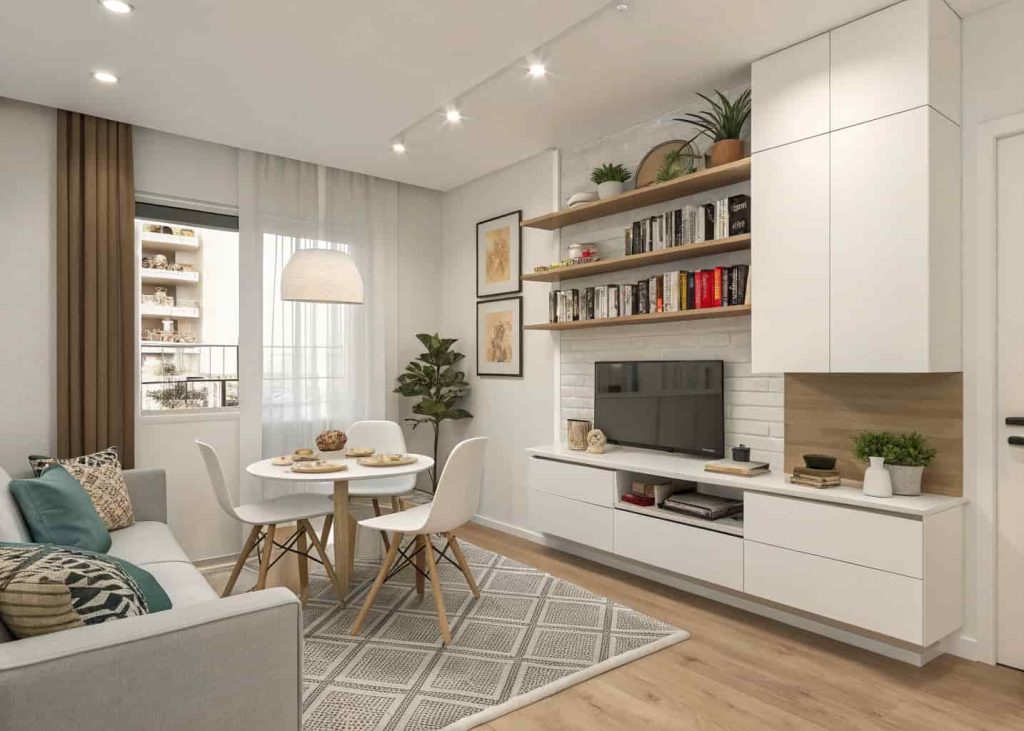
Lighting plays a key role in defining zones while keeping the overall design cohesive. Hang a modern pendant or chandelier above the dining table to highlight the dining area, and use floor or table lamps to create a cozy living space. Choose lighting fixtures with similar finishes or styles to maintain consistency. Layered lighting adds depth and warmth, preventing the space from feeling flat. Proper illumination enhances both functionality and atmosphere, helping your small open-concept layout feel welcoming day and night.
Keep Furniture Sleek and Proportional
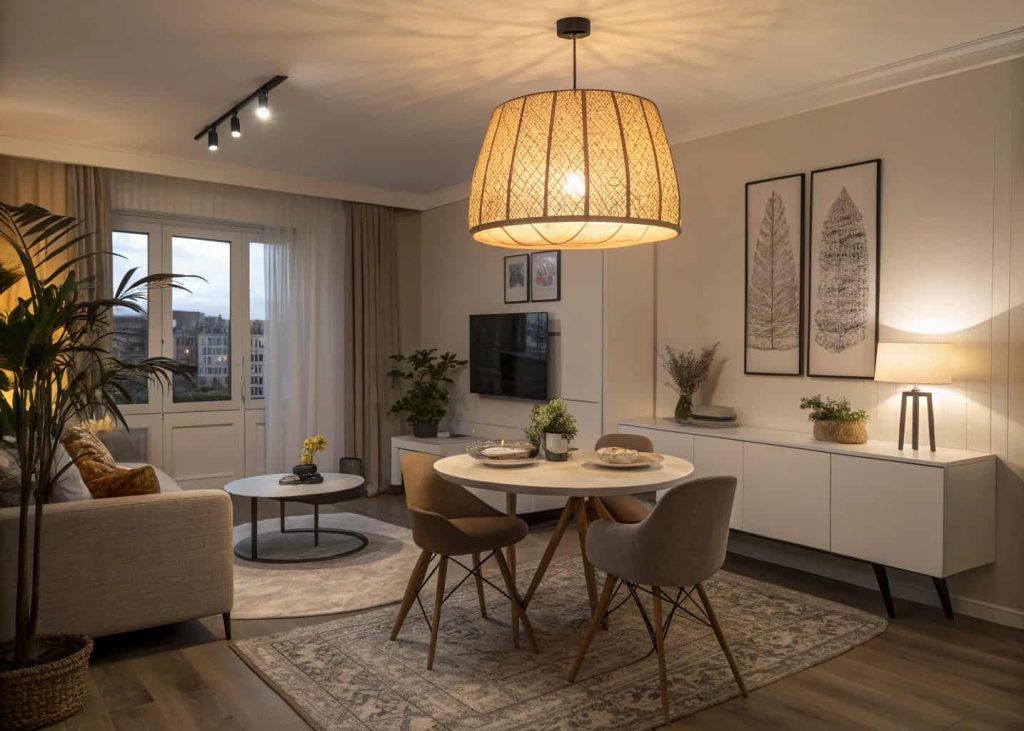
Oversized furniture can overwhelm a small living and dining combo, so choose sleek, modern pieces with clean lines. Furniture with exposed legs creates visual openness by allowing light to pass underneath. A compact sofa, slim dining chairs, and a round or narrow dining table help maintain balance. Avoid bulky designs that block sightlines or movement. Proportionate furniture ensures comfort while preserving spaciousness, allowing your open-concept layout to feel airy and stylish instead of cramped.
Incorporate Mirrors for a Spacious Feel
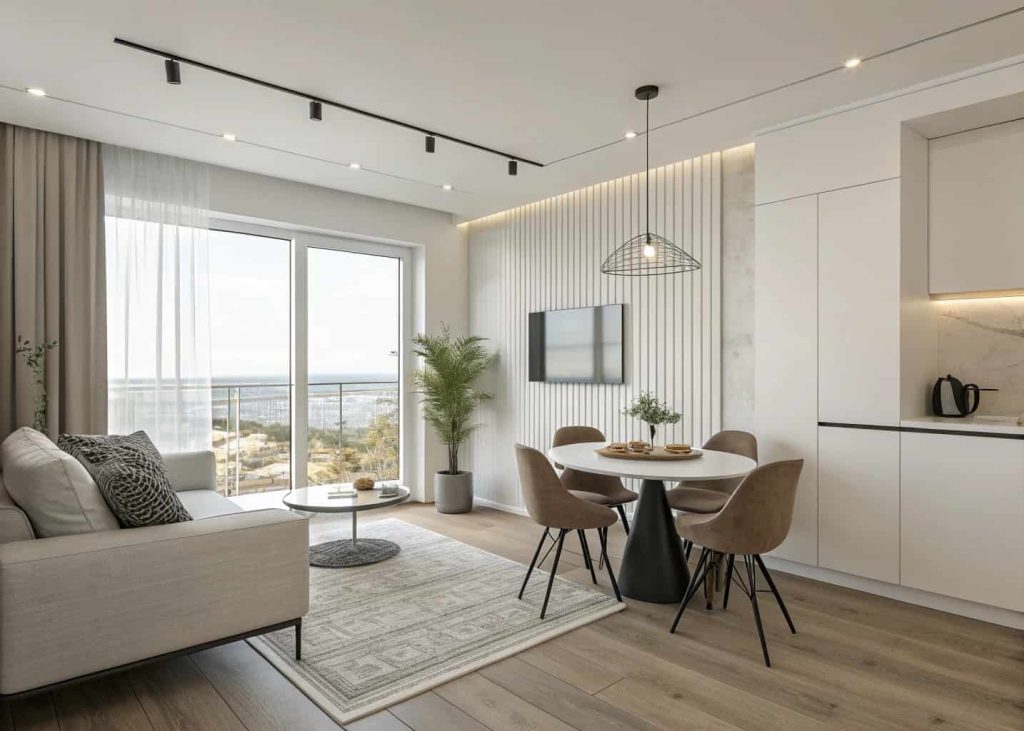
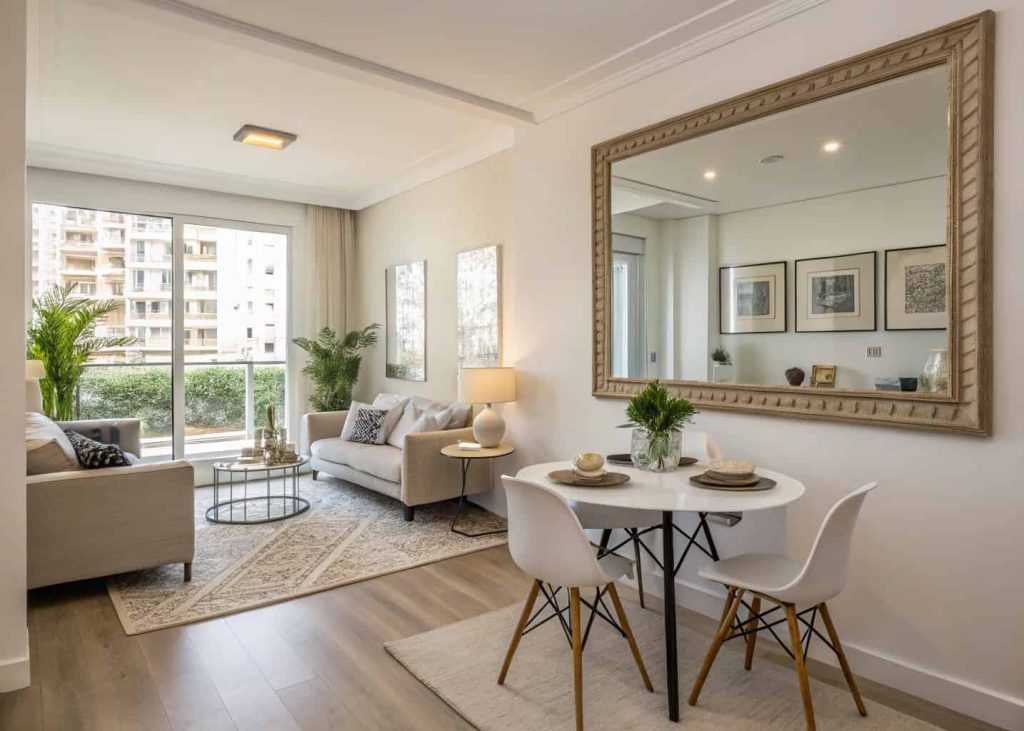
Mirrors are a powerful design tool for small spaces because they reflect light and visually expand the room. Place a large mirror on a wall opposite a window or near the dining area to enhance brightness. Mirrored décor or reflective surfaces like glass tables can also help create openness. This technique adds elegance while making the layout appear larger than it actually is. Strategically placed mirrors improve both functionality and style, making your small living and dining room feel more expansive and modern.
Add Greenery for Freshness and Life
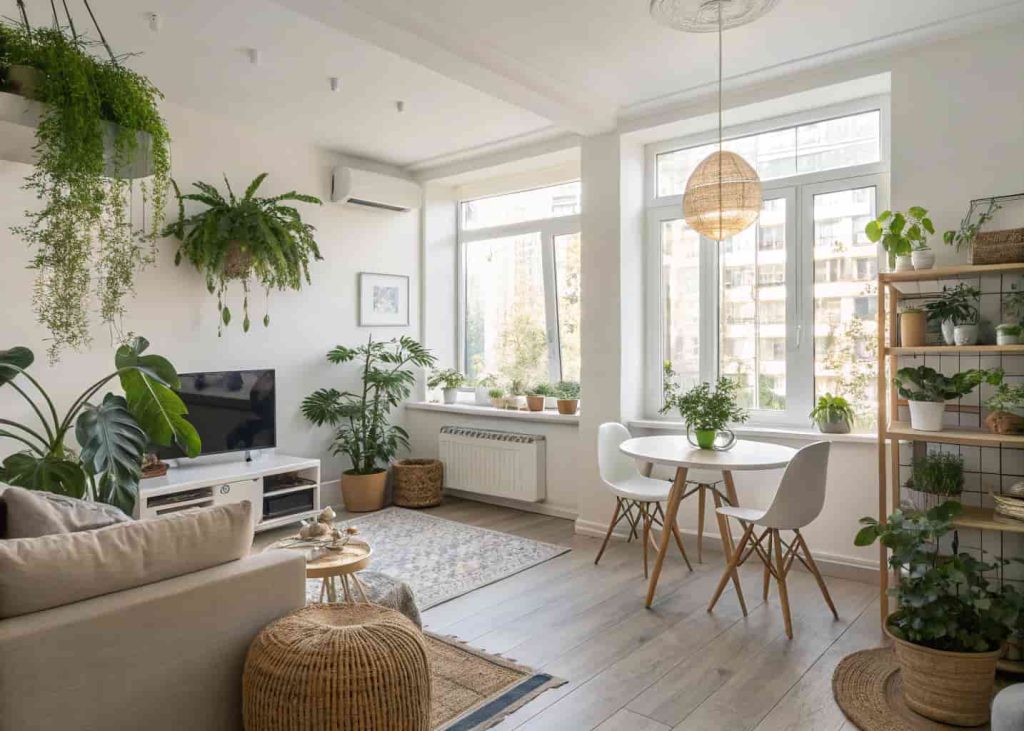
Plants bring energy and warmth into a small open-concept space without taking up much room. Use small potted plants, hanging planters, or a tall corner plant to connect both areas visually. Greenery softens modern interiors and introduces natural texture, making the space feel more inviting. Choose low-maintenance indoor plants if you prefer easy care. Adding natural elements balances furniture and décor, creating a refreshing environment that enhances comfort while maintaining a modern aesthetic.
Maintain a Minimal yet Personal Style
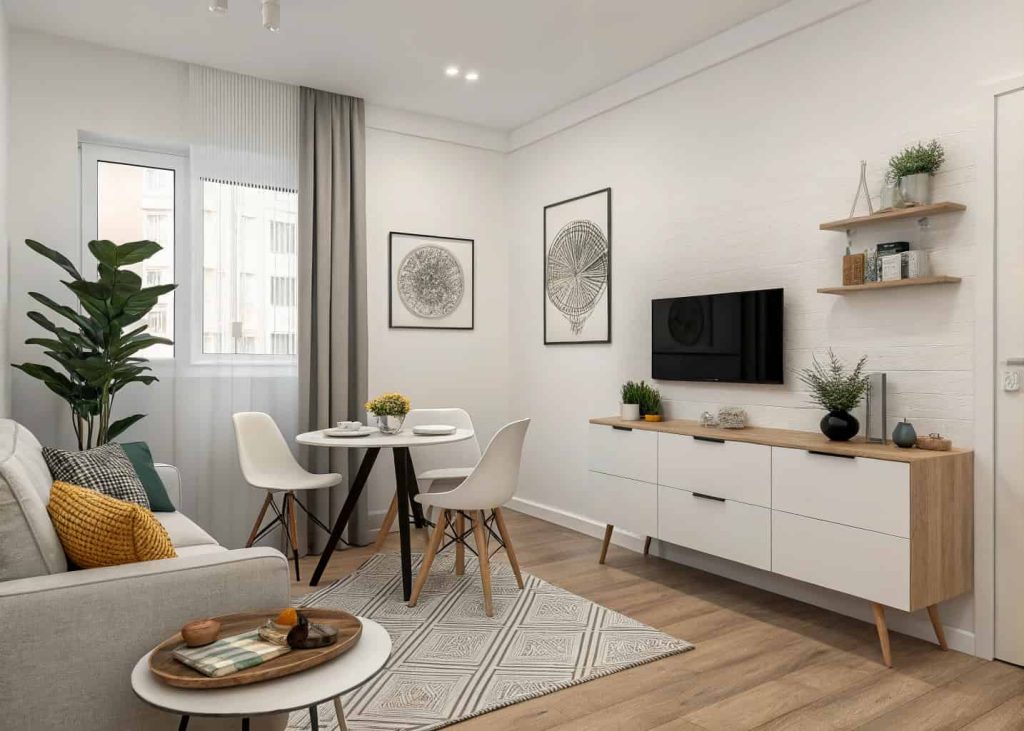
Modern small spaces benefit from a minimalist approach, but personalization keeps them from feeling cold. Select a few meaningful décor items such as artwork, textured cushions, or stylish table settings. Keep surfaces uncluttered and focus on quality over quantity. Consistent décor elements across both zones help maintain flow while expressing your personality. A balanced combination of simplicity and personal touches creates a welcoming environment that feels stylish, functional, and uniquely yours.
Conclusion: Small Space, Modern Living
Designing a modern small living and dining room for open-concept living is all about smart planning and cohesive styling. By using light colors, multifunctional furniture, defined zones, and thoughtful décor choices, you can create a space that feels larger and more comfortable. The goal is to balance practicality with aesthetics so both areas work together seamlessly. With the right design strategies, even the smallest open layout can become a beautiful and functional hub for relaxing, dining, and spending time with family and friends in a modern home environment.