1. The Rise of Dining and Living Room Combos
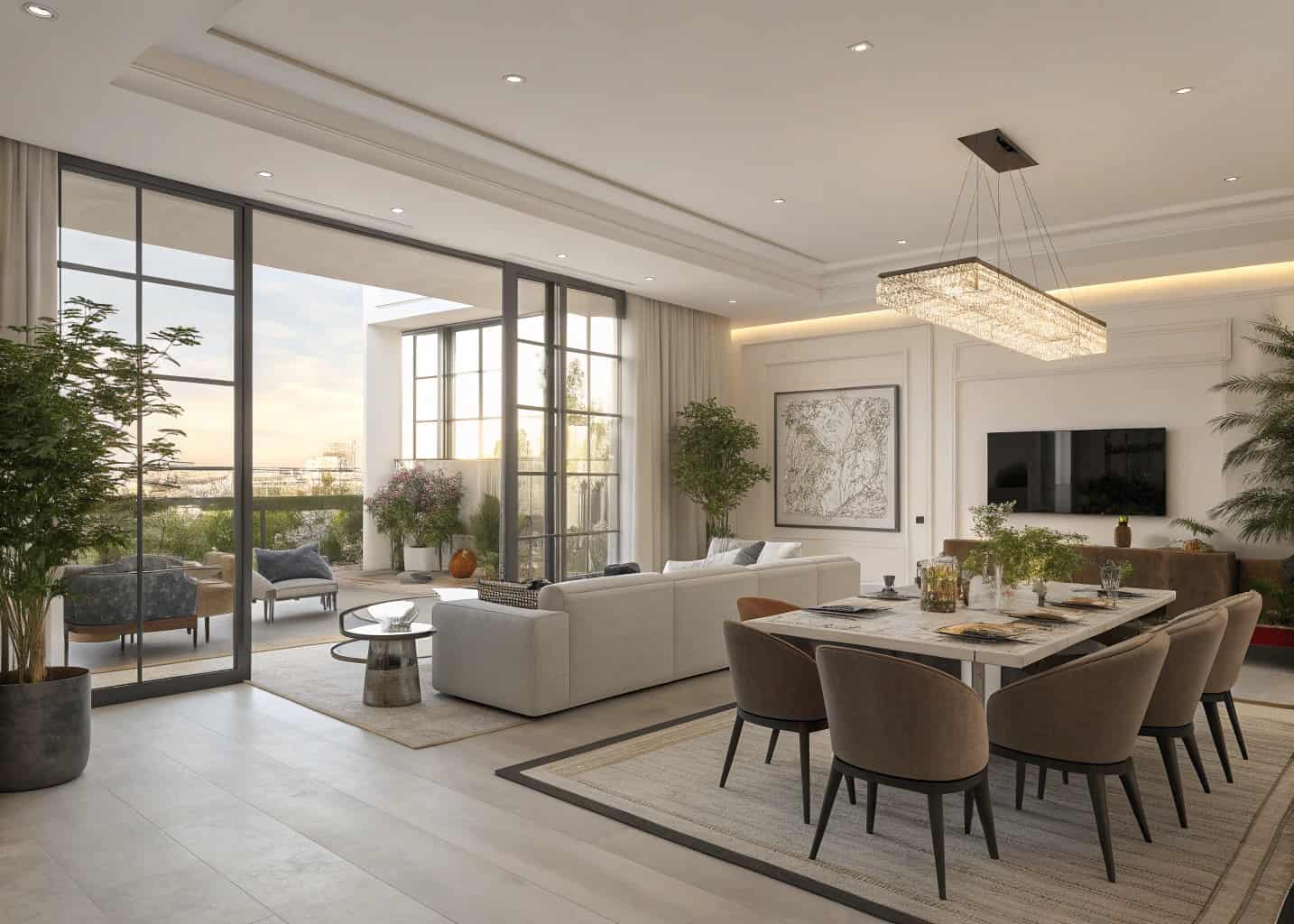
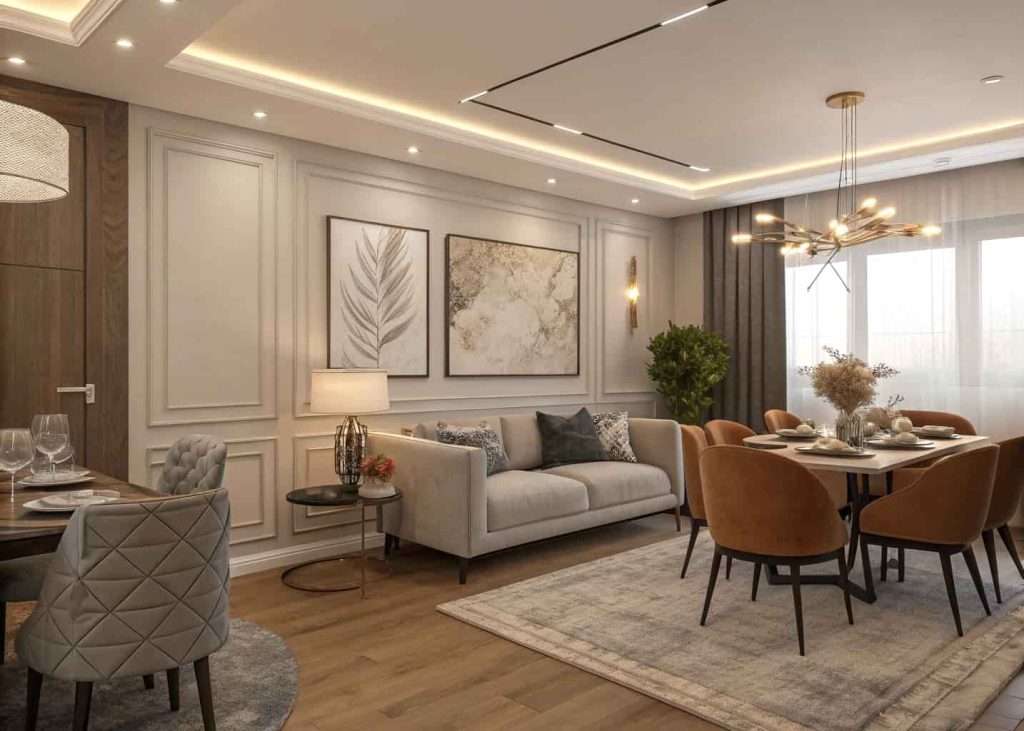
Modern homes increasingly embrace open-concept layouts where dining and living areas share one space. This design approach creates a spacious and connected environment perfect for both daily living and entertaining guests. Combining these areas allows natural light to flow freely while making homes feel larger and more inviting. A well-designed dining and living room combo balances functionality with style, ensuring each zone serves its purpose without feeling crowded. With thoughtful planning, homeowners can enjoy a seamless transition between relaxing and dining spaces while maintaining a cohesive modern aesthetic.
2. Planning the Layout for Functionality
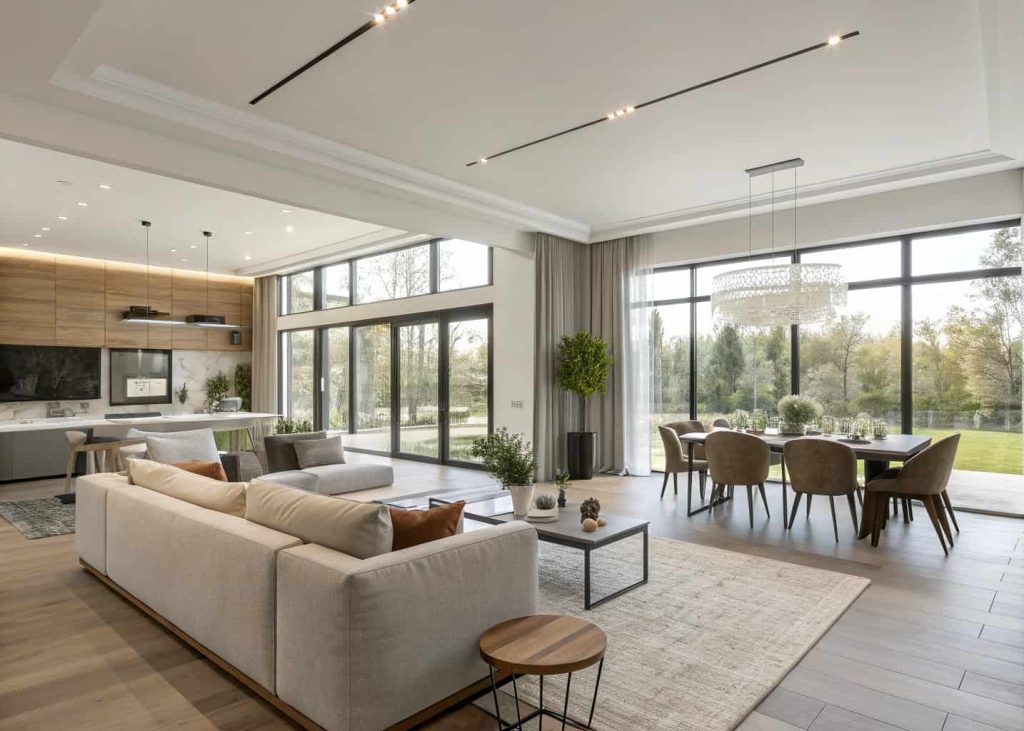
A successful combo space begins with smart layout planning. Consider how people move through the room and arrange furniture to maintain easy pathways. Position seating areas to encourage conversation while keeping dining access clear. Rugs, furniture placement, and lighting can subtly define zones without walls. Avoid placing large furniture pieces that block visual flow. A balanced layout ensures both spaces feel comfortable and practical. Planning ahead helps prevent clutter and allows each section to function independently while still feeling connected as part of one cohesive room.
3. Creating Visual Zones Without Walls
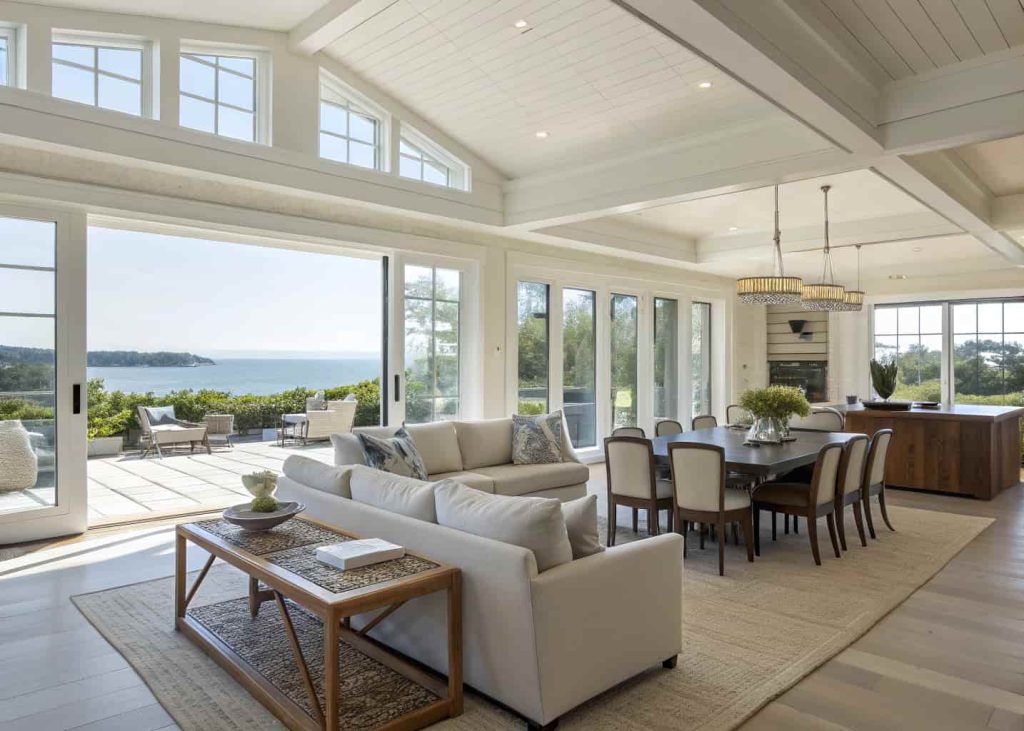
In open spaces, visual separation is key to organization. Area rugs help distinguish the living area, while pendant lighting highlights the dining space. Furniture like sofas or consoles can act as subtle dividers. Different textures or decor styles also help define zones while maintaining unity. The goal is to create structure without closing off the room. Visual zoning ensures each area has its identity while preserving openness. This approach keeps the space functional and visually appealing, especially in modern homes where minimalism and flow are important design elements.
4. Choosing a Cohesive Color Palette
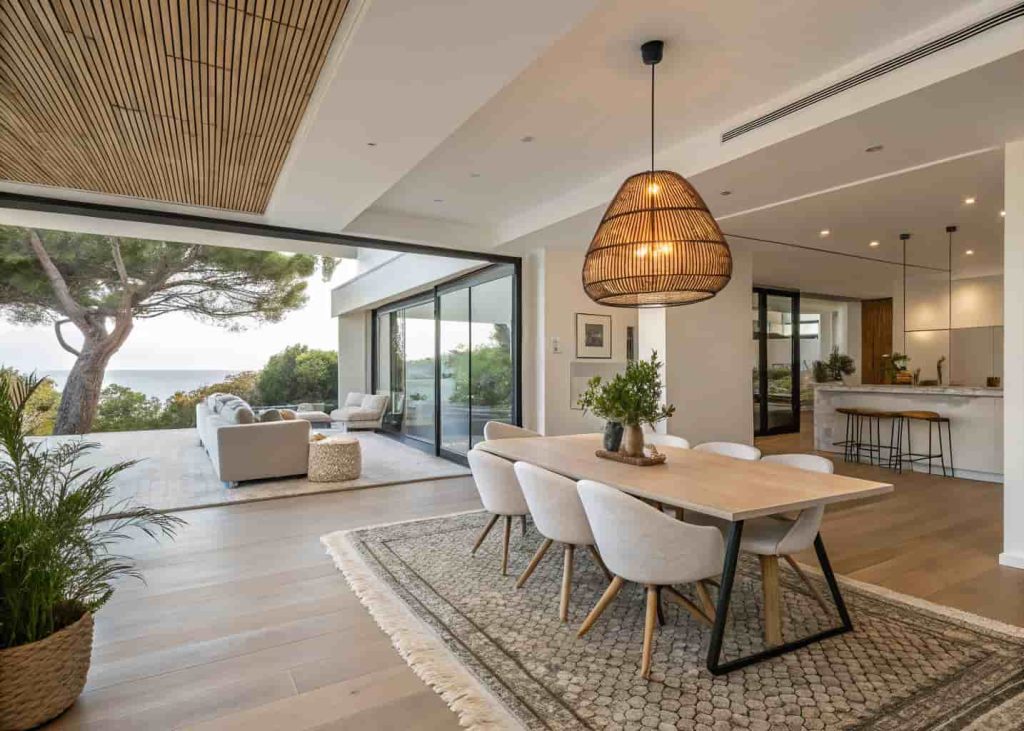
A unified color scheme ties both areas together beautifully. Neutral tones such as white, beige, gray, or soft earth colors work well as a base. Accent colors can be repeated in cushions, artwork, or dining chairs to maintain harmony. Avoid drastically different color schemes between zones, as this can make the space feel disconnected. Instead, use variations of the same palette for depth and interest. A cohesive color story ensures the room feels balanced and intentional, helping both areas blend seamlessly into one stylish environment.
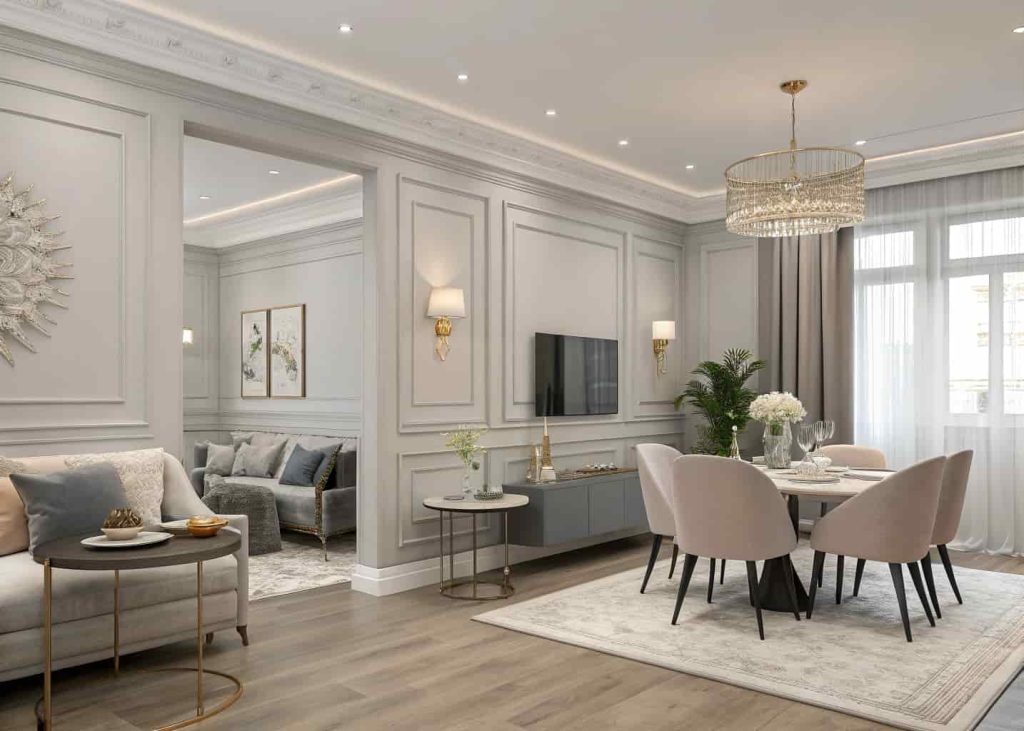
5. Furniture Selection for Modern Spaces
Furniture should complement both functionality and aesthetics. Choose pieces that share similar design styles, whether modern, Scandinavian, or contemporary. Slim-profile furniture works best in combo spaces because it prevents overcrowding. Dining chairs and sofas don’t need to match exactly but should feel visually connected through color or material. Multi-functional furniture like storage benches or extendable tables adds practicality. Keeping furniture proportional to room size ensures comfort without sacrificing openness. Thoughtful furniture selection makes the entire combo area feel unified and well-designed.
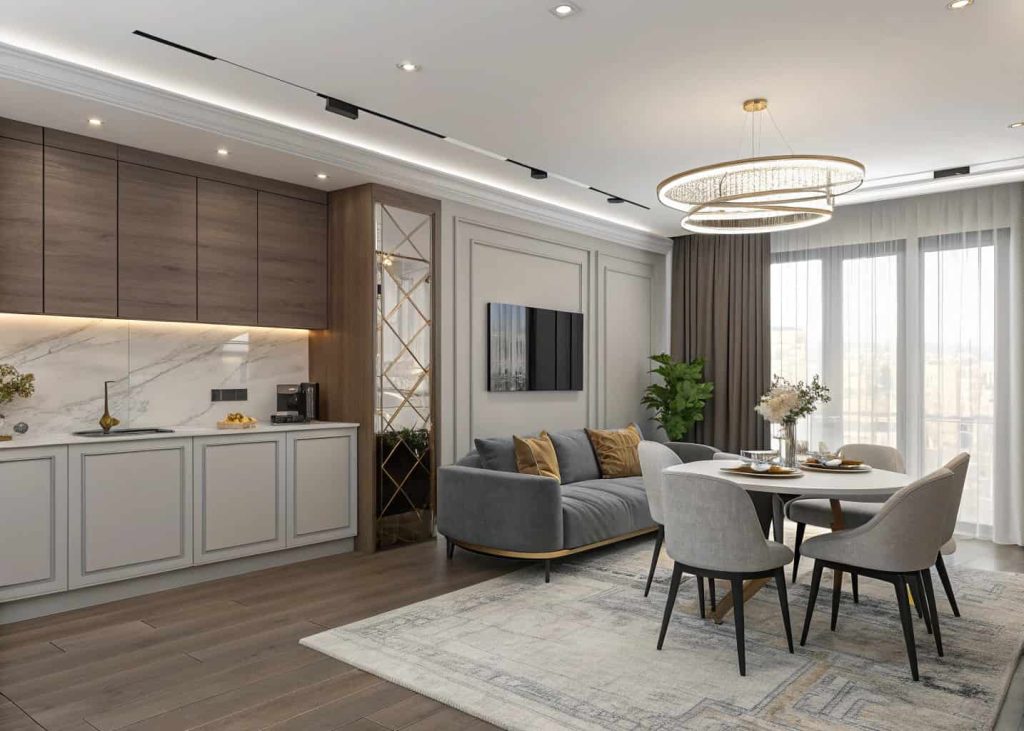
6. Lighting for Each Zone
Lighting helps define purpose while enhancing ambiance. Use layered lighting by combining ceiling fixtures, floor lamps, and table lamps. A statement chandelier or pendant light naturally anchors the dining area, while softer lighting creates a cozy living space. Warm lighting tones make the entire room feel inviting. Dimmer switches allow flexibility for different moods, from bright daytime gatherings to relaxed evenings. Proper lighting design ensures each area feels functional yet connected, improving both comfort and visual appeal.
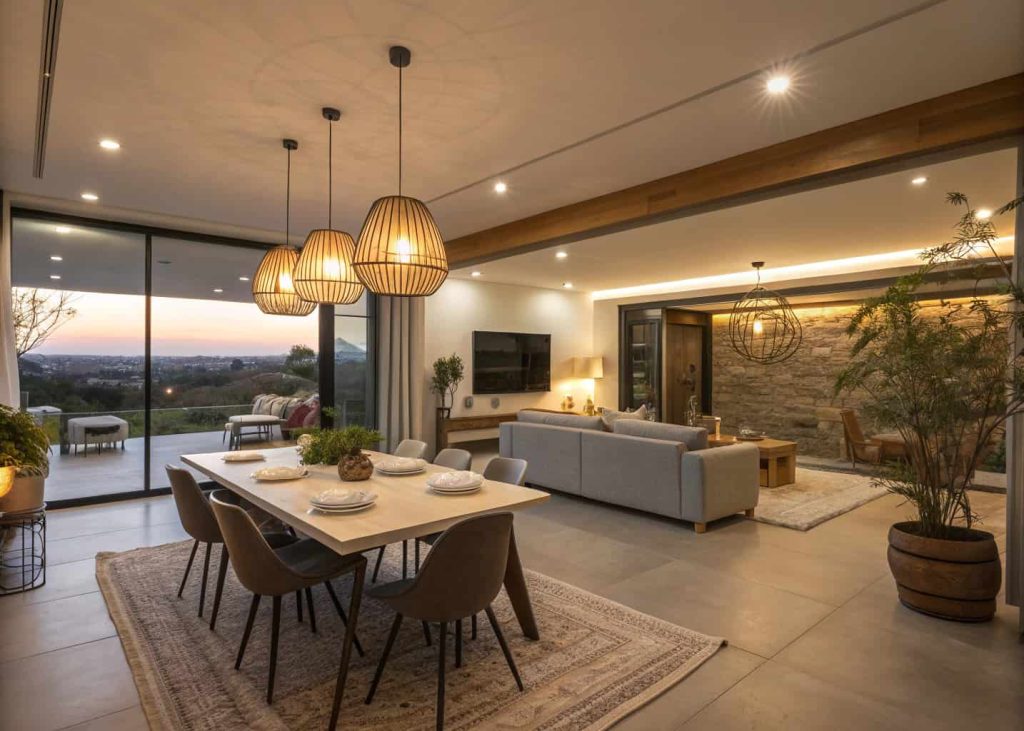
7. Using Rugs to Define Spaces
Rugs are one of the easiest ways to separate areas visually. A large rug under the sofa anchors the living zone, while the dining area may remain rug-free or use a durable flatweave option. Rugs introduce texture, color, and comfort while guiding the eye through the room. Ensure rugs are properly sized so furniture sits comfortably within each zone. Coordinating rug colors helps maintain cohesion. This simple design trick creates structure without disrupting openness.
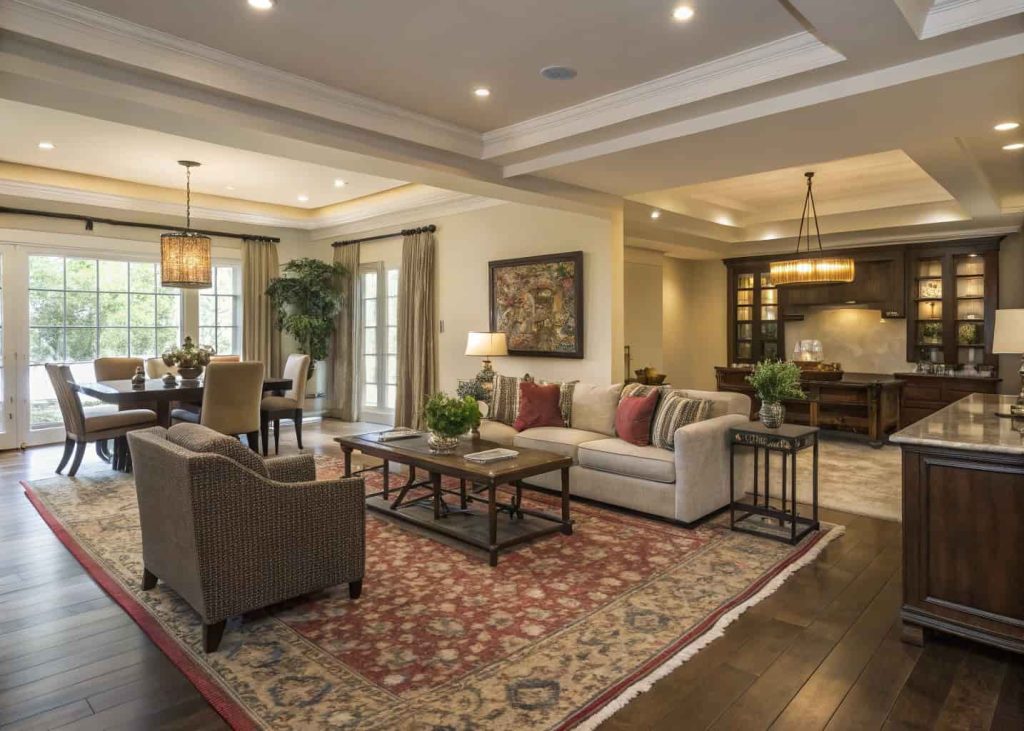
8. Storage Solutions for Organized Living
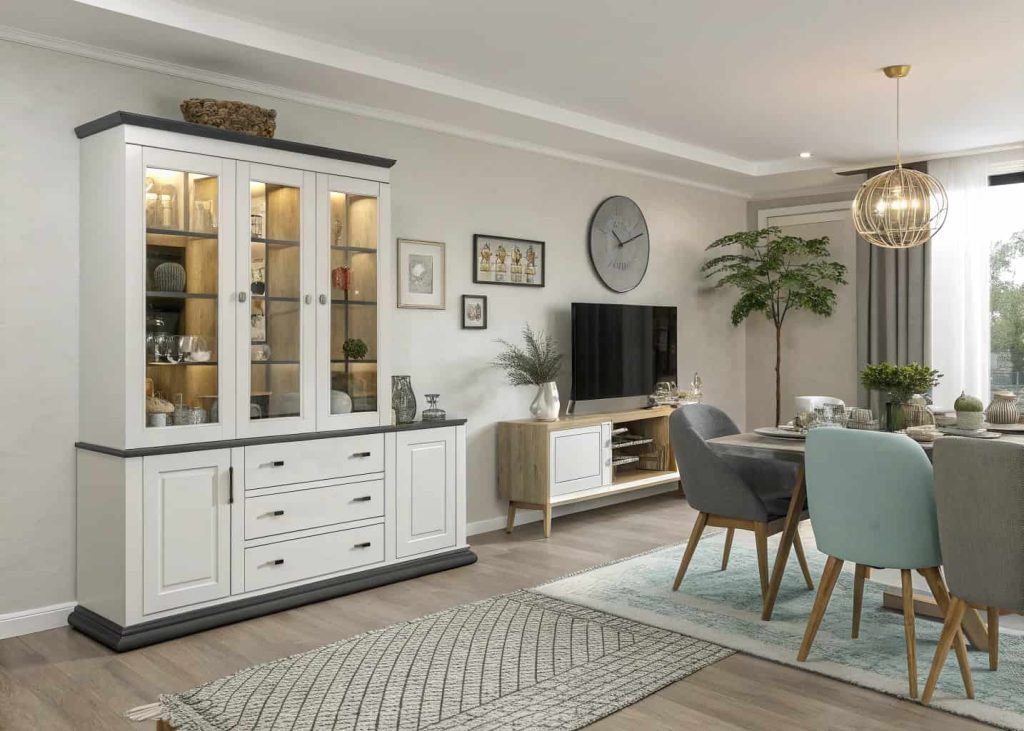
Shared spaces require smart storage to prevent clutter. Built-in shelves, sideboards, or console tables provide storage while enhancing decor. A dining sideboard can store tableware while displaying decorative pieces. Hidden storage furniture keeps everyday items organized without compromising style. Vertical storage solutions maximize wall space, especially in smaller homes. Organized spaces feel calmer and more spacious, allowing both dining and living functions to coexist comfortably. Practical storage also ensures the room stays visually clean and modern.
9. Decorating with Art and Accessories
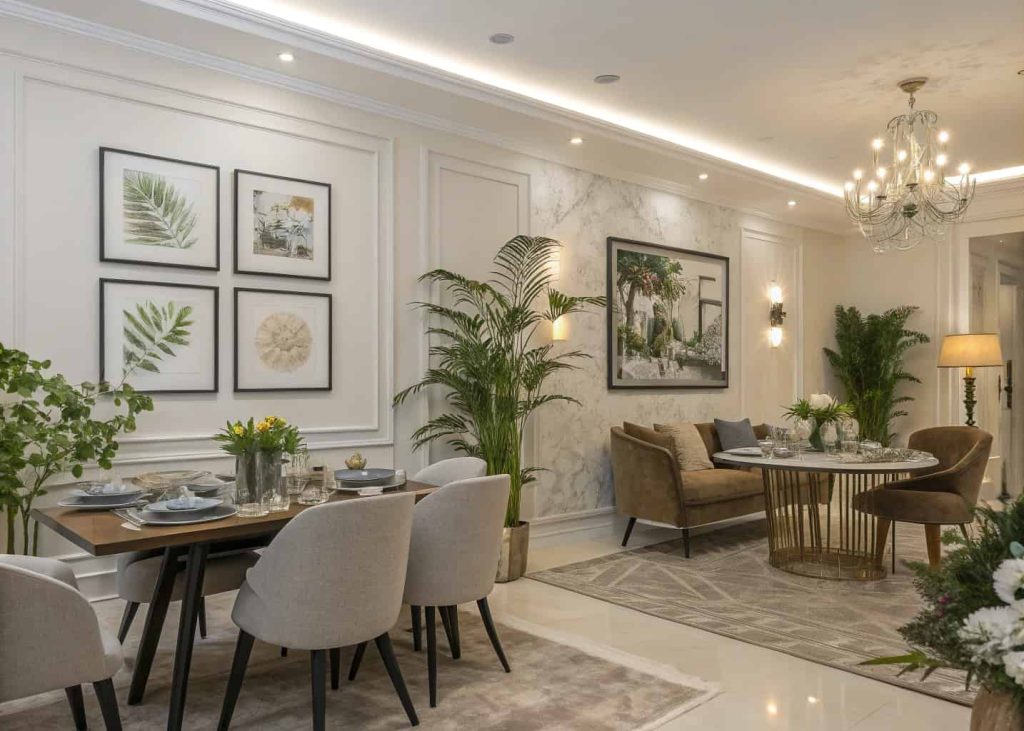
Decor elements help unify the space while adding personality. Choose artwork that complements the overall color palette and distribute it evenly across both zones. Decorative items like vases, books, or plants should repeat materials or colors for consistency. Avoid overcrowding surfaces; a curated approach looks more elegant. Accessories should enhance rather than overwhelm the room. Thoughtful decor placement ensures visual continuity, helping both areas feel connected while still maintaining individual character.
10. Small Dining and Living Room Combo Ideas
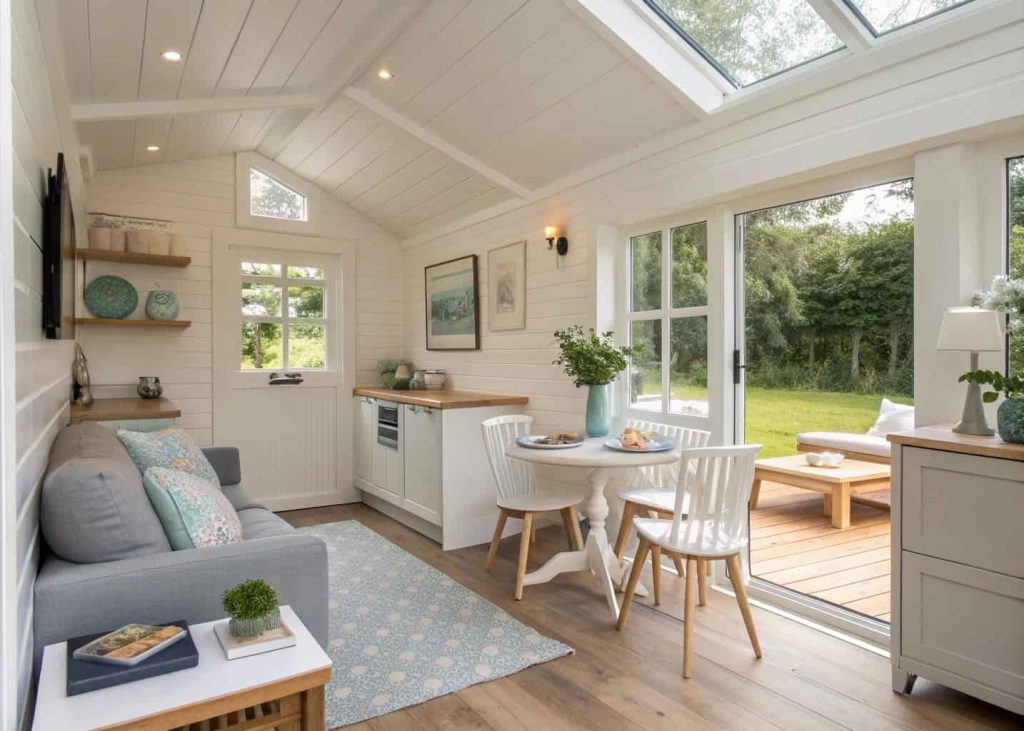
Smaller homes benefit greatly from combo layouts when designed carefully. Use light colors to create openness and choose compact furniture with clean lines. Mirrors reflect light and make rooms appear larger. Foldable or extendable dining tables save space when not in use. Keep decor minimal and functional to avoid crowding. Vertical design elements draw the eye upward, enhancing the sense of height. With smart choices, even small combo spaces can feel stylish, comfortable, and highly functional.
11. Incorporating Natural Elements
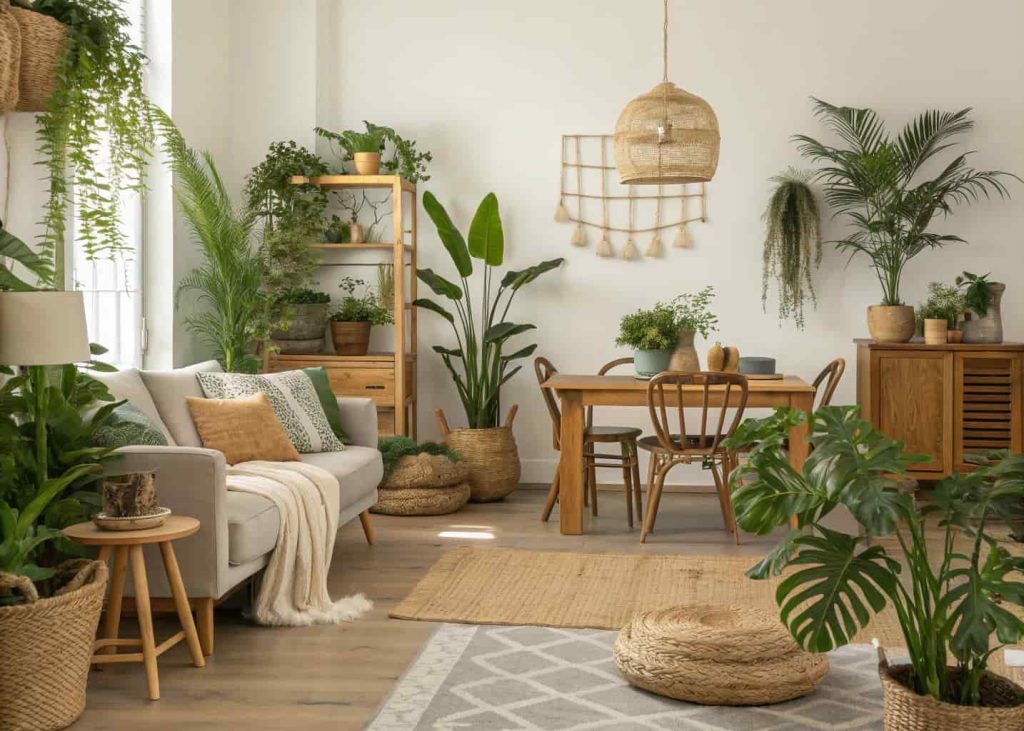
Natural materials bring warmth and balance to modern interiors. Wooden furniture, woven decor, indoor plants, and linen textiles create a welcoming atmosphere. Plants help soften the look of modern furniture while improving freshness. Natural textures connect both areas visually and emotionally, making the space feel relaxed. Incorporating organic elements prevents modern spaces from feeling cold or overly minimal. These details add depth while maintaining harmony throughout the combo layout.
12. Mixing Comfort with Elegance
A successful combo room balances comfort with sophistication. Soft sofas, cozy cushions, and inviting textiles make the living area relaxing, while refined dining furniture maintains elegance. Mixing comfort and style ensures the space feels livable rather than overly formal. Choose durable yet attractive materials suitable for everyday use. This balance allows homeowners to entertain guests while still enjoying a cozy daily environment. Modern homes thrive when practicality meets beauty.
13. Seasonal Styling Ideas
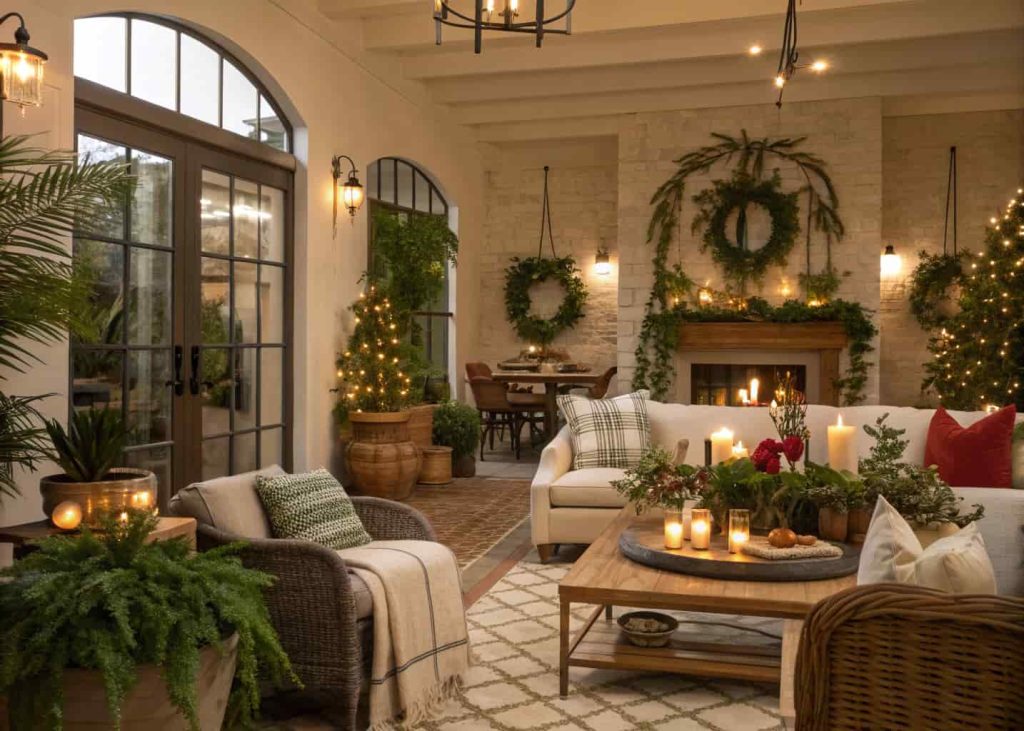
Combo spaces are easy to refresh seasonally. Add warm throws and candles during winter, fresh flowers in spring, light fabrics in summer, and earthy tones in autumn. Small updates like table centerpieces or cushion covers transform the atmosphere without major redesign. Seasonal styling keeps the room feeling fresh and dynamic throughout the year. Because both areas share decor elements, updates instantly impact the entire space, maintaining visual consistency.
14. Maintaining Flow and Balance
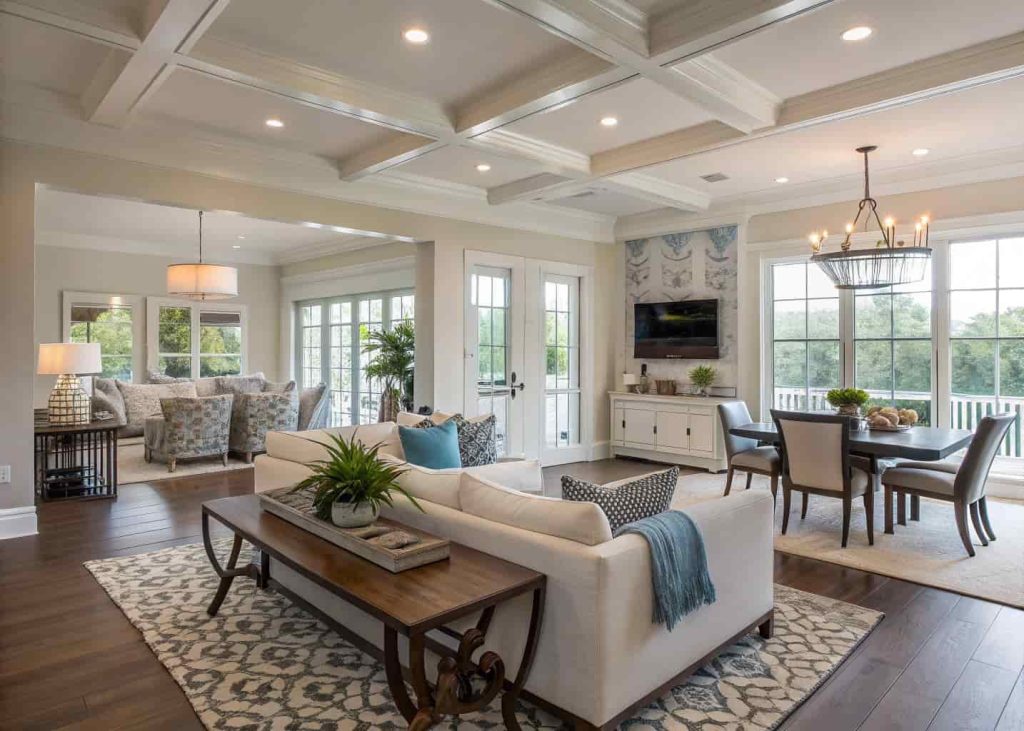
Visual flow ensures the space feels harmonious. Repeating colors, materials, and shapes across both zones helps maintain unity. Avoid overcrowding one side while leaving the other empty. Symmetry and balanced furniture placement improve visual stability. Consistency in finishes, such as metals or wood tones, strengthens cohesion. A balanced layout allows the eye to move naturally throughout the room, making the entire space feel calm and thoughtfully designed.
15. Final Thoughts on Designing a Modern Combo Space
Beautiful dining and living room combos combine practicality, comfort, and modern style. By focusing on layout, cohesive colors, lighting, and thoughtful decor, homeowners can create a space that feels open yet organized. The key is balance—each area should serve its purpose while contributing to the overall design. With careful planning and creative styling, a combo space becomes the heart of the home, perfect for relaxing, dining, and connecting with family and friends in a stylish modern environment.
Comments are closed.