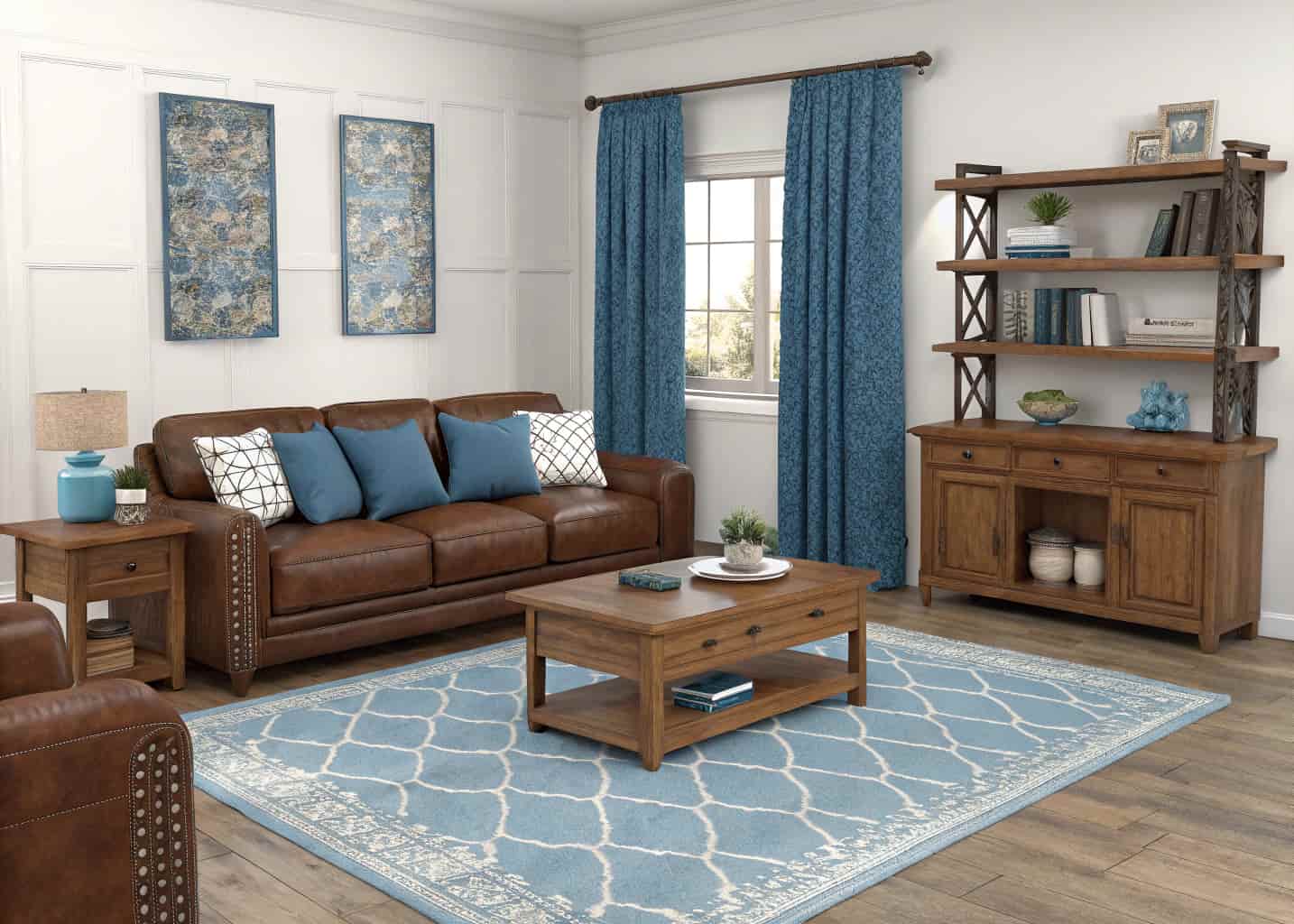
1. Understanding the Beauty of Blue and Brown Together
Blue and brown create a naturally balanced color combination because they represent sky and earth elements. Blue brings calmness and freshness, while brown adds warmth and grounding energy. Together, they create a living room that feels both relaxing and inviting. This color pairing works in modern, rustic, coastal, and traditional interiors. The secret to success lies in balancing cool and warm tones so neither color overpowers the space. When styled correctly, a blue and brown living room feels sophisticated yet comfortable, making it perfect for daily living and entertaining guests.
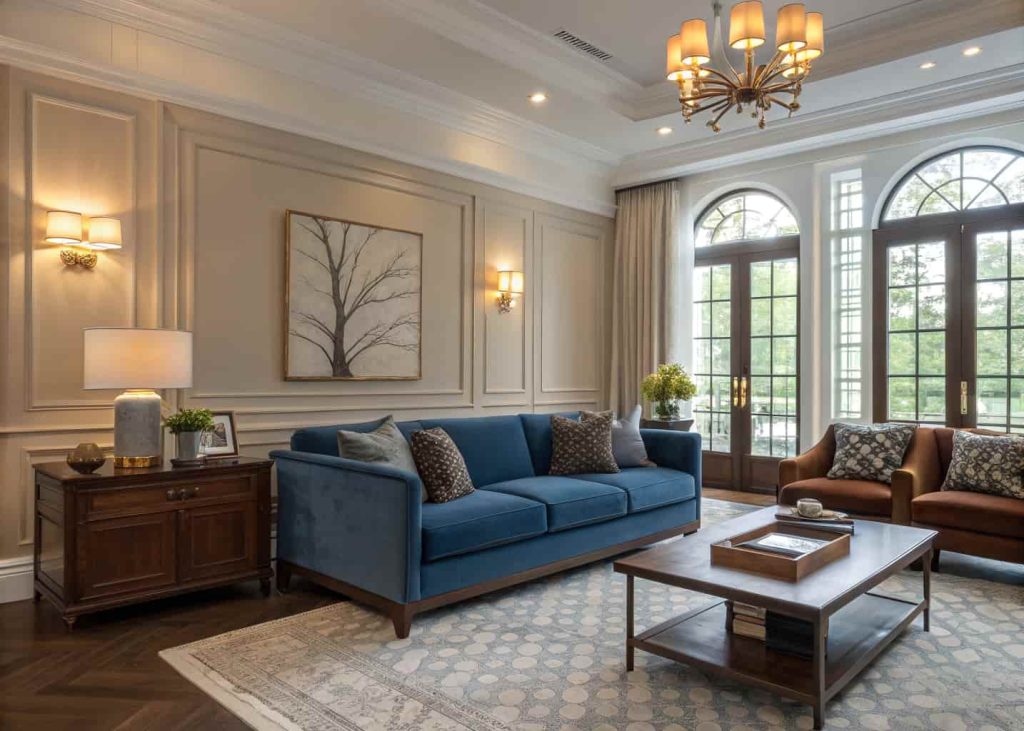
2. Choosing the Right Shades of Blue
Selecting the correct shade of blue is essential for harmony. Light blues such as sky blue or powder blue create an airy and relaxed atmosphere, while navy blue adds elegance and depth. Muted blues work best when paired with rich brown tones because they maintain softness. Avoid overly bright blues unless used as small accents. Consider the amount of natural light in your room before choosing shades. Darker rooms benefit from lighter blues, while spacious rooms can handle deeper tones. The right shade sets the mood and helps the living room feel cohesive and thoughtfully designed.
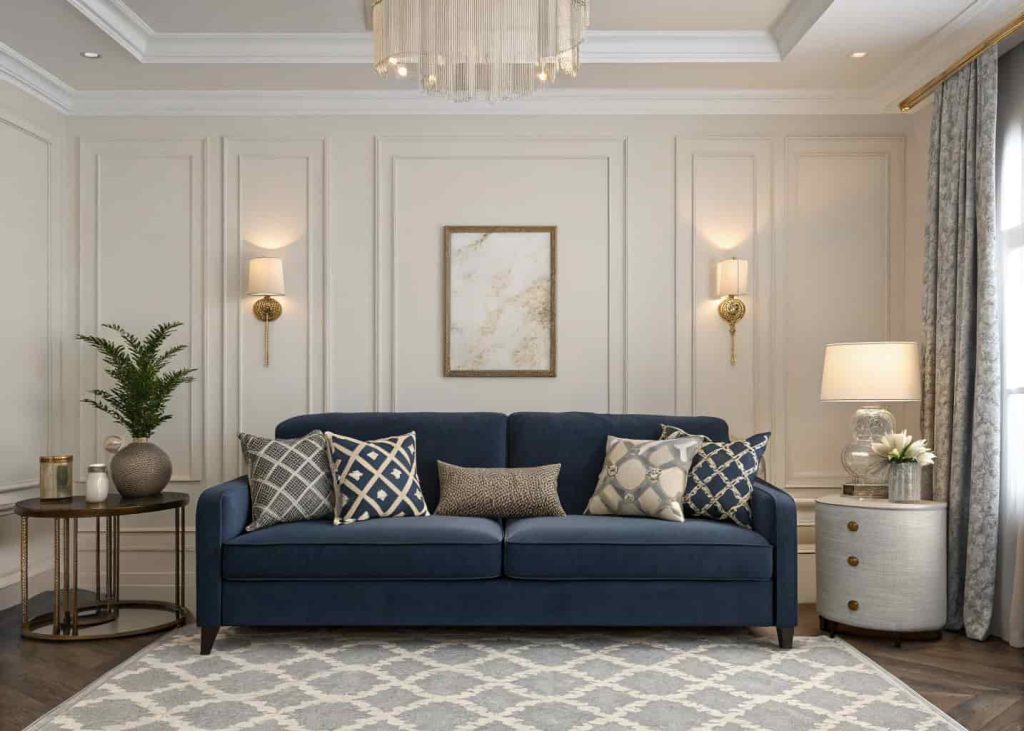
3. Selecting Complementary Brown Tones
Brown tones vary from light tan to deep chocolate, and choosing the right one affects the overall mood. Light browns create warmth without heaviness, while dark browns add richness and luxury. Wooden furniture, leather sofas, and woven decor introduce natural brown elements effortlessly. Pair deep blue shades with medium or warm browns for balance. Avoid using too many dark tones together, as this can make the space feel heavy. Mixing different brown finishes adds depth and visual interest, helping the living room feel layered and professionally styled.
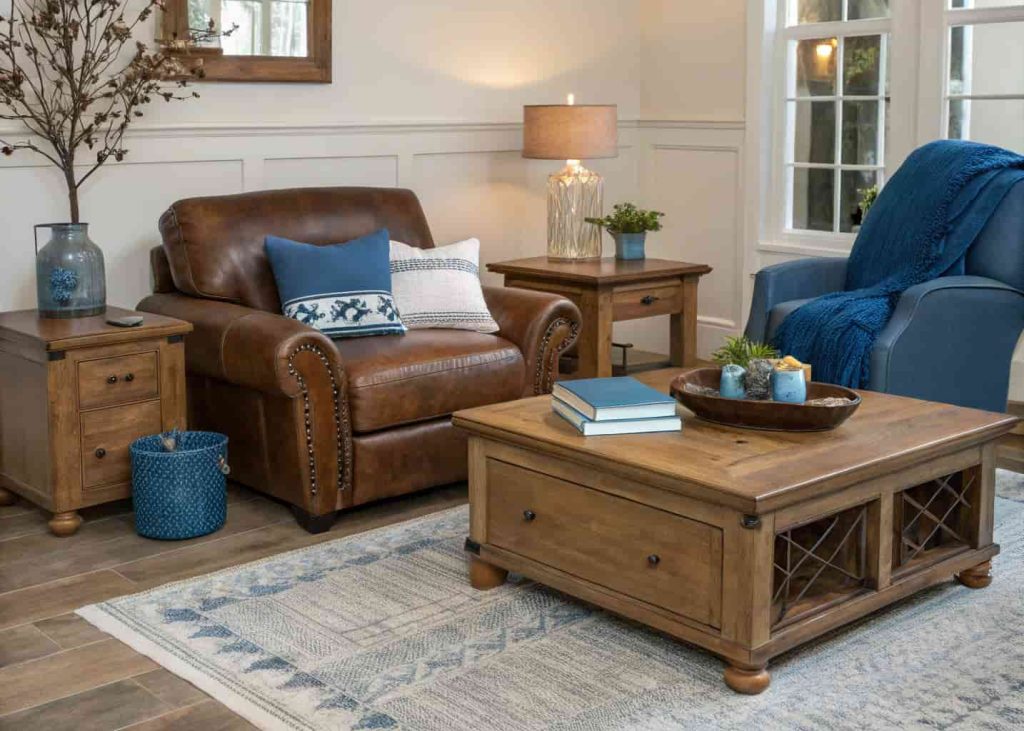
4. Creating a Balanced Color Ratio
A balanced blue and brown living room depends on proper color distribution. Designers often follow the 60-30-10 rule: 60% dominant color, 30% secondary color, and 10% accent color. For example, neutral walls may dominate, blue furniture becomes the secondary element, and brown accents complete the look. This approach prevents visual clutter and keeps the space harmonious. Avoid equal color distribution because it can feel chaotic. Instead, allow one color to lead while the other supports. Thoughtful color balance creates a calm environment that feels intentional and visually pleasing.
5. Using Furniture as the Foundation
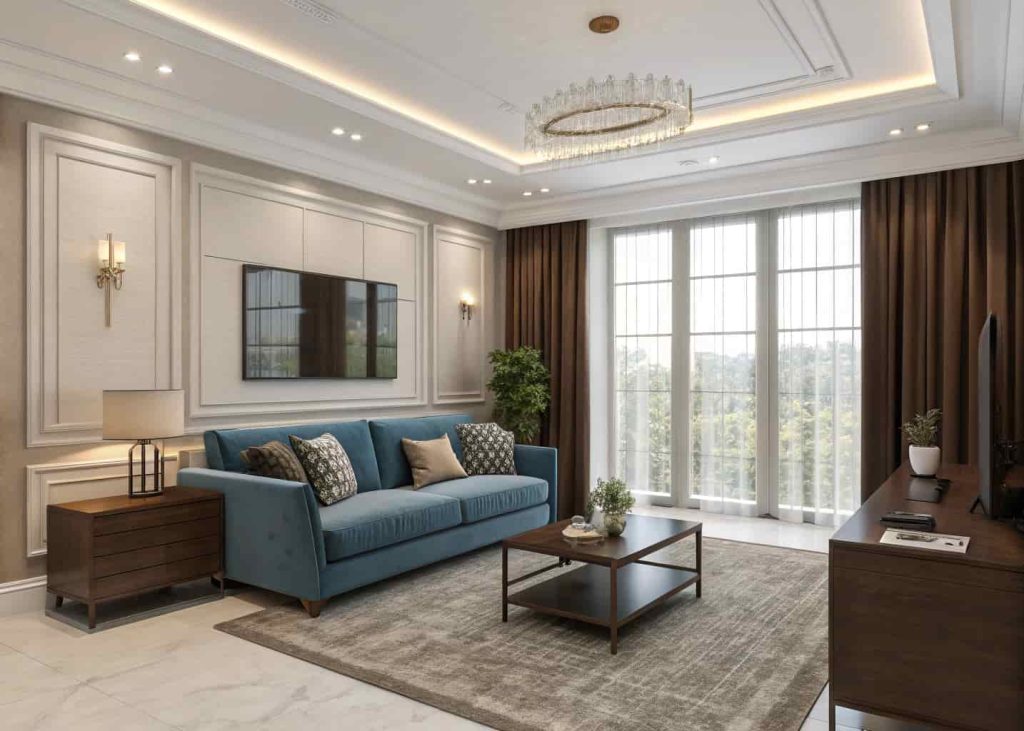
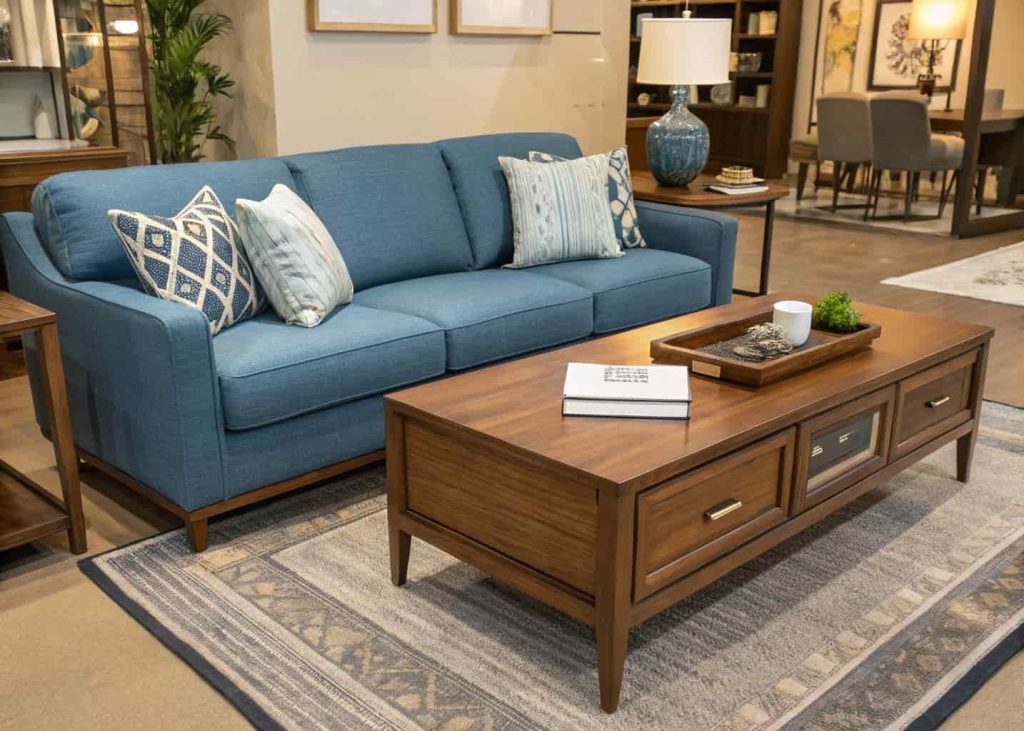
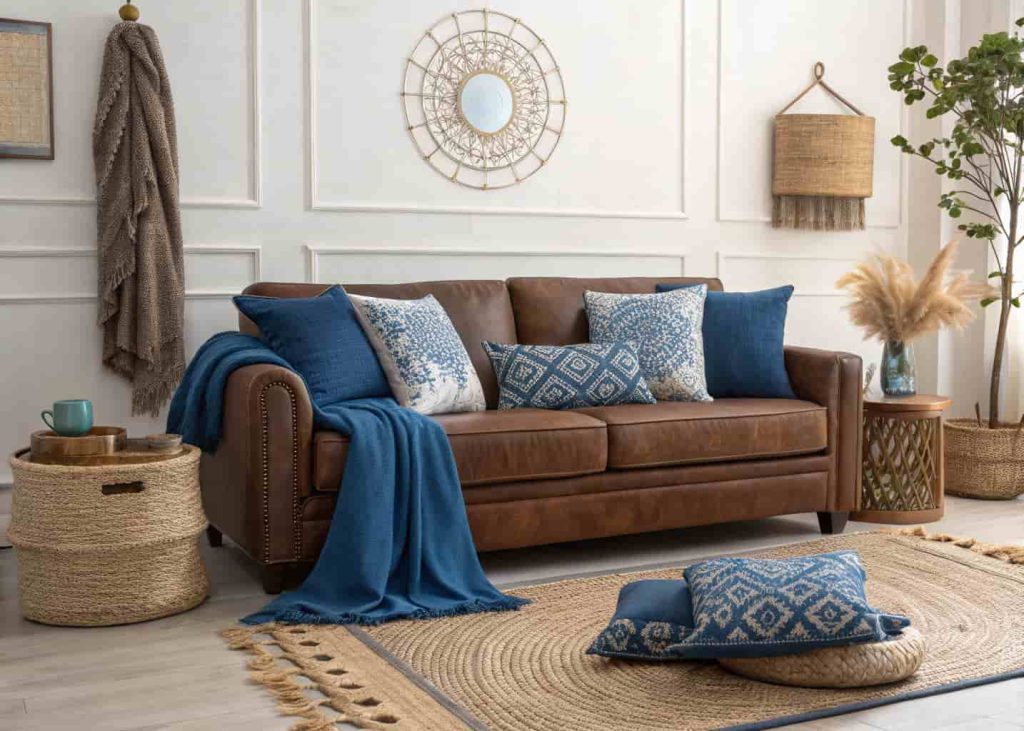
Furniture plays a major role in establishing the blue and brown theme. A blue sofa paired with brown wooden furniture creates instant contrast and warmth. Alternatively, a brown leather sofa with blue cushions offers a classic and timeless appearance. Choose furniture with clean lines for modern spaces or curved shapes for cozy interiors. Avoid overcrowding the room with large pieces. Functional furniture arrangements improve flow and comfort. When furniture colors complement each other, the living room naturally feels balanced without requiring excessive decoration.
6. Adding Textures for Visual Interest
Texture prevents a blue and brown living room from feeling flat. Combine materials like leather, linen, velvet, wood, and woven fabrics to add dimension. Soft blue cushions on a brown sofa or a textured rug under furniture instantly enhance comfort. Layered textures reflect light differently, creating depth and richness. Natural textures also strengthen the earthy and calming atmosphere of the color palette. Mixing smooth and rough surfaces helps maintain visual balance and adds a designer-quality finish to the space.
7. Choosing the Perfect Wall Colors
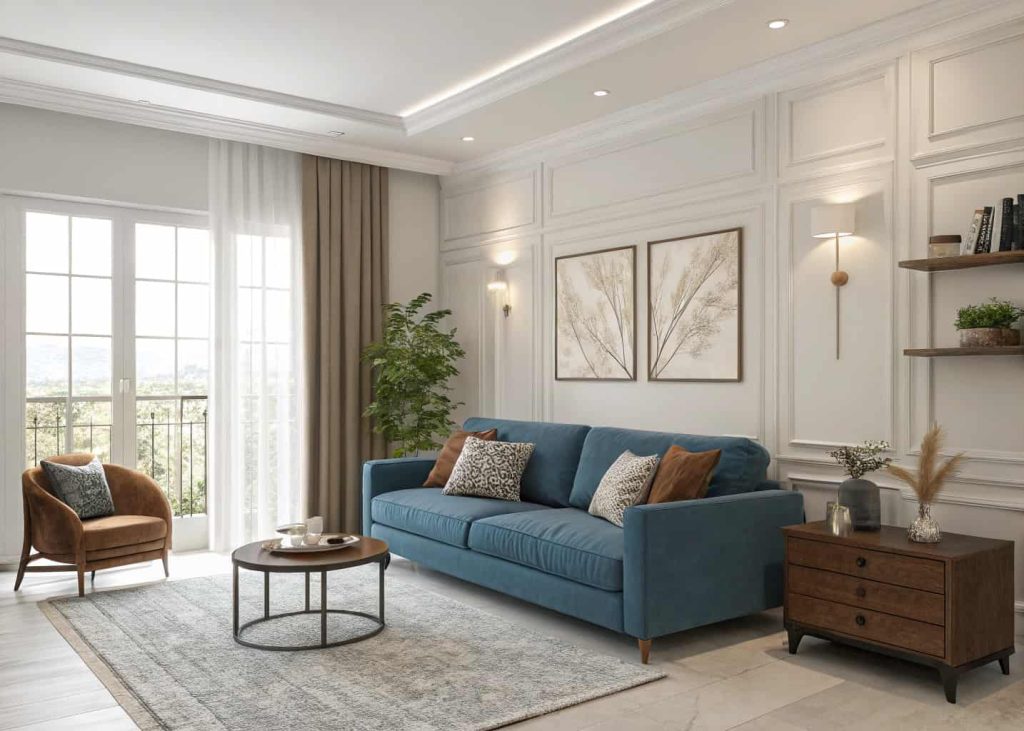
Walls set the stage for your decor. Neutral shades such as white, cream, or light beige work best because they balance both blue and brown tones. Soft gray walls can also create a modern atmosphere. If you want drama, consider a navy accent wall paired with lighter furniture. Avoid overly dark walls in small rooms, as they may reduce brightness. Wall color should enhance furniture rather than compete with it. A carefully chosen backdrop ensures the living room feels open, cohesive, and welcoming.
8. Incorporating Accent Colors
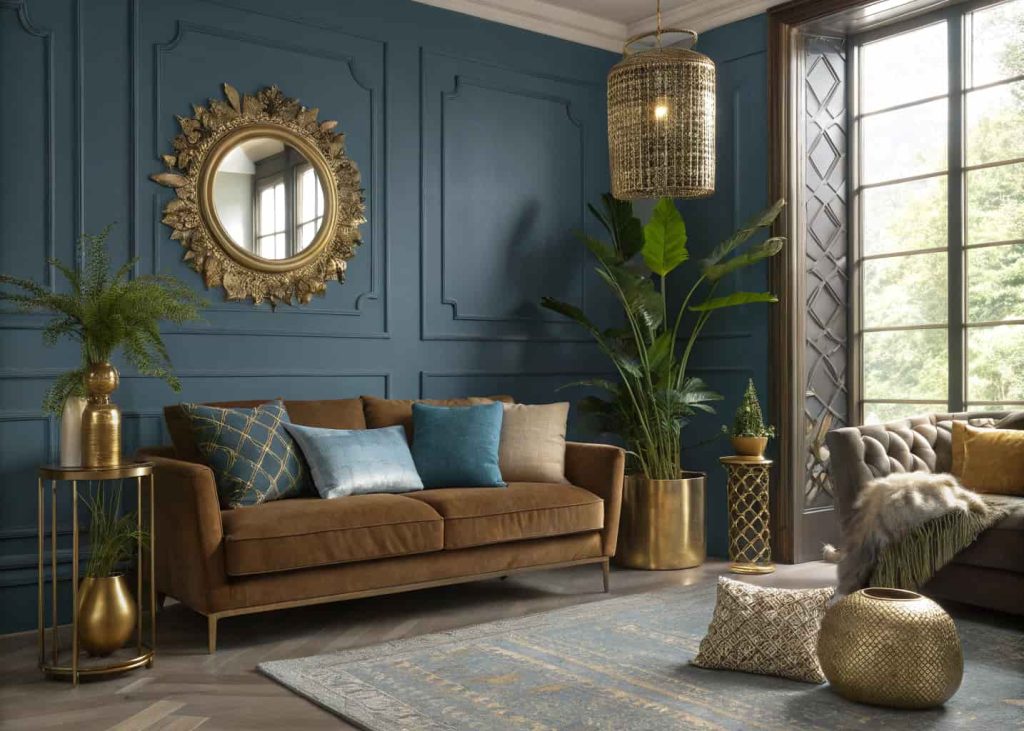
Accent colors enhance the blue and brown palette while adding personality. Gold or brass accents introduce elegance, while green plants add freshness. Cream and beige soften contrasts and maintain harmony. Rust or terracotta tones create warmth and seasonal charm. Use accent colors sparingly through cushions, artwork, or decorative objects. Too many colors can disrupt balance. Thoughtfully chosen accents help tie the entire design together, making the living room feel vibrant yet controlled.
9. Lighting for Warmth and Harmony
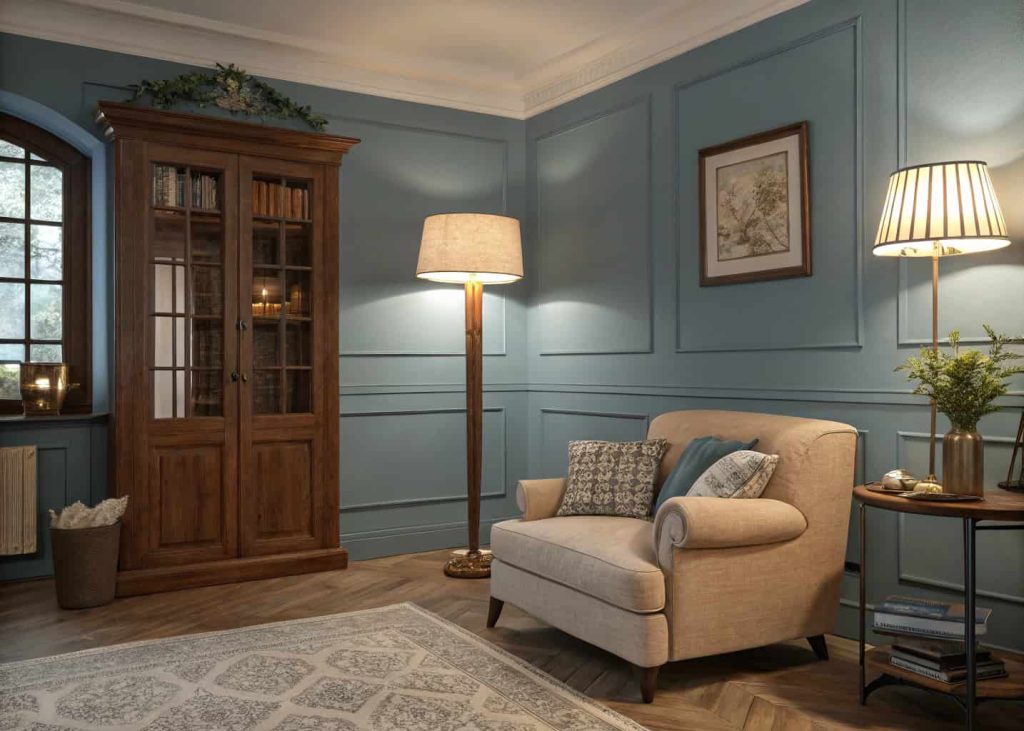
Lighting greatly influences how blue and brown colors appear. Warm lighting enhances brown tones and softens cooler blues, creating a cozy atmosphere. Use layered lighting such as ceiling fixtures, table lamps, and floor lamps for depth. Natural light should be maximized using sheer curtains or open window treatments. Accent lighting highlights decor features like artwork or shelving. Proper lighting ensures colors look rich and inviting rather than dull, especially during evenings.
10. Styling with Rugs and Textiles
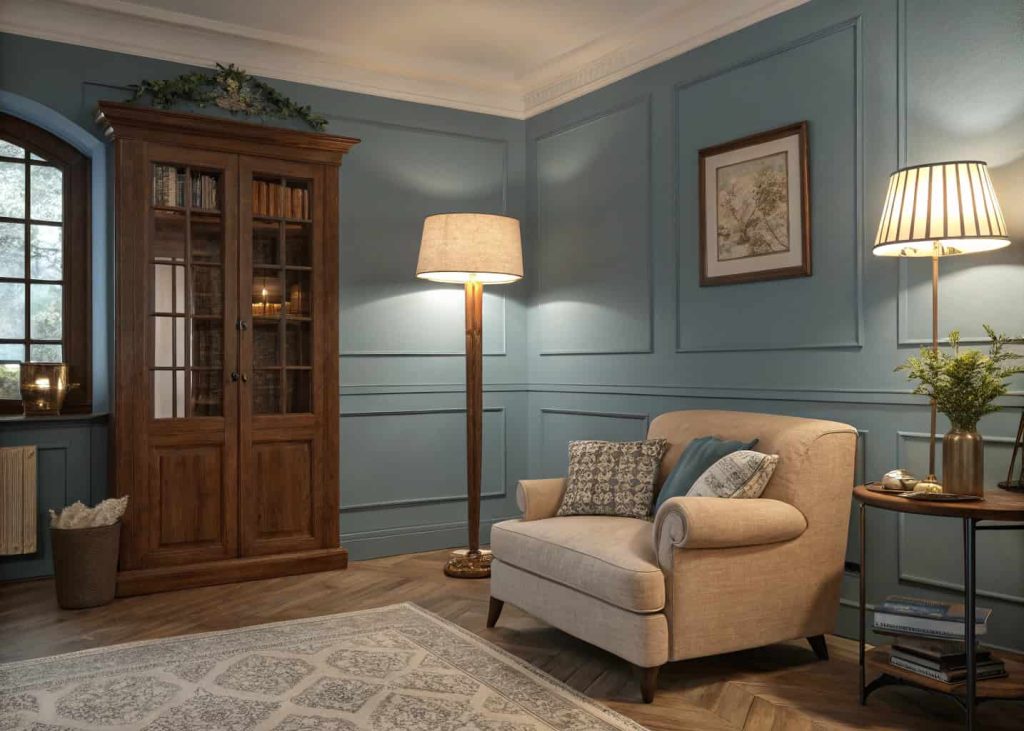
Rugs and textiles help connect blue and brown elements visually. Choose rugs that include both colors to unify the design. Patterned rugs add personality, while neutral rugs create calmness. Curtains, throws, and cushions provide softness and layering opportunities. Natural fabrics like cotton and wool maintain comfort while enhancing style. Textiles are also easy to update seasonally, allowing quick refreshes without major changes. Well-chosen fabrics bring warmth and cohesion to the living room.
11. Decorating with Artwork and Accessories
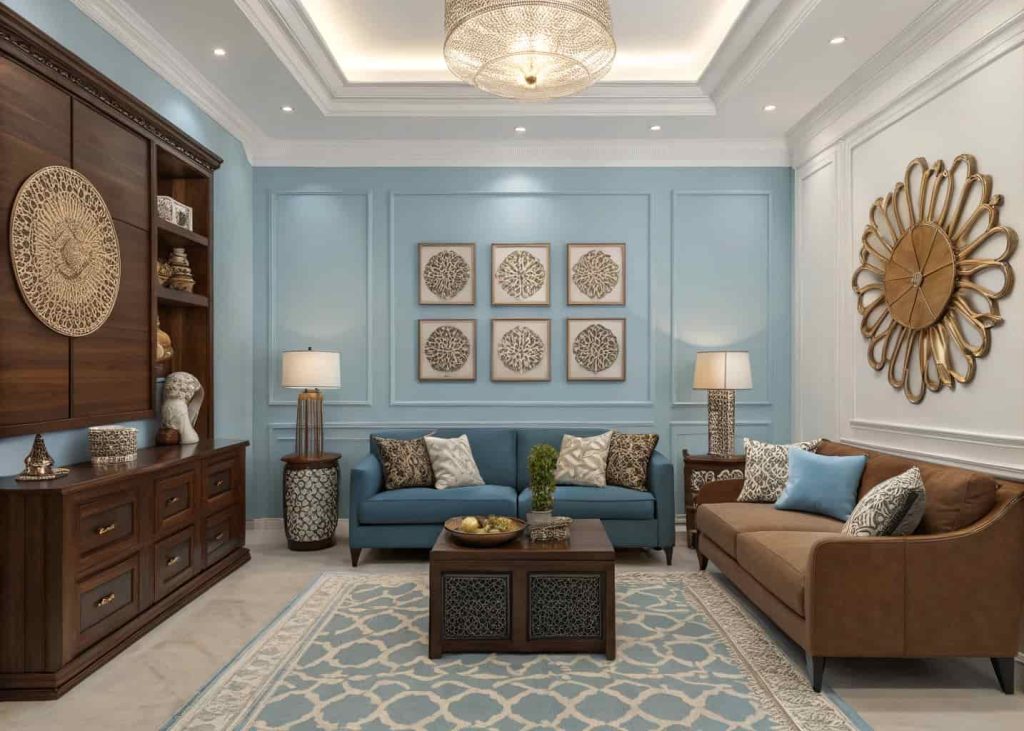
Artwork helps reinforce the color theme while expressing personality. Choose art pieces featuring abstract blues, earthy tones, or nature-inspired imagery. Decorative vases, books, and sculptures can subtly repeat colors throughout the room. Avoid overcrowding surfaces; fewer meaningful pieces create a more elegant look. Accessories should complement furniture rather than dominate it. Thoughtful decoration ensures the living room feels curated and balanced rather than cluttered.
12. Making Small Living Rooms Feel Balanced
In smaller spaces, balance becomes even more important. Use lighter blue shades and medium browns to prevent heaviness. Mirrors reflect light and make rooms appear larger. Choose multi-functional furniture to maximize space. Keep decor minimal and cohesive to avoid visual clutter. Vertical storage solutions help maintain openness. A well-planned layout ensures even a compact blue and brown living room feels comfortable and stylish.
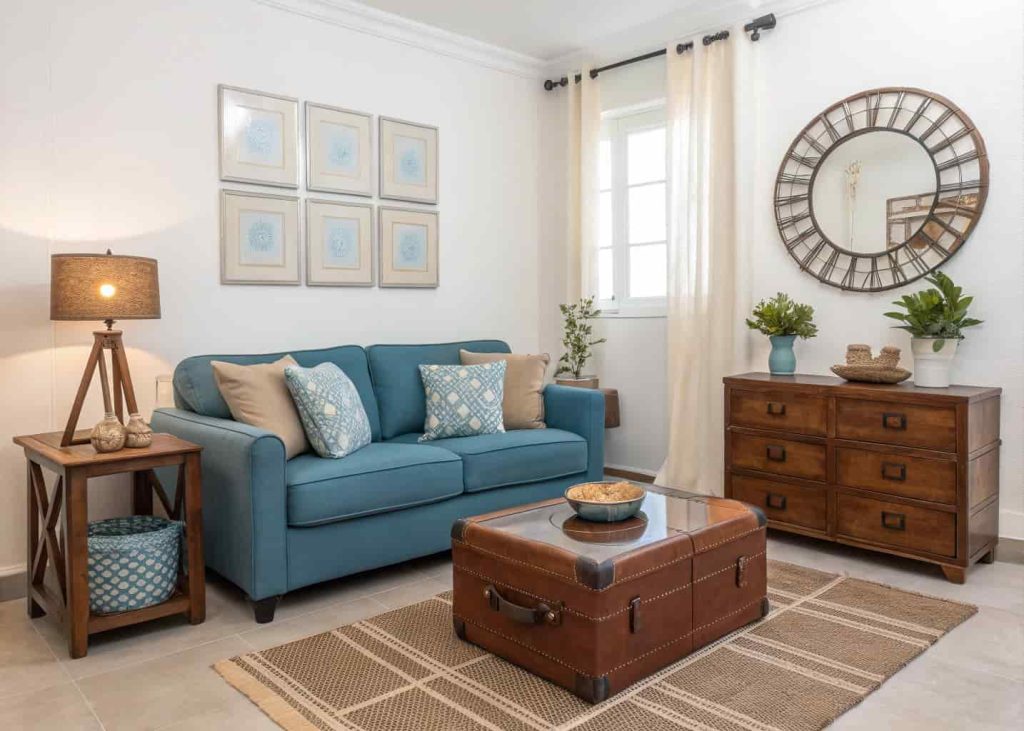
13. Seasonal Styling Ideas
Blue and brown living rooms adapt easily throughout the year. In winter, add chunky throws and warm lighting. Spring styling includes fresh greenery and lighter fabrics. Summer decor works well with airy textiles and coastal-inspired accents. Autumn naturally complements brown tones with rust and golden decor. Seasonal updates keep the space feeling fresh while maintaining its core design. This flexibility makes the color combination practical and long-lasting.
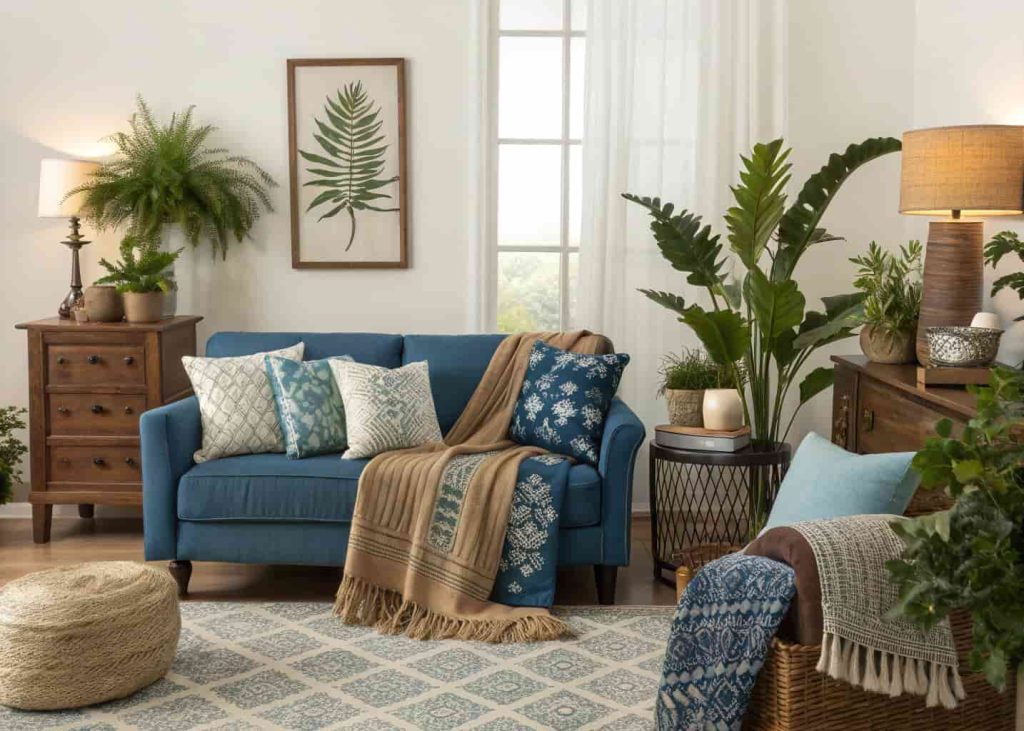
14. Mixing Modern and Classic Elements
Combining modern and classic pieces creates a timeless living room. Pair sleek blue furniture with traditional wooden elements for contrast. Classic decor adds character, while modern accents keep the space fresh. Mixing styles thoughtfully prevents the room from feeling overly trendy or outdated. Balance is achieved when textures, colors, and shapes complement each other. This layered approach gives the living room personality and sophistication.
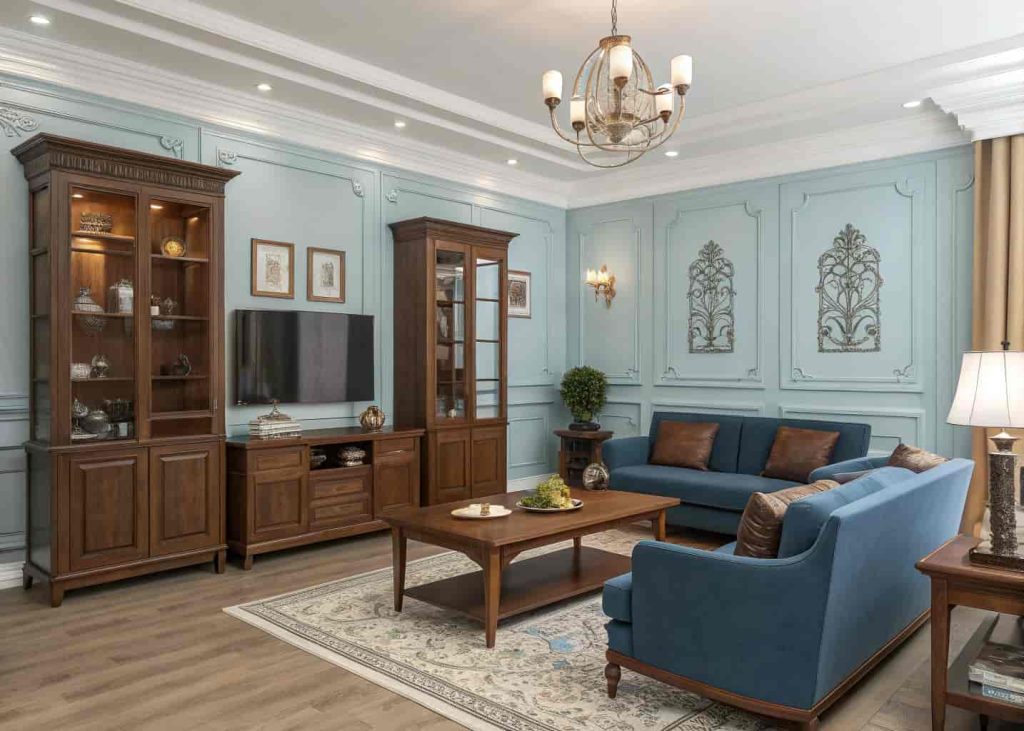
15. Final Thoughts on Creating Balance
Styling a blue and brown living room successfully comes down to harmony, proportion, and thoughtful design choices. By balancing warm and cool tones, layering textures, and using intentional lighting, you can create a space that feels both elegant and comfortable. This color combination offers timeless appeal while allowing personal creativity. Whether your style is modern, rustic, or classic, blue and brown provide a strong foundation for a welcoming living space that remains stylish for years.