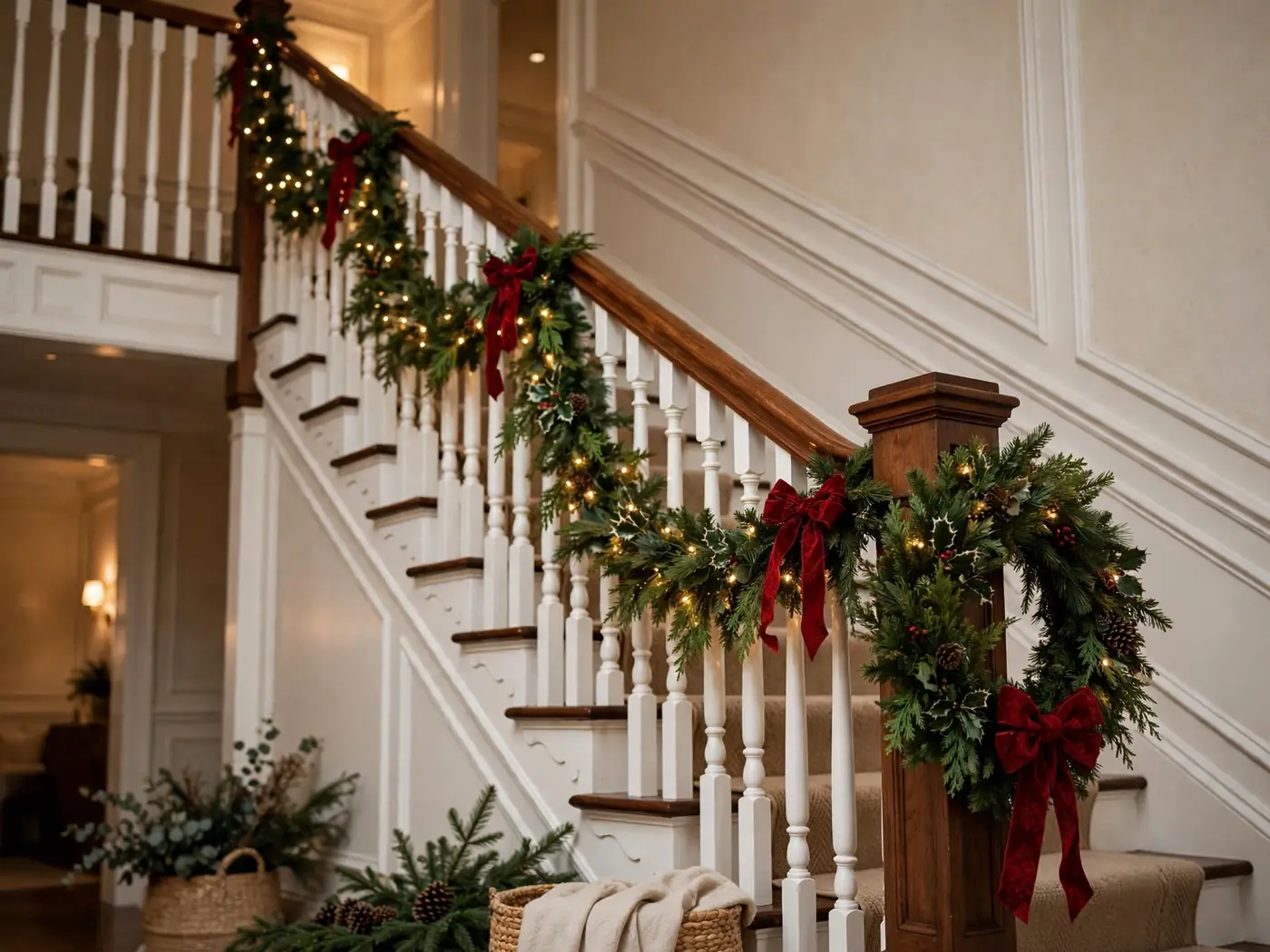
20 Staircase Christmas Ideas That Dress Rails Without Blocking Steps
The staircase is the one spot where Christmas decorating most often goes wrong. Garlands sag into the path of hands, ribbons end up underfoot, and within a week the busiest route in the house feels like an obstacle course with tinsel.
Every staircase is a working route first and a decoration second, and the ones that look best respect that order: the rail, the posts and the wall get dressed, while the treads and the handrail’s grip stay completely clear.
The 20 ideas below follow that rule, from a full swagged garland to a single oversized bow, and most can be recreated with basics you already own; they also team naturally with the christmas entryway decor ideas most of us start with.
The Staircase Formula That Keeps the Busiest Route Looking Festive
- Start with the structure: Decorate the rail, newel posts and stair wall first, because those are the parts nobody walks on.
- Keep one colour story: Choose two or three colours at most, such as deep green, burgundy and cream, and repeat them from the bottom step to the landing.
- Protect the walking line: Fix everything tight with wire or ties, keep the treads and the top of the handrail clear, and choose battery lights over trailing cords.
- Build in an easy exit: Make every piece removable in minutes, so the whole staircase can go back to normal on the first weekend of January.
For example: a deep green pine garland swagged in even loops down the rail, a burgundy wreath on the newel post, warm fairy lights woven through the balusters, and the natural wood tones of these wood bead garland ideas echoed in a basket of pinecones at the foot of the stairs.
1. A Garland Swagged in Even Loops Down the Banister
Drape a 9-foot faux pine garland along the banister so it falls in even loops, each swag dipping about 8 inches between anchor points. Tie it at every third baluster with thin green florist wire, keeping the greenery on the outer face of the rail so the handrail itself stays clear for hands. Tuck a few frosted pinecones into the bottom of each loop for weight and shape.
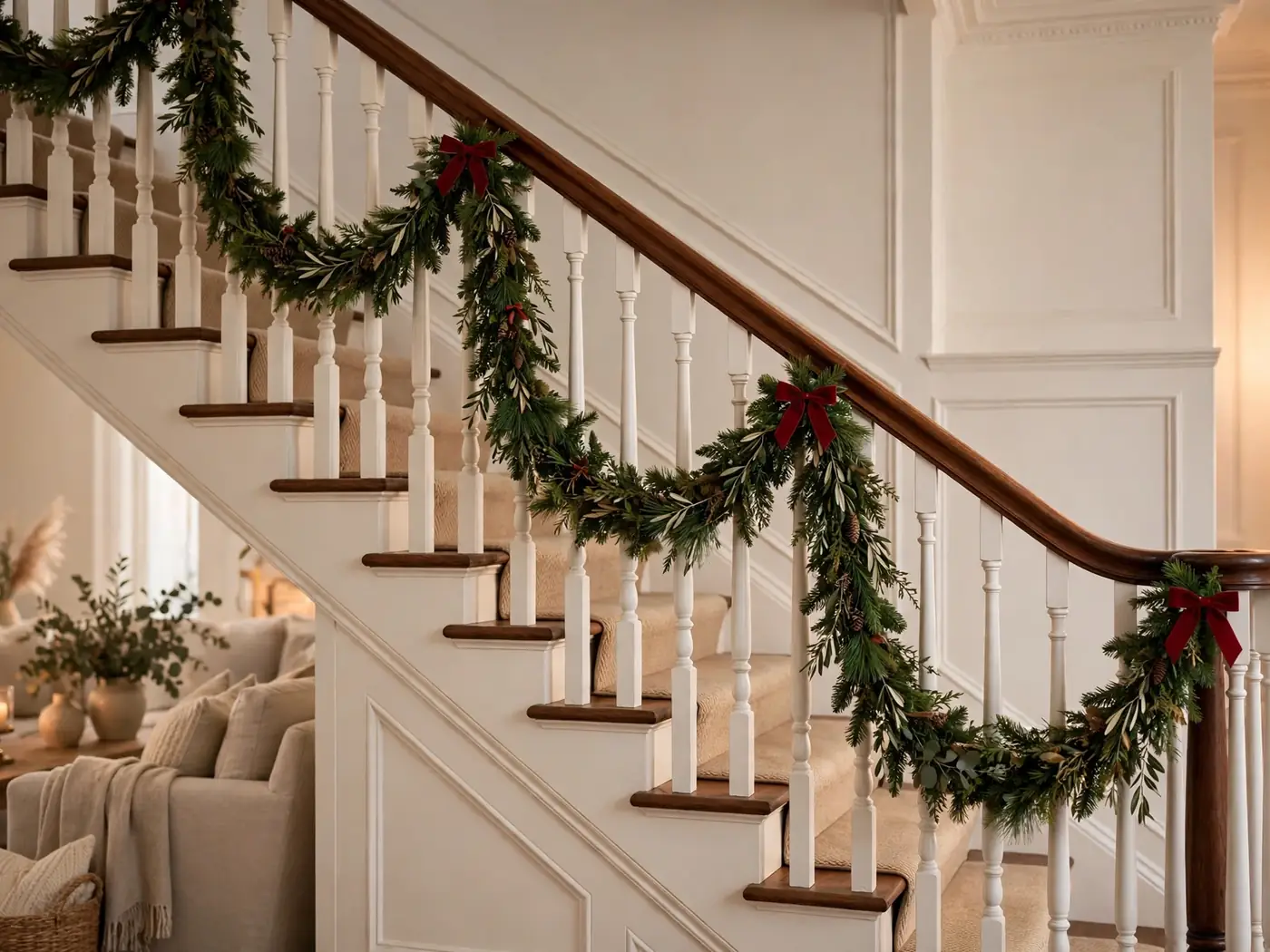
Measure your rail first and buy one and a half times its length so the loops hang generously instead of pulling tight.
Easy swap: Trade the plain pine garland for a cedar one if you want softer, flatter loops.
2. Ribbon Bows Tied at Every Third Baluster
Cut lengths of 2.5-inch wired ribbon in deep red velvet and tie a simple two-loop bow around every third baluster, starting at the newel post and working upward. Keep each bow small, about 4 inches across, and press the tails flat against the spindle so nothing catches on passing clothes or bags.
The rhythm of bow, space, space, bow reads as a pattern from the bottom of the stairs, which is what makes so little ribbon look deliberate.
Seasonal swap: Swap the red velvet for pale linen ribbon in spring and the same bows carry the rail into Easter.
It is the fastest five-minute fix on this whole list.
3. A Lit Garland on the Handrail Only, Balusters Bare
Run a pre-lit garland along the top of the handrail only, fixed with clear cable ties every 12 inches, and leave the balusters completely bare. Choose warm-white battery lights with a timer so there is no cord trailing down the steps, and keep the greenery slim, no wider than the rail itself.
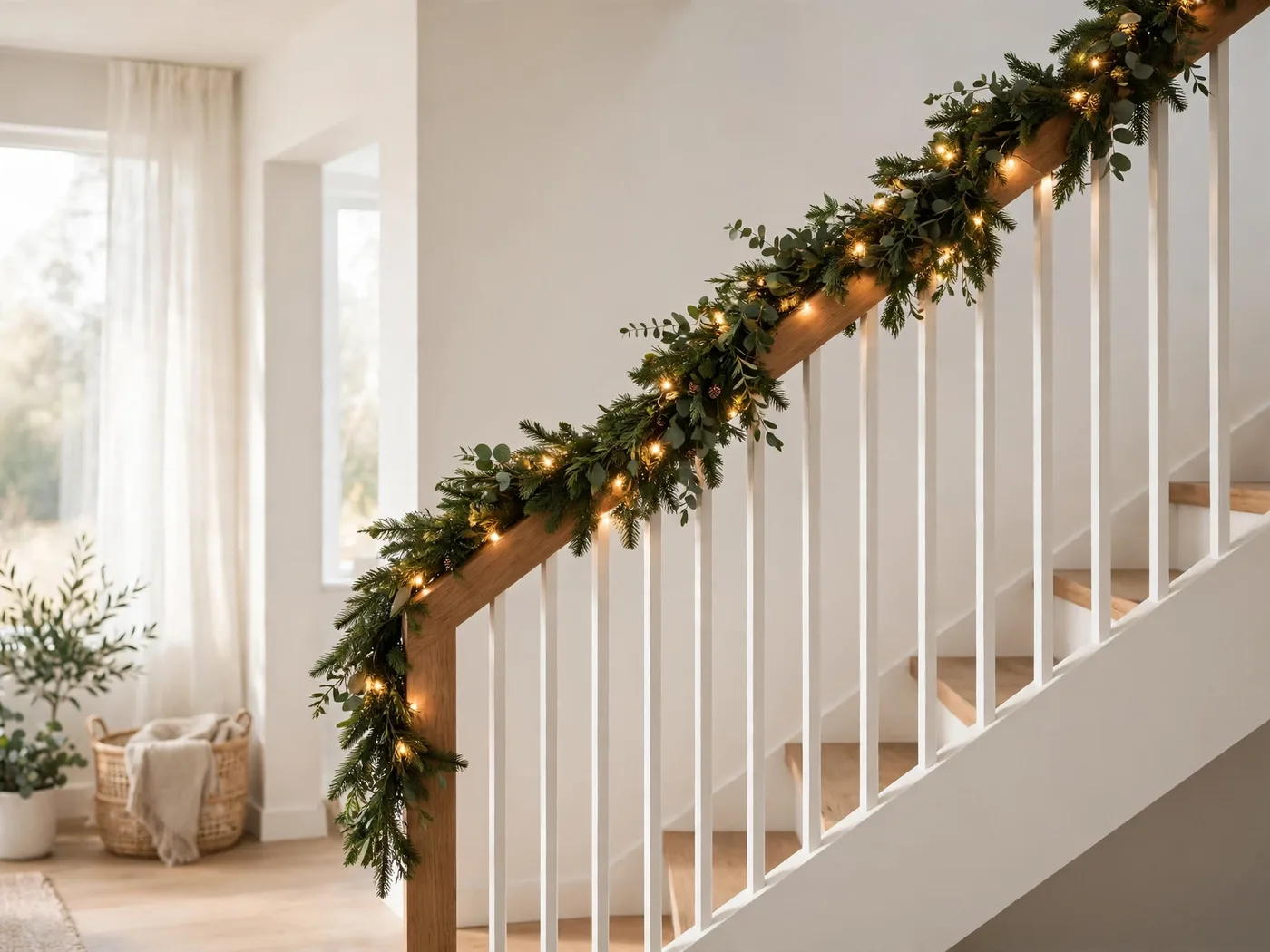
At night the lit line floats above the dark spindles, giving you the full Christmas effect with half the usual fuss.
Why it works:
- The handrail line stays smooth and grippable
- Bare balusters keep the staircase feeling open
- Battery lights mean no trip-hazard cords
4. Stockings Hung Down the Stair Rail on Ribbon
Hang four to six stockings down the outside of the stair rail, each tied with a 12-inch length of grosgrain ribbon in cream or plaid. Space them evenly along the straight run of the banister, high enough that the toes clear the treads by a good margin, and alternate the ribbon colours for a gentle pattern.
Fill them lightly or leave them empty; on a rail they are decoration first, storage second.
Budget note: Stockings you already own and ribbon offcuts cost nothing, so the whole rail display comes in under the price of one new ornament.
It suits any home where the fireplace is already crowded.
5. A White Felt Runner Down the Centre of the Treads
Lay a strip of white felt, cut about 12 inches wide, down the centre of each tread so it reads as a path of snow climbing the stairs. Hold it with double-sided carpet tape at the back edge of every step, leaving the front half of each tread bare wood for safe footing.
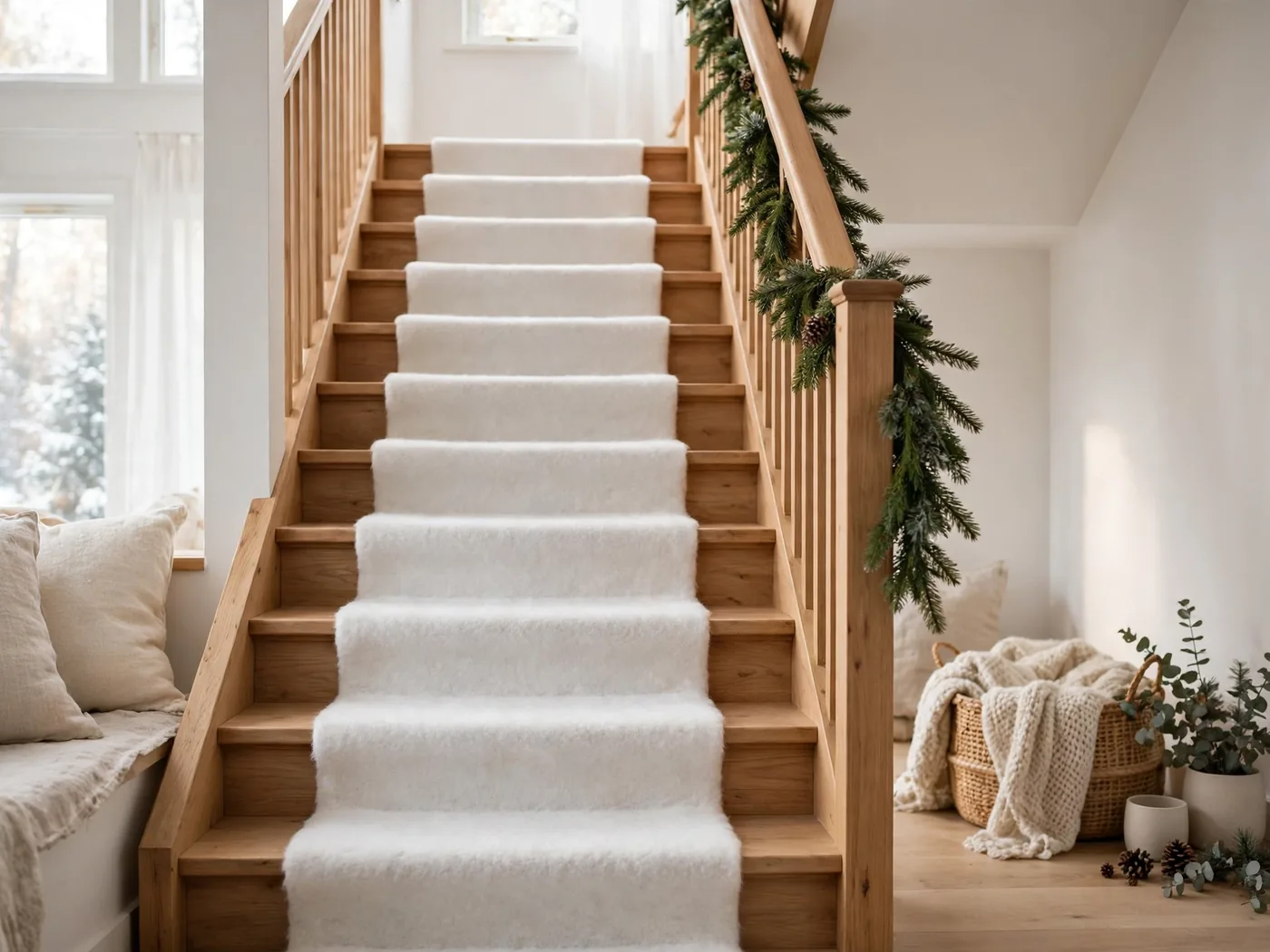
Cut one long strip per flight rather than separate pieces so the line stays unbroken. The white strip also quiets footsteps, which anyone with sleeping children upstairs will appreciate.
The formula: white felt runner + bare wood edges + warm light from the hall
6. Candles in a Row on the Wide Bottom Step
Use the wide bottom step as a stage: line up five flameless pillar candles in ivory, in heights from 4 to 8 inches, along the back edge where feet never land. Set them on a narrow brass tray so the group reads as one piece and stays put if the step gets bumped.
Get the look:
- Main piece: five ivory flameless pillar candles
- Supporting piece: a narrow brass tray
- Texture or material: smooth wax beside brushed metal
- Finishing touch: one pinecone at each end
Guests see it the second they walk in, yet nobody has to step around it.
7. A Wreath on the Newel Post Facing the Door
Hang one full wreath, about 18 inches across, on the front face of the bottom newel post so it greets everyone coming through the door. Use a wide burgundy ribbon looped over the post cap instead of a nail, and pick a wreath of plain pine with a few red berries so it sits happily beside whatever garland you choose for the rail.
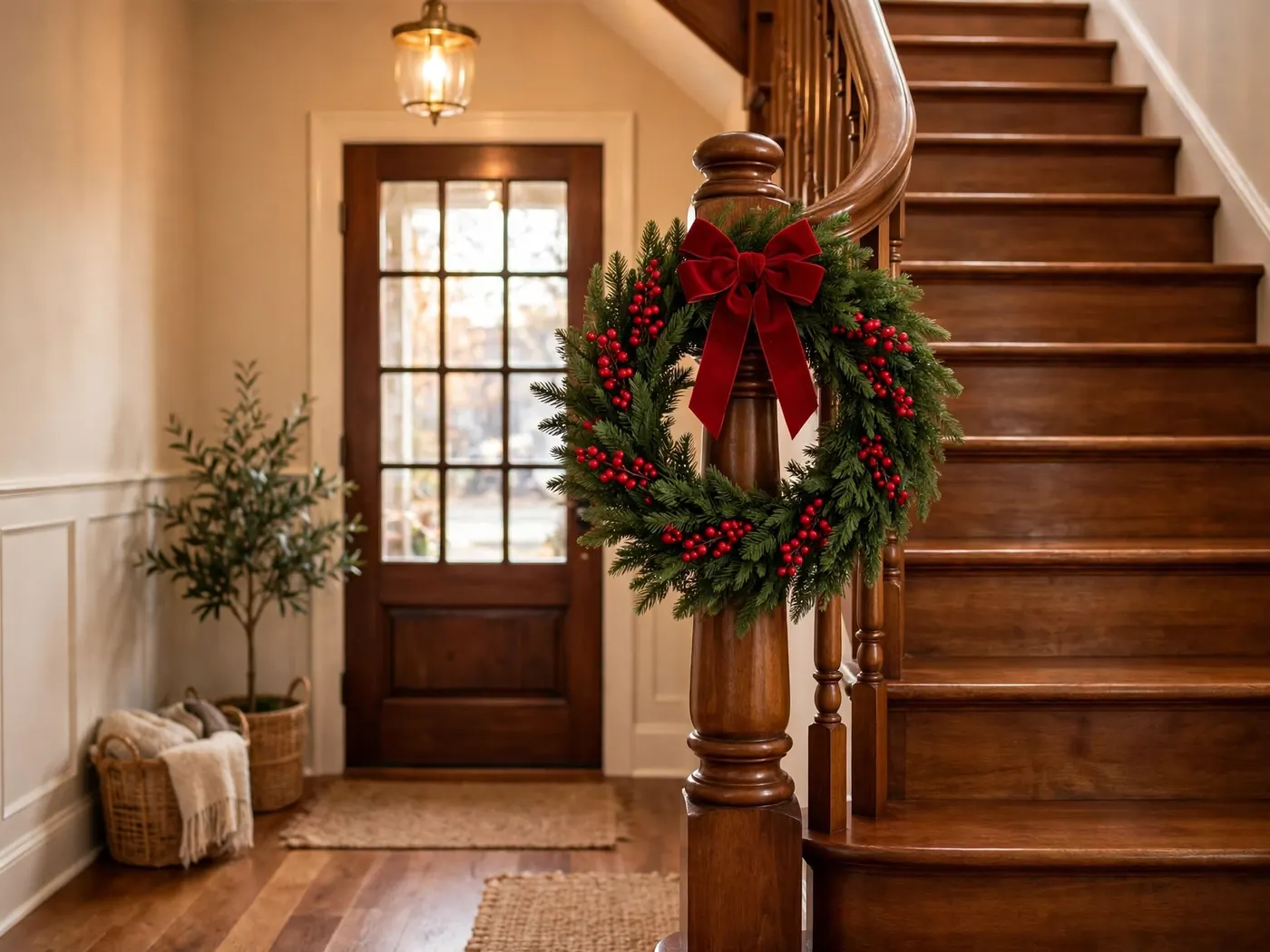
Keep the wreath centred at hand height, roughly a metre from the floor.
Color note: Burgundy and berry red warm up pale pine, while the deep green keeps the post from looking top-heavy.
8. Mini Wreaths Tied to the Banister Spindles
Make or buy mini wreaths about 4 inches wide and tie one to every second or third spindle with a short length of twine, the bows all facing the hall. Mix two greeneries, such as boxwood on one wreath and rosemary on the next, so the row has gentle variation without looking mismatched.
Hang them at the same height on each spindle so the eye reads one tidy rhythm.
Texture note: Smooth boxwood leaves against wispy rosemary give the row a soft, layered feel that plain pine alone cannot match.
It is a good use for leftover greenery cuttings from the tree.
9. Pinecone Clusters Wired Along the Rail
Group pinecones in clusters of three, wire the stems together with thin florist wire, and fix a cluster to the rail at every metre or so, just under the handrail. Leave the cones natural brown, or brush the tips of every second cluster with white paint for a frosted effect that catches the light. Because the clusters sit tight against the rail, nothing dangles into the path of hands or sleeves.
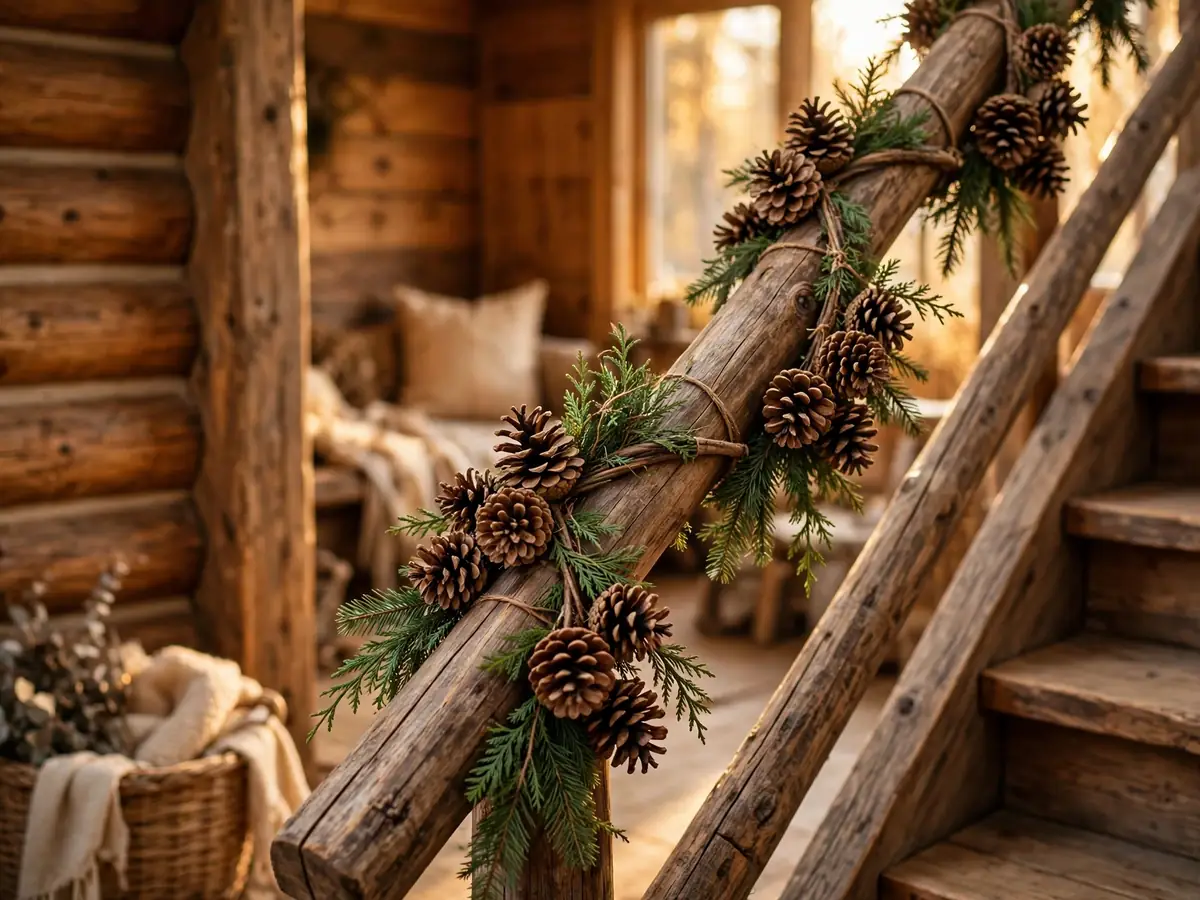
Collect cones in October and bake them briefly at a low heat so they open fully and shed any insects before wiring.
Best for: rustic staircases and homes that gather their own cones on autumn walks.
10. Two-Tone Garland: Dark Green Rail, Frosted Landing
Split the staircase into two colour zones. Run a dark green pine garland down the main rail, then switch to a flocked, snow-white garland around the landing balustrade, keeping the same ribbon colour on both so the change looks planned rather than patched. The pale garland at the top reflects what little light the landing gets and makes the upper hall feel brighter.
Space note: Two-storey stairwells have the height for a colour change; on a short single flight, keep one tone so the stairs do not look chopped in half.
It gives a tall stairwell the drama it can easily carry.
11. Bells on a Ribbon at the Bottom Newel Post
Tie a cluster of five or six brass sleigh bells onto a red ribbon and loop it around the bottom newel post at hand height. The bells should sit in one bunch, roughly the size of a grapefruit, so they ring softly when someone brushes past but never swing into the walkway.
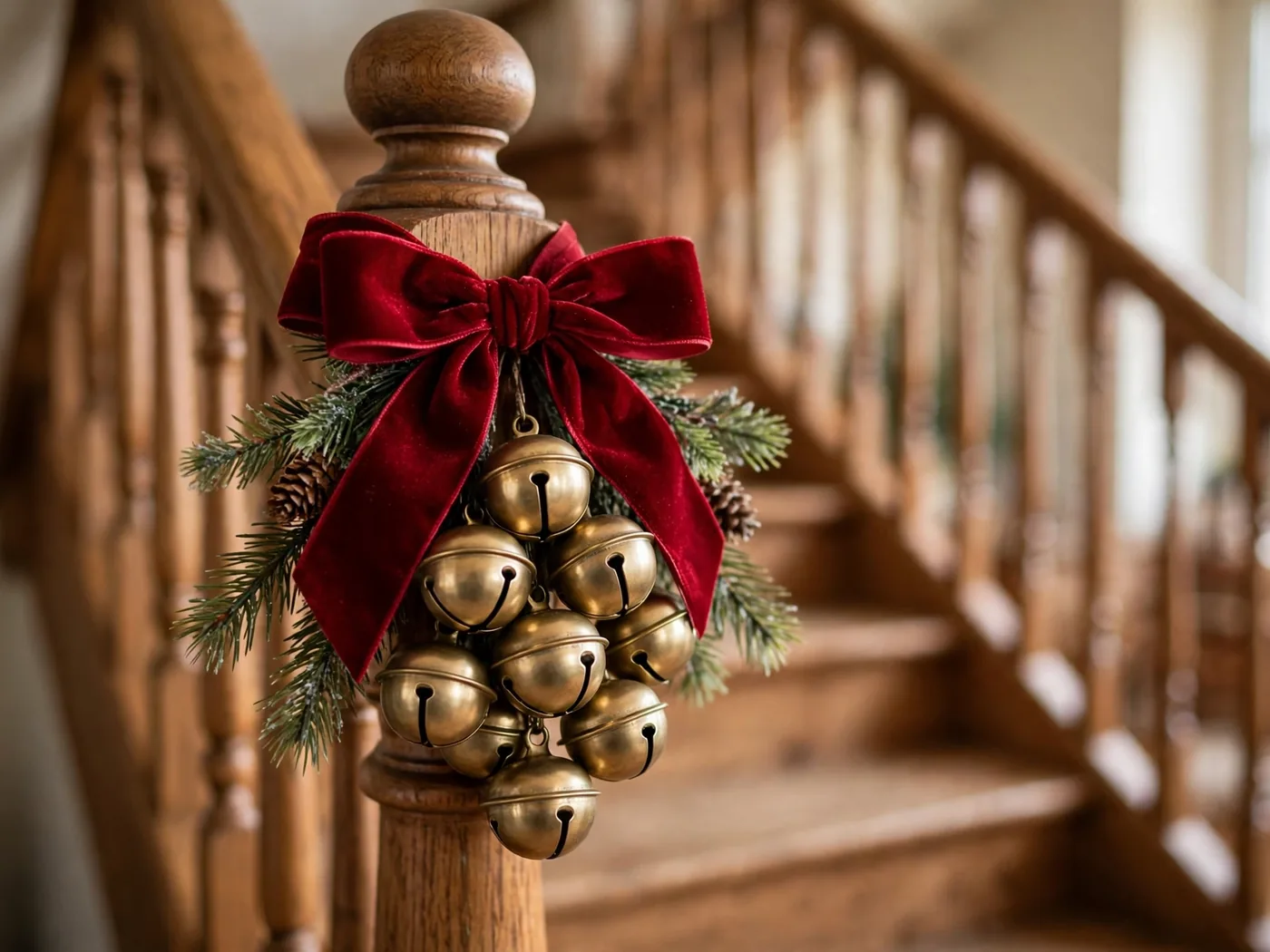
Choose bells with a mellow tone rather than a bright jingle; you will hear them a hundred times a day.
Fit check: Before you tie the final knot, walk the stairs carrying a laundry basket and check the bells clear your hip and the basket edge.
12. A Basket of Greens at the Foot of the Stairs
Set a wide wicker basket at the foot of the stairs and fill it with loose greenery: pine branches, a few stems of eucalyptus and two or three birch logs standing upright. Tuck one short string of warm fairy lights through the branches so the basket glows gently in the evening.
It fills the awkward triangle where the stairs meet the hall, the same in-between space that good christmas hallway ideas have to solve.
Style note: Standing the birch logs upright gives the arrangement height, which is what lifts it from a pile of cuttings to a display.
On a grey December morning it is the first green thing you see.
13. Framed Family Christmas Photos Up the Stair Wall
Print family Christmas photos from years past in black and white, frame them in matching thin black frames, and hang them up the stair wall following the slope of the banister. Keep the bottom edges of the frames on one rising line, about a metre above the treads, and space them a hand’s width apart. Start with the oldest photo at the bottom so the family quite literally grows up the stairs.
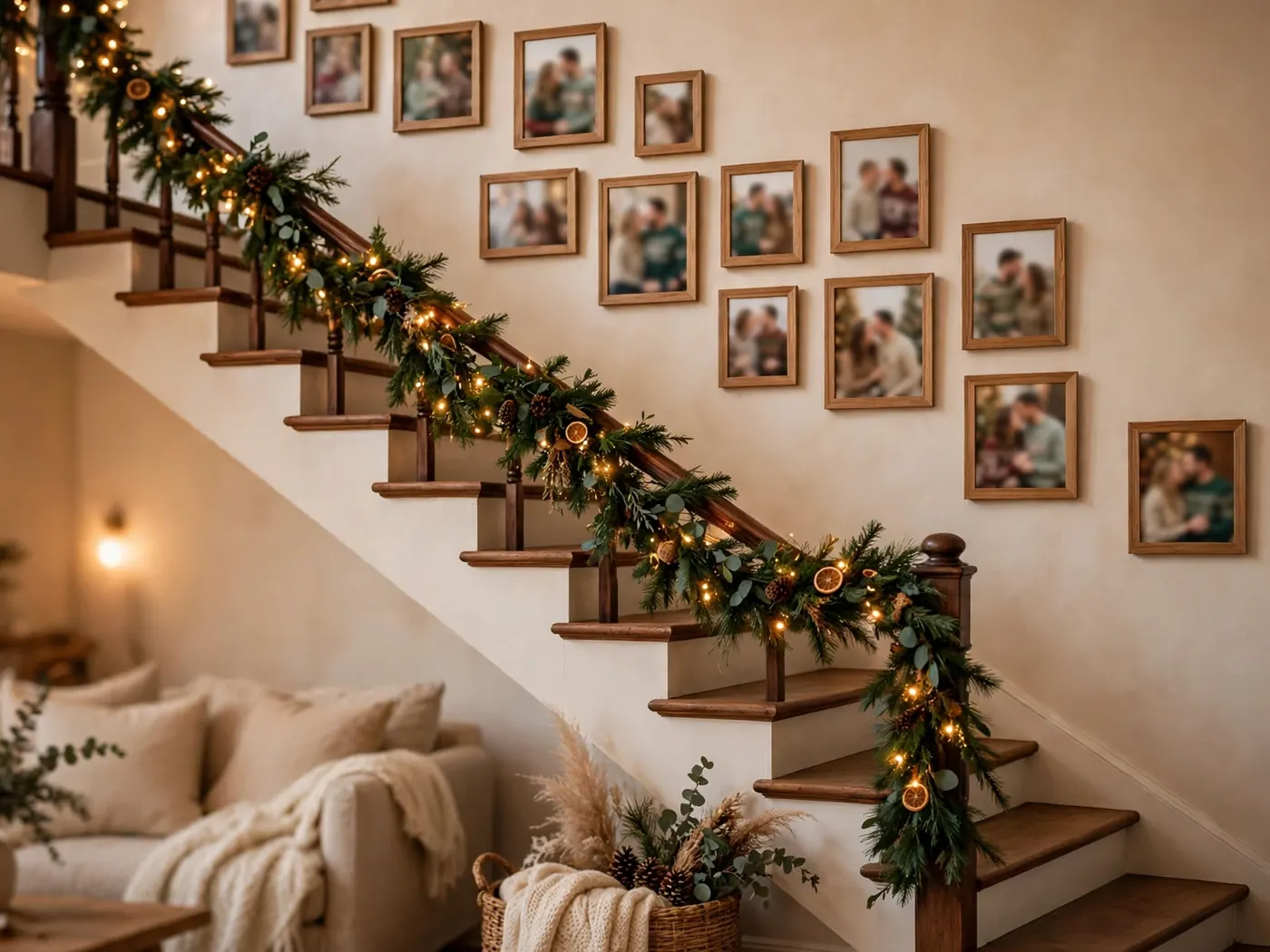
Use removable strips if your walls are freshly painted.
Easy swap: No old photos handy? Frame this year’s Christmas cards the same way instead.
14. A Velvet Ribbon Woven In and Out of the Balusters
Take a long length of deep green velvet ribbon, about 4 centimetres wide, and weave it in and out of the balusters from the newel post to the top of the flight. Keep the weave loose and even, with the same amount of ribbon showing on each side, and finish with a small knot hidden behind the top baluster.
Seasonal swap: The same weave in a rust or amber velvet works for autumn, so the technique earns its keep twice a year.
Children love running a hand along it on the way up to bed.
15. Candles in Glass Hurricanes on the Landing
On a half-landing wide enough to spare, set two glass hurricane vases on the floor against the wall, each holding a thick ivory pillar candle, real or flameless. Keep them well back from the turning path of feet, and add a small pile of pinecones beside the glass for a finished corner. The glass shields the flame from the draught every staircase creates.
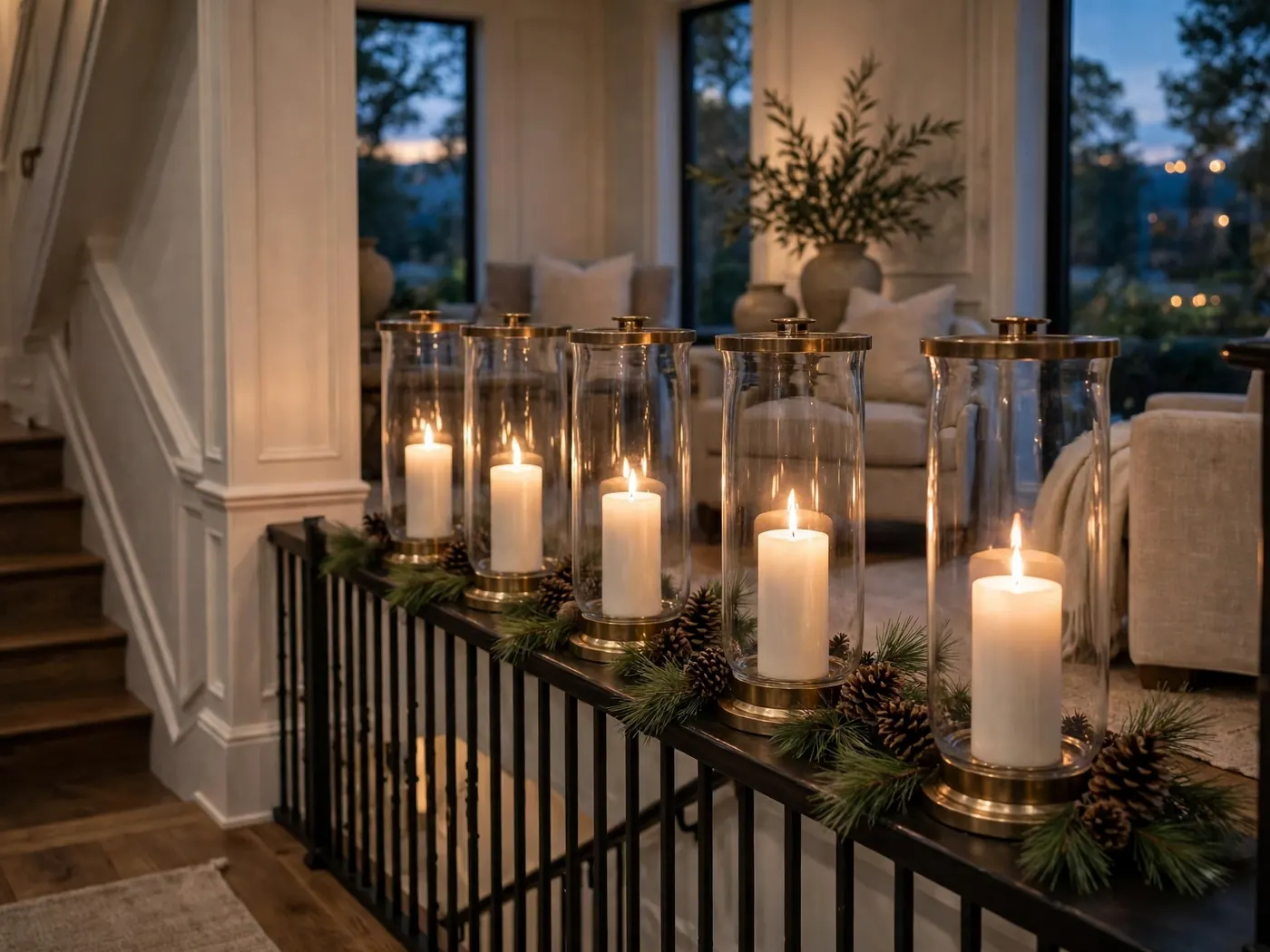
Light them only when the house is awake and about.
Why it works:
- The landing is dead space that finally gets a job
- Glass makes candlelight look doubled
- Nothing hangs, so nothing can be knocked down
16. A Plaid Runner Swapped In for the Season
Swap your everyday stair runner for a plaid one in red, green and cream just for December, keeping the same rods or gripper tape so the change takes an hour at most. The pattern hides the mud and pine needles that December feet drag in, which plain runners show mercilessly. Roll the old runner up and store it flat under a bed until January.
Budget note: A washable plaid runner from a discount home store costs less than a takeaway dinner and will serve for many Christmases.
It also muffles the early-morning thunder of excited feet.
17. Fairy Lights Woven Through the Balusters Only
Weave a single strand of warm-white fairy lights in and out of the balusters, one gentle loop per spindle, and add nothing else: no garland, no bows. Run the strand from a socket at the bottom or use a battery pack taped behind the newel post, and keep the wire against the back face of each spindle.
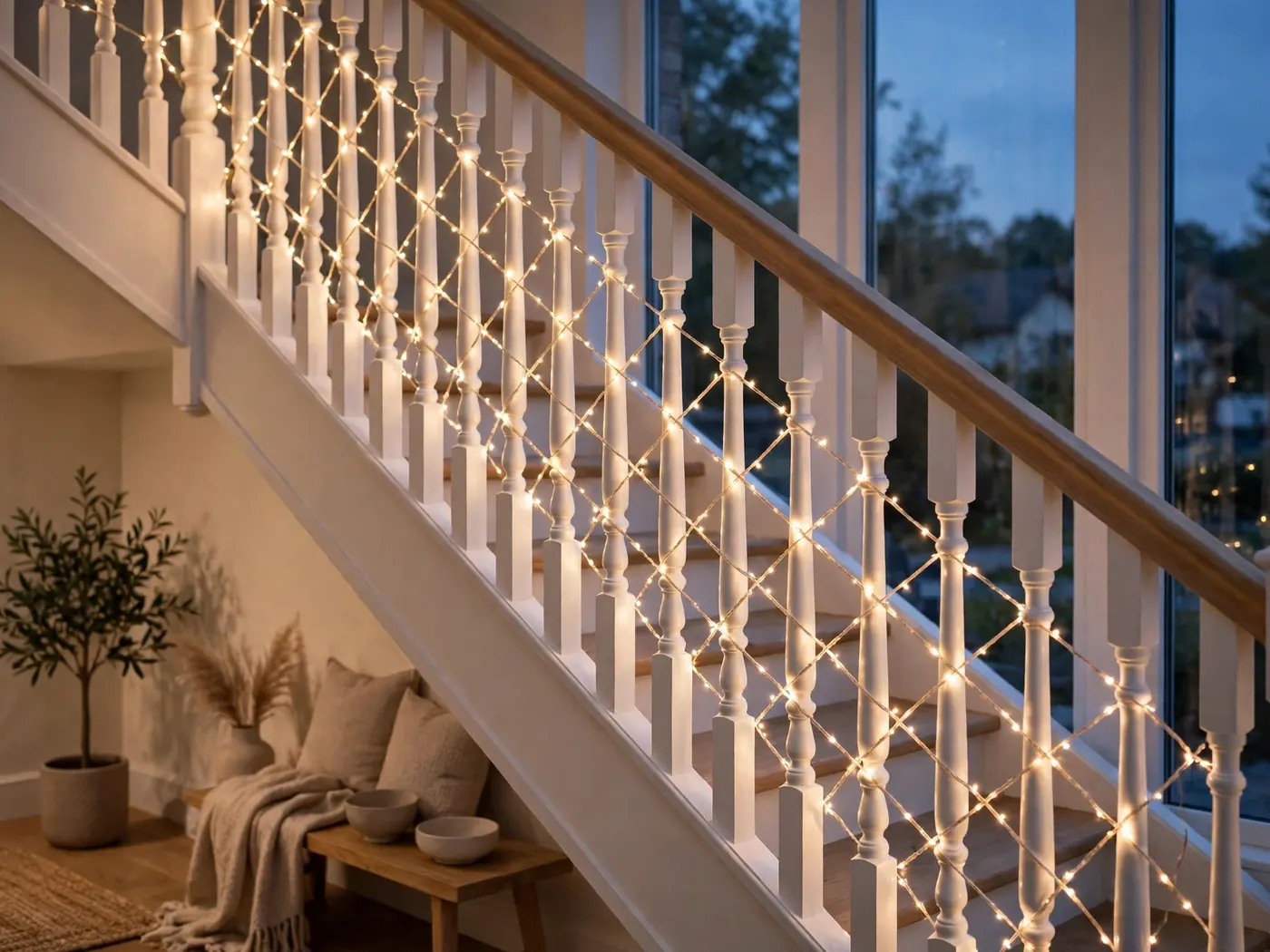
In daylight the staircase looks almost undecorated; the effect is saved entirely for the evening. Copper-wire strands bend easiest and nearly disappear against dark wood.
The formula: one light strand + bare wood + darkness after six o’clock
18. An Advent Countdown of Small Bags Down the Rail
Fill twenty-four small linen bags with a sweet or a note each, number them with stamped tags, and tie them at intervals down the rail with twine. Hang them on the outside face of the balusters so small hands can reach the string without leaning across the steps, one bag opened each morning.
Get the look:
- Main piece: twenty-four numbered linen bags
- Supporting piece: natural twine ties
- Texture or material: rough linen against smooth wood
- Finishing touch: a star tag on the last bag
By Christmas Eve the rail has told the whole month’s story.
19. A Single Oversized Bow Where the Rail Turns
Where the handrail turns at a landing or corner, fix one oversized bow made from wide wired ribbon, about 30 centimetres across, in a rich cranberry red. Let the tails hang a full 30 centimetres down the newel post, and leave the rest of that flight bare so the bow owns the corner completely.
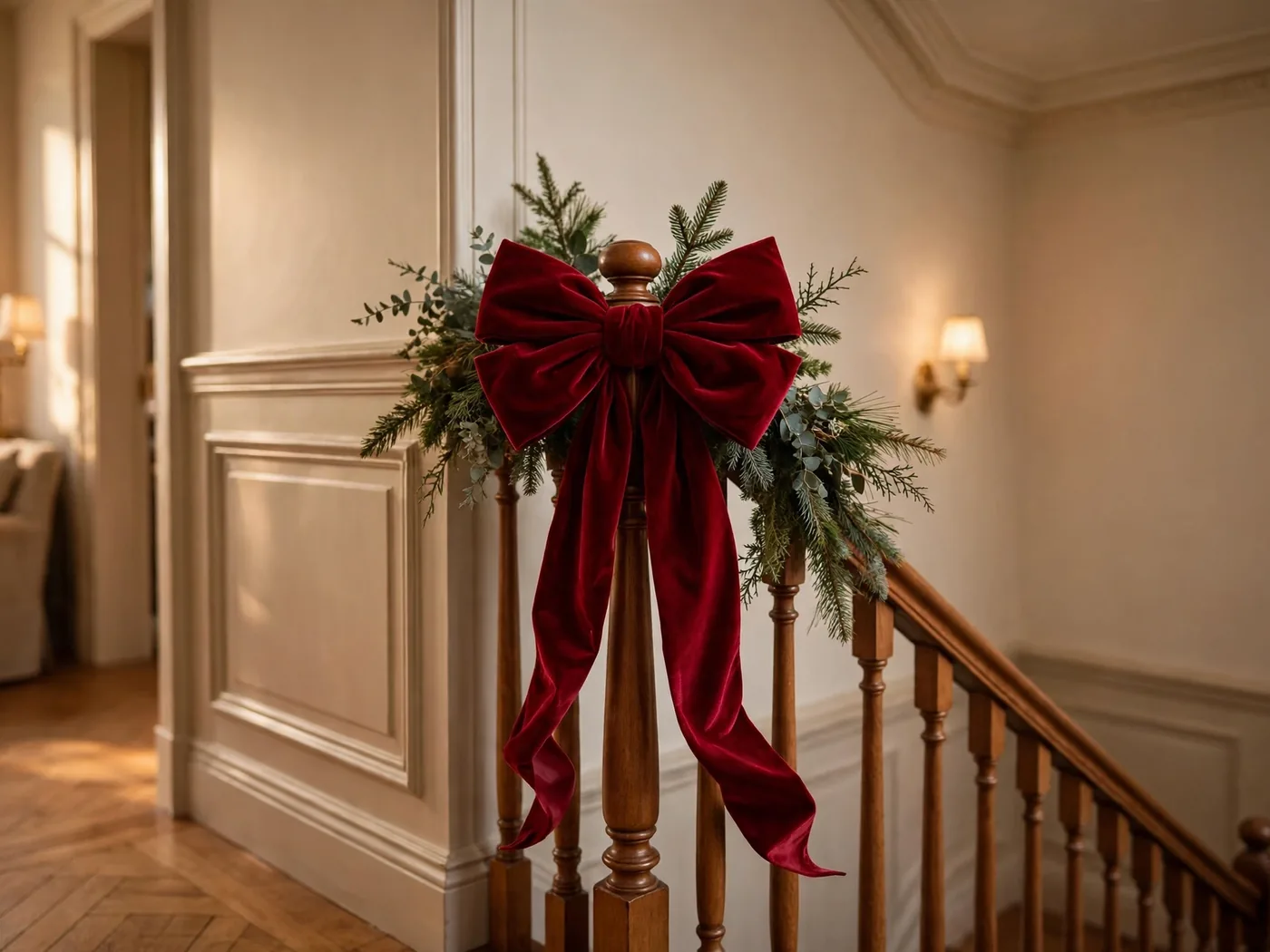
Wired ribbon matters here; floppy ribbon will not hold a bow at this scale.
Color note: Cranberry red against honey-coloured wood reads warm and traditional, while the same bow in ivory would turn the corner calm and wintry.
20. Greenery Tucked Into the Rail Corners, Nothing Hanging
For the quietest possible staircase, tuck small sprigs of greenery only into the corners where the rail meets each newel post and where the balustrade meets the wall. Use short cuttings of pine, cedar and a little silvery eucalyptus, wired in place so nothing hangs, trails or drops needles onto the treads.
Texture note: Flat cedar, spiky pine and round eucalyptus leaves give three textures in a few square inches, which is why so little greenery still registers.
If your taste runs calm, this is the one idea on the list to copy exactly.
Pick one idea for the rail and one for the wall, and your staircase will look dressed from the first of December to Twelfth Night. Everything here comes down in minutes, so January can have its calm, clear stairs back.