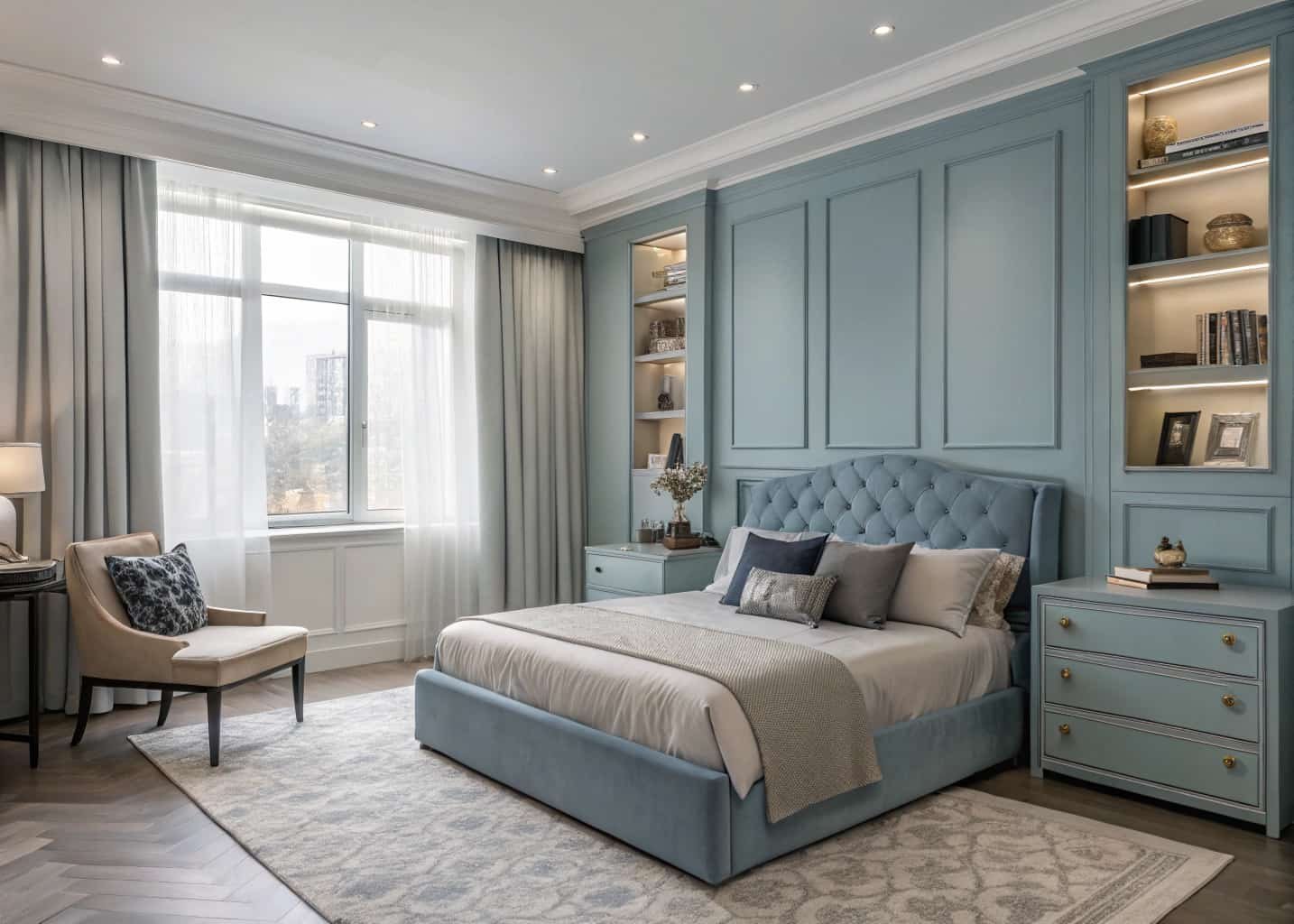
You’ve repainted the walls, bought a new duvet cover, added a plant in the corner — and the room still doesn’t feel finished. It’s not messy, exactly. It’s just… flat. Nothing draws the eye, nothing feels intentional, and you can’t quite put your finger on why a room from a magazine spread feels so much more alive than yours.
Here’s the secret most home decor advice skips over: a beautiful bedroom isn’t built from a shopping list. It’s built from a handful of design principles — the same ones professional interior designers rely on over and over, no matter the style or the budget. Once you understand these principles, you stop guessing and start designing on purpose.
This guide walks through the exact building blocks designers use to turn an ordinary bedroom into one that feels curated, calm, and completely yours.
Why the Rule of Three Works So Well
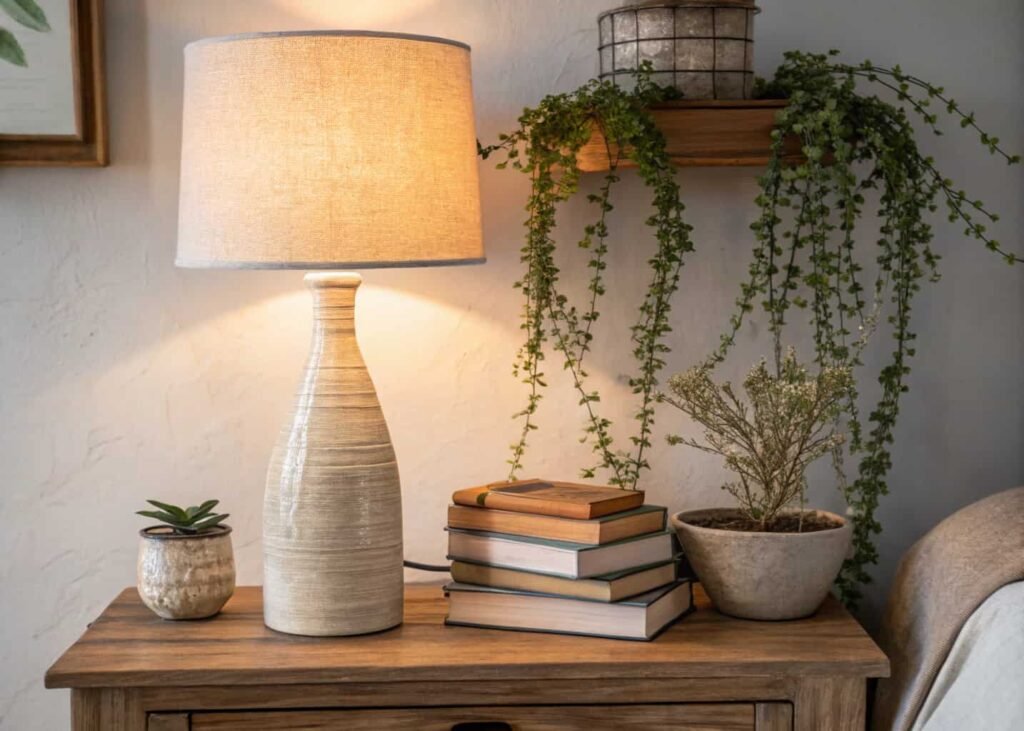
Interior designers love odd numbers, and the Rule of Three is the reason why. Grouping objects — pillows, candles, framed art, books on a nightstand — in sets of three (or five) creates visual interest that even numbers simply don’t. Our eyes are drawn to asymmetry within a group, because it feels more natural and less staged than a perfectly matched pair.
This is why a nightstand styled with a lamp, a small stack of books, and a single plant looks intentional, while the same nightstand with just a lamp and a candle looks like an afterthought. The rule works because it forces variation in height, shape, and texture, which is exactly what makes a vignette feel designed rather than accidental.
Quick Tip: Next time you style a shelf or nightstand, resist the urge to buy a matching pair of anything. Grab three items of different heights instead — you’ll notice the difference immediately.
Scale and Proportion in Furniture Selection
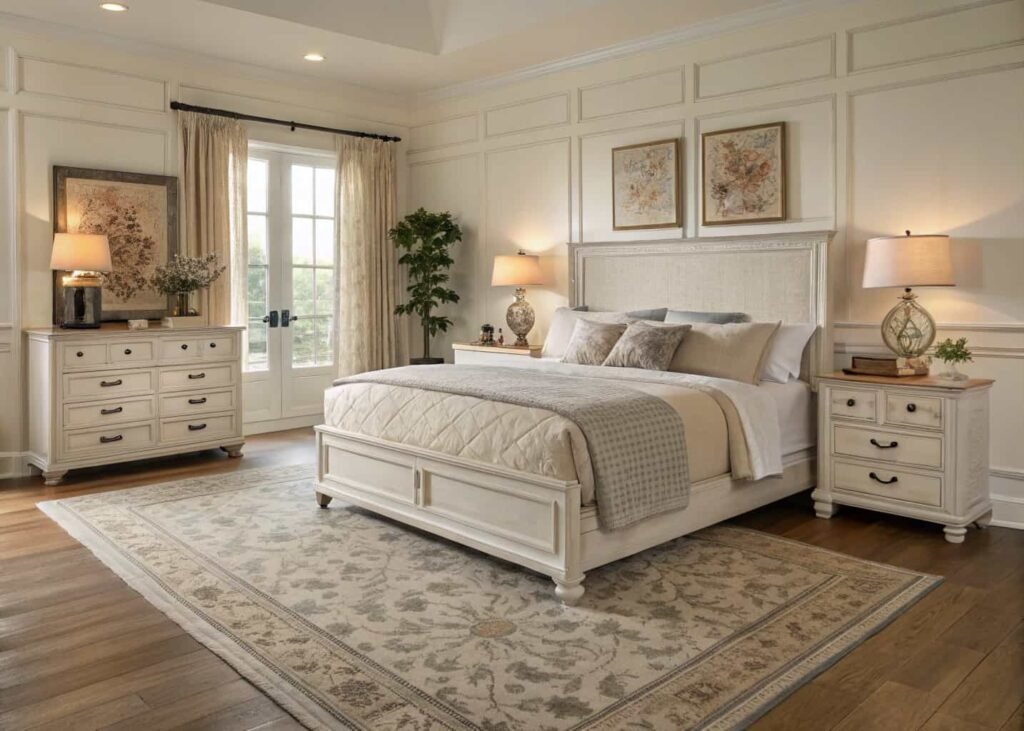
Before color or texture, designers think about scale — how big a piece of furniture is relative to the room and to the other pieces around it. A bed that’s too small for the room makes the whole space feel unfinished, while an oversized dresser in a small bedroom can make it feel cramped no matter how nice the piece is on its own.
Getting proportion right means looking at your room as a set of relationships, not a collection of individual purchases. A tall headboard needs breathing room above it. A low platform bed pairs better with low nightstands than tall ones. Matching the visual weight of your furniture keeps the whole room feeling balanced instead of lopsided.
| Furniture Piece | What to Look For | Why It Works |
|---|---|---|
| Bed frame | Should fill roughly two-thirds of the wall it sits against | Prevents the bed from looking lost or overwhelming |
| Nightstands | Height close to the top of your mattress | Keeps sightlines even and easy to reach from bed |
| Area rug | Large enough for at least the front legs of furniture to sit on it | Anchors the furniture instead of floating in the room |
Designer Tricks for Small Bedrooms
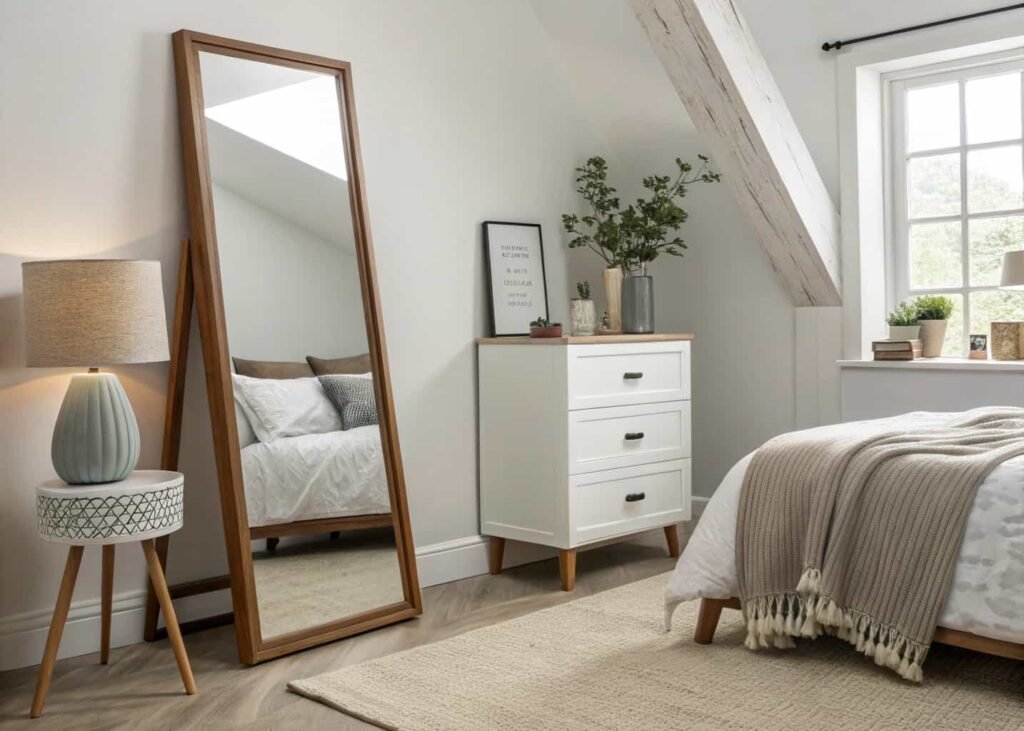
Small bedrooms don’t need less furniture — they need smarter choices. Designers lean on tricks like floating furniture away from walls slightly to create depth, using vertical space with tall mirrors or drapery hung close to the ceiling, and choosing furniture with visible legs so light can pass underneath and make the floor feel larger.
The biggest shift in thinking is realizing that a small room doesn’t have to look small. It has to look considered. A few well-chosen, well-placed pieces almost always read as more spacious than a room crammed with furniture trying to serve every possible function.
| Old Rule | What Works Better Now |
|---|---|
| Push all furniture against the walls | Float pieces slightly to create visual depth |
| Choose smaller furniture to “fit the space” | Choose fewer, well-scaled pieces with visible legs |
| Avoid mirrors to save wall space | Use a large mirror as a light-bouncing focal point |
Creating a Focal Point in the Room
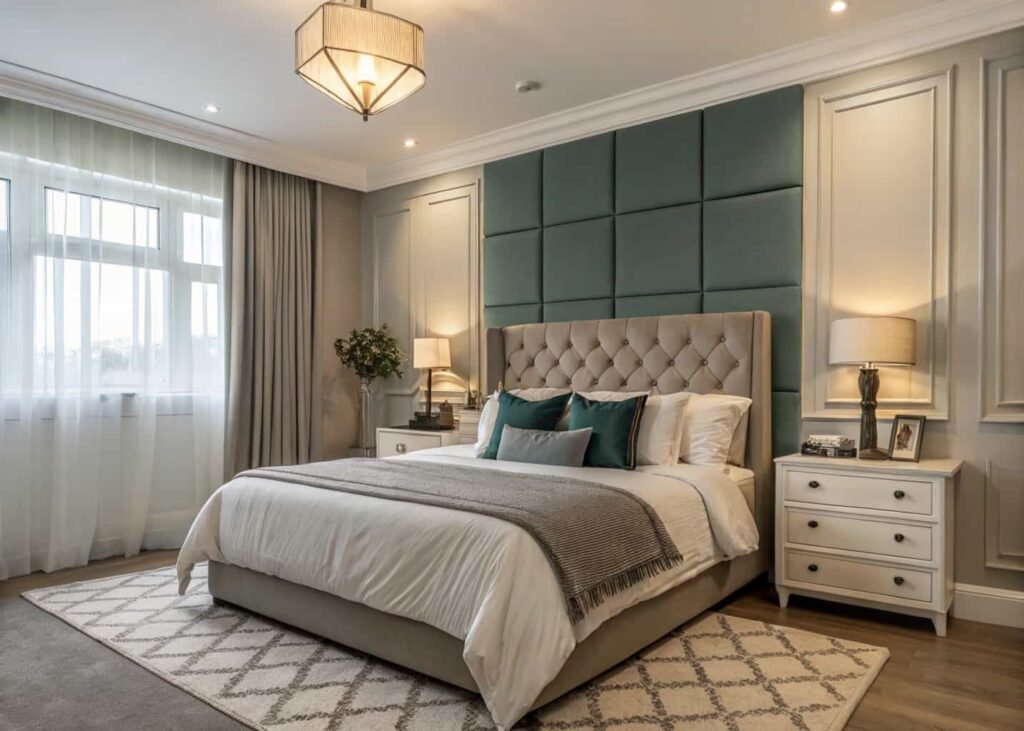
Every well-designed bedroom has one thing your eye lands on first — a headboard, a piece of art, a statement light fixture. Without a focal point, the eye wanders and the room feels unresolved, even if every individual element is attractive.
Give one element permission to stand out. This is one of the simplest shifts you can make: pick a single feature and let it lead. That might mean a bold wallpapered wall behind the bed, an oversized piece of art, or a dramatic pendant light. Once that one element is doing the heavy lifting, everything else in the room can stay quieter and more supportive, which actually makes the whole space feel more cohesive.
Image prompt: Real-photography bedroom shot with a bold accent wall behind the headboard as the clear focal point, rest of the room styled in calm neutral tones. Alt text: Bedroom accent wall used as the room’s main design focal point
Balancing Symmetry and Asymmetry
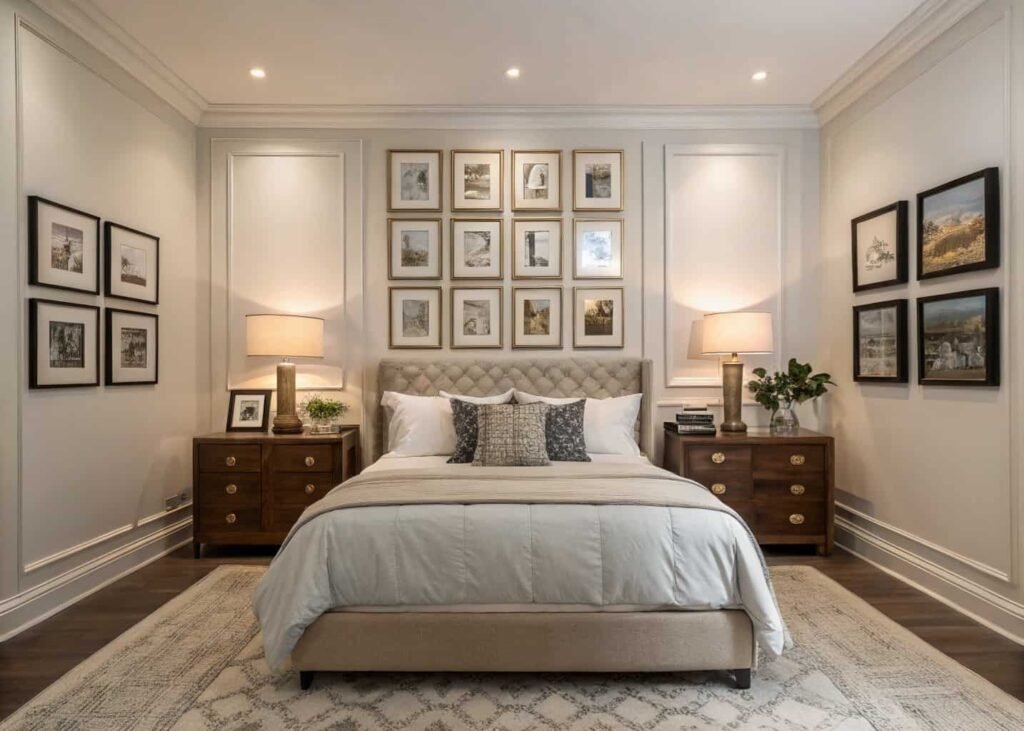
Symmetry feels calm and grounded — think matching nightstands and lamps on either side of the bed. Asymmetry feels more dynamic and collected, like a single oversized art piece off to one side. The best bedrooms usually use both: a symmetrical base, like matching nightstands, paired with asymmetrical details, like an off-center gallery wall or a single reading chair in one corner.
Designers rarely commit fully to one or the other, because pure symmetry can feel stiff and pure asymmetry can feel chaotic. The balance between the two is what gives a room its personality while still feeling put together.
Choosing a Cohesive Material Palette
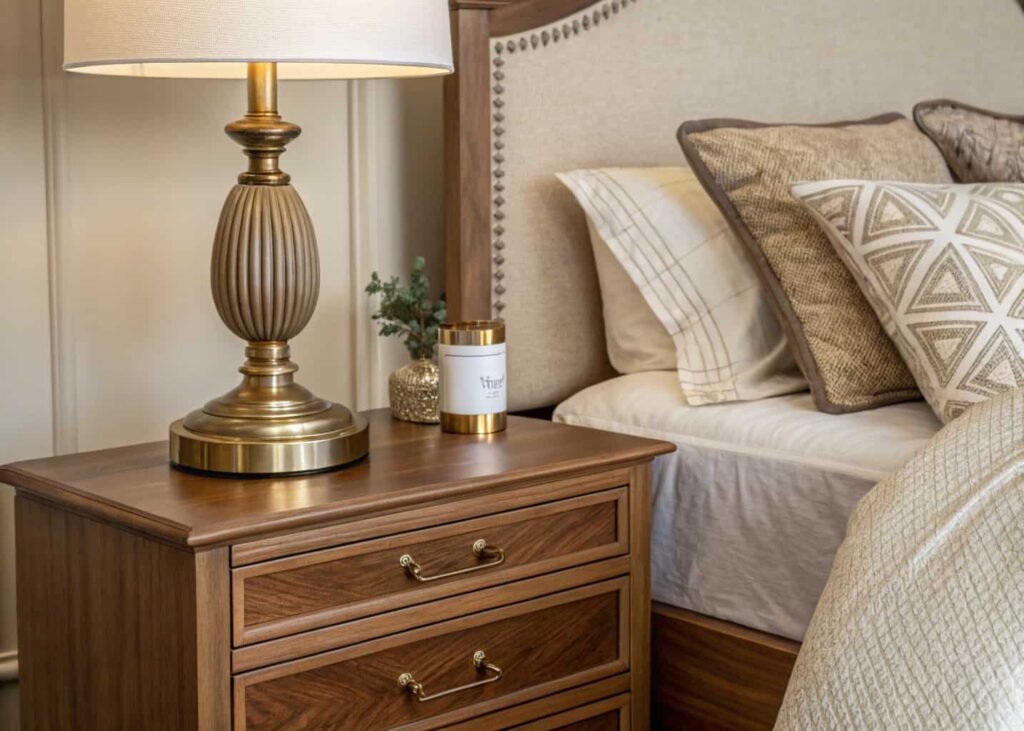
Just as you’d choose a color palette, designers choose a material palette — a small, deliberate set of textures and finishes that repeat throughout the room. This might mean warm wood tones, brushed brass hardware, and linen textiles showing up in the bed frame, lighting, and curtains alike.
When materials feel random — glossy black metal next to rustic reclaimed wood next to glass — a room can feel disjointed even if the colors match. Sticking to two or three core materials and letting them repeat is what gives a bedroom its sense of quiet consistency.
Textile Mixing Rules Designers Follow
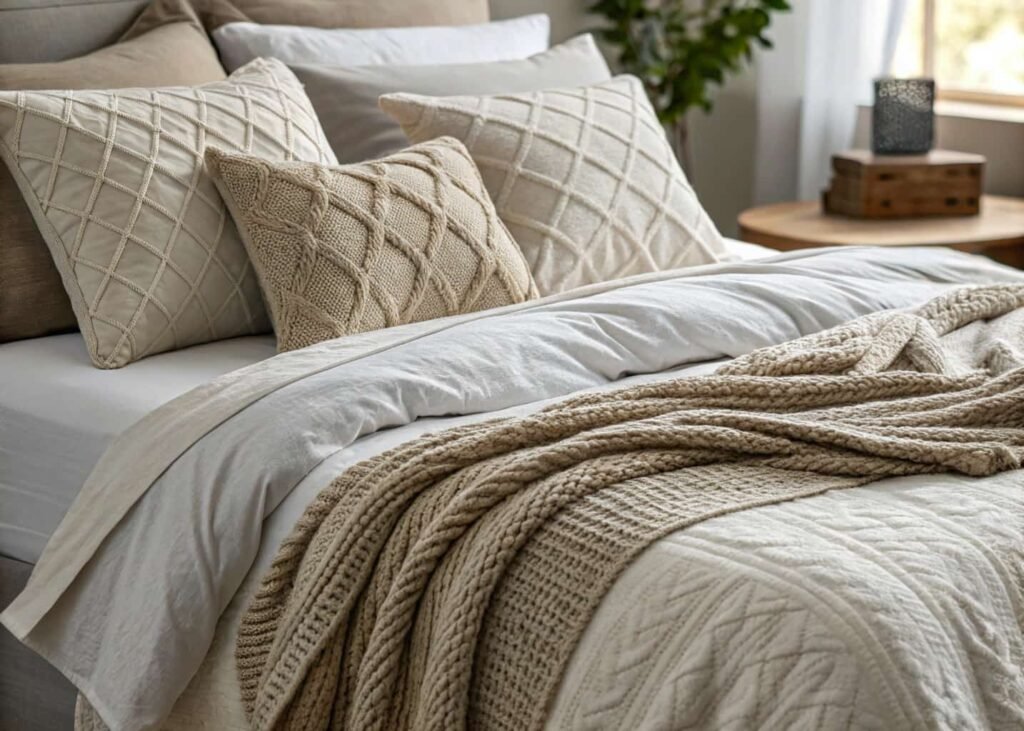
Layering textiles is how a bed goes from “made” to “styled.” Designers mix textures deliberately: a chunky knit throw against smooth cotton sheets, a linen duvet with a few velvet accent pillows. The goal is contrast in texture, not necessarily in pattern — too many competing patterns can undo the calm feeling a bedroom is meant to have.
A simple starting formula is one solid base layer, one textured throw, and two to three pillows in varied but complementary textures. This keeps the bed feeling layered and inviting without turning into visual clutter.
Common Design Mistakes to Avoid
Even well-intentioned bedrooms can tip into feeling overdone. If a space feels too busy, too cold, or too staged, it’s usually one of these common missteps at play — and each one has a simple fix.
- If matching everything feels too sterile, try mixing one antique or vintage piece into an otherwise modern room instead.
- If a bold color scheme feels overwhelming, try applying it to just one wall or one large textile instead of the whole room.
- If your gallery wall feels cluttered, try grouping fewer, larger frames instead of many small ones.
- If your lighting feels flat and clinical, try swapping one overhead fixture for two or three lower, warmer light sources.
- If your room feels like a showroom, try adding one personal, imperfect object — a handmade item or a well-loved book stack.
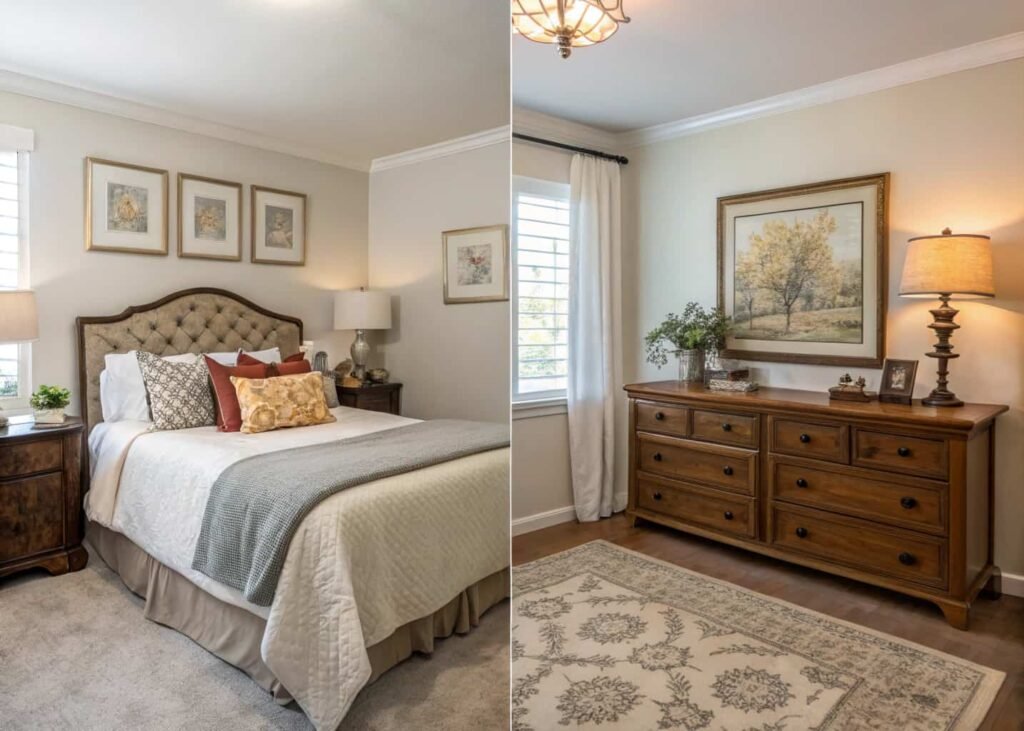
Designer Approach to Layered Lighting
Professional designers almost never rely on a single overhead light. Instead, they layer three types of lighting: ambient (overall room light), task (reading lamps near the bed), and accent (smaller decorative lighting like a picture light or a dimmable strand). This layering is what gives a bedroom the soft, warm glow you notice in well-designed spaces, versus the flat brightness of a single ceiling fixture.
Make it easier when you want to: if rewiring or adding fixtures feels like too much, plug-in sconces and battery-operated picture lights let you layer lighting without any electrical work at all.
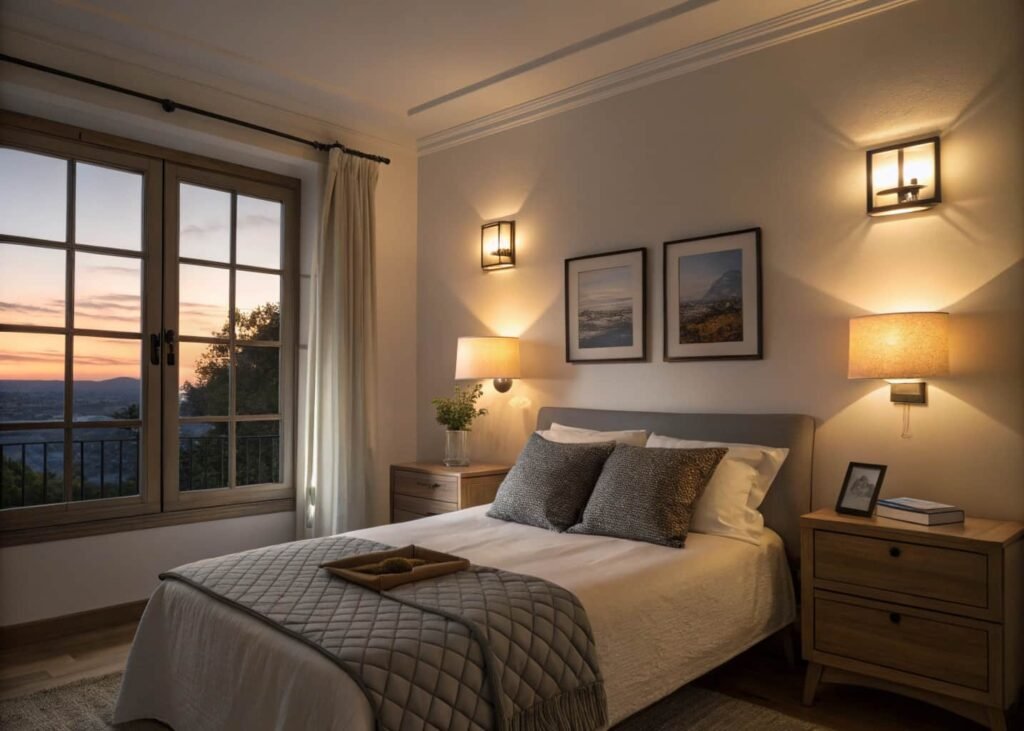
Using Negative Space Effectively
Negative space — the empty, unstyled areas of a room — is just as important as the furniture and decor filling it. A bedroom where every surface is covered in objects starts to feel cluttered no matter how nice each individual item is. Designers deliberately leave breathing room: an empty stretch of wall, an uncluttered corner, a nightstand with just one or two objects instead of five.
This restraint is often what separates a “styled” room from a “decorated” room. Give your best pieces space to be noticed, rather than competing for attention with everything else around them.
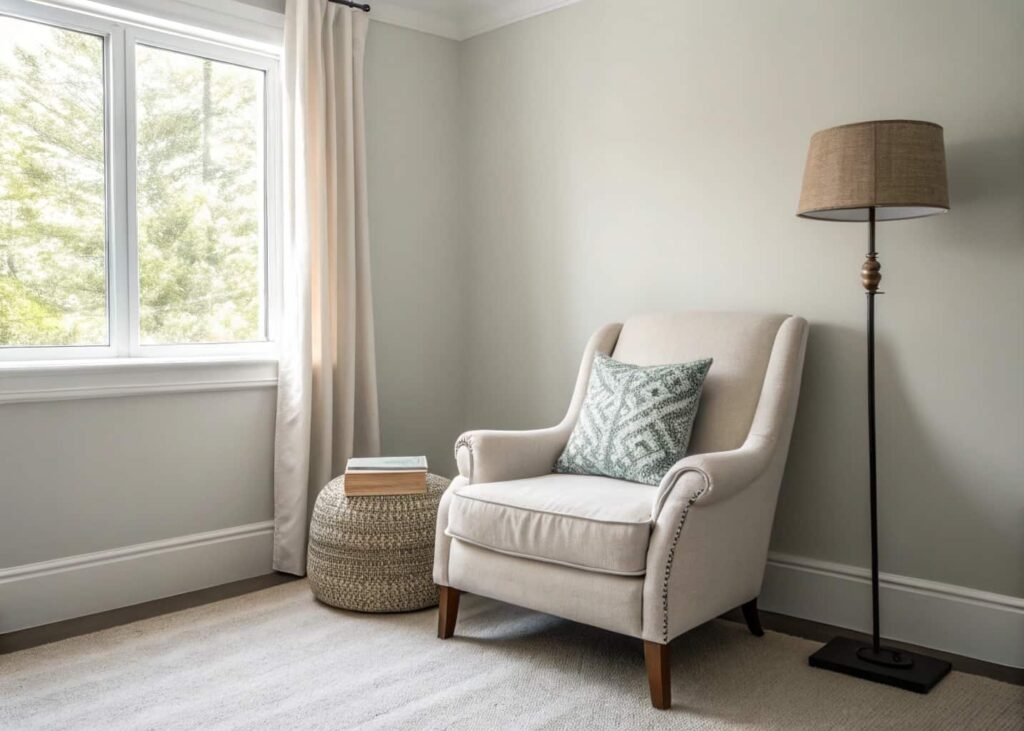
Selecting Artwork Like a Professional
Designers choose artwork based on scale and placement before they even consider subject matter or color. A too-small piece of art floating above a large headboard is one of the most common styling mistakes in bedrooms. As a general guide, art above a bed should span roughly two-thirds the width of the headboard, and should hang so its center sits at eye level when standing.
Beyond size, look for one piece that genuinely means something to you rather than filling wall space with generic prints. A single meaningful piece, well-scaled and well-placed, does more for a room than a wall full of forgettable ones.
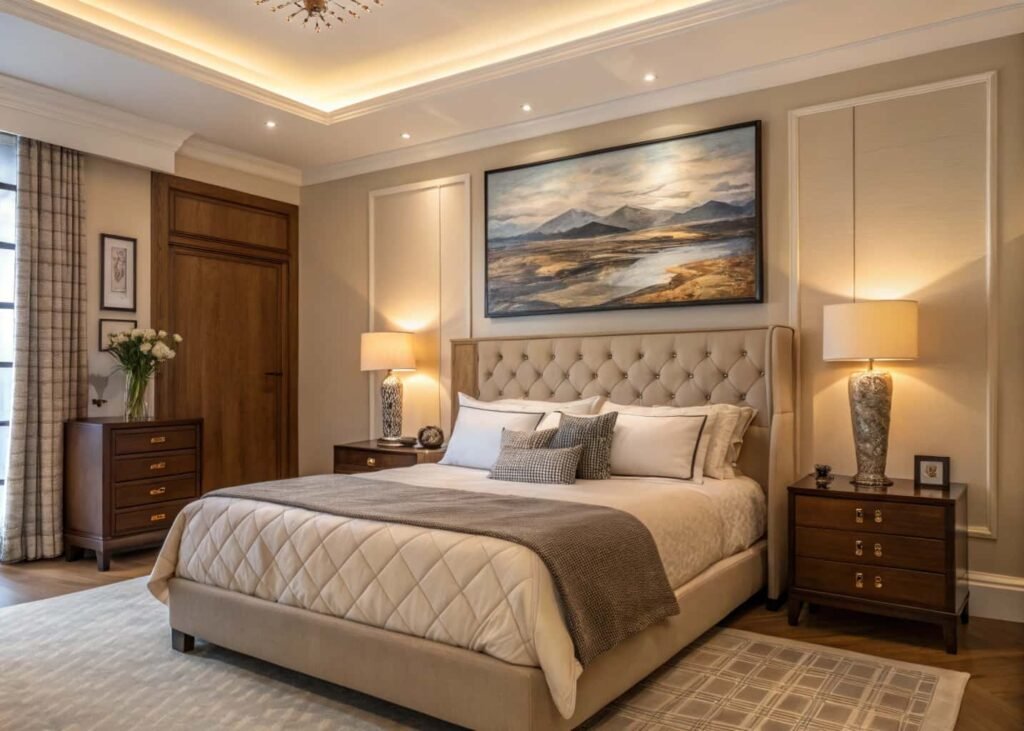
Designing for Resale Value
If you’re decorating with an eye toward future resale, designers suggest keeping the bones of the room — wall color, flooring, fixed lighting — fairly neutral, and saving bold personality for elements that are easy to change, like bedding, art, and accessories. This way, the room photographs well and appeals broadly, without sacrificing your personal style day-to-day.
A simple formula many designers use: neutral base, personal accents, timeless furniture. You get a room that feels like you now, but won’t feel dated or overly niche a few years down the line.
| Situation | Formula | Why It Works |
|---|---|---|
| Renting or planning to sell soon | Neutral walls + bold textiles + swappable art | Keeps resale appeal while allowing personal style |
| Long-term home | Neutral base + one bold structural choice (wallpaper, paint) | Balances longevity with personality |
| Small budget refresh | Existing furniture + new textiles + new lighting | Updates the whole feel without replacing big pieces |
How Designers Choose a Color Story
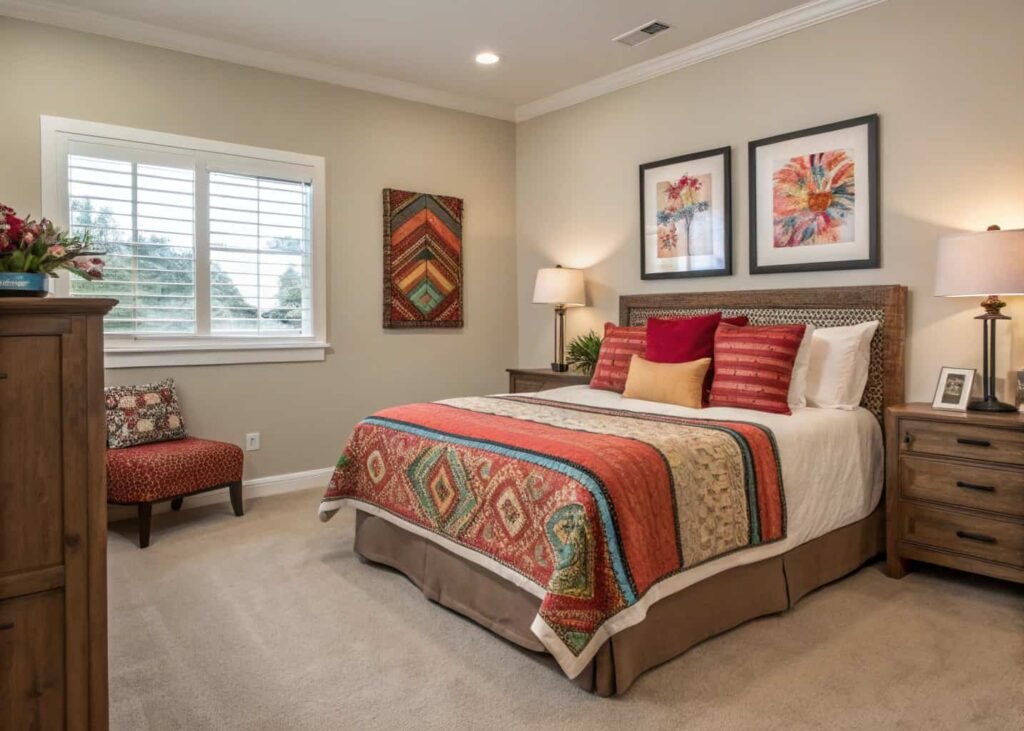
Rather than picking colors one at a time, designers build a “color story” — typically one dominant neutral, one supporting color, and one accent color used sparingly. This 60-30-10 style approach (roughly 60% dominant, 30% secondary, 10% accent) keeps a room feeling cohesive instead of scattered, even when several colors are in play.
Beginner Note: If choosing a color story feels overwhelming, start with your bedding. Pull your secondary and accent colors directly from a pattern you already love, rather than starting from a blank wall.
Frequently Asked Questions
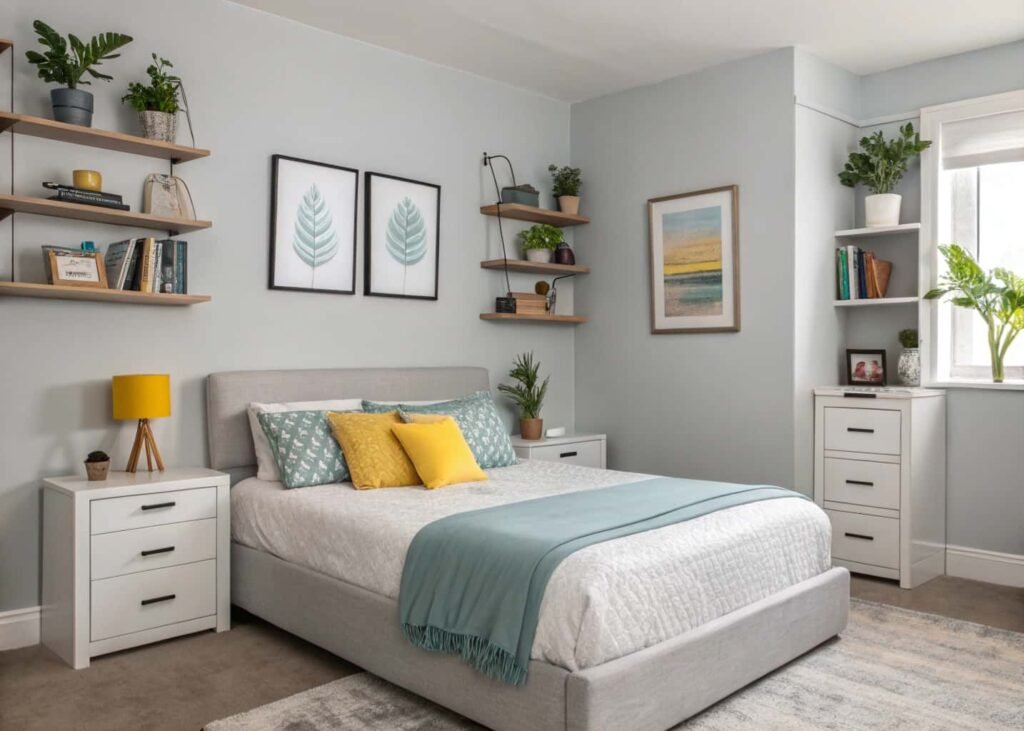
What is a bedroom design principle? A design principle is a repeatable rule professional designers use to guide decisions, like scale, focal points, or color balance. These principles work regardless of your personal style, because they’re about structure and proportion rather than specific trends.
Can beginners create a focal point without hiring a designer? Absolutely. Choosing one bold element — a headboard, an art piece, or a light fixture — and letting everything else stay simple is something anyone can do with a little intention and one standout piece.
How do I make my layered lighting work better? Start by adding just one extra light source beyond your overhead fixture, like a bedside lamp or plug-in sconce, and choose a warm bulb temperature to keep the glow cozy rather than clinical.
Do I need expensive furniture to apply these principles? No. Scale, negative space, and color balance are about arrangement and restraint, not price. You can apply every principle in this guide using furniture and decor you already own.
How do I avoid an overdone or “too styled” look? Lean on restraint: fewer, better-chosen pieces with intentional negative space almost always look more polished than a room where every surface is filled.
Bringing It All Together
A bedroom that feels professionally designed isn’t about spending more — it’s about choosing with intention, one principle at a time. Pick just one idea from this guide, whether it’s decluttering a nightstand down to three styled objects or adding a single warm lamp for layered lighting, and put it into practice this week.