Most living room walls end up with one framed print, a TV, and a lot of empty drywall. That’s not a style choice, it’s just what happens when nobody plans the wall as its own project. Below are sixteen ways to actually use that space, with the specific details — sizes, materials, price ranges, mounting problems — that usually get left out of “inspiration” posts.
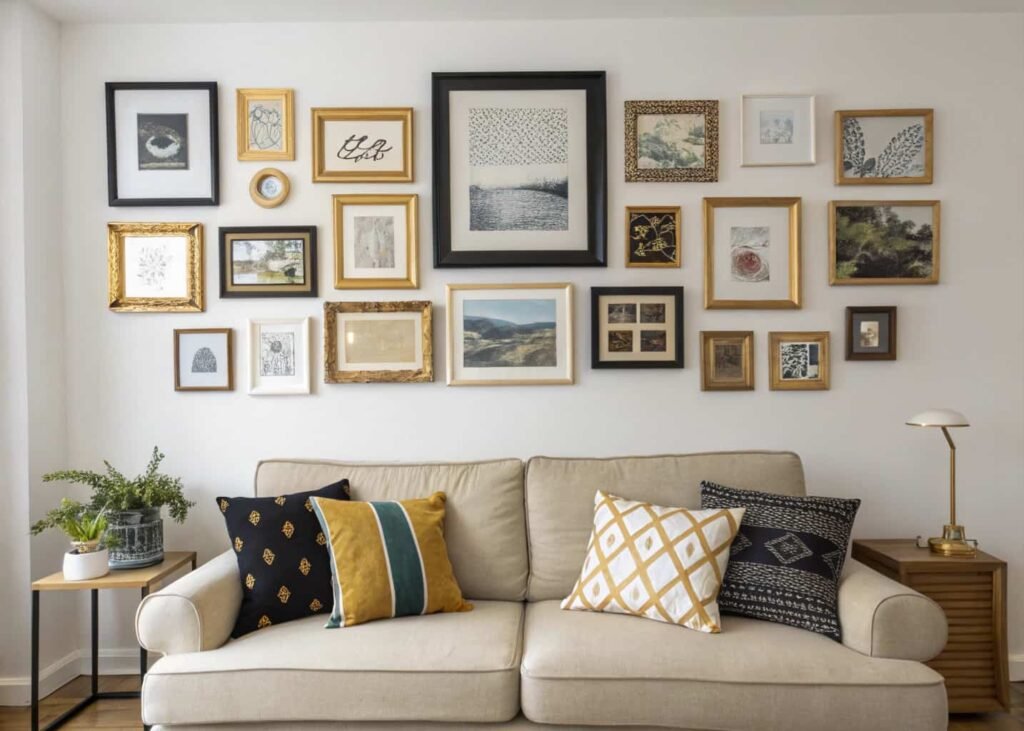
1. Gallery Wall with Mixed Frames
Skip the Pinterest grid and go asymmetric instead — it photographs less perfectly but looks less like a template. The trick professional framers use: cut kraft paper templates the exact size of each piece, tape them to the wall, and live with the layout for a day before hammering anything. Keep spacing between frames at 2–3 inches, and use an odd number of pieces (5, 7, or 9) since odd groupings read as intentional rather than accidental. The most common mistake is hanging the whole arrangement too high — the center of the composition should sit around 57–60 inches from the floor, which is standard eye level, not the top of the tallest frame.
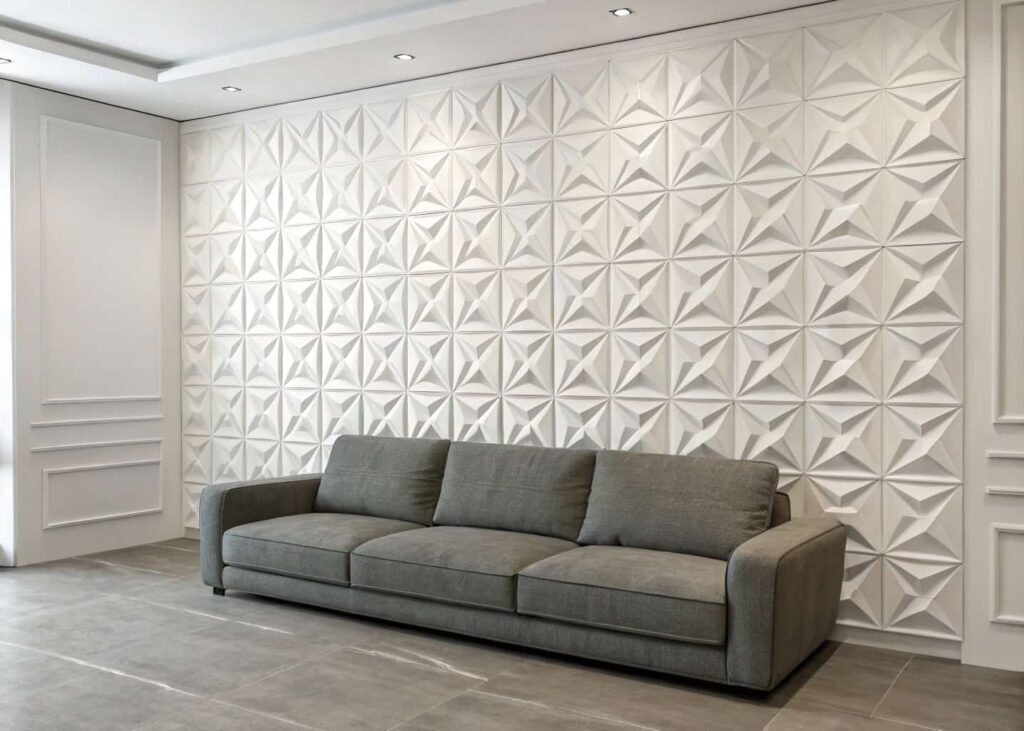
2. 3D Wall Panels
These come in PVC, MDF, or bamboo, and the price difference is real — PVC panels run around $8–15 per tile, MDF closer to $15–25, and bamboo or wood veneer versions can go higher. PVC is lightest and easiest to cut with a utility knife, but it looks plasticky under direct sunlight. MDF takes paint better and feels more substantial, but it’s heavier, so check whether the adhesive tabs sold with the panels are rated for the total weight or whether you need construction adhesive plus a few finish nails into studs. Limit these to one wall. Two walls of 3D texture in a small living room starts to feel like a padded cell.
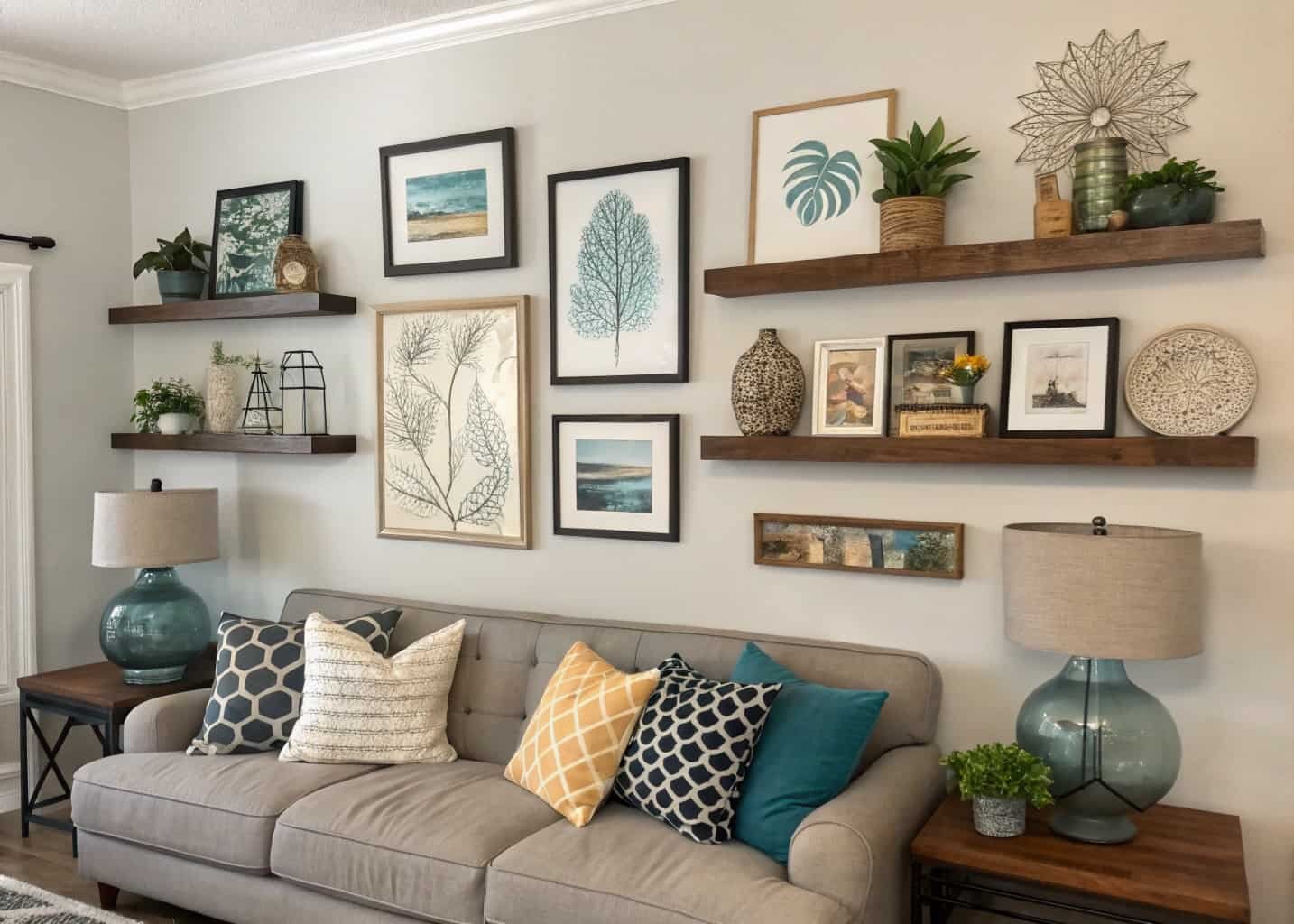
3. Floating Wall Shelves
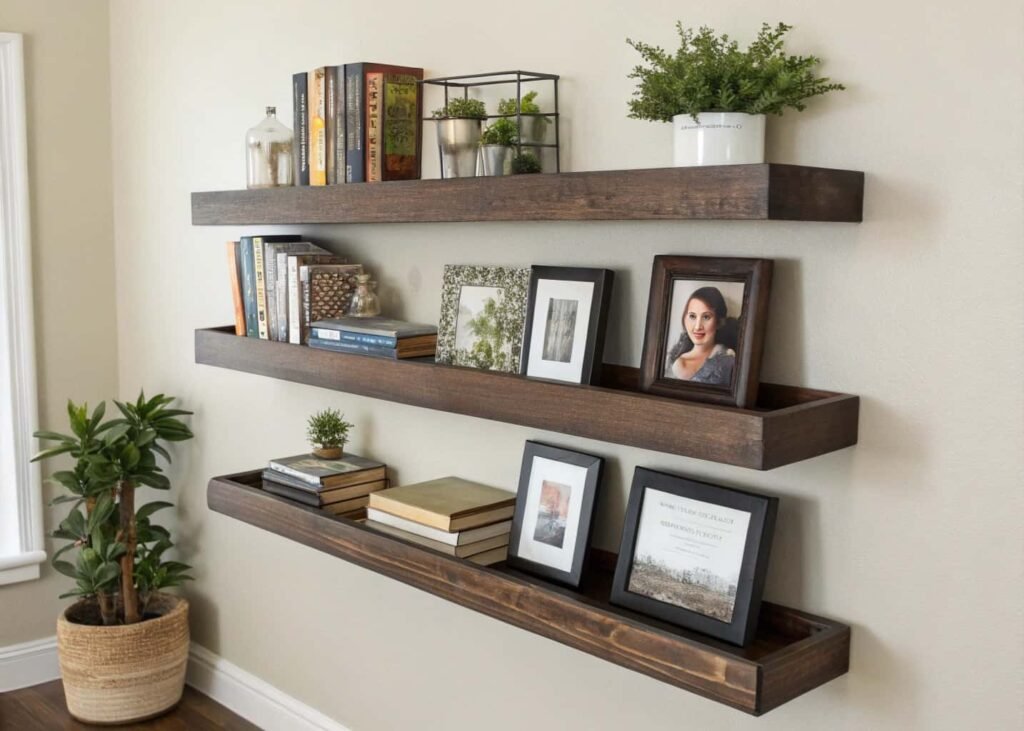
The “invisible bracket” floating shelves most people buy hold less weight than they expect — often 15–25 lbs when anchored properly into studs, and far less on drywall anchors alone. If you’re planning to stack hardcover books or ceramics, go for shelves with a visible steel bracket rated for 50+ lbs, or accept a lighter display. Standard depth for a decorative floating shelf is 6–10 inches; anything deeper starts looking like it wants to be a real shelf and should probably just be one.
4. Large Statement Mirror
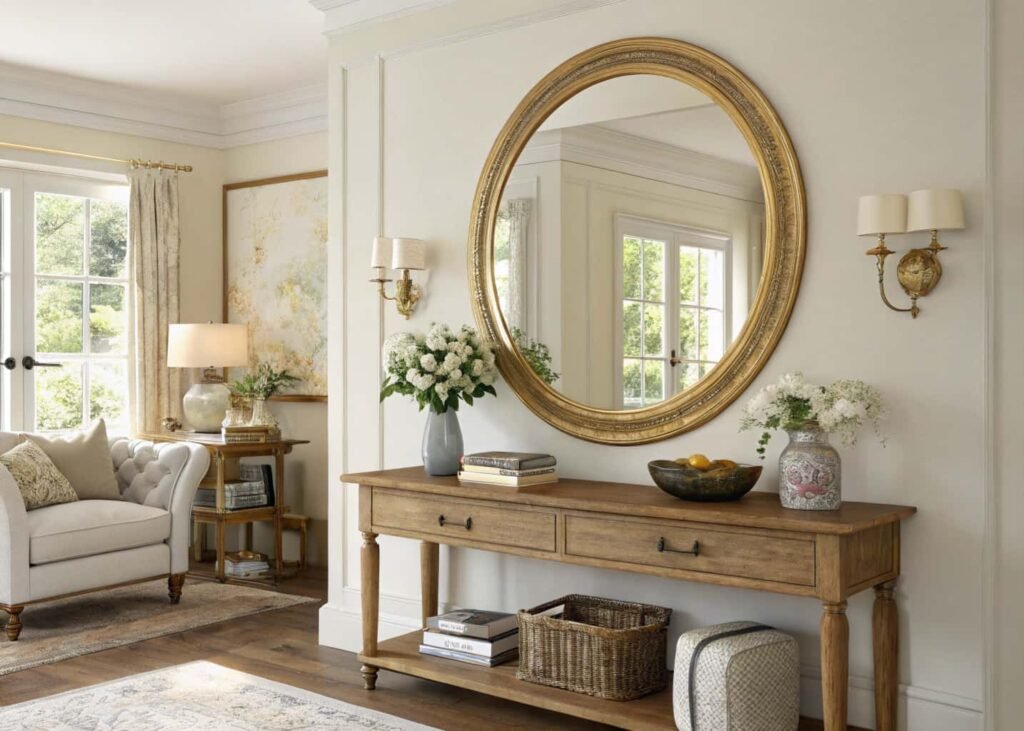
A mirror only works as a design piece if it’s sized correctly — as a rule, it should be at least two-thirds the width of whatever furniture sits below it, whether that’s a console table or a sofa. Placement matters more than most guides mention: hang it on the wall perpendicular to a window rather than directly across from a light source pointed at it, or you’ll get glare instead of the light-bouncing effect people actually want. Convex mirrors (the round, slightly bulging kind) throw light in more directions and suit smaller rooms; large flat mirrors suit rooms where you actually want a clean reflection.
5. Wall Clock as Decor Piece
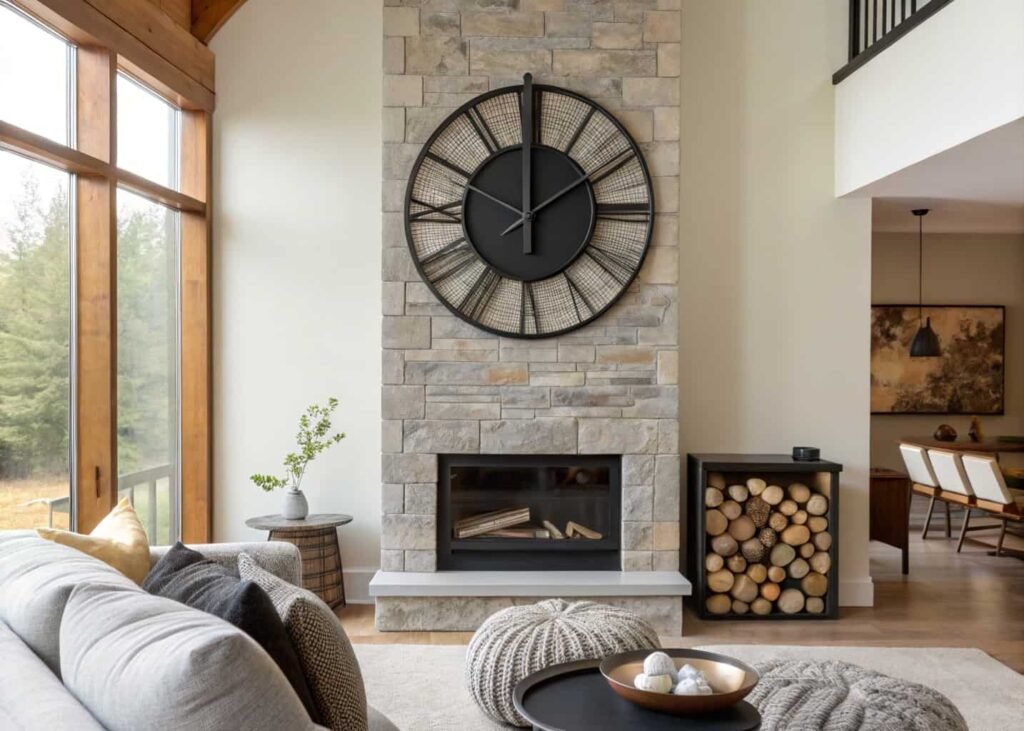
Oversized clocks — 24 to 30 inches — read as sculpture rather than a way to tell time, which is the point. One detail nobody mentions until it’s too late: cheap oversized clocks often use a standard tick-tick second hand movement, and in a quiet living room that ticking is genuinely irritating. Spend a little more for a “silent sweep” or continuous-motion quartz movement if the clock is going anywhere near where people sit and read or watch TV.
6. Textured Wallpaper Accent
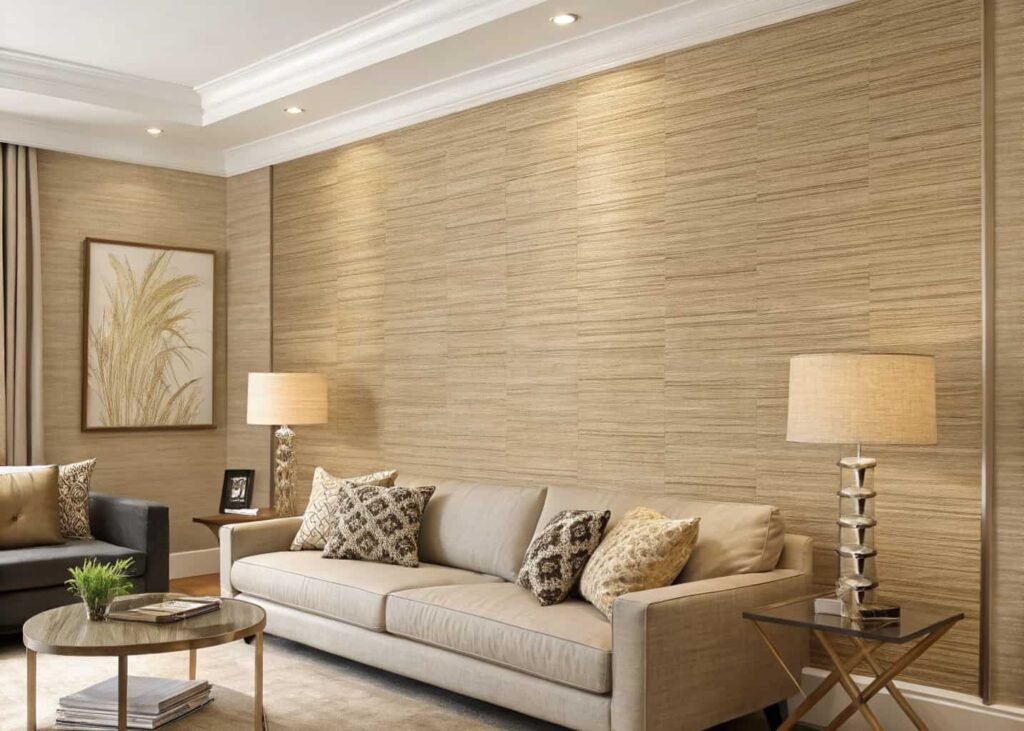
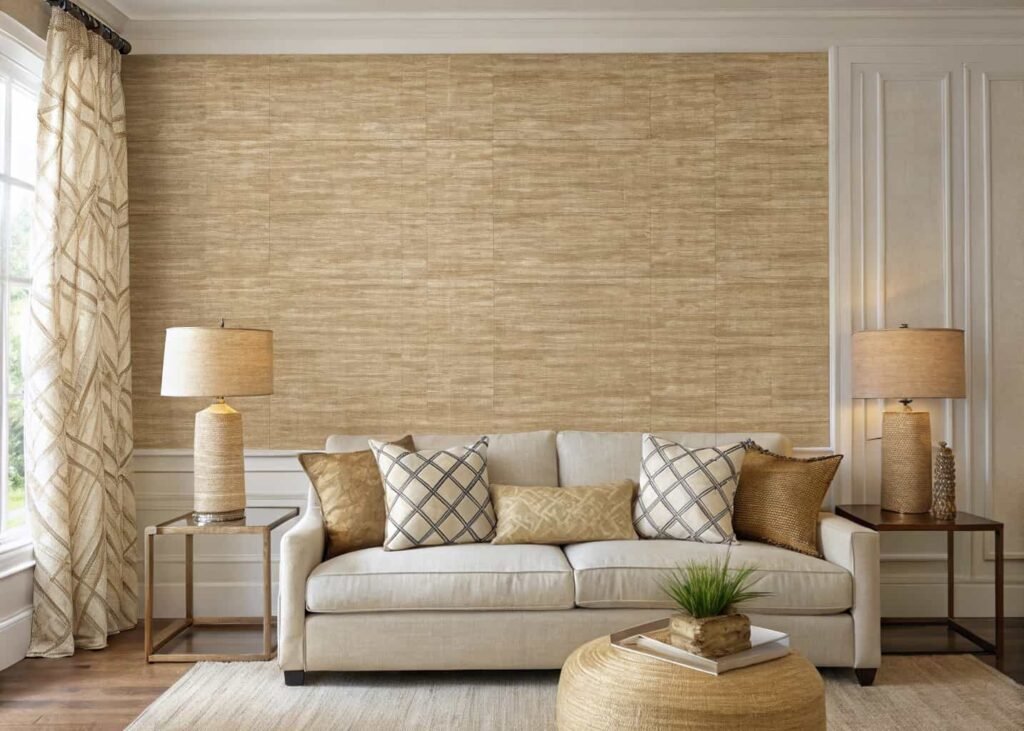
Grasscloth, limewash-effect, and plaster-look wallpapers all add texture without committing to a full 3D panel install. Peel-and-stick versions run roughly $30–60 per roll and are removable, but they don’t adhere well over textured or “orange peel” wall finishes — check your wall surface before ordering. Traditional pasted wallpaper costs more but lies flatter and lasts longer. Either way, one wall only, and pick the wall that doesn’t have a doorway or window breaking it up, or the pattern reads as chopped rather than intentional.
7. Framed Botanical Prints
Botanical prints work best in sets of three, matted with at least 2–2.5 inches of white space around the image — thin mats make the whole thing look like a poster rather than art. If the wall gets direct afternoon sun, spend the extra $10–15 per frame for UV-filtering glass or acrylic; regular glass will let prints yellow and fade within a couple of years.
8. Wall-Mounted Plant Holders
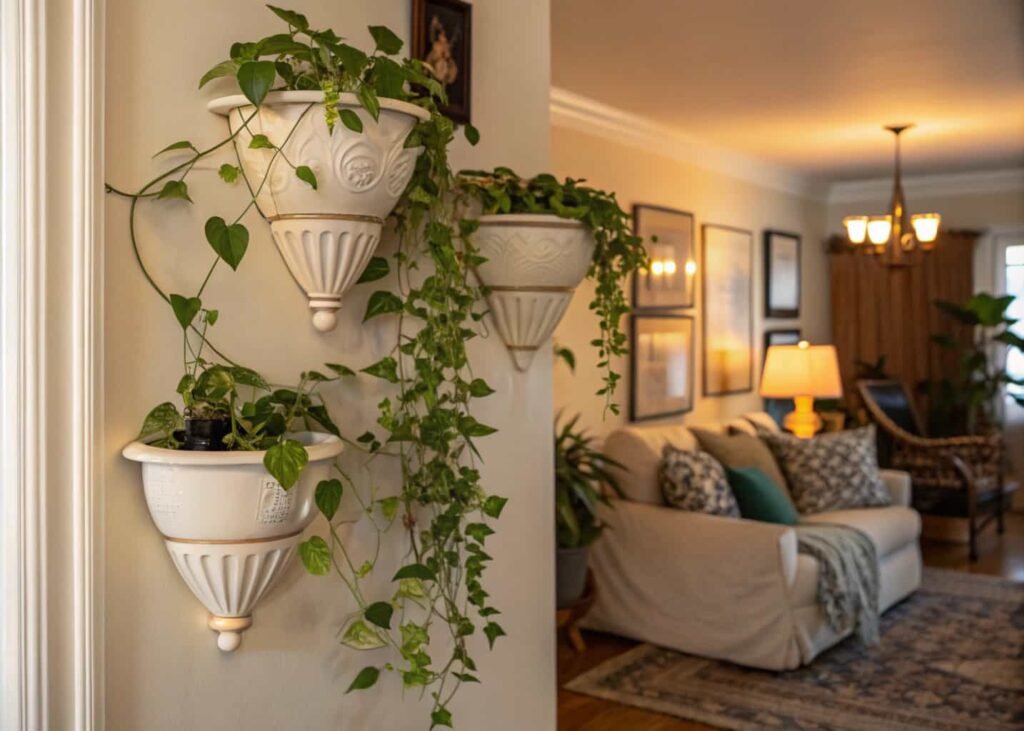
Macrame hangers and ceramic wall sconces both work, but the real issue is plant choice — walls, even near windows, usually get less direct light than a windowsill or shelf would. Pothos, philodendron, and ferns tolerate that lower light; succulents generally don’t and will stretch out and die slowly on a wall mount. For anything you’ll actually water regularly, pick holders with a drainage hole and a saucer, or ones that let you pull the inner pot out — watering in place on a wall almost always means dripping down the drywall.
9. Abstract Canvas Art
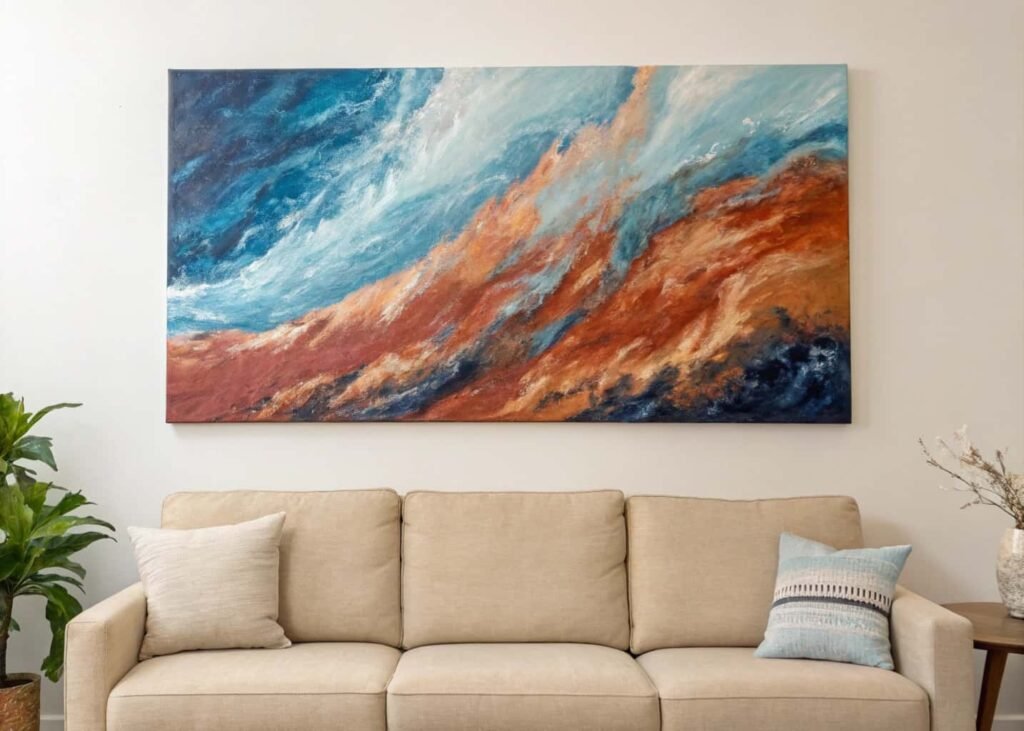
Gallery-wrapped canvas (where the image continues around 1.5-inch-deep sides) doesn’t need a frame, which keeps the look modern and cuts cost. Scale is the part people get wrong — a single large piece should span roughly two-thirds to three-quarters the width of the furniture it hangs above. A 24×36 canvas over an 8-foot sofa will look like an afterthought no matter how good the art is.
10. Wall Tapestry Decor
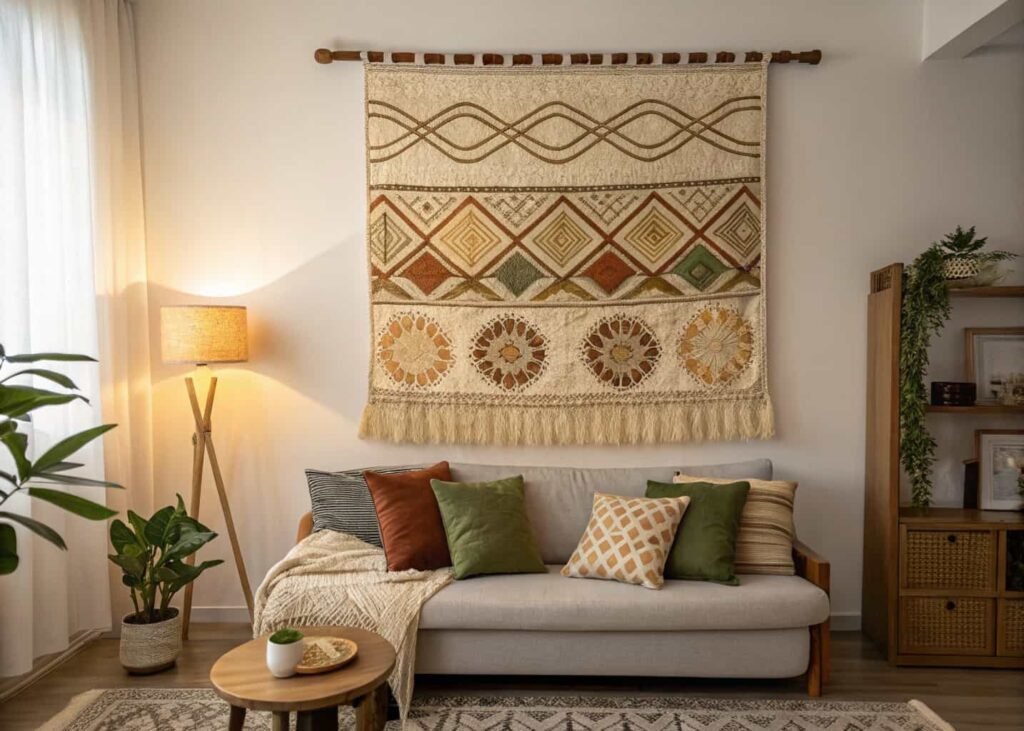
Fabric weight changes everything here — thin cotton tapestries wrinkle and sag within weeks, while heavier cotton-polyester blends or woven wool pieces hang flat and drape properly. For mounting, a tension curtain rod through a fabric sleeve gives a cleaner line than pushpins or Command strips, and it lets you swap the piece out seasonally without new holes.
11. Geometric Wall Decals
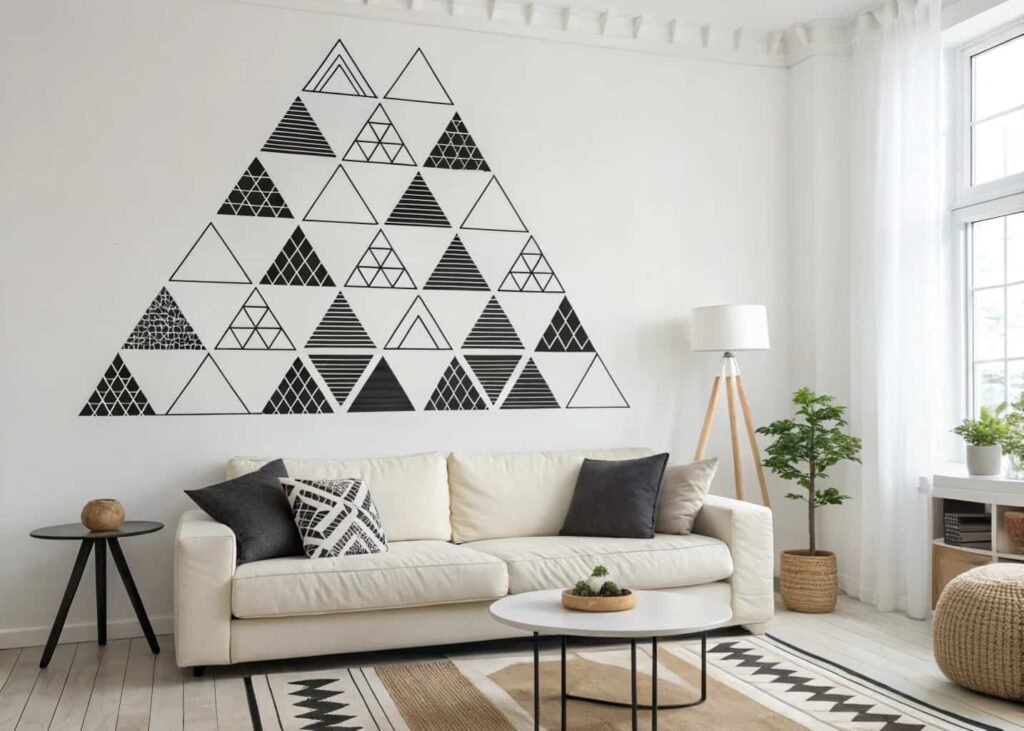
Vinyl decals are the cheapest option here, usually $15–40 for a set, but they only work well on smooth, flat-finish or eggshell paint. On textured or popcorn walls, the vinyl won’t seat into the texture and edges will lift within days. Apply with a plastic squeegee or old credit card, working from the center outward, and avoid applying in direct sun since the adhesive gets tacky and unworkable in heat.
12. Wooden Wall Art Panels
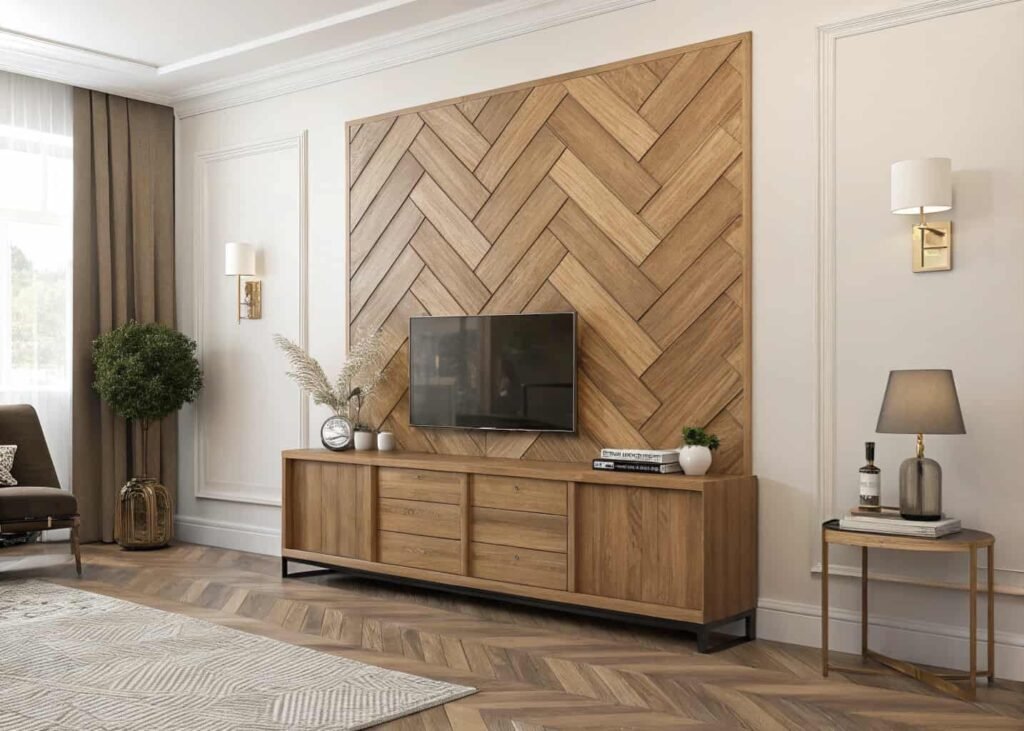
Herringbone and chevron wood panel art has become common, but reclaimed or salvaged wood pieces look noticeably different from the uniform, machine-cut versions — more variation in grain and tone, occasional nail holes left visible. These are heavier than they look once assembled, so mounting into at least two studs (not just drywall anchors) matters more here than with almost any other item on this list.
13. String Light Wall Display
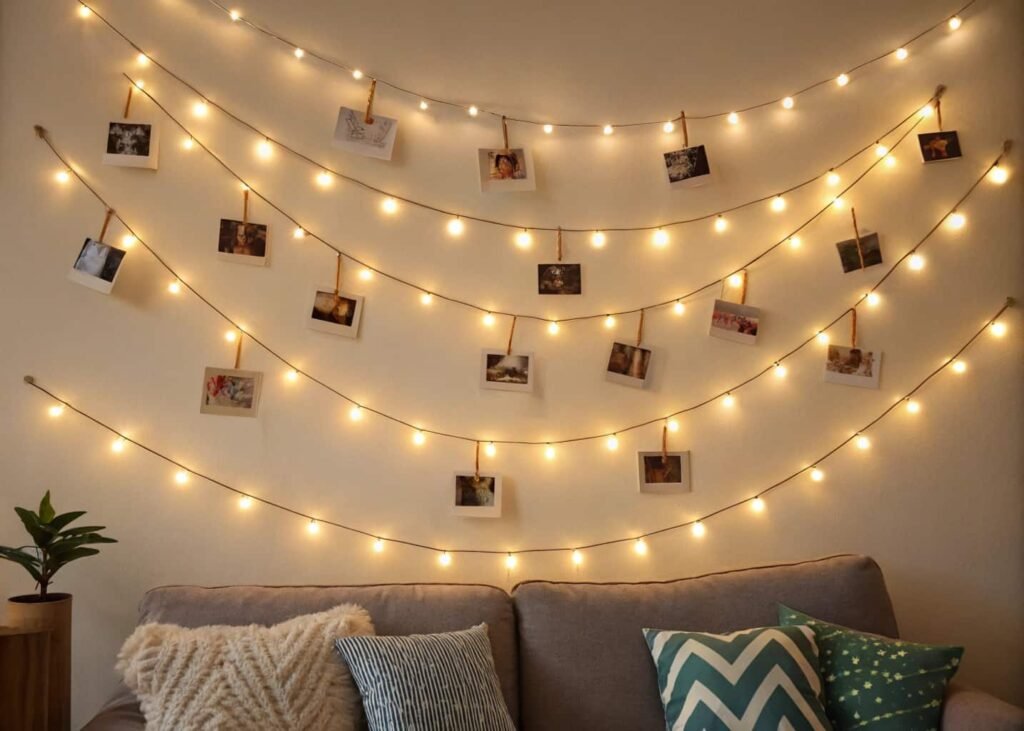
Warm white (2700K) LED string lights look intentional and cozy; cool white (5000K+) reads more like a garage or dorm room. Battery-powered strands are easiest to install anywhere with no visible cord, but need battery swaps every few weeks with regular use — plug-in strands are more reliable for a permanent display. Route the wire with small adhesive clips rather than draping it loose, and keep strands at least a few inches from curtains or fabric, since even LED bulbs generate some heat over hours of use.
14. Family Photo Wall Grid
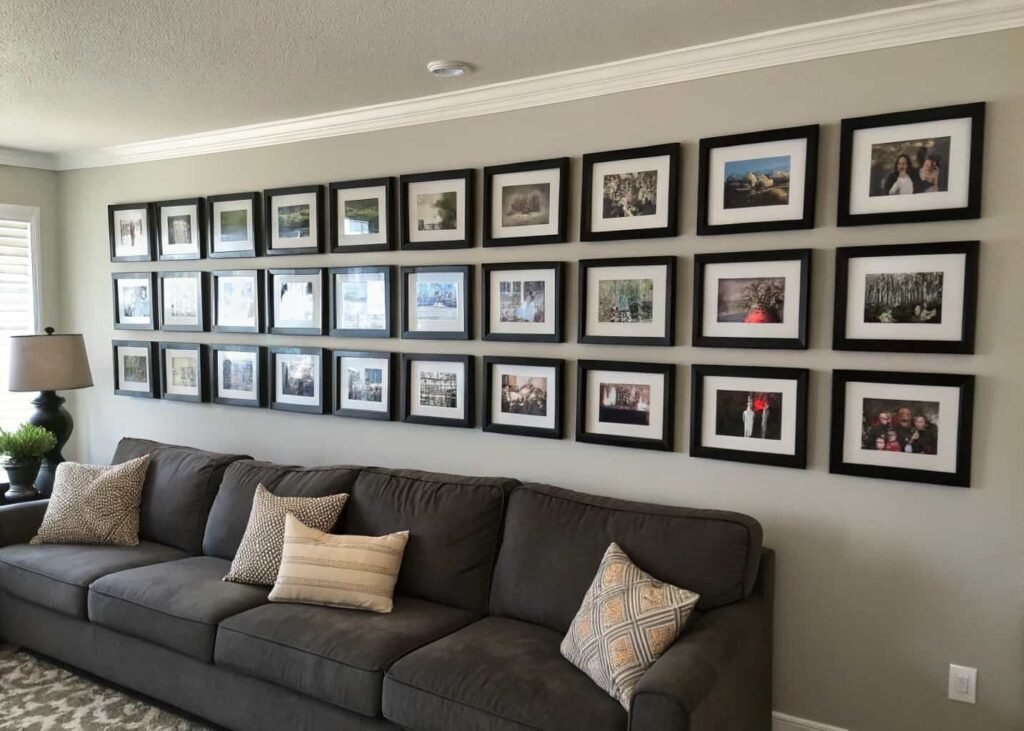
Unlike the mixed gallery wall above, a grid layout depends on uniformity — same frame color, same frame width, same mat size, spaced 3 inches apart both horizontally and vertically. Even one mismatched frame breaks the grid effect. Cut a paper template for the whole grid and tape it up first; measuring each frame individually on the wall almost always results in a slightly crooked layout by the time you reach frame six or seven.
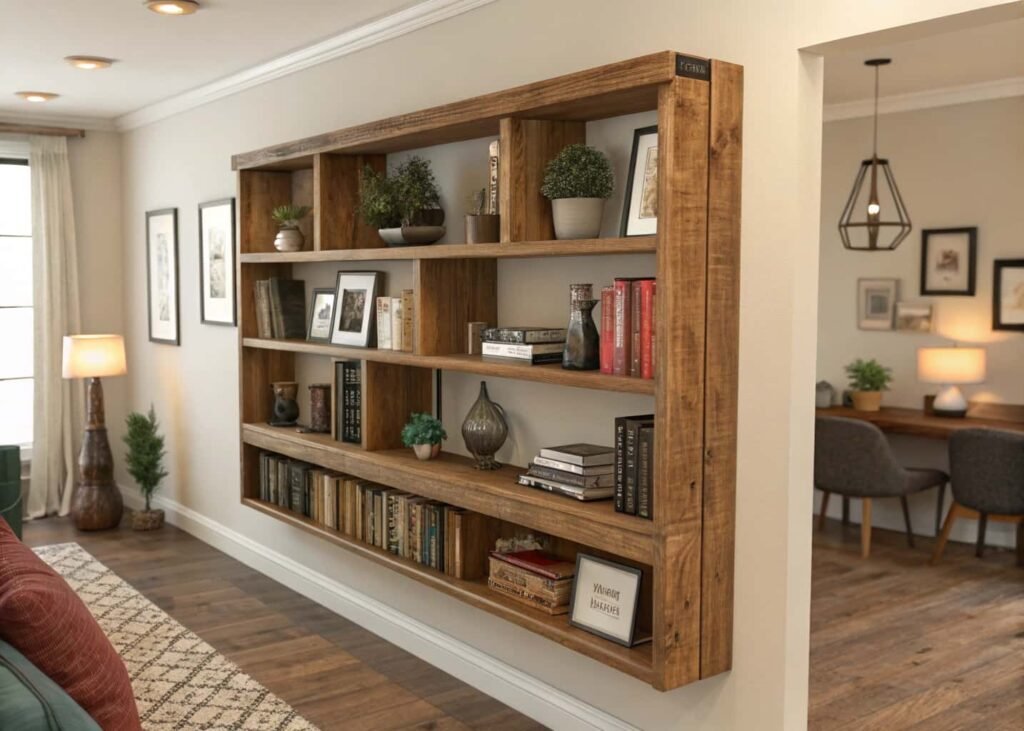
15. Wall-Mounted Bookshelf
These need to be anchored into studs, not just drywall anchors — books are deceptively heavy, and a shelf loaded with even 15–20 paperbacks can weigh 25–30 lbs. Check the bracket’s weight rating against a full shelf, not an empty one, since most manufacturers list capacity assuming even weight distribution across the studs it’s mounted to.
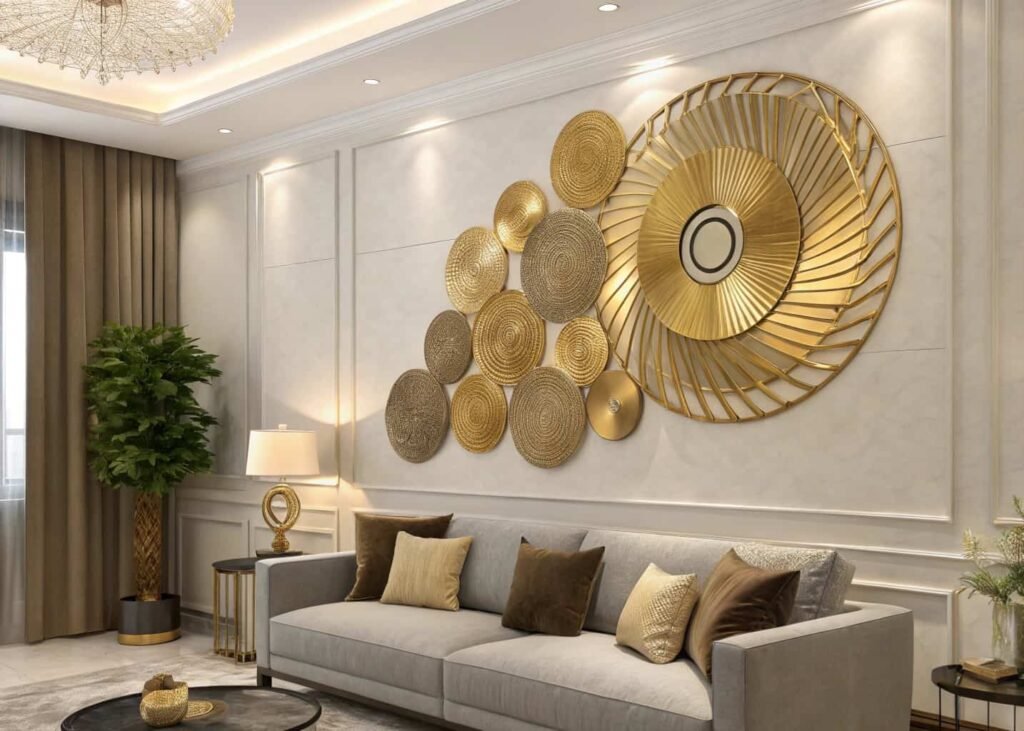
16. Metallic Wall Sculptures
Wrought iron and aluminum sculptural pieces add a different texture than anything flat on this list, but iron will develop surface rust in humid rooms unless it’s been powder-coated or sealed — worth asking before buying, especially near a window that gets condensation. These also tend to be front-heavy, so use the mounting hardware that comes with the piece rather than a generic picture hook; most sculptural wall art ships with its own French cleat or stud-specific bracket for a reason.