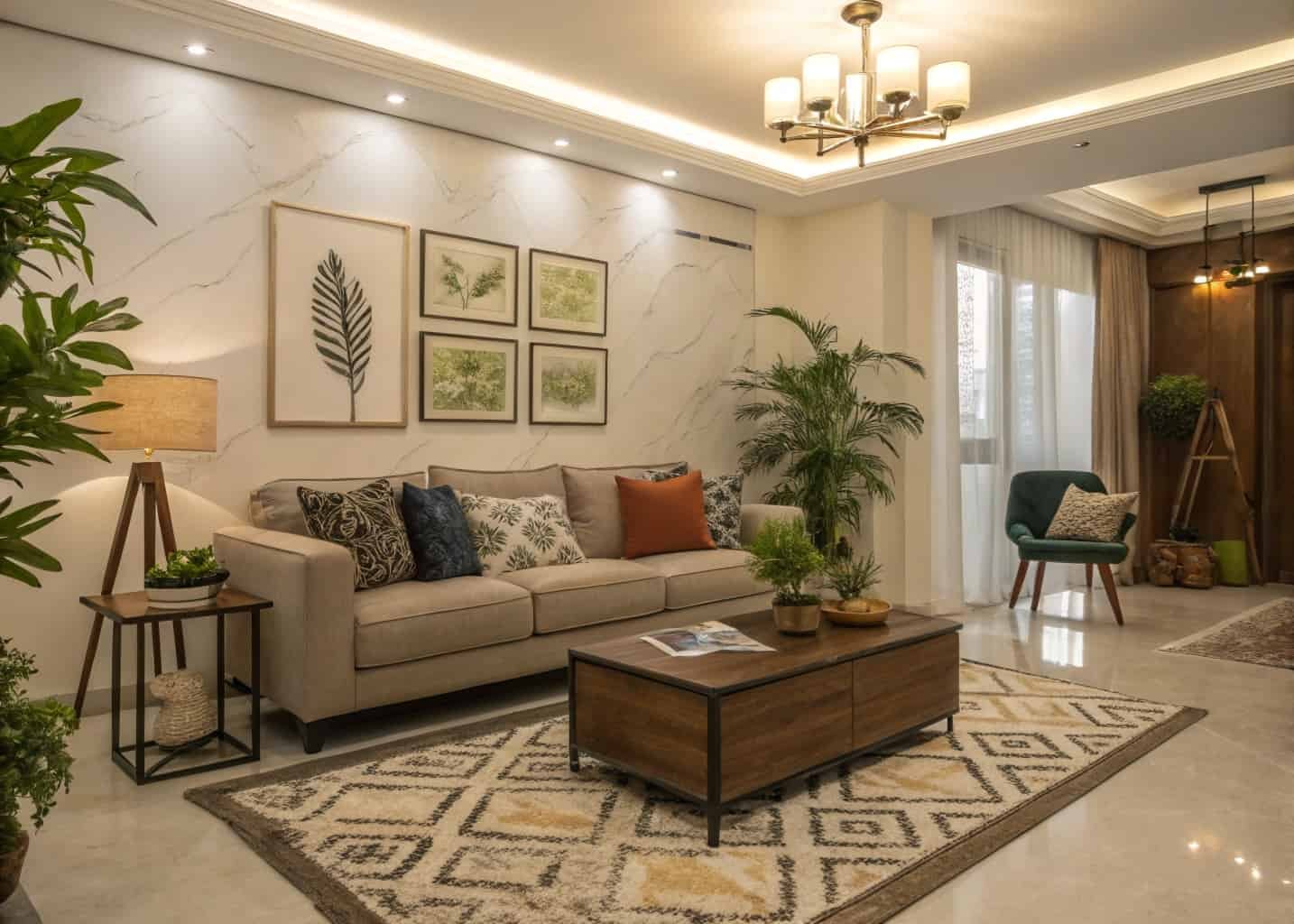
Picking a living room “style” sounds simple until you’re standing in a showroom trying to decide between a walnut console and a whitewashed oak one, wondering why it suddenly matters so much. It matters because the wrong wood tone, the wrong rug size, or the wrong metal finish can make an otherwise nice room feel slightly off — and most people can’t say why. Below are 14 directions, with the actual details (materials, colors, price ranges, sizing rules) that separate a room that looks styled from one that just looks like furniture got delivered.
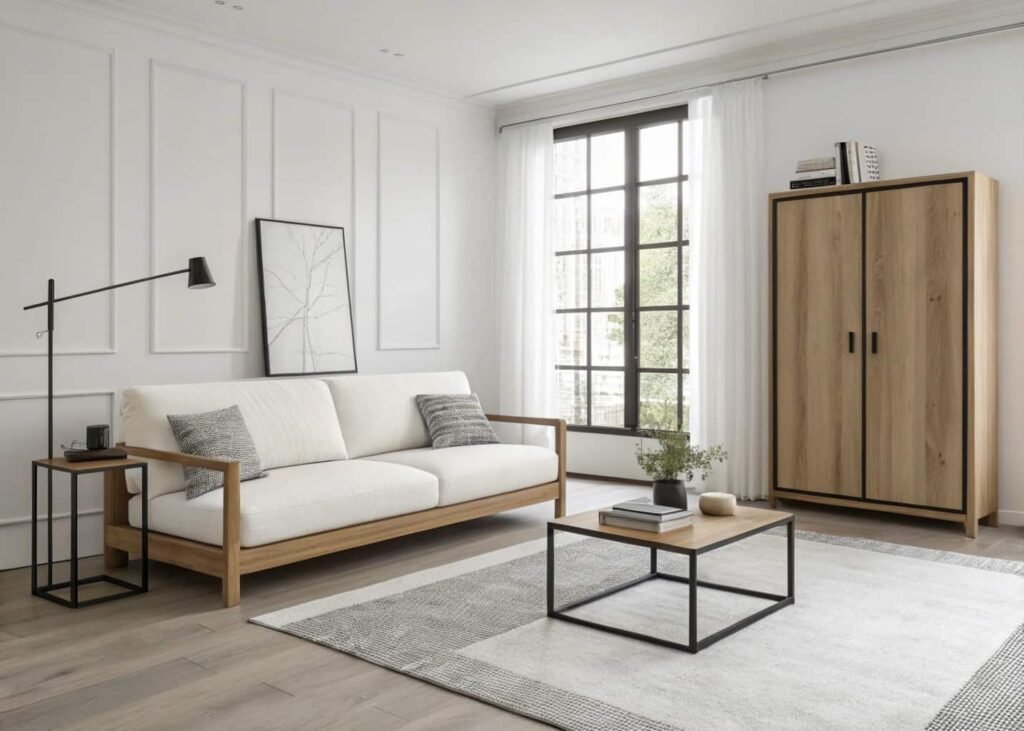
1. Minimalist Living Room Design
Minimalism isn’t “less stuff,” it’s fewer decisions. Stick to two or three materials total in the room — say, white oak, black steel, and boucle — and repeat them instead of introducing a fourth or fifth. A low-profile sofa (seat height around 16–17 inches) reads calmer than a standard 18–20 inch one. The part people get wrong: minimalist rooms actually need more storage budget, not less, because everything has to be hidden in closed cabinetry rather than displayed. Budget roughly $2,500–4,500 for a full room if you’re buying new — sofas like IKEA’s Söderhamn or Article’s Sven sit in the right price-to-look ratio.
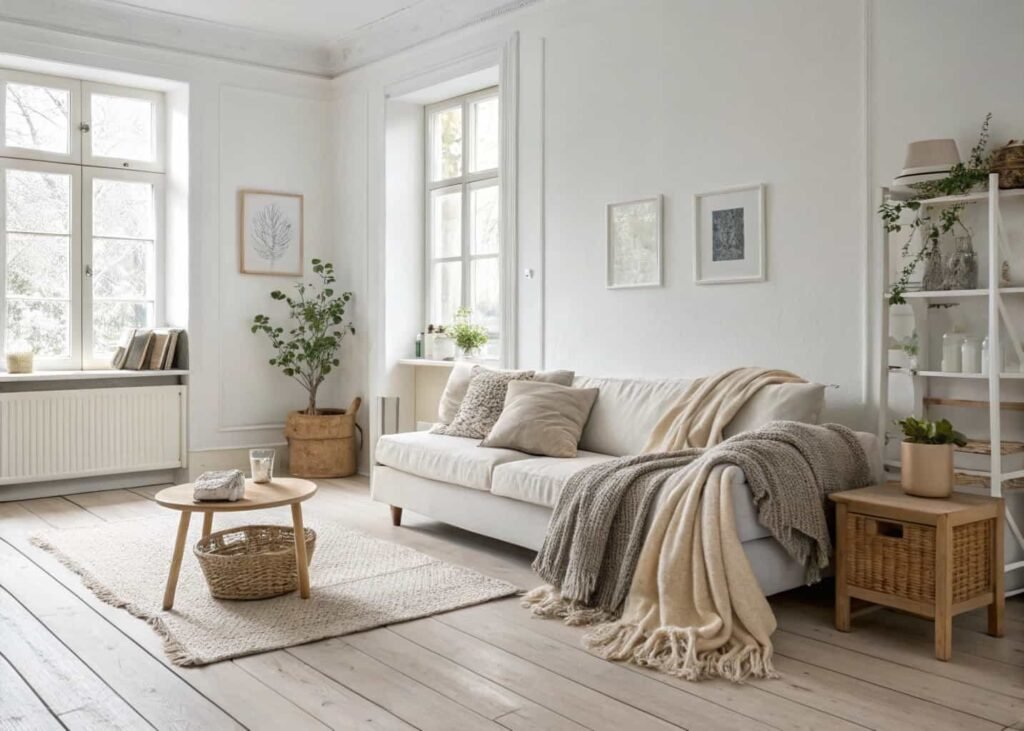
2. Scandinavian Style Living Room
Scandi gets reduced to “hygge = candles,” but the actual technique is texture layering on a narrow color base. Keep walls and large furniture in whites and warm greiges, then stack in wool throws, a sheepskin, and a chunky-knit cushion so the room doesn’t go flat. Use light, whitewashed oak — not the honey-orange oak from the 2000s — for anything wood. A sheepskin throw (around $60–90) over one chair does more for the “Scandinavian” feel than most $500 decor purchases.
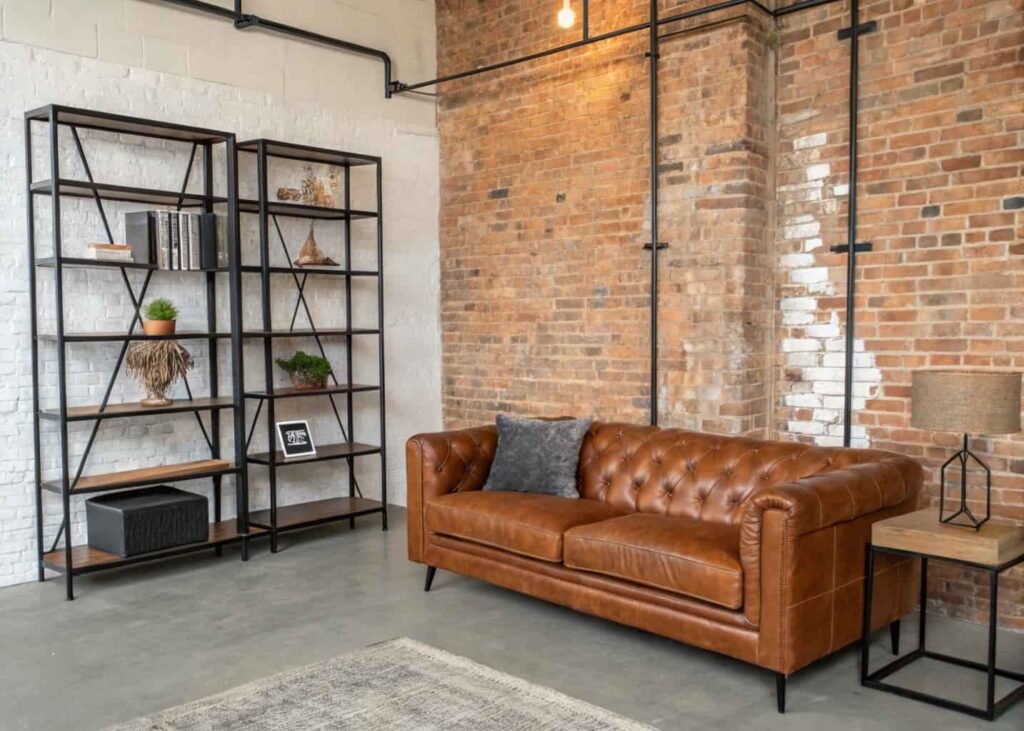
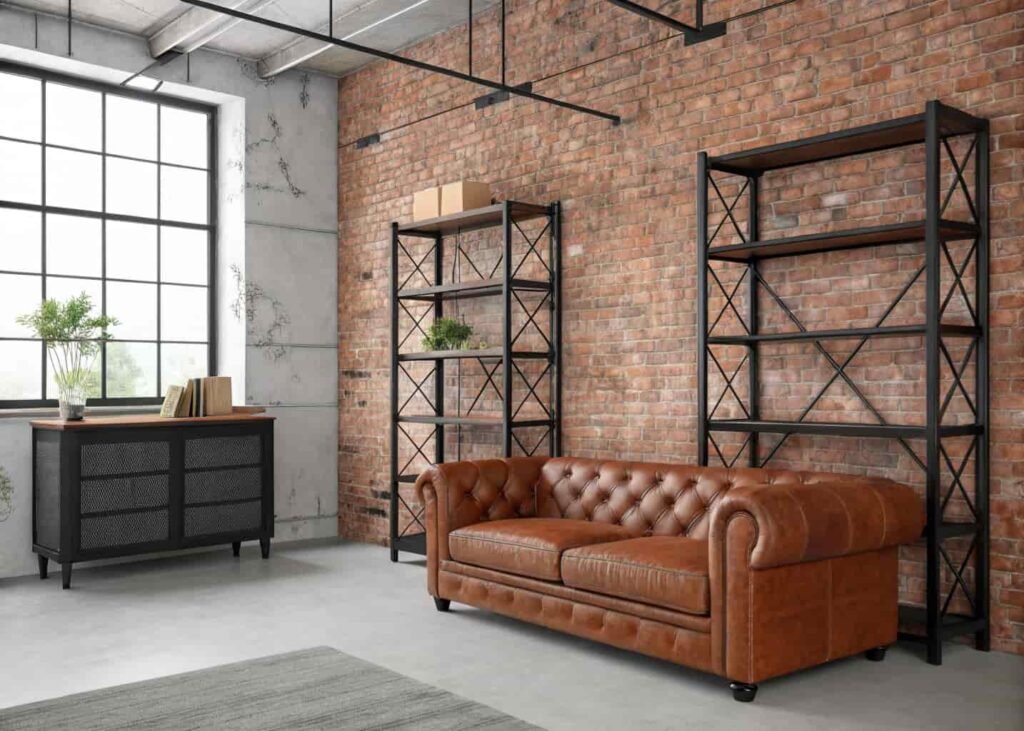
3. Industrial Style Living Room
Exposed brick (real or a good brick-look wallpaper), blackened steel shelving, and cognac leather are the core three. Edison-bulb pendant lighting works, but use it as one fixture, not three — it gets visually noisy fast. The real risk with industrial is that it turns cold and showroom-like. Fix that by adding one soft textile layer per hard surface: a wool rug against the concrete-look floor, a linen cushion against the leather sofa.
4. Bohemian Living Room Design
The layered-rug look isn’t random — the technique is a plain jute or sisal rug as the base layer, then a smaller patterned rug (Moroccan, kilim, or vintage-style) placed off-center on top, usually anchoring the seating area rather than centered under the coffee table. Rattan and cane furniture, macrame wall hangings, and a genuine mix of plant sizes (not just one big fiddle-leaf fig) complete it. Boho rooms are also one of the few styles where mismatched wood tones actually work in your favor.
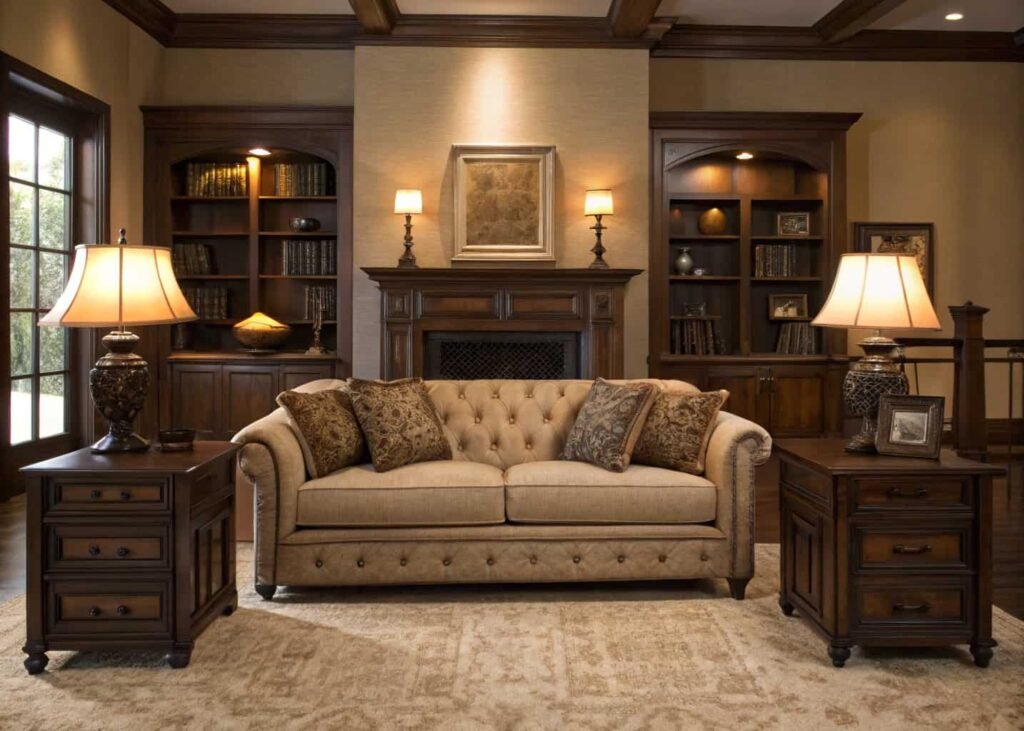
5. Traditional/Classic Living Room
Rolled-arm sofas, symmetry (a pair of matching lamps or armchairs, not one of each), and richer wood tones — mahogany, cherry, or dark walnut — define this one. Updated traditional swaps out heavy chintz for smaller-scale prints or solid velvets in jewel tones, which keeps it from feeling dated. A brass or antiqued-gold picture light over the fireplace mantel is a small detail that reads “classic” immediately without costing much.
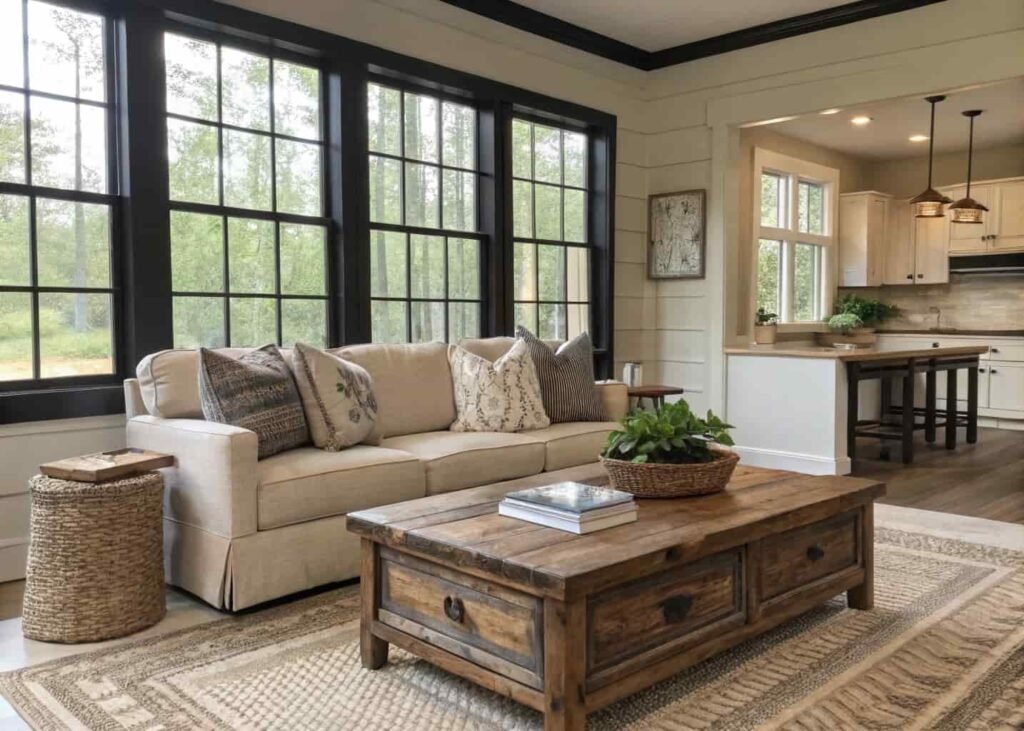
6. Modern Farmhouse Living Room
Black window frames, distressed or reclaimed wood, and a mostly neutral palette with black or dark bronze accent hardware. One honest note: shiplap is past its peak — if you want the texture without the trend risk, use it on a single accent wall rather than the whole room, or skip it for board-and-batten instead. Farmhouse works best in rooms with genuine architectural bones (exposed beams, a stone fireplace); without that, it can start to feel like a stage set.
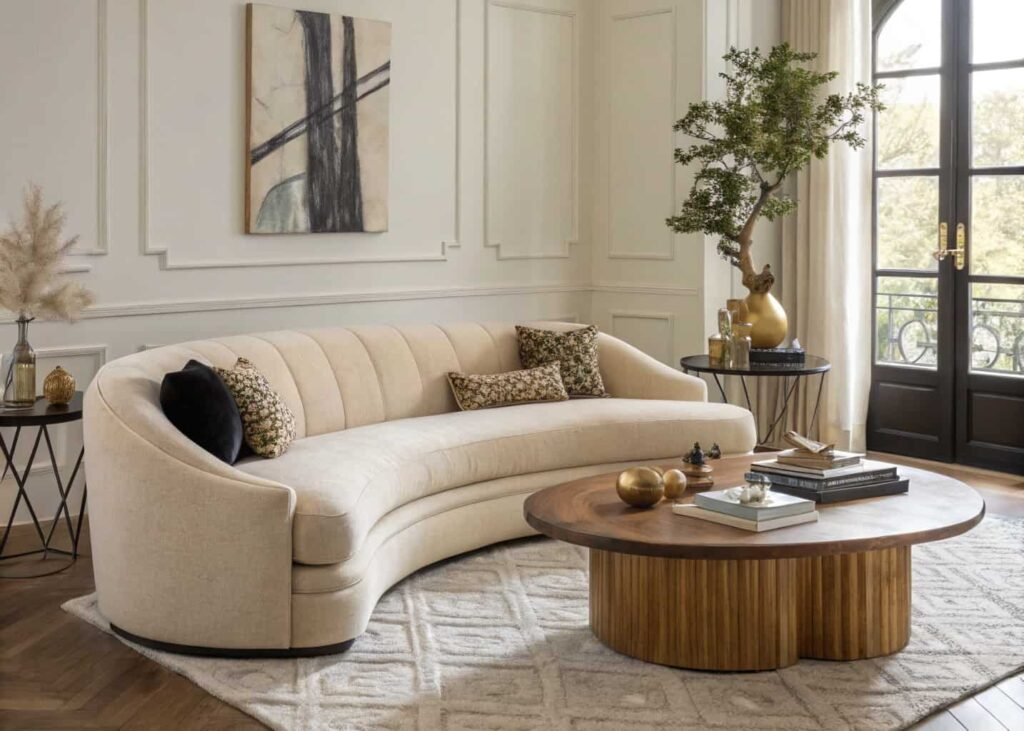
7. Contemporary Living Room Design
Contemporary isn’t a fixed look — it’s “whatever’s current,” which right now (2025–2026) means curved sofa silhouettes, mixed metals (brushed brass with matte black is common), and organic-shaped coffee tables instead of strict rectangles. It’s warmer than minimalism but still clean-lined. If you want a room that won’t look dated in five years, contemporary is actually the riskier choice, not the safer one — it depends on trend cycles more than traditional or Scandi do.
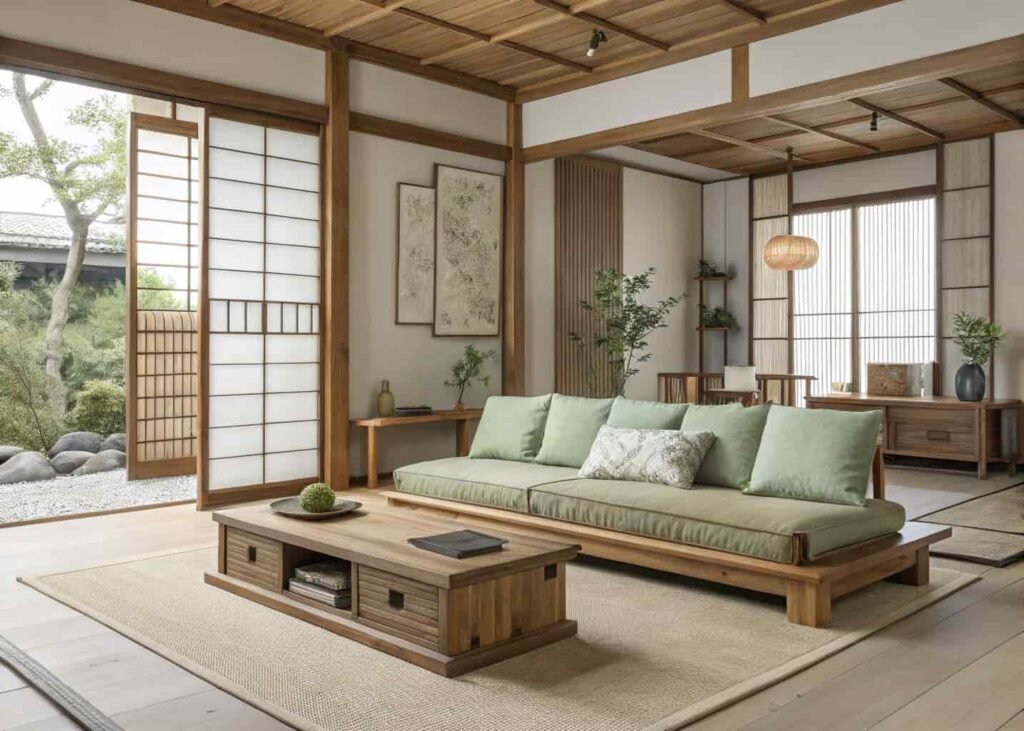
8. Japandi Style Living Room
Japandi combines Japanese wabi-sabi (imperfection, natural materials, negative space) with Scandinavian warmth. Furniture sits lower to the ground, wood is left visibly grained rather than painted, and the palette stays earthy — clay, charcoal, sage, unbleached linen. The key rule: leave at least 20–25% of wall and floor space visually empty. Overfilling a Japandi room defeats the entire point of the style.
9. Coastal Living Room Design
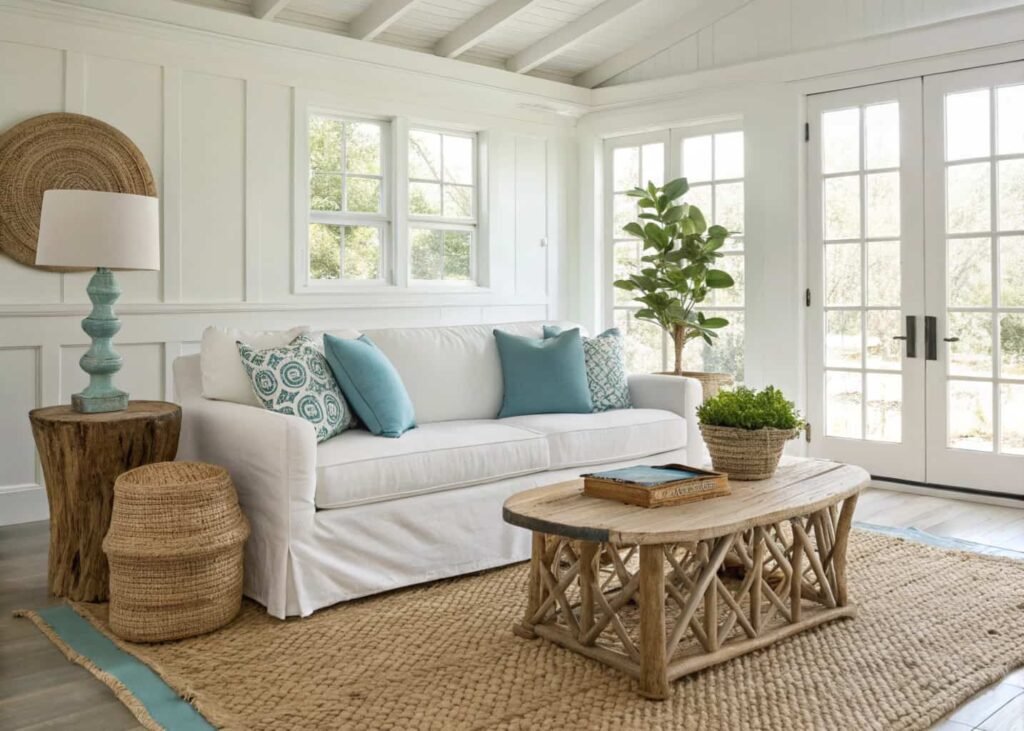
Coastal gets confused with “nautical” — anchors and rope details are the outdated version. Real coastal design leans on driftwood tones, linen slipcovers that can be washed, and blue-green used as a single accent (a cushion, a piece of art) rather than the wall color. Slipcovered sofas specifically matter here for practicality, not just look — they hold up to sun exposure and sandy feet far better than fixed upholstery.
10. Mid-Century Modern Living Room
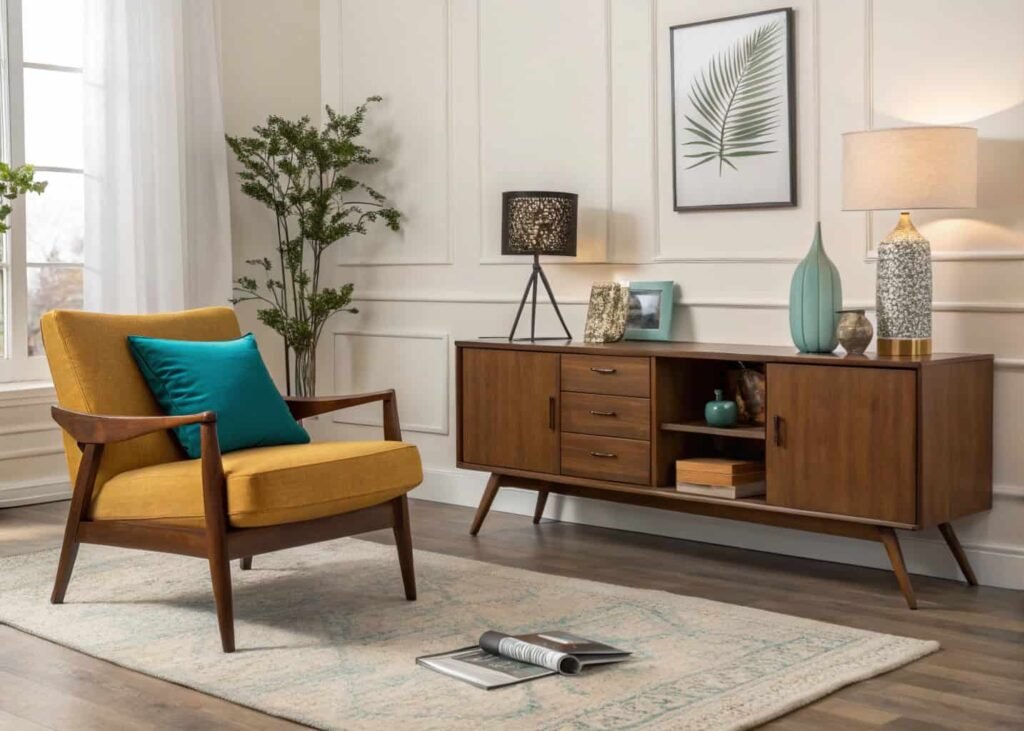
Tapered wooden legs, walnut finishes, and bold accent colors — mustard, burnt orange, teal — against an otherwise neutral base. Furniture sits low and lean; look for sofas around 30–32 inches deep rather than today’s deeper 38-inch lounge styles. An authentic Eames-style lounge chair replica runs $600–1,200 depending on quality, and it’s usually worth the higher end here because the cheap versions show their seams within a year.
11. Rustic Living Room Design
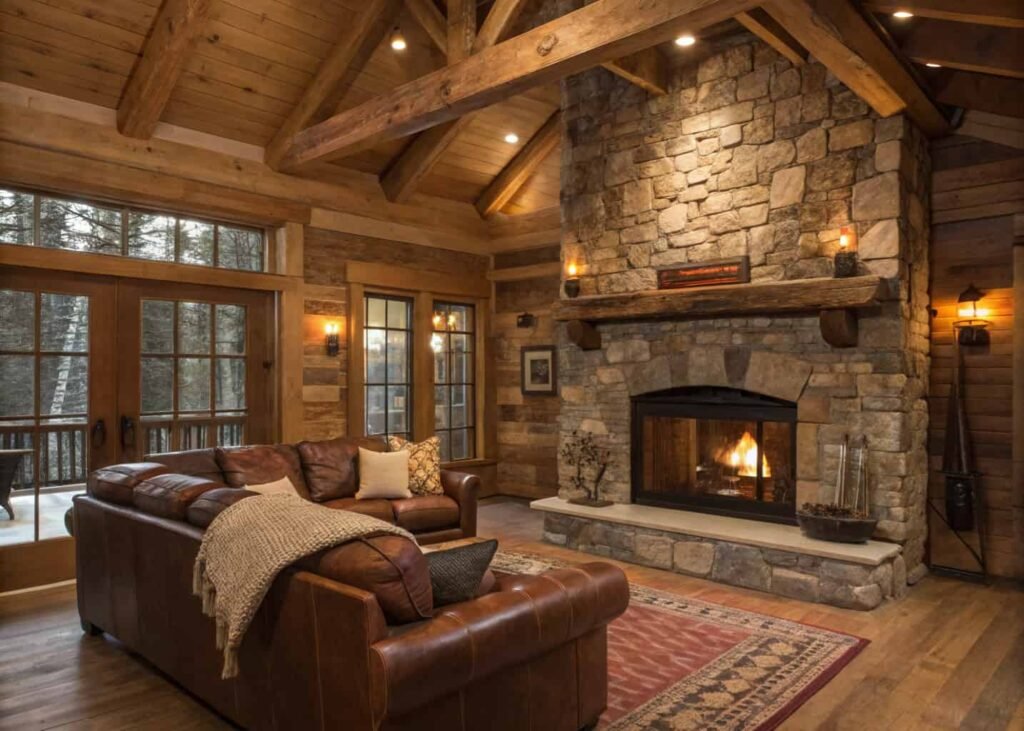
Rustic is heavier and more textural than farmhouse — think reclaimed barn wood beams, a stone or fieldstone fireplace, and leather or heavy woven upholstery rather than crisp linen. It works best in rooms with real height (vaulted or beamed ceilings); in a standard 8-foot-ceiling apartment, full rustic can feel cramped, so scale it back to one or two elements instead of the whole room.
12. Luxury/Glam Living Room
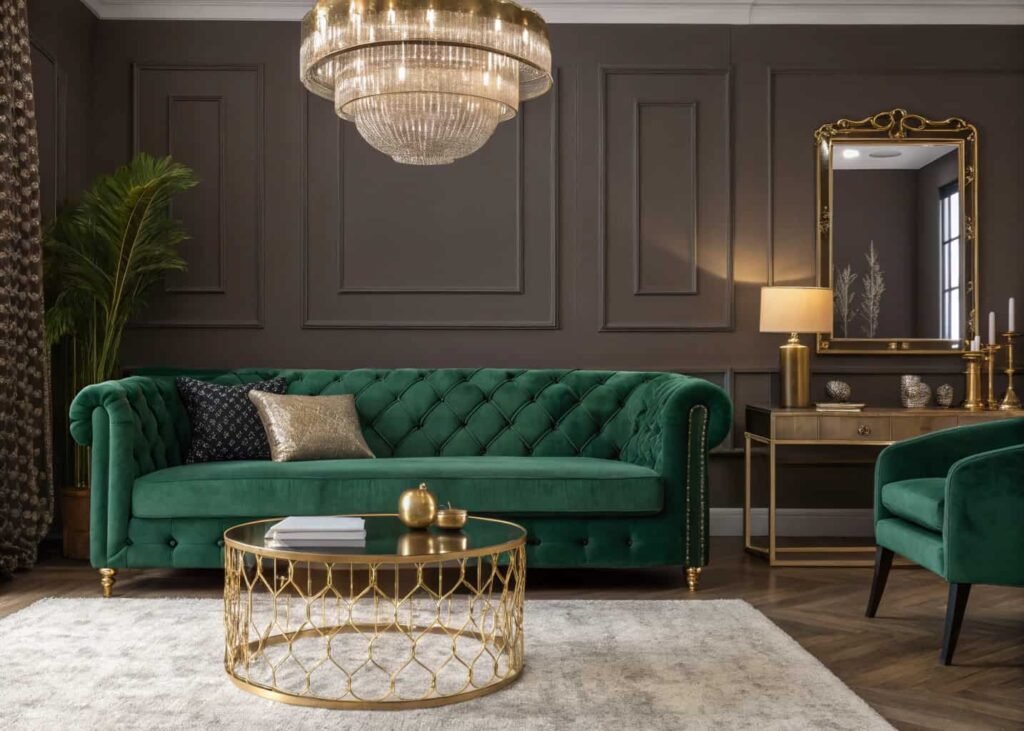
Velvet upholstery, brass or gold-tone metal legs and hardware, and at least one mirrored or lacquered surface. Statement lighting matters more here than anywhere else — a single oversized pendant or chandelier can carry an entire room’s glam factor even if everything else is fairly restrained. Keep the color palette to two or three tones max (often jewel tone plus neutral plus metallic) so it reads luxurious instead of busy.
13. Eclectic Living Room Design
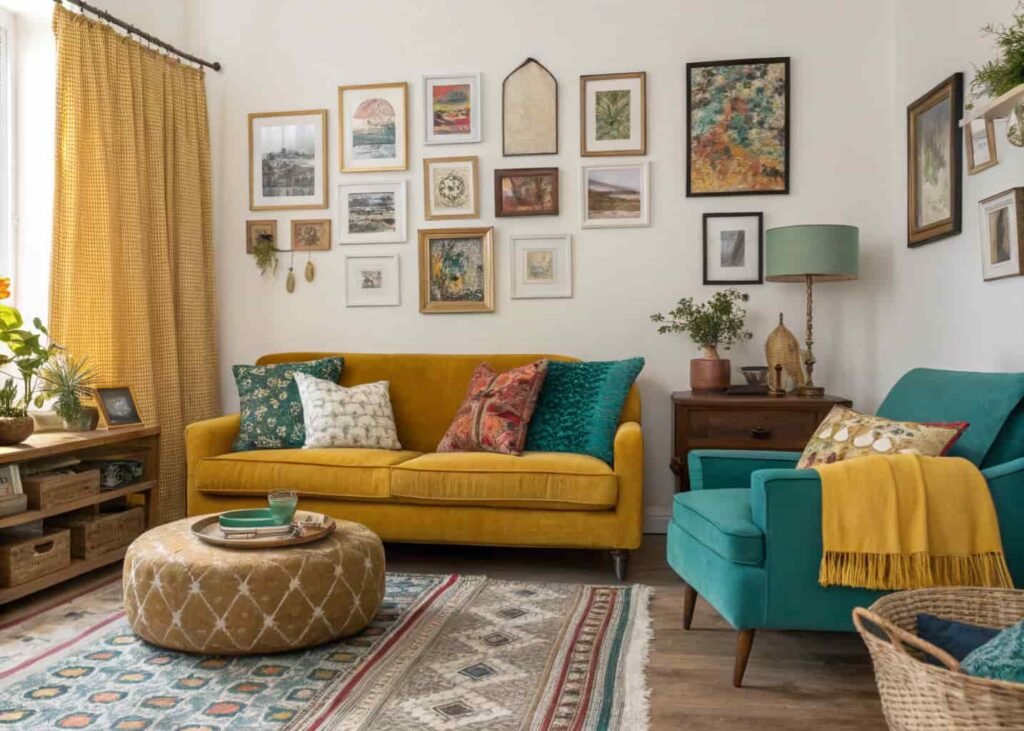
Real eclectic design — the kind that looks curated rather than accidental — always has one unifying thread holding the mismatched pieces together. That thread is usually a repeated color, a repeated material, or all pieces from roughly the same era mixed across different styles. Without that thread, “eclectic” just becomes “cluttered,” which is the single biggest mistake in this style.
14. Transitional Living Room Style
Transitional splits the difference between traditional and contemporary — classic silhouettes (like a rolled-arm sofa) but in a clean, unfussy fabric, paired with simpler, straight-lined tables instead of ornate carved wood. It’s the safest long-term choice if you’re not sure which direction you lean, since it ages better than a hard-committed trend style and is easier to update piece by piece over the years.
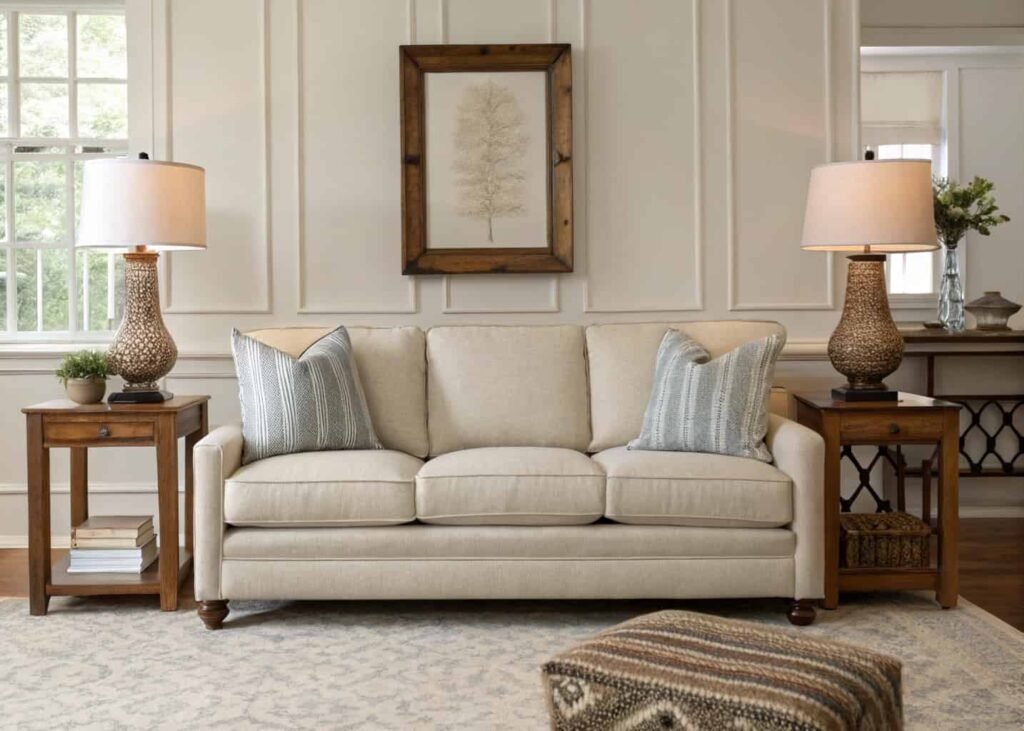
One sizing rule worth keeping regardless of which style you pick: your area rug should extend at least 6–8 inches past the front legs of your sofa and chairs. A rug that only sits under the coffee table, floating in the middle of the room, is the single most common styling mistake across every list above — and it’s an easy one to fix before you touch paint or furniture at all.