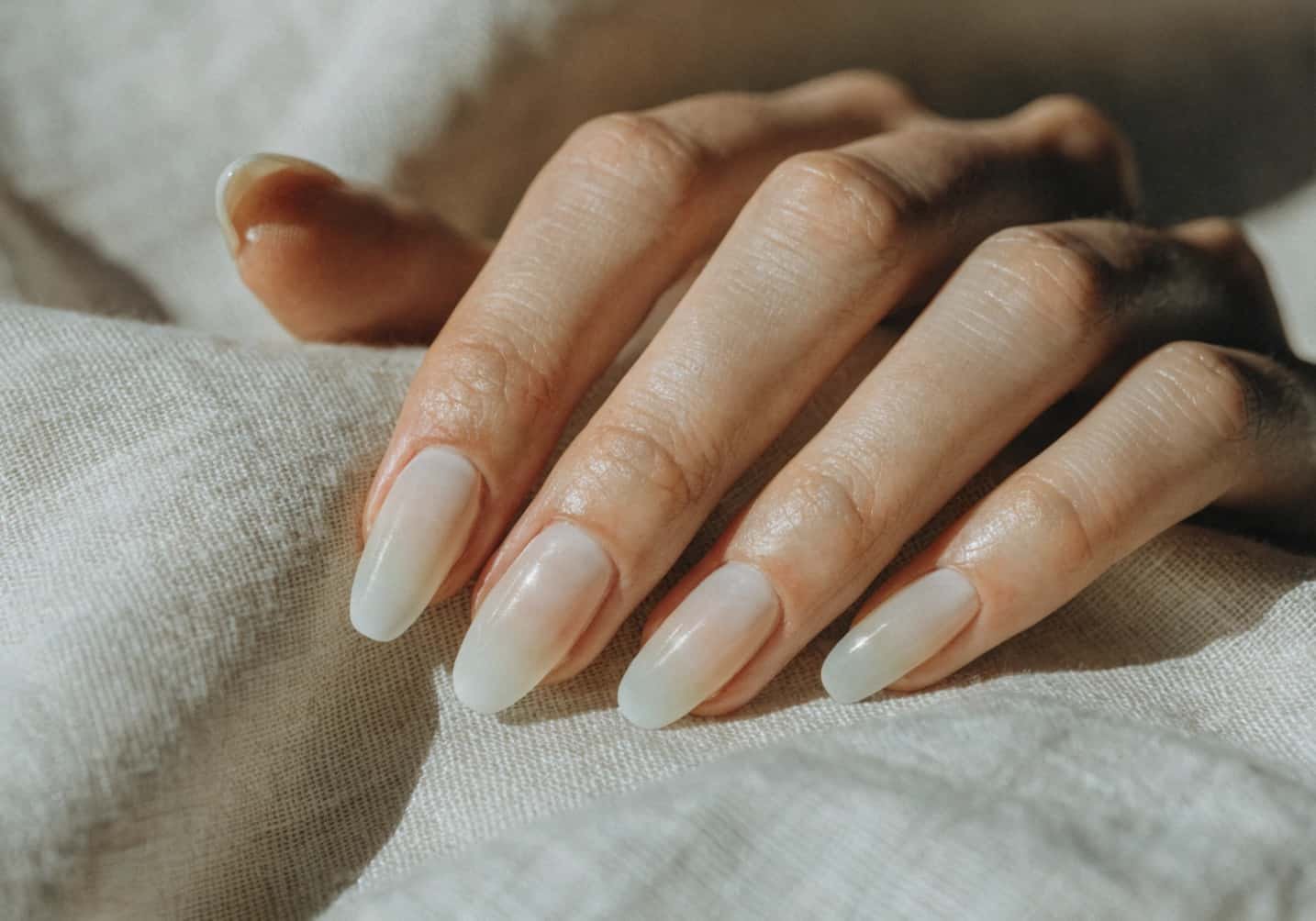
Quiet luxury made the jump from wardrobes to beauty routines faster than most trends do, and nails were an obvious next stop. No logos, no loud color, nothing that screams for attention — just clean, well-kept hands that look expensive without anyone being able to point to why. That “why” is actually easy to break down once you know what you’re looking for, so here’s the real breakdown instead of the usual vague inspiration talk.
1. What Is the Quiet Luxury Trend?
Quiet luxury nails aren’t about a specific color so much as a specific finish level. The look relies on three things: healthy nail beds, a shape that suits the hand instead of following whatever’s trending, and a polish or gel that reads as one solid, even tone rather than a “look at my nail art” statement. Think of the difference between a $12 mall manicure with visible brush strokes and a $65 salon manicure in the exact same shade — the color might be identical, but the application quality is what separates loud from quiet. That’s the whole trend in one sentence: it’s an execution trend, not a color trend.
2. How to Bring Quiet Luxury to Your Nails
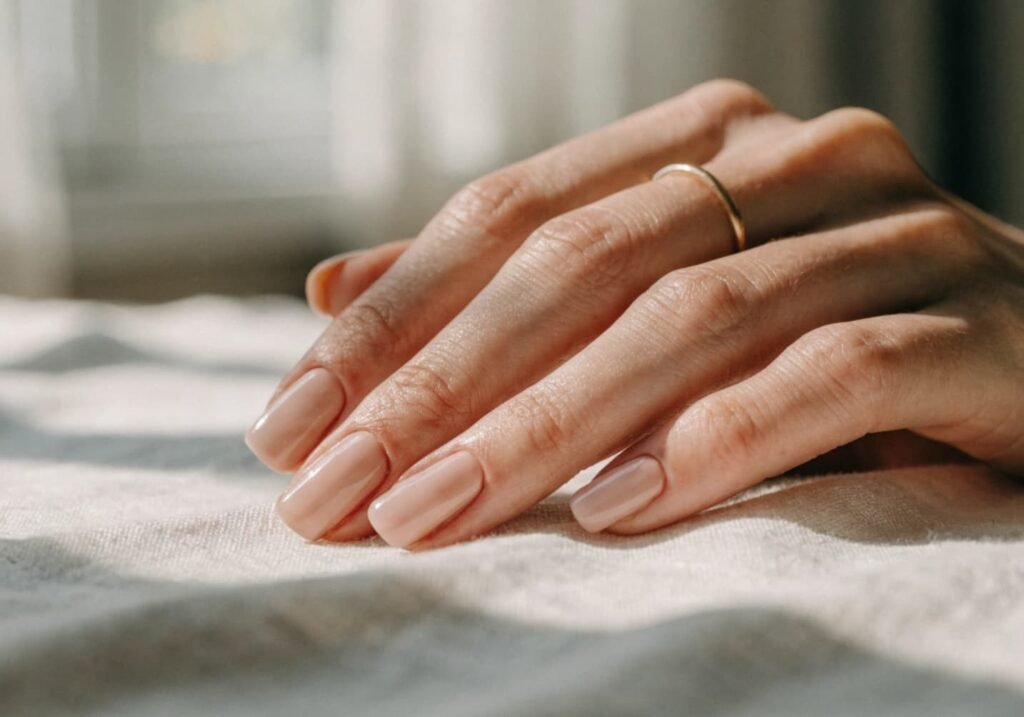
Start with the nail bed itself, not the polish. Buff the surface with a 4-way buffer block (roughly $3–6 at any drugstore) before applying color — this alone removes the ridged texture that makes even good polish look uneven under light. Second, apply thin coats. Two thin coats of polish dry harder and look glassier than one thick coat, which tends to dent and dull faster. Third, skip the top coat with shimmer or glitter particles; a plain high-gloss top coat is doing 80% of the “expensive” visual work here.
3. Neutral Tone Nail Ideas
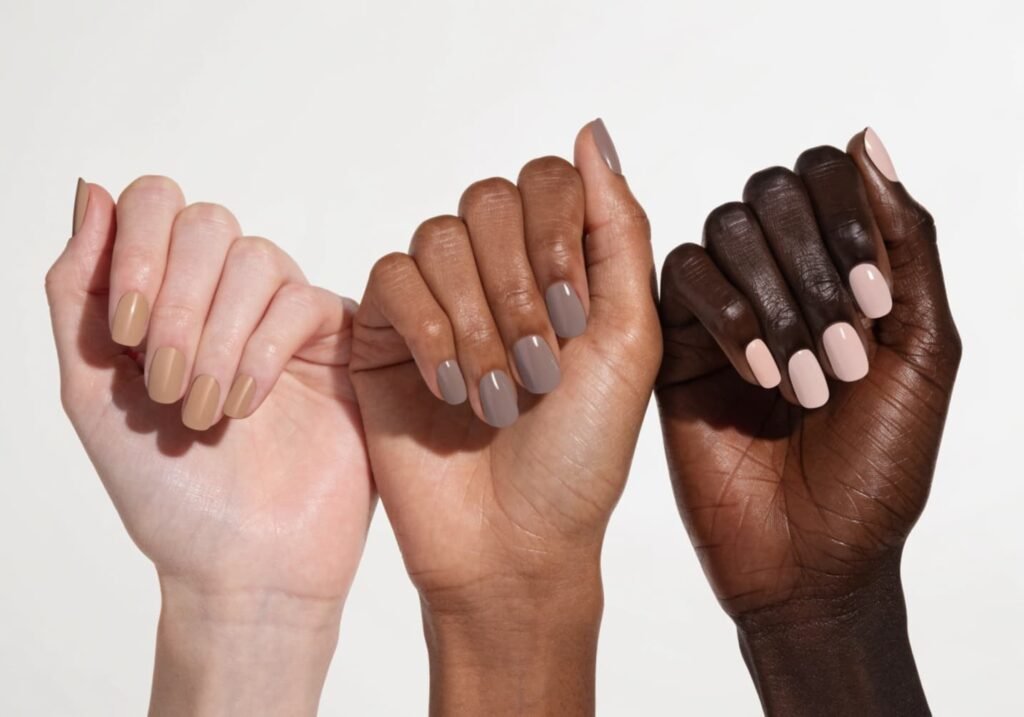
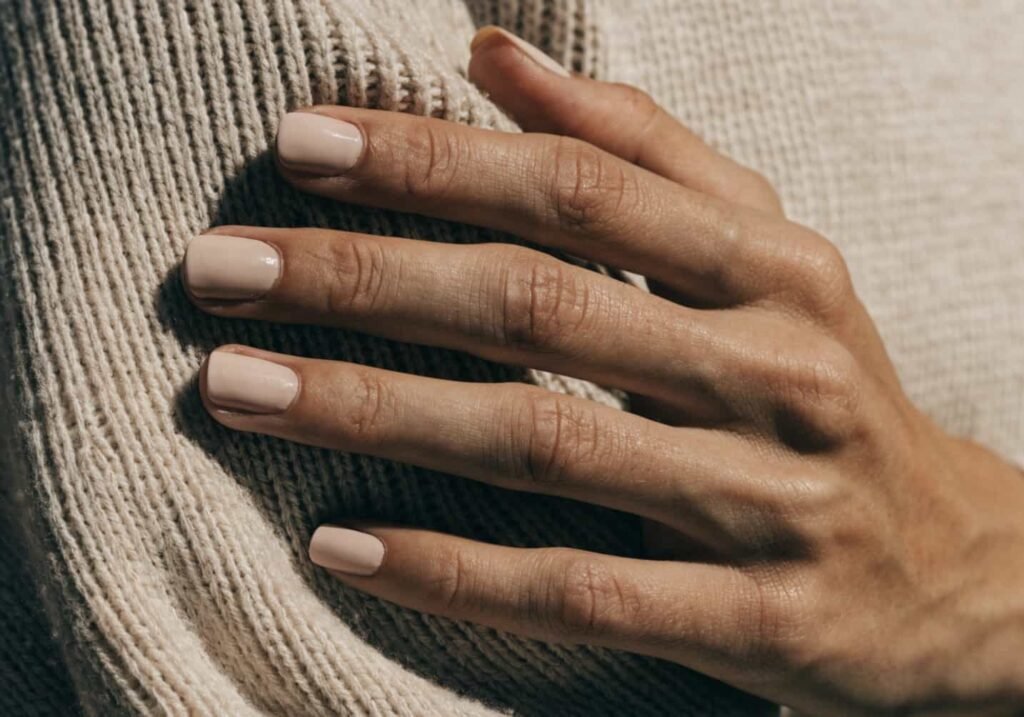
“Neutral” gets used loosely, so here’s an actual range: warm beige (closer to a latte tone), cool taupe (has a gray undertone, flatters cooler skin tones), and “your but better” — a shade within one or two tones of your actual nail bed color, just slightly more even. Warm beige tends to look chalky on very fair skin; taupe tends to look muddy on deep skin tones. If you’re unsure which lane you’re in, test the polish against the inside of your wrist in daylight, not under bathroom lighting, which skews yellow and lies to you constantly.
4. Muted Color Palettes
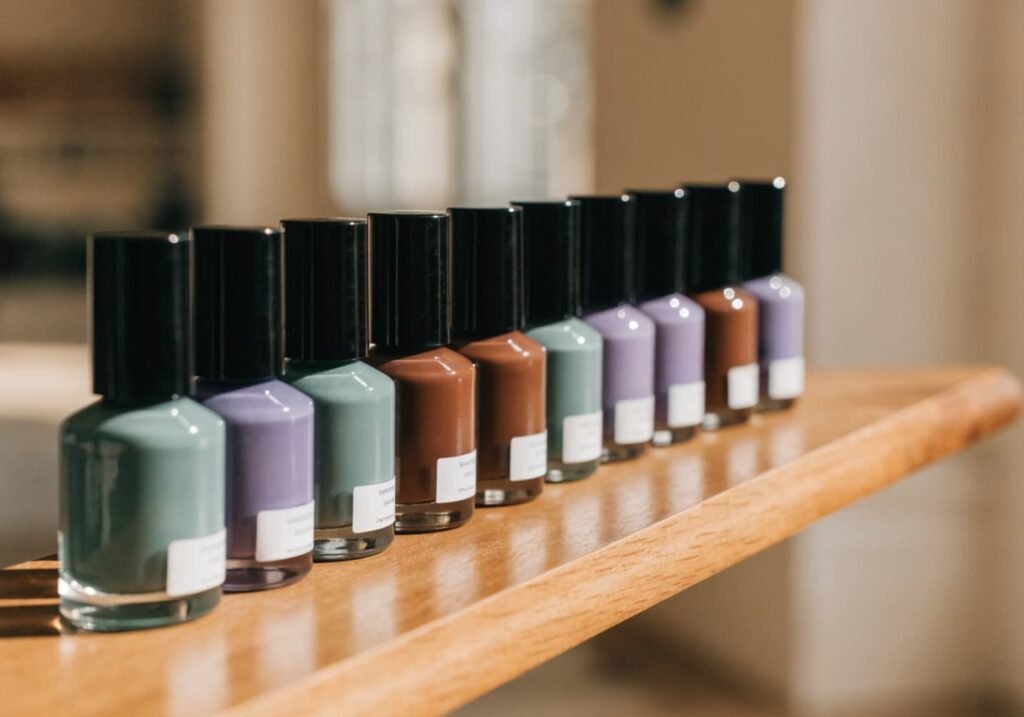
Beyond neutrals, quiet luxury does allow color — just desaturated. A dusty sage, a smoked lavender, a faded terracotta. The test is simple: hold the bottle against a bright saturated version of the same color (a true green, a true purple). If your shade looks like it’s been left in the sun for a season, it fits. If it still reads vibrant, it’s a different trend entirely (that’s “your girl summer” nails, not quiet luxury).
5. Minimalist Nail Shapes
Shape matters more than people admit. Squoval (square with softened corners) and short round are the two shapes doing the heavy lifting in this trend right now — both photograph clean and don’t catch light in odd places the way a long stiletto or coffin shape does. Length matters too: anything past 3–4mm beyond the fingertip starts reading as a “statement,” which works against the whole point. If you already have longer nails, a rounded almond shape filed conservatively short is the compromise that still looks intentional.
6. Luxury Nail Care Products
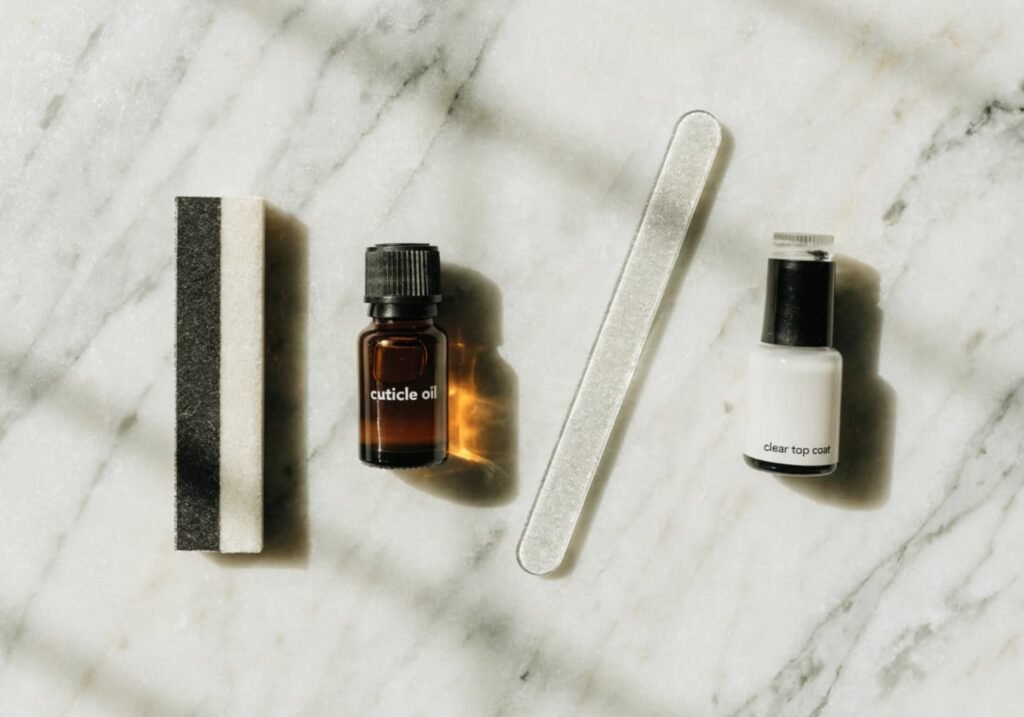
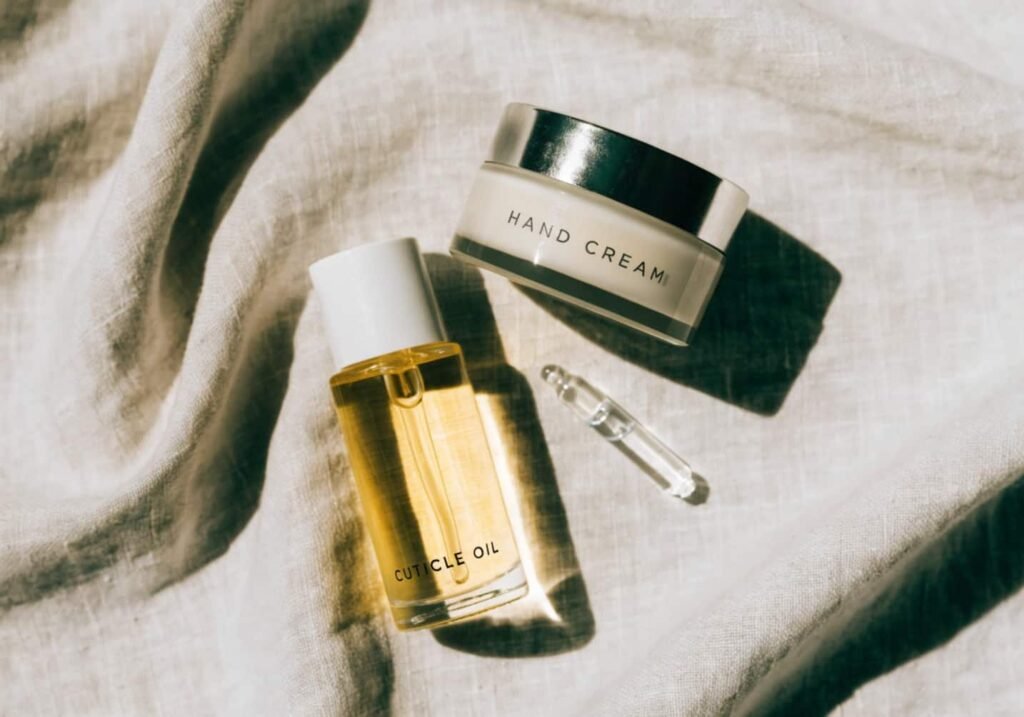
Polish is only half of it — the skin around the nail matters just as much. A good cuticle oil (Jin Soon and Dior both make ones in the $28–45 range, though a plain jojoba oil from the drugstore does 90% of the job for $8) softens the cuticle so it doesn’t crack. Hand creams with shea or urea content (look for 10%+ urea if you have genuinely dry hands) actually change skin texture over weeks, not overnight. Skip anything that markets itself purely on scent — for nail health, ingredient percentage matters more than brand story.
7. Quiet Luxury for Office Wear
For a work setting, the safest bet is anything within one shade of your natural nail bed, in a satin or soft-gloss finish rather than high-shine gel — high shine can look slightly younger/more casual under fluorescent office lighting, oddly enough. A sheer milky white or “your nails but cleaner” beige also holds up well across five days without chipping showing as obviously, since there’s less contrast between chipped and unchipped areas.

8. Quiet Luxury for Events
For evening or event wear, the trick is adding depth without adding noise — a deep espresso brown or a burgundy-adjacent mauve instead of a loud red. Chrome or “glazed donut” finishes can technically fit if the base color underneath is still muted; it’s the sparkle and rainbow-shift finishes that break the look, not shine itself. A single accent — one hand slightly darker than the other, or one ring finger in a glossier top coat — is about as far as “detail” should go here.

9. High-End Nail Polish Brands
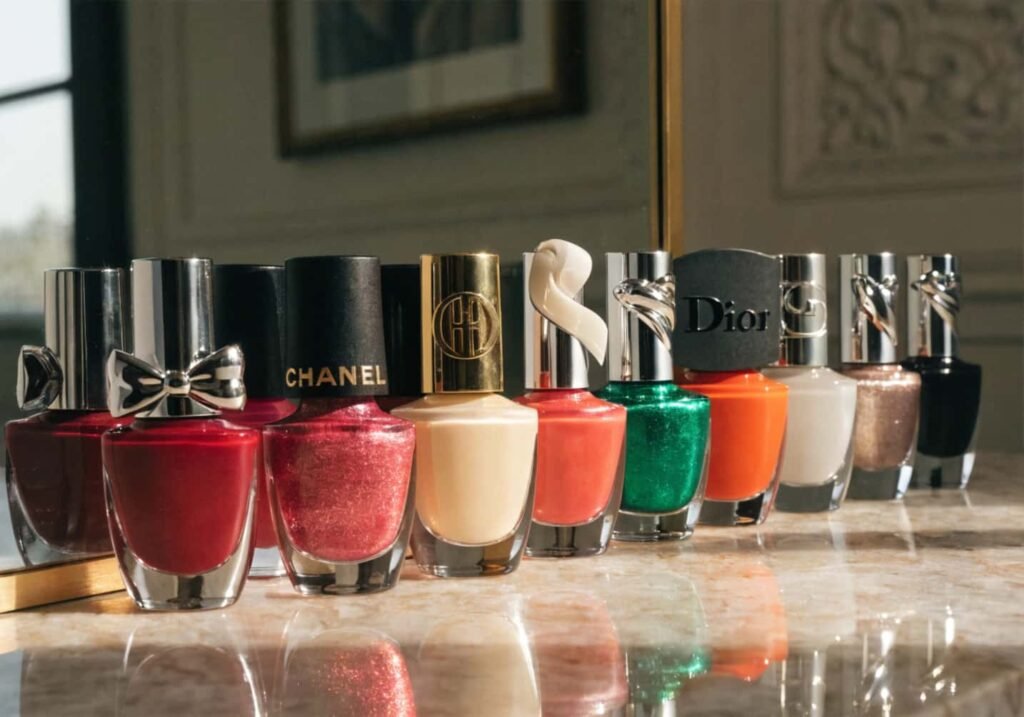
Chanel Le Vernis ($32–38) and Dior Vernis ($30) are the two most recognized names, mostly for pigment payoff — you genuinely need fewer coats with these than drugstore brands, which matters for the “thin coat” rule above. Essie and OPI’s gel-effect lines sit in the $11–14 range and are close enough in finish that most people can’t tell the difference once it’s on the nail. The honest trade-off: you’re paying for brush shape and bottle design as much as formula at the top end. If budget matters more than the unboxing experience, mid-range brands with a good top coat will get you 90% of the same visual result.
10. Matte Finish Luxury Nails
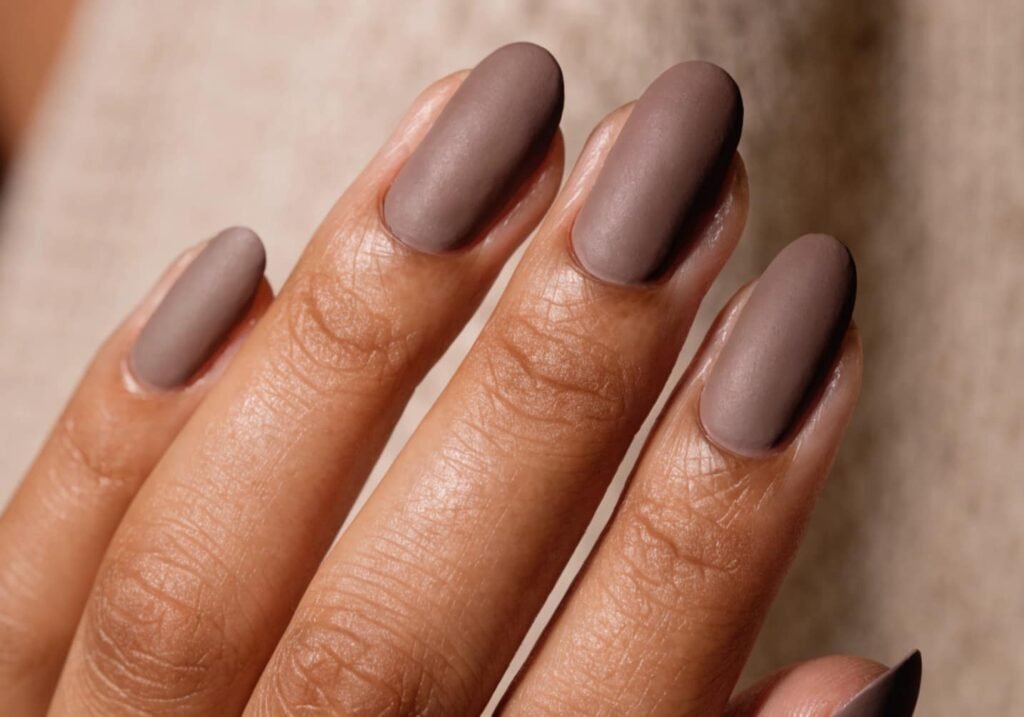
Matte is the one finish that can go wrong fast if the base coat underneath isn’t smooth, since matte top coats amplify texture instead of hiding it like gloss does. The fix: buff thoroughly first, apply two thin color coats, then a single thin layer of matte top coat — going thick with matte top coat is the most common mistake and it causes visible drag marks. Matte also chips faster than gloss because there’s no reflective shine to hide the wear line, so this finish suits shorter nail wear cycles (3–4 days) better than a two-week gel set.
11. Investment-Worthy Nail Tools
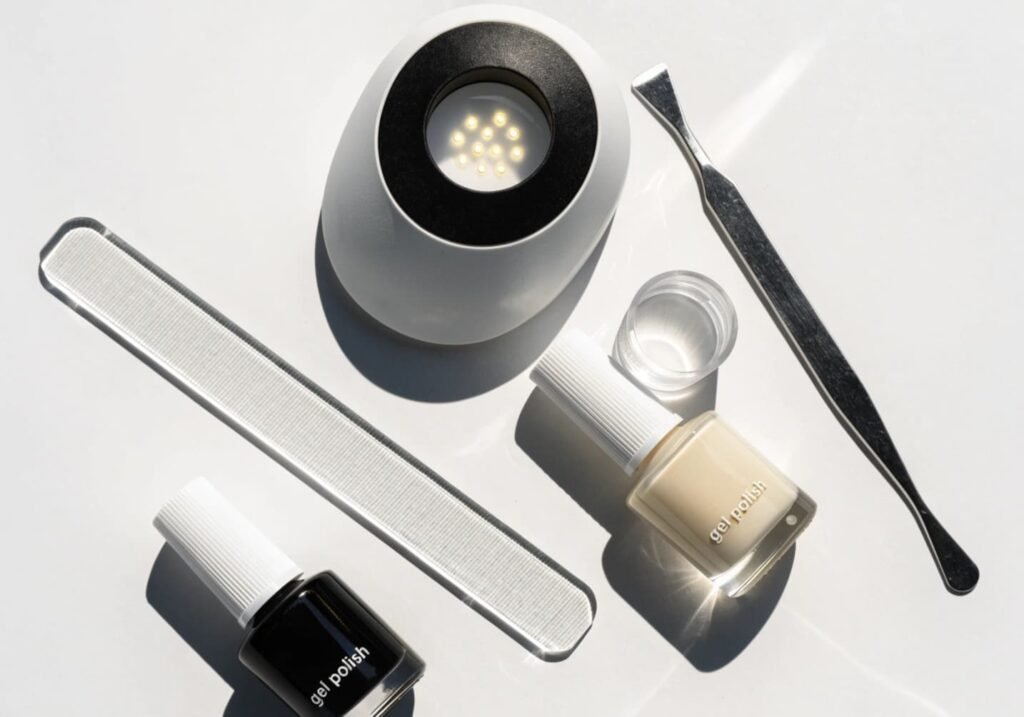
A genuinely good glass nail file (around $15–20, brands like Mont Bleu) lasts years and files more evenly than emery boards, which fray and create micro-tears in the nail edge over time — this actually affects how well polish adheres later. A proper UV/LED lamp (if you’re doing gel at home, roughly $40–70 for a decent one) cures faster and more evenly than cheap ones, which reduces the “gummy” under-cured layer that peels early. These two tools pay for themselves within a few manicures compared to salon visits.
12. Long-Term Nail Health Tips
Nails grow about 3mm a month on average, so any real change in nail health takes 2–3 months minimum to show — anyone promising results in a week is selling something. Keep them at a consistent length rather than cycling long-short-long, since repeated shape changes weaken the free edge. Give nails an occasional polish-free week if you’re wearing color constantly; not because polish “suffocates” nails (it doesn’t, that’s a myth), but because the removal process with acetone is what actually dries out the nail plate over time, and a break reduces total acetone exposure.
Quiet luxury nails aren’t really a “look” you buy off a shelf — they’re closer to a standard of finish you apply to whatever shade you already like. Get the prep and application right, and even a $9 drugstore polish can pass for something far more expensive.