
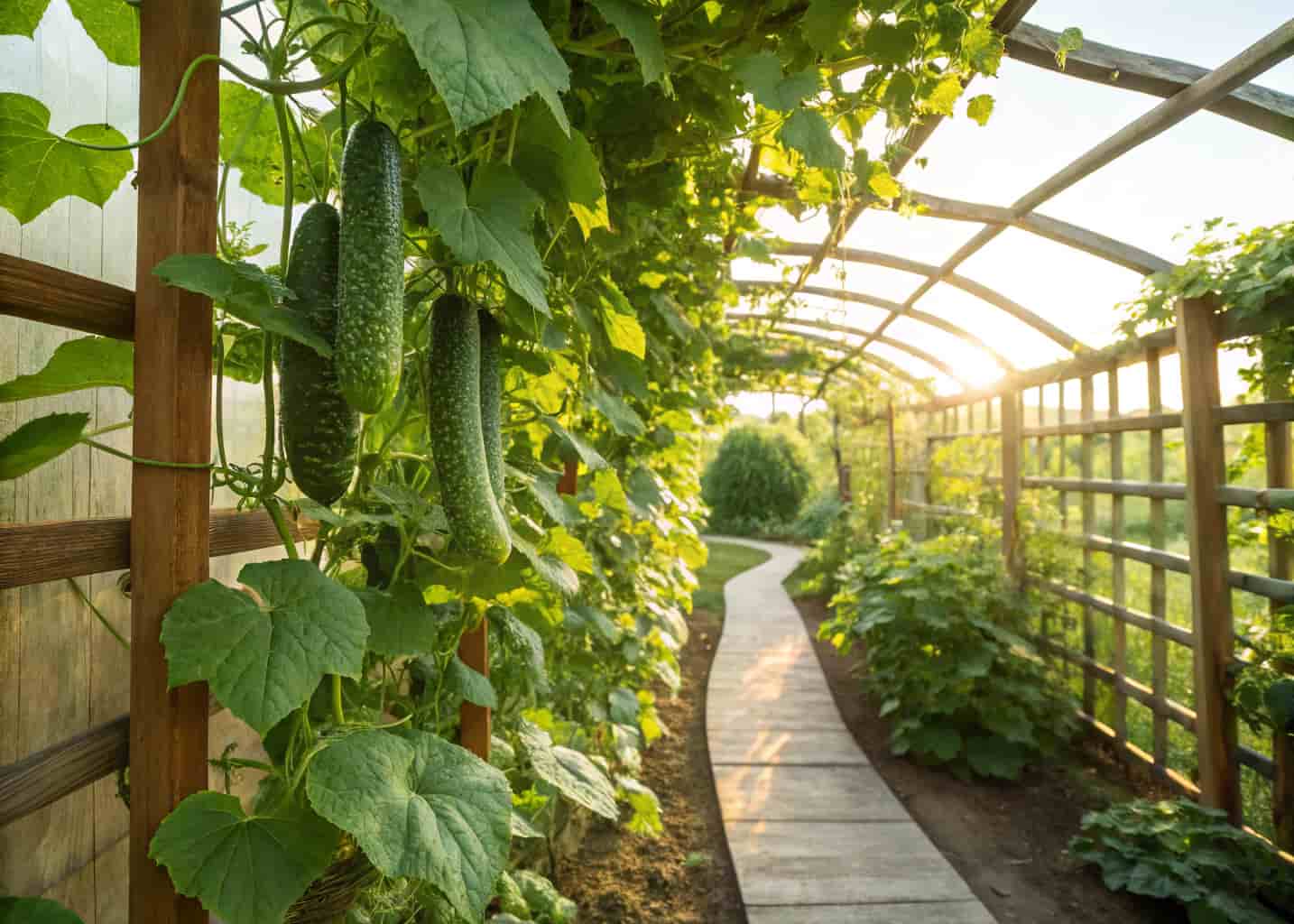

Growing Trellis for Cucumbers is one of the most rewarding experiences a gardener can have, but without the right support structure, your vines can quickly become a tangled, disease-prone mess on the ground. A good trellis system not only keeps your plants organized and upright but also dramatically improves air circulation, sunlight exposure, and overall fruit quality. Whether you are a beginner working with a small backyard or an experienced gardener managing raised beds, there is a cucumber trellis design perfectly suited for your space, budget, and skill level. In this guide, we explore 13 easy and highly effective trellis designs that every gardener should consider trying this growing season.
1. Simple A-Frame Trellis
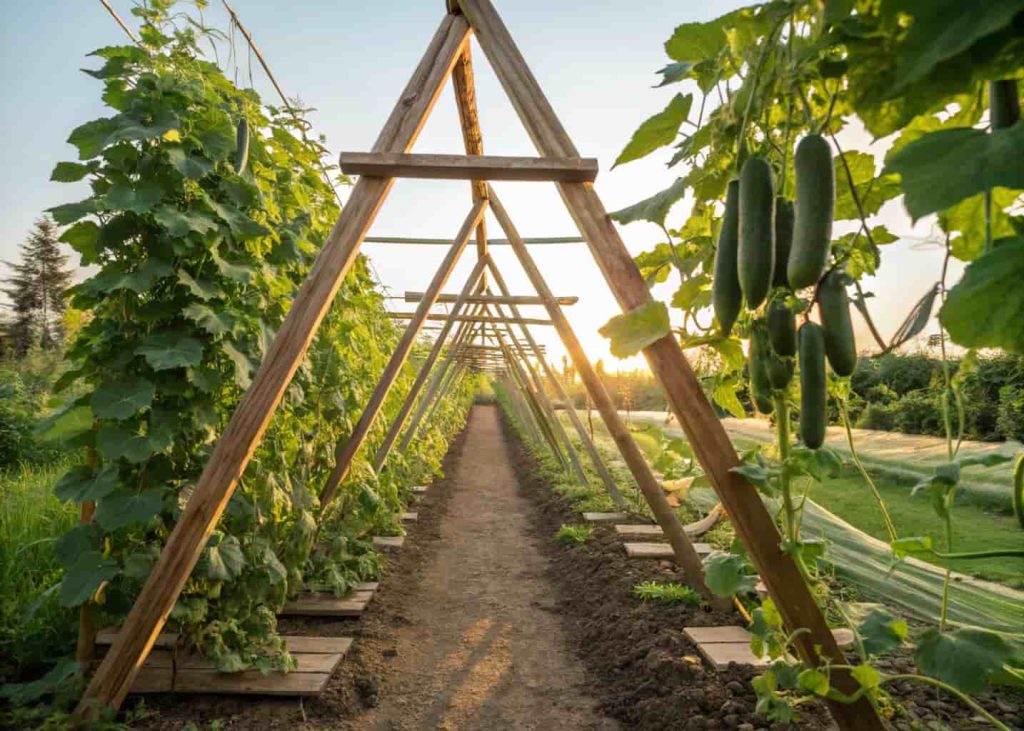
The A-frame trellis is one of the most classic and beginner-friendly designs you can build for your cucumber garden. It consists of two side panels leaning against each other at the top, forming the shape of a letter A. You can construct it using wooden stakes, PVC pipes, or bamboo poles connected with wire mesh or netting stretched between them. This design is incredibly stable and can support heavy cucumber vines throughout the entire growing season. The A-frame allows cucumbers to hang freely on both sides, making them easy to spot and harvest. It is also portable, so you can move it between garden beds each season as needed.
2. Cattle Panel Arch Trellis
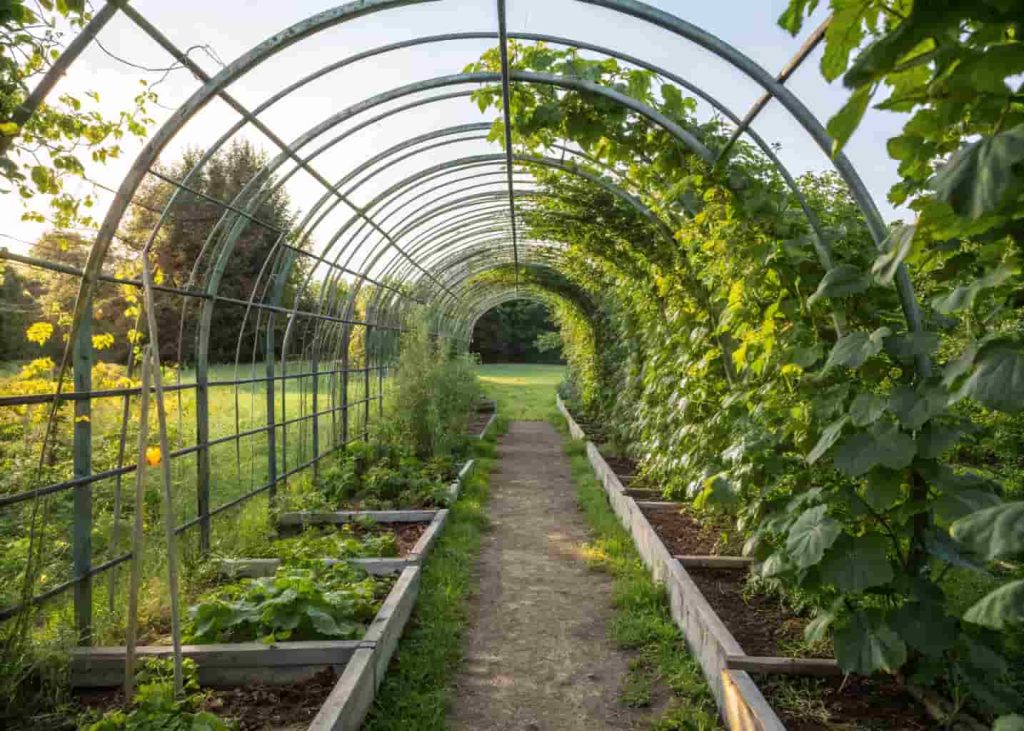
A cattle panel arch trellis is a durable and long-lasting option that transforms your garden into a beautiful cucumber tunnel. Cattle panels are rigid wire grids typically used for livestock but work brilliantly as garden structures. You simply bend one panel into an arch shape over your garden bed and anchor both ends into the ground or into raised bed frames using stakes or rebar. Cucumber vines will naturally climb up and over the arch, and the cucumbers will hang down freely inside the tunnel for super easy harvesting. This structure is strong enough to last for many growing seasons and can double as a decorative garden feature when not in use.
3. Wooden Stake and String Trellis
For gardeners on a tight budget, the wooden stake and string trellis is a wonderfully simple solution that costs almost nothing to put together. Drive a row of wooden stakes or bamboo poles into the ground at regular intervals along your cucumber row, then run horizontal strings or twine between each stake at different heights, starting close to the ground and adding more levels as the plants grow taller. Cucumber tendrils will naturally grab onto the string and climb upward without much guidance. This system works especially well in long garden rows and can be adjusted easily as your plants develop. It requires minimal tools and materials yet delivers excellent vine support throughout the season.

4. Pallet Wood Trellis
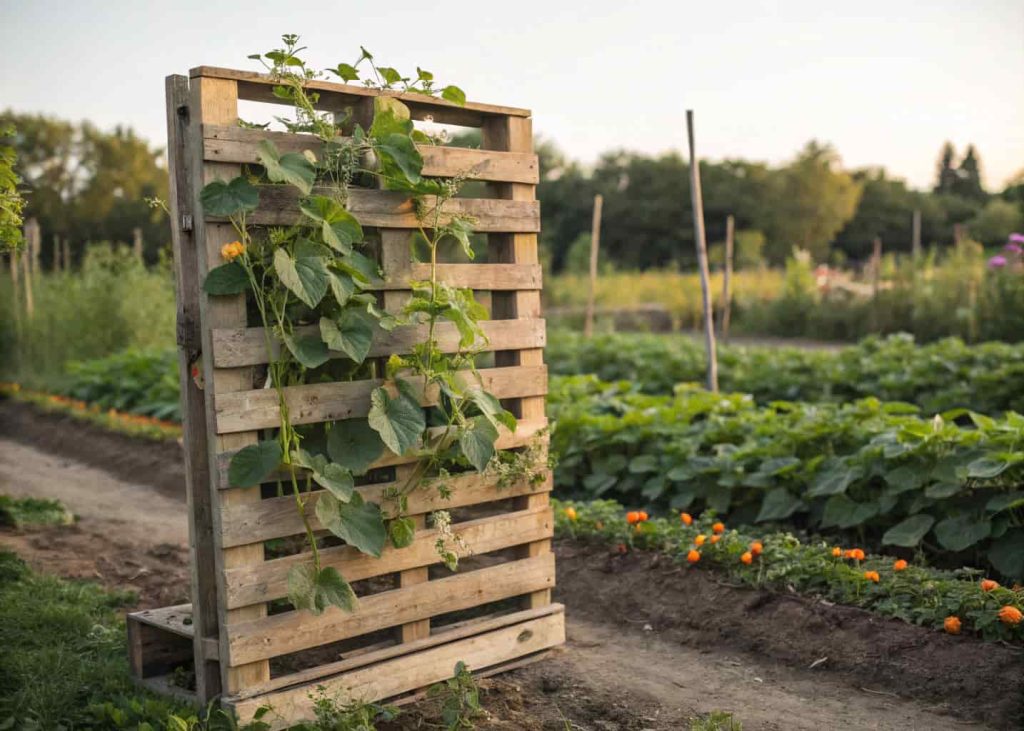
Repurposing old wooden pallets into a cucumber trellis is a brilliant way to recycle materials while creating a rustic and functional garden feature. Stand one or two pallets upright against a fence or secure them between posts driven into the ground. The natural grid pattern of the pallet slats provides ready-made openings for cucumber vines to weave through and climb without needing any additional netting or wire. Pallets are widely available for free from hardware stores or warehouses, making this one of the most budget-friendly trellis options available. With a light sanding and a coat of weatherproof stain, a pallet trellis can look surprisingly stylish while providing years of reliable support for your garden.
5. PVC Pipe Trellis Frame
A PVC pipe trellis frame is a lightweight, affordable, and customizable option that many gardeners love for its ease of assembly. Using basic PVC pipes, connectors, and zip ties or netting, you can build a freestanding rectangular frame in almost any size you need. Simply stretch garden netting or wire mesh across the frame and push the legs into the soil to hold it in place. PVC does not rot, rust, or splinter like wood or metal, making it extremely low maintenance year after year. This trellis design is also modular, meaning you can extend it or reconfigure it depending on how large your cucumber planting grows each season. It is one of the smartest long-term investments for your vegetable garden.
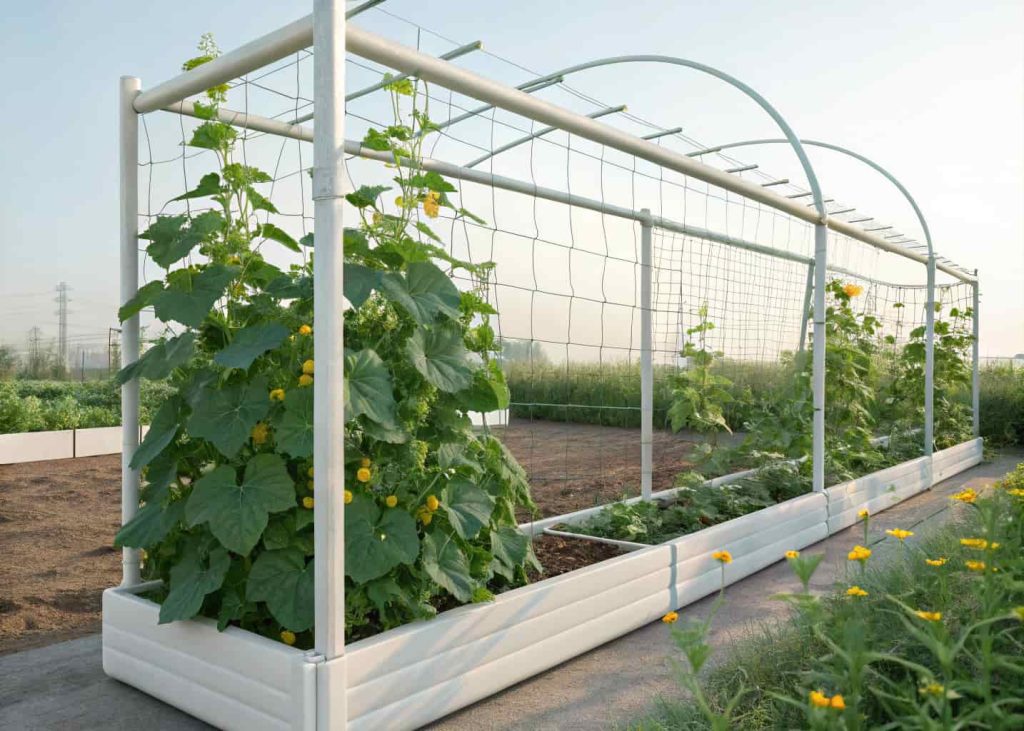
6. Cattle Wire Panel Flat Trellis
Unlike the arched version, a flat cattle wire panel trellis is simply set upright vertically between two strong posts anchored deeply into the ground. This creates a tall, sturdy wall of wire that cucumber vines can climb with ease. The rigid grid structure needs no additional netting, and the large openings make it very easy to thread vines through and reach in to harvest cucumbers from both sides. Flat panel trellises are especially popular in raised bed gardens where a straight vertical structure fits naturally along one side of the bed. They are extremely strong and can support the weight of dozens of cucumber plants all season long without sagging, bending, or requiring any repairs.
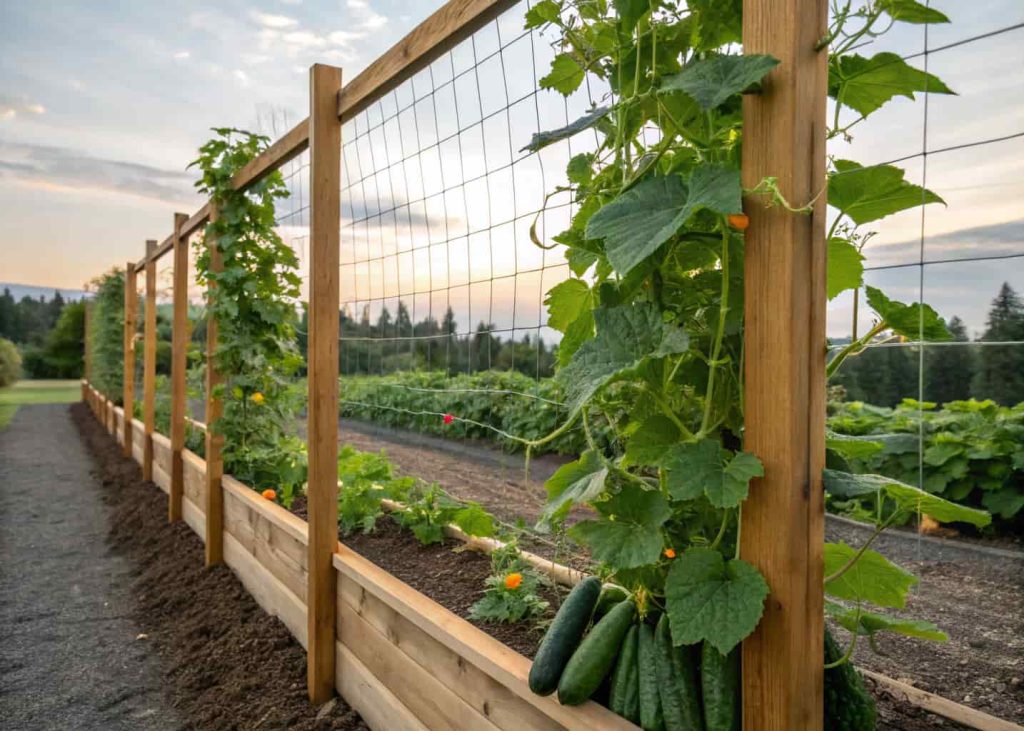
7. Bamboo Teepee Trellis
The bamboo teepee trellis brings an eye-catching, natural look to your garden while providing excellent vertical growing support for cucumber plants. To build one, gather five to eight long bamboo poles and push their pointed ends into the soil in a circle, then lean all the poles inward at the top and tie them securely together with garden twine. Plant your cucumber seedlings around the base of the teepee so each vine has its own pole to climb. As the plants mature, their tendrils grab the bamboo naturally without much assistance from you. Bamboo teepees are biodegradable, eco-friendly, and visually beautiful in any garden setting, and they can be disassembled and stored flat during the off season.

8. Fence Line Trellis
If your garden already has a fence running along one edge, you already have the backbone of a perfect cucumber trellis. Simply plant your cucumbers close to the fence line and attach garden netting, wire mesh, or horizontal strings across the fence panels to give the vines something extra to grab onto. Existing fences made of wood, chain-link, or vinyl all work well. This approach requires zero additional construction and makes excellent use of a vertical space that would otherwise go to waste. Cucumbers planted against a south or east-facing fence also benefit from reflected warmth and light, which can boost growth and fruit production significantly. It is one of the easiest and most space-efficient trellis solutions available to home gardeners.
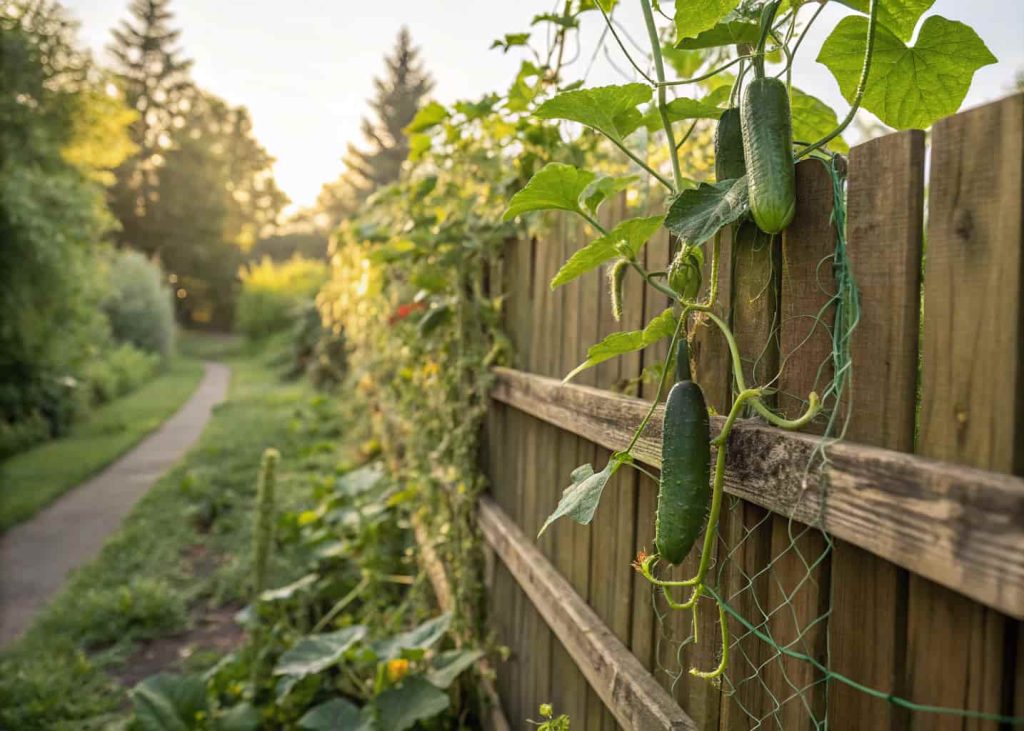
9. T-Post and Wire Trellis
The T-post and wire trellis is a heavy-duty option borrowed directly from commercial farming and vineyard operations, and it works just as effectively in the home garden. Drive metal T-posts into the ground at regular intervals along your cucumber row, then run multiple horizontal wires between the posts at different heights, attaching them securely with wire clips or staples. This creates a multi-level wire support wall that cucumbers can climb easily from the bottom to the top. T-posts are extremely strong, rust-resistant, and can withstand even strong winds or heavy rain without tipping or bending. This system is ideal for larger gardens with long rows and is one of the most reliable trellis designs you can install for a high-yield cucumber harvest.

10. Raised Bed Corner Trellis
A raised bed corner trellis is a clever space-saving design that fits perfectly inside the corner of any raised garden bed. Two angled support arms extend from a central corner post, and netting is stretched between them to form a triangular climbing surface. This configuration allows cucumbers to grow upward within the existing footprint of the raised bed without taking up extra garden space. It is especially useful in small urban gardens or courtyard spaces where every square foot counts. The corner positioning also means cucumbers get sunlight from multiple angles throughout the day, promoting faster and more even growth. With the right netting material, this compact trellis can support an impressive number of vines in a very tight space.
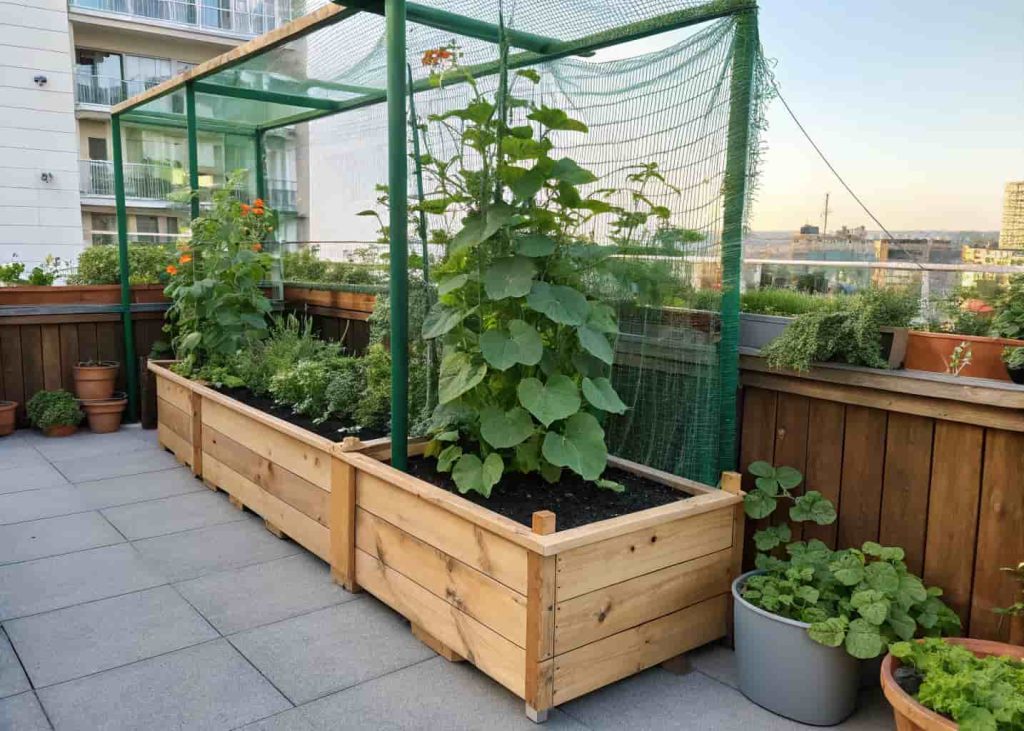
11. Tomato Cage Trellis Hack
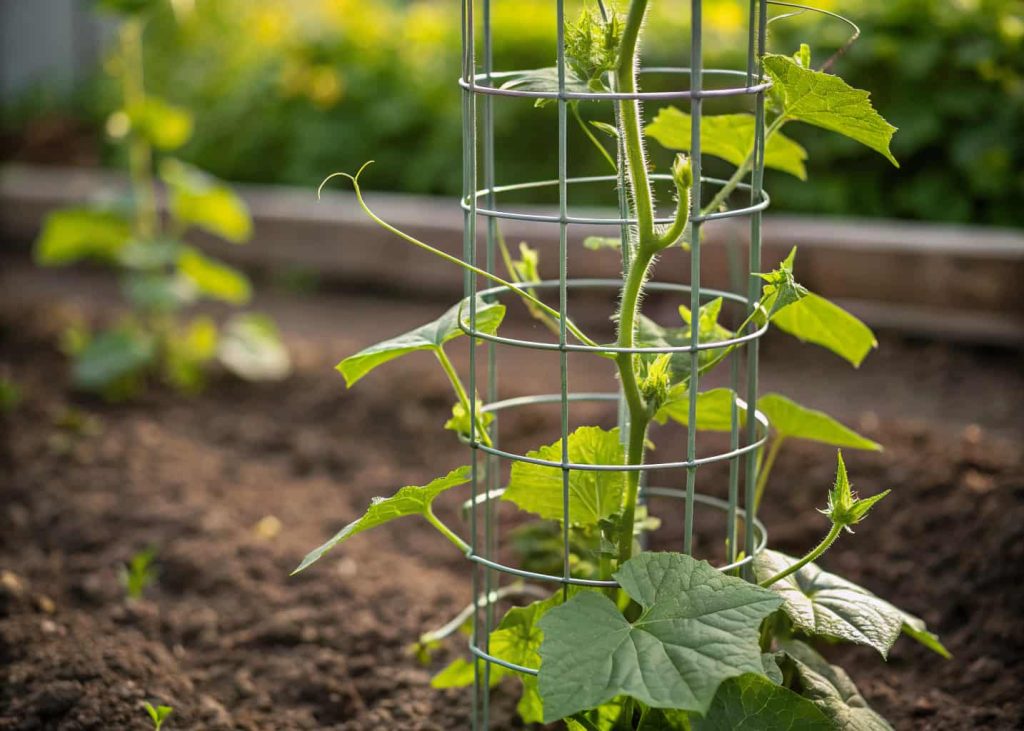
If you already have tomato cages sitting unused in your garden shed, they can be repurposed as quick and surprisingly effective cucumber trellises. Simply place a tomato cage over each cucumber plant at planting time and allow the vines to grow up through and around the wire rings as they develop. For taller cucumber varieties, you can even stack two cages on top of each other and secure them with zip ties or wire to double the climbing height. This no-build solution is perfect for gardeners who want to get cucumbers growing vertically without spending any money or time on construction. While tomato cages do not provide as much surface area as a full trellis panel, they work exceptionally well for smaller plantings or container gardens.
12. Lean-To Trellis Against a Wall
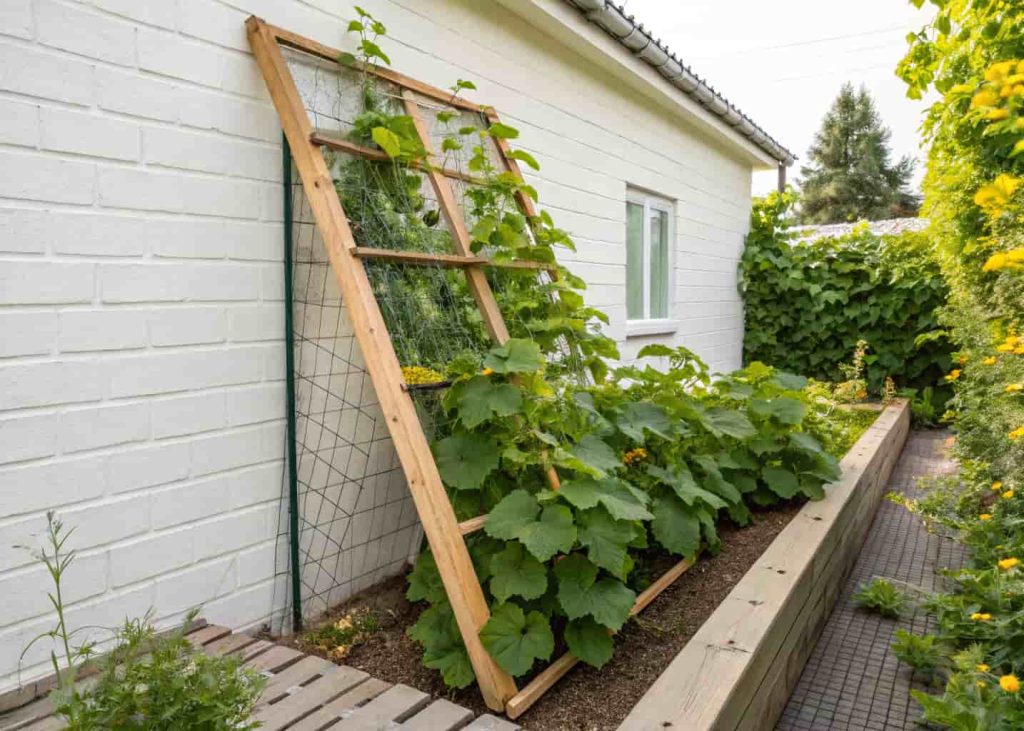
A lean-to trellis is an angled support structure that rests against an existing wall, shed, or garage exterior and is one of the most space-efficient designs available for gardeners with limited open ground space. Build a simple rectangular frame from wood or metal conduit, stretch garden netting across it, and lean the whole structure against the wall at a comfortable working angle. Plant cucumbers at the base and guide the initial vines onto the netting as they emerge. The angled design allows cucumbers to hang free and straight, making them very easy to spot among the foliage and quick to harvest. The wall behind the trellis also acts as a heat sink, absorbing warmth during the day and releasing it at night to protect plants from cold snaps.
13. Expandable Wooden Lattice Trellis
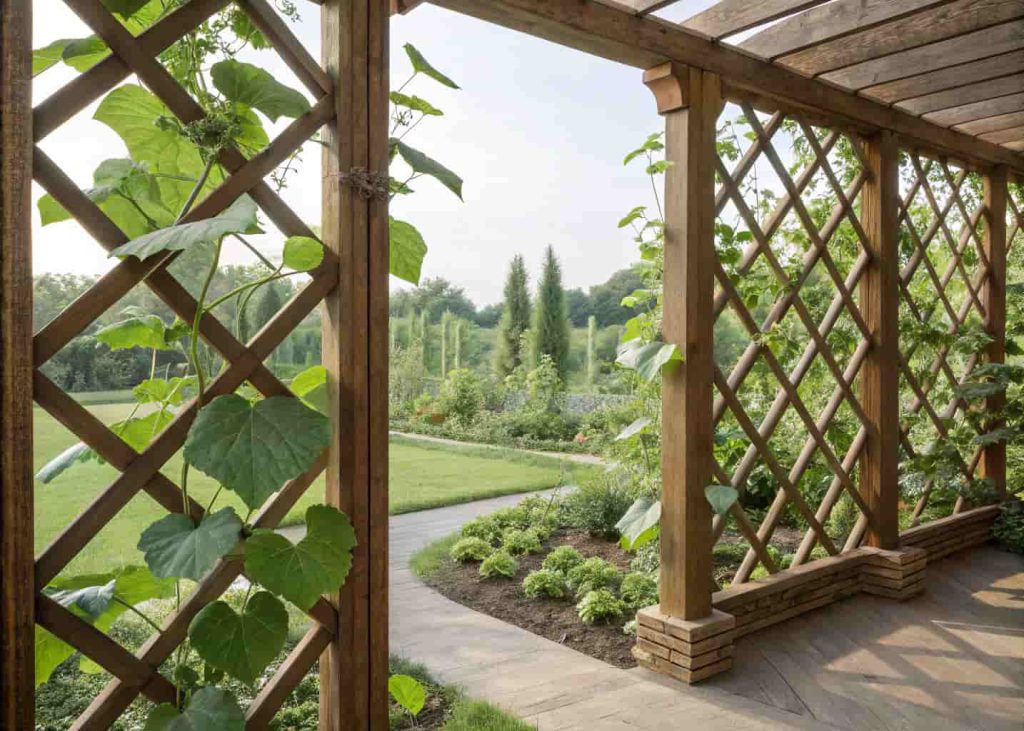
The expandable wooden lattice trellis is one of the most attractive and versatile cucumber support options you can add to your garden. These are available ready-made from garden centers or can be built easily from thin wooden strips arranged in a criss-cross diamond pattern. The lattice can be mounted onto fence posts, pushed into the soil, or attached to raised bed sides to create a decorative and highly functional climbing surface. Cucumbers adore the diagonal diamond pattern of a lattice because their tendrils can easily grip the crossing points from any direction. Lattice trellises also add visual beauty to your garden and can make even a practical vegetable patch look like a professionally designed outdoor space, giving you both function and aesthetic appeal in one structure.
Conclusion
Choosing the right trellis for your cucumbers can make the difference between a struggling, disease-ridden patch and a thriving, high-yield garden that produces beautiful fruit all season long. From the rustic charm of a bamboo teepee to the industrial strength of a T-post wire system, there is a design here to suit every gardener, every budget, and every garden layout. The best trellis is ultimately the one you will actually build and use, so choose a design that matches your available materials and skill level. Start with one or two of these ideas this season, observe how your cucumbers respond, and refine your approach each year. Happy growing, and may your cucumber harvest be abundant, straight, and delicious!